The Revolutionary War is Raging How to Create



- Slides: 40
The Revolutionary War is Raging How to Create a strong Government?
Home work Due Monday 10/8/2019 • Assign textbooks to go home and stay at home all year • Homework for Tuesday • Read pages 140 -144 and answer Terms & Names on 144 • Also read pages 145 – 149 do terms and Names on page 149
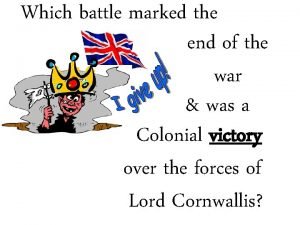
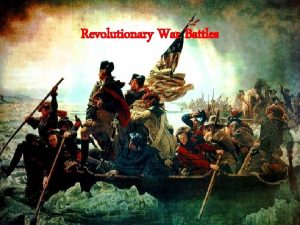
Battle of Yorktown, VA, Ends the War • On September 28, 1781, General George Washington commanding a force of 17, 000 French and Continental troops, begins the siege known as the Battle of Yorktown against British General Lord Charles Cornwallis and a contingent of 9, 000 British troops at Yorktown, Virginia in the most important battle of the Revolutionary War. Thank you Marquis de Lafayette
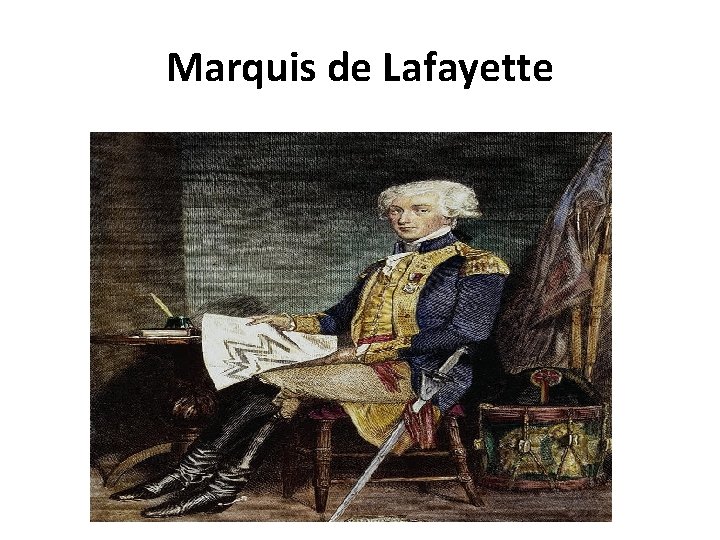
Marquis de Lafayette (1757– 1834 was a French general and political leader who enthusiastically supported the American Revolution. . Lafayette played a critical role in the ultimate victory of the Revolutionary War, co-leading American forces in the successful siege of Lord Cornwallis' British armies at Yorktown.
Marquis de Lafayette
Years of the Revolution • April 19, 1775 -- 1781 • 1. begins with battles of Lexington and Concord in Massachusetts. • 2. Conflict lasted a total of seven years, with the major American victory at Yorktown, VA.
Articles of Confederation were weak • Examples of how the AOC failed to provide a government that could have authority over the states • 1. • 2. • 3. • 4.
Treaty of Paris • Settles war between England America
Articles of Confederation are not working • delegates met in Philadelphia to create a strong government this time period is called the Constitutional convention. They are terrified of uprisings like Shays Rebellion
Shays Rebellion 1786 • Why Shays Rebellion? An uprising led by a former militia officer, Daniel Shays, which broke out in western Massachusetts in 1786. Shays's followers protested the foreclosures of farms for debt and briefly succeeded in shutting down the court system. • Shows the weakness of the AOC
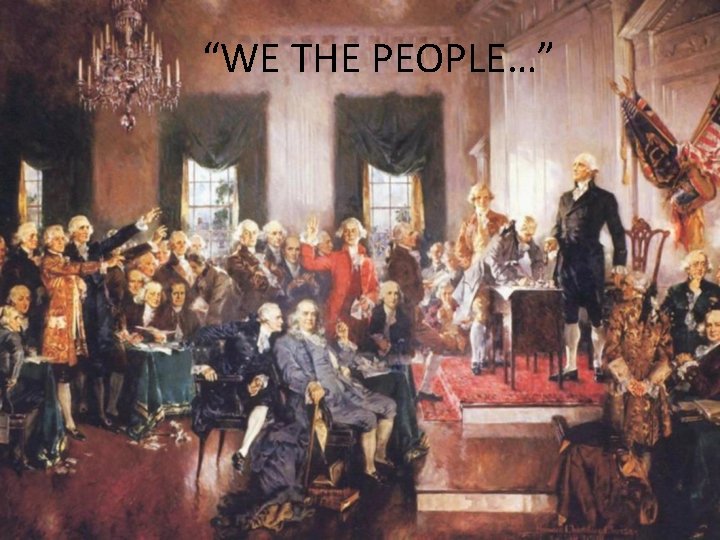
“WE THE PEOPLE…”
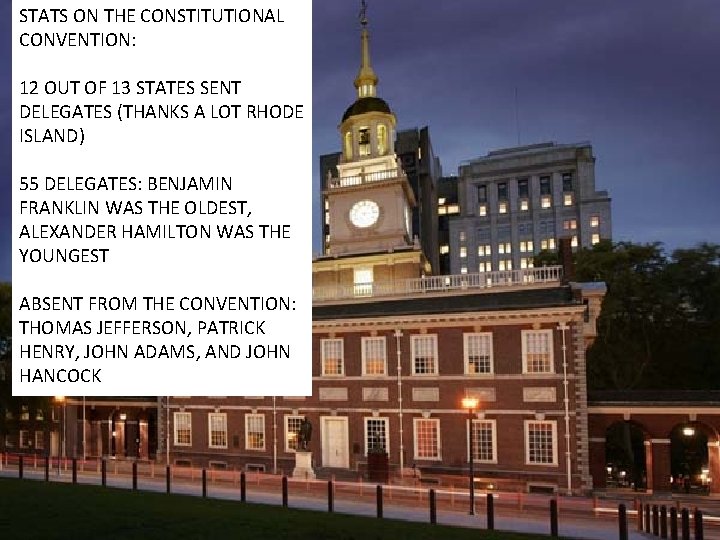
STATS ON THE CONSTITUTIONAL CONVENTION: 12 OUT OF 13 STATES SENT DELEGATES (THANKS A LOT RHODE ISLAND) 55 DELEGATES: BENJAMIN FRANKLIN WAS THE OLDEST, ALEXANDER HAMILTON WAS THE YOUNGEST ABSENT FROM THE CONVENTION: THOMAS JEFFERSON, PATRICK HENRY, JOHN ADAMS, AND JOHN HANCOCK
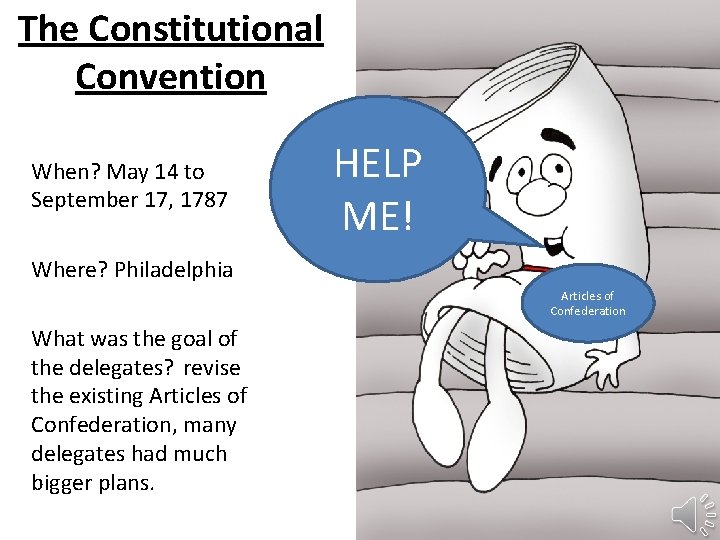
The Constitutional Convention When? May 14 to September 17, 1787 HELP ME! Where? Philadelphia Articles of Confederation What was the goal of the delegates? revise the existing Articles of Confederation, many delegates had much bigger plans.
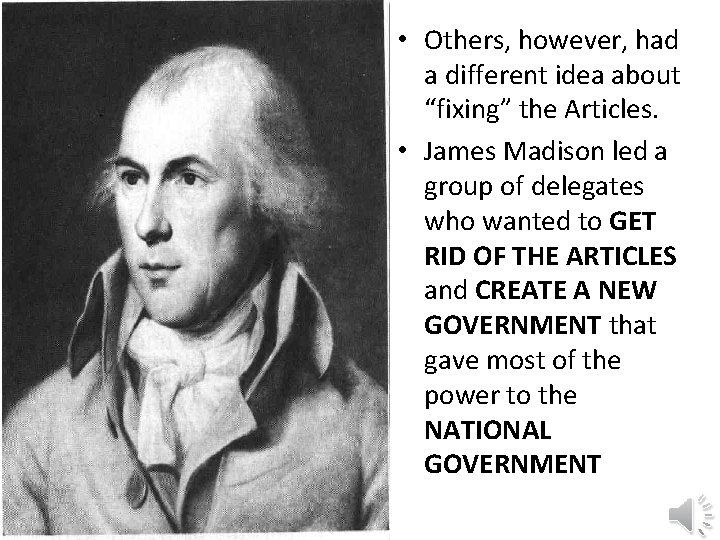
• Others, however, had a different idea about “fixing” the Articles. • James Madison led a group of delegates who wanted to GET RID OF THE ARTICLES and CREATE A NEW GOVERNMENT that gave most of the power to the NATIONAL GOVERNMENT
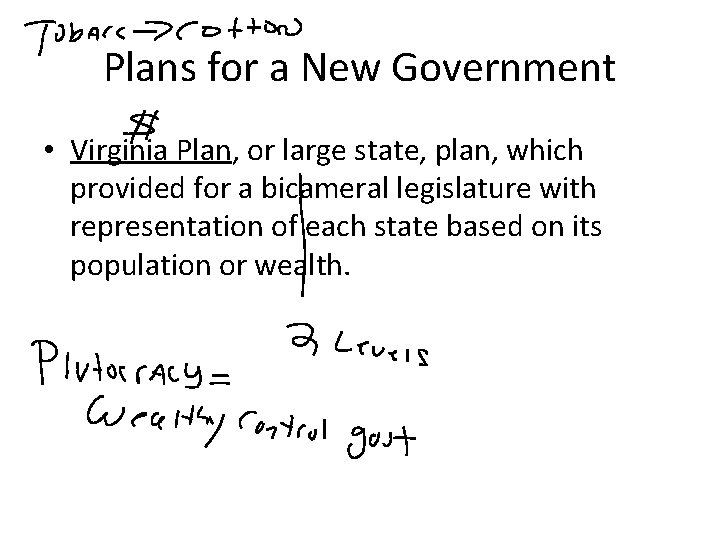
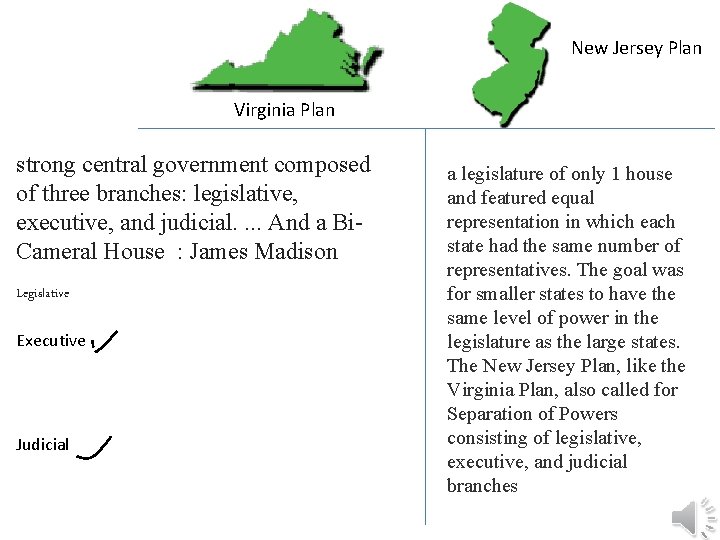
Plans for a New Government • Virginia Plan, or large state, plan, which provided for a bicameral legislature with representation of each state based on its population or wealth.
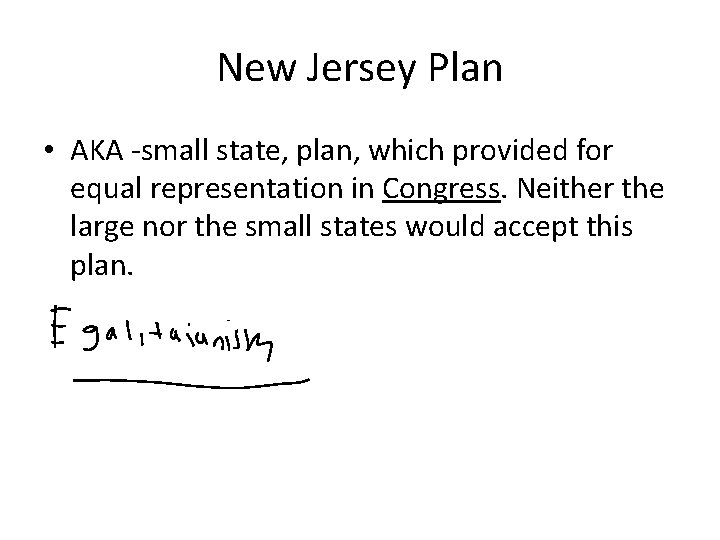
New Jersey Plan • AKA -small state, plan, which provided for equal representation in Congress. Neither the large nor the small states would accept this plan.
Albany Plan of Union
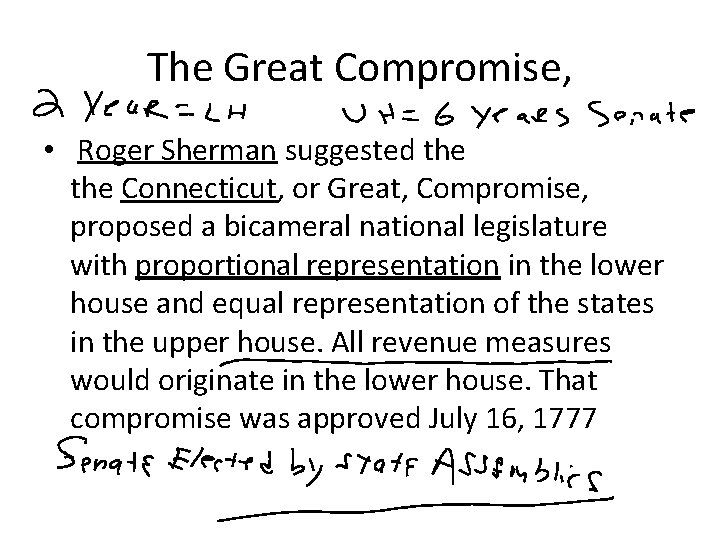
The Great Compromise, • Roger Sherman suggested the Connecticut, or Great, Compromise, proposed a bicameral national legislature with proportional representation in the lower house and equal representation of the states in the upper house. All revenue measures would originate in the lower house. That compromise was approved July 16, 1777
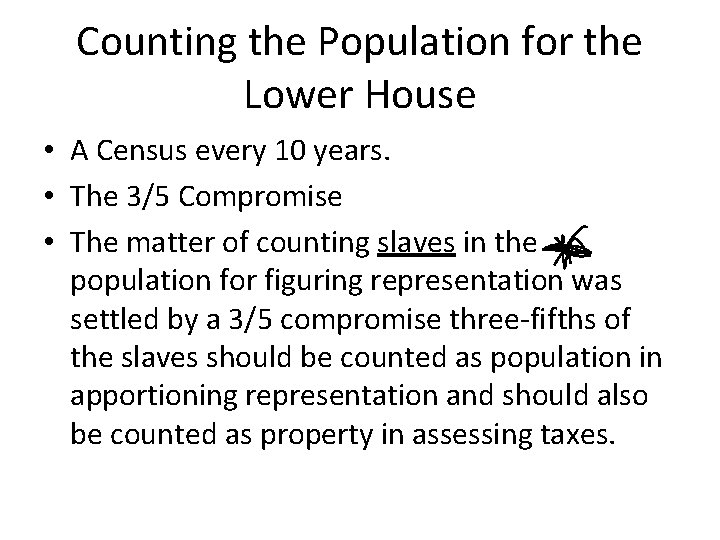
Counting the Population for the Lower House • A Census every 10 years. • The 3/5 Compromise • The matter of counting slaves in the population for figuring representation was settled by a 3/5 compromise three-fifths of the slaves should be counted as population in apportioning representation and should also be counted as property in assessing taxes.
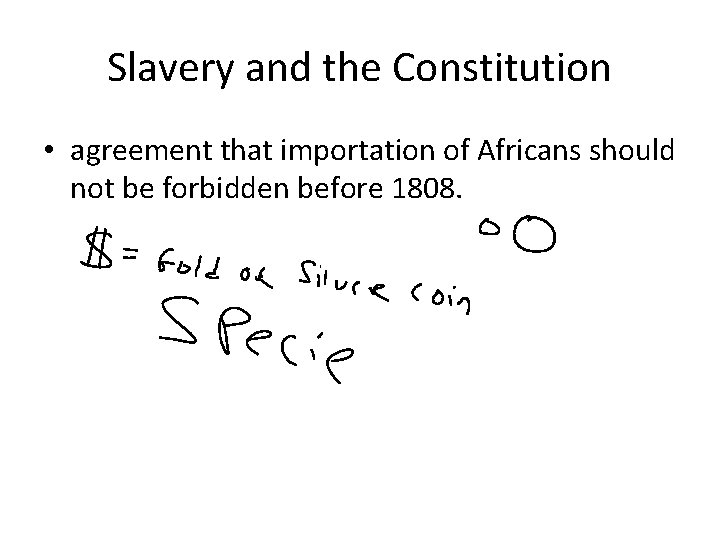
Slavery and the Constitution • agreement that importation of Africans should not be forbidden before 1808.
New Jersey Plan Virginia Plan strong central government composed of three branches: legislative, executive, and judicial. . And a Bi. Cameral House : James Madison Legislative Executive Judicial a legislature of only 1 house and featured equal representation in which each state had the same number of representatives. The goal was for smaller states to have the same level of power in the legislature as the large states. The New Jersey Plan, like the Virginia Plan, also called for Separation of Powers consisting of legislative, executive, and judicial branches
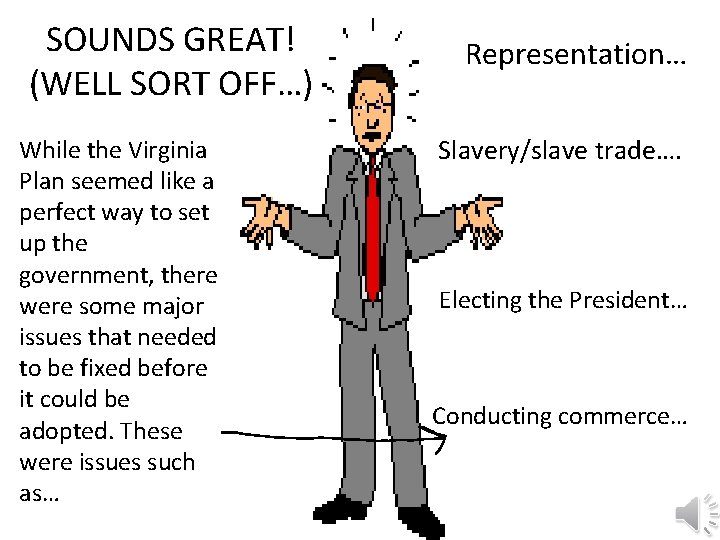
SOUNDS GREAT! (WELL SORT OFF…) While the Virginia Plan seemed like a perfect way to set up the government, there were some major issues that needed to be fixed before it could be adopted. These were issues such as… Representation… Slavery/slave trade…. Electing the President… Conducting commerce…
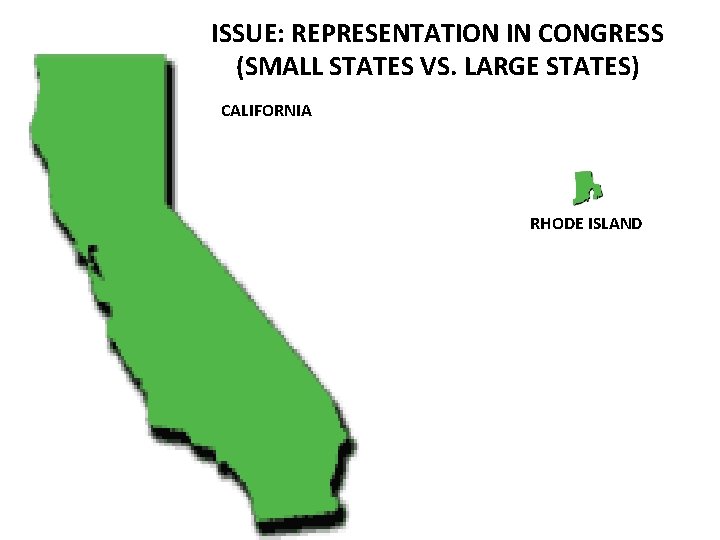
ISSUE: REPRESENTATION IN CONGRESS (SMALL STATES VS. LARGE STATES) CALIFORNIA RHODE ISLAND
Baron Montesquieu political authority of the state is divided into legislative, executive and judicial powers. He asserted that, to most effectively promote liberty, these three powers must be separate and acting independently.
Jean Rousseau famously stated, "Man is born free and everywhere he is in chains. “ Social contract Theory : between the governors and the governed. Power ultimately resided with the people.
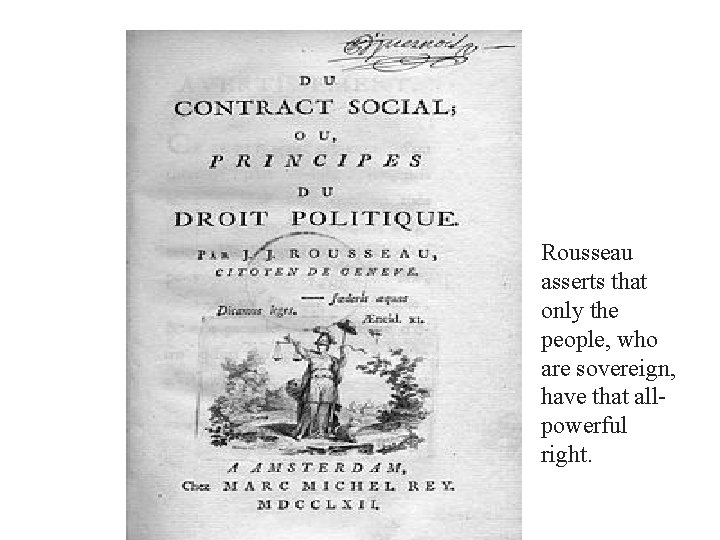
Rousseau asserts that only the people, who are sovereign, have that allpowerful right.
John Locke wrote that all individuals are equal in the sense that they are born with certain "inalienable" natural rights. That is, rights that are God-given and can never be taken or even given away. Among these fundamental natural rights, Locke said, are "life, liberty, and property. "
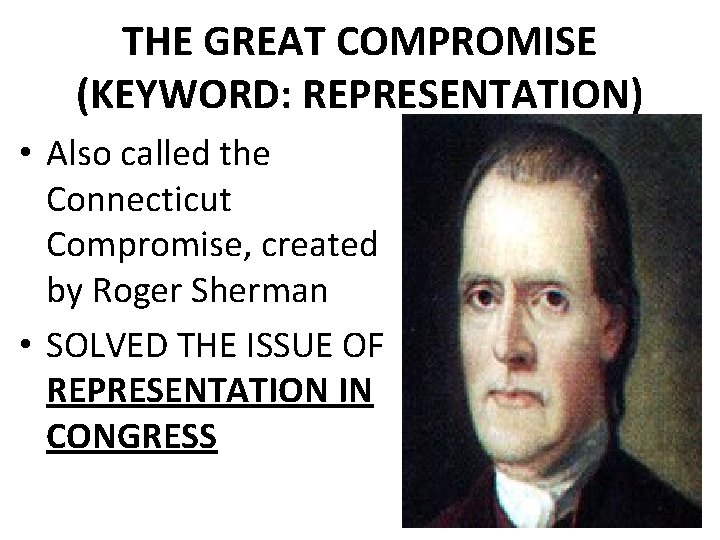
THE GREAT COMPROMISE (KEYWORD: REPRESENTATION) • Also called the Connecticut Compromise, created by Roger Sherman • SOLVED THE ISSUE OF REPRESENTATION IN CONGRESS
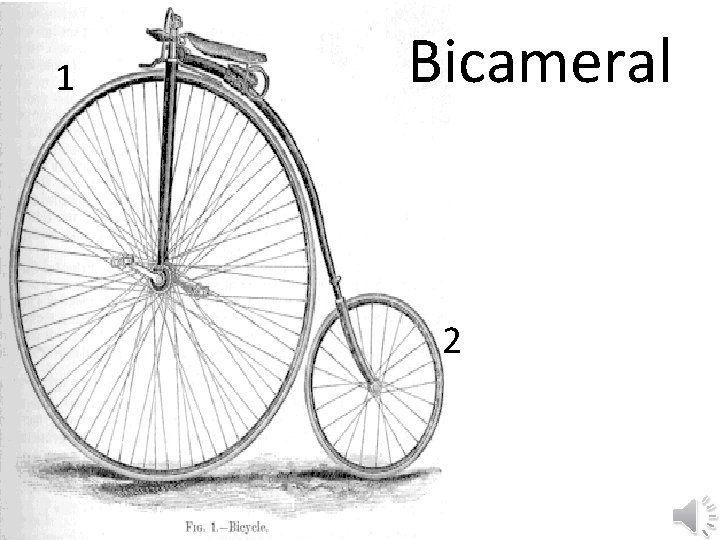
1 Bicameral 2
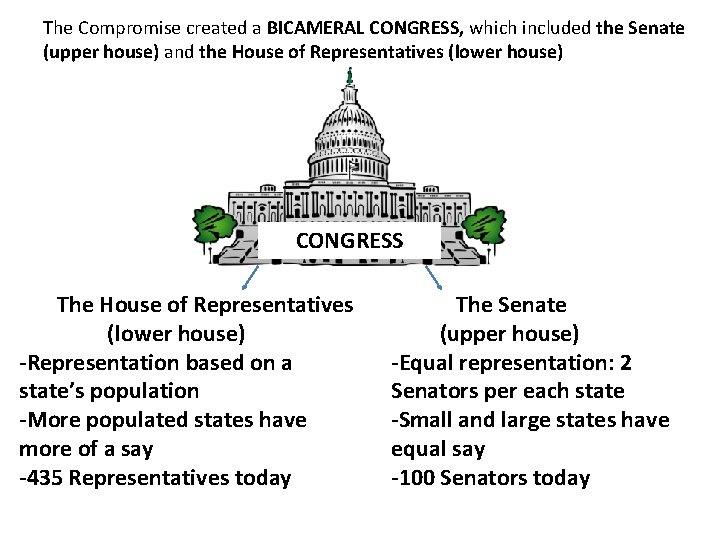
The Compromise created a BICAMERAL CONGRESS, which included the Senate (upper house) and the House of Representatives (lower house) CONGRESS The House of Representatives (lower house) -Representation based on a state’s population -More populated states have more of a say -435 Representatives today The Senate (upper house) -Equal representation: 2 Senators per each state -Small and large states have equal say -100 Senators today
THE CENSUS • The Compromise also included the idea of a Census, or a population count. • Every 10 years (always ending in a 0), the U. S. counts the population in the country and each state • This is determine a State’s REPRESENTATION IN CONGRESS
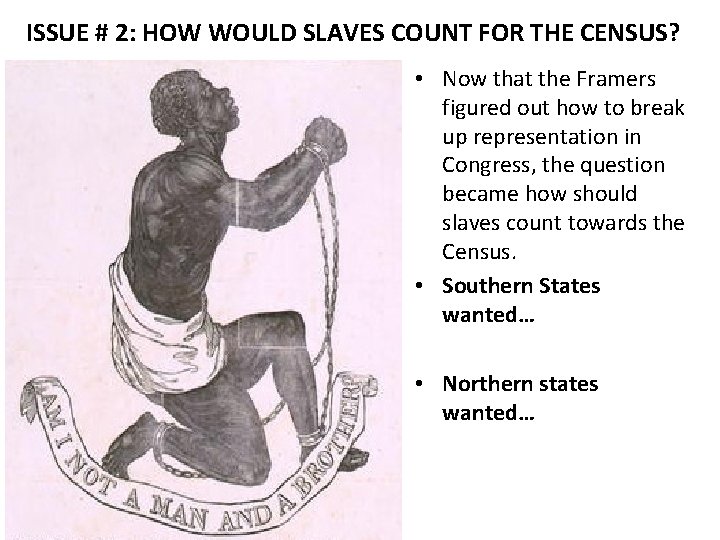
ISSUE # 2: HOW WOULD SLAVES COUNT FOR THE CENSUS? • Now that the Framers figured out how to break up representation in Congress, the question became how should slaves count towards the Census. • Southern States wanted… • Northern states wanted…
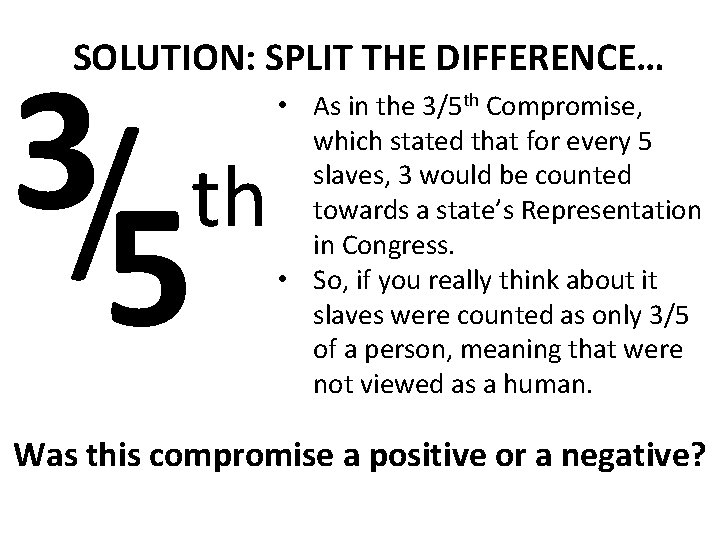
SOLUTION: SPLIT THE DIFFERENCE… 3/ th 5 • As in the 3/5 th Compromise, which stated that for every 5 slaves, 3 would be counted towards a state’s Representation in Congress. • So, if you really think about it slaves were counted as only 3/5 of a person, meaning that were not viewed as a human. Was this compromise a positive or a negative?
Other issues solved at the Constitutional Convention: Electing the President… Because the Framers did not trust he judgement of the common American, the electoral college was set up to elect the President (more on that later)
Congress could tax IMPORTS, but not EXPORTS. This process is known as a tariff, or a tax on imported goods. Also, the Federal Government would control trading between states and other countries.
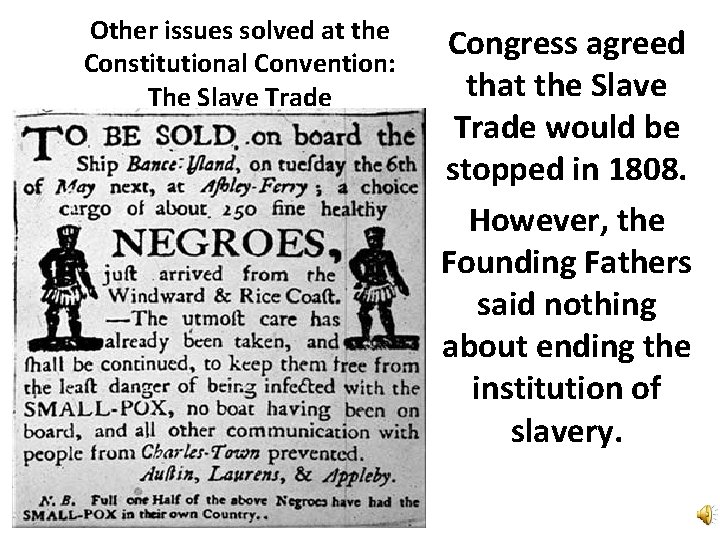
Other issues solved at the Constitutional Convention: The Slave Trade Congress agreed that the Slave Trade would be stopped in 1808. However, the Founding Fathers said nothing about ending the institution of slavery.
THE CONSTITUTION • Signed on Sept. 17, 1787 • Needed to be Ratified • Federalists v. Anti. Federalists (Federalist Papers) • Ratified on April 30, 1787 – Agreed to add the Bill of Rights – Where was the first capital?
We the People of the United States, in Order to form a more perfect Union, establish Justice, insure domestic Tranquility, provide for the common defense, promote the general Welfare, and secure the Blessings of Liberty to ourselves and our Posterity, do ordain and establish this Constitution for the United States of America. - to keep our country stronger and more united; - to make sure everybody obeys the law and is treated fairly; - to ensure peace within our borders; - to defend ourselves from our enemies; - to ensure that people are generally happy and prosperous; - and to ensure freedom for ourselves and those after us.