
Volcanoes and Earthquakes Warm Up Why do you

- Slides: 15
Volcanoes and Earthquakes!
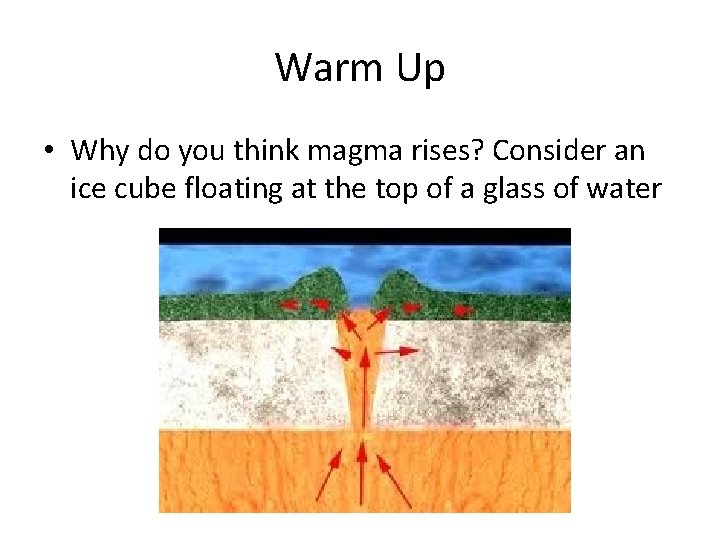
Warm Up • Why do you think magma rises? Consider an ice cube floating at the top of a glass of water
• Objective: – SWBAT • Describe at least two of the three types of volcanoes and how they form • Agenda: – Weather – Guided Notes: 3 Types of Volcanoes – Volcano Articles – Raging Planet: Volcanoes – Closing • Homework: – Finish Article Questions and transfer answers to Chart
Weather
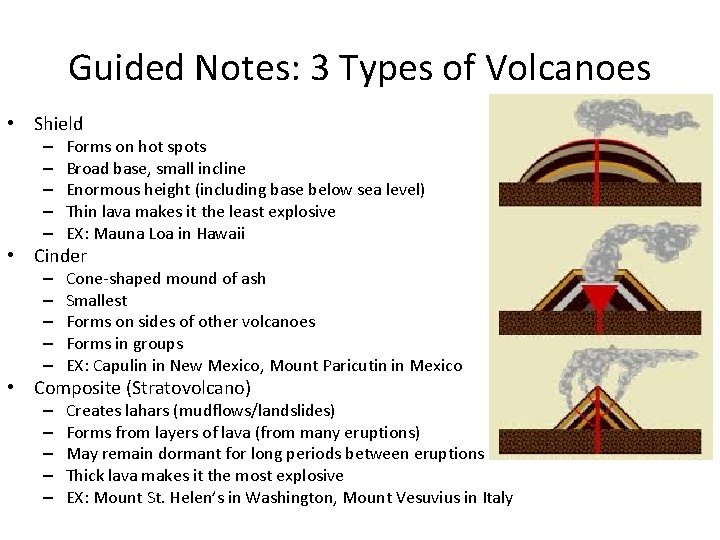
Guided Notes: 3 Types of Volcanoes • Shield – – – Forms on hot spots Broad base, small incline Enormous height (including base below sea level) Thin lava makes it the least explosive EX: Mauna Loa in Hawaii • Cinder – – – Cone-shaped mound of ash Smallest Forms on sides of other volcanoes Forms in groups EX: Capulin in New Mexico, Mount Paricutin in Mexico • Composite (Stratovolcano) – – – Creates lahars (mudflows/landslides) Forms from layers of lava (from many eruptions) May remain dormant for long periods between eruptions Thick lava makes it the most explosive EX: Mount St. Helen’s in Washington, Mount Vesuvius in Italy
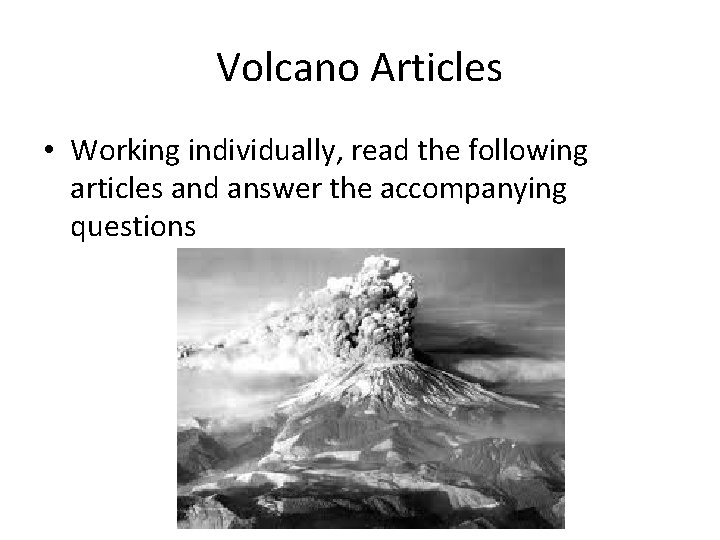
Volcano Articles • Working individually, read the following articles and answer the accompanying questions
Raging Planet: Volcanoes • While watching the Raging Planet: Volcanoes, answer the questions on your worksheet
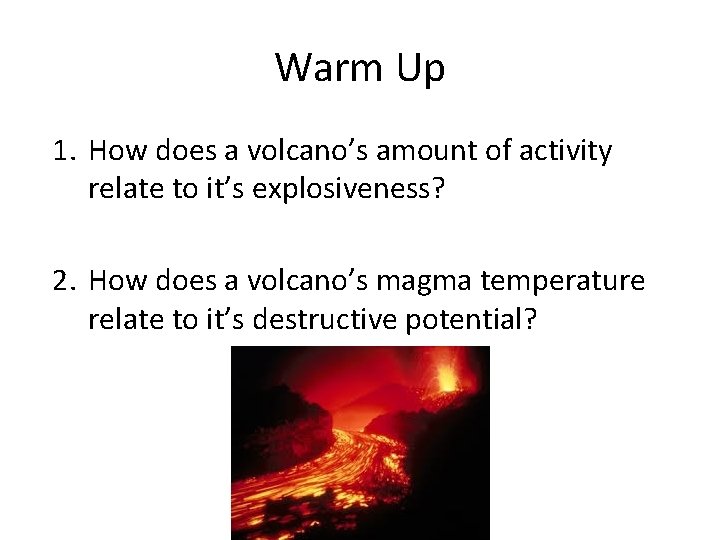
Warm Up 1. How does a volcano’s amount of activity relate to it’s explosiveness? 2. How does a volcano’s magma temperature relate to it’s destructive potential?
• Objective: – SWBAT • Explain why scientist’s study seismic waves • Agenda: – Earthquake Survival – Notes: Seismic Waves – Slinky Demonstration – If time: Finish Raging Planet: Volcanoes – Closing • Homework: – Extraterrestrial Volcanoes
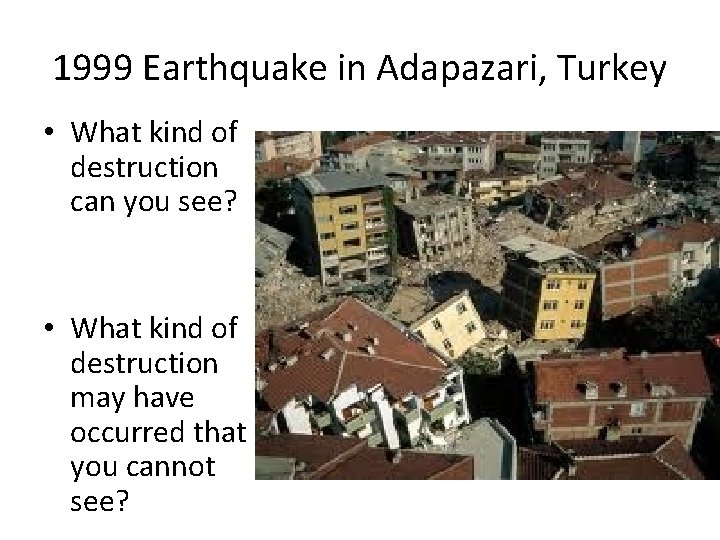
1999 Earthquake in Adapazari, Turkey • What kind of destruction can you see? • What kind of destruction may have occurred that you cannot see?
Earthquake Survival Activity • Ms. Mc. Gowan will split you into groups of 4 • In your groups, take turns reading the Earthquake Survival Script • Then, work together to determine what actions you would take post-earthquake
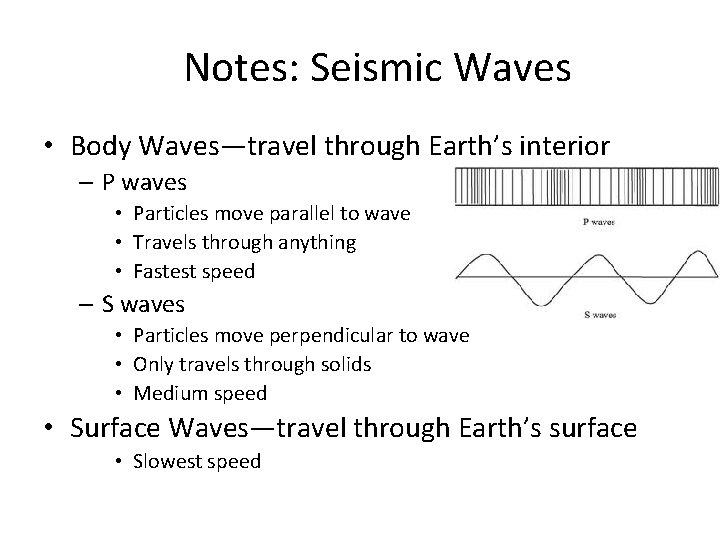
Notes: Seismic Waves • Body Waves—travel through Earth’s interior – P waves • Particles move parallel to wave • Travels through anything • Fastest speed – S waves • Particles move perpendicular to wave • Only travels through solids • Medium speed • Surface Waves—travel through Earth’s surface • Slowest speed
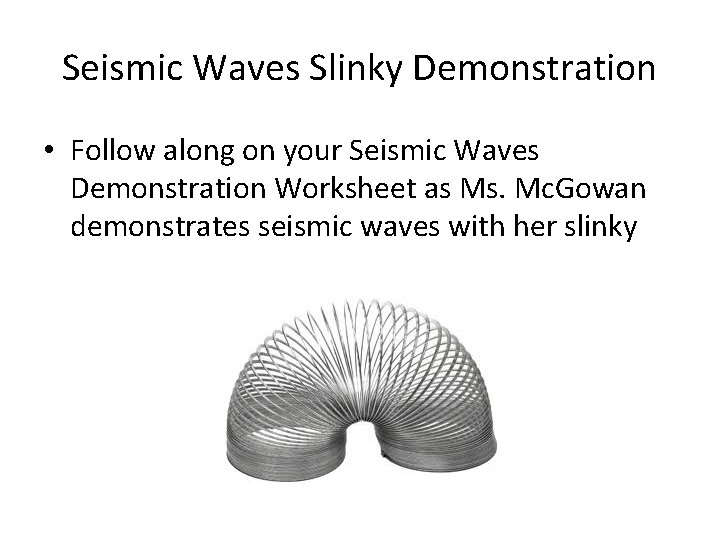
Seismic Waves Slinky Demonstration • Follow along on your Seismic Waves Demonstration Worksheet as Ms. Mc. Gowan demonstrates seismic waves with her slinky
Raging Planet: Volcano • Take out your Raging Planet: Volcano Questions Sheet • Answer your questions as we finish watching the video • Follow along as Ms. Mc. Gowan reviews the answers
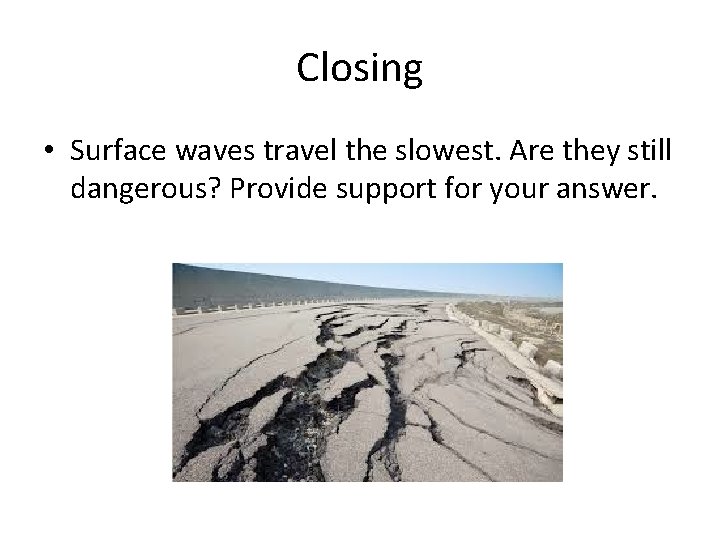
Closing • Surface waves travel the slowest. Are they still dangerous? Provide support for your answer.