The Reunification of Japan Chapter 20 Lesson 2


- Slides: 7
The Reunification of Japan Chapter 20 Lesson 2
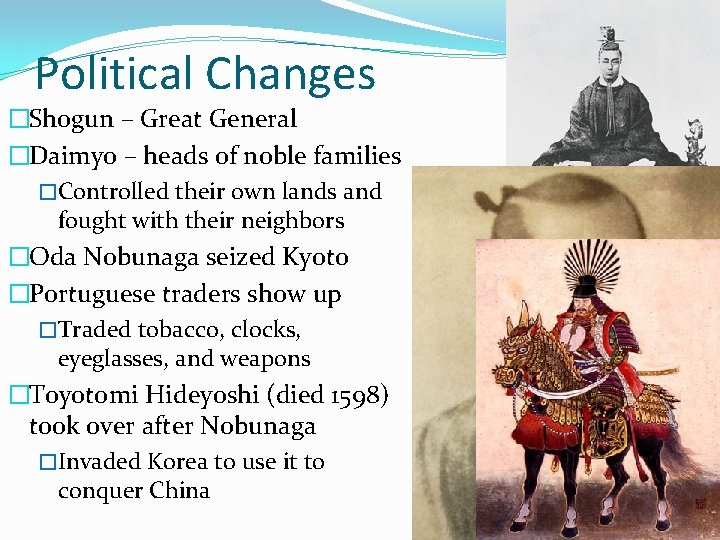
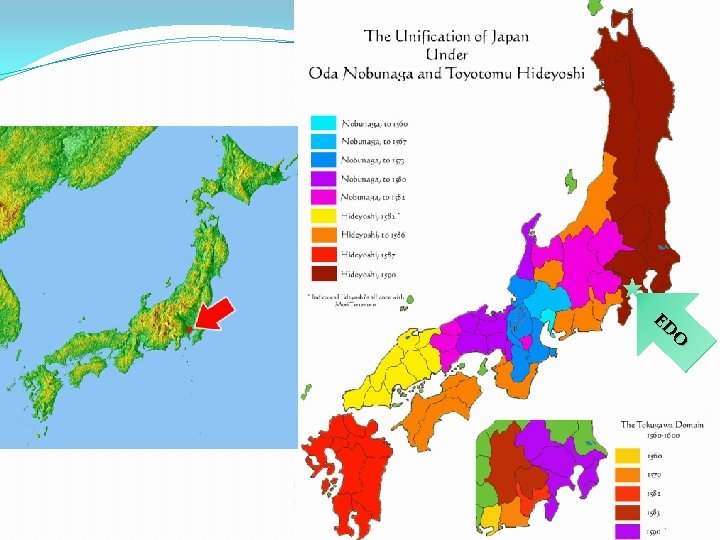
Political Changes �Shogun – Great General �Daimyo – heads of noble families �Controlled their own lands and fought with their neighbors �Oda Nobunaga seized Kyoto �Portuguese traders show up �Traded tobacco, clocks, eyeglasses, and weapons �Toyotomi Hideyoshi (died 1598) took over after Nobunaga �Invaded Korea to use it to conquer China
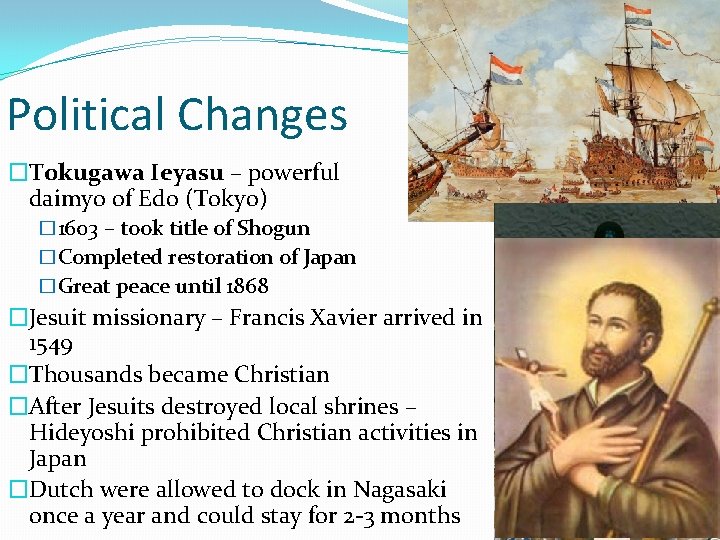
Political Changes �Tokugawa Ieyasu – powerful daimyo of Edo (Tokyo) � 1603 – took title of Shogun �Completed restoration of Japan �Great peace until 1868 �Jesuit missionary – Francis Xavier arrived in 1549 �Thousands became Christian �After Jesuits destroyed local shrines – Hideyoshi prohibited Christian activities in Japan �Dutch were allowed to dock in Nagasaki once a year and could stay for 2 -3 months
Tokugawa Era �Trade and industry flourished � 250 separate territories called Hans (domains) �Kept taxes �How do you keep 250 leaders in check? �Hostage System � 2 residences � 1 in home land 1 in Edo �Family forced to stay in Edo while daimyo was away �Why is this effective?
ED O
Society and Art �Classes �Emperor and imperial court families �Warrior – Shogun, daimyo, and samurai, ronin �Peasants - farmers �Artisans – craftspeople sword makers and carpenters �Merchants – distributed basic goods �Kabuki �Theater – dramas what dealt with the world of teahouses and dance halls