The Four Waves of Human Rights Prof Mark









- Slides: 35
The Four Waves of Human Rights Prof. Mark E. Wojcik The John Marshall Law School Chicago USA
The Four Waves of Human Rights 1. Recognition 2. Definition and Codification 3. Enforcement and Remedies 4. Prevention 2
1. Recognition 3
Recognition How are human rights recognized? Where do they come from? Who (if anyone) grants human rights? 4
Recognition: Three Generations In 1979, Prof. Karel Vašák, First Secretary. General of the International Institute of Human Rights in Strasbourg, proposed dividing human rights into “three generations. ” 5
Recognition: First Generation First-generation human rights are civil and political rights. They are sometimes called “negative” rights. They prevent a state from interfering with rights of individuals. 6
Examples Freedom of speech Freedom of the press Freedom of assembly Freedom of religion Right to a fair trial Right to vote 7
Where Found? Various national and international documents: Magna Carta (1215) (England) Claim of Right Act (1689) (Scotland) Bill of Rights (1689) (England) Bill of Rights (1789) (U. S. Constitution) Universal Declaration of Human Rights articles 3 to 21 (1948) (“UDHR”) International Covenant on Civil and Political Rights (1966)(“ICCPR”) 8
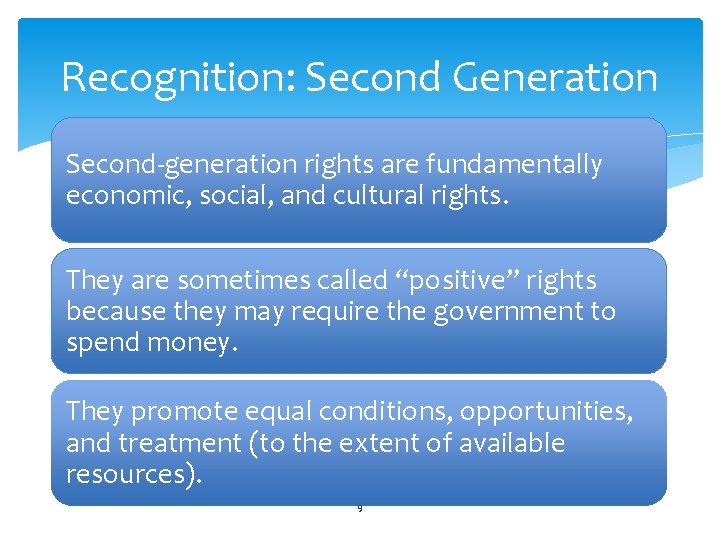
Recognition: Second Generation Second-generation rights are fundamentally economic, social, and cultural rights. They are sometimes called “positive” rights because they may require the government to spend money. They promote equal conditions, opportunities, and treatment (to the extent of available resources). 9
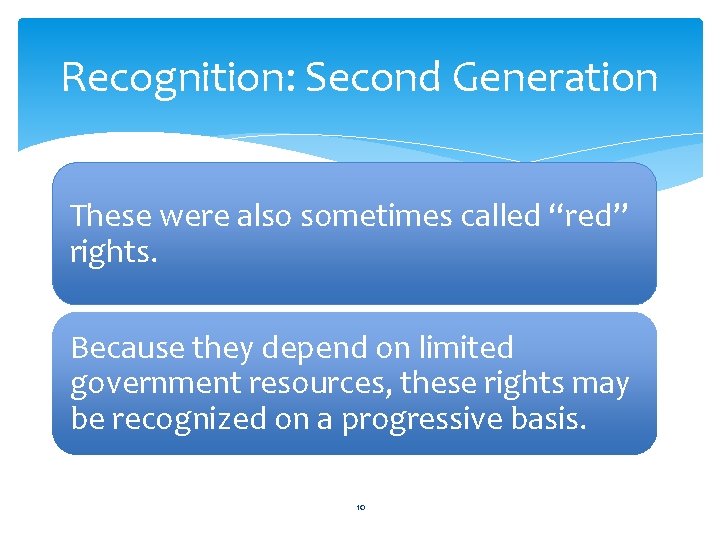
Recognition: Second Generation These were also sometimes called “red” rights. Because they depend on limited government resources, these rights may be recognized on a progressive basis. 10
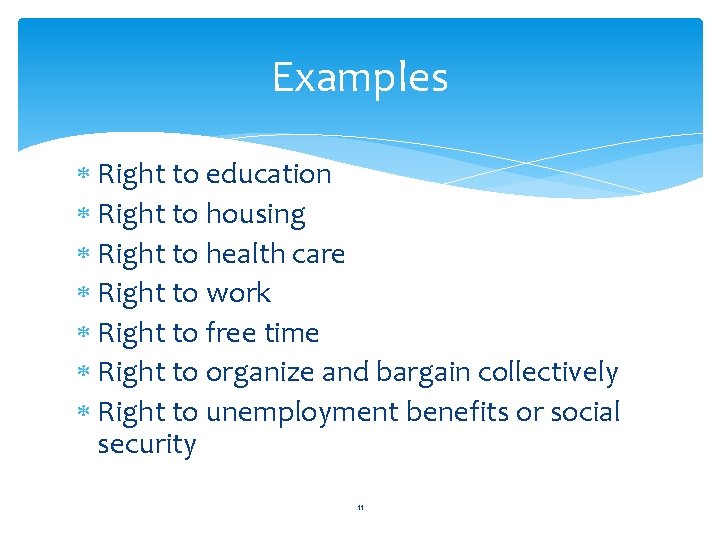
Examples Right to education Right to housing Right to health care Right to work Right to free time Right to organize and bargain collectively Right to unemployment benefits or social security 11
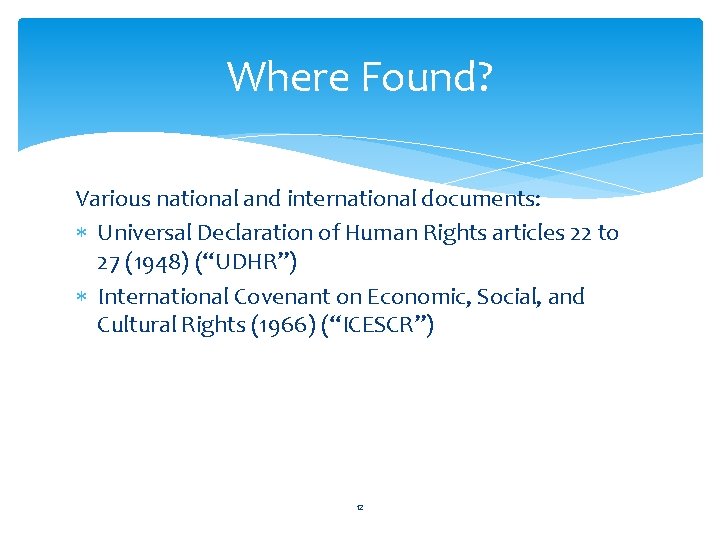
Where Found? Various national and international documents: Universal Declaration of Human Rights articles 22 to 27 (1948) (“UDHR”) International Covenant on Economic, Social, and Cultural Rights (1966) (“ICESCR”) 12
Recognition: Third Generation Third-generation human rights go beyond the mere civil and social. They are aspirational. They are sometimes called “green rights. ” 13
Examples Right to economic and social development Right to a healthy environment Right to natural resources Right to communicate Right to participate in cultural heritage Rights to intergenerational equity and sustainability 14
Where Found? Third-generation human rights can be found in many progressive international law documents: Stockholm Declaration of the U. N. Conference on the Human Environment (1972) Rio Declaration on Environment and Development (1992) Other “soft law” documents 15
2. Definition and Codification 16
Who is Bound by a Definition? The power to define is the power to control. • Which definitions are binding? • Which definitions are persuasive? 17
Definition and Codification The protection of human rights requires precise terms: (1) to know what rights are protected; and (2) to know what defenses are allowed to claimed violations. 18
Who Has the Right to Define? A national court? A national legislature (by statutes or a constitution)? A group of nations (by treaty)? An international tribunal? Civil society (world opinion)? Religious institutions? Four law professors sitting together on a panel? A room full of European law students? 19
The Future of European Human Rights Law 20
Examples 21
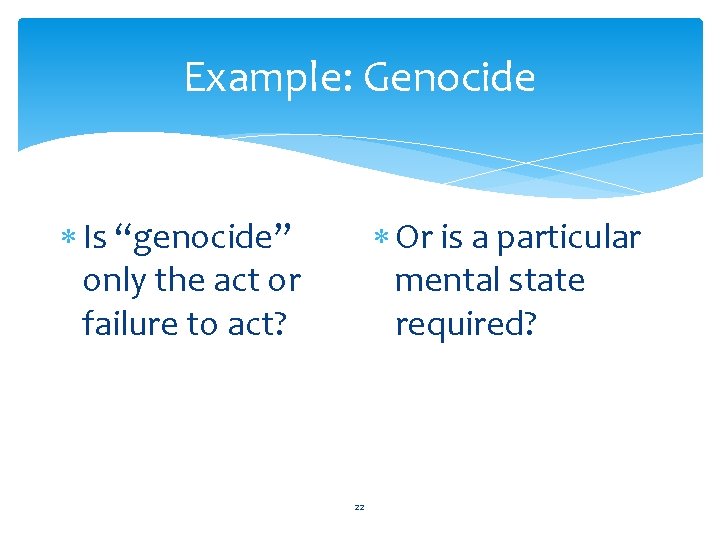
Example: Genocide Is “genocide” only the act or failure to act? Or is a particular mental state required? 22
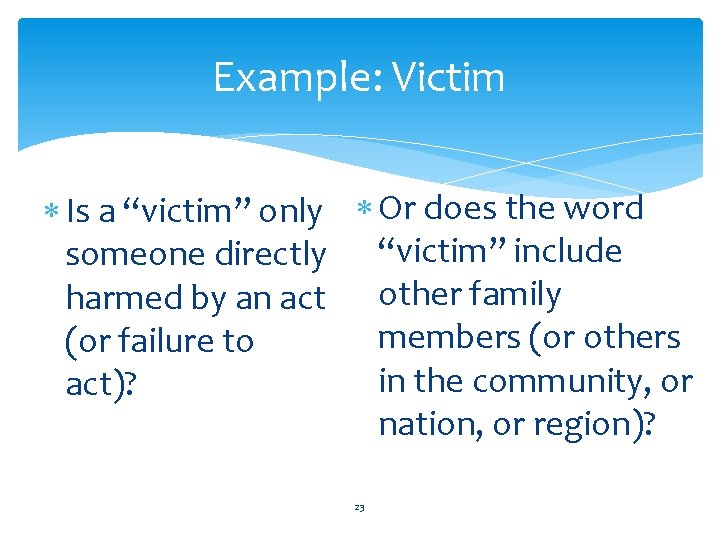
Example: Victim Is a “victim” only Or does the word someone directly “victim” include harmed by an act other family members (or others (or failure to in the community, or act)? nation, or region)? 23
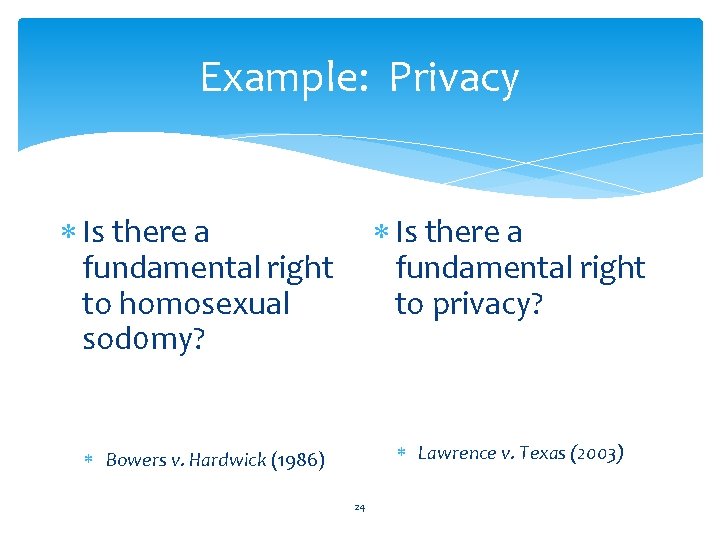
Example: Privacy Is there a fundamental right to homosexual to privacy? sod 0 my? Lawrence v. Texas (2003) Bowers v. Hardwick (1986) 24
Example: Marriage Is there a fundamental right to marriage? Is there a fundamental right to same-sex marriage? 25
3. Enforcement and Remedies 26
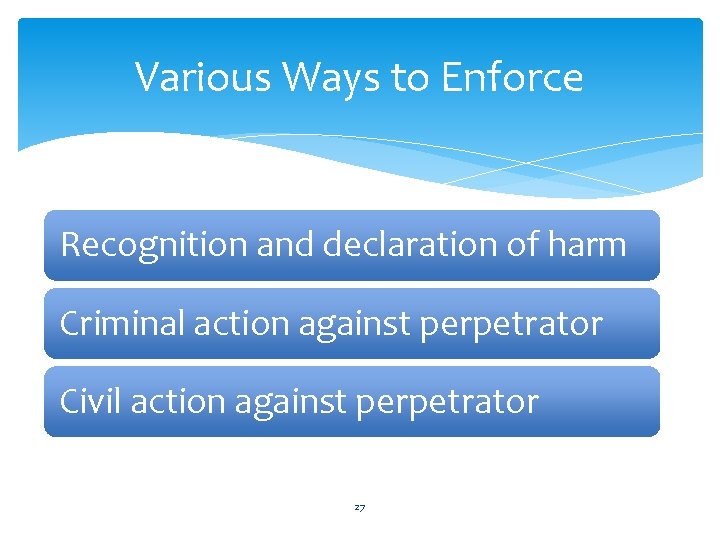
Various Ways to Enforce Recognition and declaration of harm Criminal action against perpetrator Civil action against perpetrator 27
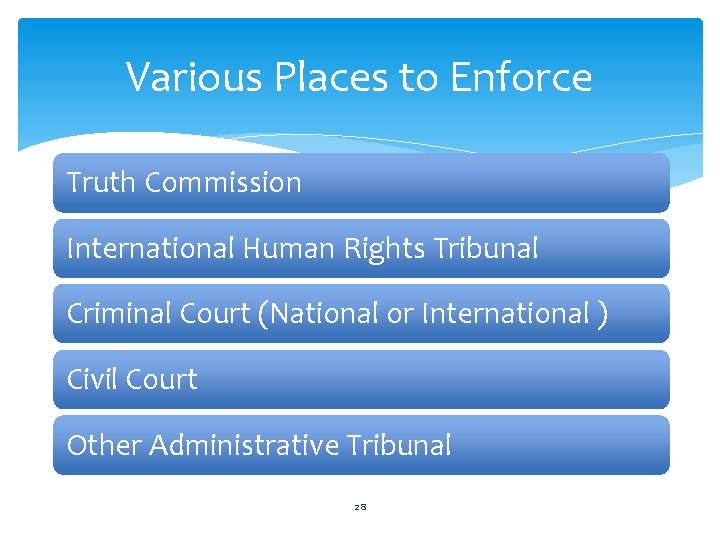
Various Places to Enforce Truth Commission International Human Rights Tribunal Criminal Court (National or International ) Civil Court Other Administrative Tribunal 28
Various Places to Enforce Human rights can also be enforced in places other than courts • U. N. Resolutions • Legislative acts • Grant of asylum • Recognition by civil society 29
Various Remedies Declaration Injunction Imprisonment and Fines Money Damages 30
4. Prevention 31
Prevention The best “solution” for human rights violations is prevention. 32
Prevention Legislation Education Mediation Protection 33
Comments and Questions?
The Four Waves of Human Rights Prof. Mark E. Wojcik The John Marshall Law School 315 S. Plymouth Court Chicago, IL USA +1 -312 -987 -2391 intlawprof@gmail. com