The Effective Use of Tungsten as a Shielding
- Slides: 26
The Effective Use of Tungsten as a Shielding Material in Nuclear Applications Presenter: Kenneth Ohr Authors: Kenneth Ohr Radiological Engineering Manager - Quad Cities Robert Thompson, Jr. Radiological Engineer - Quad Cities Don Barker Radiation Protection Manager - Quad Cities
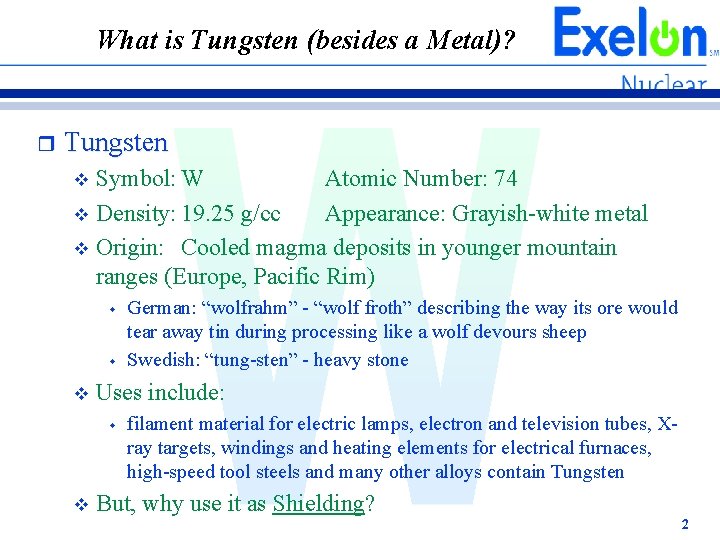
What is Tungsten (besides a Metal)? r Tungsten Symbol: W Atomic Number: 74 v Density: 19. 25 g/cc Appearance: Grayish-white metal v Origin: Cooled magma deposits in younger mountain ranges (Europe, Pacific Rim) v w w v Uses include: w v German: “wolfrahm” - “wolf froth” describing the way its ore would tear away tin during processing like a wolf devours sheep Swedish: “tung-sten” - heavy stone filament material for electric lamps, electron and television tubes, Xray targets, windings and heating elements for electrical furnaces, high-speed tool steels and many other alloys contain Tungsten But, why use it as Shielding? 2
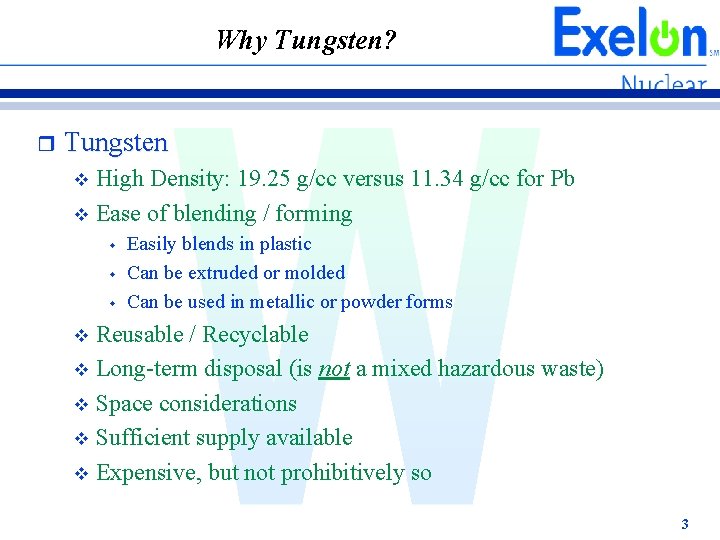
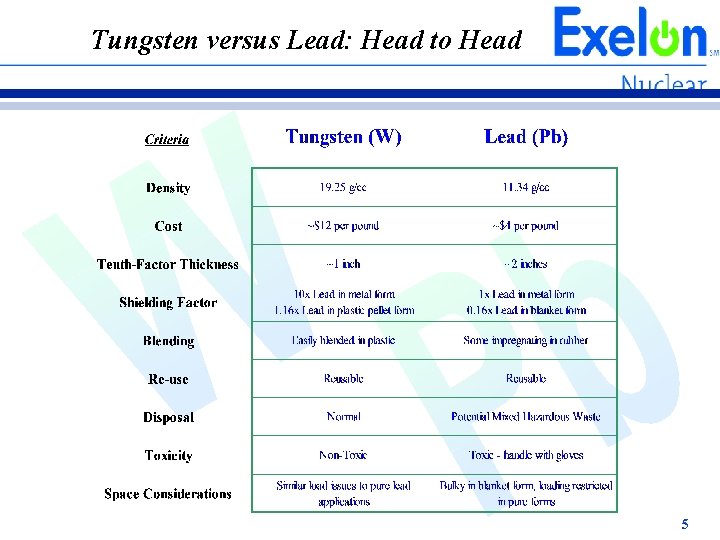
Why Tungsten? r Tungsten High Density: 19. 25 g/cc versus 11. 34 g/cc for Pb v Ease of blending / forming v w w w Easily blends in plastic Can be extruded or molded Can be used in metallic or powder forms Reusable / Recyclable v Long-term disposal (is not a mixed hazardous waste) v Space considerations v Sufficient supply available v Expensive, but not prohibitively so v 3
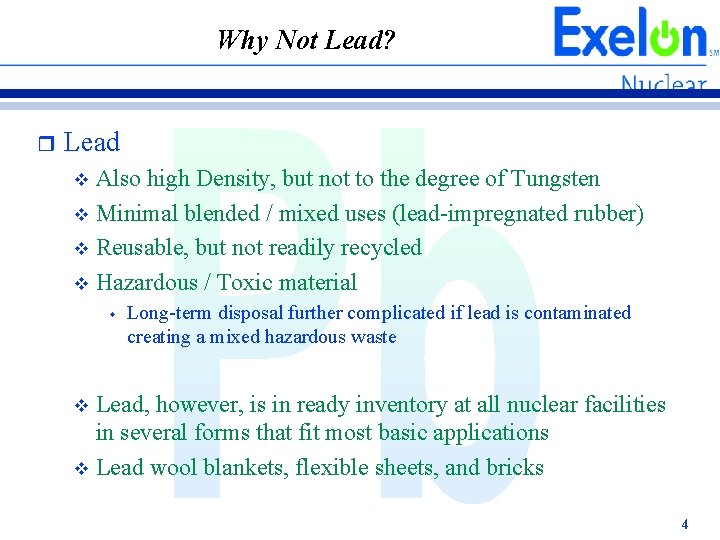
Why Not Lead? r Lead Also high Density, but not to the degree of Tungsten v Minimal blended / mixed uses (lead-impregnated rubber) v Reusable, but not readily recycled v Hazardous / Toxic material v w Long-term disposal further complicated if lead is contaminated creating a mixed hazardous waste Lead, however, is in ready inventory at all nuclear facilities in several forms that fit most basic applications v Lead wool blankets, flexible sheets, and bricks v 4
Tungsten versus Lead: Head to Head 5
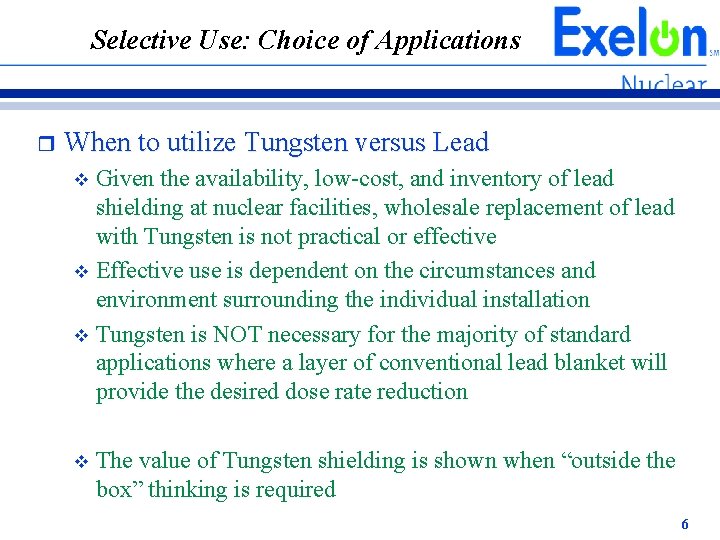
Selective Use: Choice of Applications r When to utilize Tungsten versus Lead Given the availability, low-cost, and inventory of lead shielding at nuclear facilities, wholesale replacement of lead with Tungsten is not practical or effective v Effective use is dependent on the circumstances and environment surrounding the individual installation v Tungsten is NOT necessary for the majority of standard applications where a layer of conventional lead blanket will provide the desired dose rate reduction v v The value of Tungsten shielding is shown when “outside the box” thinking is required 6
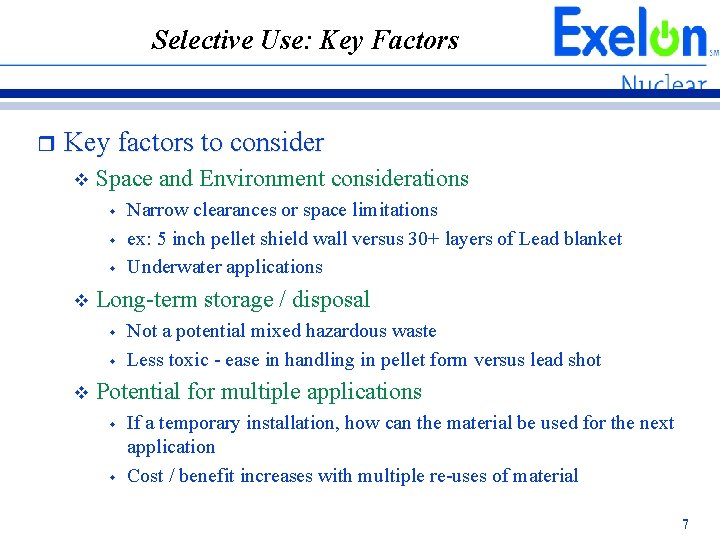
Selective Use: Key Factors r Key factors to consider v Space and Environment considerations w w w v Long-term storage / disposal w w v Narrow clearances or space limitations ex: 5 inch pellet shield wall versus 30+ layers of Lead blanket Underwater applications Not a potential mixed hazardous waste Less toxic - ease in handling in pellet form versus lead shot Potential for multiple applications w w If a temporary installation, how can the material be used for the next application Cost / benefit increases with multiple re-uses of material 7
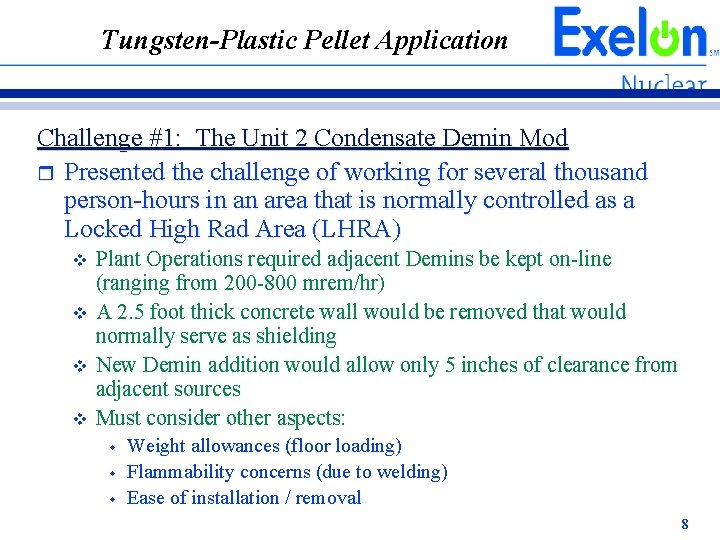
Tungsten-Plastic Pellet Application Challenge #1: The Unit 2 Condensate Demin Mod r Presented the challenge of working for several thousand person-hours in an area that is normally controlled as a Locked High Rad Area (LHRA) v v Plant Operations required adjacent Demins be kept on-line (ranging from 200 -800 mrem/hr) A 2. 5 foot thick concrete wall would be removed that would normally serve as shielding New Demin addition would allow only 5 inches of clearance from adjacent sources Must consider other aspects: w w w Weight allowances (floor loading) Flammability concerns (due to welding) Ease of installation / removal 8
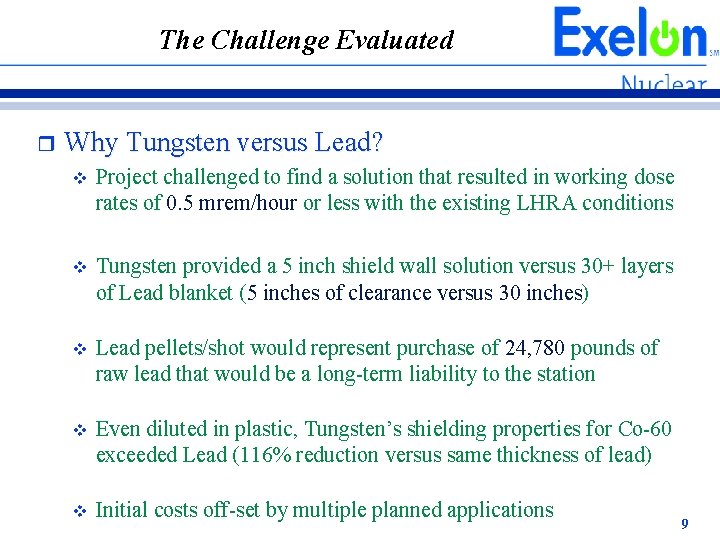
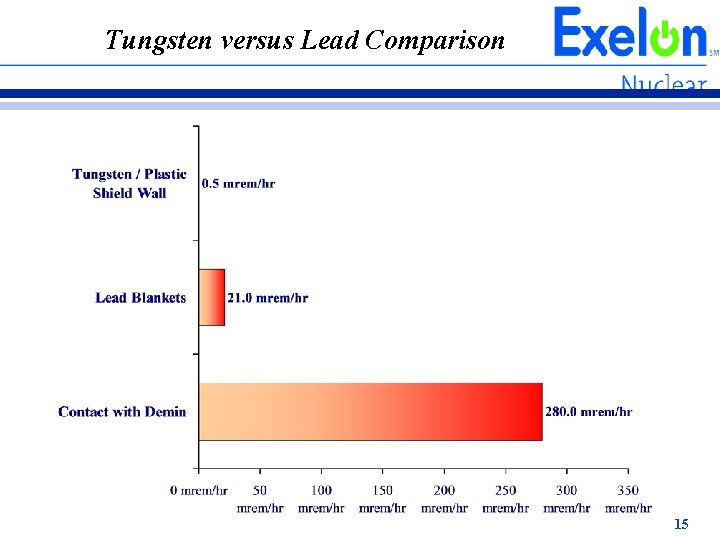
The Challenge Evaluated r Why Tungsten versus Lead? v Project challenged to find a solution that resulted in working dose rates of 0. 5 mrem/hour or less with the existing LHRA conditions v Tungsten provided a 5 inch shield wall solution versus 30+ layers of Lead blanket (5 inches of clearance versus 30 inches) v Lead pellets/shot would represent purchase of 24, 780 pounds of raw lead that would be a long-term liability to the station v Even diluted in plastic, Tungsten’s shielding properties for Co-60 exceeded Lead (116% reduction versus same thickness of lead) v Initial costs off-set by multiple planned applications 9
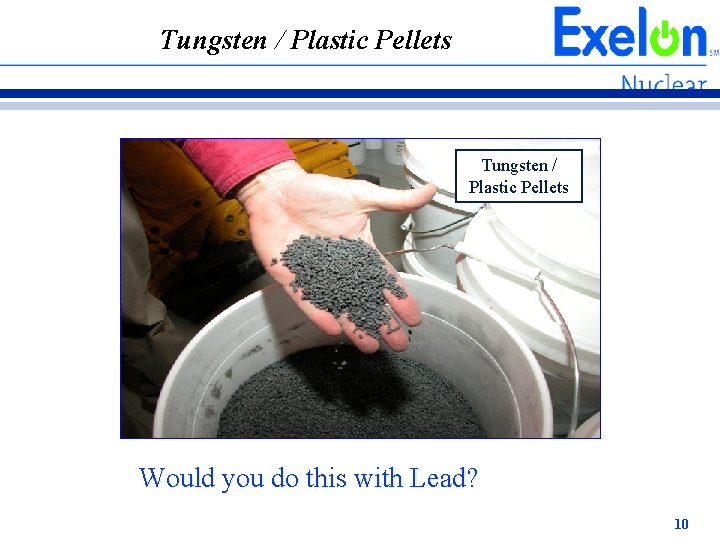
Tungsten / Plastic Pellets Would you do this with Lead? 10
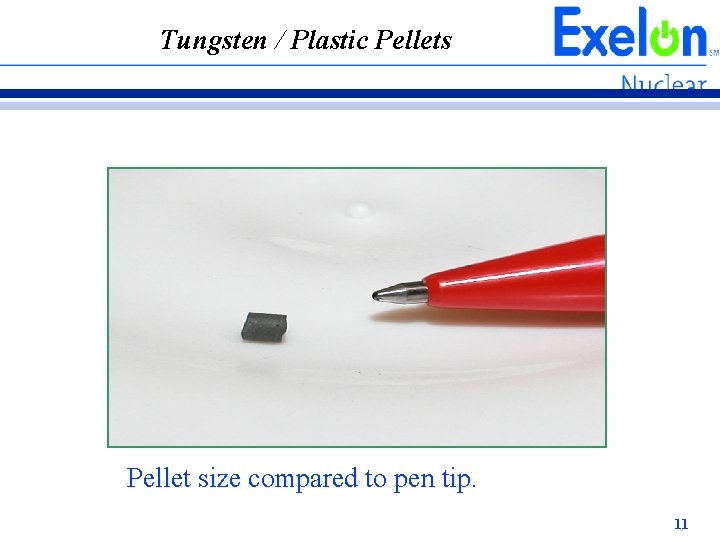
Tungsten / Plastic Pellets Pellet size compared to pen tip. 11
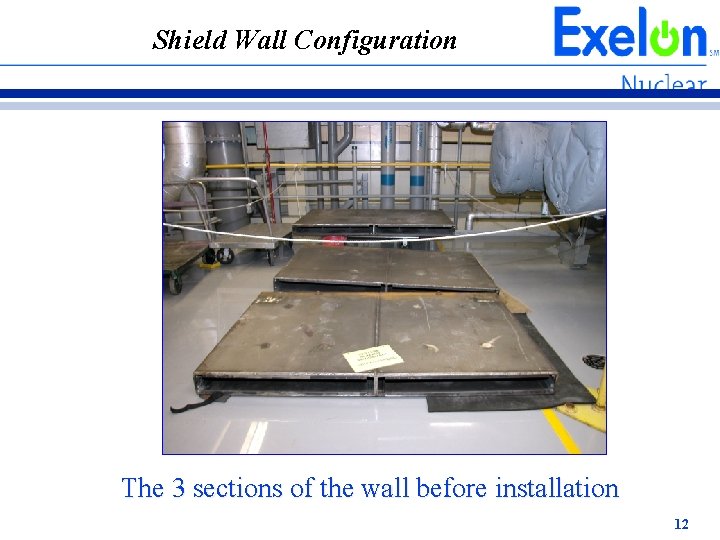
Shield Wall Configuration The 3 sections of the wall before installation 12
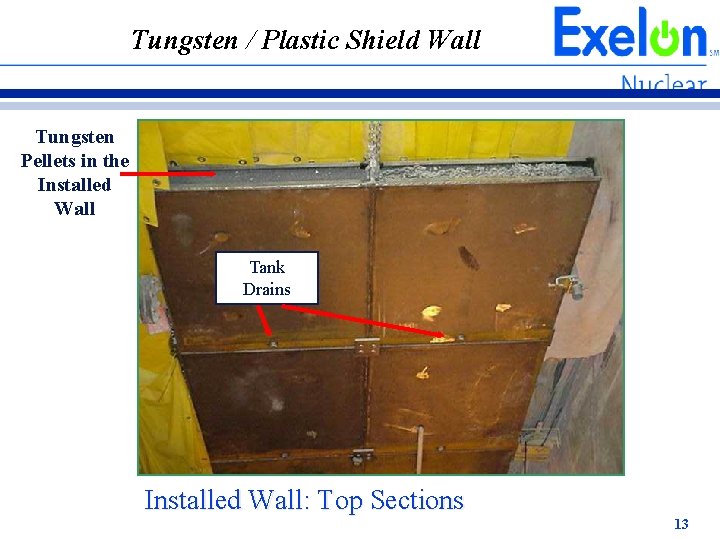
Tungsten / Plastic Shield Wall Tungsten Pellets in the Installed Wall Tank Drains Installed Wall: Top Sections 13
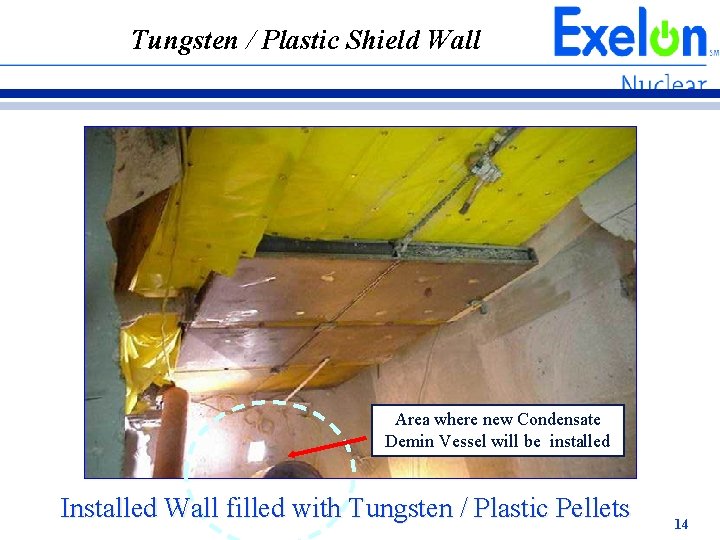
Tungsten / Plastic Shield Wall Area where new Condensate Demin Vessel will be installed Installed Wall filled with Tungsten / Plastic Pellets 14
Tungsten versus Lead Comparison 15
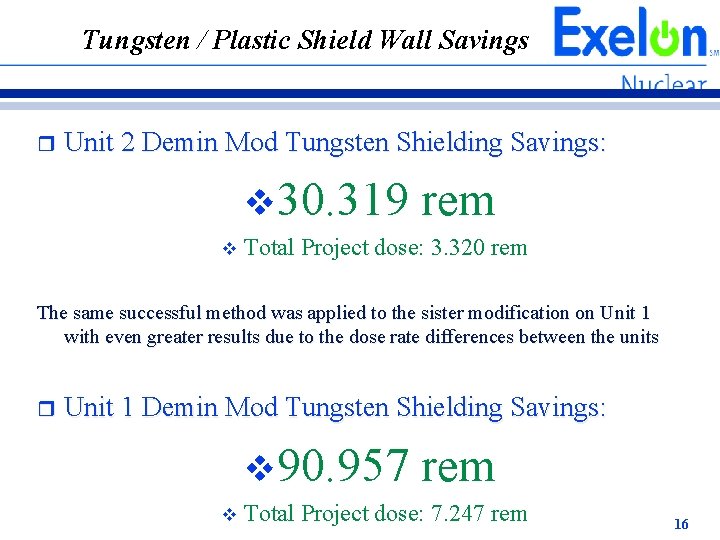
Tungsten / Plastic Shield Wall Savings r Unit 2 Demin Mod Tungsten Shielding Savings: v 30. 319 v rem Total Project dose: 3. 320 rem The same successful method was applied to the sister modification on Unit 1 with even greater results due to the dose rate differences between the units r Unit 1 Demin Mod Tungsten Shielding Savings: v 90. 957 v rem Total Project dose: 7. 247 rem 16
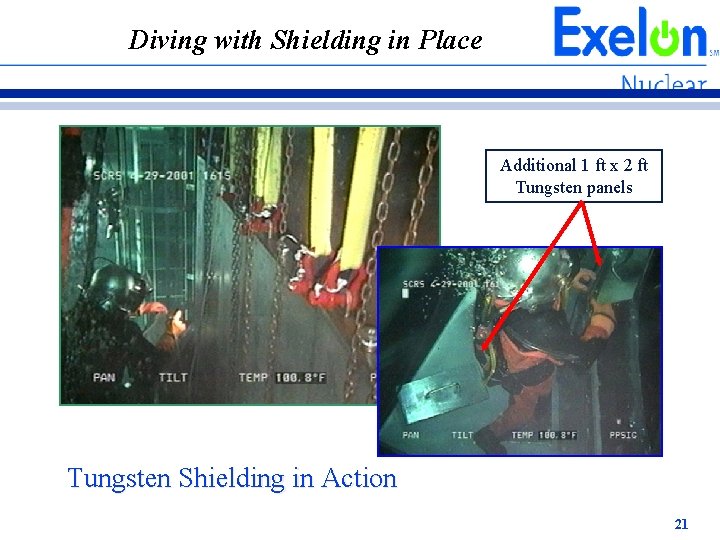
Metallic Tungsten Application Challenge #2: U 1 Steam Dryer Underwater Weld Repair r Presented the challenge of underwater welding and dive operations adjacent to the 10 rem/hour Steam Dryer v v Location of plate to be cut-out and modified had clearance of 3 inches prior to interfering with welding or requiring removal of shield plates 3 inch steel plates used for other unit provided 4. 3 factor reduction, which was insufficient for Unit 1 rad conditions Location of welding prevented remote tooling Must consider other aspects: w w w Limited dose available for skilled diver/welders combined with endof-year annual limits Solution must support modifications on three units (Quad / Dresden) Installation must not interfere with bridge operations on Refuel floor 17
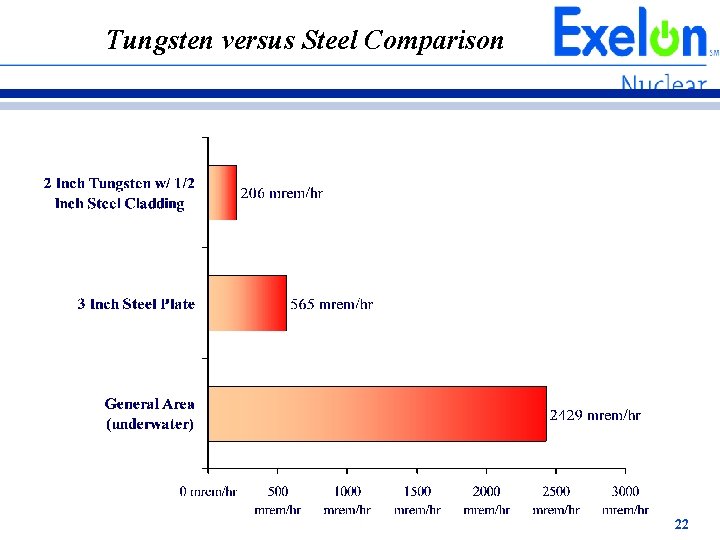
The Challenge Evaluated r Why Tungsten versus Lead? v r Plastic coated lead sheets available, but in limited thicknesses (1/8” and 1/4”) and presented a concern of water intrusion inside coating Why Tungsten versus Steel Plates? v Tungsten metal powder, encased in steel cladding, provided a reduction factor of 11. 8 in a clearance of 2. 5 inches versus a reduction factor of 4. 3 for steel plate v With limited available dose left for 2002, divers required a solution that would minimize exposure to allow completion of the project within budgeted resources / personnel 18
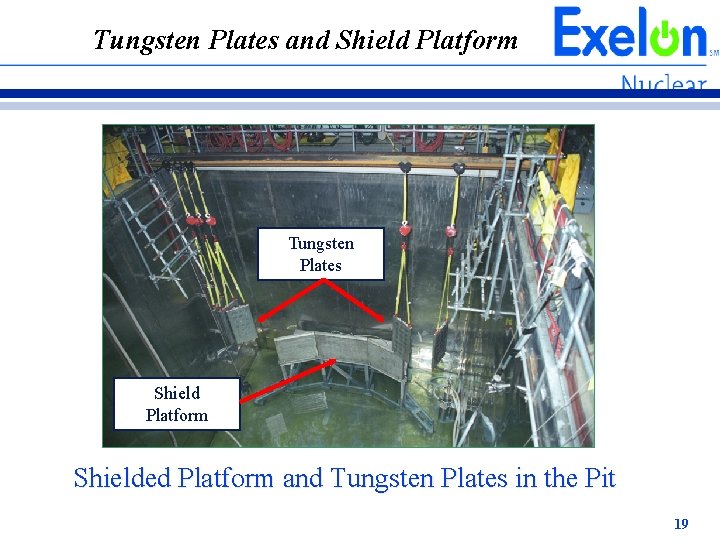
Tungsten Plates and Shield Platform Tungsten Plates Shield Platform Shielded Platform and Tungsten Plates in the Pit 19
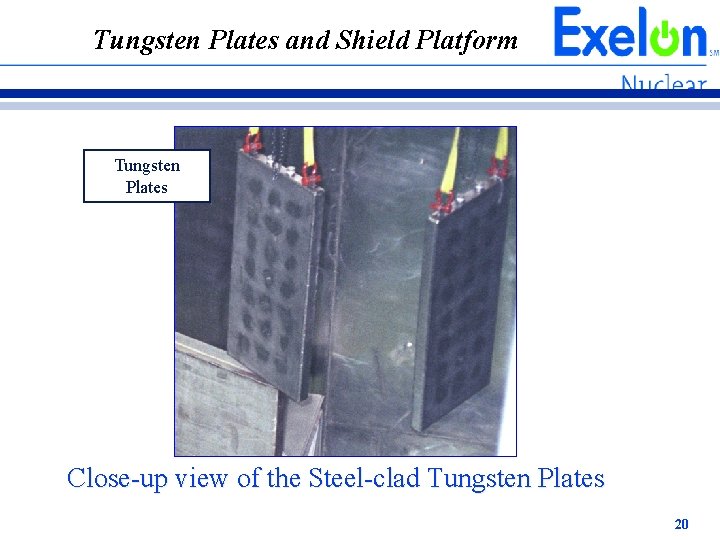
Tungsten Plates and Shield Platform Tungsten Plates Close-up view of the Steel-clad Tungsten Plates 20
Diving with Shielding in Place Additional 1 ft x 2 ft Tungsten panels Tungsten Shielding in Action 21
Tungsten versus Steel Comparison 22
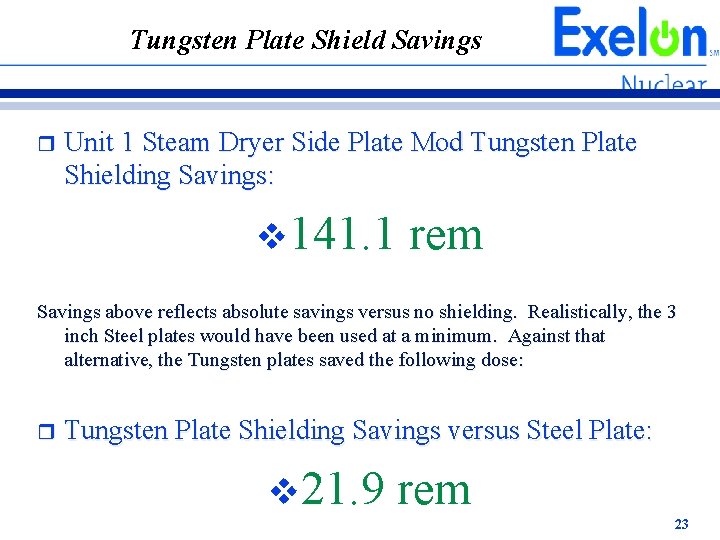
Tungsten Plate Shield Savings r Unit 1 Steam Dryer Side Plate Mod Tungsten Plate Shielding Savings: v 141. 1 rem Savings above reflects absolute savings versus no shielding. Realistically, the 3 inch Steel plates would have been used at a minimum. Against that alternative, the Tungsten plates saved the following dose: r Tungsten Plate Shielding Savings versus Steel Plate: v 21. 9 rem 23
Future Directions r r With each of the originally designed-for applications completed, the Tungsten is available for additional applications at Quad Cities and other Exelon sites These include: v v r Dresden Unit 2 Steam Dryer Mod (plates) Irradiated In-Core probe shielding (pellets) RWCU System small bore line shadow shielding (plates) Wherever a mobile shadow wall is needed Additional research is going into development of extruded Tungsten/plastic “tape” that can be easily wrapped around piping and rubber encasing of Tungsten for customformed pipe shielding 24
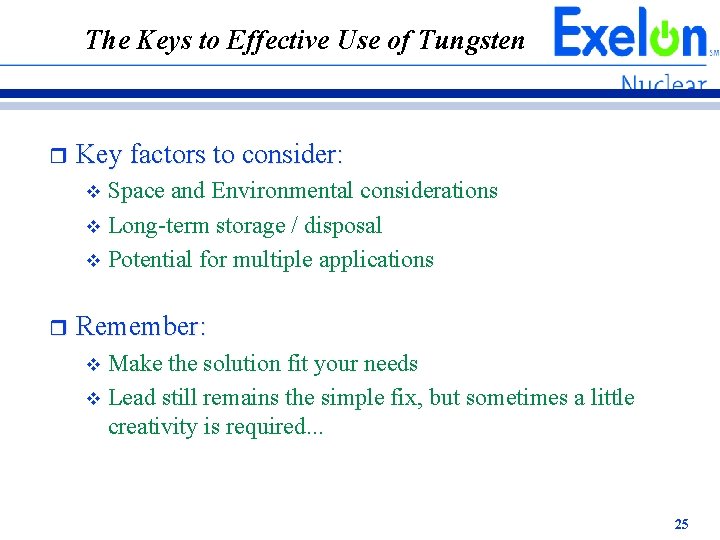
The Keys to Effective Use of Tungsten r Key factors to consider: Space and Environmental considerations v Long-term storage / disposal v Potential for multiple applications v r Remember: Make the solution fit your needs v Lead still remains the simple fix, but sometimes a little creativity is required. . . v 25
Concluding Remarks 26