The Early Years of the War A Categorizing
- Slides: 33
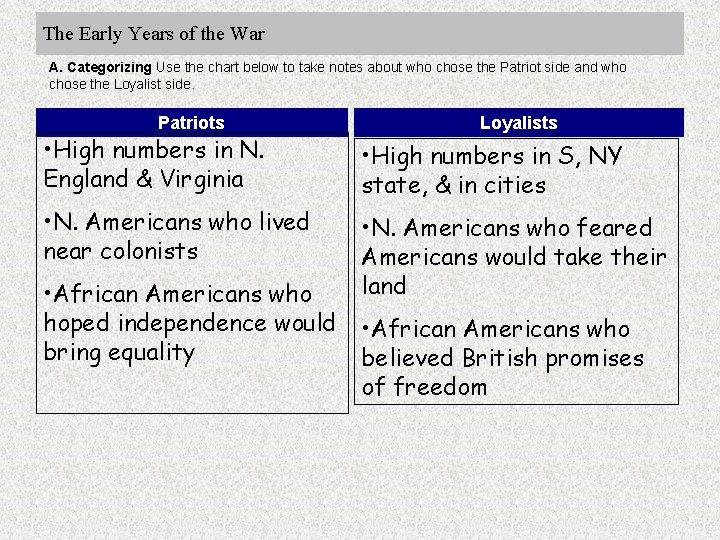
The Early Years of the War A. Categorizing Use the chart below to take notes about who chose the Patriot side and who chose the Loyalist side. Patriots Loyalists • High numbers in N. England & Virginia • High numbers in S, NY state, & in cities • N. Americans who lived near colonists • N. Americans who feared Americans would take their land • African Americans who hoped independence would bring equality • African Americans who believed British promises of freedom
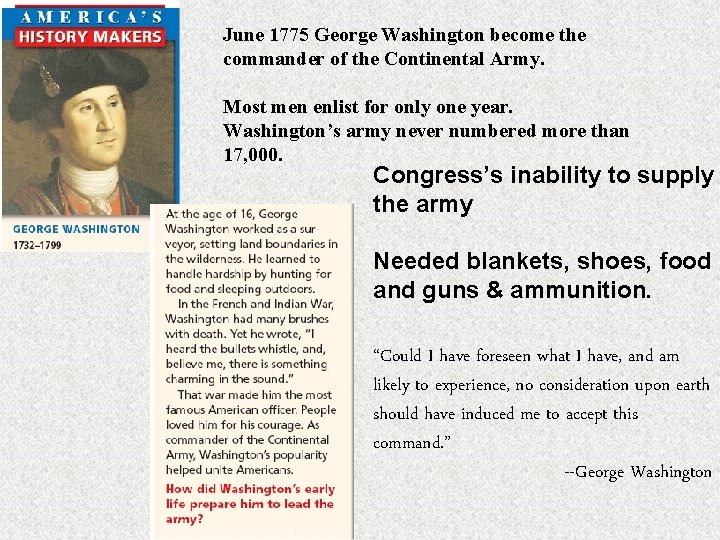
June 1775 George Washington become the commander of the Continental Army. Most men enlist for only one year. Washington’s army never numbered more than 17, 000. Congress’s inability to supply the army Needed blankets, shoes, food and guns & ammunition. “Could I have foreseen what I have, and am likely to experience, no consideration upon earth should have induced me to accept this command. ” --George Washington
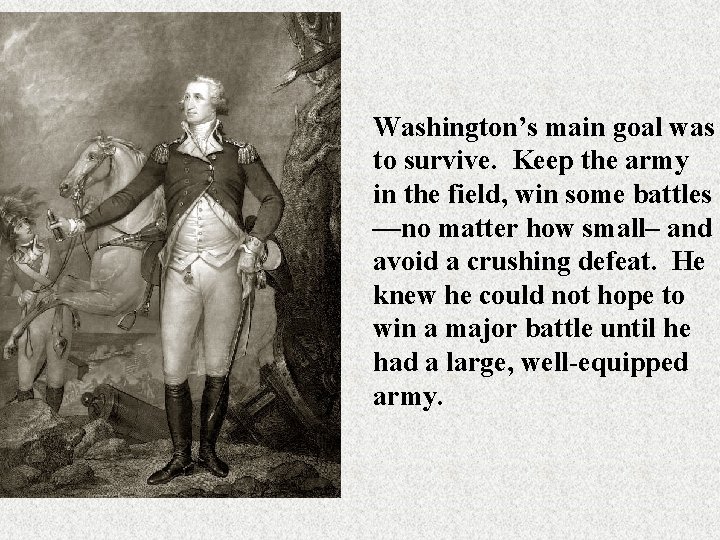
Washington’s main goal was to survive. Keep the army in the field, win some battles —no matter how small– and avoid a crushing defeat. He knew he could not hope to win a major battle until he had a large, well-equipped army.
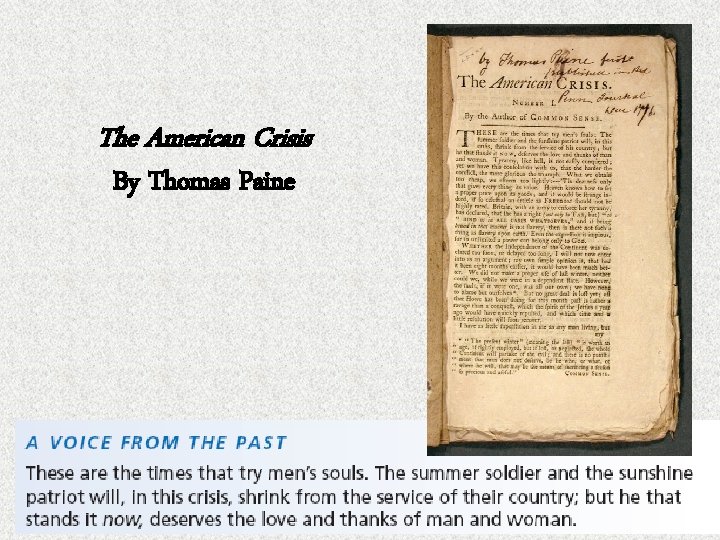
The American Crisis By Thomas Paine
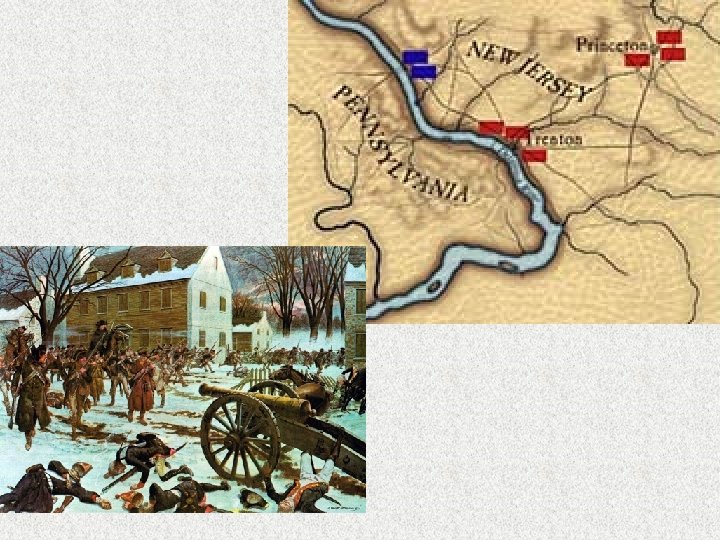
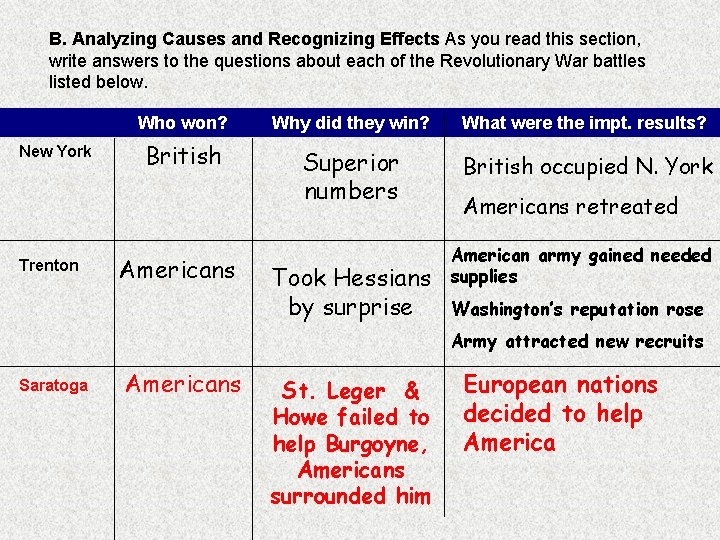
B. Analyzing Causes and Recognizing Effects As you read this section, write answers to the questions about each of the Revolutionary War battles listed below. New York Trenton Who won? Why did they win? What were the impt. results? British Superior numbers British occupied N. York Americans Took Hessians by surprise Americans retreated American army gained needed supplies Washington’s reputation rose Army attracted new recruits Saratoga Americans St. Leger & Howe failed to help Burgoyne, Americans surrounded him European nations decided to help America
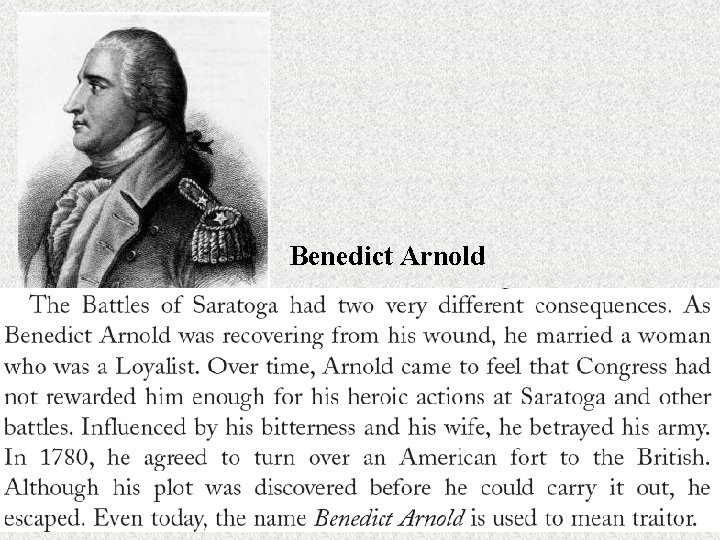
Benedict Arnold
Chapter 7, Section 2 B. Finding Main Idea Ally- The War Expands Wbk. p. 23/p. 184 Explain or define each of the following terms: a country that agrees to help another country achieve a common goal Privateer-
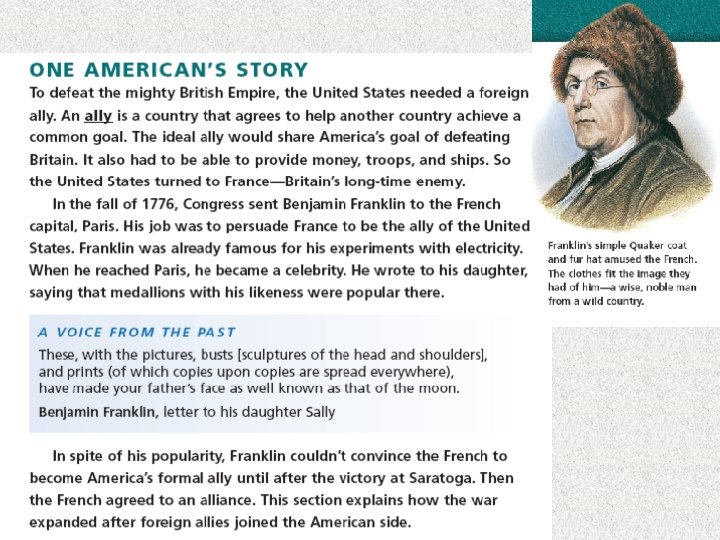
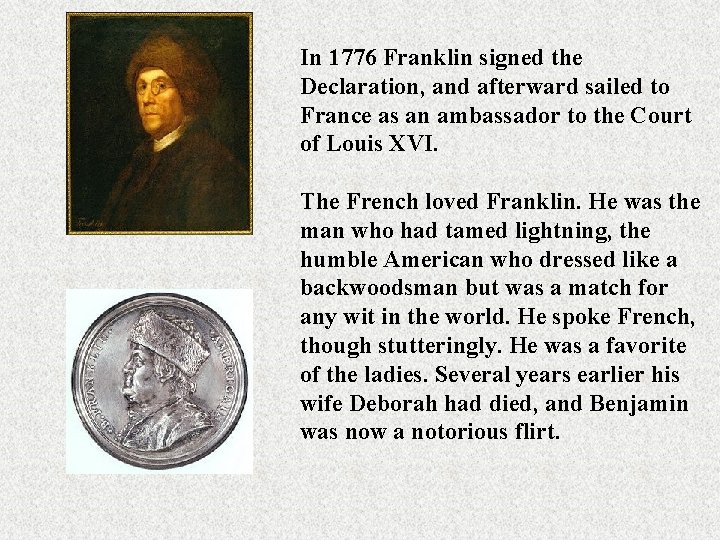
In 1776 Franklin signed the Declaration, and afterward sailed to France as an ambassador to the Court of Louis XVI. The French loved Franklin. He was the man who had tamed lightning, the humble American who dressed like a backwoodsman but was a match for any wit in the world. He spoke French, though stutteringly. He was a favorite of the ladies. Several years earlier his wife Deborah had died, and Benjamin was now a notorious flirt.
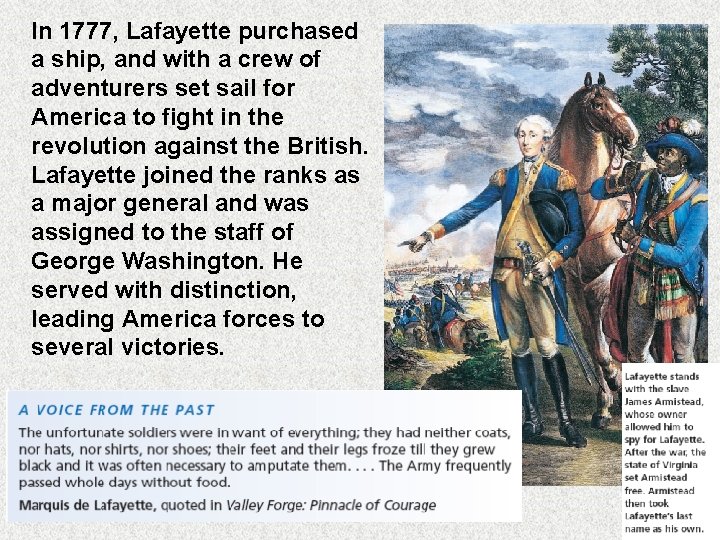
In 1777, Lafayette purchased a ship, and with a crew of adventurers set sail for America to fight in the revolution against the British. Lafayette joined the ranks as a major general and was assigned to the staff of George Washington. He served with distinction, leading America forces to several victories.
The War Expands Categorizing Take notes about people who helped to win American Independence 1. Marquis de Lafayette A young French nobleman who commanded an army division, fought in many battles, and persuaded the French King to send troops. 2. Baron von Steuben
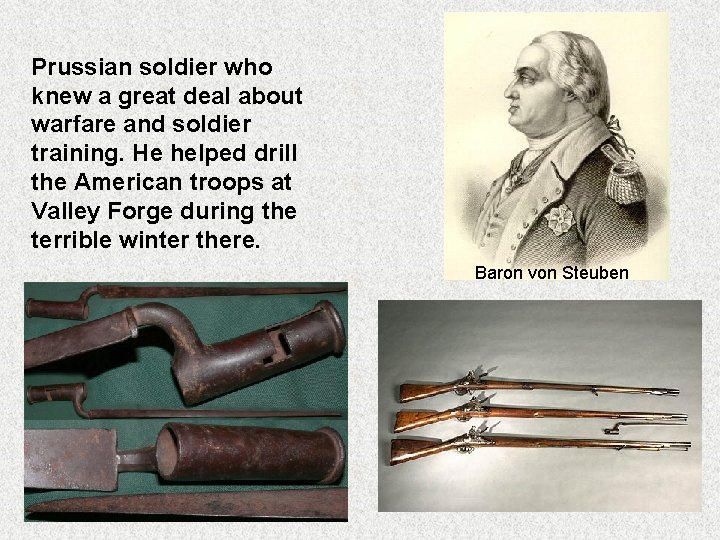
Prussian soldier who knew a great deal about warfare and soldier training. He helped drill the American troops at Valley Forge during the terrible winter there. Baron von Steuben
The War Expands Categorizing Take notes about people who helped to win American Independence 1. Marquis de Lafayette 2. Baron von Steuben A young French nobleman who commanded an army division, fought in many battles, and persuaded the French King to send troops. A German who trained Washington’s inexperienced army into a skilled fighting force.
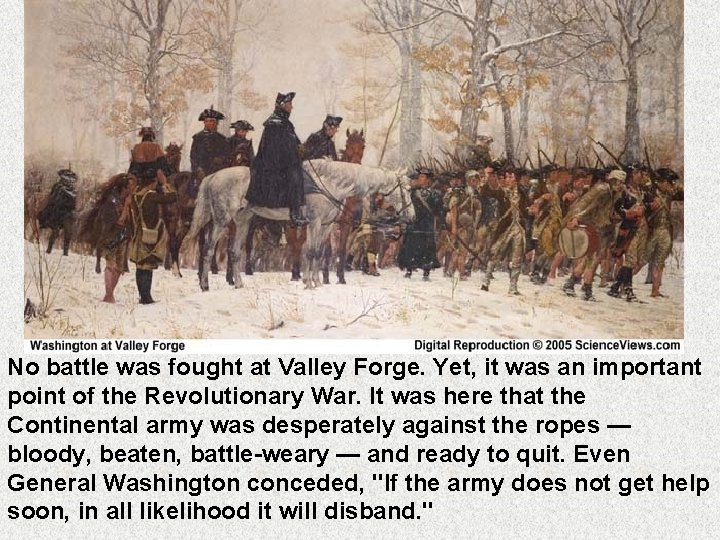
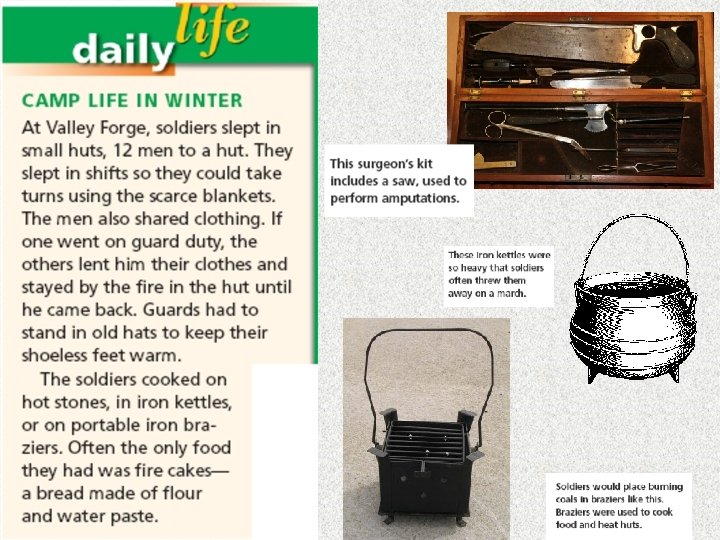
No battle was fought at Valley Forge. Yet, it was an important point of the Revolutionary War. It was here that the Continental army was desperately against the ropes — bloody, beaten, battle-weary — and ready to quit. Even General Washington conceded, "If the army does not get help soon, in all likelihood it will disband. "
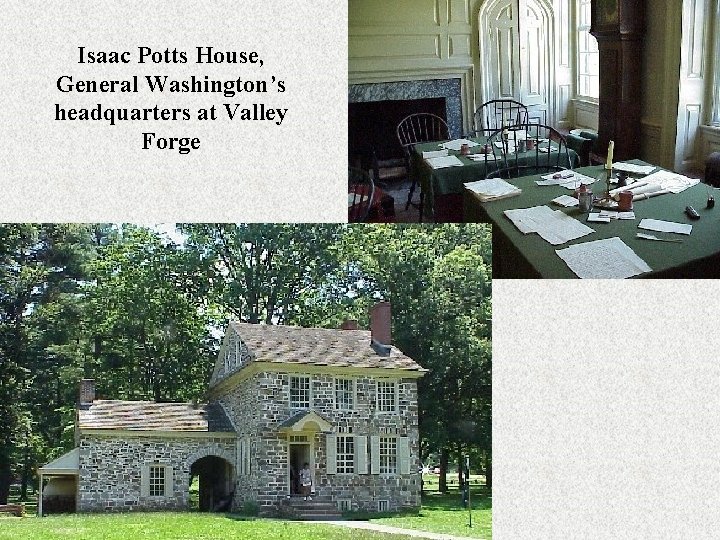
Isaac Potts House, General Washington’s headquarters at Valley Forge
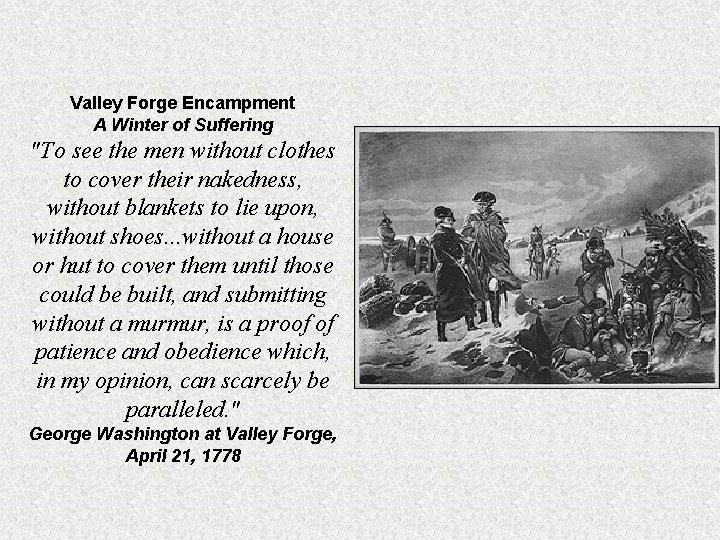
Valley Forge Encampment A Winter of Suffering "To see the men without clothes to cover their nakedness, without blankets to lie upon, without shoes. . . without a house or hut to cover them until those could be built, and submitting without a murmur, is a proof of patience and obedience which, in my opinion, can scarcely be paralleled. " George Washington at Valley Forge, April 21, 1778
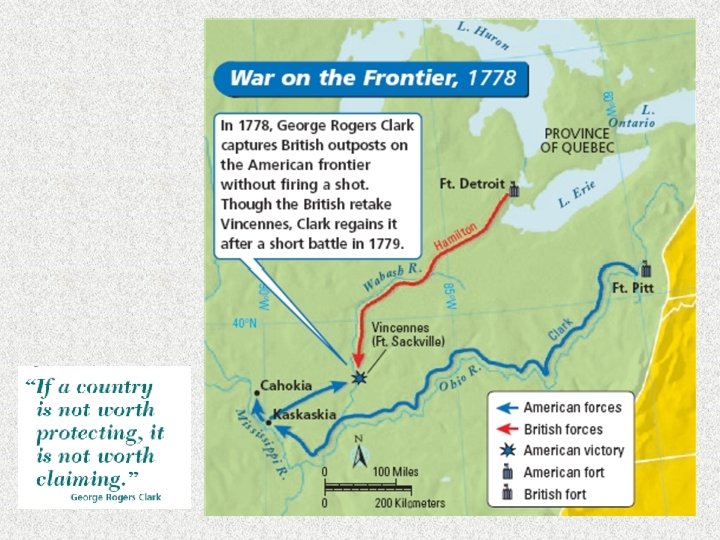
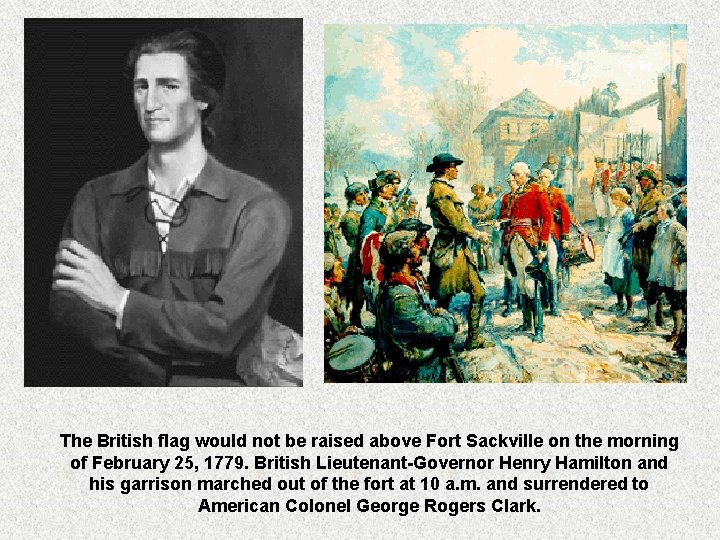
The British flag would not be raised above Fort Sackville on the morning of February 25, 1779. British Lieutenant-Governor Henry Hamilton and his garrison marched out of the fort at 10 a. m. and surrendered to American Colonel George Rogers Clark.
The War Expands 3. George Rogers Clark A frontiersman who led a force against the British at Kaskaskia & Vincennes, securing the frontier for America
B. Finding Main Idea Ally- Explain or define each of the following terms: a country that agrees to help another country achieve a common goal Privateer- a privately owned ship that a wartime government gives permission to attack an enemy’s merchant ships
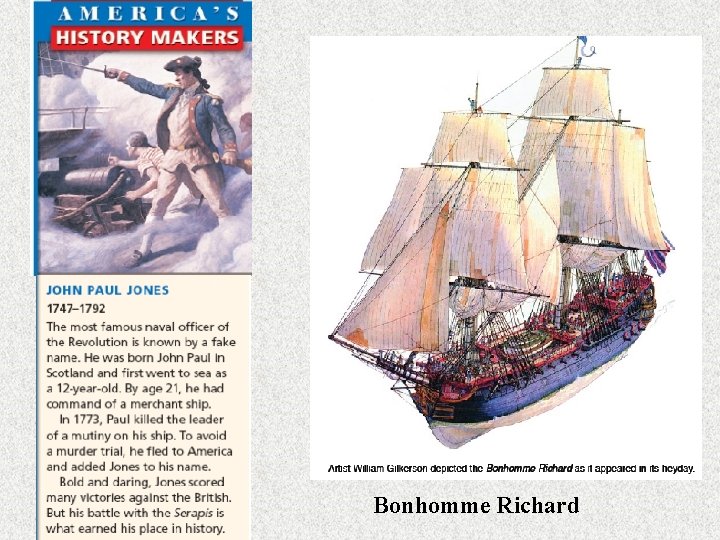
Bonhomme Richard
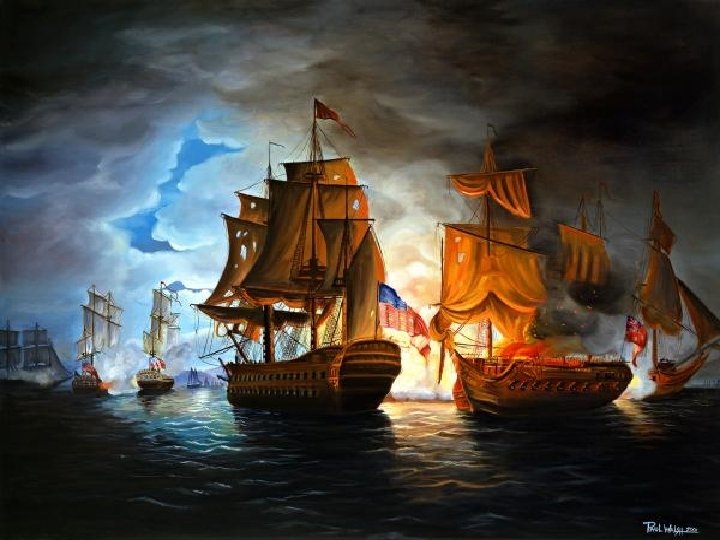
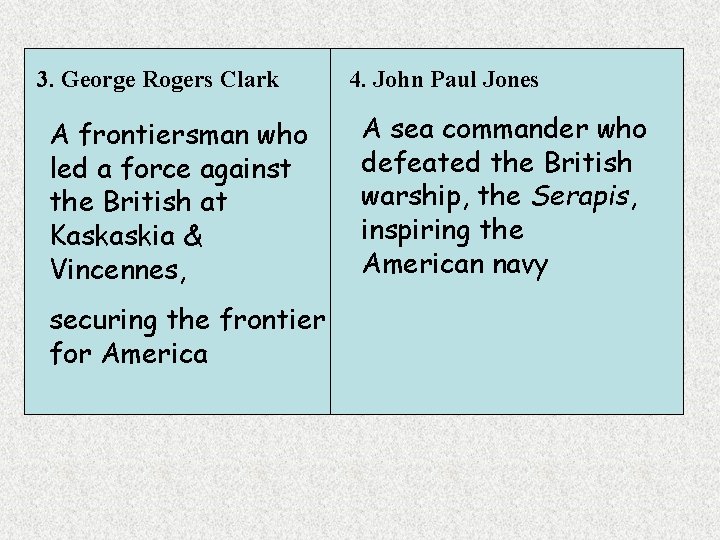
3. George Rogers Clark A frontiersman who led a force against the British at Kaskaskia & Vincennes, securing the frontier for America 4. John Paul Jones A sea commander who defeated the British warship, the Serapis, inspiring the American navy