THE DRUIDS AND THEIR HISTORY Ethymology The origin
- Slides: 16
THE DRUIDS AND THEIR HISTORY
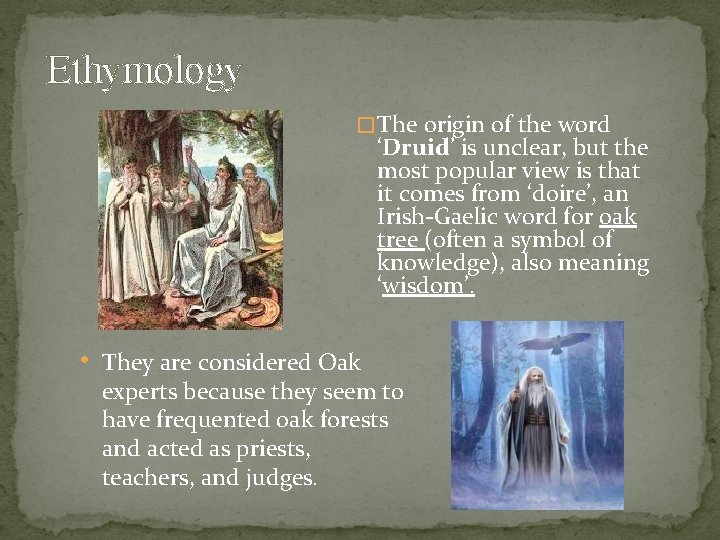
Ethymology � The origin of the word ‘Druid’ is unclear, but the most popular view is that it comes from ‘doire’, an Irish-Gaelic word for oak tree (often a symbol of knowledge), also meaning ‘wisdom’. • They are considered Oak experts because they seem to have frequented oak forests and acted as priests, teachers, and judges.
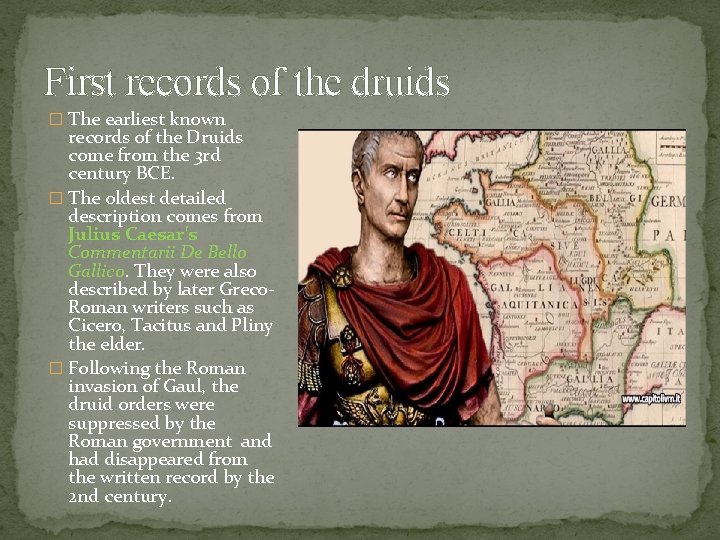
First records of the druids � The earliest known records of the Druids come from the 3 rd century BCE. � The oldest detailed description comes from Julius Caesar's Commentarii De Bello Gallico. They were also described by later Greco. Roman writers such as Cicero, Tacitus and Pliny the elder. � Following the Roman invasion of Gaul, the druid orders were suppressed by the Roman government and had disappeared from the written record by the 2 nd century.
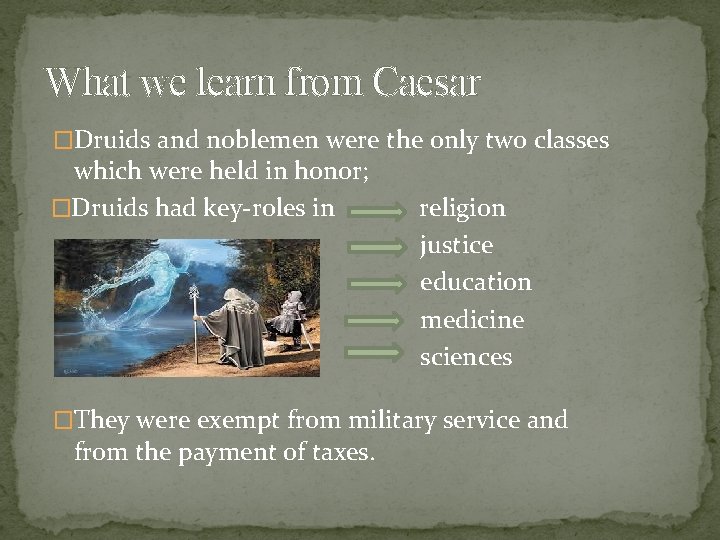
What we learn from Caesar �Druids and noblemen were the only two classes which were held in honor; �Druids had key-roles in religion justice education medicine sciences �They were exempt from military service and from the payment of taxes.
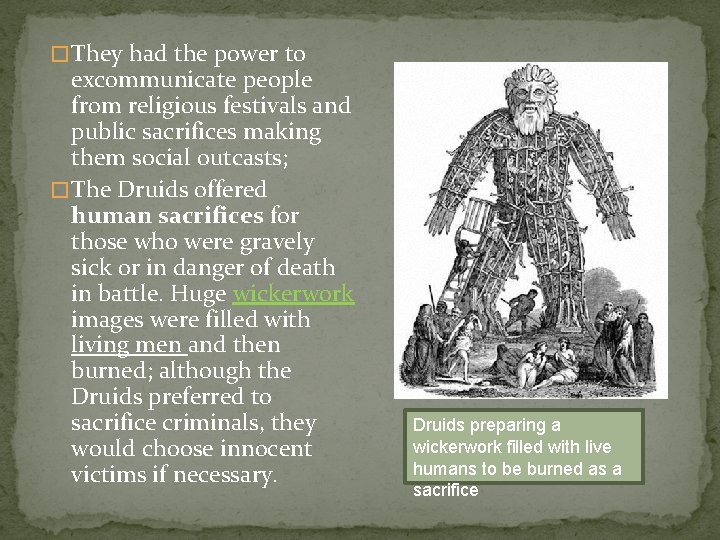
� They had the power to excommunicate people from religious festivals and public sacrifices making them social outcasts; � The Druids offered human sacrifices for those who were gravely sick or in danger of death in battle. Huge wickerwork images were filled with living men and then burned; although the Druids preferred to sacrifice criminals, they would choose innocent victims if necessary. Druids preparing a wickerwork filled with live humans to be burned as a sacrifice
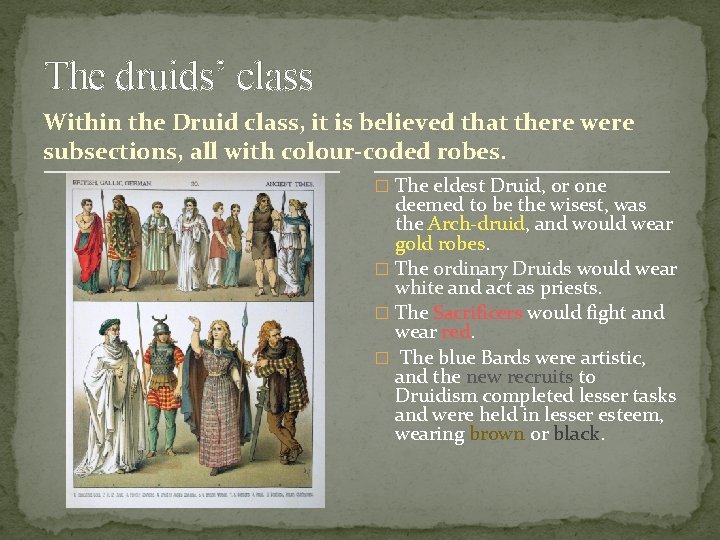
The druids’ class Within the Druid class, it is believed that there were subsections, all with colour-coded robes. � The eldest Druid, or one deemed to be the wisest, was the Arch-druid, and would wear gold robes. � The ordinary Druids would wear white and act as priests. � The Sacrificers would fight and wear red. � The blue Bards were artistic, and the new recruits to Druidism completed lesser tasks and were held in lesser esteem, wearing brown or black.
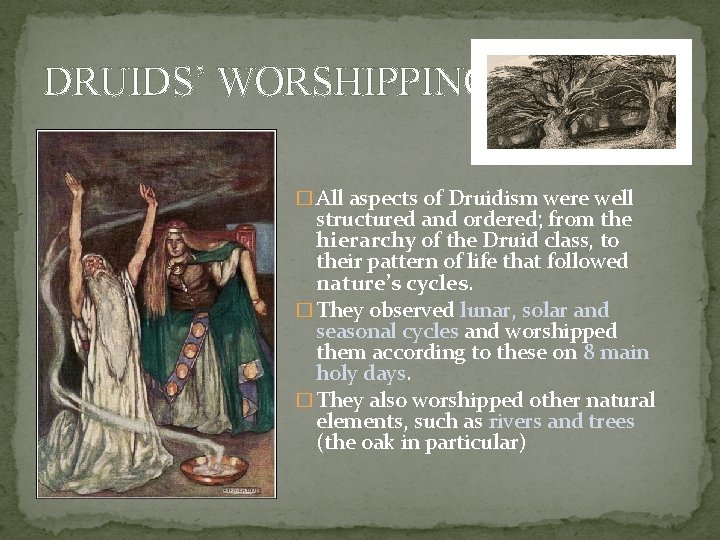
DRUIDS’ WORSHIPPING � All aspects of Druidism were well structured and ordered; from the hierarchy of the Druid class, to their pattern of life that followed nature’s cycles. � They observed lunar, solar and seasonal cycles and worshipped them according to these on 8 main holy days. � They also worshipped other natural elements, such as rivers and trees (the oak in particular)
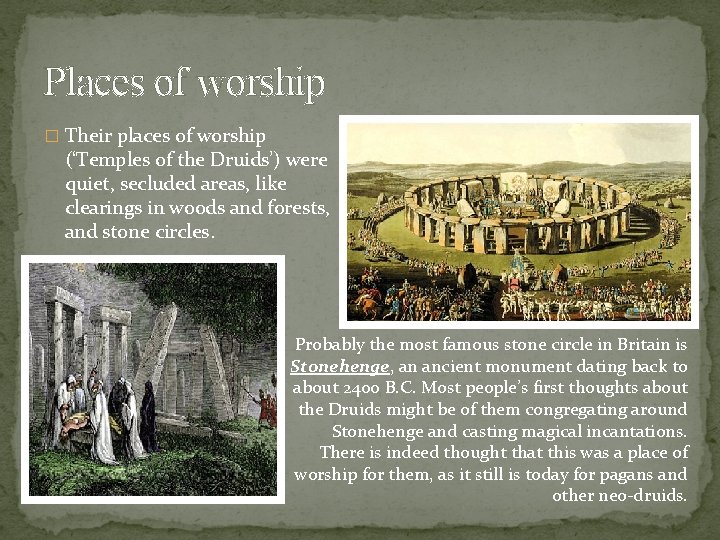
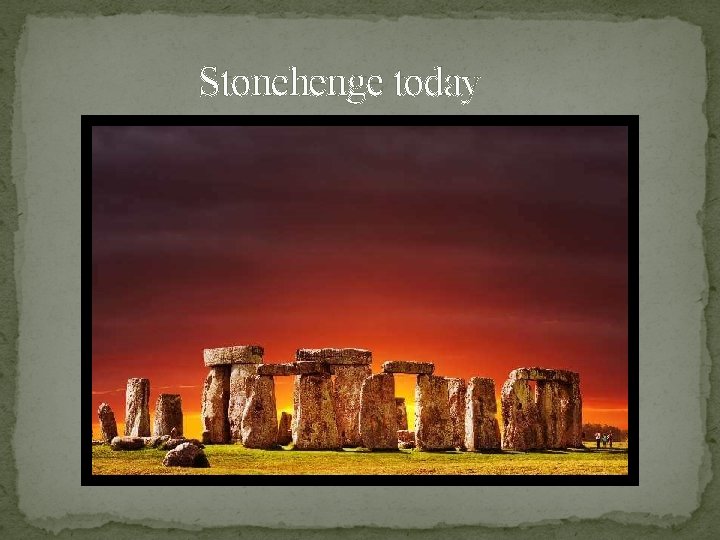
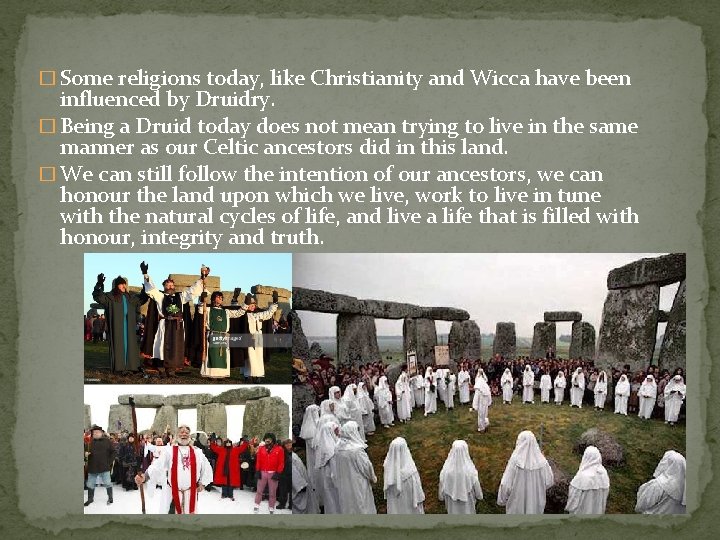
Places of worship � Their places of worship (‘Temples of the Druids’) were quiet, secluded areas, like clearings in woods and forests, and stone circles. Probably the most famous stone circle in Britain is Stonehenge, an ancient monument dating back to about 2400 B. C. Most people’s first thoughts about the Druids might be of them congregating around Stonehenge and casting magical incantations. There is indeed thought that this was a place of worship for them, as it still is today for pagans and other neo-druids.
Stonehenge today
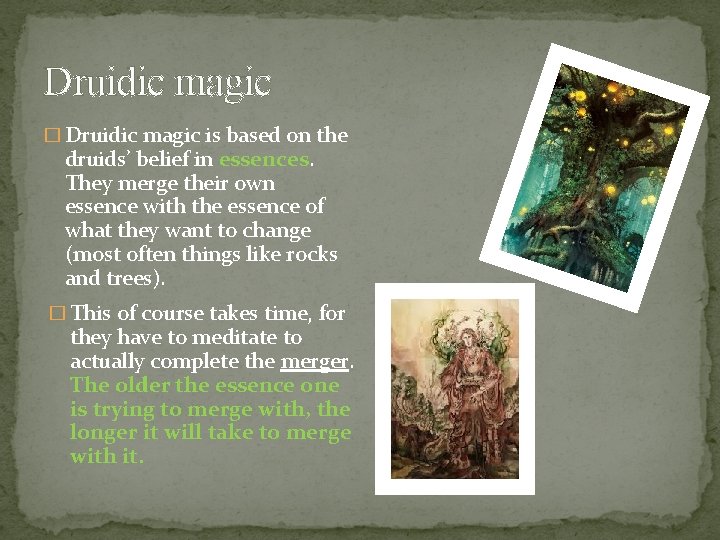
Druidic magic � Druidic magic is based on the druids’ belief in essences. They merge their own essence with the essence of what they want to change (most often things like rocks and trees). � This of course takes time, for they have to meditate to actually complete the merger. The older the essence one is trying to merge with, the longer it will take to merge with it.
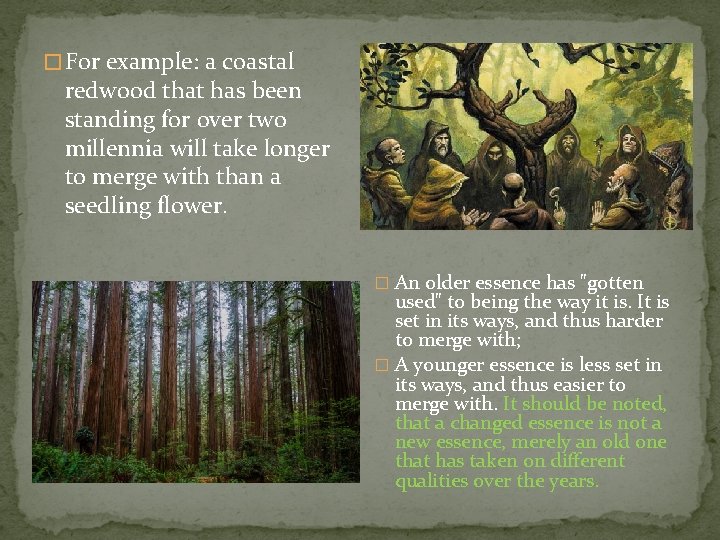
� For example: a coastal redwood that has been standing for over two millennia will take longer to merge with than a seedling flower. � An older essence has "gotten used" to being the way it is. It is set in its ways, and thus harder to merge with; � A younger essence is less set in its ways, and thus easier to merge with. It should be noted, that a changed essence is not a new essence, merely an old one that has taken on different qualities over the years.
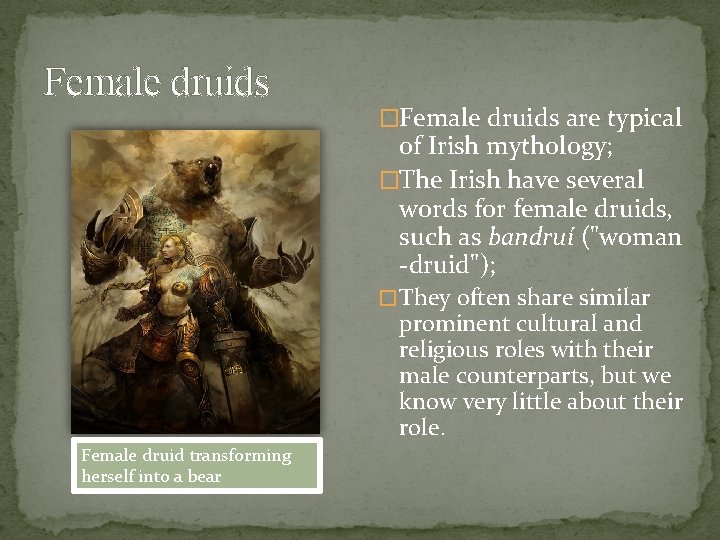
Female druids �Female druids are typical of Irish mythology; �The Irish have several words for female druids, such as bandruí ("woman -druid"); � They often share similar prominent cultural and religious roles with their male counterparts, but we know very little about their role. Female druid transforming herself into a bear
Druidry today What does it mean to be a Druid nowadays?
� Some religions today, like Christianity and Wicca have been influenced by Druidry. � Being a Druid today does not mean trying to live in the same manner as our Celtic ancestors did in this land. � We can still follow the intention of our ancestors, we can honour the land upon which we live, work to live in tune with the natural cycles of life, and live a life that is filled with honour, integrity and truth.
Glossary �Oak tree……………. . Quercia �Wisdom……………… Saggezza �Wicker……………… Vimini �Wickerwork…………. . . Lavoro in vimini �Recruit ……………… Adepto �Seedling………………. . Giovane pianta �Clearing……………… Radura �Secluded area…………. Zona isolata �Task………………. . . Compito Main source: britannica. com
Men believe spontaneously in anything they wish to be true Quotation by Julius Caesar