The Constitution of the United States WE WON



- Slides: 41
The Constitution of the United States
WE WON!! America Won… WE Spanked England! Yeah, baby - that's what I'M TALKING ABOUT!!
The Declaration of Independence DID NOT create a plan of government.
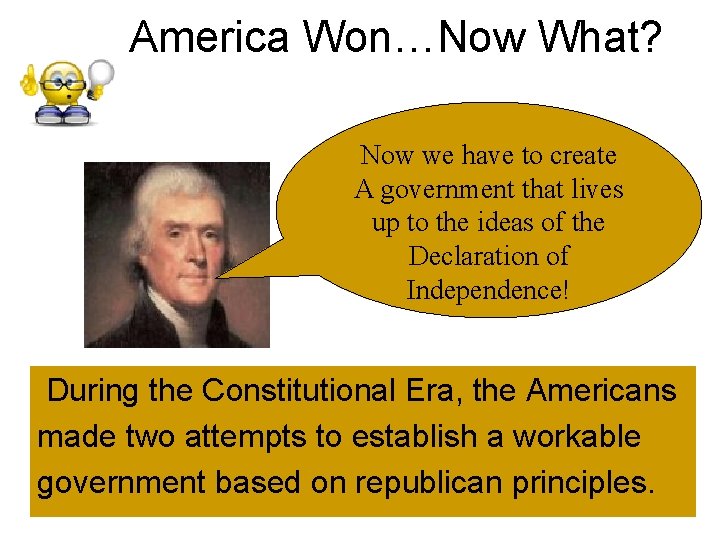
America Won…Now What? Now we have to create A government that lives up to the ideas of the Declaration of Independence! During the Constitutional Era, the Americans made two attempts to establish a workable government based on republican principles.
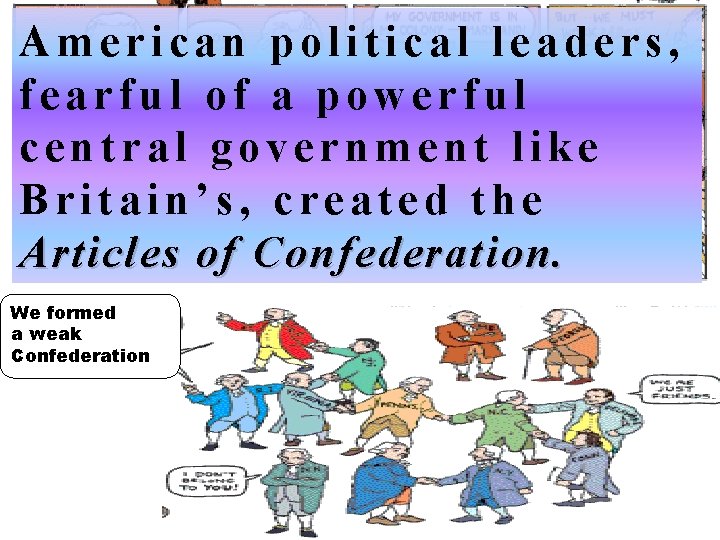
American political leaders, fearful of a powerful central government like Britain’s, created the Articles of Confederation. We formed a weak Confederation
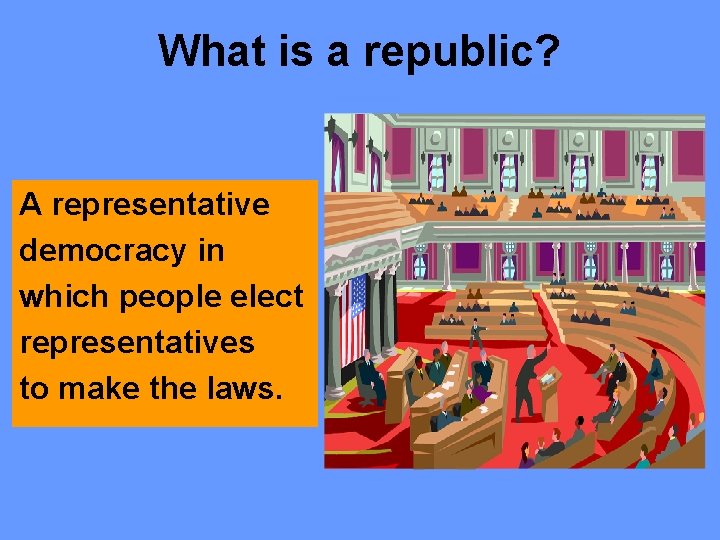
What is a republic? A representative democracy in which people elect representatives to make the laws.
America’s 1 st Plan of Government v. The Articles stated that there was a perpetual union between the states, while individual states remained sovereign. v. What were the weaknesses in the Articles of Confederation?
America’s 1 st Plan of Government (Not Effective) This weak central government could not control the nation!!!!! The Articles of Confederation • Provided for a weak national government • Gave Congress no power to tax or regulate commerce among the states • Provided for no common currency • Gave each state one vote regardless of size • Provided for no executive or judicial branch
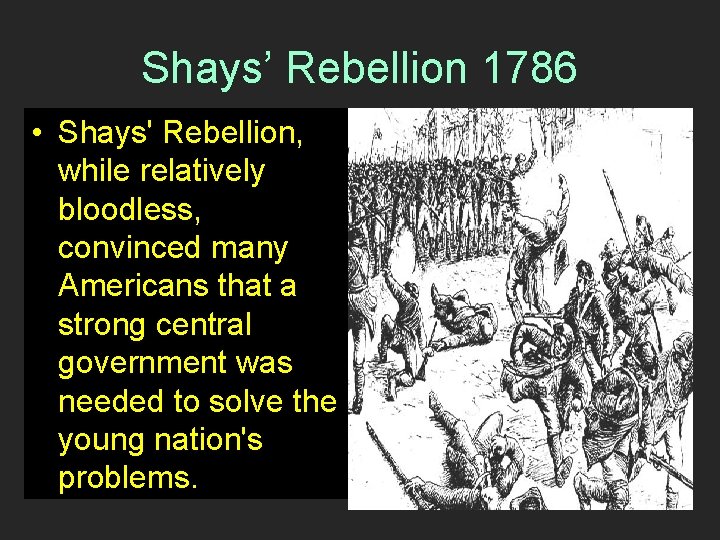
Shays’ Rebellion 1786 • Shays' Rebellion, while relatively bloodless, convinced many Americans that a strong central government was needed to solve the young nation's problems.
Off to a Bad Start!!!! • America political leaders, fearful of a power central government like England’s created the Articles of Confederation after the war
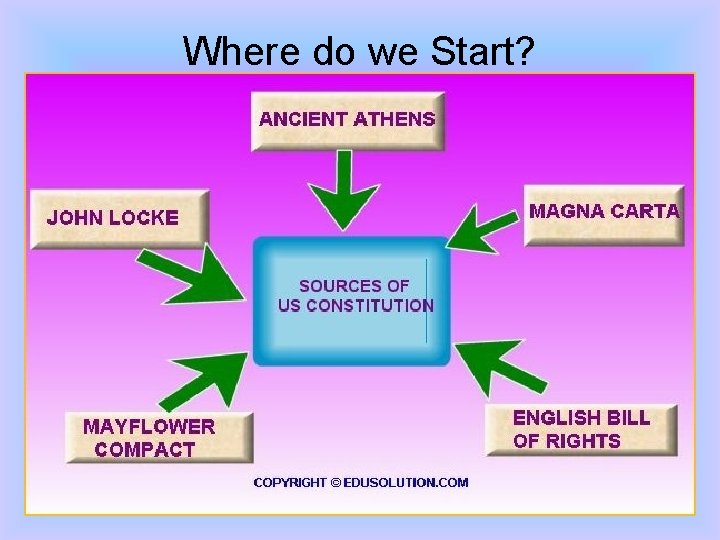
Where do we Start?
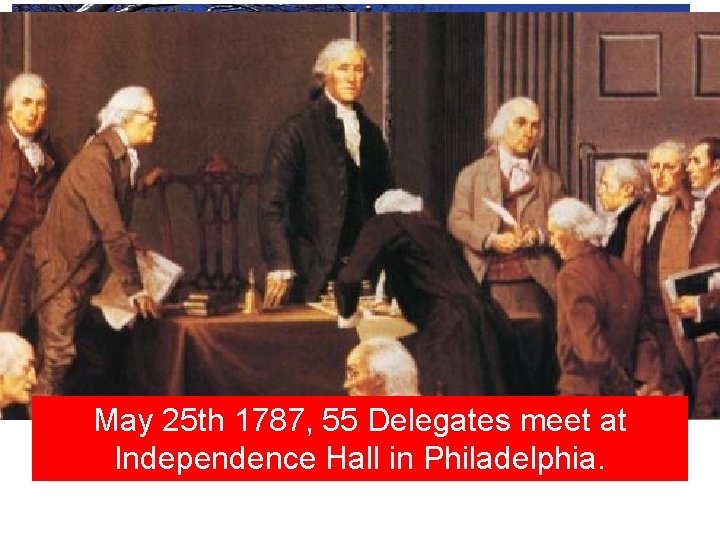
• A new Government is need; but May 25 th 1787, 55 Delegates meet at where do they Hall start? Independence in Philadelphia.
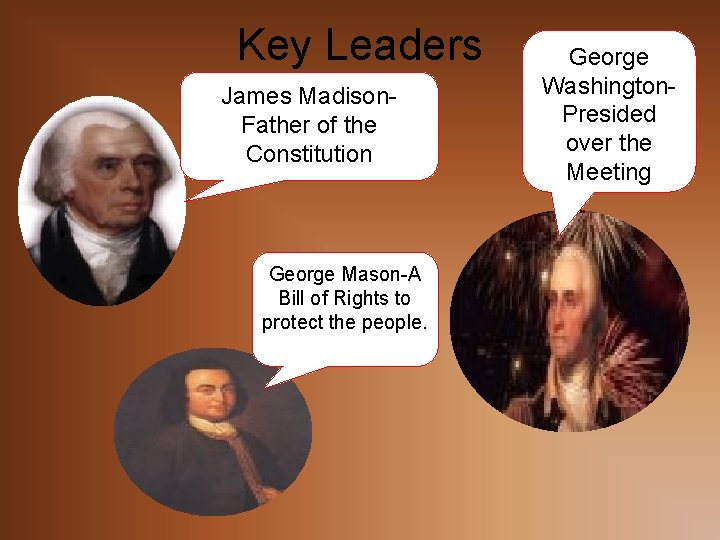
Key Leaders James Madison. Father of the Constitution George Mason-A Bill of Rights to protect the people. George Washington. Presided over the Meeting
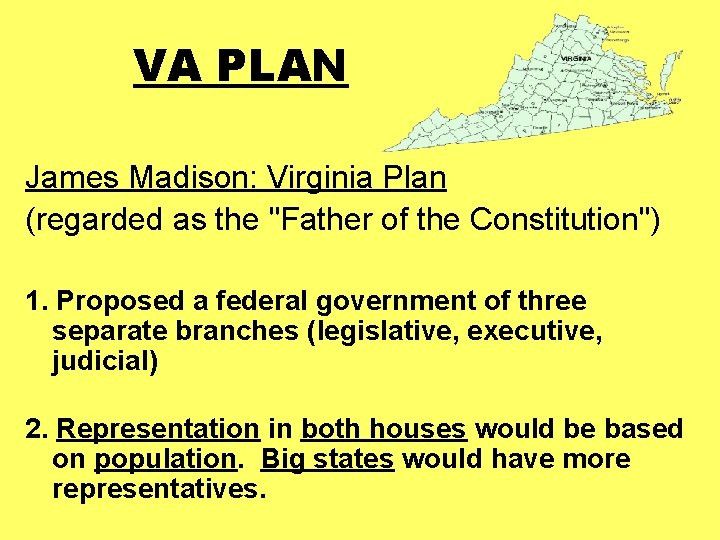
VA PLAN James Madison: Virginia Plan (regarded as the "Father of the Constitution") 1. Proposed a federal government of three separate branches (legislative, executive, judicial) 2. Representation in both houses would be based on population. Big states would have more representatives.
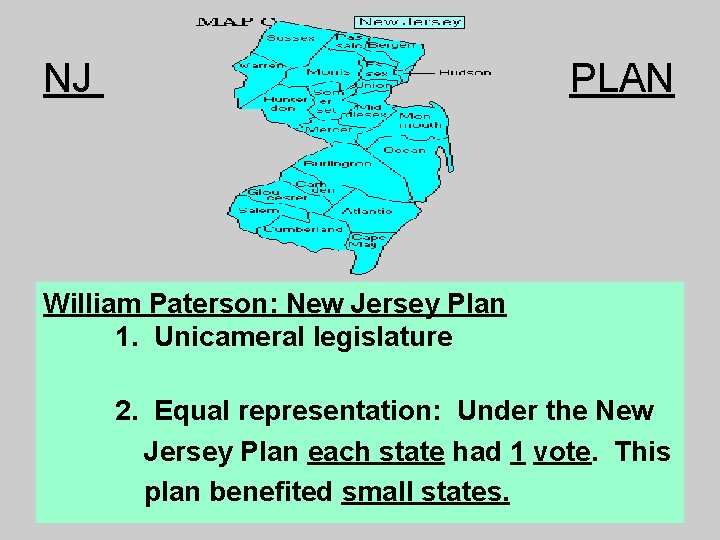
NJ PLAN William Paterson: New Jersey Plan 1. Unicameral legislature 2. Equal representation: Under the New Jersey Plan each state had 1 vote. This plan benefited small states.
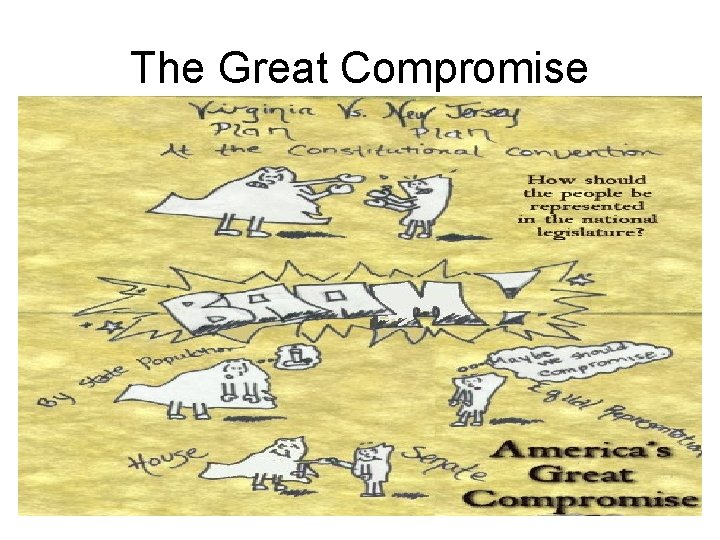
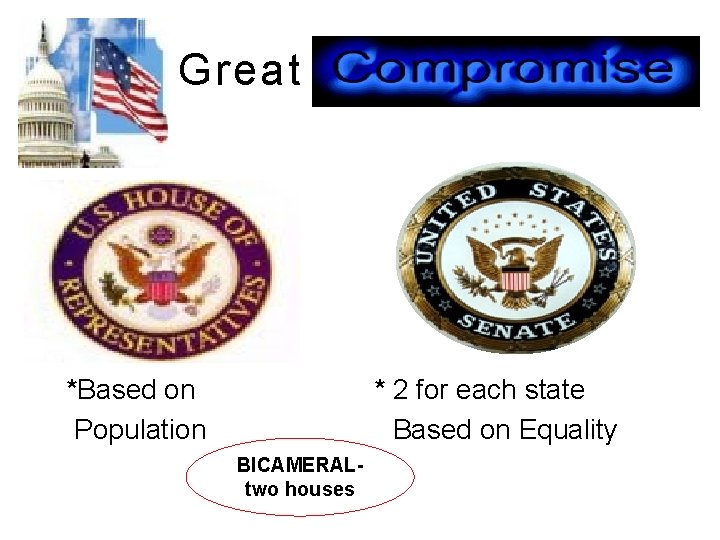
The Great Compromise • Created a Bicameral Legislature by combining the two plans.
Great *Based on Population * 2 for each state Based on Equality BICAMERALtwo houses
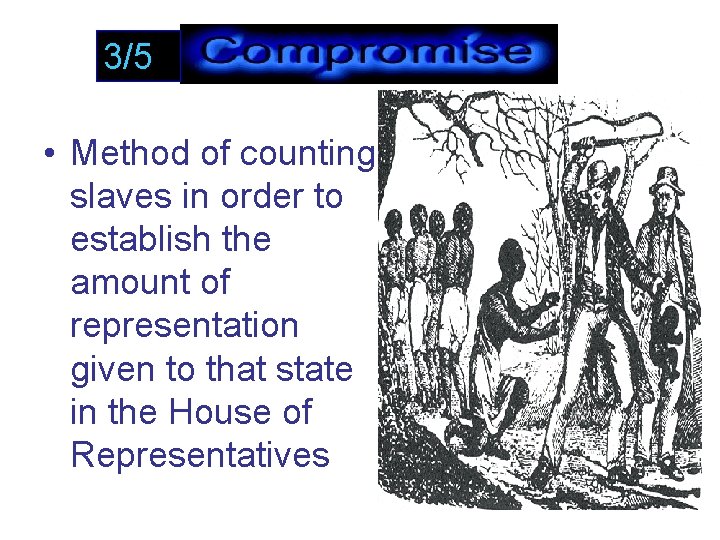
3/5 • Method of counting slaves in order to establish the amount of representation given to that state in the House of Representatives
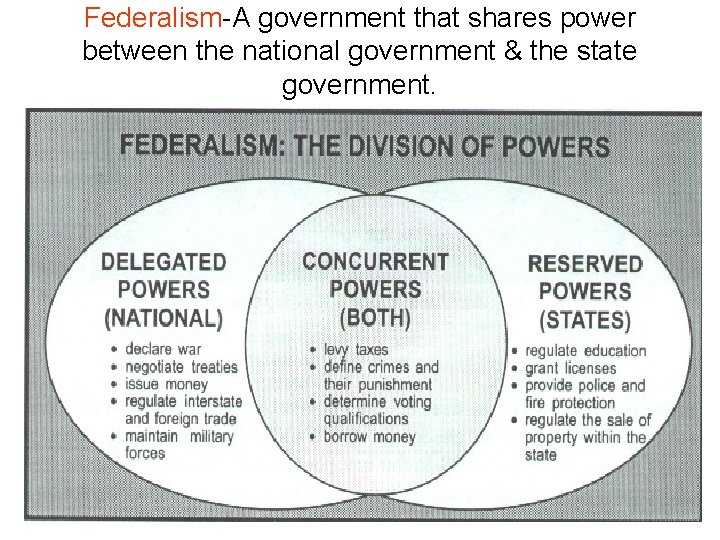
Federalism-A government that shares power between the national government & the state government.
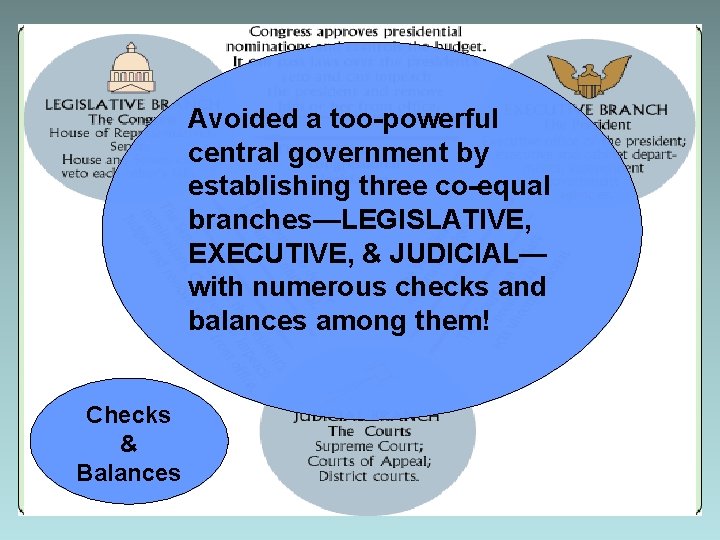
Avoided a too-powerful central government by establishing three co-equal branches—LEGISLATIVE, EXECUTIVE, & JUDICIAL— with numerous checks and balances among them! Checks & Balances
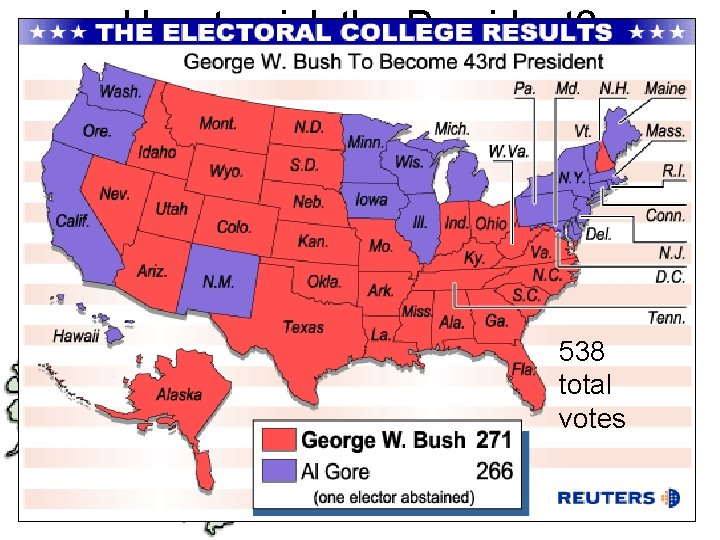
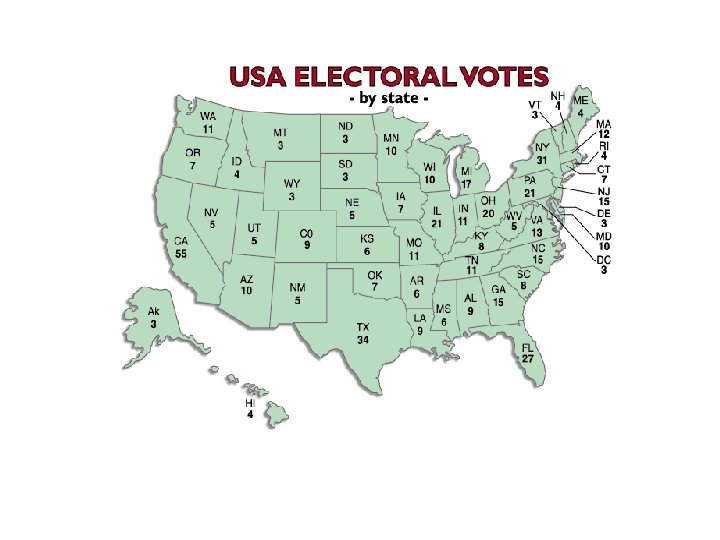
How to pick the President? • During the convention, one group wanted Congress to elect the President. Another group didn't want Congress to have so much power, but they also did not want 538 the people to decide such an important total election. As a result, they developed the votes electoral college, which is sometimes called an "indirect popular vote. "
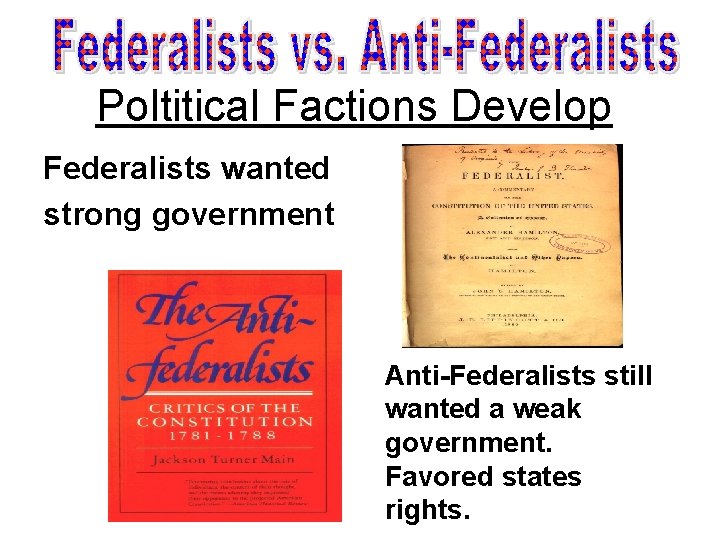
Poltitical Factions Develop Federalists wanted strong government Anti-Federalists still wanted a weak government. Favored states rights.
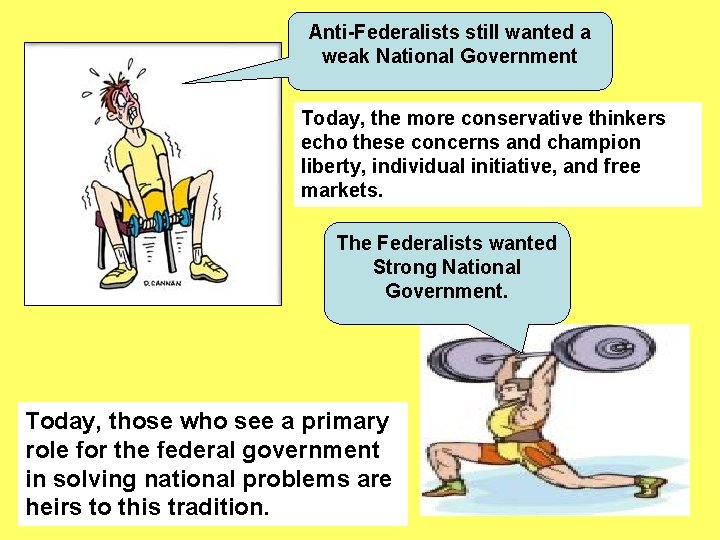
Anti-Federalists still wanted a weak National Government Today, the more conservative thinkers echo these concerns and champion liberty, individual initiative, and free markets. The Federalists wanted Strong National Government. Today, those who see a primary role for the federal government in solving national problems are heirs to this tradition.
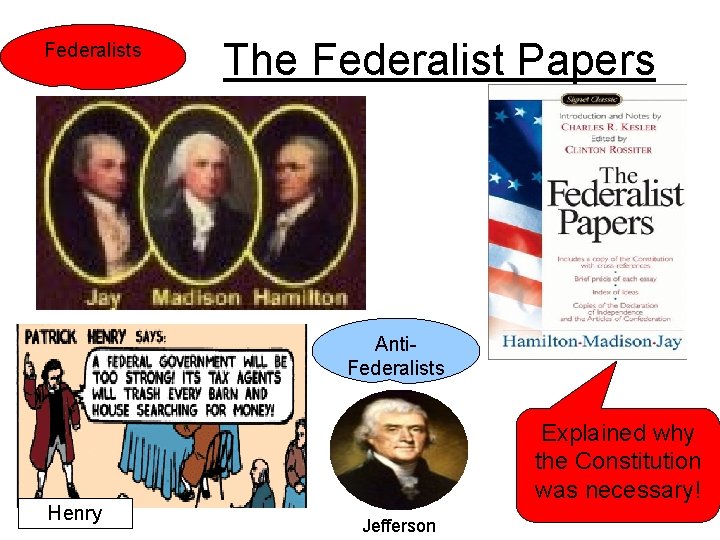
Federalists The Federalist Papers Anti. Federalists Henry Explained why the Constitution was necessary! Jefferson
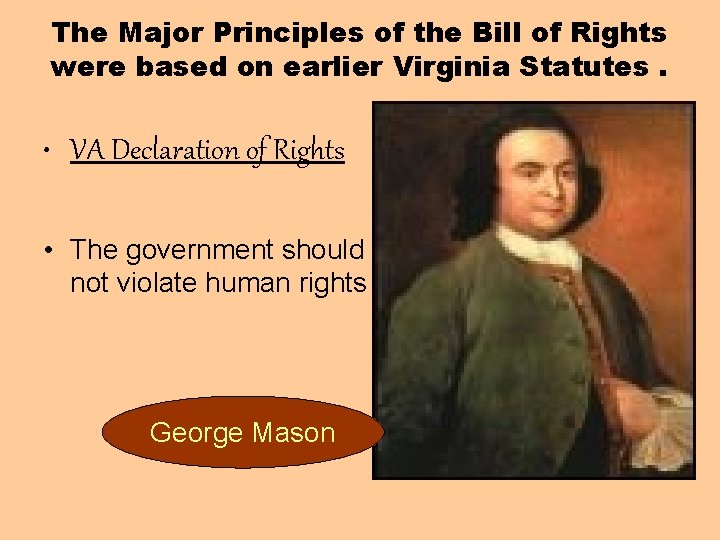
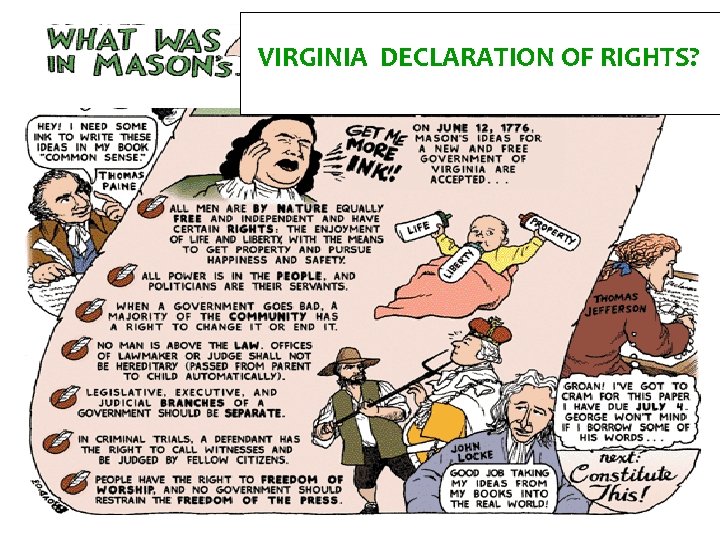
The Major Principles of the Bill of Rights were based on earlier Virginia Statutes. • VA Declaration of Rights • The government should not violate human rights George Mason
VIRGINIA DECLARATION OF RIGHTS?
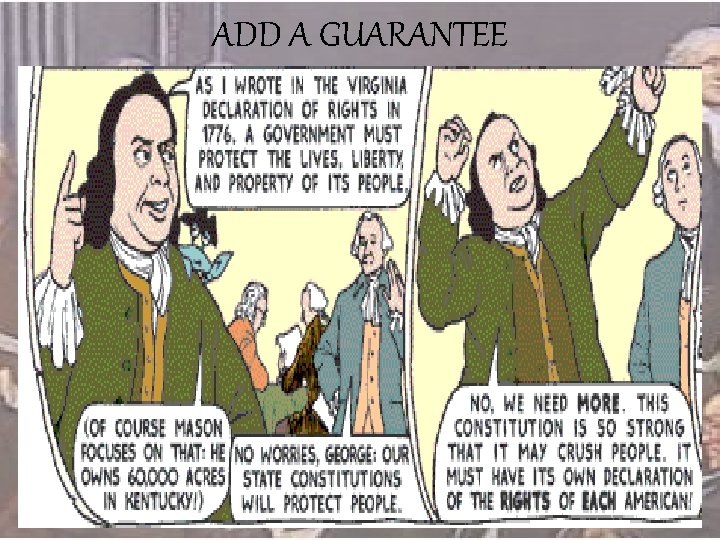
ADD A GUARANTEE The Bill of Rights The Anti-Federalists or Democratic-Republicans wanted a Bill of Rights to assure that rights would always be protected.
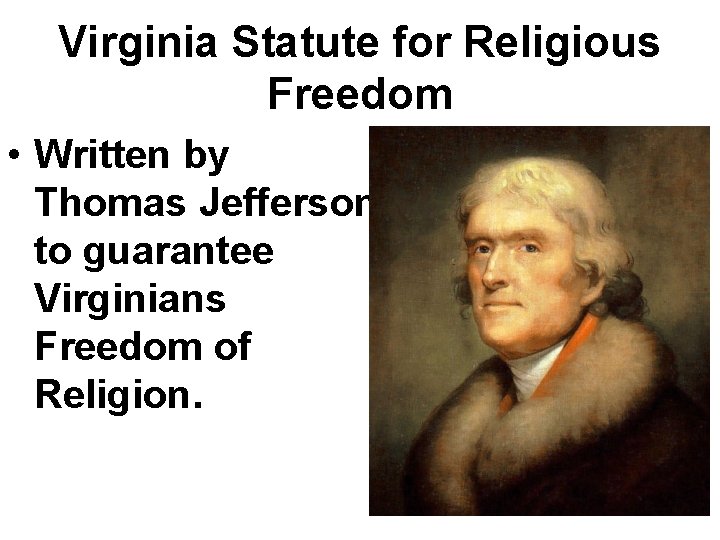
Virginia Statute for Religious Freedom • Written by Thomas Jefferson to guarantee Virginians Freedom of Religion.
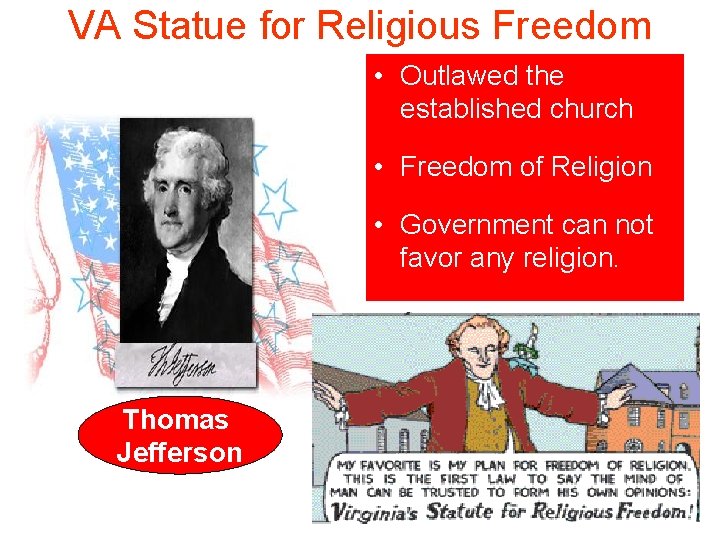
VA Statue for Religious Freedom • Outlawed the established church • Freedom of Religion • Government can not favor any religion. Thomas Jefferson
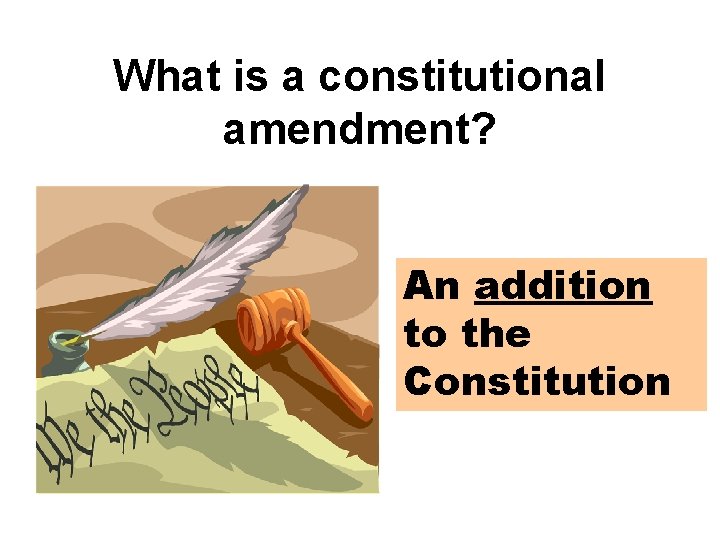
What is a constitutional amendment? An addition to the Constitution
Bill of Rights • James Madison consulted the VA Declaration of Rights & the VA Statue of Religious Freedom when drafting the amendments that eventually became the U. S. Bill of Rights
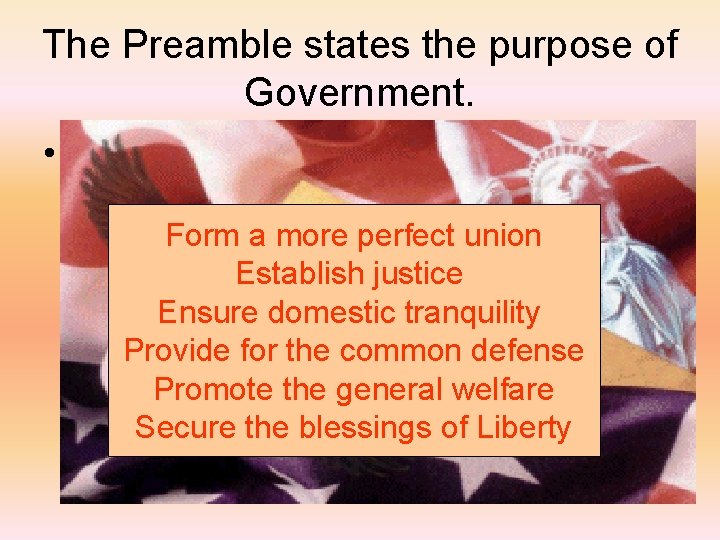
The Preamble states the purpose of Government. • As we have already seen our Constitution is very much a reaction a more perfectbefore union it. Our to the Form events that came Establish justice founding fathers had several goals, Ensure domestic tranquility foremost among those goals was to Provide for the common defense avoid tyranny. Promote the general welfare Secure the blessings of Liberty
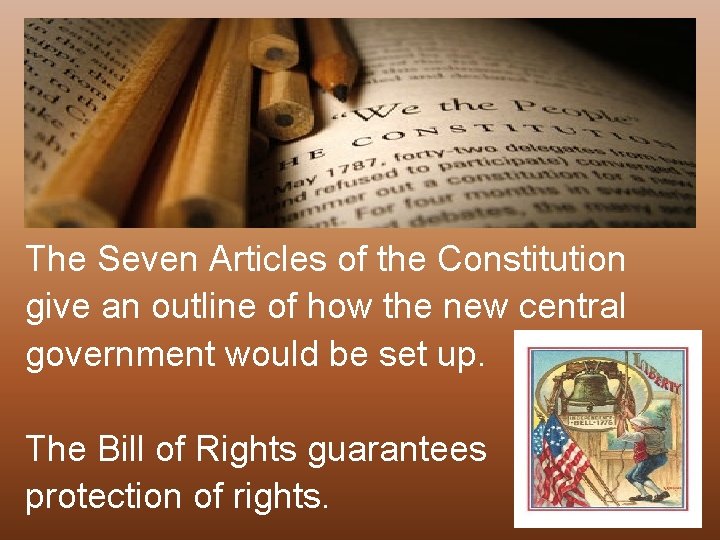
The Seven Articles of the Constitution give an outline of how the new central government would be set up. The Bill of Rights guarantees protection of rights.
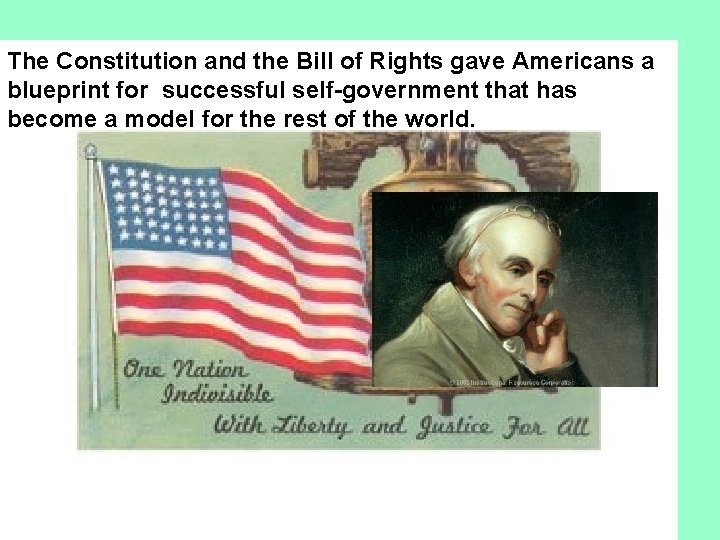
Ratification -June 21 st 1788 The Constitution and the Bill of Rights gave Americans a blueprint for successful self-government that has become a model for the rest of the world. • Delaware is the 1 st to sign the new government. • The 1 st congress under the Constitution meets on March 4 th 1789 in NYC. • G. Washington is sworn in on April 30 th 1789. “Tis done. We have become a Nation. ”-Benjamin Rush
This is the end! Other slides below are just extra info……
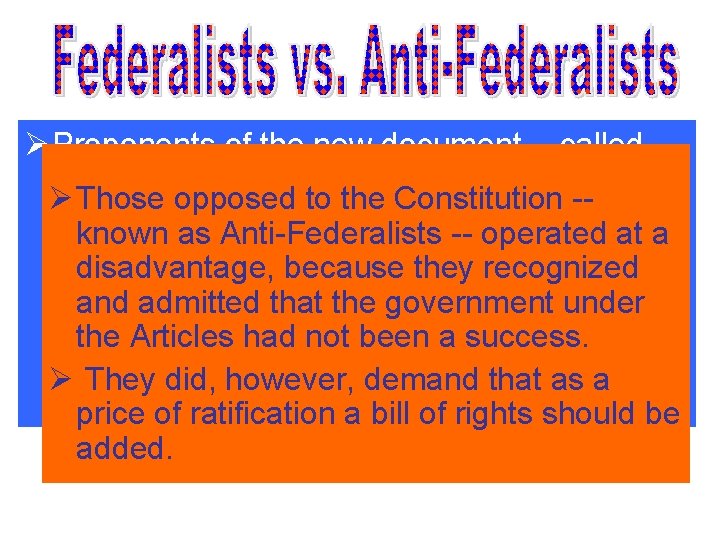
Ø Proponents of the new document -- called Federalists -- claimed that not only would it Ø Those opposed to the Constitution -remedy defects of the Articles of knownthe as Anti-Federalists -- operated at a Confederation, it would provide a strong disadvantage, but because they recognized yet limited government would ensure and admitted that the that government underthe peace and security of been the new nation. the Articles had not a success. Ø They did, however, demand that as a price of ratification a bill of rights should be added.
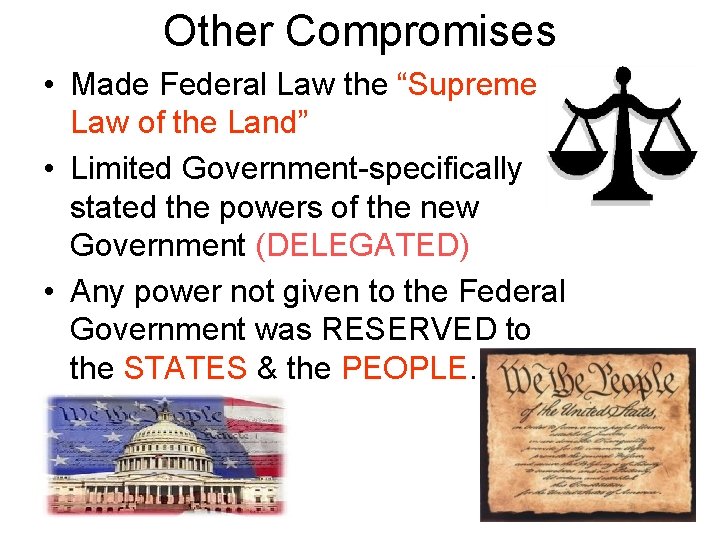
Other Compromises • Made Federal Law the “Supreme Law of the Land” • Limited Government-specifically stated the powers of the new Government (DELEGATED) • Any power not given to the Federal Government was RESERVED to the STATES & the PEOPLE.
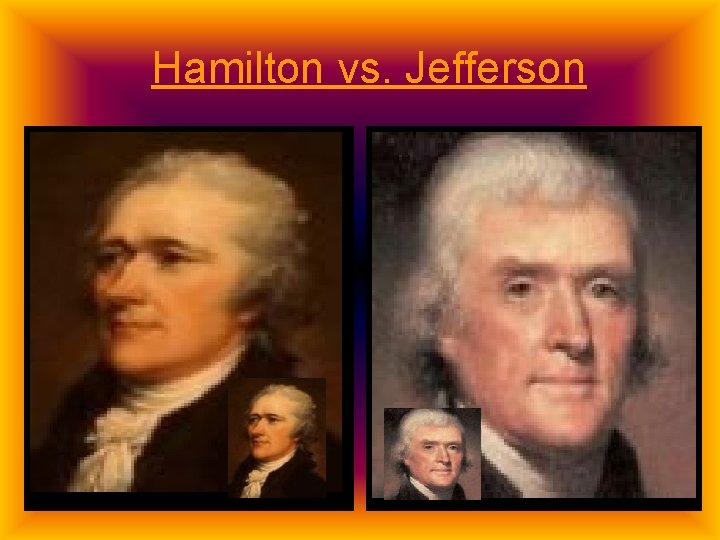
Hamilton vs. Jefferson Ø Strong National Gov’t Ø Industrial Economy Ø Protective Tariffs Ø Wanted the Bank of the U. S. Ø The U. S. should trade with Britain Ø Weak National Gov’t Ø Agricultural Economy Ø Disliked Tariffs Ø Disliked the Bank of the U. S. Ø The U. S. should trade with France
• The Federalists believed that a Bill of rights was not necessary, because as a government of limited powers, the new government would have no authority to invade the rights of the citizens. Thomas Jefferson said, "A bill of rights is what the people are entitled to against every government on earth, general or particular, and what no just government should refuse, or rest upon inferences. "