The CLE Programme at HKU Achievements challenges and

- Slides: 27
The CLE Programme at HKU: Achievements, challenges and the way forward @IJCLE Conference November 2018 Speakers: Julienne Jen Eric Cheung
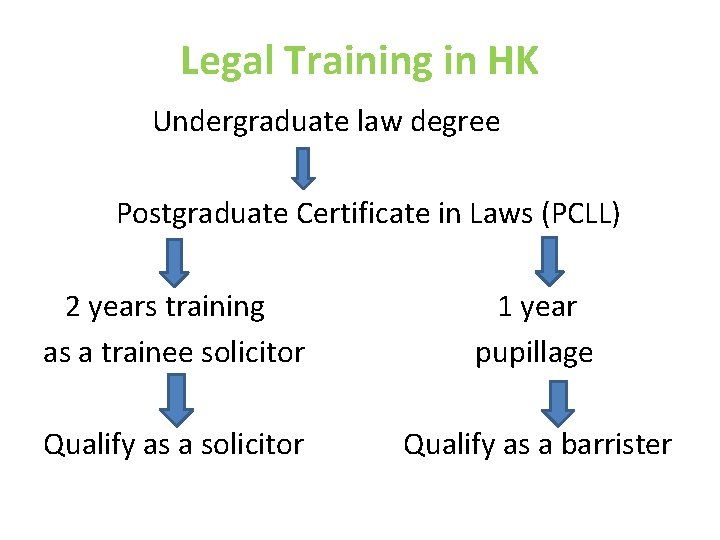
Legal Training in HK Undergraduate law degree Postgraduate Certificate in Laws (PCLL) 2 years training as a trainee solicitor 1 year pupillage Qualify as a solicitor Qualify as a barrister
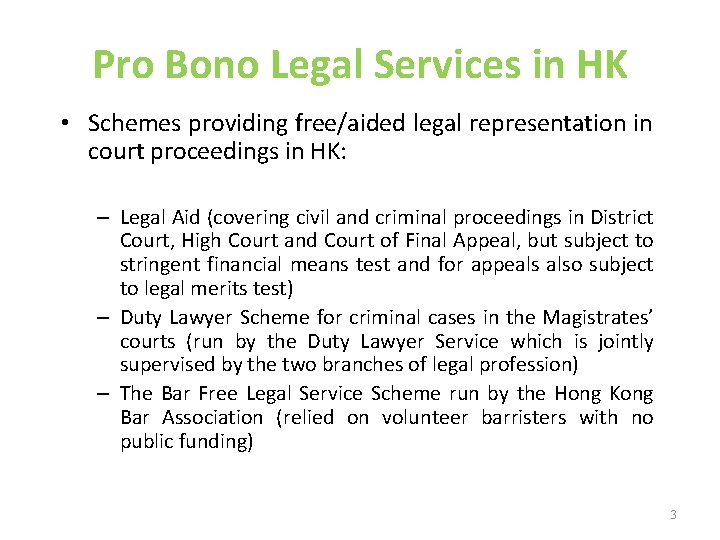
Pro Bono Legal Services in HK • Schemes providing free/aided legal representation in court proceedings in HK: – Legal Aid (covering civil and criminal proceedings in District Court, High Court and Court of Final Appeal, but subject to stringent financial means test and for appeals also subject to legal merits test) – Duty Lawyer Scheme for criminal cases in the Magistrates’ courts (run by the Duty Lawyer Service which is jointly supervised by the two branches of legal profession) – The Bar Free Legal Service Scheme run by the Hong Kong Bar Association (relied on volunteer barristers with no public funding) 3
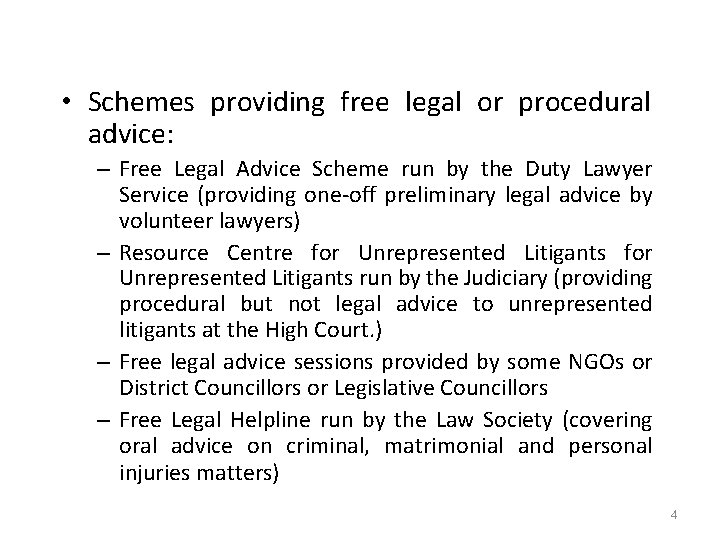
• Schemes providing free legal or procedural advice: – Free Legal Advice Scheme run by the Duty Lawyer Service (providing one-off preliminary legal advice by volunteer lawyers) – Resource Centre for Unrepresented Litigants run by the Judiciary (providing procedural but not legal advice to unrepresented litigants at the High Court. ) – Free legal advice sessions provided by some NGOs or District Councillors or Legislative Councillors – Free Legal Helpline run by the Law Society (covering oral advice on criminal, matrimonial and personal injuries matters) 4
Unmet legal needs in HK • Obvious unmet legal needs in relation to: • Proceedings where formal legal representation is not allowed (e. g. Small Claims Tribunal and Labour Tribunal; but one party may be a big corporation with in-house lawyers or resources to engage private lawyers to assist short of formal representation at the hearing; or the party may be a government department represented by the Department of Justice) • Proceedings outside scope of Legal Aid but where the party cannot afford private lawyers (e. g. administrative appeals and refugee screening) • Legal assistance beyond one-off preliminary legal advice but short of full legal representation by legal aid (or clients are not poor enough to obtain legal aid) • Legal aid is unjustifiably refused on merits ground 5
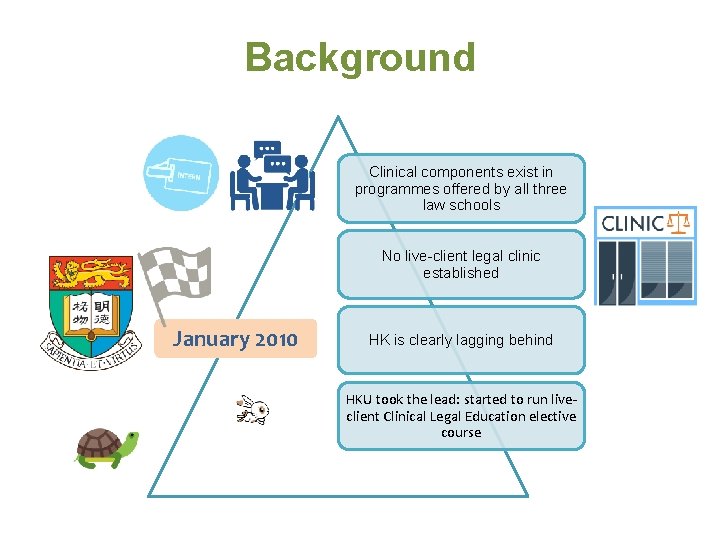
Background Clinical components exist in programmes offered by all three law schools No live-client legal clinic established January 2010 HK is clearly lagging behind HKU took the lead: started to run liveclient Clinical Legal Education elective course
Developing CLE at HKU • HKU Law Faculty has long recognised the educational benefits and public interest in CLE • Clinical components have been introduced over the years: • Free Legal Referral and Advice Scheme on campus (operated for many years until 2002 when we sent volunteer students to handle similar services at the District Offices); • Social Justice Programme (set up in 2001 where law students are paired up with social science students for a 4 -week summer internship with NGOs o social service agencies); • various other internship with law firms, barristers’ chambers, Department of Justice, Legal Aid Department etc 7
• 2005 -06: Engaged Professor Stacy Caplow, the Director of Legal Education in the Brooklyn Law School, as a consultant to report on the feasibility of introducing clinical legal education in Hong Kong. After extensive consultation with all the stakeholders in Hong Kong on the subject, she submitted her report to the Faculty in June 2006. • July 2007: Consultation Paper on the Development of CLE Programme issued by the Faculty. The proposal was to set up a Law Centre within the Faculty to operate a legal clinic under which students would be handling real cases under the supervision of qualified lawyers. The Law Centre would operate as both a service provider and a referral agency. 8
Responses from Consultees • Supportive, enthusiastic and positive responses generally from the judiciary, NGOs and social services agencies. • Bar Association: As long as law students are not requesting a right-of-audience, no objection to any program which primarily serves educational purposes. Some concerns raised over issues like quality of services and supervision; and the avoidance of law students becoming the “third” branch of legal profession 9
• Law Society: • Any Law Centre should be registered as a solicitors’ firm subject to the regulation by the LS; • some members are not convinced of the education value and need for setting up a legal clinic; • concerns expressed over the ability of law students to handle the work and the professional liability issues • Concerns also expressed over the free legal services provided by the Legal Clinic may be subject to abuse by those who do not wish to go to solicitors in private practice 10
Our Strategy • As it may take time to resolve satisfactorily the issue relating to the formal structure of the legal clinic, the Faculty has decided to defer the setting up of a formal legal clinic pending further discussions with the Law Society and other stakeholders. • Instead of setting up a legal clinic, the Faculty has decided to launch a CLE course as one of the LLB electives, which is within the academic autonomy of a University. • A pilot run was started in January 2009 whereby 18 law students were recruited to participate in the CLE Course on a voluntary and non-credit bearing basis. • Formal launch of CLE Course in January 2010. 11
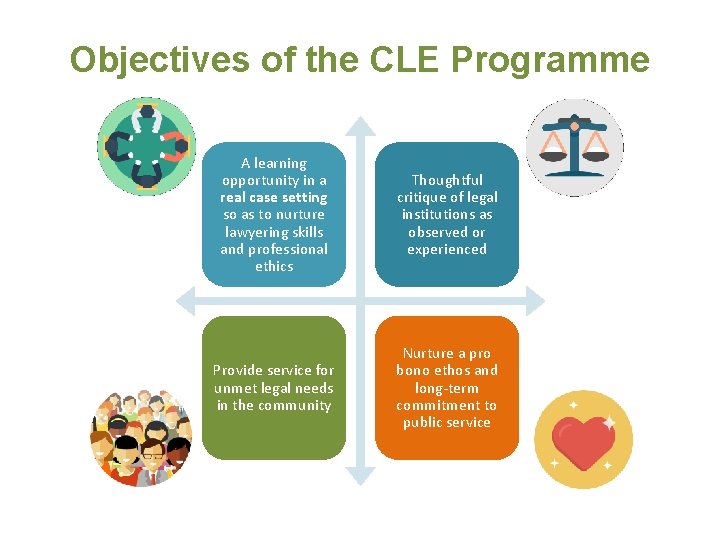
Objectives of the CLE Programme A learning opportunity in a real case setting so as to nurture lawyering skills and professional ethics Thoughtful critique of legal institutions as observed or experienced Provide service for unmet legal needs in the community Nurture a pro bono ethos and long-term commitment to public service
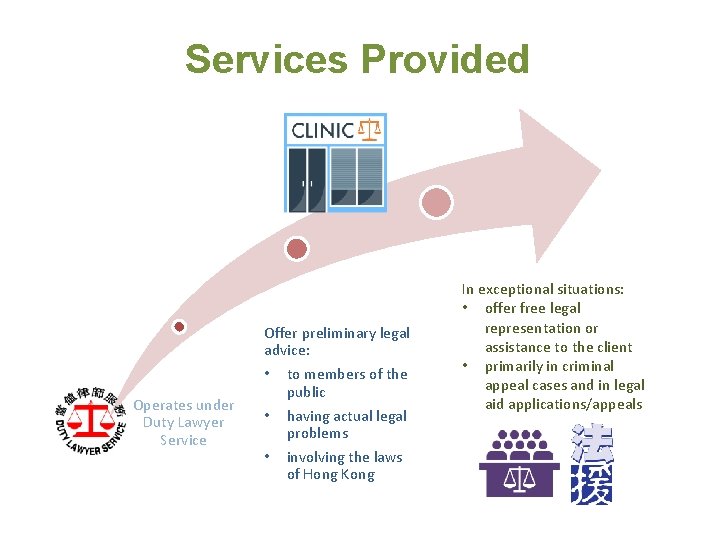
Services Provided Offer preliminary legal advice: • Operates under Duty Lawyer Service • • to members of the public having actual legal problems involving the laws of Hong Kong In exceptional situations: • offer free legal representation or assistance to the client • primarily in criminal appeal cases and in legal aid applications/appeals
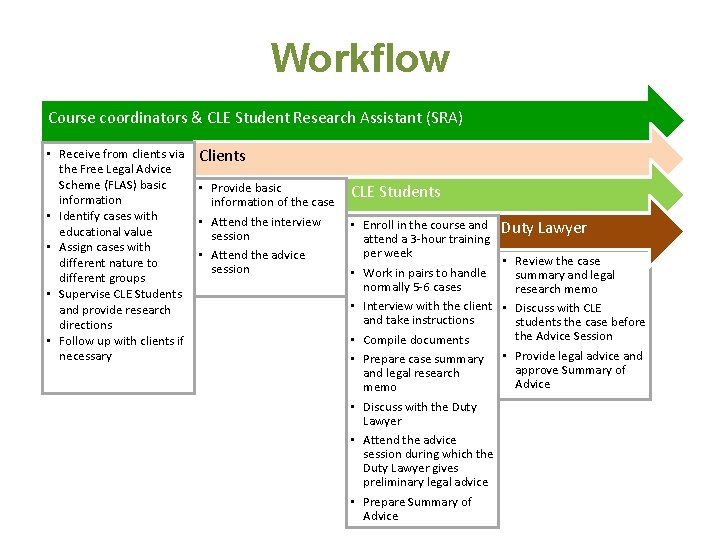
Workflow Course coordinators & CLE Student Research Assistant (SRA) • Receive from clients via Clients the Free Legal Advice Scheme (FLAS) basic • Provide basic information of the case • Identify cases with • Attend the interview educational value session • Assign cases with • Attend the advice different nature to session different groups • Supervise CLE Students and provide research directions • Follow up with clients if necessary CLE Students • Enroll in the course and Duty Lawyer attend a 3 -hour training per week • Review the case • Work in pairs to handle summary and legal normally 5 -6 cases research memo • Interview with the client • Discuss with CLE and take instructions students the case before the Advice Session • Compile documents • Prepare case summary • Provide legal advice and approve Summary of and legal research Advice memo • Discuss with the Duty Lawyer • Attend the advice session during which the Duty Lawyer gives preliminary legal advice • Prepare Summary of Advice
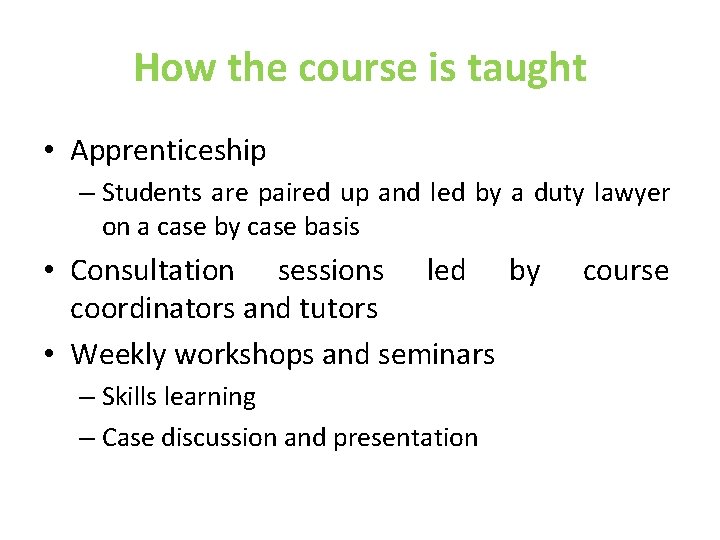
How the course is taught • Apprenticeship – Students are paired up and led by a duty lawyer on a case by case basis • Consultation sessions led by coordinators and tutors • Weekly workshops and seminars – Skills learning – Case discussion and presentation course
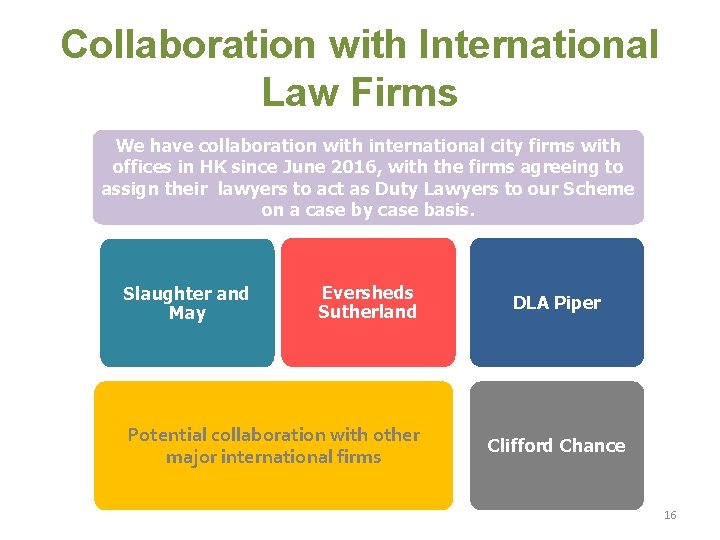
Collaboration with International Law Firms We have collaboration with international city firms with offices in HK since June 2016, with the firms agreeing to assign their lawyers to act as Duty Lawyers to our Scheme on a case by case basis. Slaughter and May Eversheds Sutherland Potential collaboration with other major international firms DLA Piper Clifford Chance 16
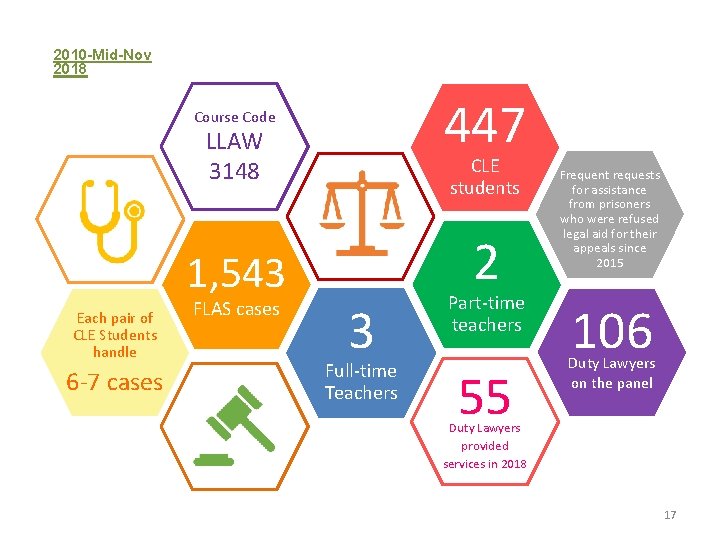
2010 -Mid-Nov 2018 447 Course Code LLAW 3148 1, 543 Each pair of CLE Students handle 6 -7 cases FLAS cases CLE students 2 3 Full-time Teachers Part-time teachers 55 Frequent requests for assistance from prisoners who were refused legal aid for their appeals since 2015 106 Duty Lawyers on the panel Duty Lawyers provided services in 2018 17
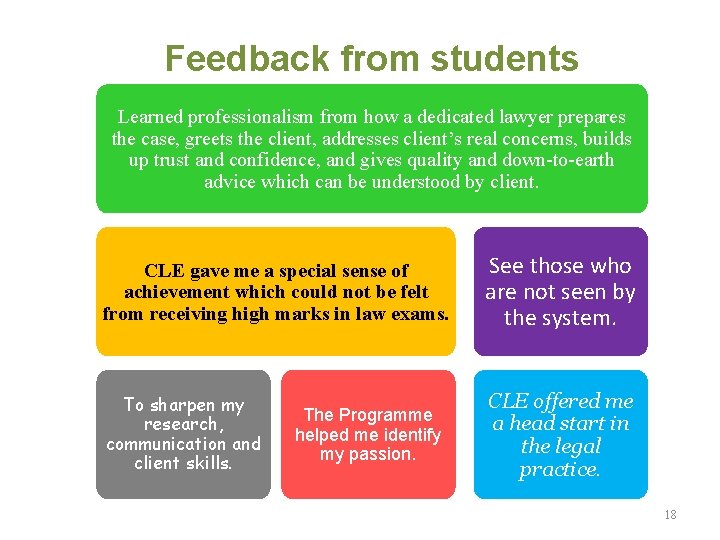
Feedback from students Learned professionalism from how a dedicated lawyer prepares the case, greets the client, addresses client’s real concerns, builds up trust and confidence, and gives quality and down-to-earth advice which can be understood by client. CLE gave me a special sense of achievement which could not be felt from receiving high marks in law exams. See those who are not seen by the system. To sharpen my research, communication and client skills. CLE offered me a head start in the legal practice. The Programme helped me identify my passion. 18
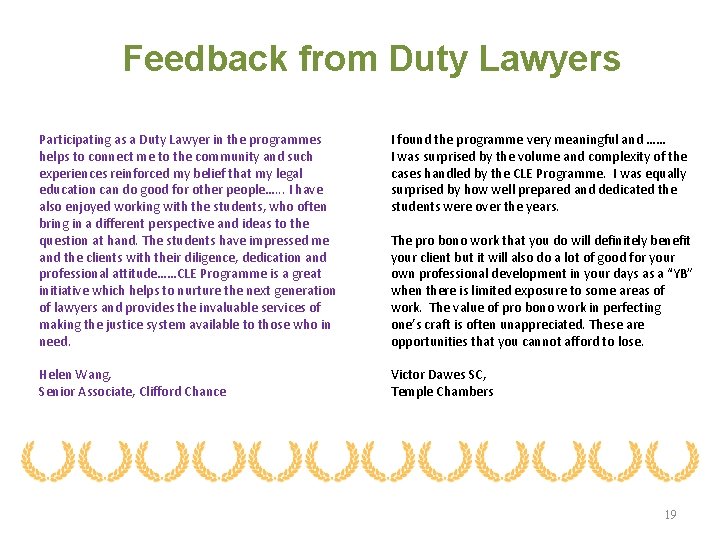
Feedback from Duty Lawyers Participating as a Duty Lawyer in the programmes helps to connect me to the community and such experiences reinforced my belief that my legal education can do good for other people…. . . I have also enjoyed working with the students, who often bring in a different perspective and ideas to the question at hand. The students have impressed me and the clients with their diligence, dedication and professional attitude……CLE Programme is a great initiative which helps to nurture the next generation of lawyers and provides the invaluable services of making the justice system available to those who in need. Helen Wang, Senior Associate, Clifford Chance I found the programme very meaningful and …… I was surprised by the volume and complexity of the cases handled by the CLE Programme. I was equally surprised by how well prepared and dedicated the students were over the years. The pro bono work that you do will definitely benefit your client but it will also do a lot of good for your own professional development in your days as a “YB” when there is limited exposure to some areas of work. The value of pro bono work in perfecting one’s craft is often unappreciated. These are opportunities that you cannot afford to lose. Victor Dawes SC, Temple Chambers 19
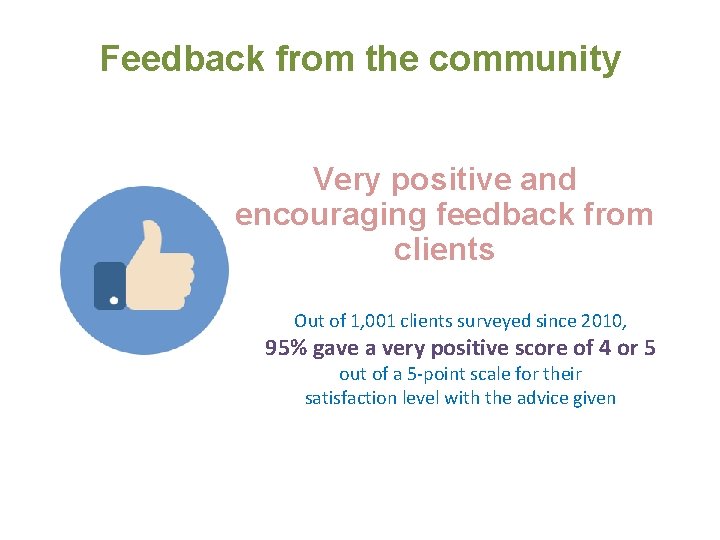
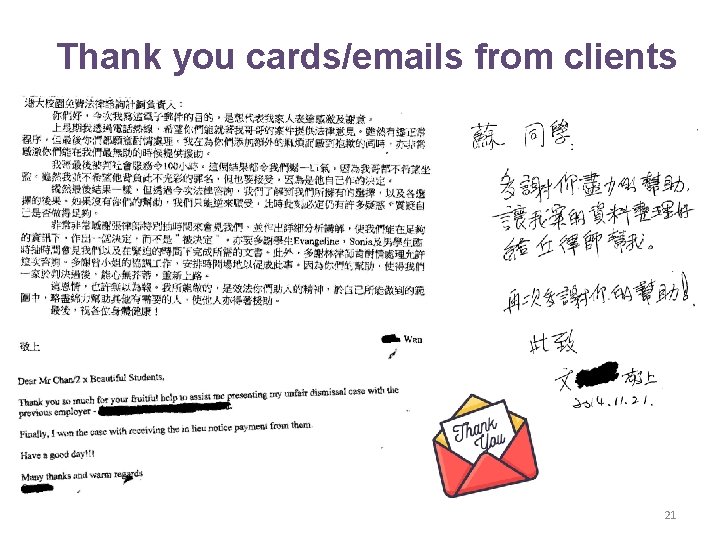
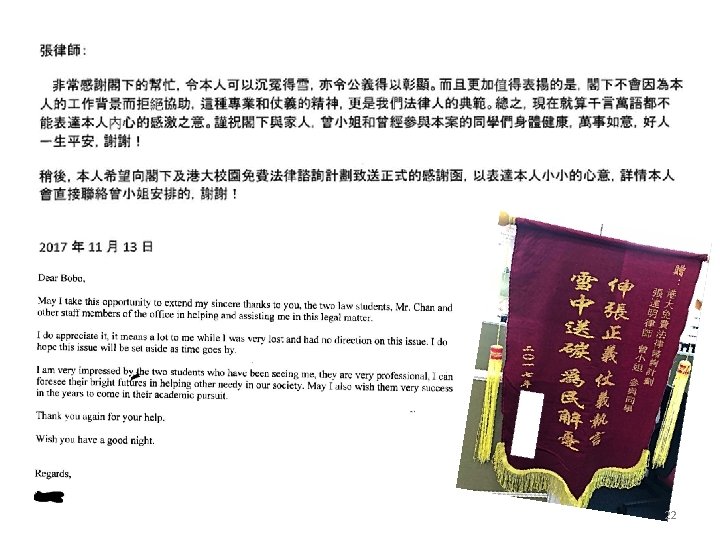
Feedback from the community Very positive and encouraging feedback from clients Out of 1, 001 clients surveyed since 2010, 95% gave a very positive score of 4 or 5 out of a 5 -point scale for their satisfaction level with the advice given
Thank you cards/emails from clients 21
22
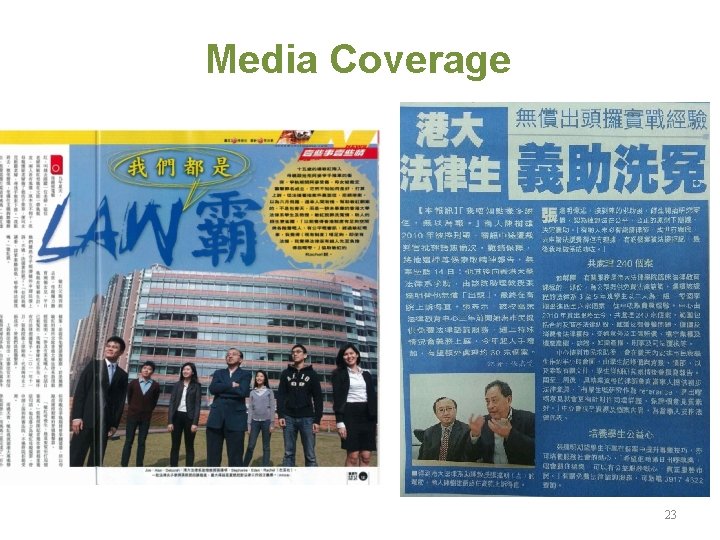
Media Coverage 23
24
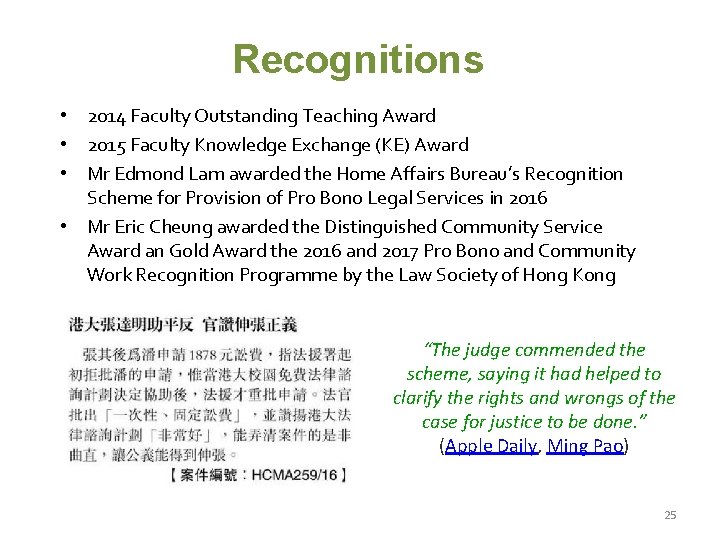
Recognitions • 2014 Faculty Outstanding Teaching Award • 2015 Faculty Knowledge Exchange (KE) Award • Mr Edmond Lam awarded the Home Affairs Bureau’s Recognition Scheme for Provision of Pro Bono Legal Services in 2016 • Mr Eric Cheung awarded the Distinguished Community Service Award an Gold Award the 2016 and 2017 Pro Bono and Community Work Recognition Programme by the Law Society of Hong Kong “The judge commended the scheme, saying it had helped to clarify the rights and wrongs of the case for justice to be done. ” (Apple Daily, Ming Pao) 25
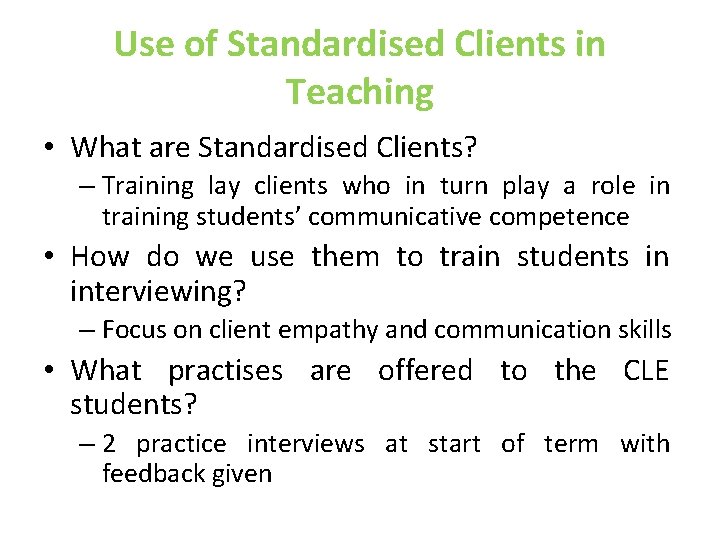
Use of Standardised Clients in Teaching • What are Standardised Clients? – Training lay clients who in turn play a role in training students’ communicative competence • How do we use them to train students in interviewing? – Focus on client empathy and communication skills • What practises are offered to the CLE students? – 2 practice interviews at start of term with feedback given
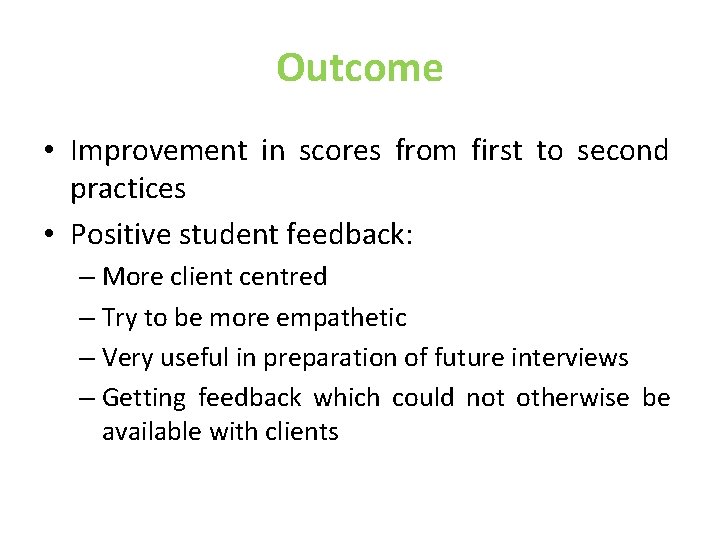
Outcome • Improvement in scores from first to second practices • Positive student feedback: – More client centred – Try to be more empathetic – Very useful in preparation of future interviews – Getting feedback which could not otherwise be available with clients