The Cheating Culture Why American Are Doing Wrong

- Slides: 21
The Cheating Culture: Why American Are Doing Wrong to Get Ahead. (2004). David Callahan. Harcourt.
The Cheating Culture • Cheating is increasing in American society. – – – – NY Municipal Credit Union 9/11 Henry Blodget Enron World Com Wall Street Big Banks SAT tests
Diagnosis shopping Doctors Lawyers overbilling CEO’s fake resumes Steroids in sports Jayson Blair and Stephen Glass (“Shattered Glass”) in Journalism – 82% of corporate executives admitted to cheating on gold course – – – • Crime down, violence down, drunk driving down. Cheating up?
• Cheating is breaking the rules to get ahead academically, professionally, or financially. – Some cheating violates the law – often by outstanding members of society who wouldn’t shoplift a pack of chewing gum. But at tax time cheat, or betray trust of clients or patients, or rip off insurance companies or the government. • Americans tend to use two moral compasses: – One that directs behavior on sex, family, drugs and traditional forms of crime. – Another that provides ethical guidance in careers, money, and success.
• Where did Americans pick up second compass? • Jeffersonian suspicion of central power nurtured seeking personal liberty and individualism. • During Industrial Revolution Americans embraced the rawest form of industrial capitalism in the world. • 1920 s notorious for cheating, and inequality was at its height – not until 2007 was it that high again. • Social responsibility movement lost traction in 1970 s and 1980 s.
• 1981 Reagan: “Government is not the solution; government is the problem. ” – Deregulation – Making money was in, government activism was out. – “The market as the dominant cultural force had so infiltrated society that it is increasingly difficult to remember any other reality. ” – The laissez-faire revolution – focusing on the bottom line and shareholder value.
• Economic inequalities led to striking changes in our society. – Winner-take –all – High inequality = more divisions in society, undermining the “we’re all in it together” mentality and being bound by the same rules. – Inequality reshaped politics as wealthy elites were able to break the rules. Money = influence. – The government’s ability to act as a referee was hobbled.
• Market values held sway. Social Darwinism thinking dominated. • Cheating increased. • What led to more cheating? – – New pressures for profit Bigger rewards for winning Temptation Trickle-down corruption • When middle-class people stop believing the rules are fair, they change their behavior. • Hard to stop when “everybody does it. ”
• Cheating in the bottom-line economy: – Money is valued more than service to clients, customers, or community. • Wall Street – outright greed. • Lawyers overbilling hourly • Whatever-It-Takes morals – – Led by skyrocketing CEO pay Tax policies that favor the rich Barry Bonds in sports Jason Blair, Jonah Lehrer in journalism
• It’s a question of character. – The “do your own thing” of the 1960 s led to the laissez-faire revolution of the 1980 s and 1990 s. – Stressed individual liberty and choice. – Ayn Rand’s philosophy of extreme libertarianism – unfettered markets and personal freedom – 1980 s juggernaut of yuppies and materialism – Financial goals pushed aside other aspirations – belief that more money makes you happier. – Rise of Social Darwinism – survival of the fittest means some people naturally suited to rule. – Made moral judgments on people’s level of economic success.
• The everybody-loves-a-winner mentality has troubling implications for our society’s ethics. – Cut slack for those who are successful; love them whatever their sins. – The sacrosanct goal of wealth virtually consecrates the means – any means. • Jay Gatsby • Ken Lay
• However, Max Weber argued that people are more likely to follow rules or laws that seem fair and are made by an authority that deserves its power.
• Cheating from the starting line: – – Cheating at schools to get into selective colleges rampant. Difference between Harvard and Rutgers worth millions. Cheating one way not to be left behind. Stakes are too big. • Crime and no punishment. – United States more punitive than any other advanced democratic society – death penalty. – Uniquely tough on poor and unemployed and on drug offenders.
• “Strict-father” morality jibes easily with laissez-faire mentality and libertarianism. • Wealthy American coddled. • Most academic cheating goes unpunished. • Athletes and other admired people easily forgiven.
• Cheating thrives where unfairness reigns along with economic anxiety. – And where government is the weak captive of the wealthy. • New social contract with new rules is needed: – Everyone who plays by the rules can get ahead. – Everyone who breaks the rules suffers the same penalties. – All off us are in the same boat, living in the same moral community.
• We need a different bottom line. – Media ethics – Business ethics
Happiest and Most Hated Jobs
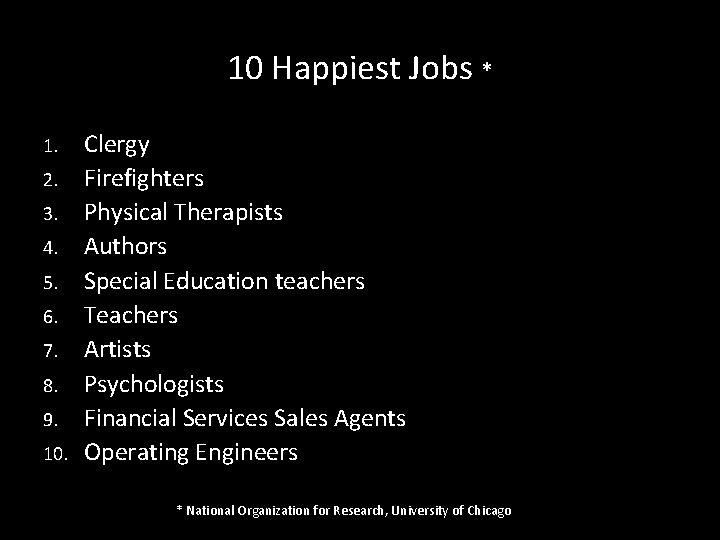
10 Happiest Jobs * 1. 2. 3. 4. 5. 6. 7. 8. 9. 10. Clergy Firefighters Physical Therapists Authors Special Education teachers Teachers Artists Psychologists Financial Services Sales Agents Operating Engineers * National Organization for Research, University of Chicago
• Meaning, not money
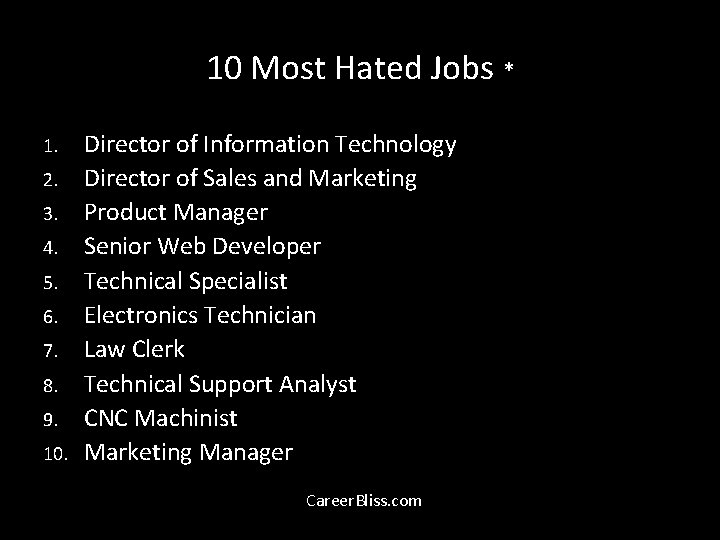
10 Most Hated Jobs * 1. 2. 3. 4. 5. 6. 7. 8. 9. 10. Director of Information Technology Director of Sales and Marketing Product Manager Senior Web Developer Technical Specialist Electronics Technician Law Clerk Technical Support Analyst CNC Machinist Marketing Manager Career. Bliss. com
• Money, not meaning