Tessellation Game Plan Journal Entry History of Tessellation

- Slides: 10
Tessellation
Game Plan • • • Journal Entry History of Tessellation Article Tessellation - Dilation / Iteration Project Objective: Explain how computers can be used as a tool for visualizing data, modeling, design, and patterns
WORDPRESS POST Define (on your post) ● Tessellation ● Iteration ● Dilations Research The History of Tessellation(on your post) ● Read the article on History of Tessellation “ the Beginnings”. ○ http: //tinyurl. com/pdrwt 9 j ● Summarize what you read. Answer the following on your post. ● How does this relate to Computer Science and/ or Coding. You are to create a Tessellation Artwork that contains Dilation and/or Iteration. ● On a 8. 5 x 11 paper ● Take a picture add to your post
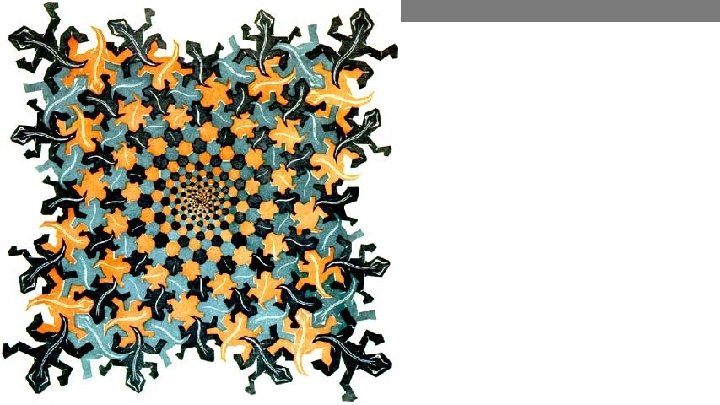
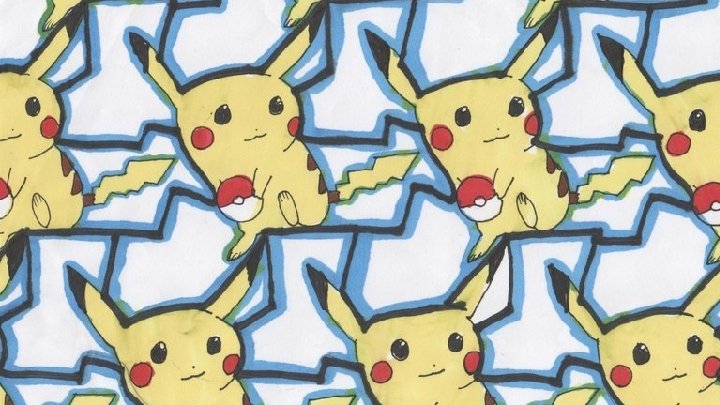
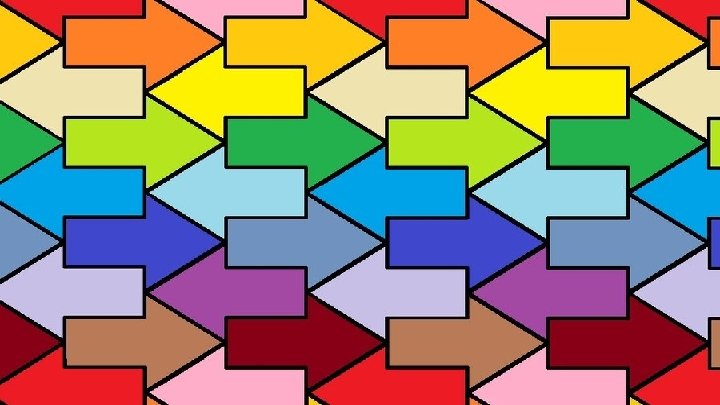
Tessellation The Beginnings In ancient Rome, "tessella" were small squarish tiles that artists covered floors and walls with, to make bigger pictures. Basically, this is also what happens with the colored dots on your computer screen: they're lined up and colored to create a bigger picture. Today, on this website, "tessellation" means something a little different. There are two main kinds of tessellation art that we like to talk about and look at, here. . In the first kind, Alhambra style tessellation, the tiles aren't merely squares. They're geometric-looking abstract shapes, not merely squares or bricks. They give us a feeling of awe about their geometry. Look at the first picture on this page, an Alhambra tessellation. Doesn't it make you want to say "Wow!"? In the second kind, Escher style tessellation, the tiles are as big as the picture. Also, instead of being square or other geometric shapes (octagons, triangles, hexagons. . . ), each tile looks like something: maybe a bird, a Toyota, a toaster, a dancer, a fish. . . whatever. The silhouette. . . the outline. . . of each tile is enough to tell the audience "this tile is shaped like a rabbit. ". . . or a duck, or a goldfish. Whatever. There are other kinds of tessellation, of course: natural tessellations like bee honeycombs, and architects' tessellations like brickwork and kitchen floors. However, in this website, and generally in the art world, we stick to the Alhambra and Escher styles. The tilings in the Alhambra in Spain were laid out by the Moors and by Christian artisans inspired by the Moors' style in the 14 th century. They are made of coloured tiles forming patterns, many truly symmetrical, geometrical and beautiful. Some were not tessellations because they didn't cover a surface with a repetitive design without gaps or overlaps. However, many of the Alhambra's patterns were true tessellations, like three shown here. They inspired the young M. C Escher, who copied these geometric tessellations into his notebooks and later tweaked some into tessellations that resembled animals or people. (For examples, see "China Boy" 1936 and "Strong Men" 1936. ) Escher defined "tessellation" as "the regular division of a plane". At Tessellations. org, we use a similar definition: "Repeating shapes or patterns that cover a surface without gaps or overlaps. " In our opinion, the shapes in a tessellation can be geometric like squares and triangles, or shaped like animals and people. That surface can be square like a page orround like a CD. It can be flat or cover a 3 D object like a lampshade, shoebox, donut, baseball, or soccer ball. The Alhambra artists made many beautiful tessellations long before Escher was born, but Escher made tessellation art much more popular. Escher noted that the Alhambra tilings never included animals or plants. His tessellations hardly ever left them out! One of Escher's biggest contributions to tessellation art was to make designs with people and animals instead of stiff geometric shapes like squares and triangles. When lecturing later in life, Escher used to ask the audience if they knew of any tessellations done by other artists in the past. He was sent details of a tapestry design by Koloman Moser entitled "Forellenreigen" ("trout farm"), depicting a fish tessellation completed around 1899 to 1902. (Escher was born in 1898. ) You can see it here, on this page. Have you seen tessellations from other cultures, and from the times before Escher? Please tell us about them, and we'll post your photos or sketches of them here! There were Egyptian, Hindu, Chinese and English tessellations, all "abstract" style rather than looking like animals and plants and people. Click here to visit another website that shows examples from those other cultures.
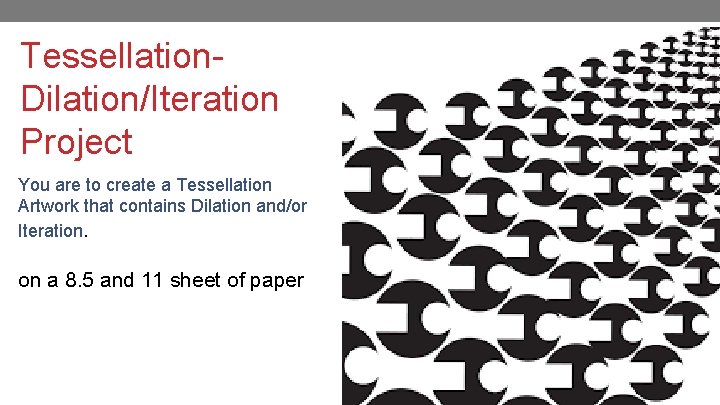
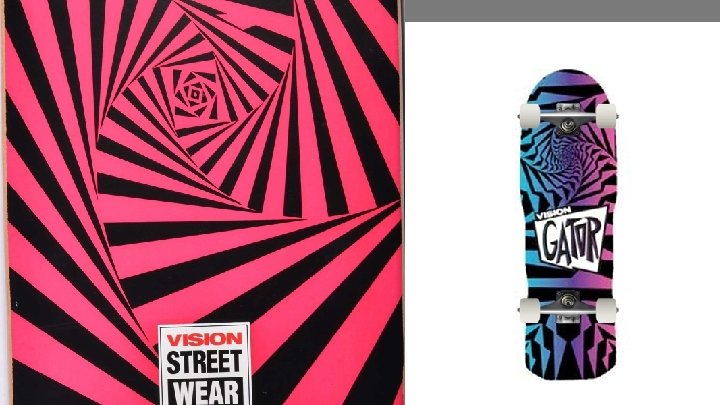
Tessellation- Dilation/Iteration Project You are to create a Tessellation Artwork that contains Dilation and/or Iteration. on a 8. 5 and 11 sheet of paper
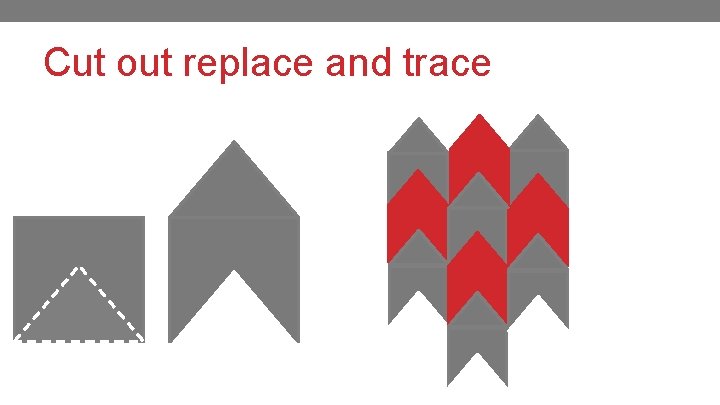
Cut out replace and trace