Profit and Changes in Retained Earnings Chapter 12





- Slides: 37
Profit and Changes in Retained Earnings Chapter 12 Mc. Graw-Hill/Irwin Copyright © 2010 by The Mc. Graw-Hill Companies, Inc. All rights reserved.
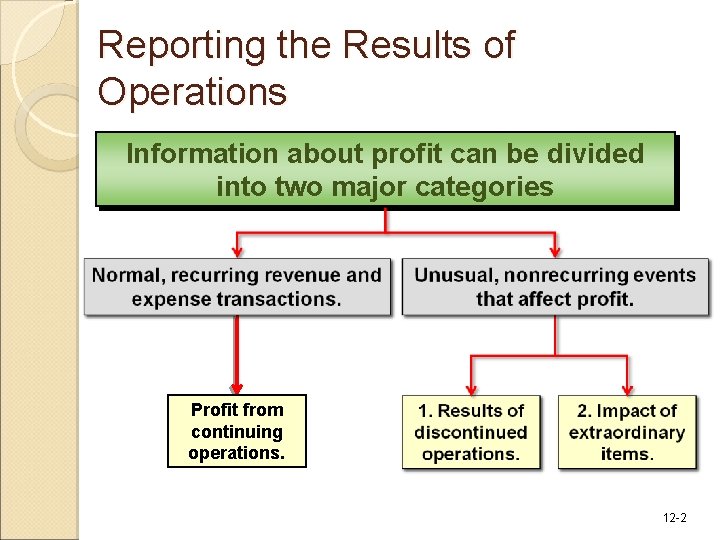
Reporting the Results of Operations Information about profit can be divided into two major categories Profit from continuing operations. 12 -2
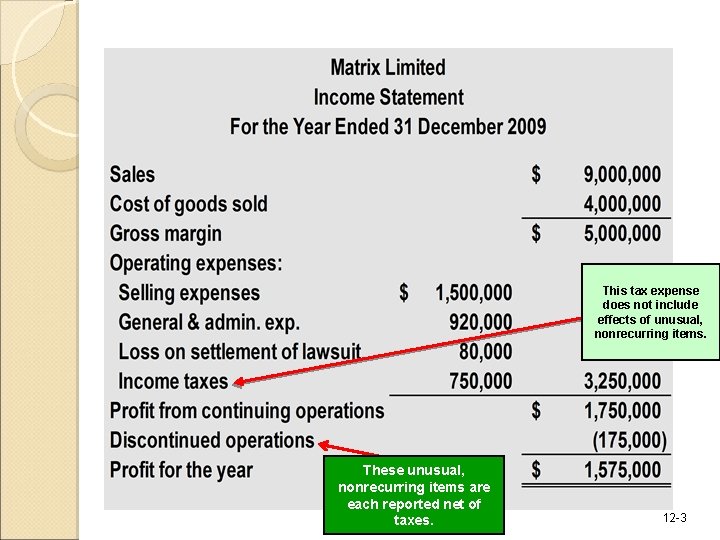
This tax expense does not include effects of unusual, nonrecurring items. These unusual, nonrecurring items are each reported net of taxes. 12 -3
Discontinued Operations When management enters into a formal plan to sell or discontinue a component of a company, the related gains and losses must be disclosed on the income statement. Discontinued Operations 12 -4
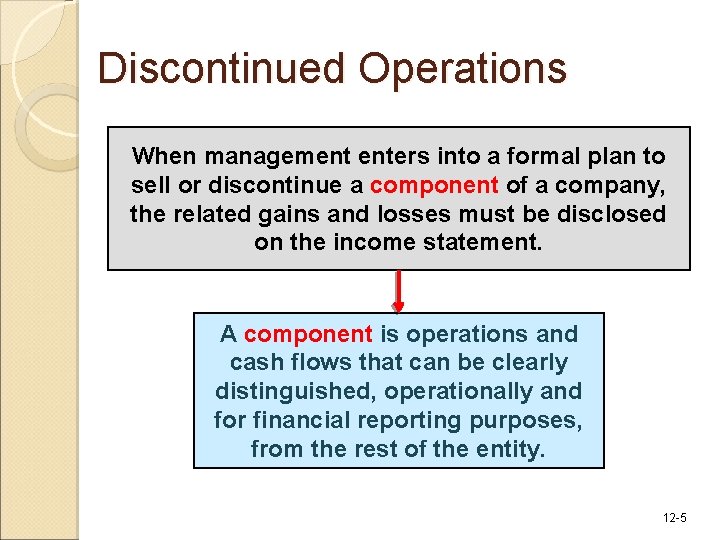
Discontinued Operations When management enters into a formal plan to sell or discontinue a component of a company, the related gains and losses must be disclosed on the income statement. A component is operations and cash flows that can be clearly distinguished, operationally and for financial reporting purposes, from the rest of the entity. 12 -5
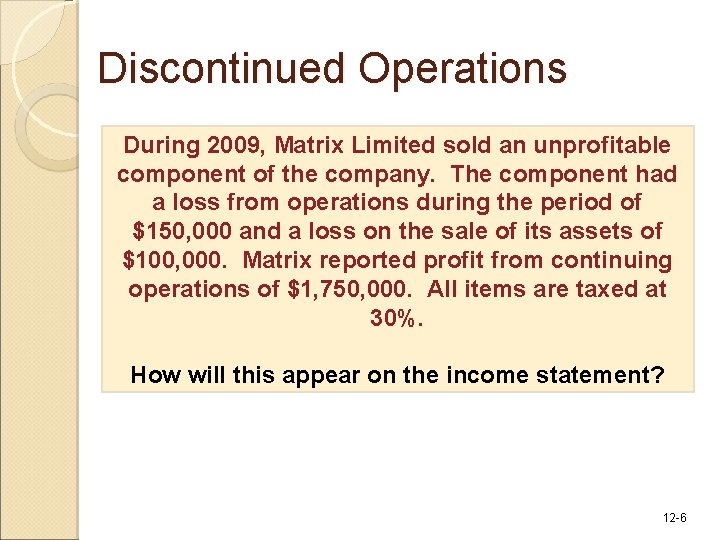
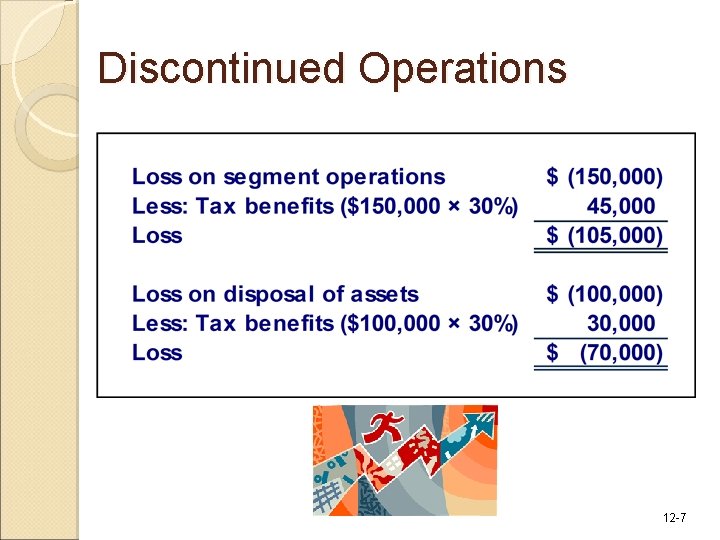
Discontinued Operations During 2009, Matrix Limited sold an unprofitable component of the company. The component had a loss from operations during the period of $150, 000 and a loss on the sale of its assets of $100, 000. Matrix reported profit from continuing operations of $1, 750, 000. All items are taxed at 30%. How will this appear on the income statement? 12 -6
Discontinued Operations 12 -7
Discontinued Operations Income Statement Presentation: 12 -8
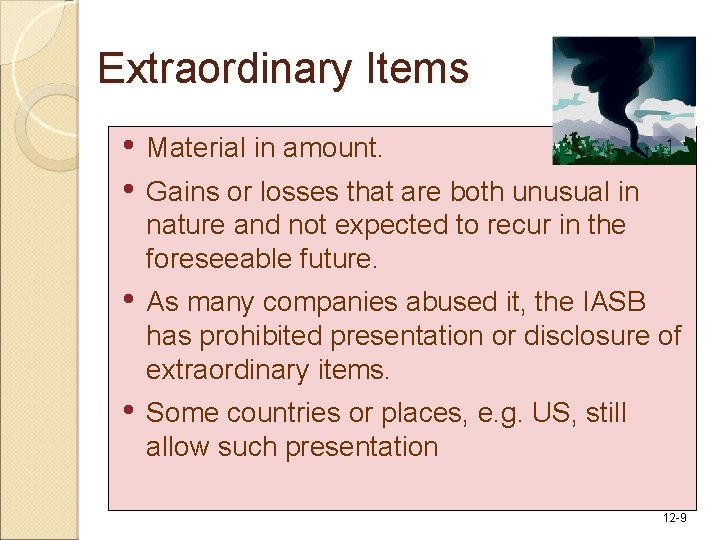
Extraordinary Items • • Material in amount. • As many companies abused it, the IASB has prohibited presentation or disclosure of extraordinary items. • Some countries or places, e. g. US, still allow such presentation Gains or losses that are both unusual in nature and not expected to recur in the foreseeable future. 12 -9
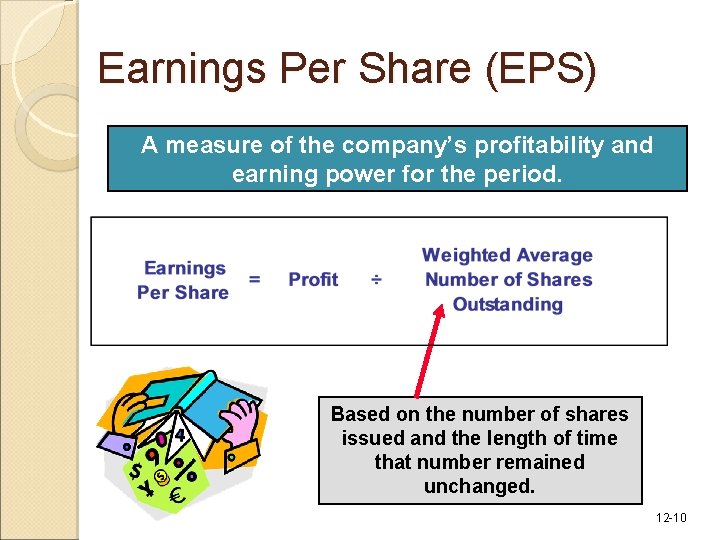
Earnings Per Share (EPS) A measure of the company’s profitability and earning power for the period. Based on the number of shares issued and the length of time that number remained unchanged. 12 -10
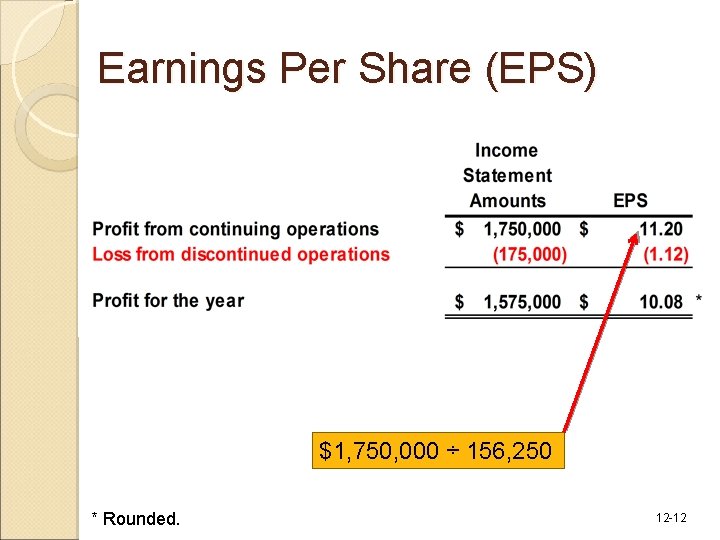
Earnings Per Share (EPS) Remember that Matrix Limited has profit from continuing operations of $1, 750, 000. The after-tax loss from discontinued operations was $175, 000. Assume that Matrix has 156, 250 weighted average shares outstanding. Let’s prepare a partial income statement using all this information. 12 -11
Earnings Per Share (EPS) $1, 750, 000 ÷ 156, 250 * Rounded. 12 -12
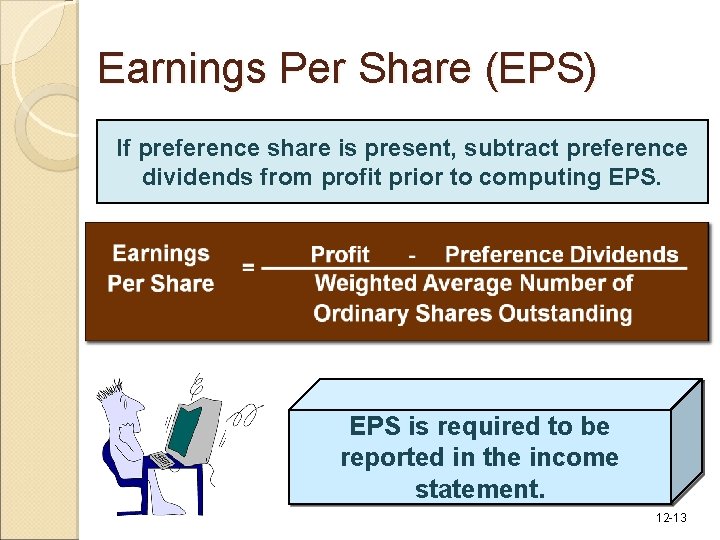
Earnings Per Share (EPS) If preference share is present, subtract preference dividends from profit prior to computing EPS is required to be reported in the income statement. 12 -13
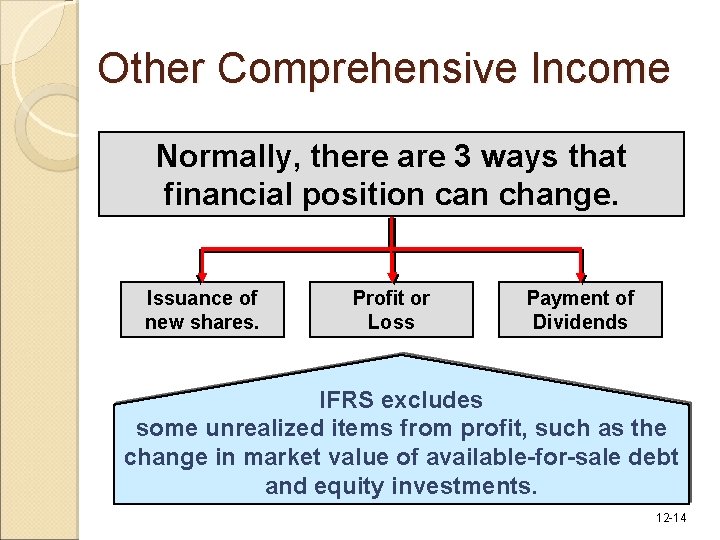
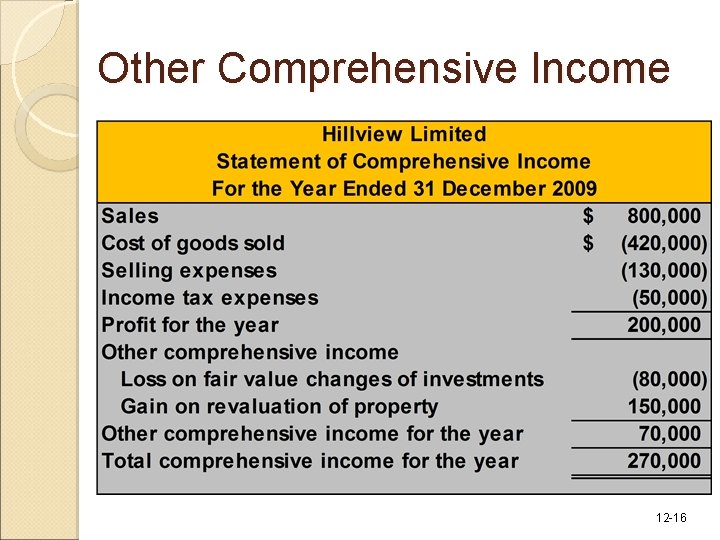
Other Comprehensive Income Normally, there are 3 ways that financial position can change. Issuance of new shares. Profit or Loss Payment of Dividends IFRS excludes some unrealized items from profit, such as the change in market value of available-for-sale debt and equity investments. 12 -14
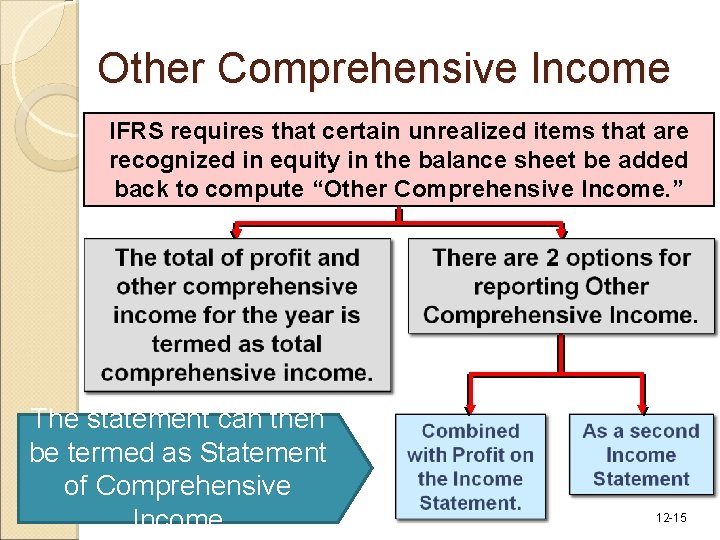
Other Comprehensive Income IFRS requires that certain unrealized items that are recognized in equity in the balance sheet be added back to compute “Other Comprehensive Income. ” The statement can then be termed as Statement of Comprehensive Income 12 -15
Other Comprehensive Income 12 -16
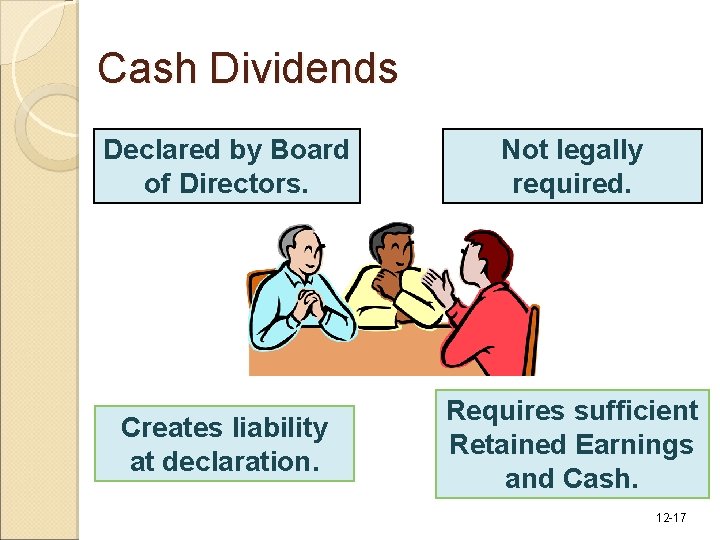
Cash Dividends Declared by Board of Directors. Not legally required. Creates liability at declaration. Requires sufficient Retained Earnings and Cash. 12 -17
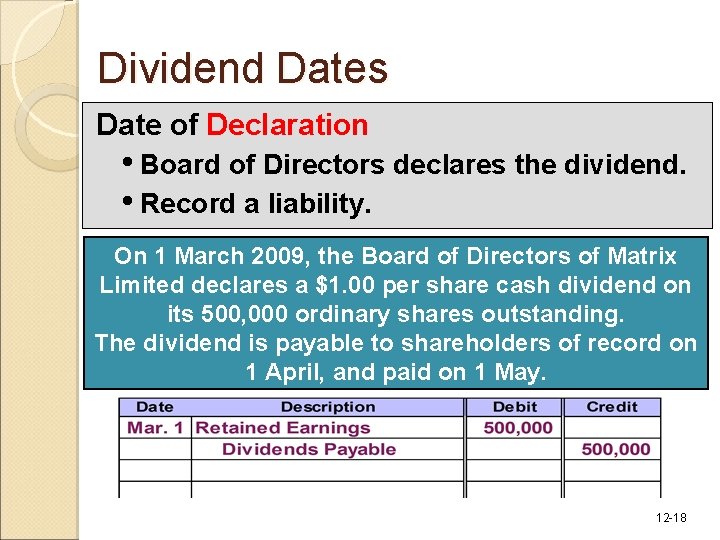
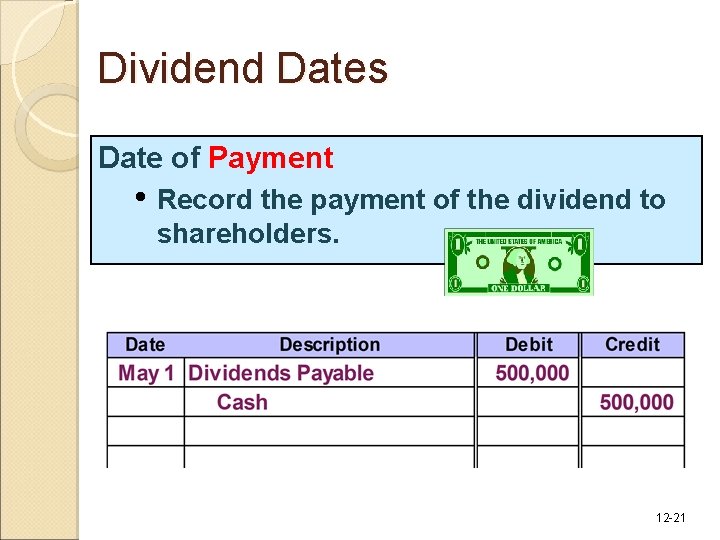
Dividend Dates Date of Declaration • Board of Directors declares the dividend. • Record a liability. On 1 March 2009, the Board of Directors of Matrix Limited declares a $1. 00 per share cash dividend on its 500, 000 ordinary shares outstanding. The dividend is payable to shareholders of record on 1 April, and paid on 1 May. 12 -18
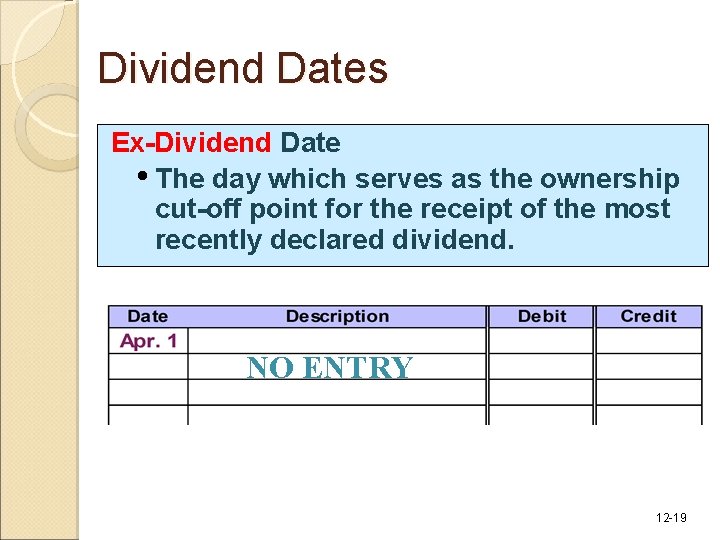
Dividend Dates Ex-Dividend Date • The day which serves as the ownership cut-off point for the receipt of the most recently declared dividend. NO ENTRY 12 -19
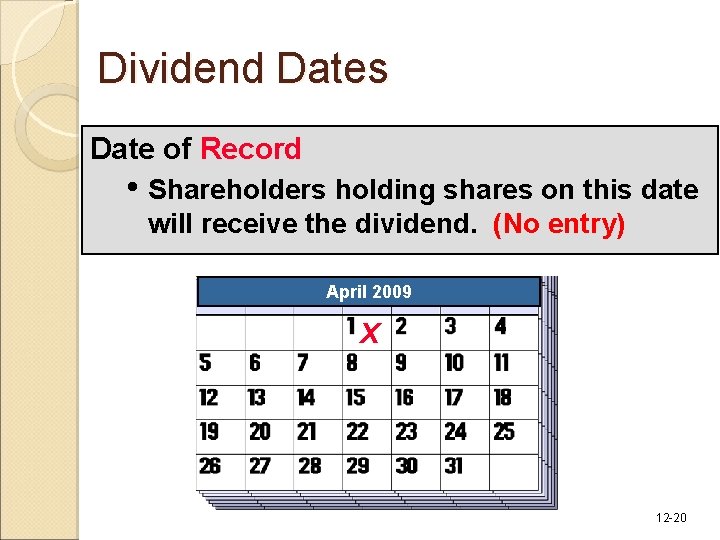
Dividend Dates Date of Record • Shareholders holding shares on this date will receive the dividend. (No entry) April 2009 X 12 -20
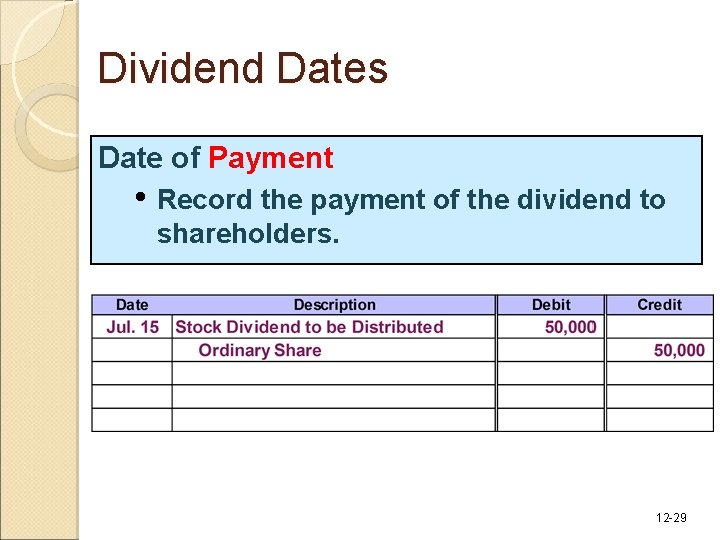
Dividend Dates Date of Payment • Record the payment of the dividend to shareholders. 12 -21
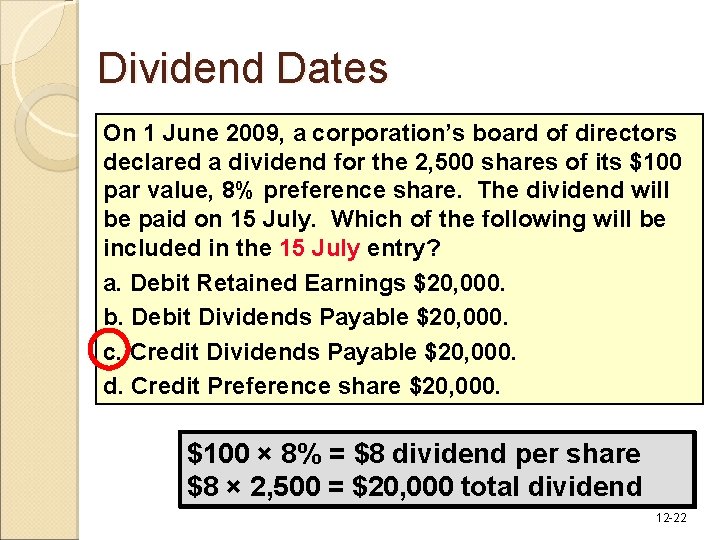
Dividend Dates On 1 June 2009, a corporation’s board of directors declared a dividend for the 2, 500 shares of its $100 par value, 8% preference share. The dividend will be paid on 15 July. Which of the following will be included in the 15 July entry? a. Debit Retained Earnings $20, 000. b. Debit Dividends Payable $20, 000. c. Credit Dividends Payable $20, 000. d. Credit Preference share $20, 000. $100 × 8% = $8 dividend per share $8 × 2, 500 = $20, 000 total dividend 12 -22
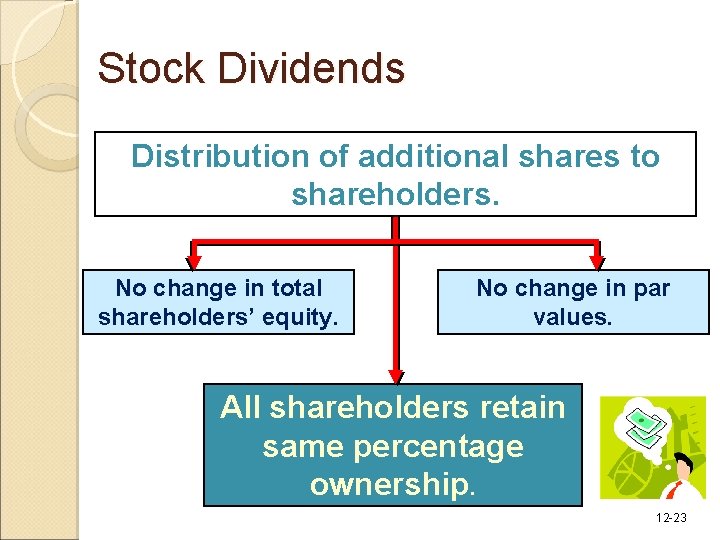
Stock Dividends Distribution of additional shares to shareholders. No change in total shareholders’ equity. No change in par values. All shareholders retain same percentage ownership. 12 -23
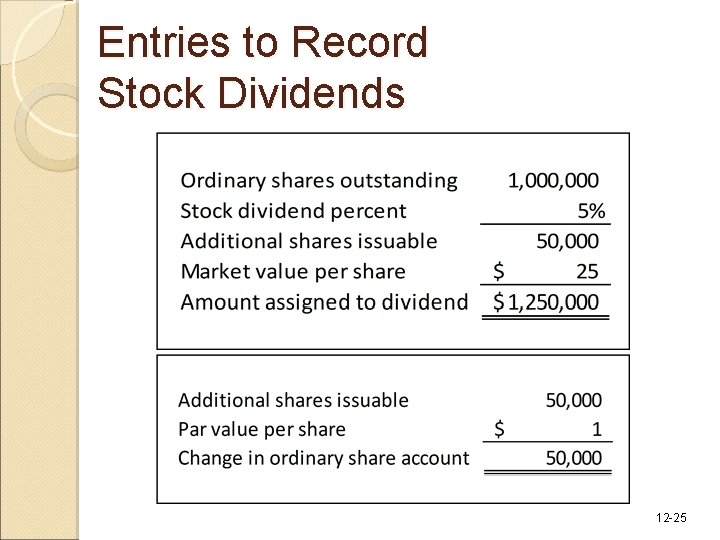
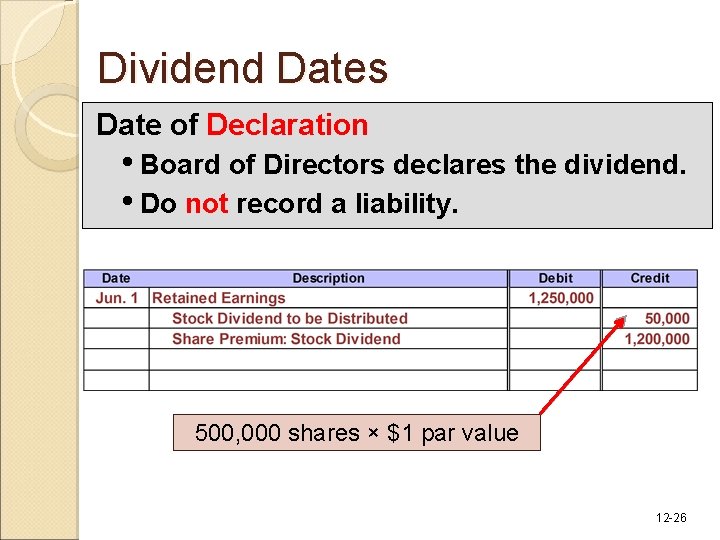
Entries to Record Stock Dividends In accounting for a relatively small stock dividend (say, less than 20%), the market value of the new shares is transferred from Retained Earning account to the share premium accounts. This process is sometimes called “capitalizing” retained earnings. On 1 June, Aspen Corporation has outstanding 1, 000 shares of $1 par value ordinary share with a market value of $25 per share. The company declares a 5% stock dividend on this date. The dividend is distributable on 15 July to shareholders of record on 20 June. Let’s look at the journal entries. 12 -24
Entries to Record Stock Dividends 12 -25
Dividend Dates Date of Declaration • Board of Directors declares the dividend. • Do not record a liability. 500, 000 shares × $1 par value 12 -26
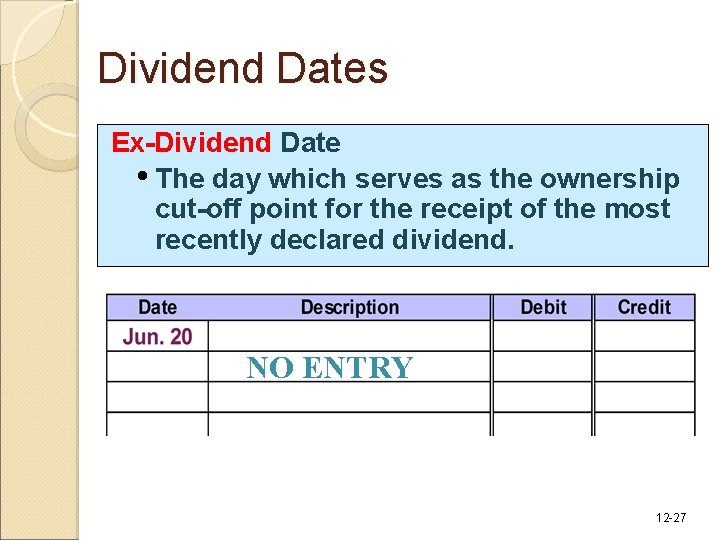
Dividend Dates Ex-Dividend Date • The day which serves as the ownership cut-off point for the receipt of the most recently declared dividend. NO ENTRY 12 -27
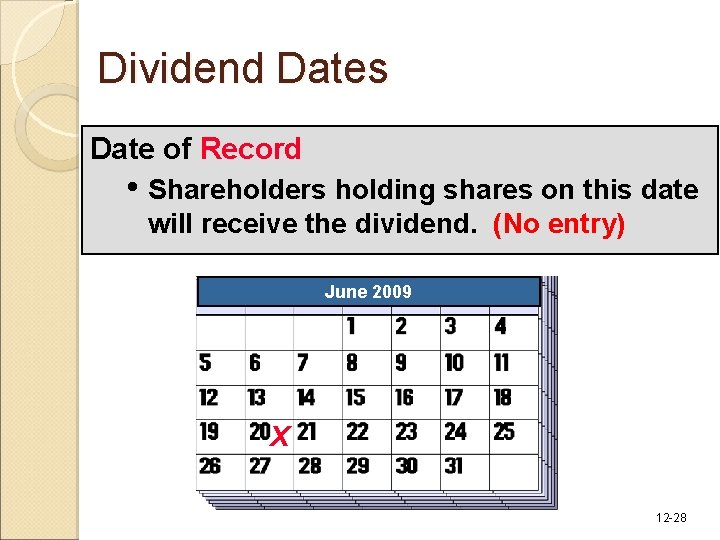
Dividend Dates Date of Record • Shareholders holding shares on this date will receive the dividend. (No entry) June 2009 X 12 -28
Dividend Dates Date of Payment • Record the payment of the dividend to shareholders. 12 -29
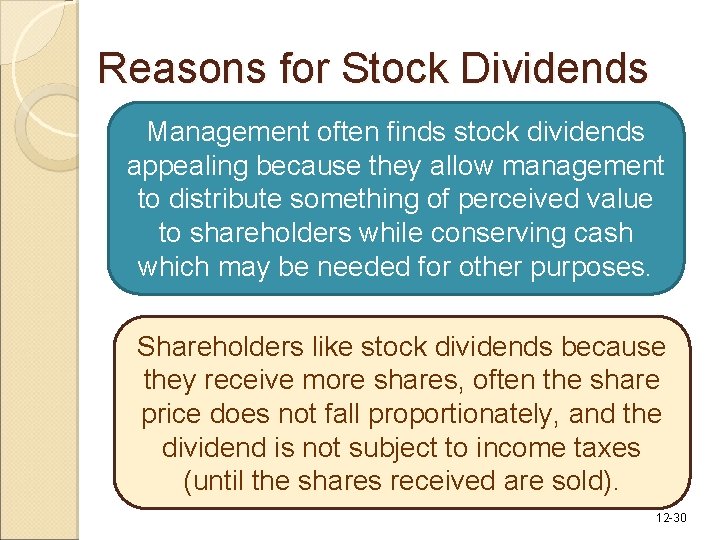
Reasons for Stock Dividends Management often finds stock dividends appealing because they allow management to distribute something of perceived value to shareholders while conserving cash which may be needed for other purposes. Shareholders like stock dividends because they receive more shares, often the share price does not fall proportionately, and the dividend is not subject to income taxes (until the shares received are sold). 12 -30
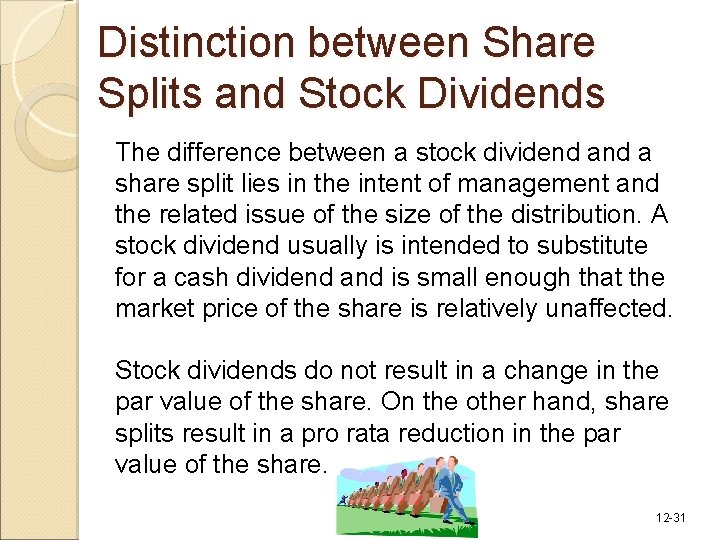
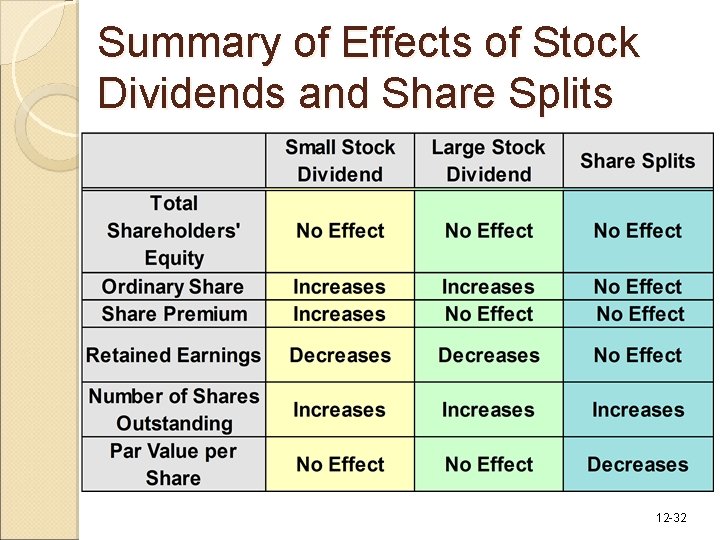
Distinction between Share Splits and Stock Dividends The difference between a stock dividend a share split lies in the intent of management and the related issue of the size of the distribution. A stock dividend usually is intended to substitute for a cash dividend and is small enough that the market price of the share is relatively unaffected. Stock dividends do not result in a change in the par value of the share. On the other hand, share splits result in a pro rata reduction in the par value of the share. 12 -31
Summary of Effects of Stock Dividends and Share Splits 12 -32
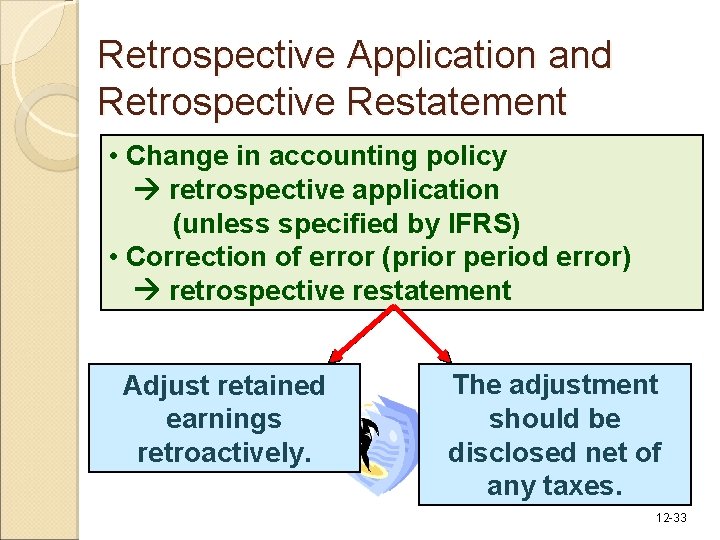
Retrospective Application and Retrospective Restatement • Change in accounting policy retrospective application (unless specified by IFRS) • Correction of error (prior period error) retrospective restatement Adjust retained earnings retroactively. The adjustment should be disclosed net of any taxes. 12 -33
Restrictions of Retained Earnings If I loan your company $1, 000, I will want you to restrict your retained earnings in order to limit dividend payments. Loan agreements can include restrictions on paying dividends below a certain amount of retained earnings. 12 -34
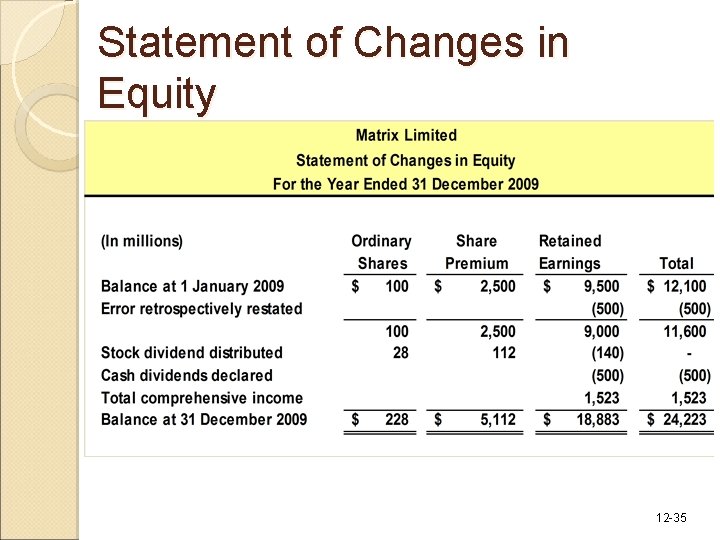
Statement of Changes in Equity 12 -35
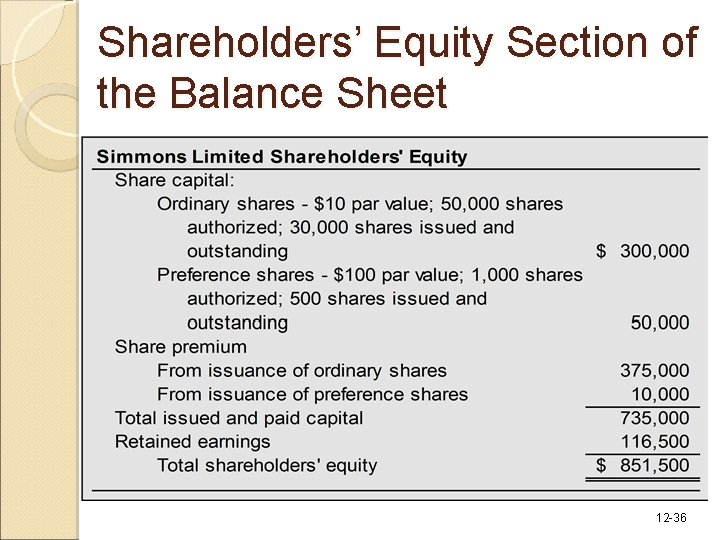
Shareholders’ Equity Section of the Balance Sheet 12 -36
End of Chapter 12 12 -37