TDT 69 Artistic Software Products and Processes Letizia
- Slides: 12
TDT 69 Artistic Software: Products and Processes Letizia Jaccheri www. letiziajaccheri. com
Formalities 3. 75 SP (6 hours per week work) Support for project but not only Exam 1 st December 2010, oral 25 minutes Monday 13/09 27/09 25/10 08/11 presentation by students • Workshop OSS technology (arduino, processing, scratch, ? ) from 9. 00 to 14. 00, 4 th october • •
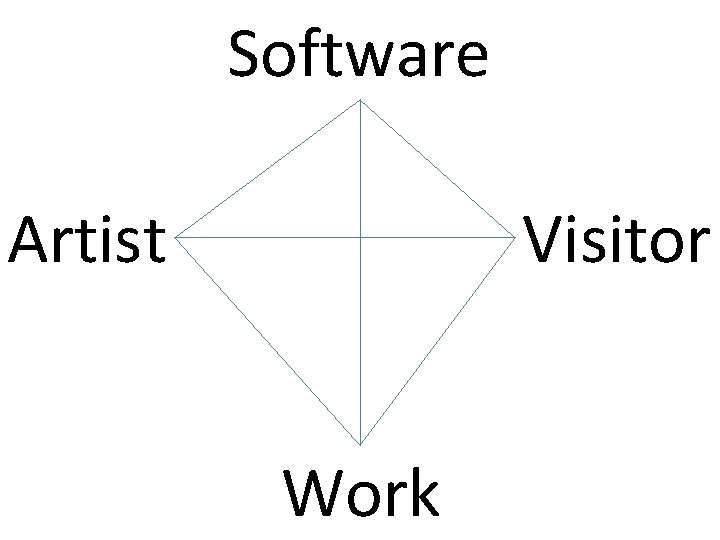
Software Artist Visitor Work
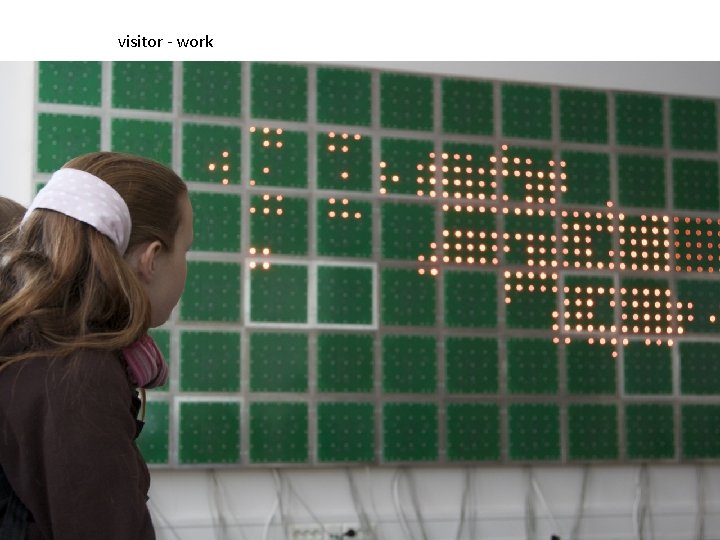
visitor - work
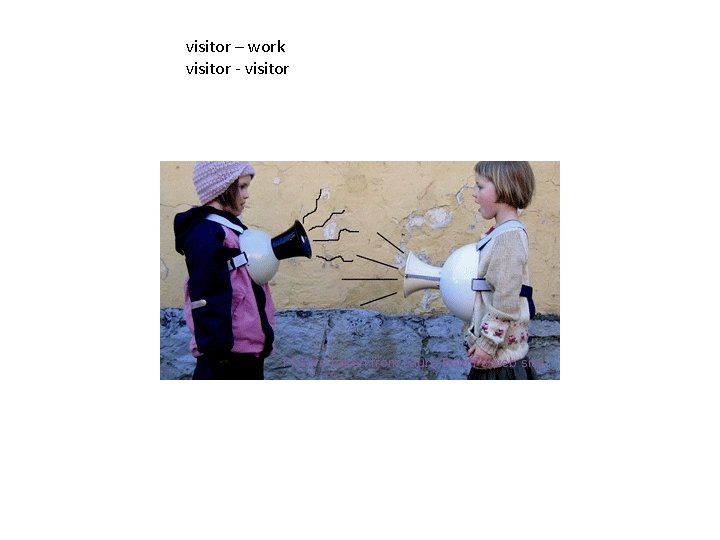
visitor – work visitor - visitor
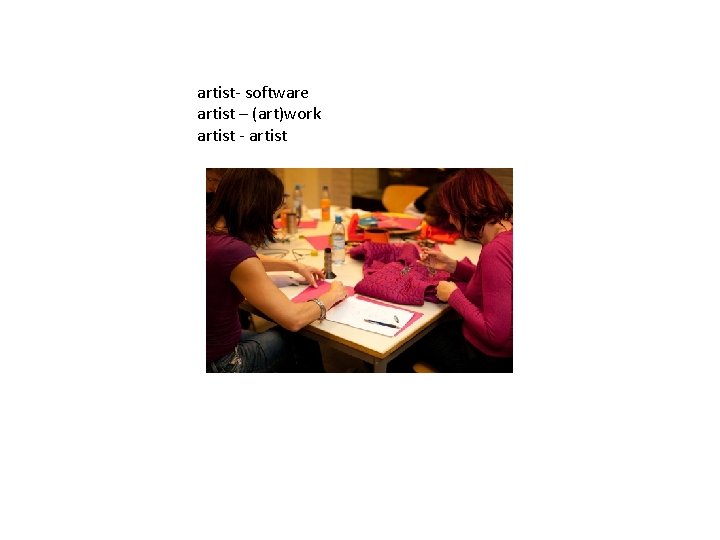
artist- software artist – (art)work artist - artist
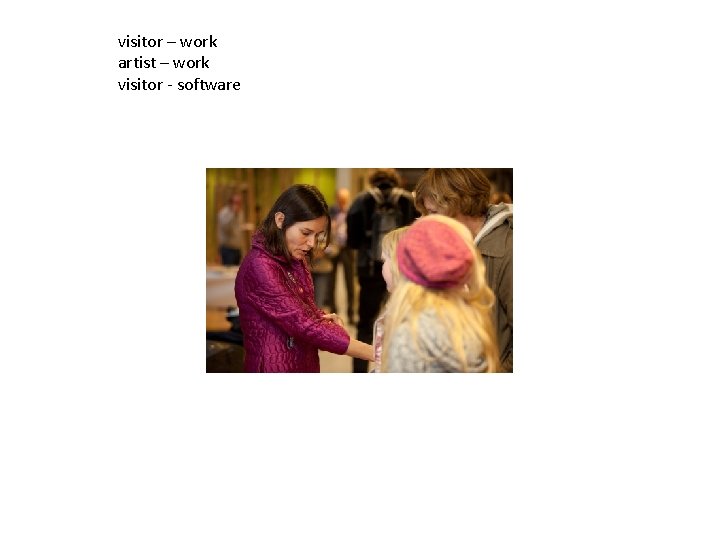
visitor – work artist – work visitor - software
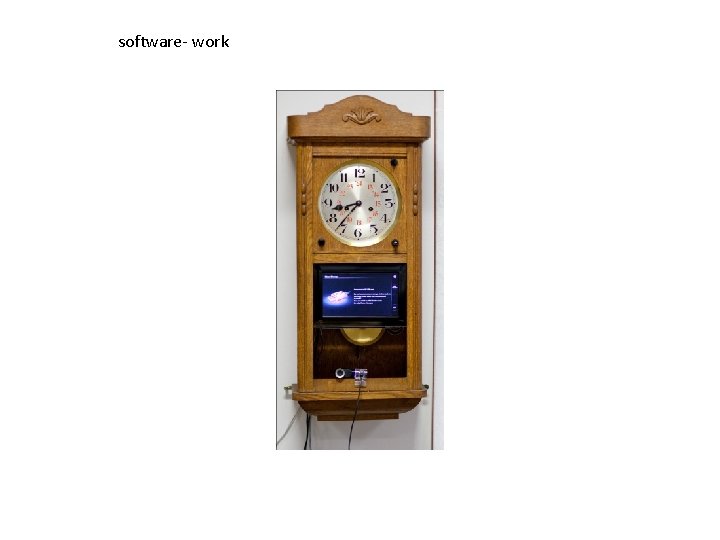
software- work
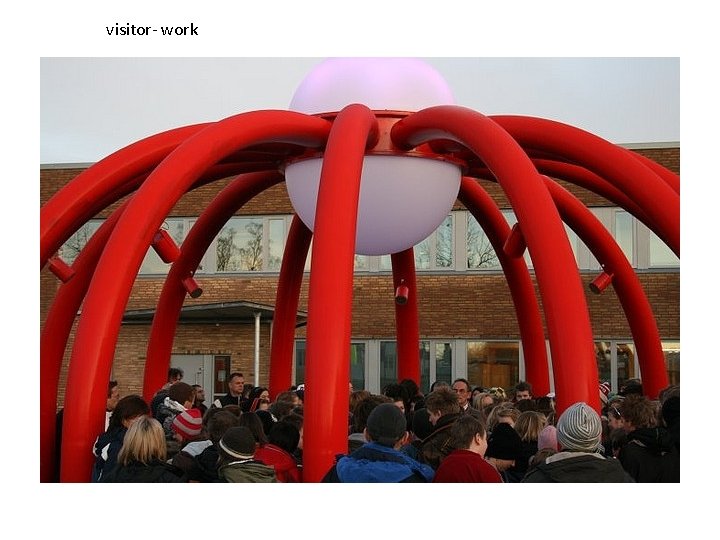
visitor- work
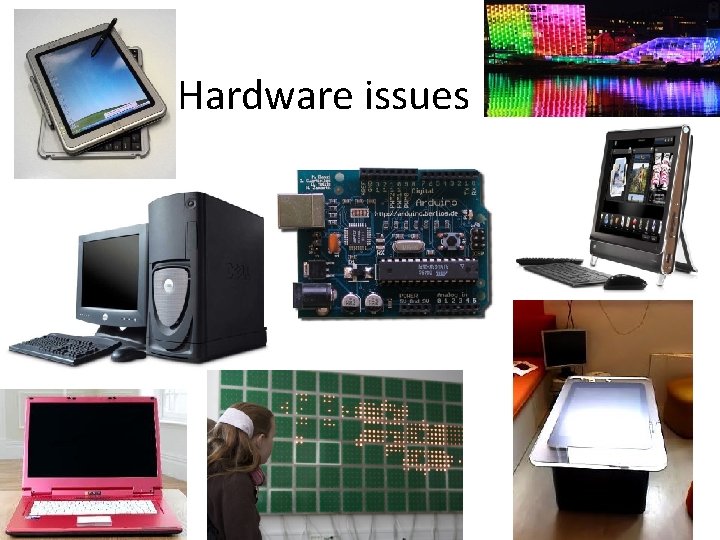
Hardware issues
research questions • The research questions explore the interplay between artwork, technology, artist, and audience. – Who does use which software? – How do users choose their tools? – Why do users choose OSS tools? – Which influence has software technology on the creative process?
W 35 literature • • Buechley, L. , Eisenberg, M. , Catchen, J. , and Crockett, A. 2008. The Lily. Pad Arduino: using computational textiles to investigate engagement, aesthetics, and diversity in computer science education. In Proceeding of the Twenty-Sixth Annual SIGCHI Conference on Human Factors in Computing Systems (Florence, Italy, April 05 – 10, 2008). CHI ’ 08. ACM, New York, NY, 423 -432. DOI= http: //doi. acm. org/10. 1145/1357054. 1357123 Ryokai, K. , Lee, M. J. , and Breitbart, J. M. 2009. Children’s storytelling and programming with robotic characters. In Proceeding of the Seventh ACM Conference on Creativity and Cognition (Berkeley, California, USA, October 26 – 30, 2009). C&C ’ 09. ACM, New York, NY, 19 -28. DOI= http: //doi. acm. org/10. 1145/1640233. 1640240 Resnick, M. , Maloney, J. , Monroy-Hernández, A. , Rusk, N. , Eastmond, E. , Brennan, K. , Millner, A. , Rosenbaum, E. , Silver, J. , Silverman, B. , and Kafai, Y. 2009. Scratch: programming for all. Commun. ACM 52, 11 (Nov. 2009), 60 -67. DOI= http: //doi. acm. org/10. 1145/1592761. 1592779 For each work, write a summary page (1000 words). Identify, if possible, artist, work, software and hardware, audience, research questions, research process, results. We work with the texts. Important to write well.