Systemic mastocytosis SM analysis of diagnostic markers and

- Slides: 33
Systemic mastocytosis (SM): analysis of diagnostic markers and course of the disease prediction Tomáš Kozák, John Plate, Veronika Petečuková, Olga Černá Department of Internal Medicine and Haematology, 3 rd. Faculty of Medicine, Charles University and University Hospital Kralovske Vinohrady, Prague, Czech Republic.
Disclosure Travel grants: ROCHE s. r. o. Amgen s. r. o. Bayer Schering Pharma s. r. o. Member of local advisory board: Amgen s. r. o. , TAKEDA s. r. o, NOVARTIS s. r. o.
Mastocytosis Paul Ehrlich 1878: Mast cells (Mastzellen), mesenchymal origin 8. decade of 20. century: MC derived from bone marrow hematopoietic progenitor cell Tefferi 2003: tissue infiltration by morphologicaly and immunophenotypically atypical mastocytes WHO 2008 and WHO 2016 revised classification of MPN & AL: mastocytosis included firmly among myeloprolipherative neoplasia (MPN)
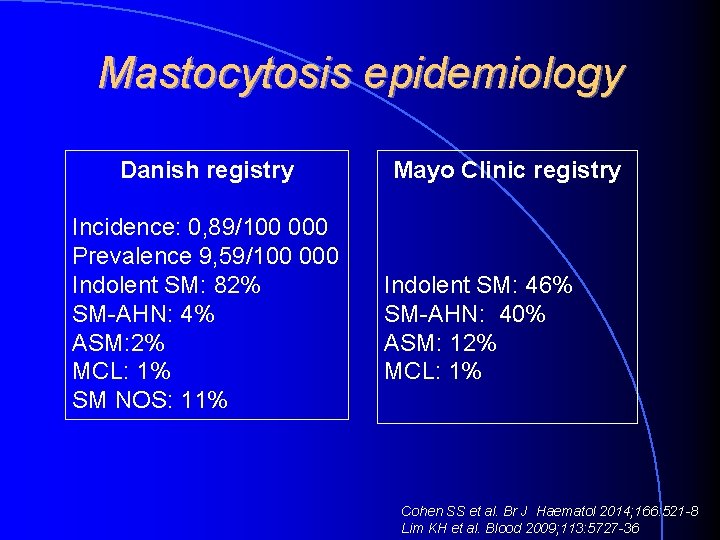
Mastocytosis epidemiology Danish registry Incidence: 0, 89/100 000 Prevalence 9, 59/100 000 Indolent SM: 82% SM-AHN: 4% ASM: 2% MCL: 1% SM NOS: 11% Mayo Clinic registry Indolent SM: 46% SM-AHN: 40% ASM: 12% MCL: 1% Cohen SS et al. Br J Haematol 2014; 166: 521 -8 Lim KH et al. Blood 2009; 113: 5727 -36
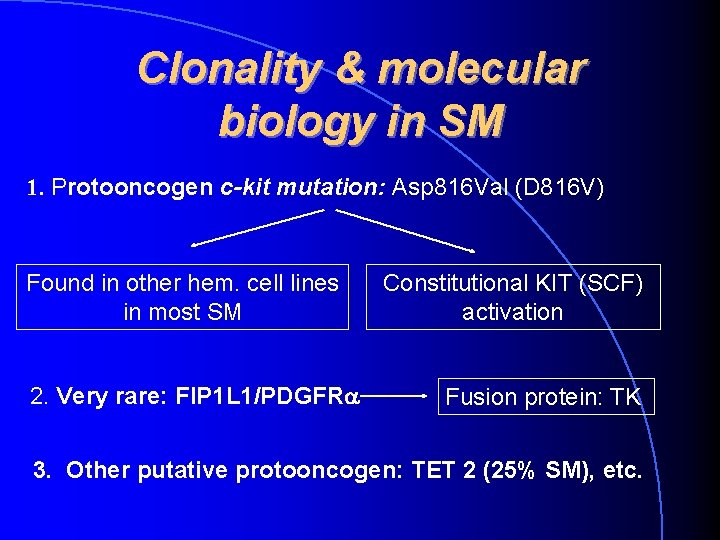
Clonality & molecular biology in SM 1. Protooncogen c-kit mutation: Asp 816 Val (D 816 V) Found in other hem. cell lines in most SM 2. Very rare: FIP 1 L 1/PDGFR Constitutional KIT (SCF) activation Fusion protein: TK 3. Other putative protooncogen: TET 2 (25% SM), etc.
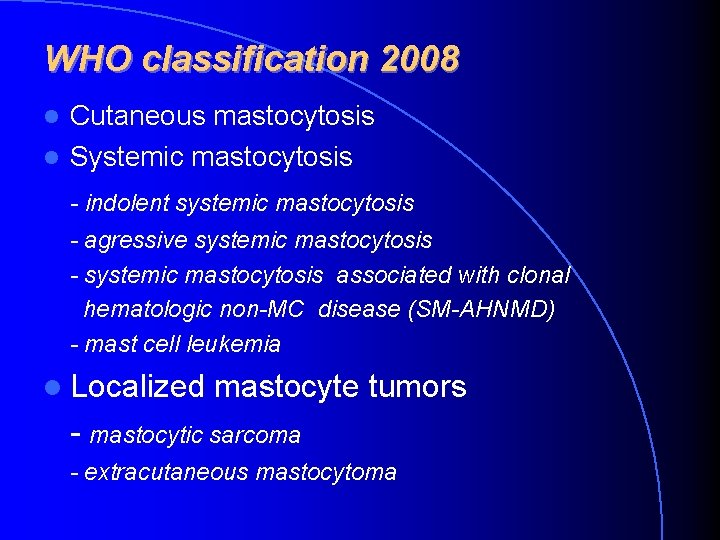
WHO classification 2008 Cutaneous mastocytosis Systemic mastocytosis - indolent systemic mastocytosis - agressive systemic mastocytosis - systemic mastocytosis associated with clonal hematologic non-MC disease (SM-AHNMD) - mast cell leukemia Localized mastocyte tumors - mastocytic sarcoma - extracutaneous mastocytoma
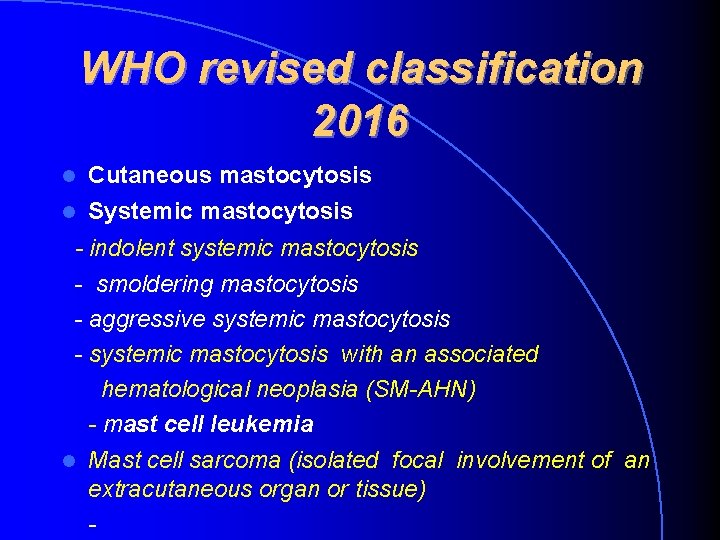
WHO revised classification 2016 Cutaneous mastocytosis Systemic mastocytosis - indolent systemic mastocytosis - smoldering mastocytosis - aggressive systemic mastocytosis - systemic mastocytosis with an associated hematological neoplasia (SM-AHN) - mast cell leukemia Mast cell sarcoma (isolated focal involvement of an extracutaneous organ or tissue)
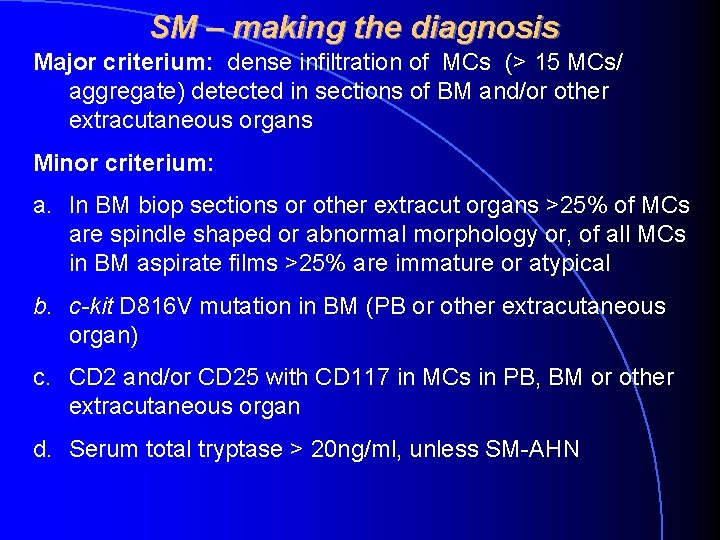
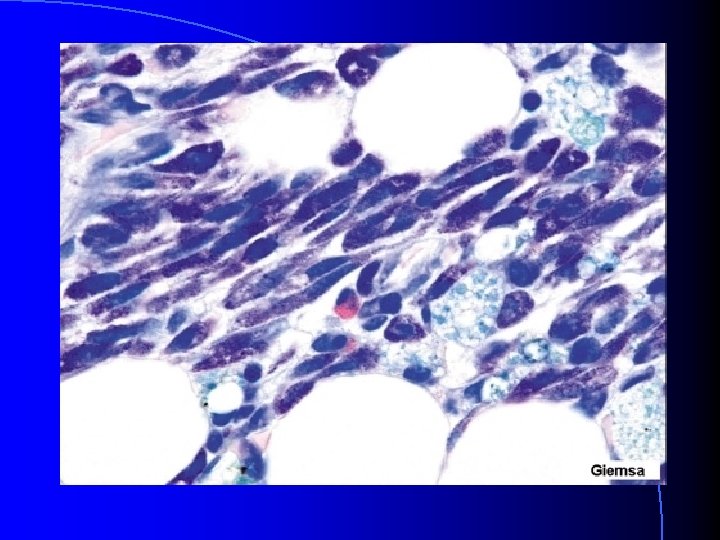
SM – making the diagnosis Major criterium: dense infiltration of MCs (> 15 MCs/ aggregate) detected in sections of BM and/or other extracutaneous organs Minor criterium: a. In BM biop sections or other extracut organs >25% of MCs are spindle shaped or abnormal morphology or, of all MCs in BM aspirate films >25% are immature or atypical b. c-kit D 816 V mutation in BM (PB or other extracutaneous organ) c. CD 2 and/or CD 25 with CD 117 in MCs in PB, BM or other extracutaneous organ d. Serum total tryptase > 20 ng/ml, unless SM-AHN
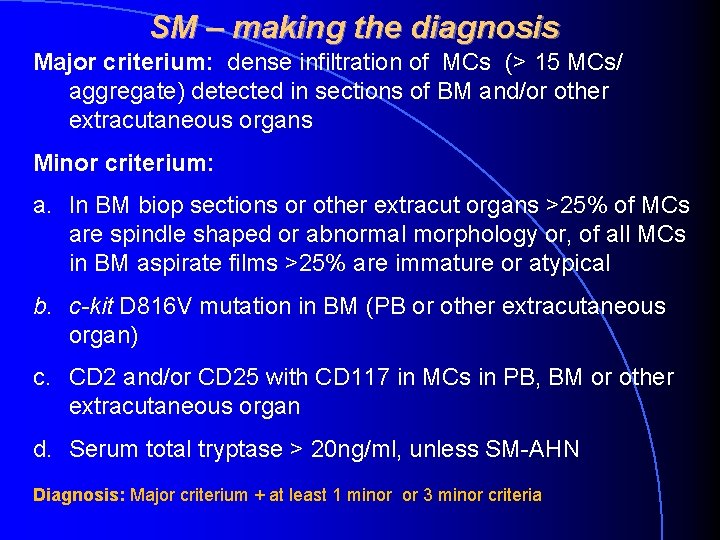
SM – making the diagnosis Major criterium: dense infiltration of MCs (> 15 MCs/ aggregate) detected in sections of BM and/or other extracutaneous organs Minor criterium: a. In BM biop sections or other extracut organs >25% of MCs are spindle shaped or abnormal morphology or, of all MCs in BM aspirate films >25% are immature or atypical b. c-kit D 816 V mutation in BM (PB or other extracutaneous organ) c. CD 2 and/or CD 25 with CD 117 in MCs in PB, BM or other extracutaneous organ d. Serum total tryptase > 20 ng/ml, unless SM-AHN Diagnosis: Major criterium + at least 1 minor or 3 minor criteria
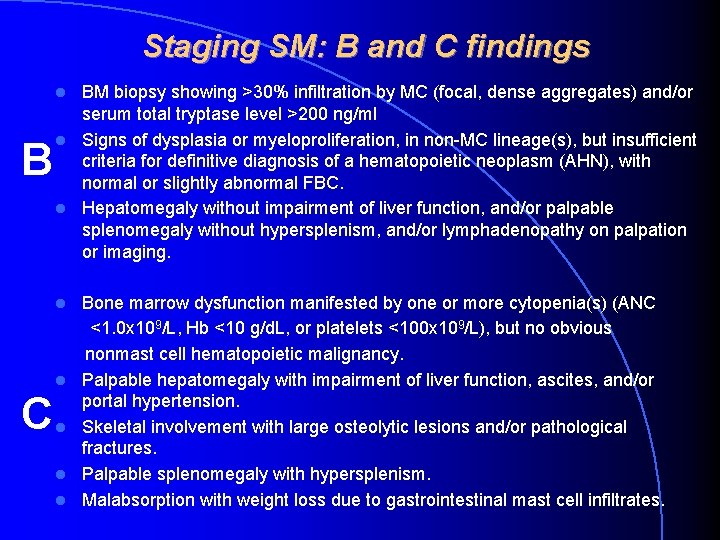
Staging SM: B and C findings BM biopsy showing >30% infiltration by MC (focal, dense aggregates) and/or serum total tryptase level >200 ng/ml Signs of dysplasia or myeloproliferation, in non-MC lineage(s), but insufficient criteria for definitive diagnosis of a hematopoietic neoplasm (AHN), with normal or slightly abnormal FBC. Hepatomegaly without impairment of liver function, and/or palpable splenomegaly without hypersplenism, and/or lymphadenopathy on palpation or imaging. B C Bone marrow dysfunction manifested by one or more cytopenia(s) (ANC <1. 0 x 109/L, Hb <10 g/d. L, or platelets <100 x 109/L), but no obvious nonmast cell hematopoietic malignancy. Palpable hepatomegaly with impairment of liver function, ascites, and/or portal hypertension. Skeletal involvement with large osteolytic lesions and/or pathological fractures. Palpable splenomegaly with hypersplenism. Malabsorption with weight loss due to gastrointestinal mast cell infiltrates.
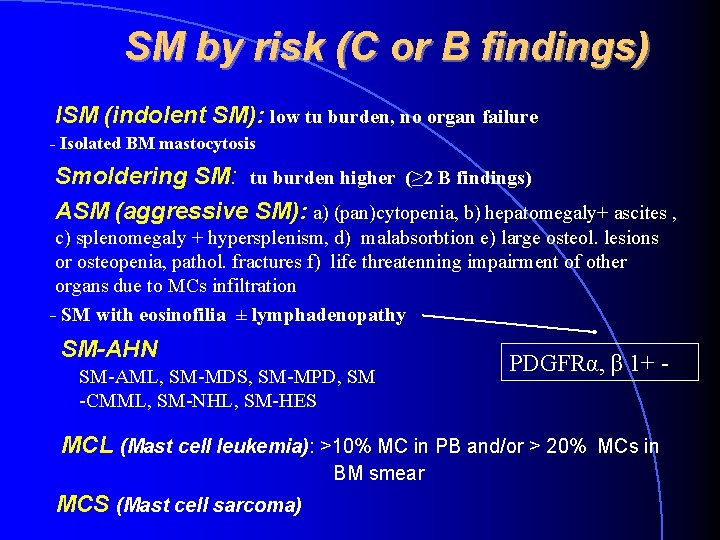
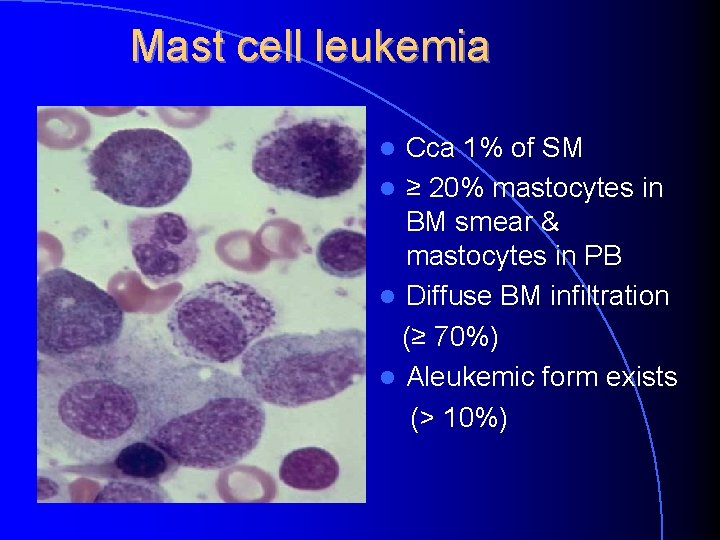
SM by risk (C or B findings) ISM (indolent SM): low tu burden, no organ failure - Isolated BM mastocytosis Smoldering SM: tu burden higher (≥ 2 B findings) ASM (aggressive SM): a) (pan)cytopenia, b) hepatomegaly+ ascites , c) splenomegaly + hypersplenism, d) malabsorbtion e) large osteol. lesions or osteopenia, pathol. fractures f) life threatenning impairment of other organs due to MCs infiltration - SM with eosinofilia ± lymphadenopathy SM-AHN SM-AML, SM-MDS, SM-MPD, SM -CMML, SM-NHL, SM-HES PDGFRα, β 1+ - MCL (Mast cell leukemia): >10% MC in PB and/or > 20% MCs in BM smear MCS (Mast cell sarcoma)
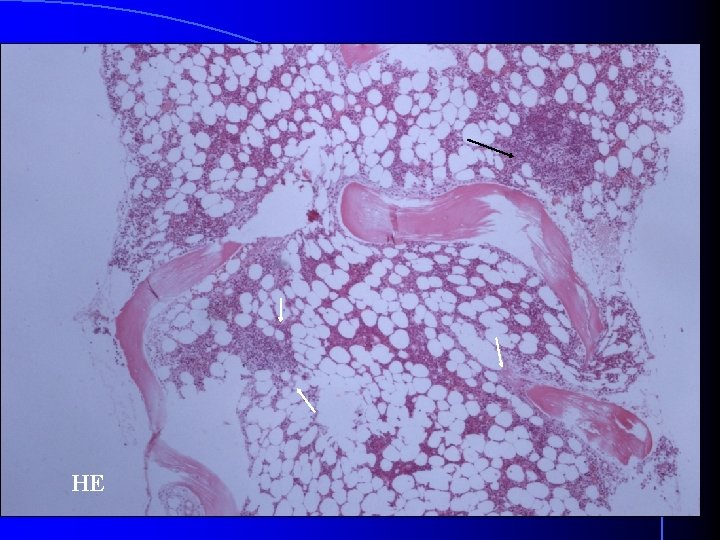
HE
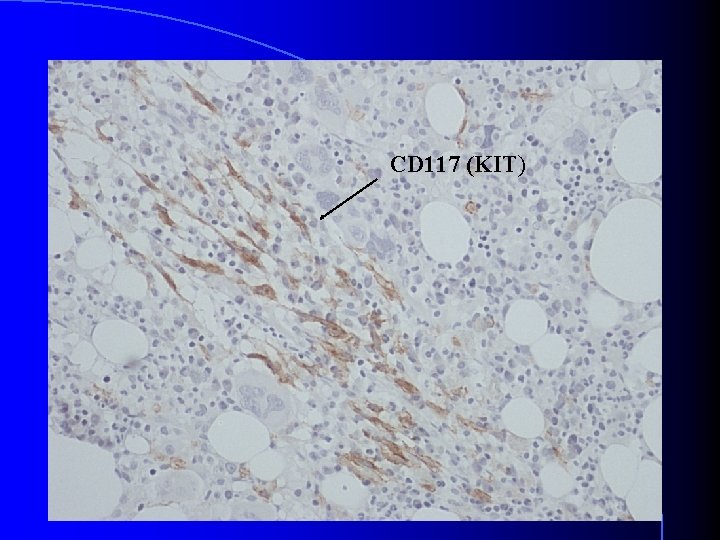
CD 117 (KIT)
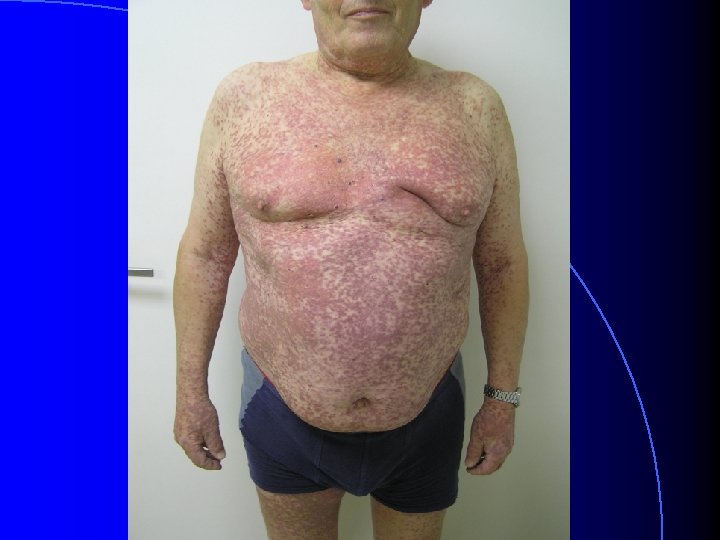
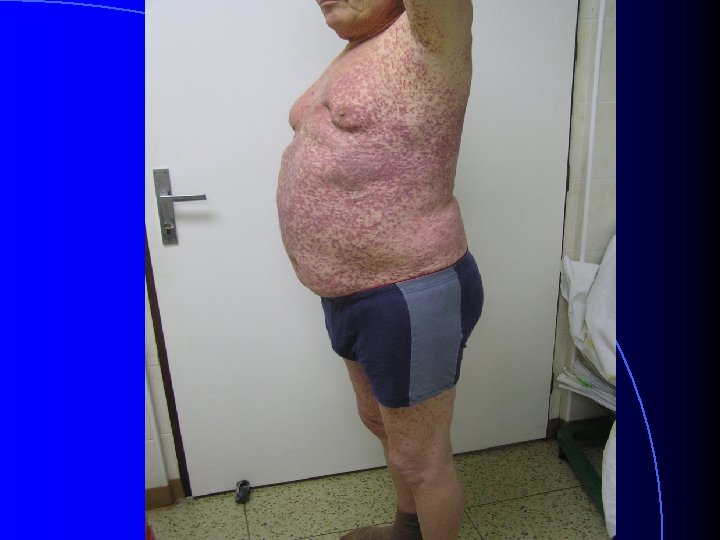
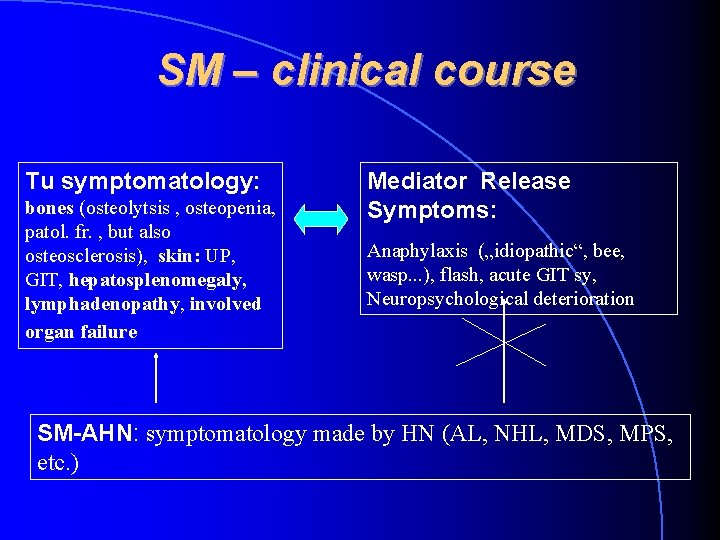
SM – clinical course Tu symptomatology: bones (osteolytsis , osteopenia, patol. fr. , but also osteosclerosis), skin: UP, GIT, hepatosplenomegaly, lymphadenopathy, involved organ failure Mediator Release Symptoms: Anaphylaxis („idiopathic“, bee, wasp. . . ), flash, acute GIT sy, Neuropsychological deterioration SM-AHN: symptomatology made by HN (AL, NHL, MDS, MPS, etc. )
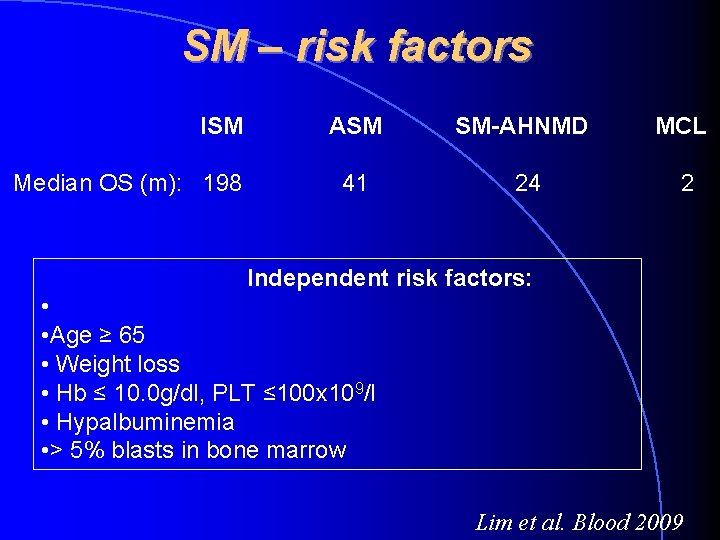
SM – risk factors ISM Median OS (m): 198 ASM SM-AHNMD MCL 41 24 2 Independent risk factors: • • Age ≥ 65 • Weight loss • Hb ≤ 10. 0 g/dl, PLT ≤ 100 x 109/l • Hypalbuminemia • > 5% blasts in bone marrow Lim et al. Blood 2009
Mast cell leukemia Cca 1% of SM ≥ 20% mastocytes in BM smear & mastocytes in PB Diffuse BM infiltration (≥ 70%) Aleukemic form exists (> 10%)
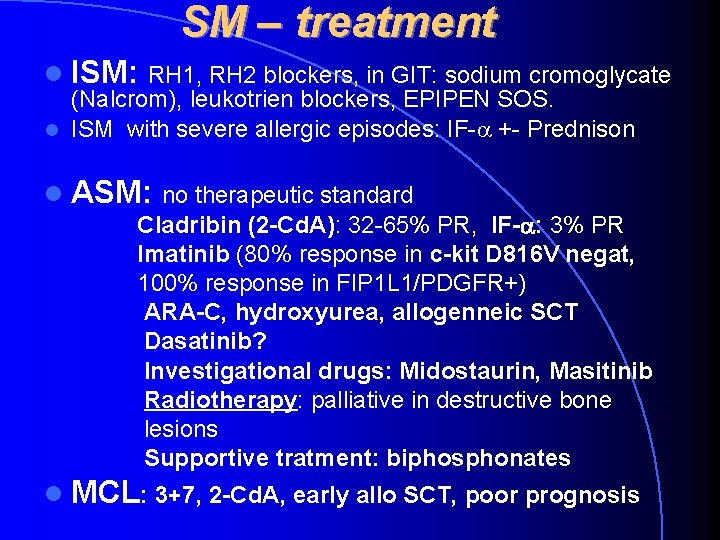
SM – treatment ISM: RH 1, RH 2 blockers, in GIT: sodium cromoglycate (Nalcrom), leukotrien blockers, EPIPEN SOS. ISM with severe allergic episodes: IF- +- Prednison ASM: no therapeutic standard Cladribin (2 -Cd. A): 32 -65% PR, IF- : 3% PR Imatinib (80% response in c-kit D 816 V negat, 100% response in FIP 1 L 1/PDGFR+) ARA-C, hydroxyurea, allogenneic SCT Dasatinib? Investigational drugs: Midostaurin, Masitinib Radiotherapy: palliative in destructive bone lesions Supportive tratment: biphosphonates MCL: 3+7, 2 -Cd. A, early allo SCT, poor prognosis
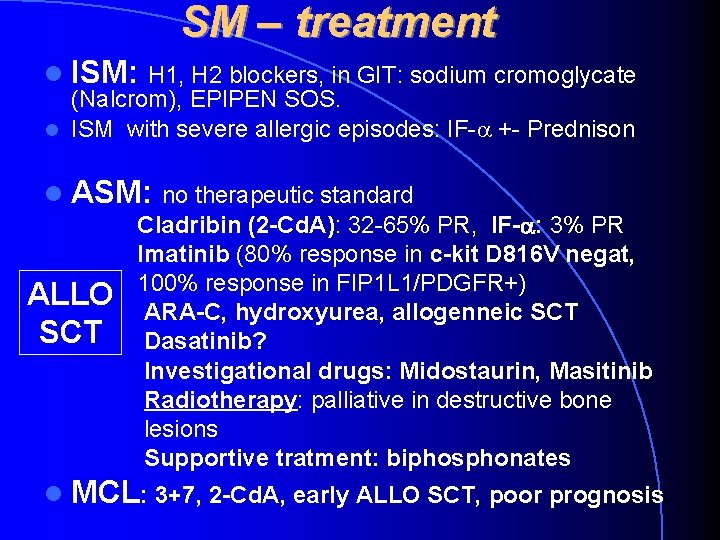
SM – treatment ISM: H 1, H 2 blockers, in GIT: sodium cromoglycate (Nalcrom), EPIPEN SOS. ISM with severe allergic episodes: IF- +- Prednison ASM: no therapeutic standard ALLO SCT Cladribin (2 -Cd. A): 32 -65% PR, IF- : 3% PR Imatinib (80% response in c-kit D 816 V negat, 100% response in FIP 1 L 1/PDGFR+) ARA-C, hydroxyurea, allogenneic SCT Dasatinib? Investigational drugs: Midostaurin, Masitinib Radiotherapy: palliative in destructive bone lesions Supportive tratment: biphosphonates MCL: 3+7, 2 -Cd. A, early ALLO SCT, poor prognosis
40 patients with SM
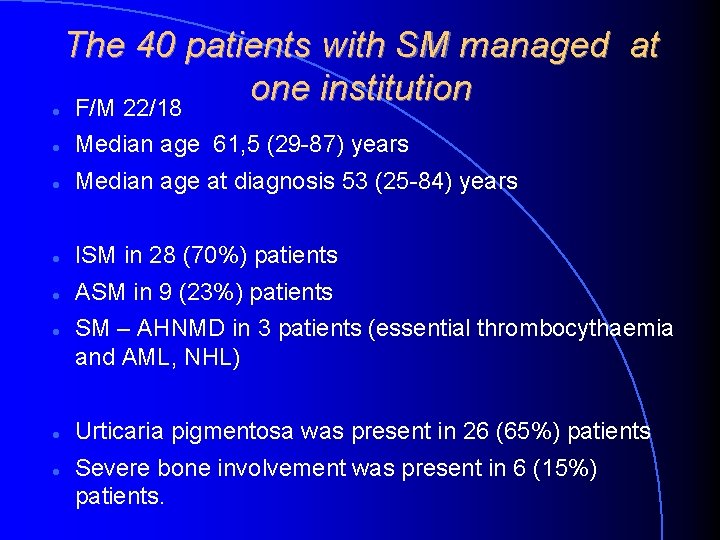
The 40 patients with SM managed at one institution F/M 22/18 Median age 61, 5 (29 -87) years Median age at diagnosis 53 (25 -84) years ISM in 28 (70%) patients ASM in 9 (23%) patients SM – AHNMD in 3 patients (essential thrombocythaemia and AML, NHL) Urticaria pigmentosa was present in 26 (65%) patients Severe bone involvement was present in 6 (15%) patients.
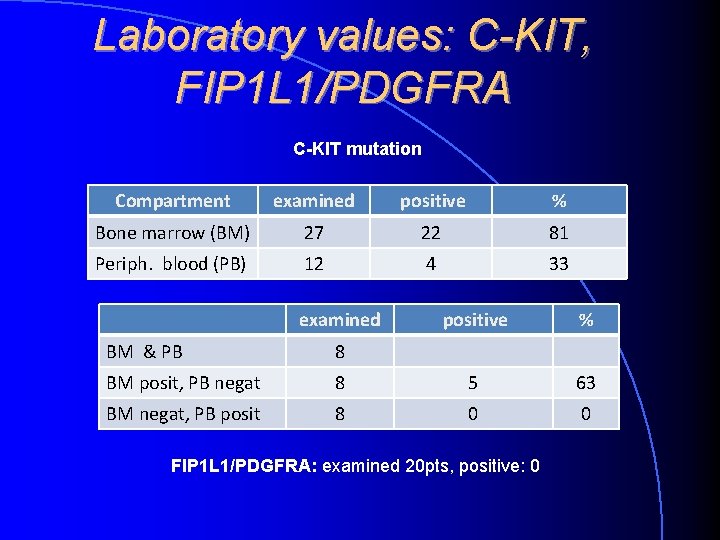
Laboratory values: C-KIT, FIP 1 L 1/PDGFRA C-KIT mutation Compartment examined positive % Bone marrow (BM) 27 22 81 Periph. blood (PB) 12 4 33 examined positive % BM & PB 8 BM posit, PB negat 8 5 63 BM negat, PB posit 8 0 0 FIP 1 L 1/PDGFRA: examined 20 pts, positive: 0
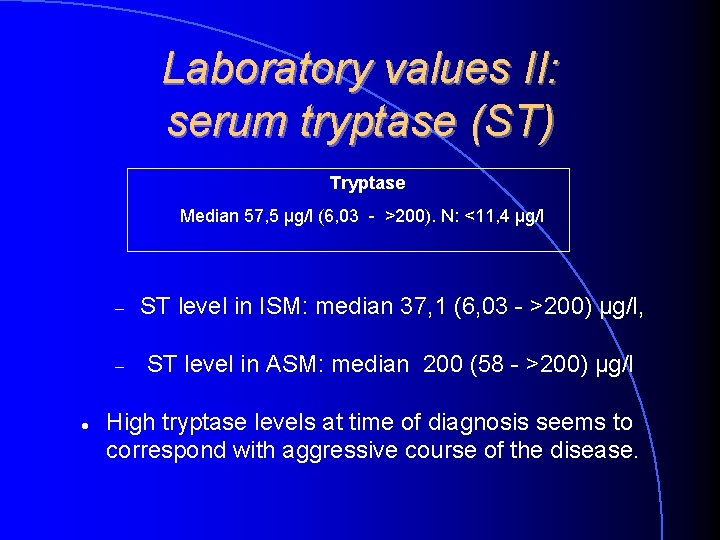
Laboratory values II: serum tryptase (ST) Tryptase Median 57, 5 µg/l (6, 03 - >200). N: <11, 4 µg/l ST level in ISM: median 37, 1 (6, 03 - >200) µg/l, ST level in ASM: median 200 (58 - >200) µg/l High tryptase levels at time of diagnosis seems to correspond with aggressive course of the disease.
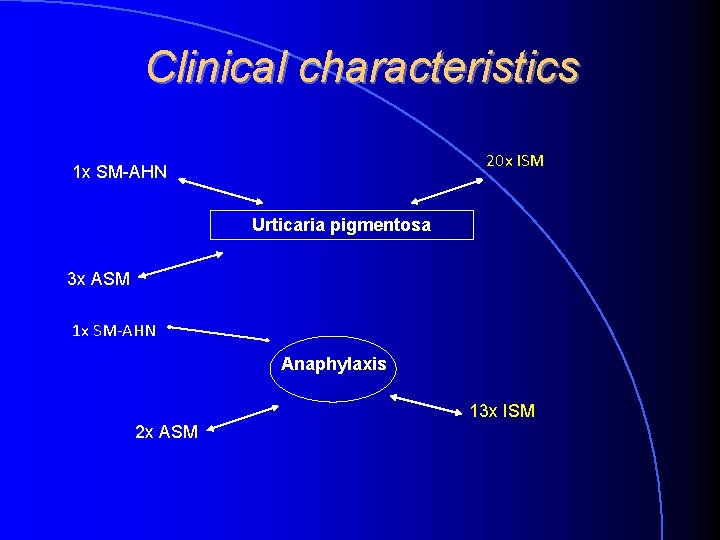
Clinical characteristics 20 x ISM 1 x SM-AHN Urticaria pigmentosa 3 x ASM 1 x SM-AHN Anaphylaxis 13 x ISM 2 x ASM
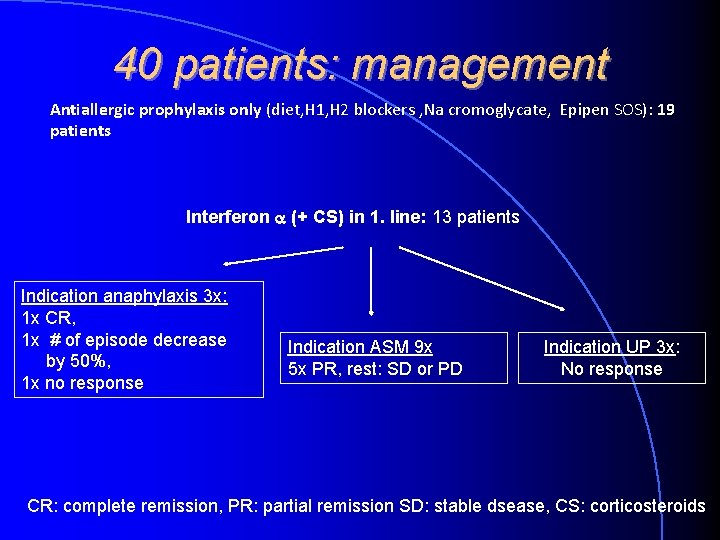
40 patients: management Antiallergic prophylaxis only (diet, H 1, H 2 blockers , Na cromoglycate, Epipen SOS): 19 patients Interferon (+ CS) in 1. line: 13 patients Indication anaphylaxis 3 x: 1 x CR, 1 x # of episode decrease by 50%, 1 x no response Indication ASM 9 x 5 x PR, rest: SD or PD Indication UP 3 x: No response CR: complete remission, PR: partial remission SD: stable dsease, CS: corticosteroids
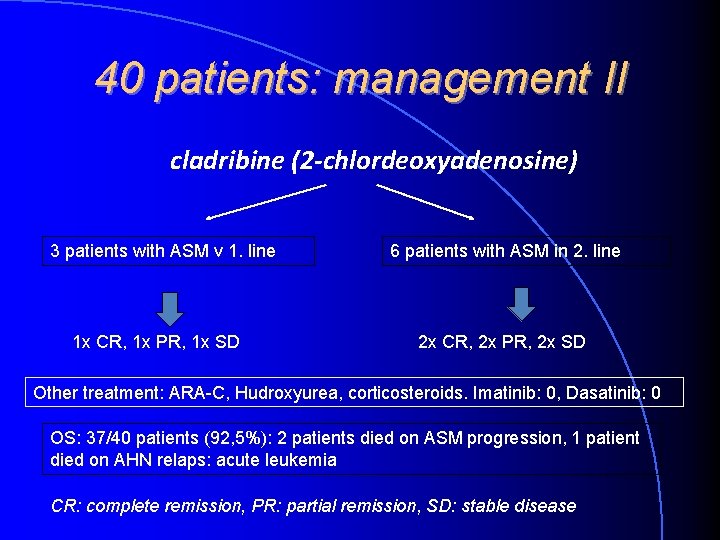
40 patients: management II cladribine (2 -chlordeoxyadenosine) 3 patients with ASM v 1. line 1 x CR, 1 x PR, 1 x SD 6 patients with ASM in 2. line 2 x CR, 2 x PR, 2 x SD Other treatment: ARA-C, Hudroxyurea, corticosteroids. Imatinib: 0, Dasatinib: 0 OS: 37/40 patients (92, 5%): 2 patients died on ASM progression, 1 patient died on AHN relaps: acute leukemia CR: complete remission, PR: partial remission, SD: stable disease
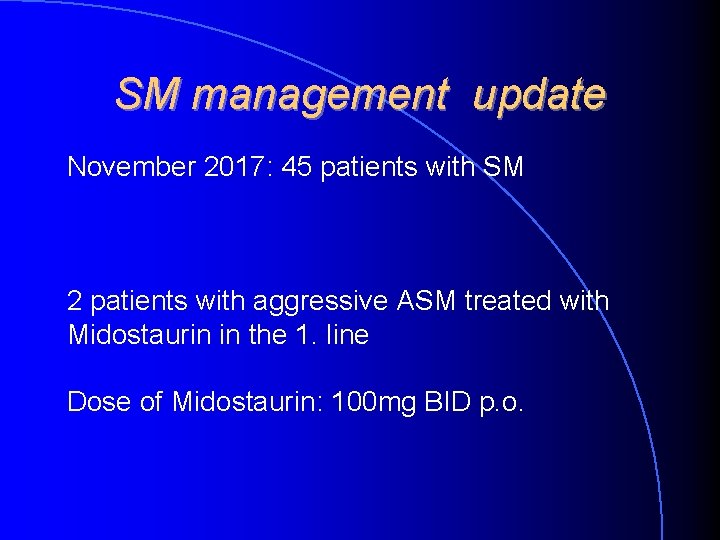
SM management update November 2017: 45 patients with SM 2 patients with aggressive ASM treated with Midostaurin in the 1. line Dose of Midostaurin: 100 mg BID p. o.
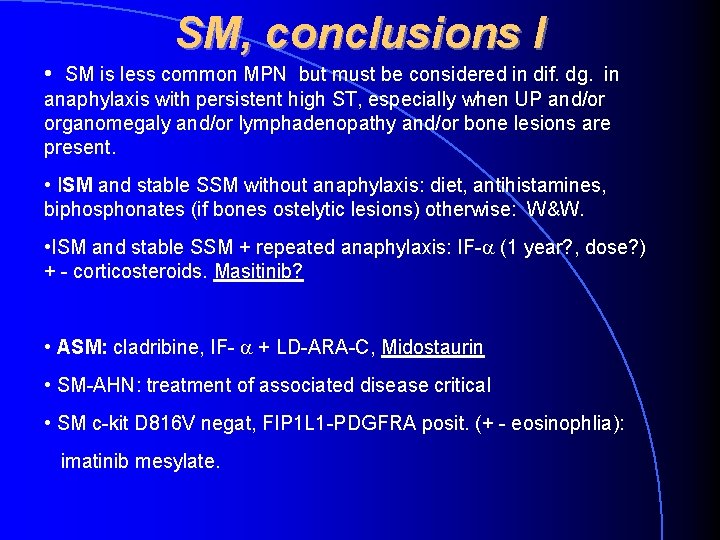
SM, conclusions I • SM is less common MPN but must be considered in dif. dg. in anaphylaxis with persistent high ST, especially when UP and/or organomegaly and/or lymphadenopathy and/or bone lesions are present. • ISM and stable SSM without anaphylaxis: diet, antihistamines, biphosphonates (if bones ostelytic lesions) otherwise: W&W. • ISM and stable SSM + repeated anaphylaxis: IF- (1 year? , dose? ) + - corticosteroids. Masitinib? • ASM: cladribine, IF- + LD-ARA-C, Midostaurin • SM-AHN: treatment of associated disease critical • SM c-kit D 816 V negat, FIP 1 L 1 -PDGFRA posit. (+ - eosinophlia): imatinib mesylate.
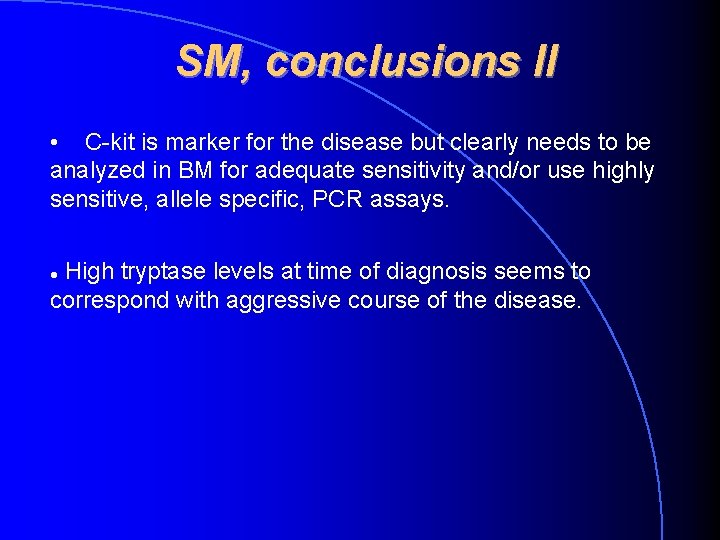
SM, conclusions II • C-kit is marker for the disease but clearly needs to be analyzed in BM for adequate sensitivity and/or use highly sensitive, allele specific, PCR assays. High tryptase levels at time of diagnosis seems to correspond with aggressive course of the disease.
THANK YOU!