Stress Management What is Stress Stress is your
- Slides: 16
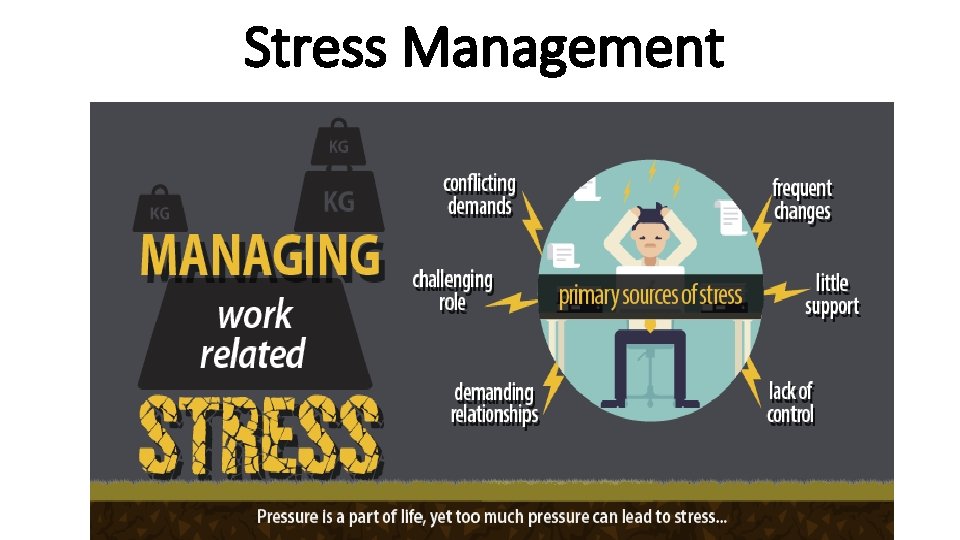
Stress Management
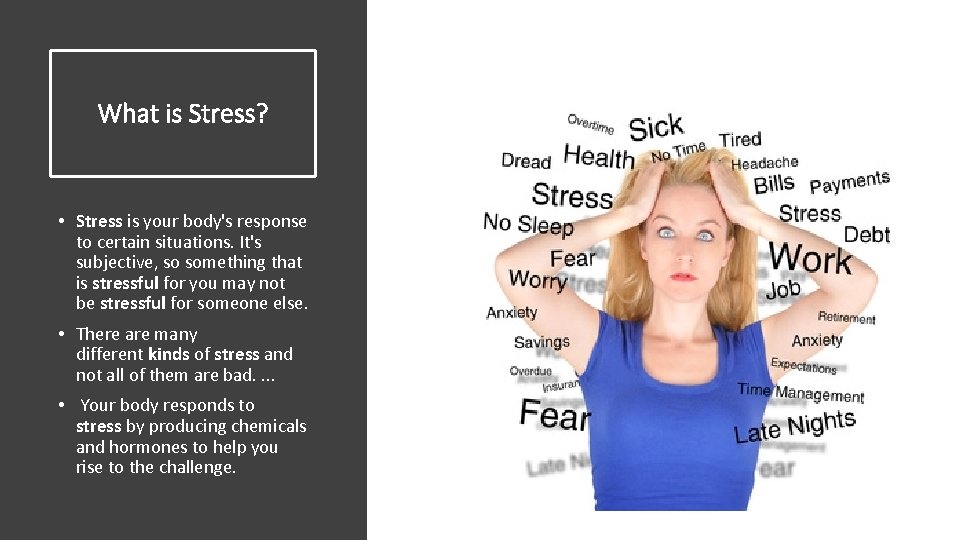
What is Stress? • Stress is your body's response to certain situations. It's subjective, so something that is stressful for you may not be stressful for someone else. • There are many different kinds of stress and not all of them are bad. . • Your body responds to stress by producing chemicals and hormones to help you rise to the challenge.
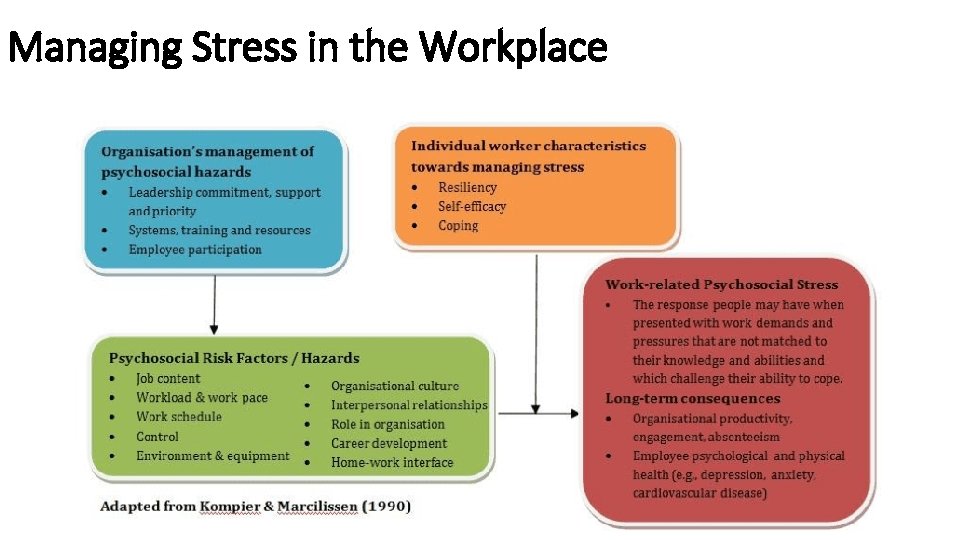
Managing Stress in the Workplace
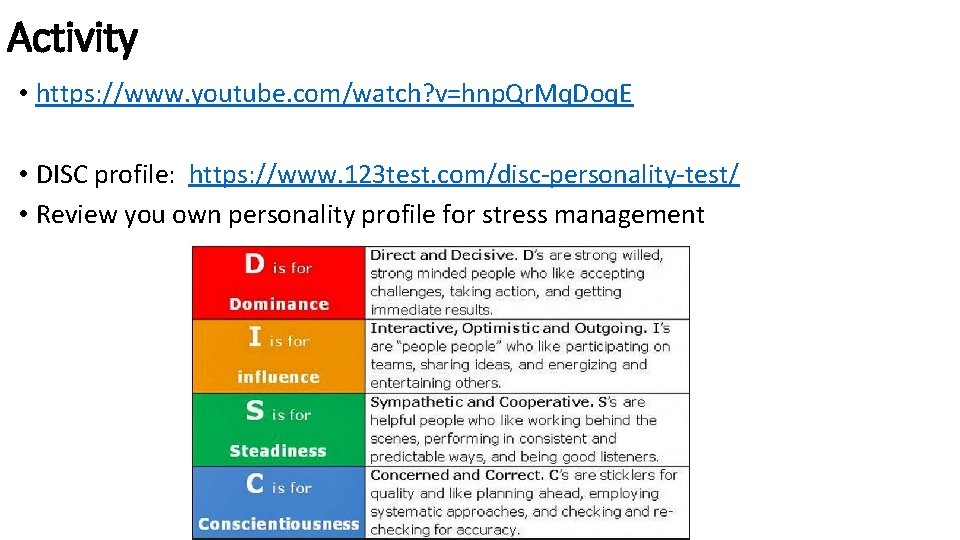
Activity • https: //www. youtube. com/watch? v=hnp. Qr. Mq. Doq. E • DISC profile: https: //www. 123 test. com/disc-personality-test/ • Review you own personality profile for stress management
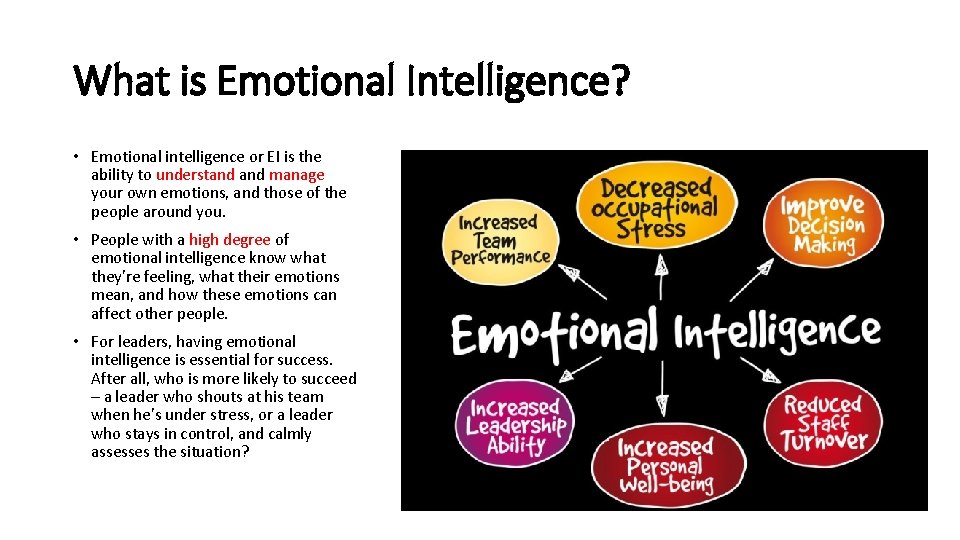
What is Emotional Intelligence? • Emotional intelligence or EI is the ability to understand manage your own emotions, and those of the people around you. • People with a high degree of emotional intelligence know what they're feeling, what their emotions mean, and how these emotions can affect other people. • For leaders, having emotional intelligence is essential for success. After all, who is more likely to succeed – a leader who shouts at his team when he's under stress, or a leader who stays in control, and calmly assesses the situation?
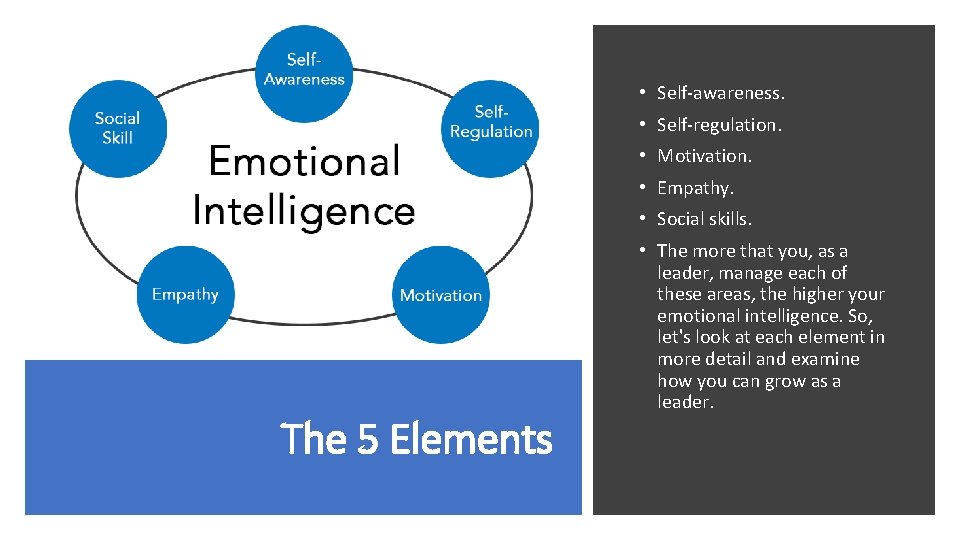
• Self-awareness. • Self-regulation. • Motivation. • Empathy. • Social skills. The 5 Elements • The more that you, as a leader, manage each of these areas, the higher your emotional intelligence. So, let's look at each element in more detail and examine how you can grow as a leader.
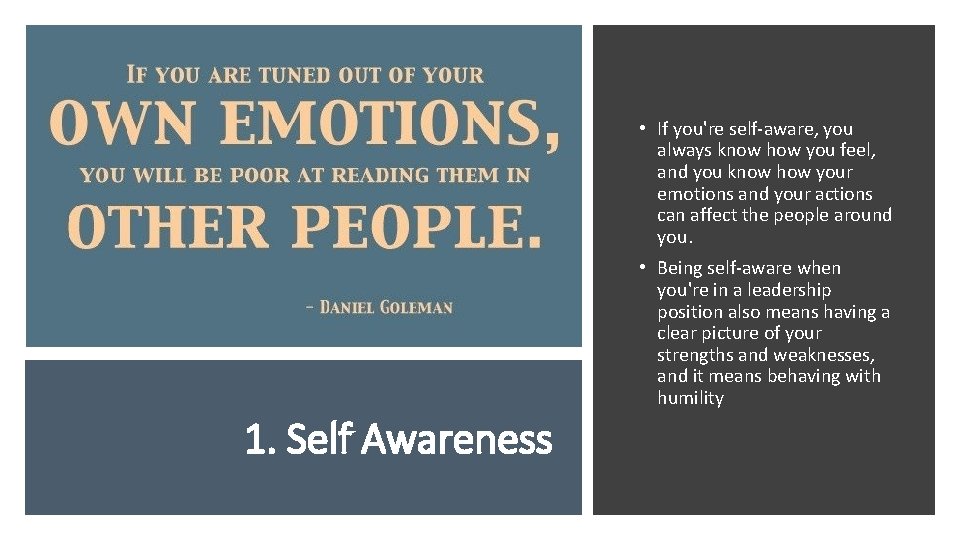
• If you're self-aware, you always know how you feel, and you know how your emotions and your actions can affect the people around you. • Being self-aware when you're in a leadership position also means having a clear picture of your strengths and weaknesses, and it means behaving with humility 1. Self Awareness
• Keep a journal – Journals help you improve your selfawareness. • Writing down your thoughts can move you to a higher degree of self-awareness. • Slow down – When you experience anger or other strong emotions, slow down to examine why. What can you do to improve your self-awareness? • Remember, no matter what the situation, you can always choose how you react to it.
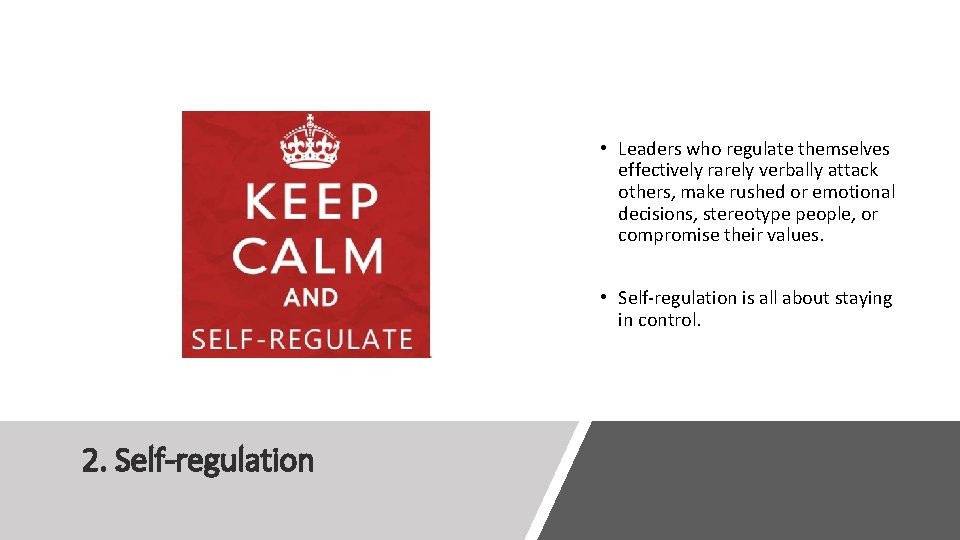
• Leaders who regulate themselves effectively rarely verbally attack others, make rushed or emotional decisions, stereotype people, or compromise their values. • Self-regulation is all about staying in control. 2. Self-regulation
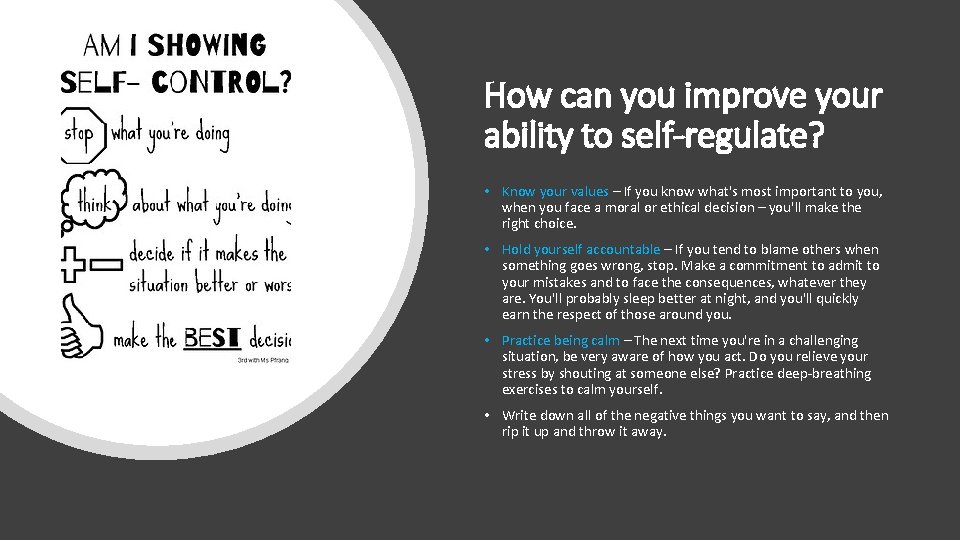
How can you improve your ability to self-regulate? • Know your values – If you know what's most important to you, when you face a moral or ethical decision – you'll make the right choice. • Hold yourself accountable – If you tend to blame others when something goes wrong, stop. Make a commitment to admit to your mistakes and to face the consequences, whatever they are. You'll probably sleep better at night, and you'll quickly earn the respect of those around you. • Practice being calm – The next time you're in a challenging situation, be very aware of how you act. Do you relieve your stress by shouting at someone else? Practice deep-breathing exercises to calm yourself. • Write down all of the negative things you want to say, and then rip it up and throw it away.
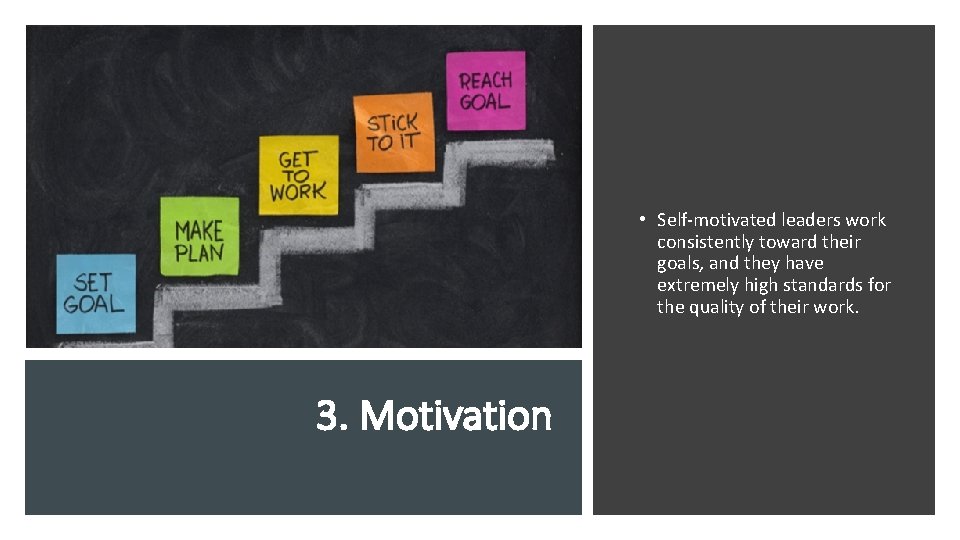
• Self-motivated leaders work consistently toward their goals, and they have extremely high standards for the quality of their work. 3. Motivation
How can you improve your motivation? • Reflect - why you're doing your job – Take some time to remember why you wanted this job in the first place • Know where you stand – Determine how motivated you are to lead • Be hopeful and find something good – Motivated leaders are optimistic, no matter what problems they face. Have a positive mindset. • Every time you face a challenge, or a failure, try to find at least one good thing about the situation.
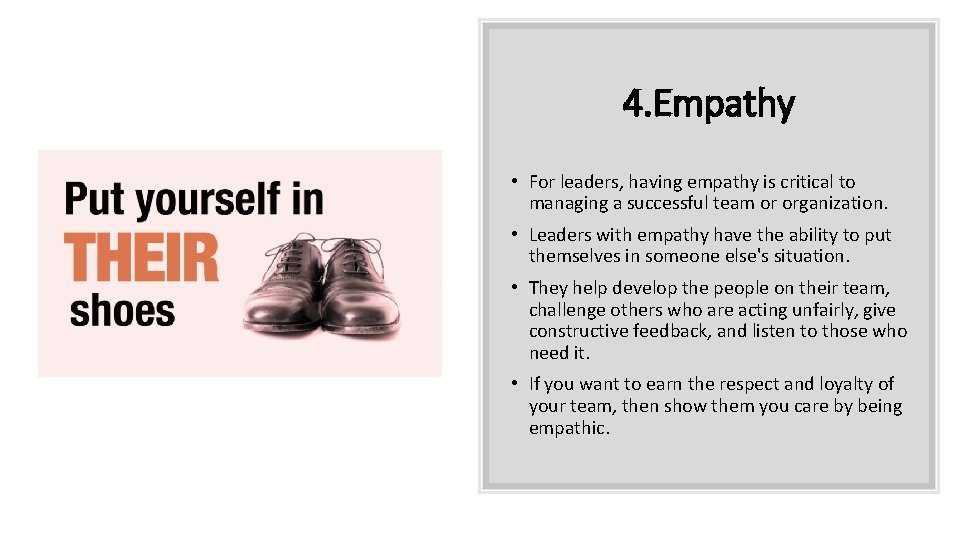
4. Empathy • For leaders, having empathy is critical to managing a successful team or organization. • Leaders with empathy have the ability to put themselves in someone else's situation. • They help develop the people on their team, challenge others who are acting unfairly, give constructive feedback, and listen to those who need it. • If you want to earn the respect and loyalty of your team, then show them you care by being empathic.
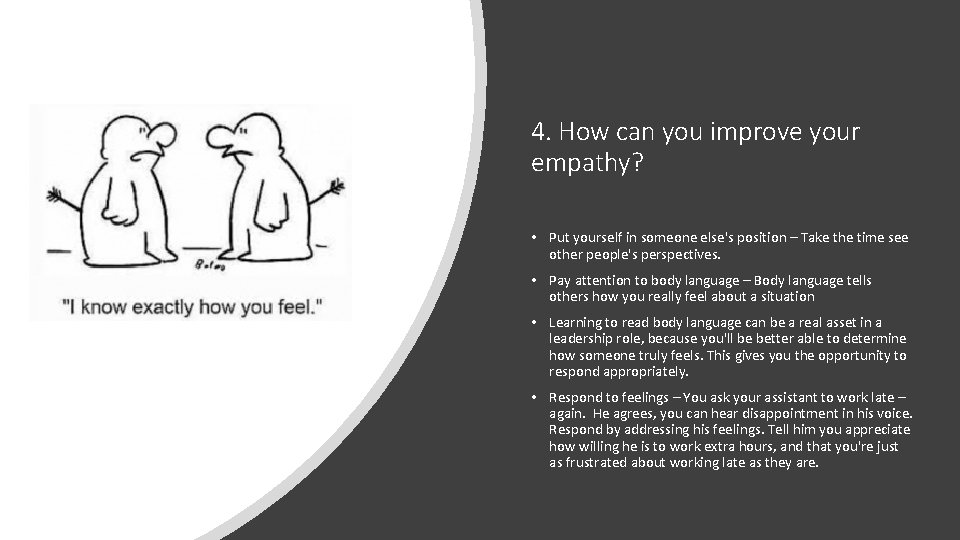
4. How can you improve your empathy? • Put yourself in someone else's position – Take the time see other people's perspectives. • Pay attention to body language – Body language tells others how you really feel about a situation • Learning to read body language can be a real asset in a leadership role, because you'll be better able to determine how someone truly feels. This gives you the opportunity to respond appropriately. • Respond to feelings – You ask your assistant to work late – again. He agrees, you can hear disappointment in his voice. Respond by addressing his feelings. Tell him you appreciate how willing he is to work extra hours, and that you're just as frustrated about working late as they are.
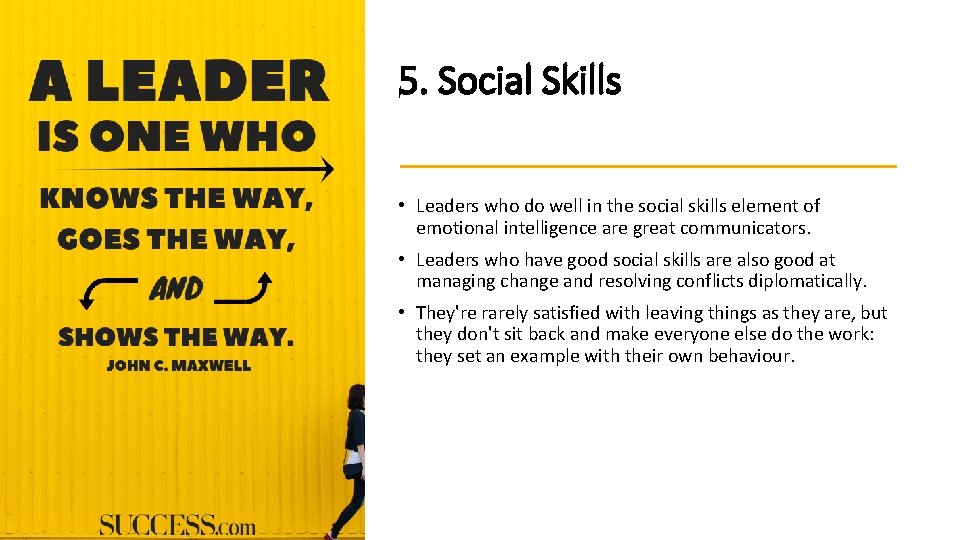
5. Social Skills • Leaders who do well in the social skills element of emotional intelligence are great communicators. • Leaders who have good social skills are also good at managing change and resolving conflicts diplomatically. • They're rarely satisfied with leaving things as they are, but they don't sit back and make everyone else do the work: they set an example with their own behaviour.
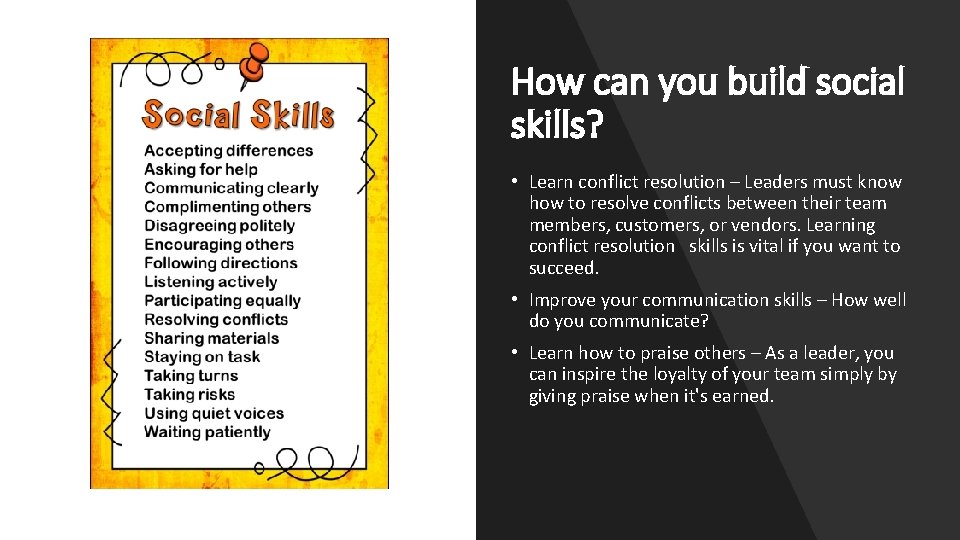
How can you build social skills? • Learn conflict resolution – Leaders must know how to resolve conflicts between their team members, customers, or vendors. Learning conflict resolution skills is vital if you want to succeed. • Improve your communication skills – How well do you communicate? • Learn how to praise others – As a leader, you can inspire the loyalty of your team simply by giving praise when it's earned.