STRENGTHENING LAWYERS LEGAL KNOWLEDGE AND COOPERATION WITH PROSECUTORS
- Slides: 24
STRENGTHENING LAWYERS LEGAL KNOWLEDGE AND COOPERATION WITH PROSECUTORS AND JUDGES TO PROTECT VICTIMS OF HUMAN TRAFFICKING RIGHTS IN THE JUDICIAL PROCEEDINGS Financed by the Justice Programme of the European Union Part I / Strategies to fight trafficking in human beings in Germany Henriette Lyndian Dortmund Germany www. anwalt-do. de © Lyndian & Hinne TRAINING 10 -12 May and 20 -21 October 2017, BUCHAREST, ROMANIA Lyndian 1
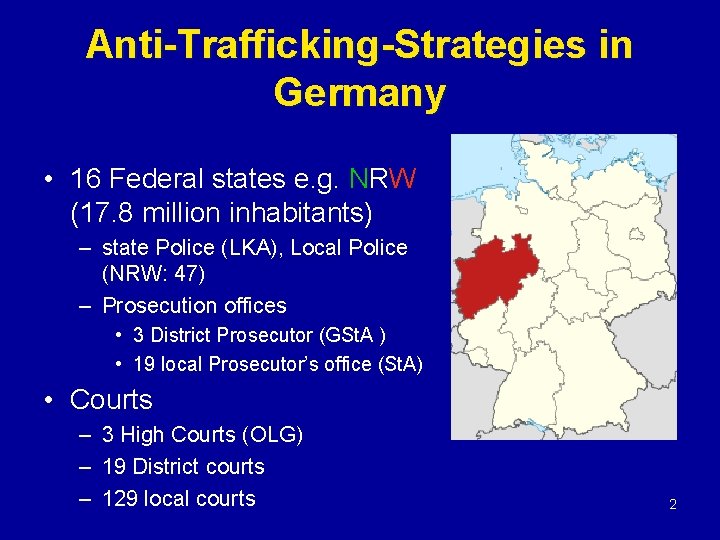
Anti-Trafficking-Strategies in Germany • 16 Federal states e. g. NRW (17. 8 million inhabitants) – state Police (LKA), Local Police (NRW: 47) – Prosecution offices • 3 District Prosecutor (GSt. A ) • 19 local Prosecutor’s office (St. A) • Courts – 3 High Courts (OLG) – 19 District courts – 129 local courts 2
„Dortmunder Modell“ • installed in November 1995 • in 1998 488 potential victims were arrested Ø Mitternachtsmission Ø criminal investigations in trafficking in human beings Ø trials Ø convictions 3
„Dortmunder Modell“ means Co-operation of the following institutions: • Police, prosecutor, NGOs • Public order office, building regulation office • Immigration authorities, Tax Office • Social welfare office, Pension agency • Operators of brothels • Self-employed prostitutes 4
EUROPEAN JUSTICE PROGRAM STRENGTHENING LAWYERS LEGAL KNOWLEDGE AND COOPERATION WITH PROSECUTORS AND JUDGES TO PROTECT VICTIMS OF HUMAN TRAFFICKING RIGHTS IN THE JUDICIAL PROCEEDINGS Part II: Protection of victims of trafficking in human beings Henriette Lyndian Dortmund Germany www. anwalt-do. de Lyndian 5
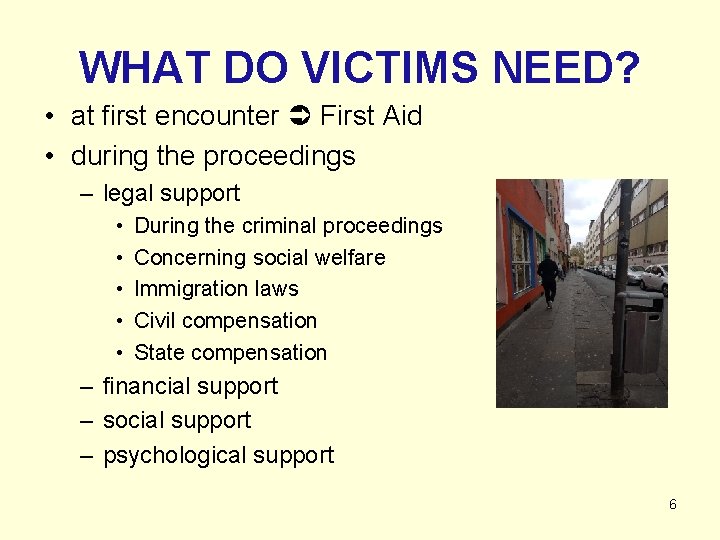
WHAT DO VICTIMS NEED? • at first encounter First Aid • during the proceedings – legal support • • • During the criminal proceedings Concerning social welfare Immigration laws Civil compensation State compensation – financial support – social support – psychological support 6
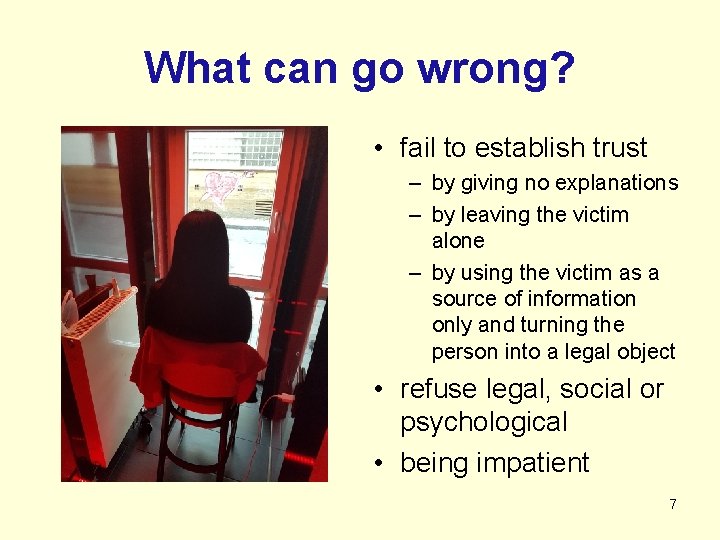
What can go wrong? • fail to establish trust – by giving no explanations – by leaving the victim alone – by using the victim as a source of information only and turning the person into a legal object • refuse legal, social or psychological • being impatient 7
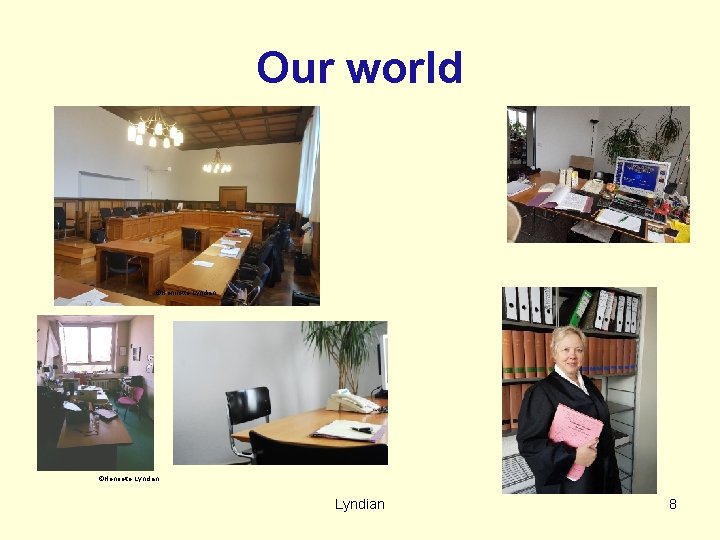
Our world ©Henriette Lyndian 8
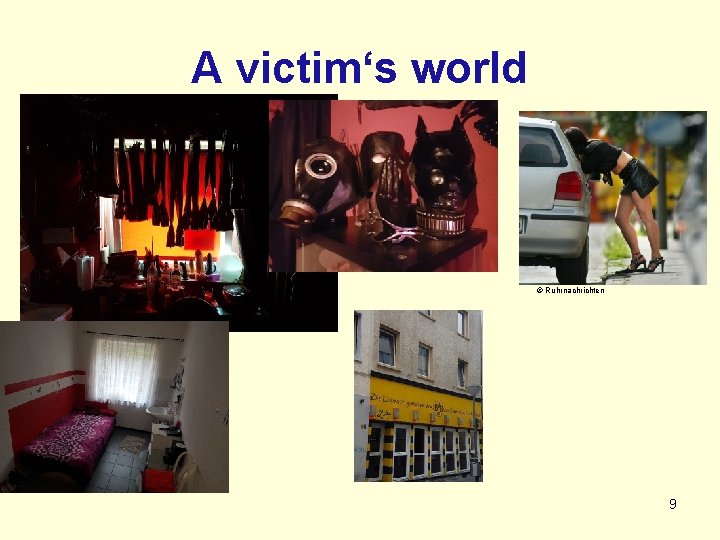
A victim‘s world © Ruhrnachrichten 9
Imagine. . you are a victim. . .
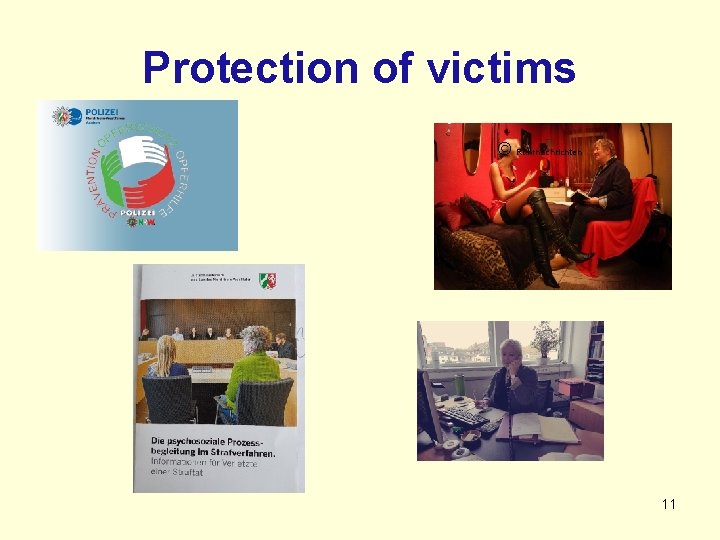
Protection of victims © Ruhrnachrichten 11
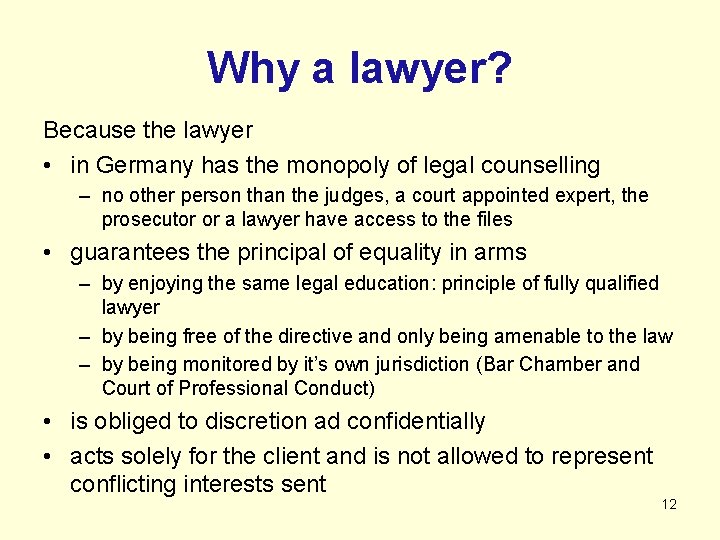
Why a lawyer? Because the lawyer • in Germany has the monopoly of legal counselling – no other person than the judges, a court appointed expert, the prosecutor or a lawyer have access to the files • guarantees the principal of equality in arms – by enjoying the same legal education: principle of fully qualified lawyer – by being free of the directive and only being amenable to the law – by being monitored by it’s own jurisdiction (Bar Chamber and Court of Professional Conduct) • is obliged to discretion ad confidentially • acts solely for the client and is not allowed to represent conflicting interests sent 12
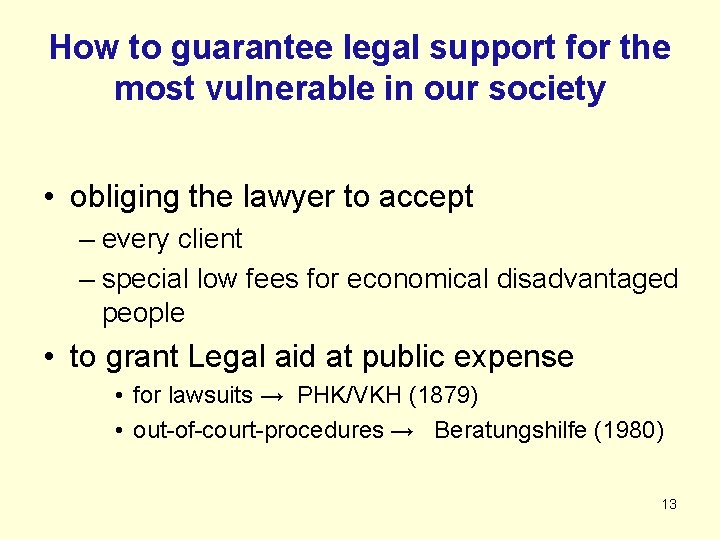
How to guarantee legal support for the most vulnerable in our society • obliging the lawyer to accept – every client – special low fees for economical disadvantaged people • to grant Legal aid at public expense • for lawsuits → PHK/VKH (1879) • out-of-court-procedures → Beratungshilfe (1980) 13
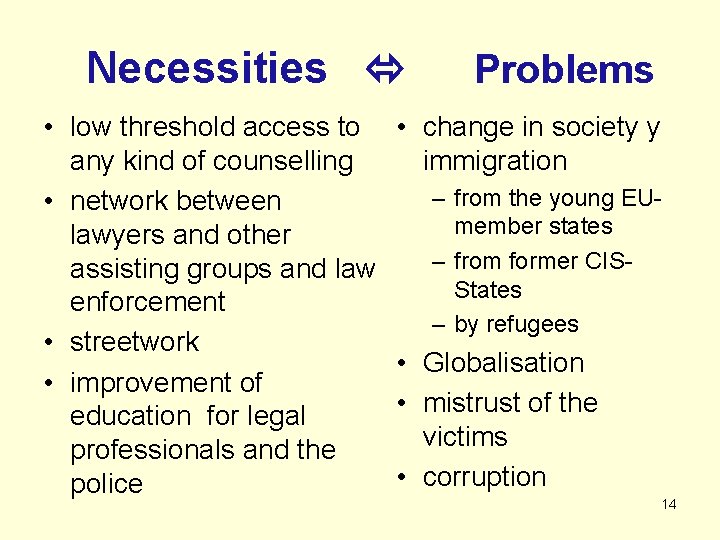
Necessities • low threshold access to any kind of counselling • network between lawyers and other assisting groups and law enforcement • streetwork • improvement of education for legal professionals and the police Problems • change in society y immigration – from the young EUmember states – from former CISStates – by refugees • Globalisation • mistrust of the victims • corruption 14
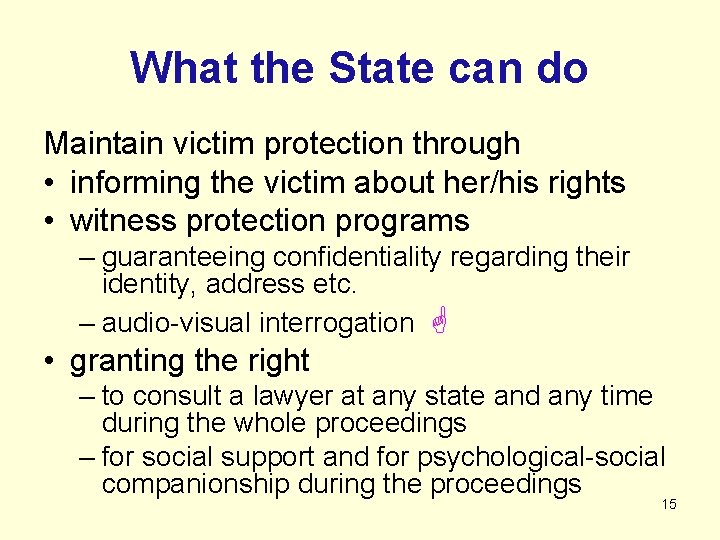
What the State can do Maintain victim protection through • informing the victim about her/his rights • witness protection programs – guaranteeing confidentiality regarding their identity, address etc. – audio-visual interrogation • granting the right – to consult a lawyer at any state and any time during the whole proceedings – for social support and for psychological-social companionship during the proceedings 15
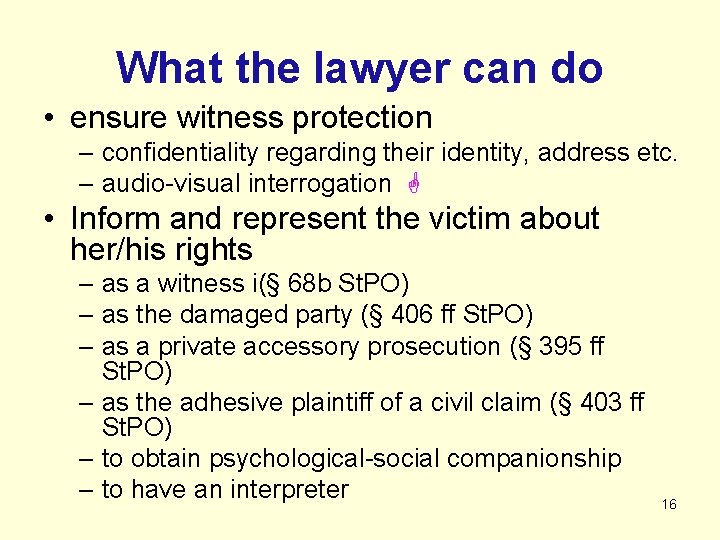
What the lawyer can do • ensure witness protection – confidentiality regarding their identity, address etc. – audio-visual interrogation • Inform and represent the victim about her/his rights – as a witness i(§ 68 b St. PO) – as the damaged party (§ 406 ff St. PO) – as a private accessory prosecution (§ 395 ff St. PO) – as the adhesive plaintiff of a civil claim (§ 403 ff St. PO) – to obtain psychological-social companionship – to have an interpreter 16
Why can’t police detectives, prosecutors or a judges do the same? Because they have • to preserve their neutrality • respect the defendant‘s rights 17
What we all can do. . . is • keeping connected • build up trust in each other‘s work • work together • respect the competence of the other expert‘s fields • participate in training courses 18
EUROPEAN JUSTICE PROGRAM STRENGTHENING LAWYERS LEGAL KNOWLEDGE AND COOPERATION WITH PROSECUTORS AND JUDGES TO PROTECT VICTIMS OF HUMAN TRAFFICKING RIGHTS IN THE JUDICIAL PROCEEDINGS Part III: Financial compensation for victims of trafficking of Human beings in Germany Dirk Hinne Dortmund Germany www. anwalt-do. de Lyndian 19
Civil Liability • • compensation for non-material harm compensation for damages injunctive claim entitlement – of private accident insurance – family law – labour law – inheritance law – right regarding one own’s image 20
Civil Law means • the regulation of claims of civilians among each other • that a criminal conviction does not imply automatically an enforceability of a civilly claim • the burden of proof is the responsibility of the claimant – one word against the other e. g. in a case of rape 21
Financial compensation can be achieved through • litigation against the perpetrator under civil law only • requesting civil action within criminal proceedings (Adhesion) against the culprit • Claiming for state compensation to victims (OEG) • special funds 22
Благодарим Ви за вниманието! Vă mulţumesc pentru antenţie! Vielen Dank für Ihre Aufmerksamkeit! © Henriette Lyndian und Dirk Hinne Dortmund 23
This publication has been produced with the financial support of the Justice Programme of the European Union. The contents of this publication are the sole responsibility of the author and can in no way be taken to reflect the views of the European Commission