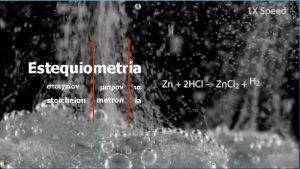
Stoichiometry Comes from the Greek words stoicheion meaning

- Slides: 13
Stoichiometry Comes from the Greek words stoicheion, meaning “element, ” and metron, meaning “measure. ”
Stoichiometry Calculations • Theoretical yield • Compare grams and moles of 2 substances • Review of Stoichiometry - using grams – You. Tube (mole ratio activity? ? ? )
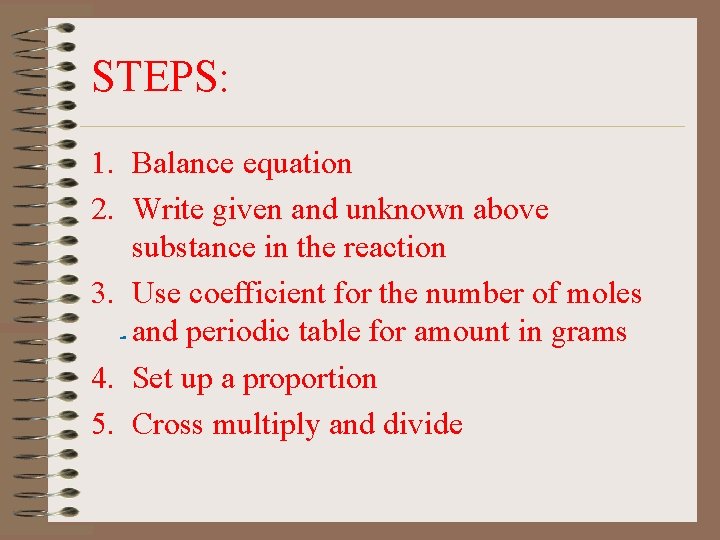
STEPS: 1. Balance equation 2. Write given and unknown above substance in the reaction 3. Use coefficient for the number of moles and periodic table for amount in grams 4. Set up a proportion 5. Cross multiply and divide
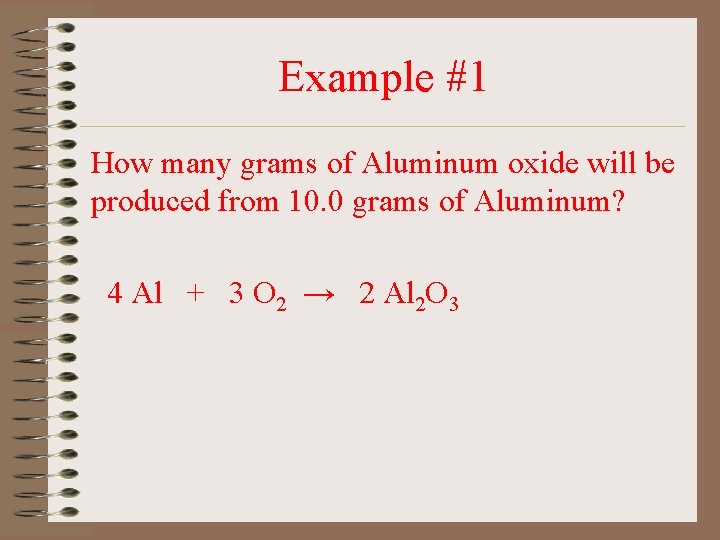
Example #1 How many grams of Aluminum oxide will be produced from 10. 0 grams of Aluminum? 4 Al + 3 O 2 → 2 Al 2 O 3
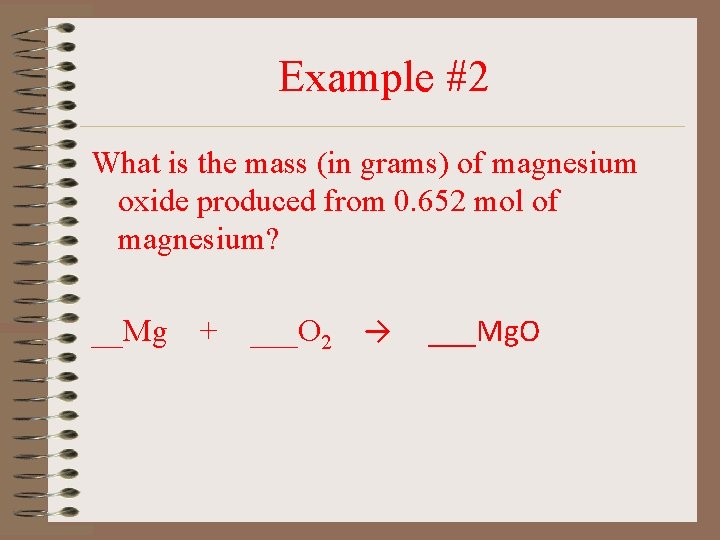
Example #2 What is the mass (in grams) of magnesium oxide produced from 0. 652 mol of magnesium? __Mg + ___O 2 → ___Mg. O
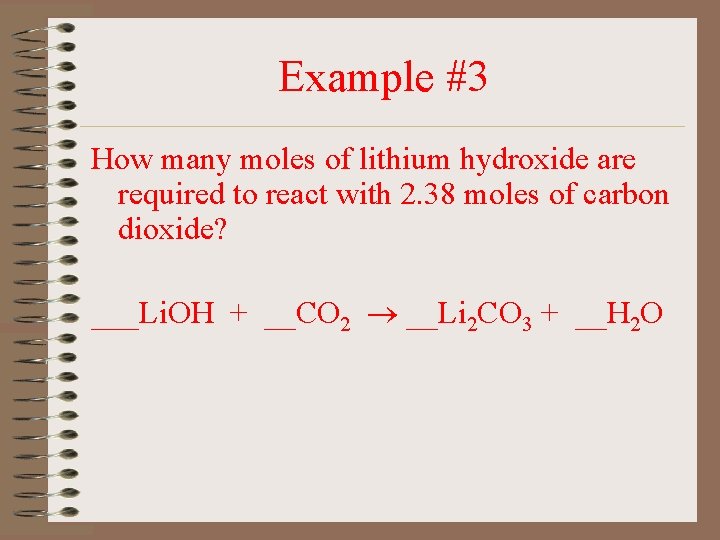
Example #3 How many moles of lithium hydroxide are required to react with 2. 38 moles of carbon dioxide? ___Li. OH + __CO 2 __Li 2 CO 3 + __H 2 O
• Limiting Reactant – reactant that is completely used up first • Excess Reactant – reactant that is left over
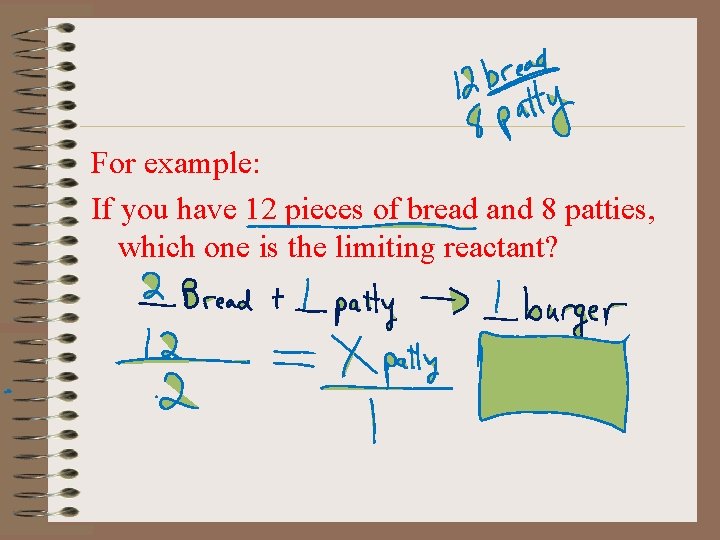
To determine limiting reactant: • Use given amount of only ONE reactant to determine how much you need of the other reactant. Use logic to determine which one will be used up first
For example: If you have 12 pieces of bread and 8 patties, which one is the limiting reactant?
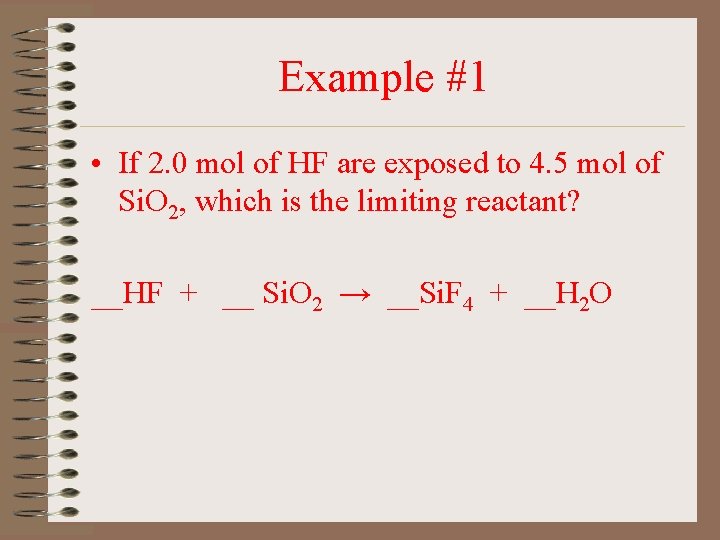
Example #1 • If 2. 0 mol of HF are exposed to 4. 5 mol of Si. O 2, which is the limiting reactant? __HF + __ Si. O 2 → __Si. F 4 + __H 2 O
Example #2 • What is the limiting reagent if 36. 0 g of H 2 O is mixed with 167 g Fe in the following reaction: 3 Fe + 4 H 2 O Fe 3 O 4 + 4 H 2
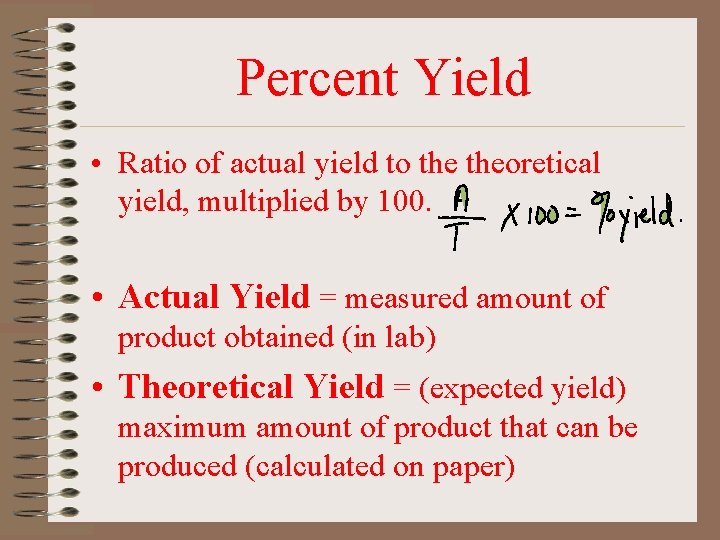
Percent Yield • Ratio of actual yield to theoretical yield, multiplied by 100. • Actual Yield = measured amount of product obtained (in lab) • Theoretical Yield = (expected yield) maximum amount of product that can be produced (calculated on paper)
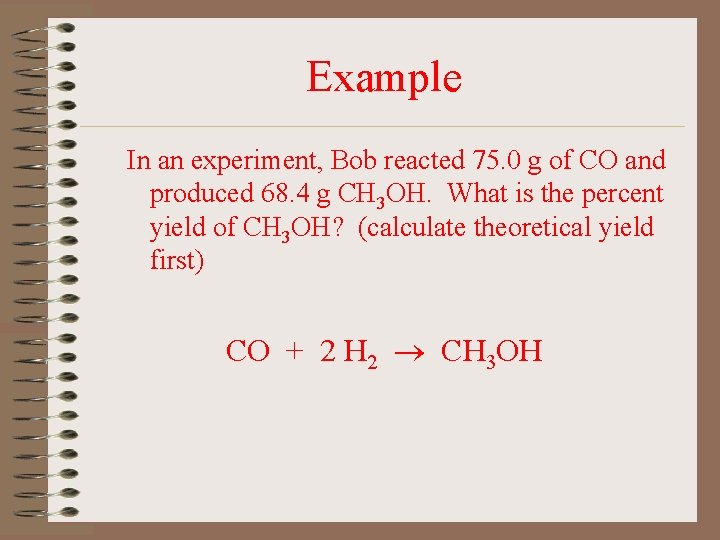
Example In an experiment, Bob reacted 75. 0 g of CO and produced 68. 4 g CH 3 OH. What is the percent yield of CH 3 OH? (calculate theoretical yield first) CO + 2 H 2 CH 3 OH