Standard 17 Size Categories for Children Men and
- Slides: 13
Standard 17 Size Categories for Children, Men, and Women
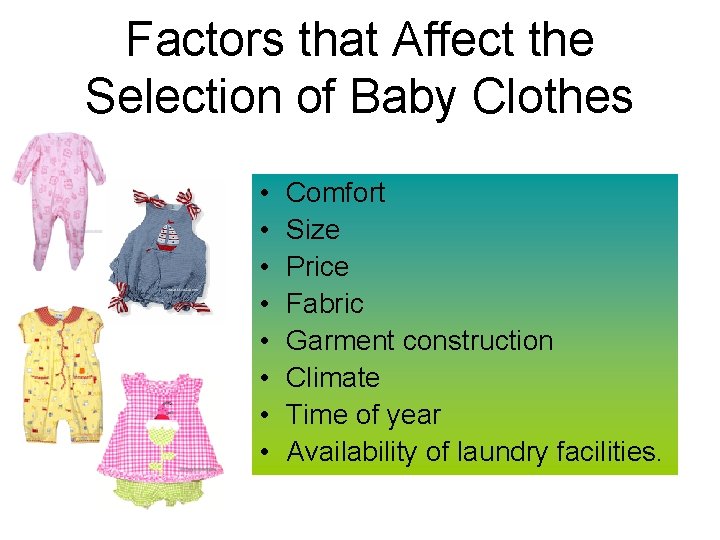
Factors that Affect the Selection of Baby Clothes • • Comfort Size Price Fabric Garment construction Climate Time of year Availability of laundry facilities.
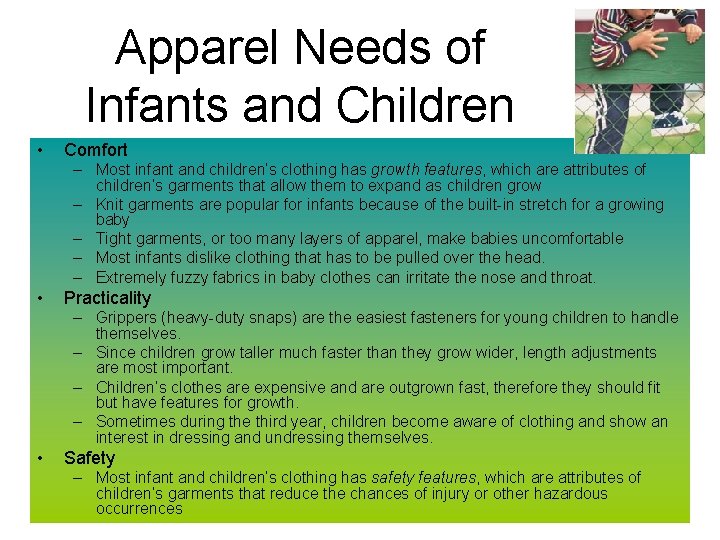
Apparel Needs of Infants and Children • Comfort – Most infant and children’s clothing has growth features, which are attributes of children’s garments that allow them to expand as children grow – Knit garments are popular for infants because of the built-in stretch for a growing baby – Tight garments, or too many layers of apparel, make babies uncomfortable – Most infants dislike clothing that has to be pulled over the head. – Extremely fuzzy fabrics in baby clothes can irritate the nose and throat. • Practicality – Grippers (heavy-duty snaps) are the easiest fasteners for young children to handle themselves. – Since children grow taller much faster than they grow wider, length adjustments are most important. – Children’s clothes are expensive and are outgrown fast, therefore they should fit but have features for growth. – Sometimes during the third year, children become aware of clothing and show an interest in dressing and undressing themselves. • Safety – Most infant and children’s clothing has safety features, which are attributes of children’s garments that reduce the chances of injury or other hazardous occurrences
Infants’ & Children’s Wear • Pre-fall (“Back to School”) is one of the three main production seasons for manufacturers – Fashion producers present new styles, fabrics, and colors • Spring/summer • Winter/holiday
Trends in Infants’ & Children’s Wear • Styles designed for older age groups have begun to migrate to the children’s market. • Licensing of children’s apparel has become big business. – Disney – Mary Kate & Ashley • Safety trends also affect production – Fabrics used in the children’s apparel industry must meet flame-retardant standards. – Clothing must not cause tripping or catch on objects.
Classifications for Infant’s & Children’s Wear • Clothing is organized by gender and sizes. – Infant – Toddler – Young children (sizes 2 -6 X) – Girls (sizes 6 -14) – Boys (sizes 6 -20)
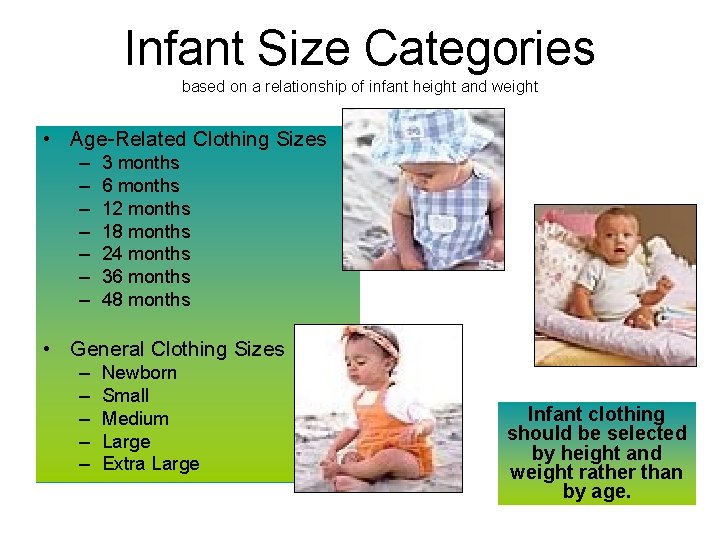
Infant Size Categories based on a relationship of infant height and weight • Age-Related Clothing Sizes – – – – 3 months 6 months 12 months 18 months 24 months 36 months 48 months • General Clothing Sizes – – – Newborn Small Medium Large Extra Large Infant clothing should be selected by height and weight rather than by age.
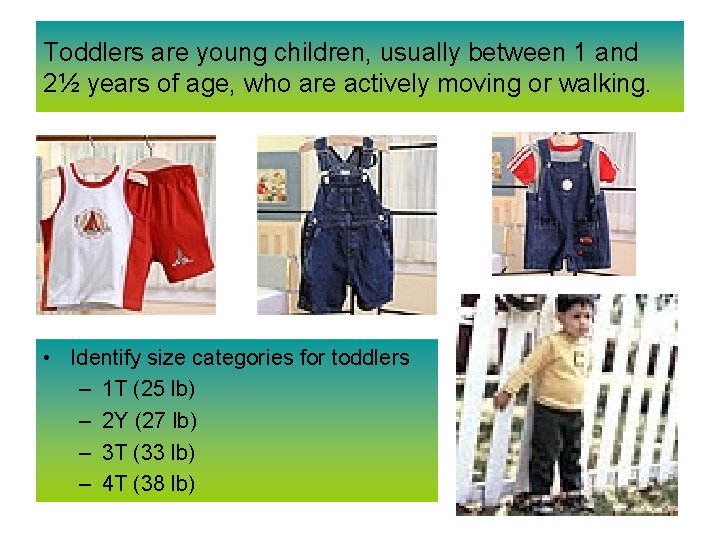
Toddlers are young children, usually between 1 and 2½ years of age, who are actively moving or walking. • Identify size categories for toddlers – 1 T (25 lb) – 2 Y (27 lb) – 3 T (33 lb) – 4 T (38 lb)
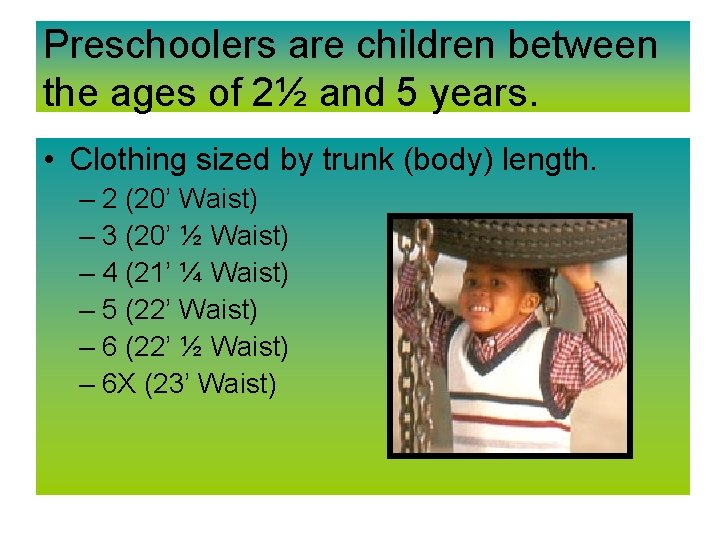
Preschoolers are children between the ages of 2½ and 5 years. • Clothing sized by trunk (body) length. – 2 (20’ Waist) – 3 (20’ ½ Waist) – 4 (21’ ¼ Waist) – 5 (22’ Waist) – 6 (22’ ½ Waist) – 6 X (23’ Waist)
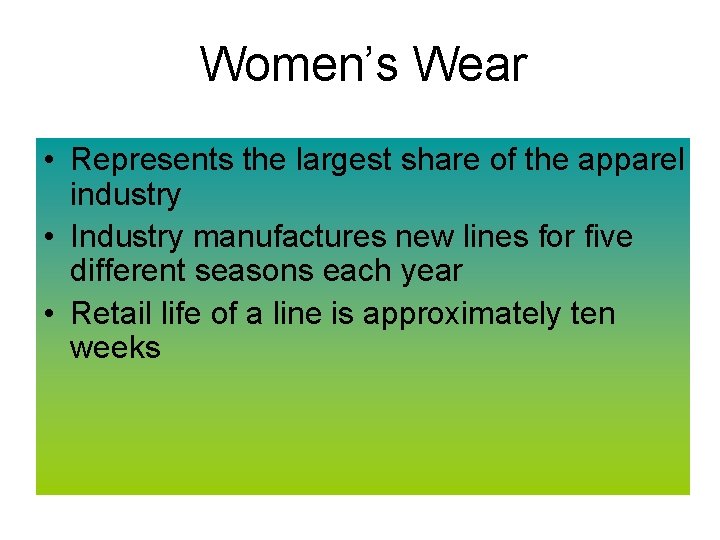
Women’s Wear • Represents the largest share of the apparel industry • Industry manufactures new lines for five different seasons each year • Retail life of a line is approximately ten weeks
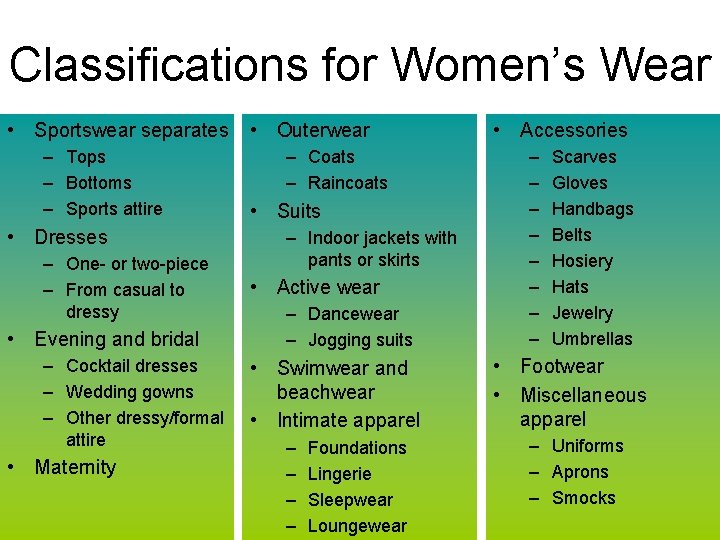
Classifications for Women’s Wear • Sportswear separates – Tops – Bottoms – Sports attire • Dresses – One- or two-piece – From casual to dressy • Evening and bridal – Cocktail dresses – Wedding gowns – Other dressy/formal attire • Maternity • Outerwear – Coats – Raincoats • Suits – Indoor jackets with pants or skirts • Active wear – Dancewear – Jogging suits • Swimwear and beachwear • Intimate apparel – – Foundations Lingerie Sleepwear Loungewear • Accessories – – – – Scarves Gloves Handbags Belts Hosiery Hats Jewelry Umbrellas • Footwear • Miscellaneous apparel – Uniforms – Aprons – Smocks
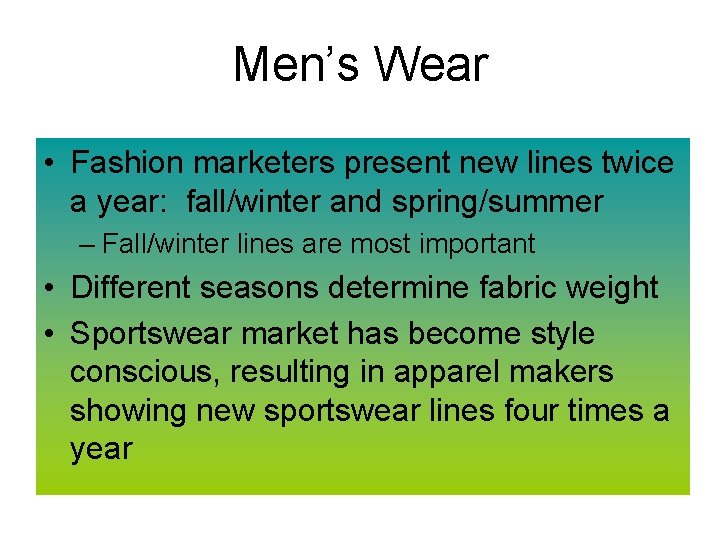
Men’s Wear • Fashion marketers present new lines twice a year: fall/winter and spring/summer – Fall/winter lines are most important • Different seasons determine fabric weight • Sportswear market has become style conscious, resulting in apparel makers showing new sportswear lines four times a year
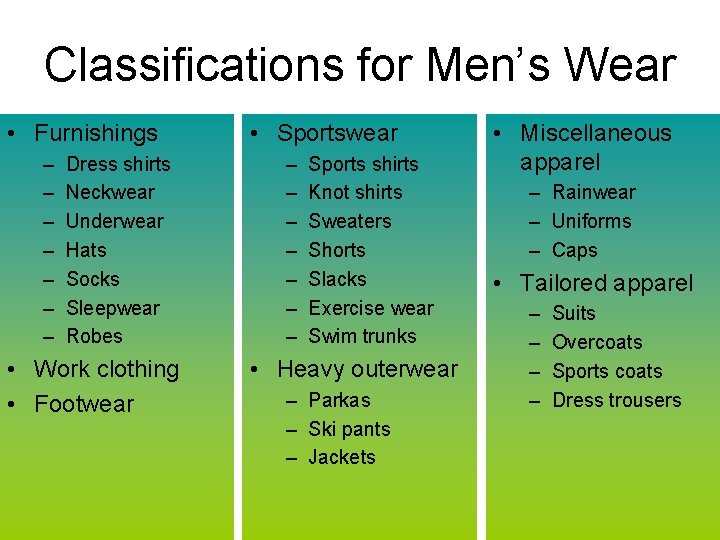
Classifications for Men’s Wear • Furnishings – – – – Dress shirts Neckwear Underwear Hats Socks Sleepwear Robes • Work clothing • Footwear • Sportswear – – – – Sports shirts Knot shirts Sweaters Shorts Slacks Exercise wear Swim trunks • Heavy outerwear – Parkas – Ski pants – Jackets • Miscellaneous apparel – Rainwear – Uniforms – Caps • Tailored apparel – – Suits Overcoats Sports coats Dress trousers