South Carolina DOT Training Workshop Geophysics Field Testing


- Slides: 23
South Carolina DOT Training Workshop Geophysics Field Testing Methods, Data Reduction, and Interpretation of Results Robert C. Bachus and Glenn J. Rix June 5 – 26, 2020
Seismic Wave Mechanics
Body Waves sz tzy tzx tyz sy txz txy tyx sx G, n, r y x 1. Equilibrium Equations: Relationships between stresses 2. Compatibility Equations: Relationships between displacements and strains 3. Constitutive Equations: Relationships between stresses and strains z Elastic Medium: G = shear modulus n = Poisson’s ratio r = mass density 1. Compression waves 2. Shear waves Body waves
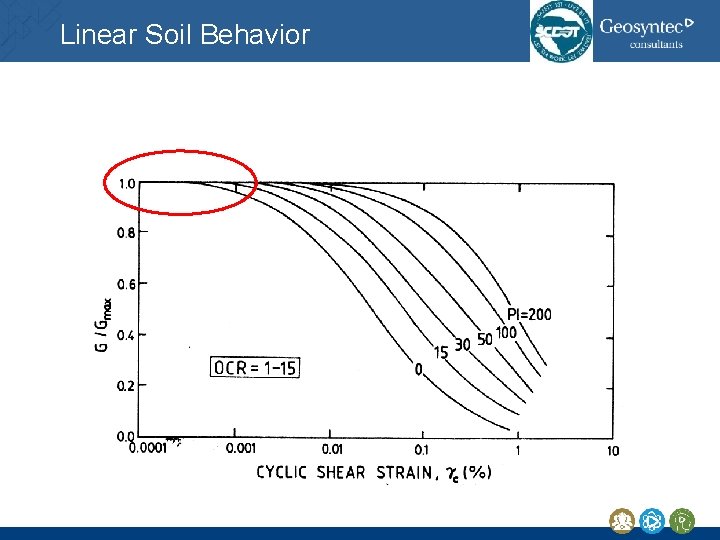
Linear Soil Behavior
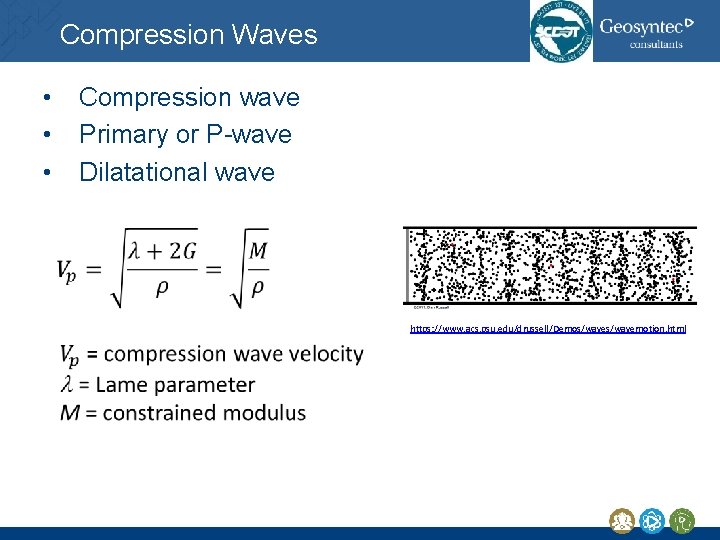
Compression Waves • • • Compression wave Primary or P-wave Dilatational wave https: //www. acs. psu. edu/drussell/Demos/wavemotion. html
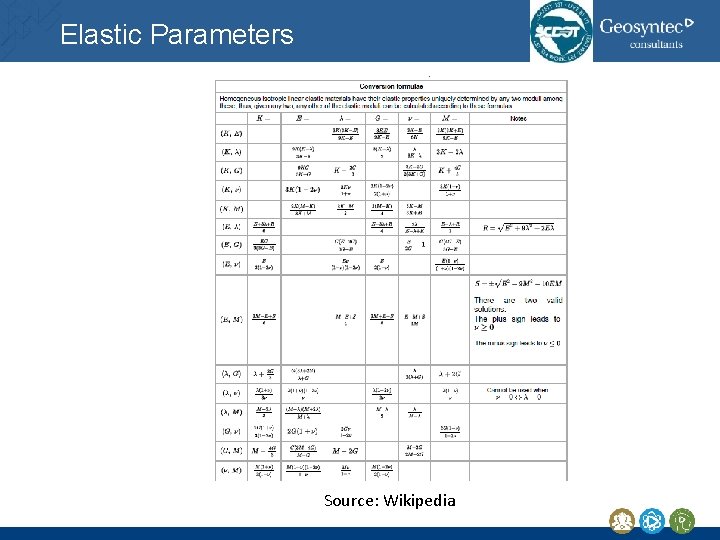
Elastic Parameters Source: Wikipedia
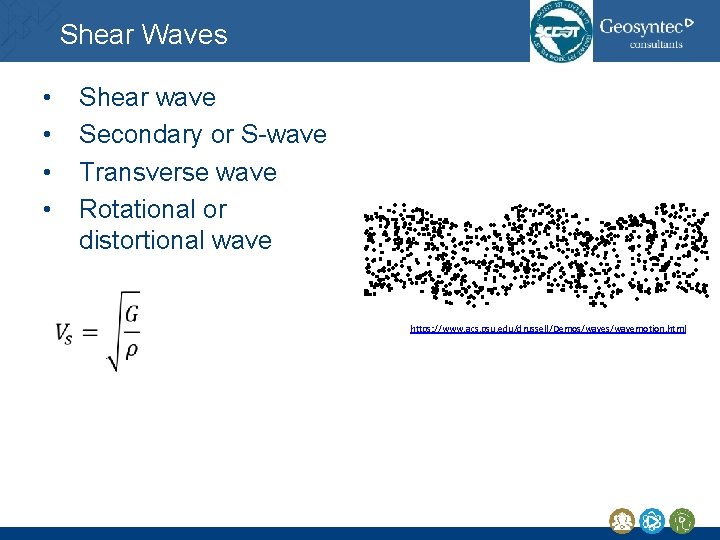
Shear Waves • • Shear wave Secondary or S-wave Transverse wave Rotational or distortional wave https: //www. acs. psu. edu/drussell/Demos/wavemotion. html
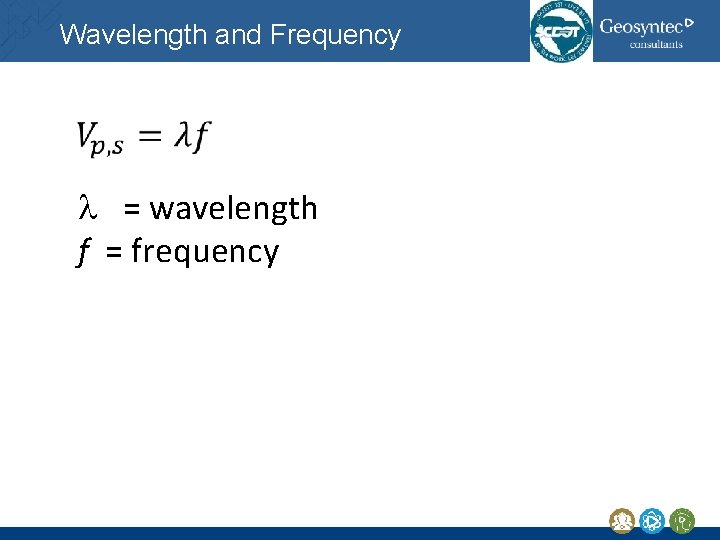
Wavelength and Frequency l = wavelength f = frequency
Body Waves - Summary • • For compression waves, the direction of particle motion is parallel to the direction of wave propagation For shear waves, the direction of particle motion is perpendicular to the direction of wave propagation
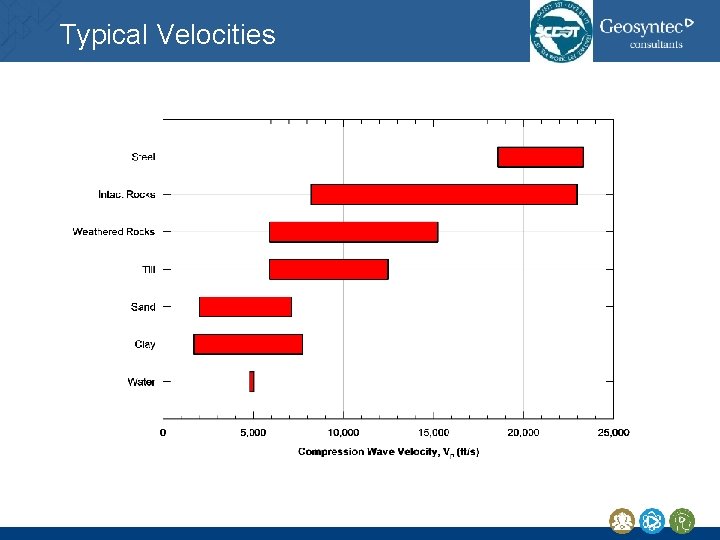
Typical Velocities
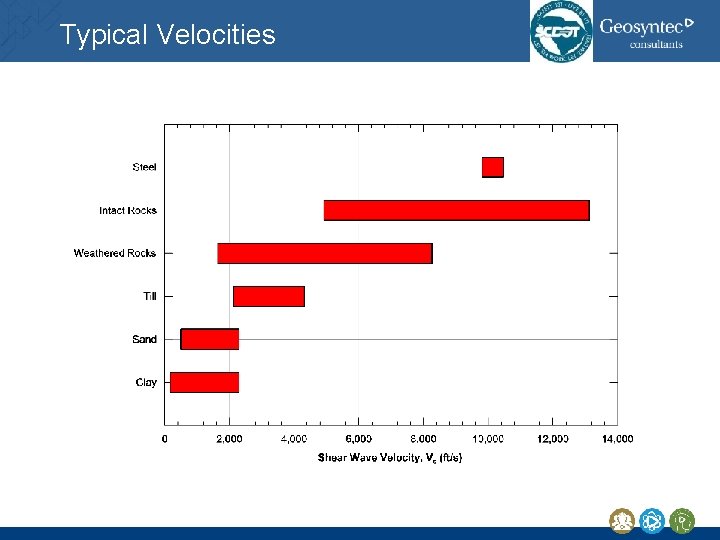
Typical Velocities
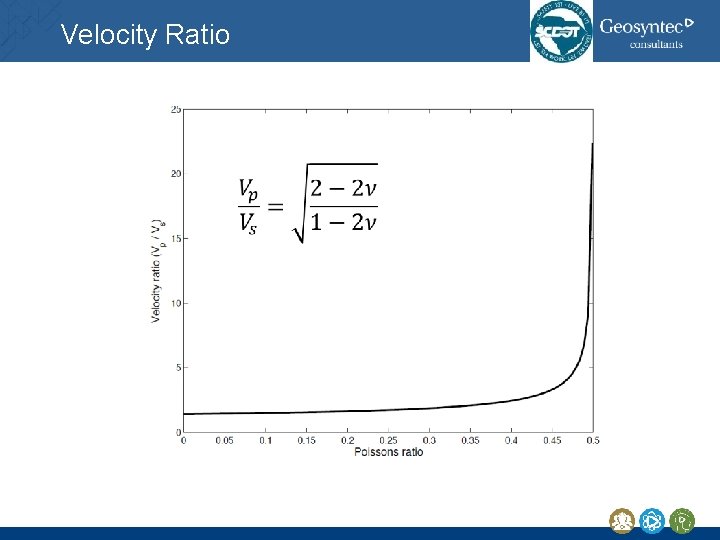
Velocity Ratio
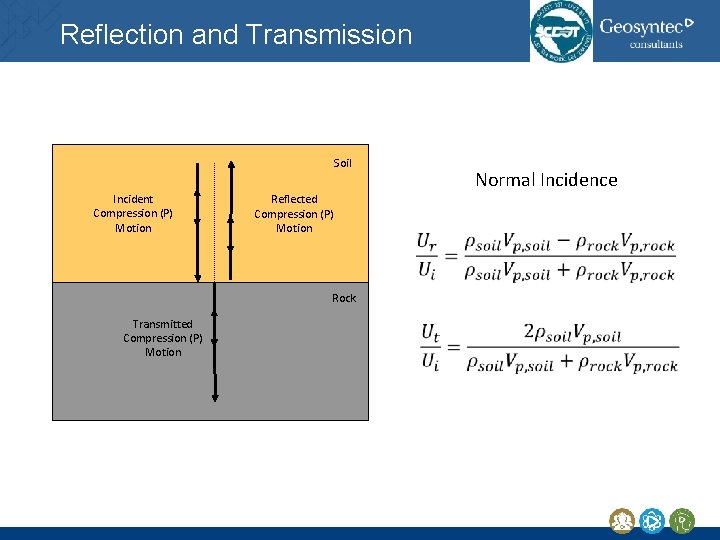
Reflection and Transmission Soil Incident Compression (P) Motion Reflected Compression (P) Motion Normal Incidence Rock Transmitted Compression (P) Motion
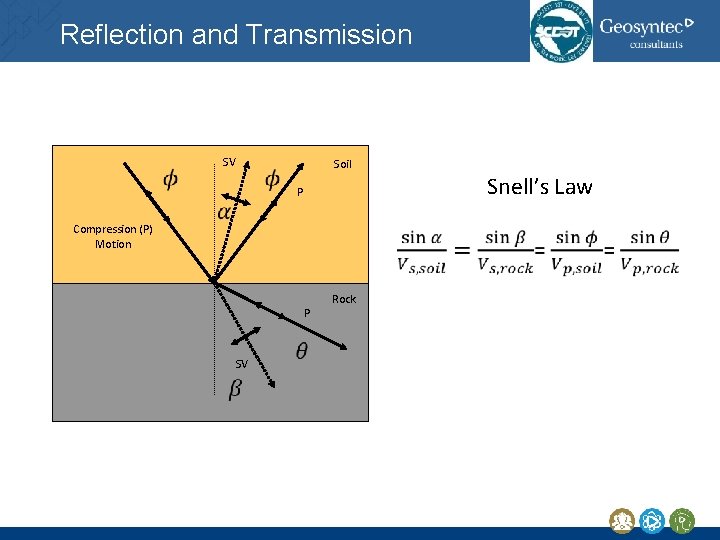
Reflection and Transmission SV Soil Snell’s Law P Compression (P) Motion P SV Rock
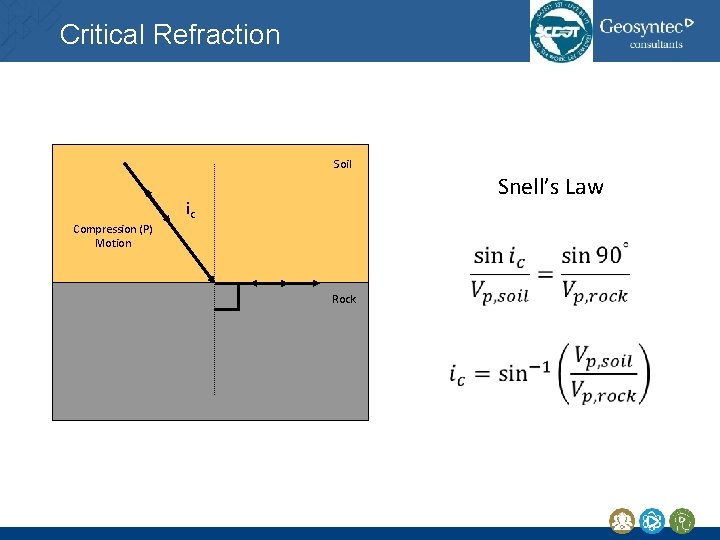
Critical Refraction Soil Snell’s Law ic Compression (P) Motion Rock
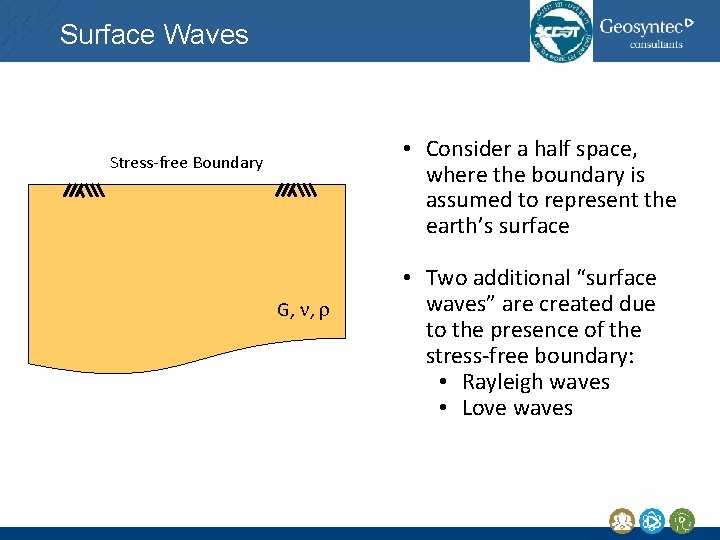
Surface Waves • Consider a half space, where the boundary is assumed to represent the earth’s surface Stress-free Boundary G, n, r • Two additional “surface waves” are created due to the presence of the stress-free boundary: • Rayleigh waves • Love waves
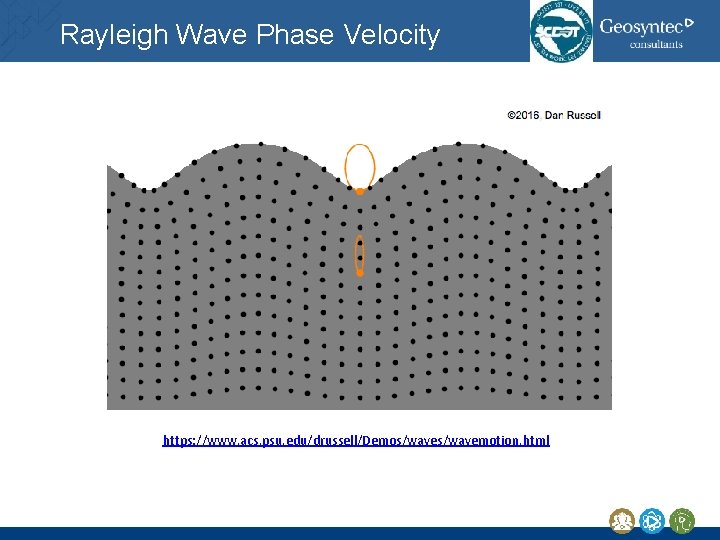
Rayleigh Wave Phase Velocity https: //www. acs. psu. edu/drussell/Demos/wavemotion. html
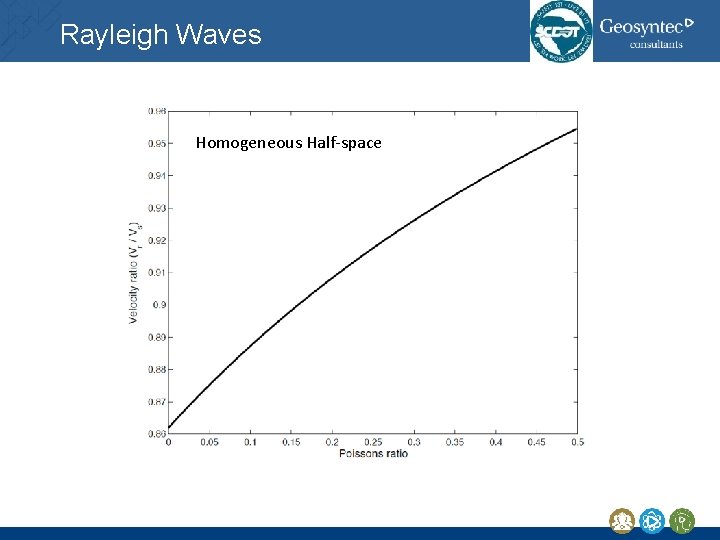
Rayleigh Waves Homogeneous Half-space
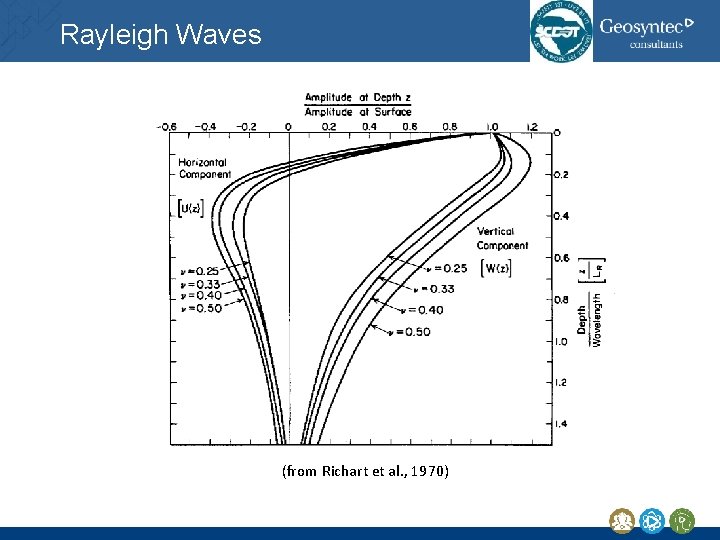
Rayleigh Waves (from Richart et al. , 1970)
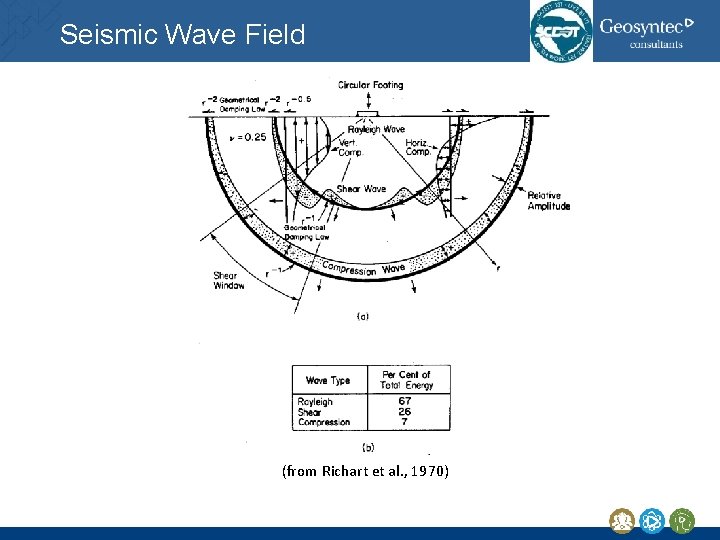
Seismic Wave Field (from Richart et al. , 1970)
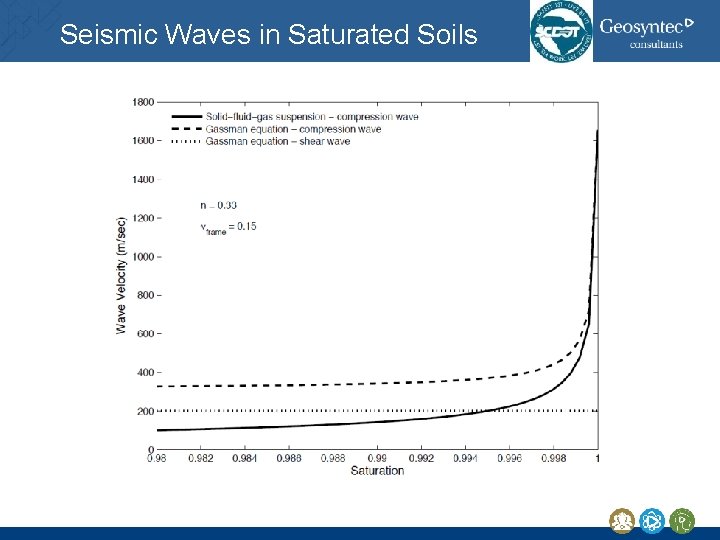
Seismic Waves in Saturated Soils • In a saturated, particulate medium (i. e. , soil), there are two compression waves: – Compression wave through the pore fluid – Compression wave through the soil skeleton or frame • • The compression wave through the pore fluid has a velocity of approximately 4, 800 ft/sec and travels faster than the compression wave through the soil skeleton. Be careful of misinterpreting compression wave velocity measurements in saturated soils.
Seismic Waves in Saturated Soils
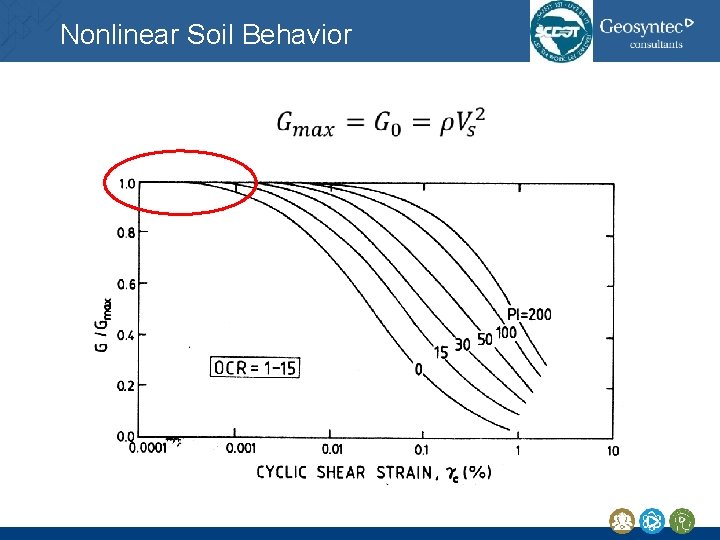
Nonlinear Soil Behavior