Sociology Chapter 4 Section 3 AGENTS OF SOCIALIZATION

- Slides: 16
Sociology Chapter 4 Section 3: AGENTS OF SOCIALIZATION
The Family and Socialization The child’s first exposure to the world occurs within the family. Within the family the child learns to… Think and speak Internalize Form norms, beliefs, and values some basic attitudes Develop a capacity for intimate and personal relationships Acquire a self-image
Our family’s social class shapes what we think of ourselves and how others treat us, even far into adulthood.
Socialization in Schools Rewards and punishments are based on performance rather than affection. A teacher evaluates students by more objective standards. The school creates feelings of loyalty and allegiance to something beyond the family.
How so schools socialize students? Underlying the formal goals of the school is the hidden curriculum – the informal and unofficial aspects of culture that children are taught in preparation for life. The hidden curriculum teaches children discipline, order, cooperation, and conformity- characteristics required for success in the adult world of work.
School also teaches children the reality of how we experience time in the real world.
Peer Group Socialization The child’s peer group- composed of individuals of roughly the same age and interests- is the only agency of socialization that is not controlled primarily by adults.
How do peer groups contribute to socialization? In the peer group, young people have an opportunity to engage in give-and-take relationships. The peer group also gives children experience in self-direction. They begin to make their own decisions.
Children learn to be different from their parents in ways that help to develop selfsufficiency.
Do friends or family have more influence on young people? Once children reach the upper levels of grade school, they may spend more time with their peers than they do with their parents.
According to psychologist Judith Harris, peers are more important than parents in socializing children.
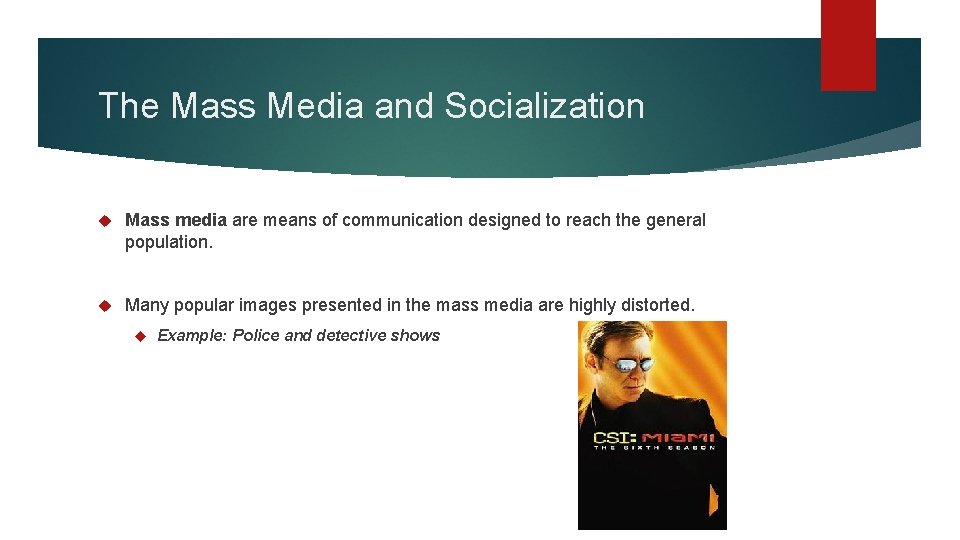
The Mass Media and Socialization Mass media are means of communication designed to reach the general population. Many popular images presented in the mass media are highly distorted. Example: Police and detective shows
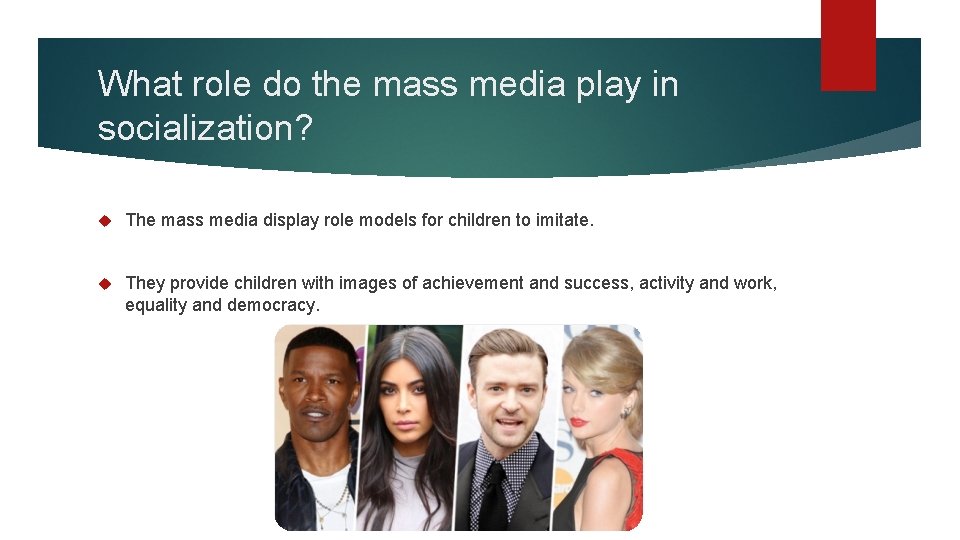
What role do the mass media play in socialization? The mass media display role models for children to imitate. They provide children with images of achievement and success, activity and work, equality and democracy.
What about violence in the mass media? By age sixteen, the average American child will have seen twenty thousand homicides on television. Based on hundreds of studies involving over ten thousand children, most social scientists conclude that watching aggressive behavior on television significantly increases aggression.
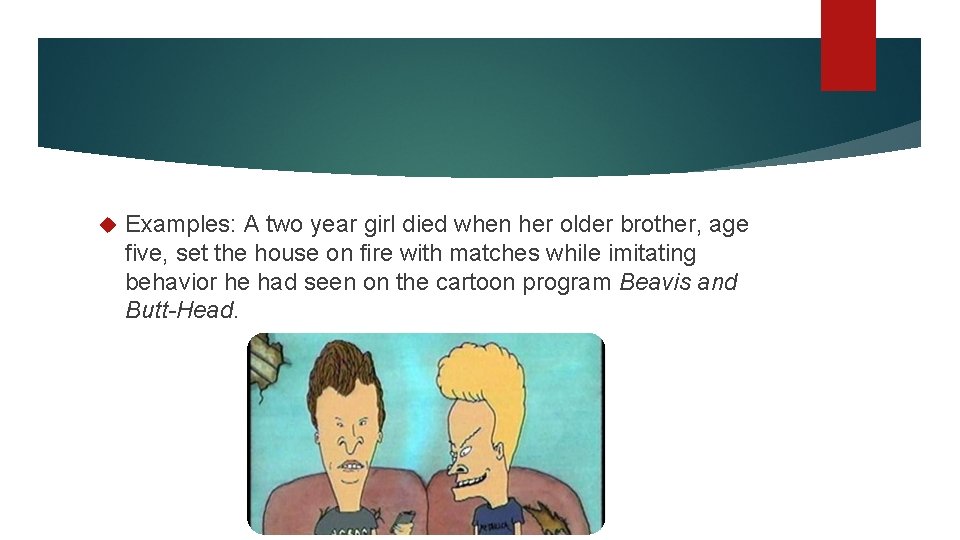
Examples: A two year girl died when her older brother, age five, set the house on fire with matches while imitating behavior he had seen on the cartoon program Beavis and Butt-Head.
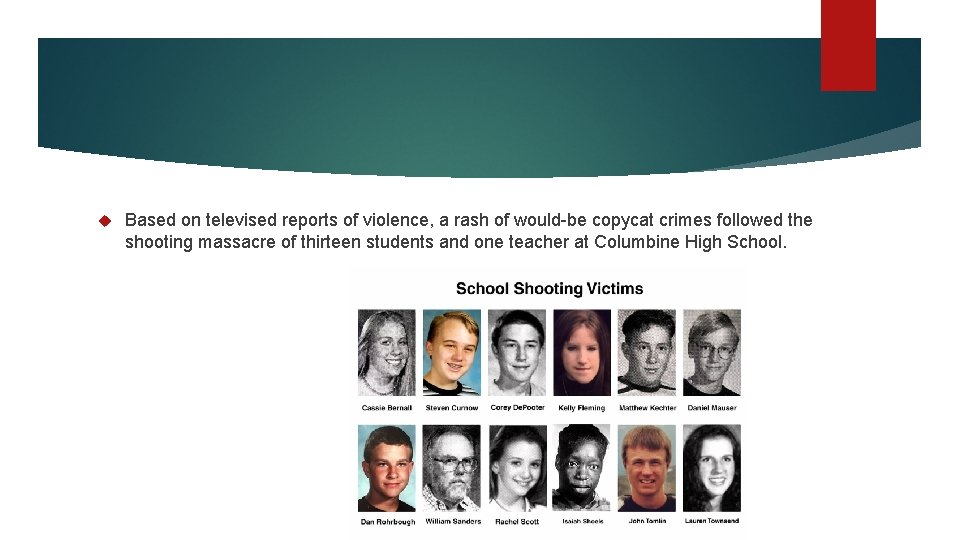
Based on televised reports of violence, a rash of would-be copycat crimes followed the shooting massacre of thirteen students and one teacher at Columbine High School.