Slip Trip and Fall STF Prevention 1 Presentation

- Slides: 14
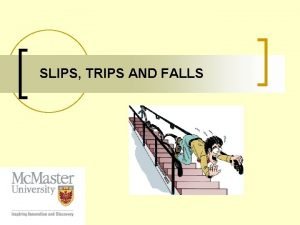
Slip, Trip, and Fall (STF) Prevention 1
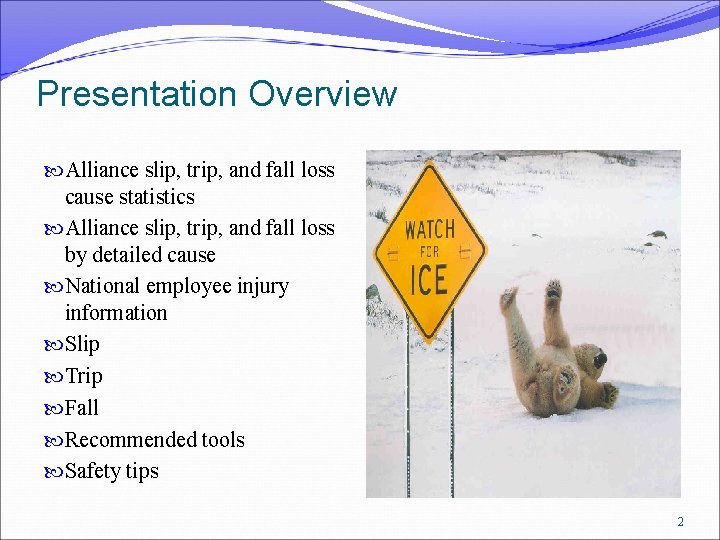
Presentation Overview Alliance slip, trip, and fall loss cause statistics Alliance slip, trip, and fall loss by detailed cause National employee injury information Slip Trip Fall Recommended tools Safety tips 2
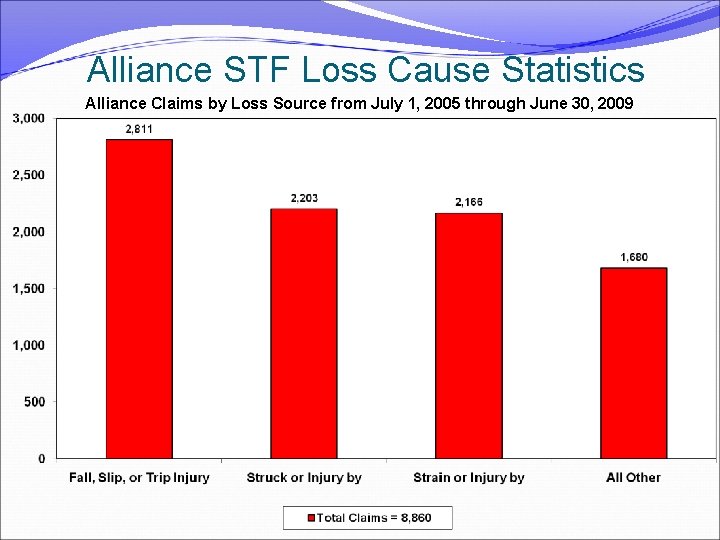
Alliance STF Loss Cause Statistics Alliance Claims by Loss Source from July 1, 2005 through June 30, 2009
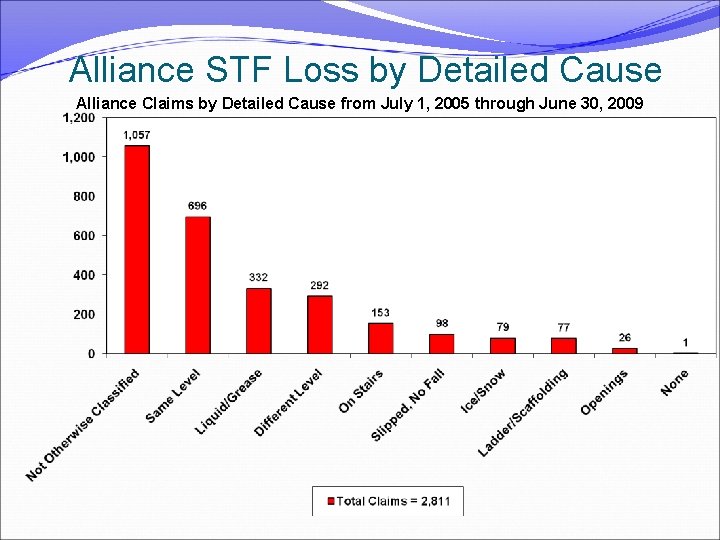
Alliance STF Loss by Detailed Cause Alliance Claims by Detailed Cause from July 1, 2005 through June 30, 2009
National Employee Injury Information There were 1, 158, 870 employee injuries requiring days spent away from work in 2007. Approximately 344, 184, or 30%, of those injuries were due to slips, trips, or falls. Approximately 80% of employee injuries are attributable to unsafe acts, rather than unsafe conditions. Simply paying greater attention to where you’re walking, keeping your line of sight clear, and reducing distractions can greatly decrease the likelihood of a fall. Also, using the correct tool for the job at hand helps to reduce your exposure to injury. 5
Slip Definition: to slide suddenly or involuntarily; to lose one's foothold, as on a smooth surface Common causes of slip hazards are: spilled food, drink, or oil; freshly-mopped floors; ice and/or snow; and sand and/or fine gravel accumulation within walkways. When a slip hazard is identified, it is best to contact Maintenance or clean the spill yourself. If possible, do not leave the slip hazard unattended.
Slip Hazards Oil leaking onto the floor An accumulation of sawdust within the walkway; also, flexible cord lying on the walkway poses a trip hazard 7
Trip Definition: a stumble; misstep Common causes of tripping hazards are: misaligned sections of a walking surface, flexible cord within the walkway, items improperly stored within the walkway, obstructed view, improper footwear, and bypassing designated walkways (taking shortcuts). When a trip hazard is identified, it is important to notify Maintenance in writing immediately. Some trip hazards, such as cords within walkways, poor housekeeping, and improper footwear, can be quickly and easily resolved. 8
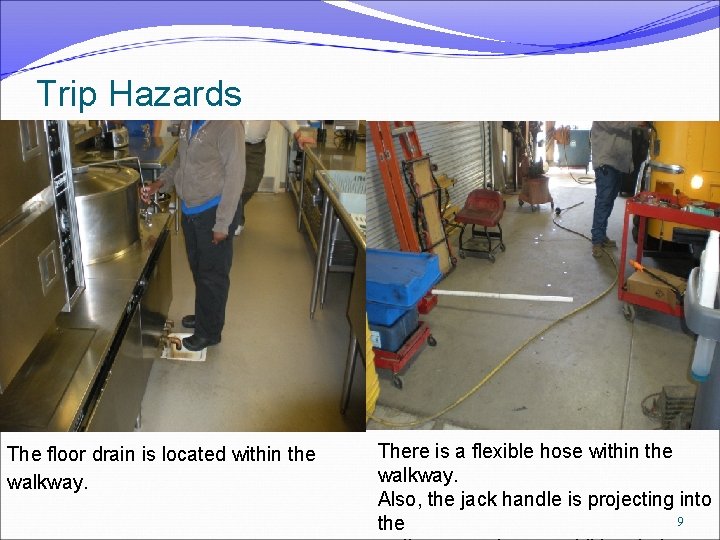
Trip Hazards The floor drain is located within the walkway. There is a flexible hose within the walkway. Also, the jack handle is projecting into 9 the
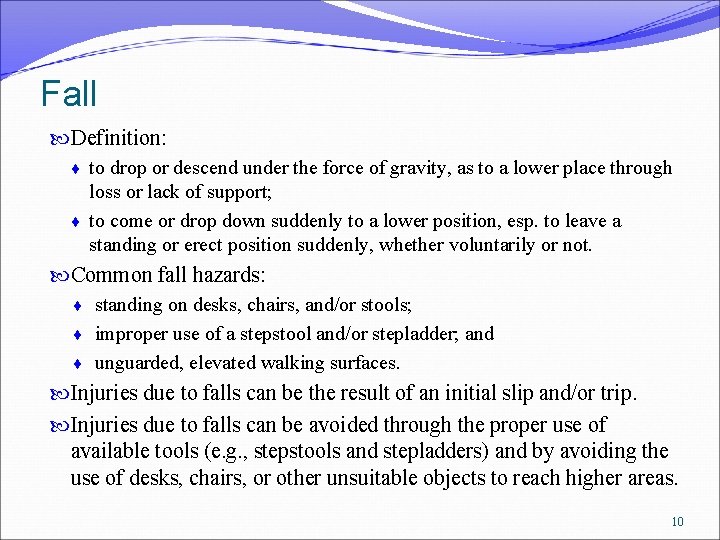
Fall Definition: to drop or descend under the force of gravity, as to a lower place through loss or lack of support; to come or drop down suddenly to a lower position, esp. to leave a standing or erect position suddenly, whether voluntarily or not. Common fall hazards: standing on desks, chairs, and/or stools; improper use of a stepstool and/or stepladder; and unguarded, elevated walking surfaces. Injuries due to falls can be the result of an initial slip and/or trip. Injuries due to falls can be avoided through the proper use of available tools (e. g. , stepstools and stepladders) and by avoiding the use of desks, chairs, or other unsuitable objects to reach higher areas. 10
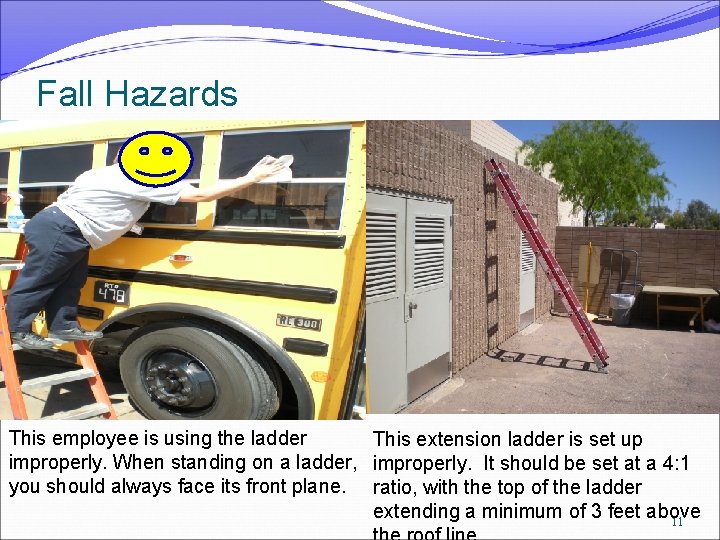
Fall Hazards This employee is using the ladder This extension ladder is set up improperly. When standing on a ladder, improperly. It should be set at a 4: 1 you should always face its front plane. ratio, with the top of the ladder extending a minimum of 3 feet above 11
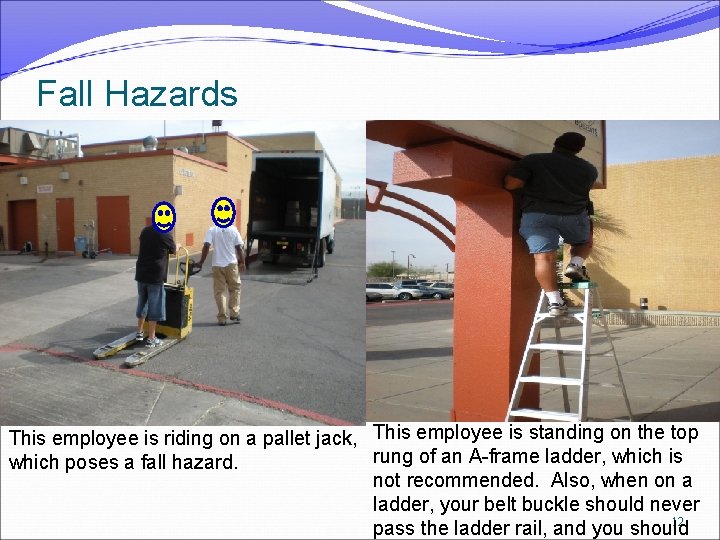
Fall Hazards This employee is riding on a pallet jack, This employee is standing on the top rung of an A-frame ladder, which is which poses a fall hazard. not recommended. Also, when on a ladder, your belt buckle should never 12 pass the ladder rail, and you should
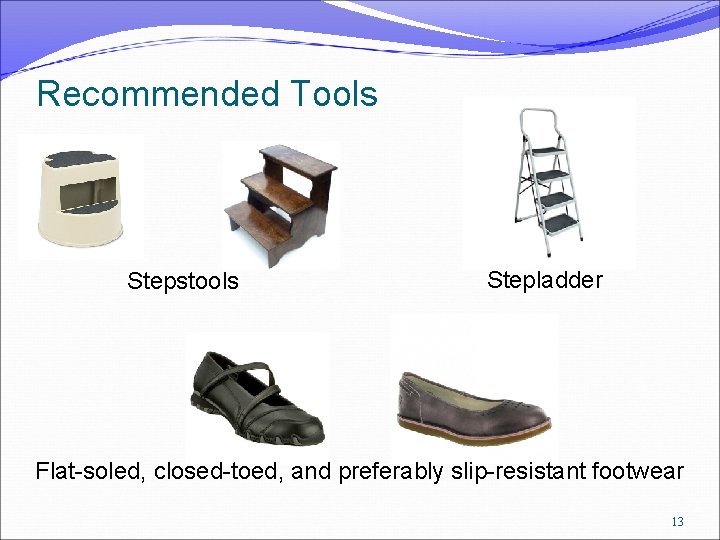
Recommended Tools Stepstools Stepladder Flat-soled, closed-toed, and preferably slip-resistant footwear 13
Safety Tips Always look approximately six feet in front of you when walking. This will help you identify hazards. Use handrails wherever they are provided. Rotate your body 30° toward the handrail when descending stairs. This will increase your stability. Do not ride in unauthorized driver or passenger positions on forklifts or other machinery. Inspect ladders before each use. Post warning signs indicating a wet or slippery floor whenever possible.