Skeletal Muscular Systems Form and Movement Functions of

- Slides: 22
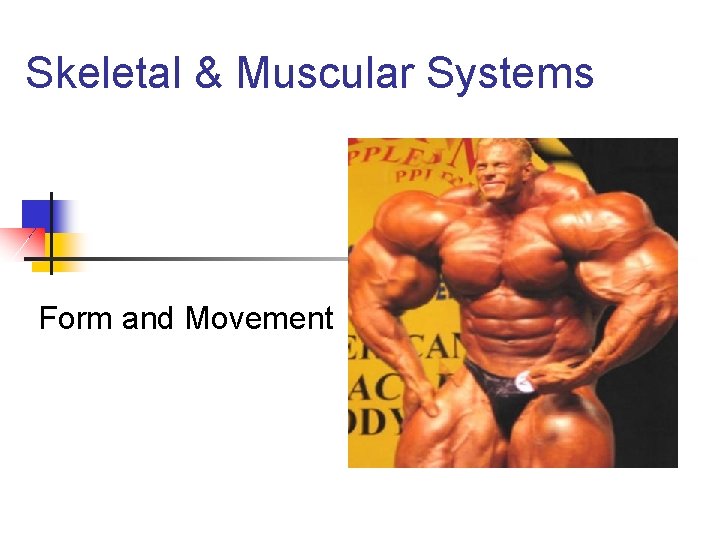
Skeletal & Muscular Systems Form and Movement
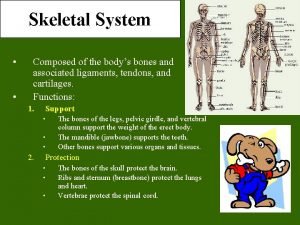
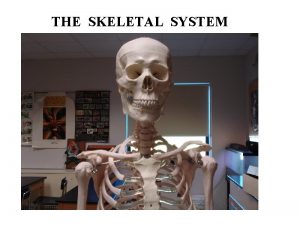
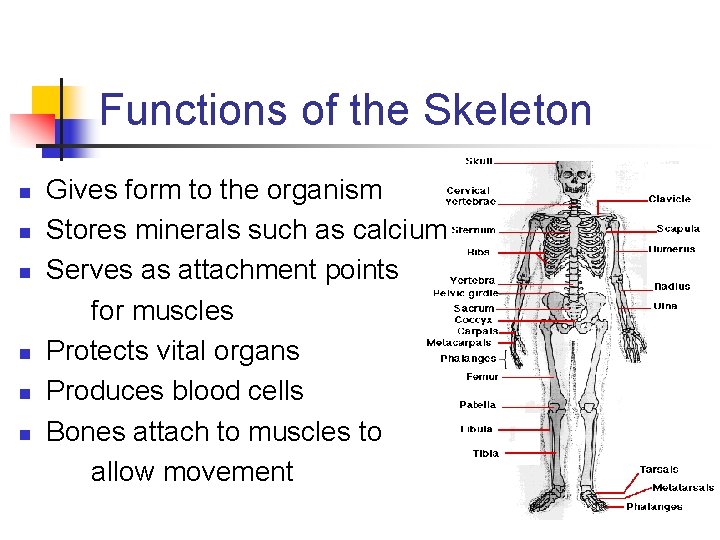
Functions of the Skeleton n n n Gives form to the organism Stores minerals such as calcium Serves as attachment points for muscles Protects vital organs Produces blood cells Bones attach to muscles to allow movement
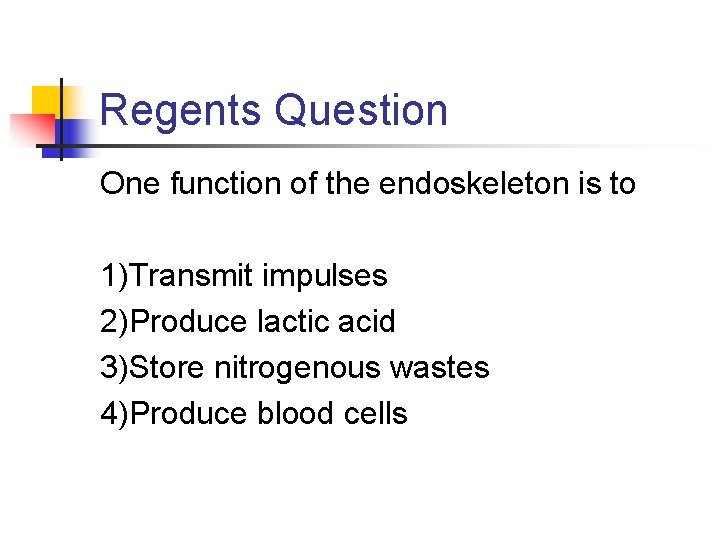
Regents Question One function of the endoskeleton is to 1)Transmit impulses 2)Produce lactic acid 3)Store nitrogenous wastes 4)Produce blood cells
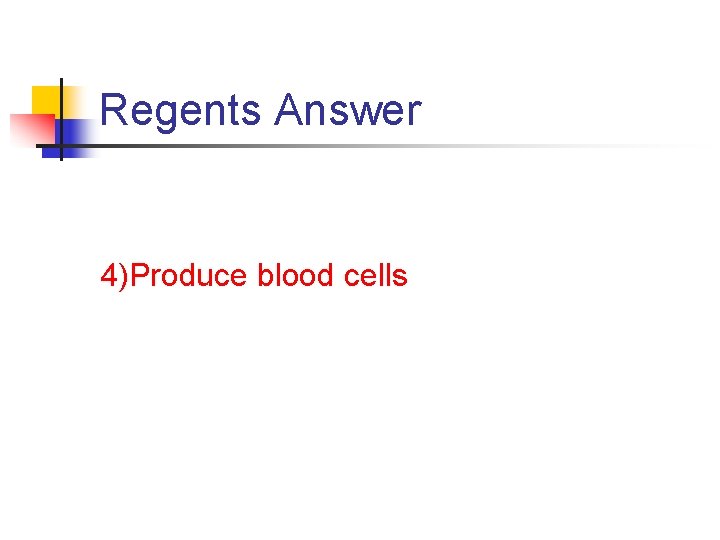
Regents Answer 4)Produce blood cells
Bone and Bone Tissue n n Bone tissue includes bone cells (osteocytes) and non-living mineral deposits. Bone parts: 1. Marrow, 2. Compact bone, 3. Periosteum, 4. Spongy bone
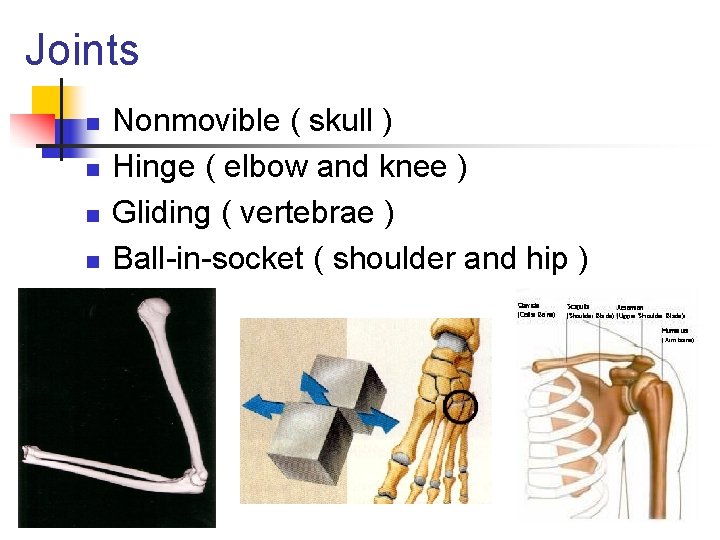
Joints n n Nonmovible ( skull ) Hinge ( elbow and knee ) Gliding ( vertebrae ) Ball-in-socket ( shoulder and hip )
Regents Question The humerus, the bone in the upper arm, is directly connected to other bones in the arm by 1)Cartilage 2)Extensors 3)Ligaments 4)Tendons
Regents Answer 3)Ligaments
Bone Diseases n n Osteoporosis Acromegaly Leukemia Vitamin D deficency
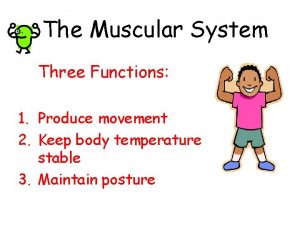
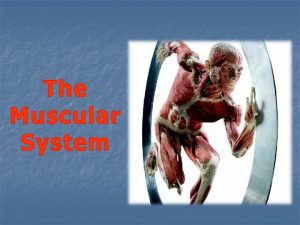
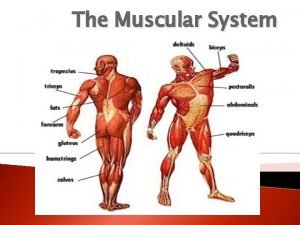
Muscular System n n n Contract and relax to move the body. Stores energy Protects internal organs
Regents Question The bones of humans most directly aid body movement 1)Producing blood cells in the marrow 2)Providing an anchor site for muscles 3)Protecting internal organs 4)Absorbing excess calcium from the blood
Regents Answer 2)Providing an anchor site for muscles
Muscle Types Cardiac Muscle n. Smooth Muscle n. Skeletal Muscle n
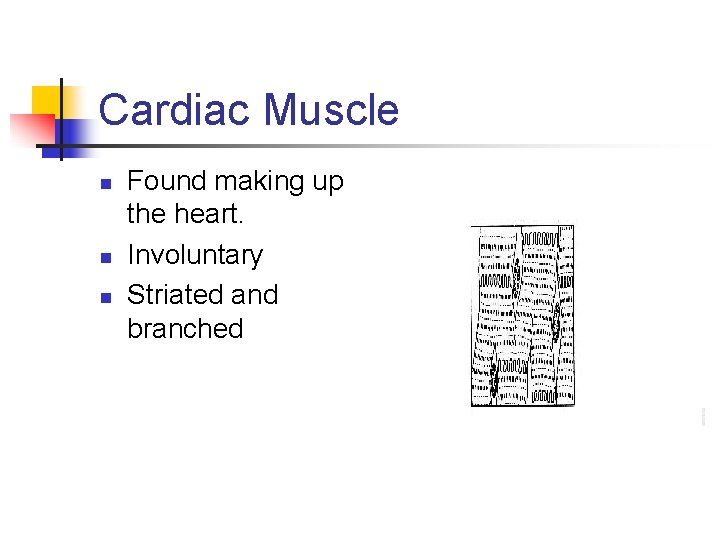
Cardiac Muscle n n n Found making up the heart. Involuntary Striated and branched
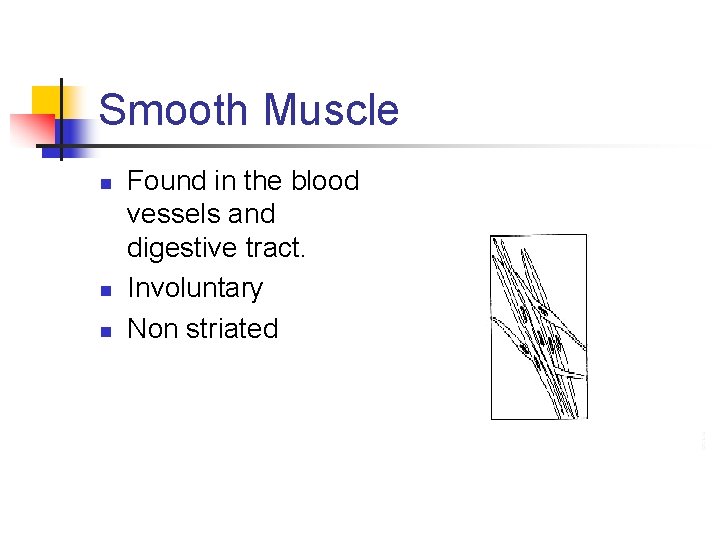
Smooth Muscle n n n Found in the blood vessels and digestive tract. Involuntary Non striated
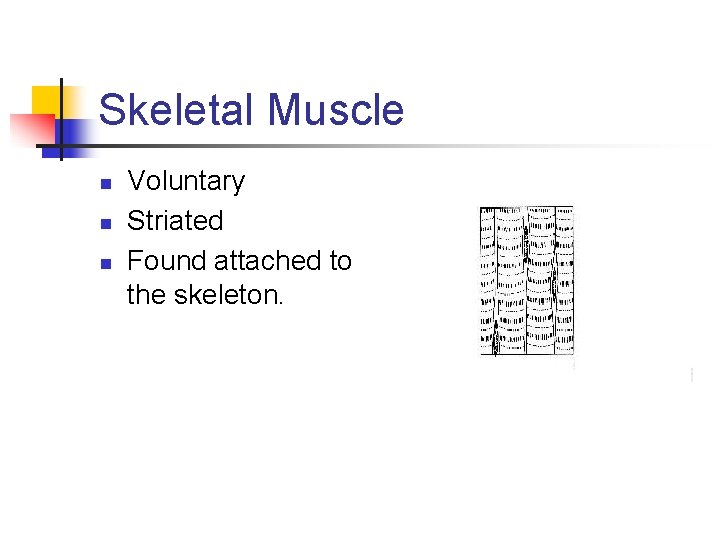
Skeletal Muscle n n n Voluntary Striated Found attached to the skeleton.
Regents Question Which malfunction is most closely associated with connective tissue that is involved in human locomotion? 1)Tendonitis 2)Bronchitis 3)Diabetes 4)Meningitis
Regents Answer 1)Tendonitis
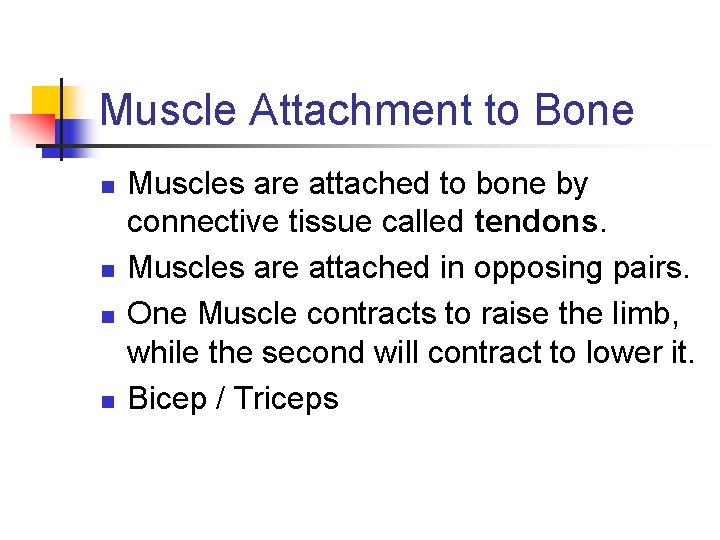
Muscle Attachment to Bone n n Muscles are attached to bone by connective tissue called tendons. Muscles are attached in opposing pairs. One Muscle contracts to raise the limb, while the second will contract to lower it. Bicep / Triceps
Regents Question Which statement does not correctly describe a function of cartilage? 1)It provides flexibility in an embryo 2)It makes up the outer ear 3)It anchors muscles to bones 4)It cushions bones at a joint
Regents Answer 3)It anchors muscles to bones