SIGGRAPH ASIA 2009 Stochastic Progressive Photon Mapping Toshiya


- Slides: 21
SIGGRAPH ASIA 2009 Stochastic Progressive Photon Mapping Toshiya Hachisuka Henrik Wann Jensen 최인창(Inchang Choi)
Outline ● Problem Statement ● Distributed Ray Tracing ● Brief Review ● Photon Mapping ● Progressive Photon Mapping ● Stochastic Progressive Photon Mapping ● Derivation of SPPM ● Shared Radius ● Shared Accumulated Flux ● Results ● Conclusion 2
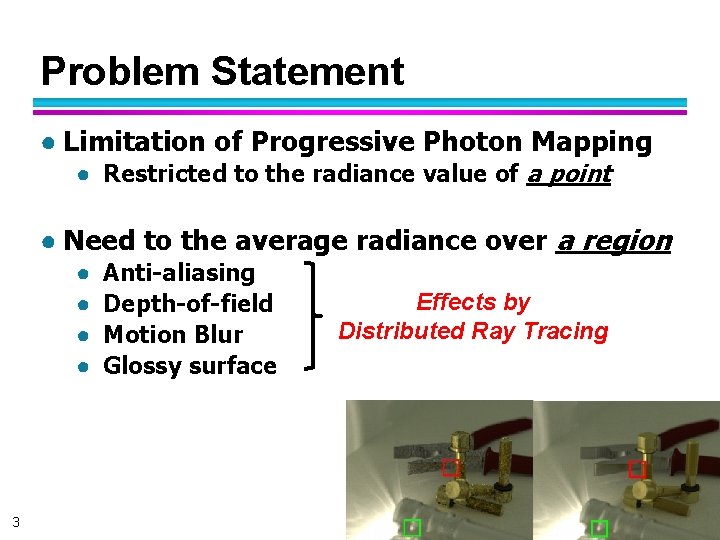
Problem Statement ● Limitation of Progressive Photon Mapping ● Restricted to the radiance value of a point ● Need to the average radiance over a region ● ● 3 Anti-aliasing Depth-of-field Motion Blur Glossy surface Effects by Distributed Ray Tracing
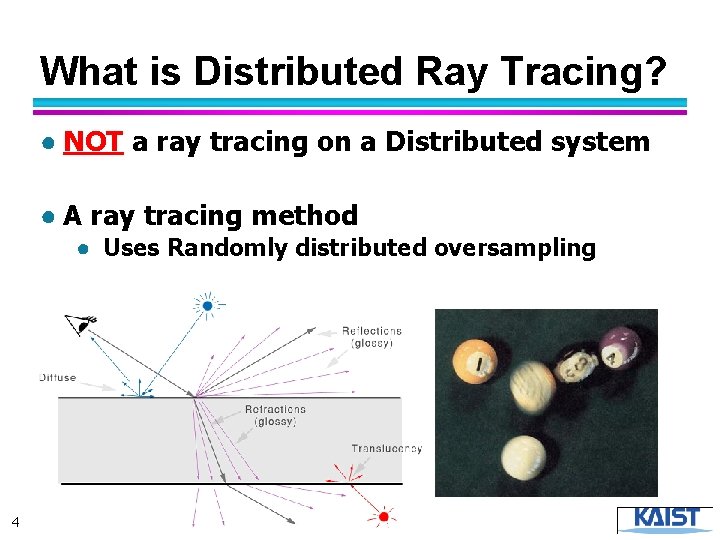
What is Distributed Ray Tracing? ● NOT a ray tracing on a Distributed system ● A ray tracing method ● Uses Randomly distributed oversampling 4
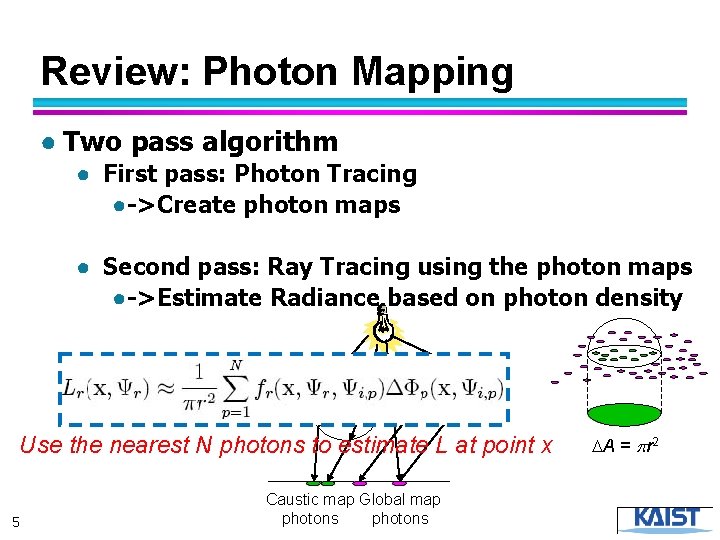
Review: Photon Mapping ● Two pass algorithm ● First pass: Photon Tracing ●->Create photon maps ● Second pass: Ray Tracing using the photon maps ●->Estimate Radiance based on photon density Use the nearest N photons to estimate L at point x 5 Caustic map Global map photons DA = pr 2
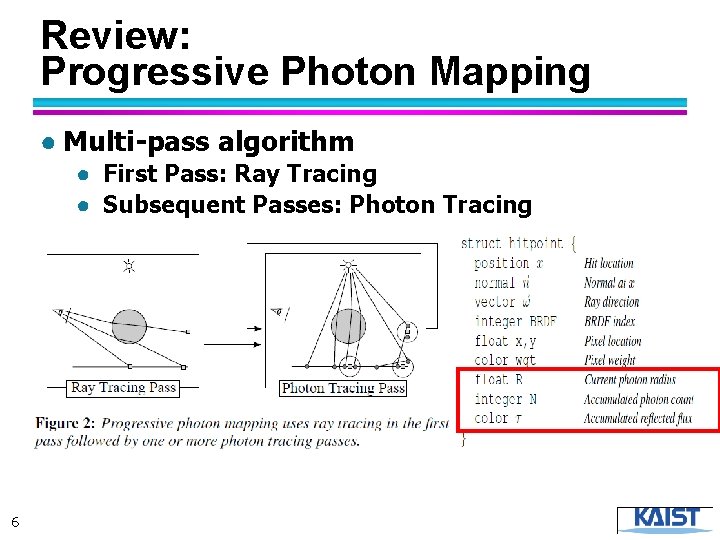
Review: Progressive Photon Mapping ● Multi-pass algorithm ● First Pass: Ray Tracing ● Subsequent Passes: Photon Tracing 6
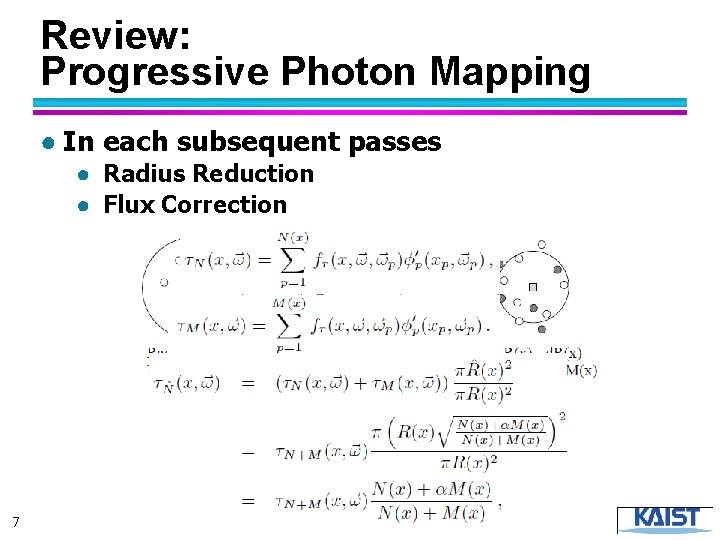
Review: Progressive Photon Mapping ● In each subsequent passes ● Radius Reduction ● Flux Correction 7
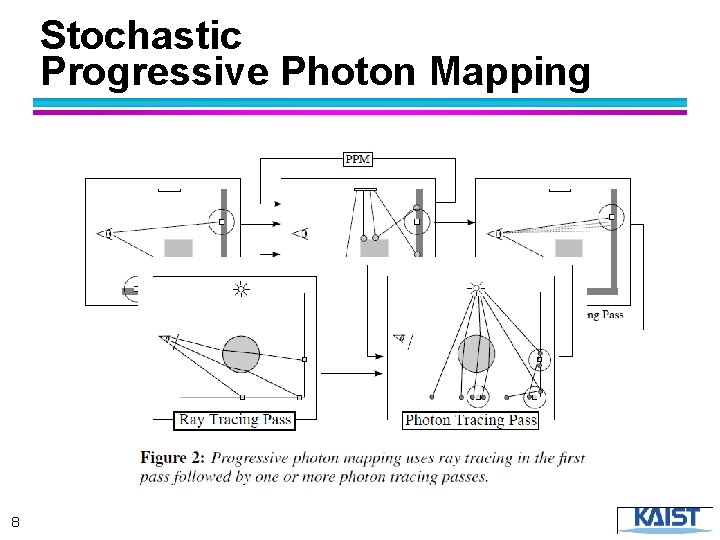
Stochastic Progressive Photon Mapping 8
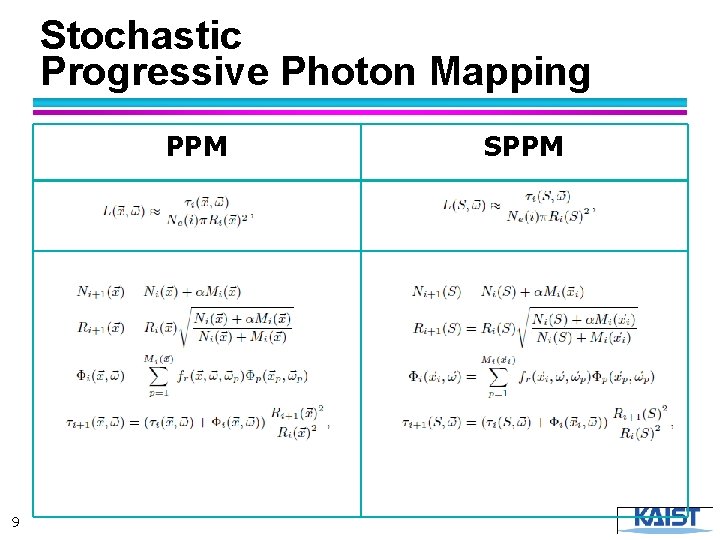
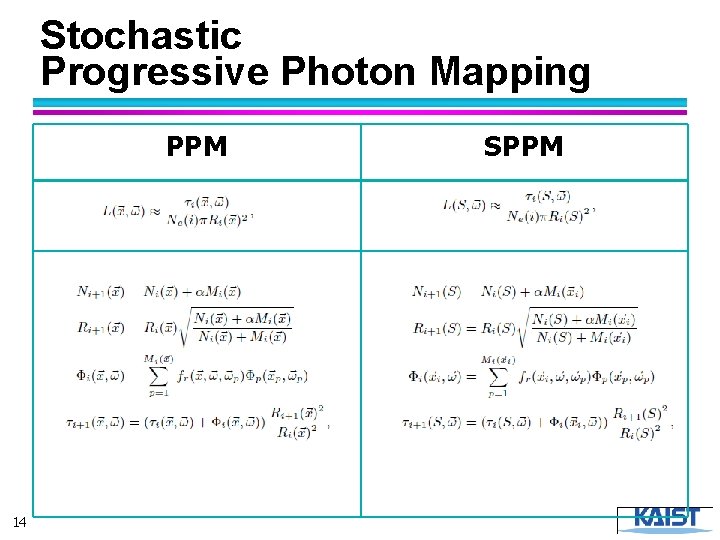
Stochastic Progressive Photon Mapping PPM 9 SPPM
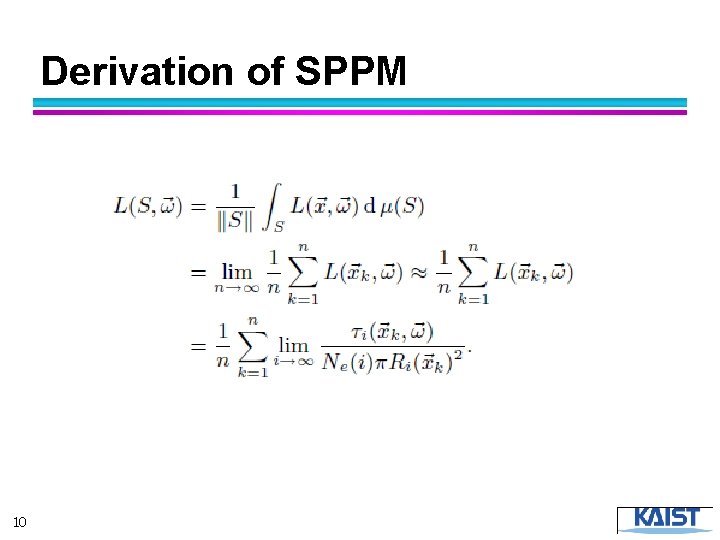
Derivation of SPPM 10
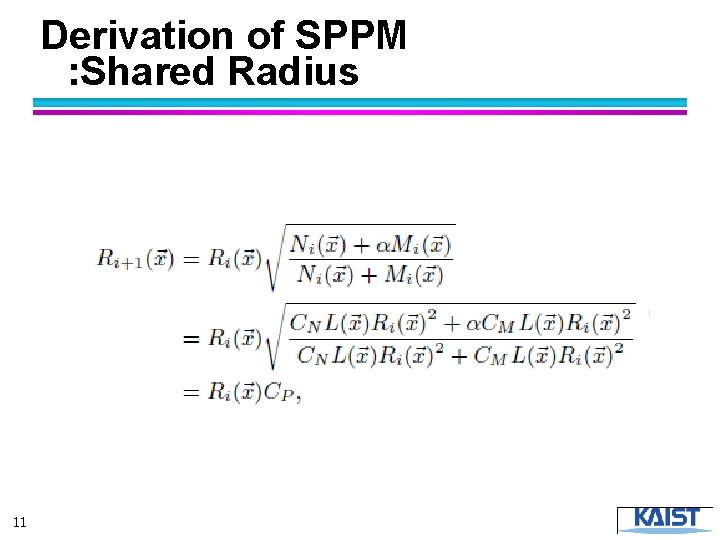
Derivation of SPPM : Shared Radius 11
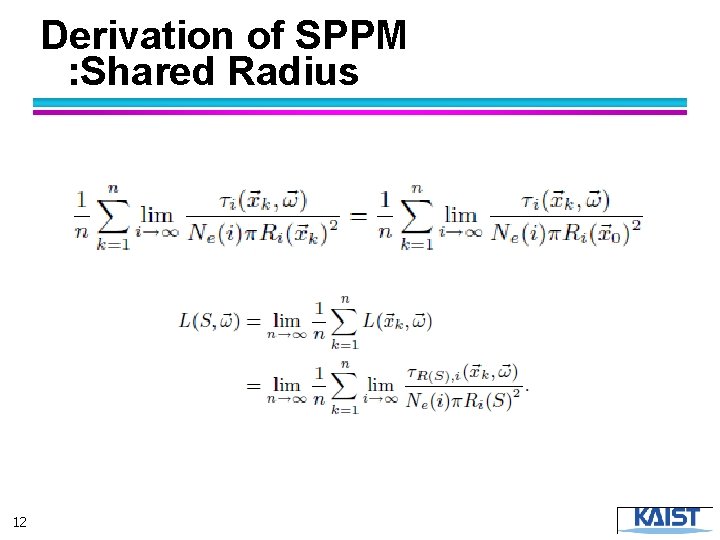
Derivation of SPPM : Shared Radius 12
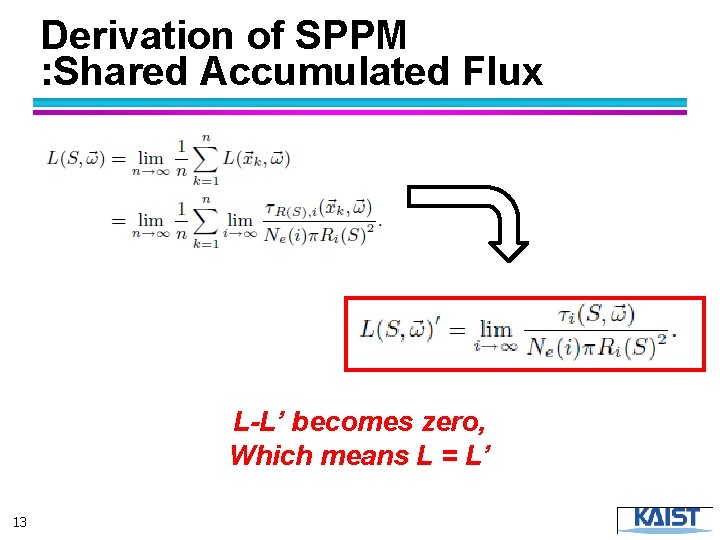
Derivation of SPPM : Shared Accumulated Flux L-L’ becomes zero, Which means L = L’ 13
Stochastic Progressive Photon Mapping PPM 14 SPPM
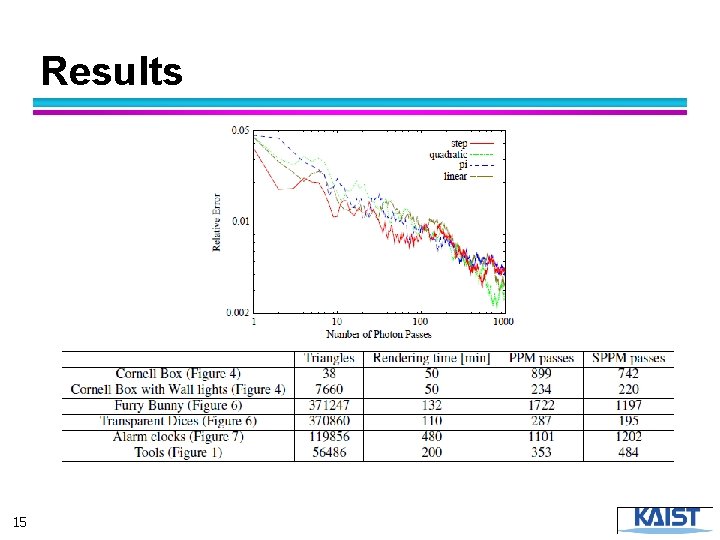
Results 15
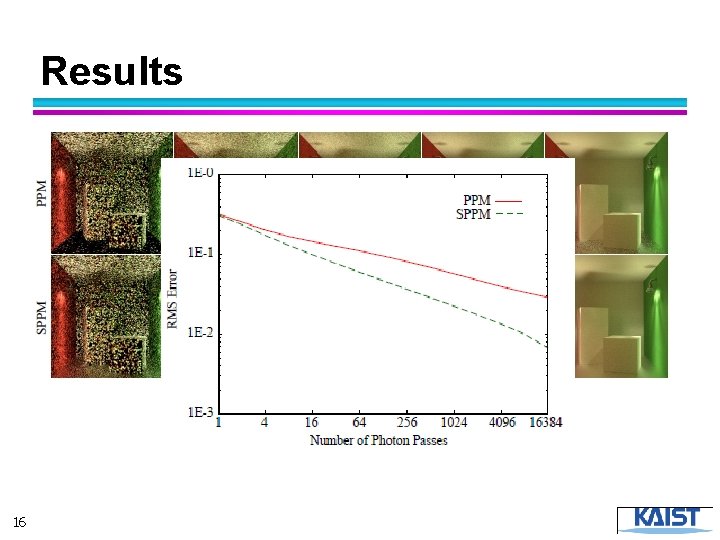
Results 16
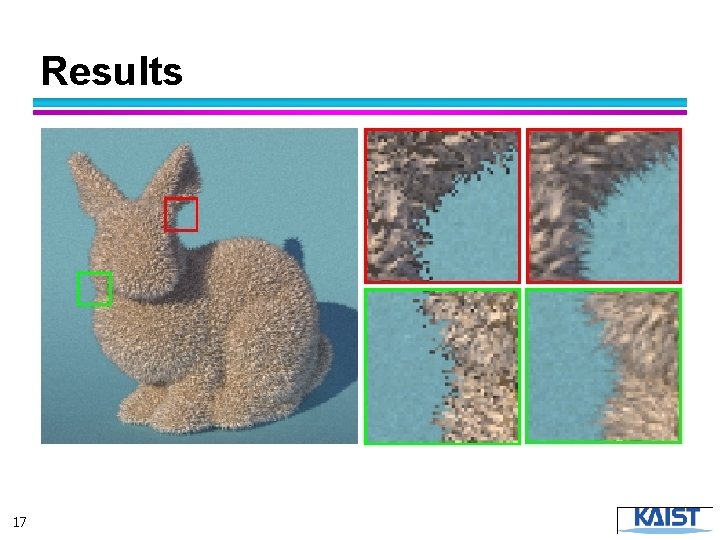
Results 17
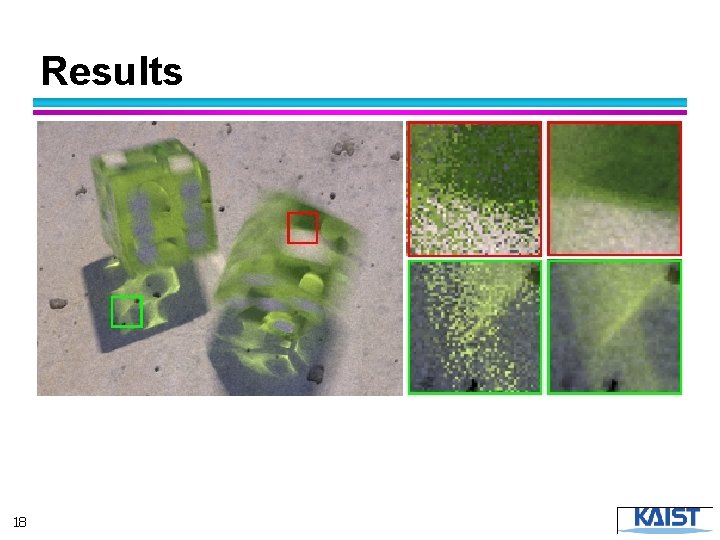
Results 18
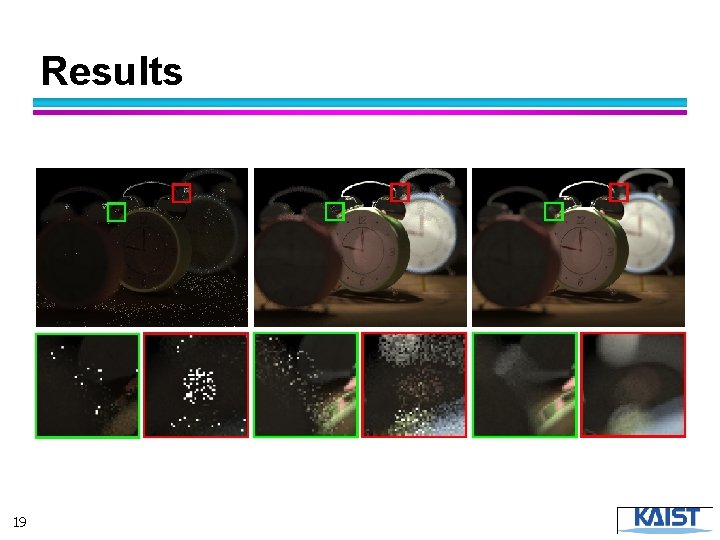
Results 19
Conclusion ● SPPM can compute the correct average radiance value over a region. ● SPPM = PPM + Distributed Ray Tracing ● Results show that SPPM includes distributed ray tracing effects ● Depth of field / motion blur / glossy reflection 20
Thank you for listening ● Any Questions? 21