
Relighting with 4 D Incident Light Fields Vincent
- Slides: 38
Relighting with 4 D Incident Light Fields Vincent Masselus Pieter Peers Philip Dutré Yves D. Willems
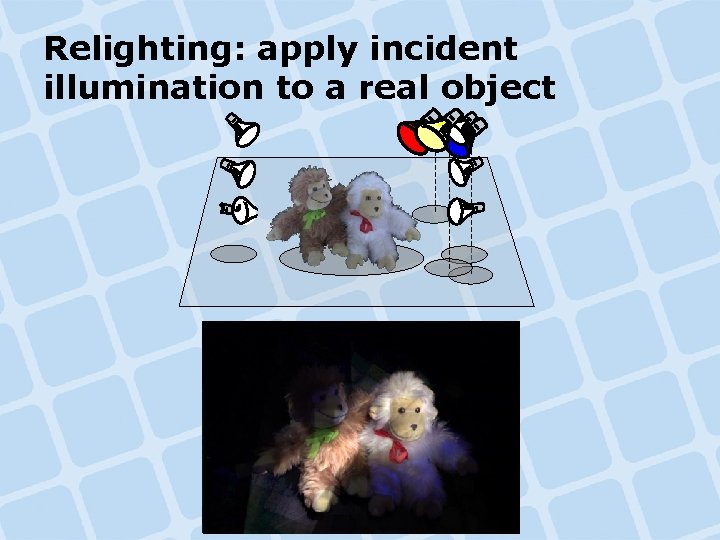
Relighting: apply incident illumination to a real object
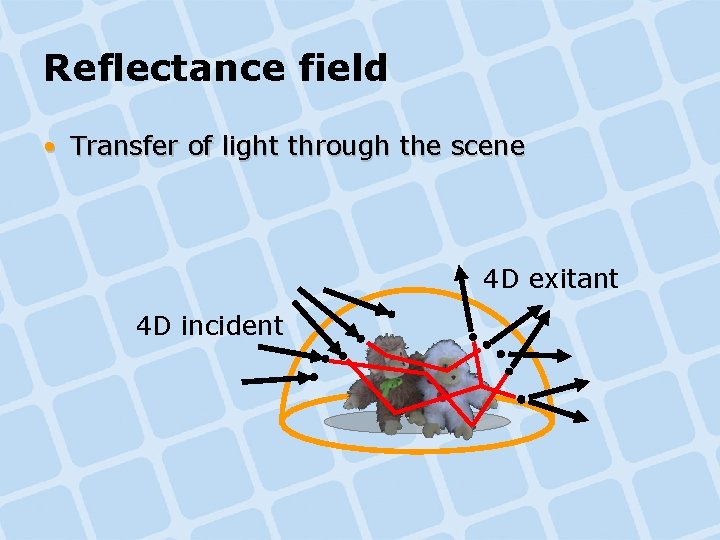
Reflectance field • Transfer of light through the scene 4 D exitant 4 D incident
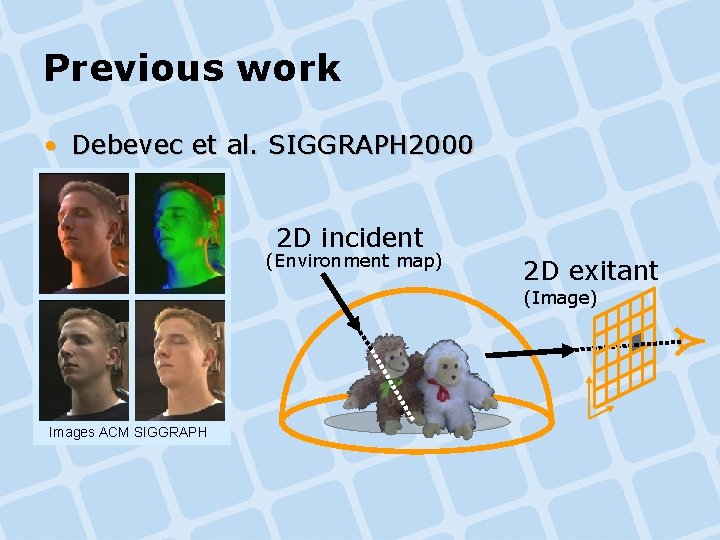
Previous work • Debevec et al. SIGGRAPH 2000 2 D incident (Environment map) 2 D exitant (Image) Images ACM SIGGRAPH
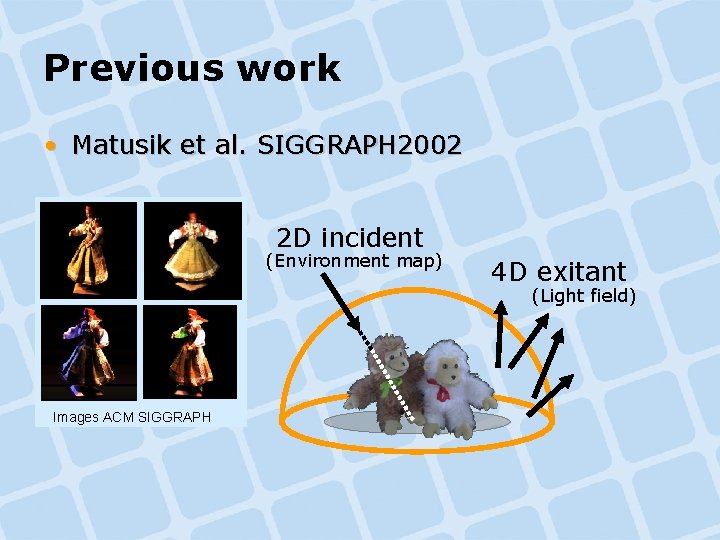
Previous work • Matusik et al. SIGGRAPH 2002 2 D incident (Environment map) 4 D exitant (Light field) Images ACM SIGGRAPH
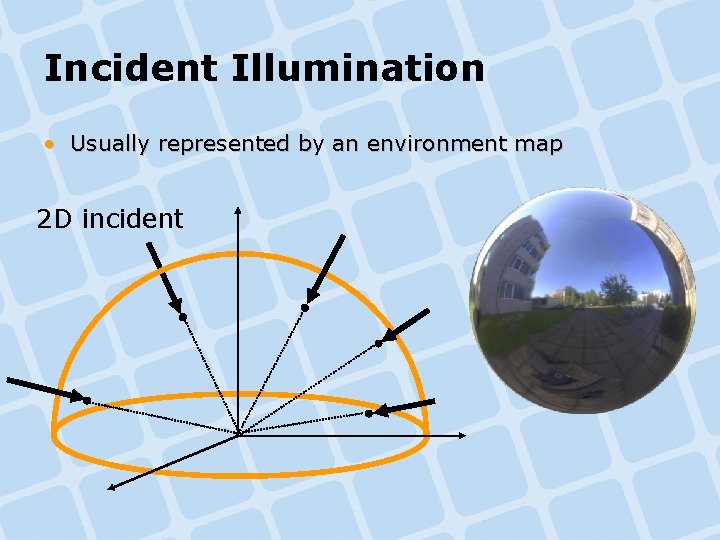
Incident Illumination • Usually represented by an environment map 2 D incident
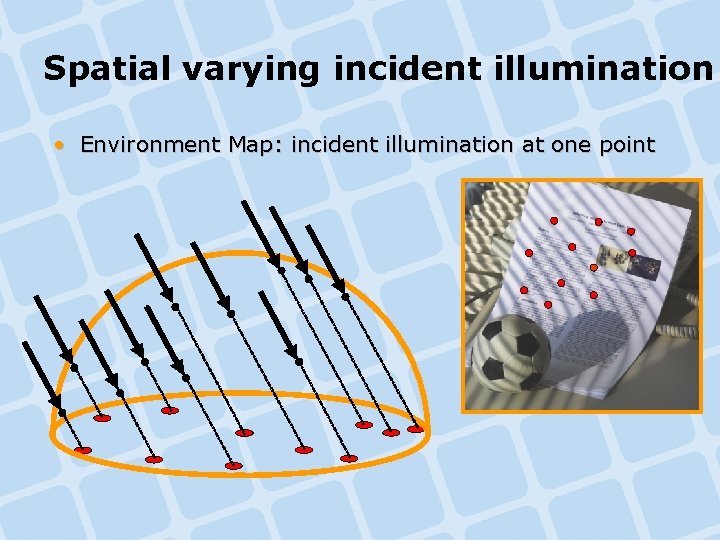
Spatial varying incident illumination • Environment Map: incident illumination at one point
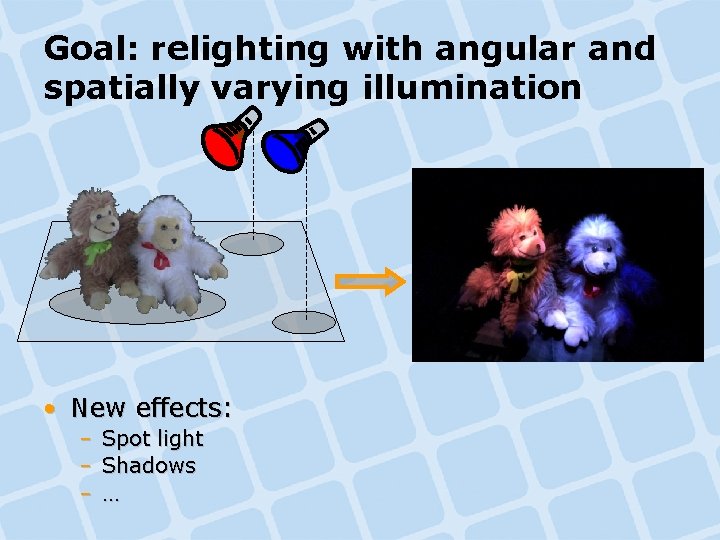
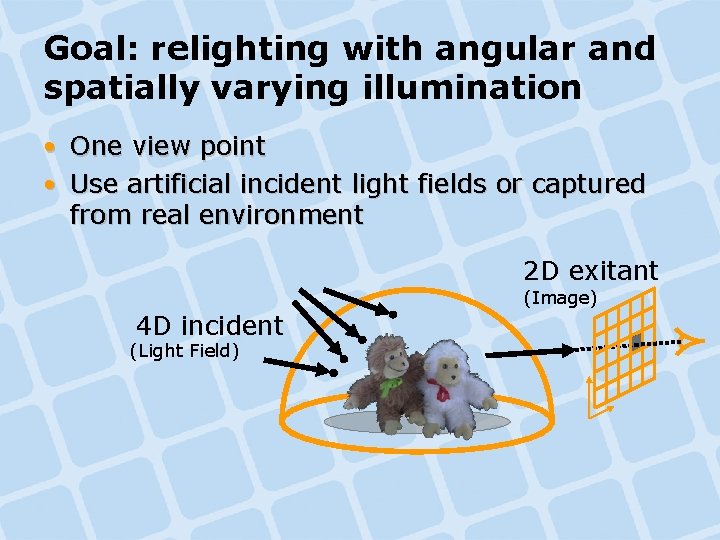
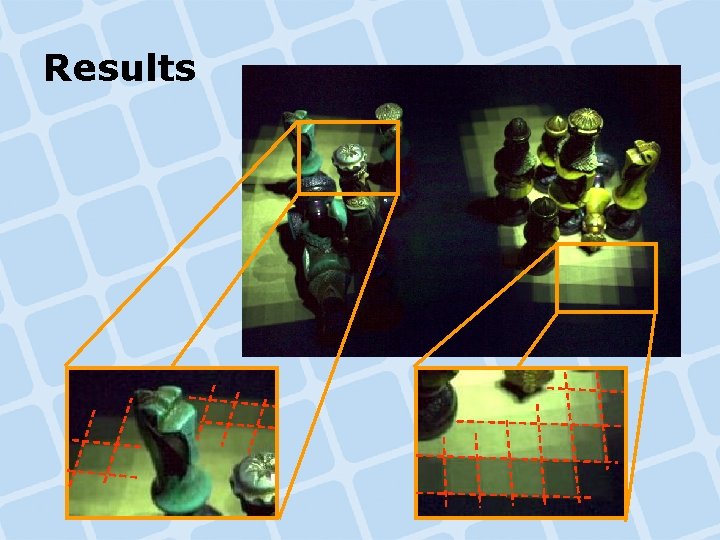
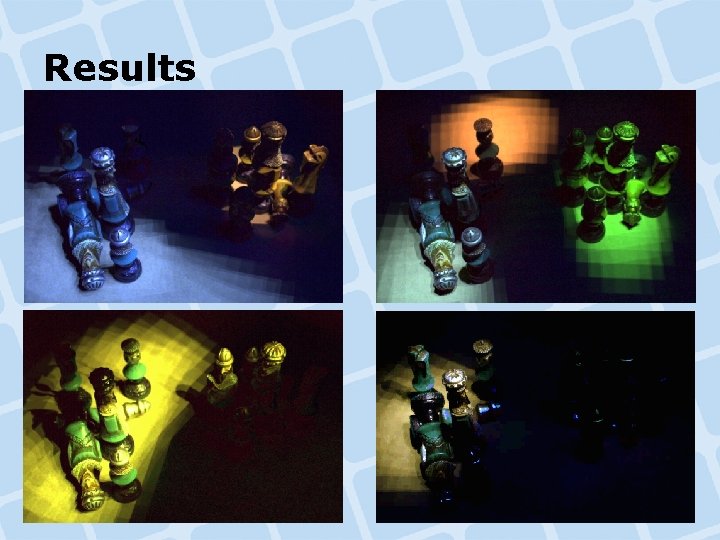
Goal: relighting with angular and spatially varying illumination • New effects: – Spot light – Shadows – …
Goal: relighting with angular and spatially varying illumination • One view point • Use artificial incident light fields or captured from real environment 2 D exitant (Image) 4 D incident (Light Field)
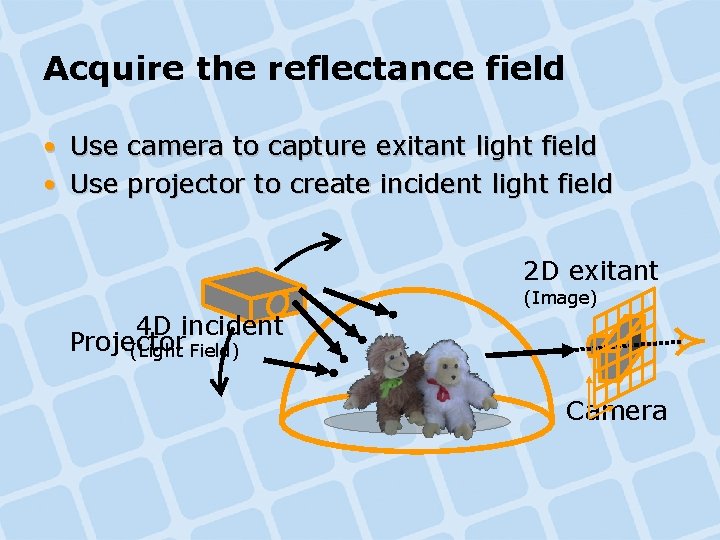
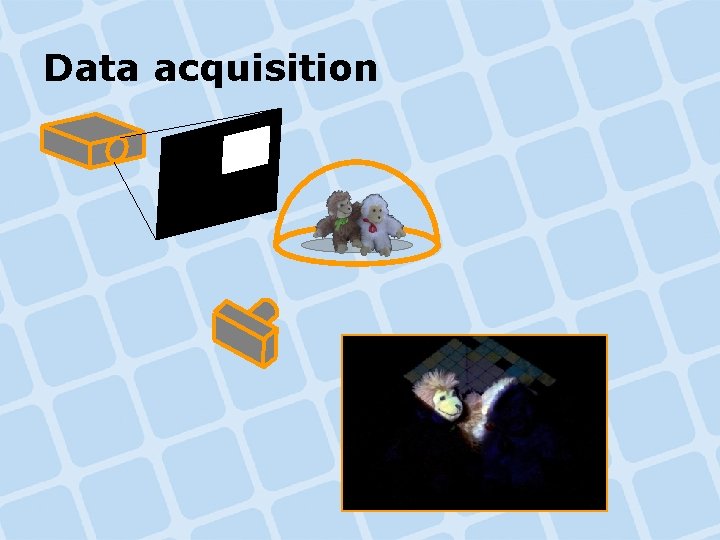
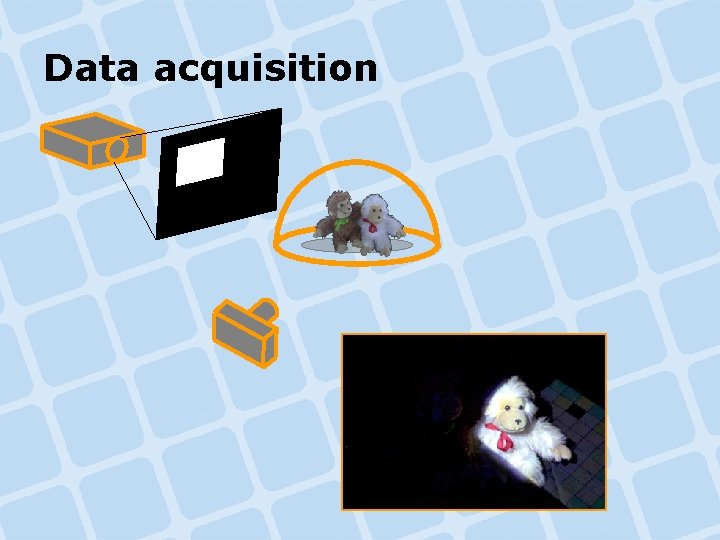
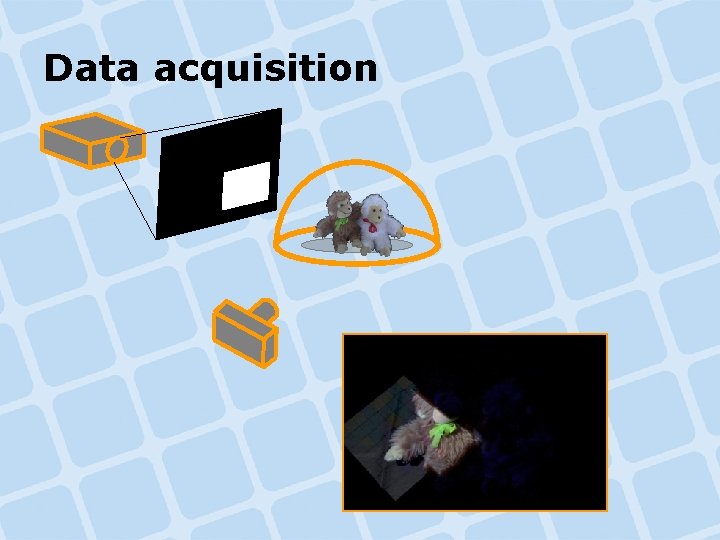
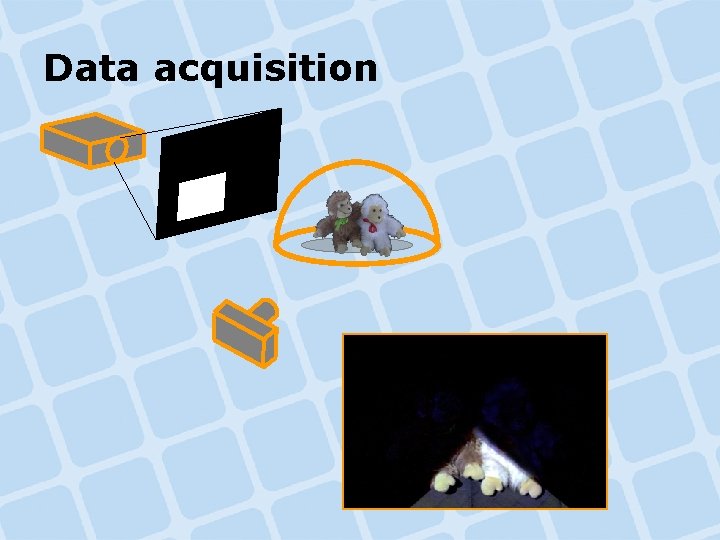
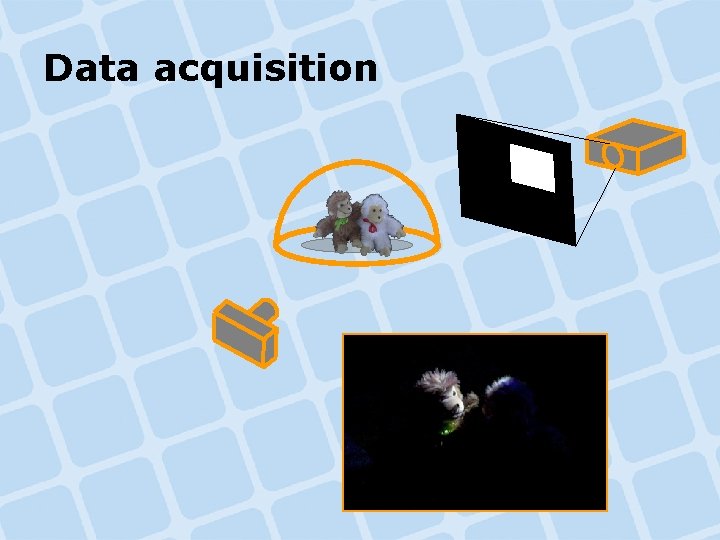
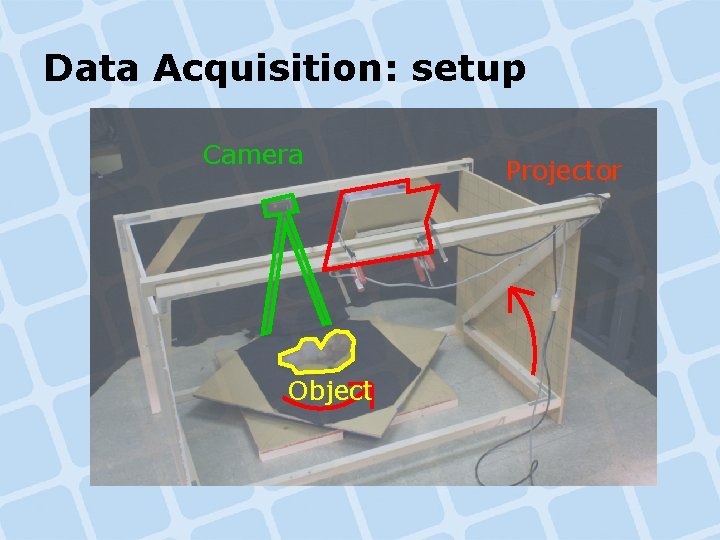
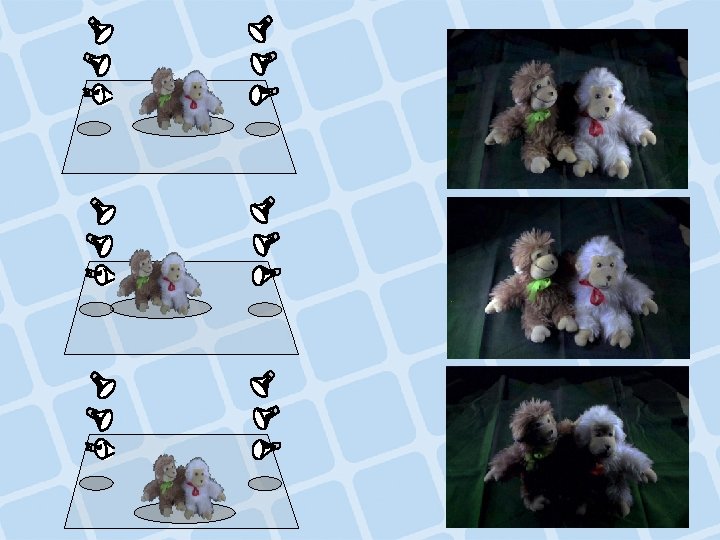
Acquire the reflectance field • Use camera to capture exitant light field • Use projector to create incident light field 2 D exitant (Image) 4 D incident Projector (Light Field) Camera
Data acquisition
Data acquisition
Data acquisition
Data acquisition
Data acquisition
Data Acquisition: setup Camera Object Projector
Data Acquisition: setup
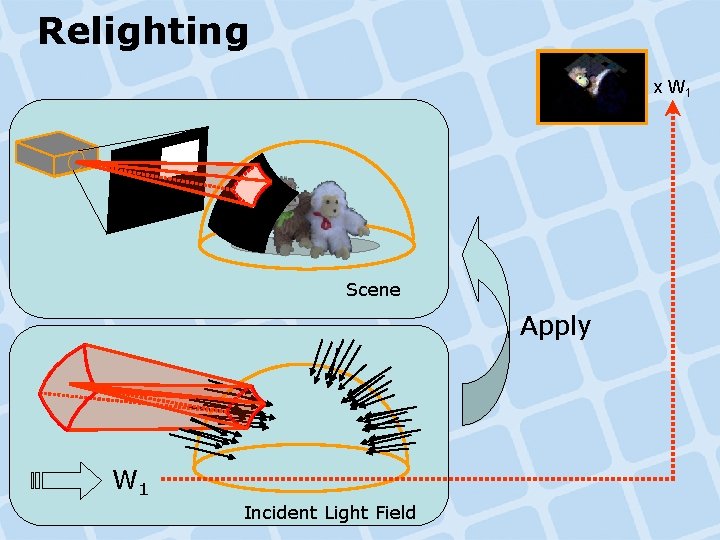
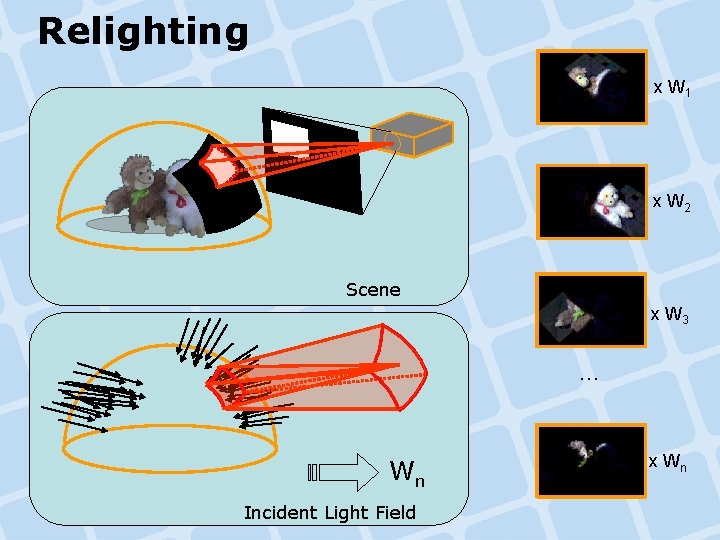
Relighting x W 1 Scene Apply W 1 Incident Light Field
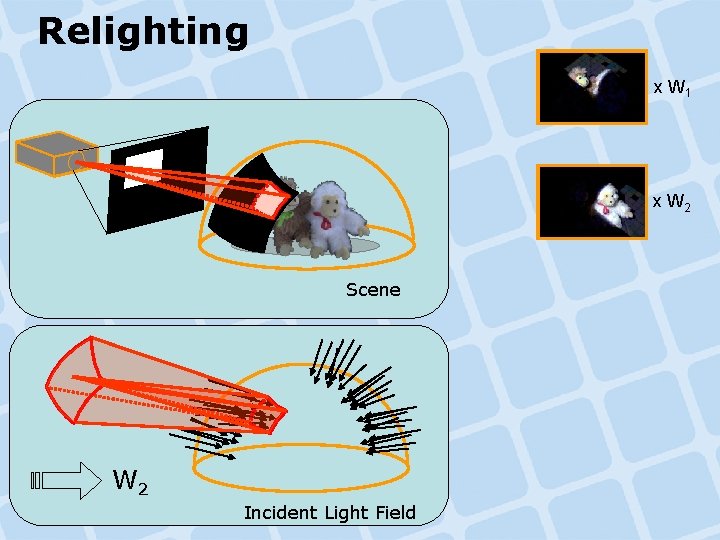
Relighting x W 1 x W 2 Scene W 2 Incident Light Field
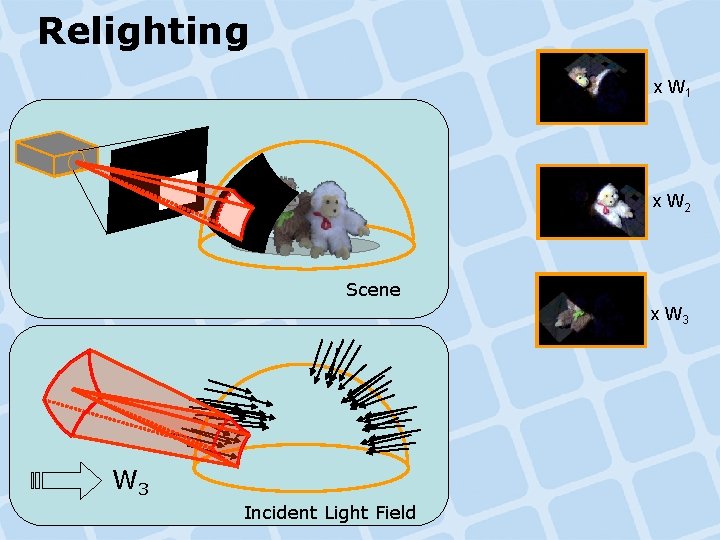
Relighting x W 1 x W 2 Scene x W 3 Incident Light Field
Relighting x W 1 x W 2 Scene x W 3 … Wn Incident Light Field x Wn
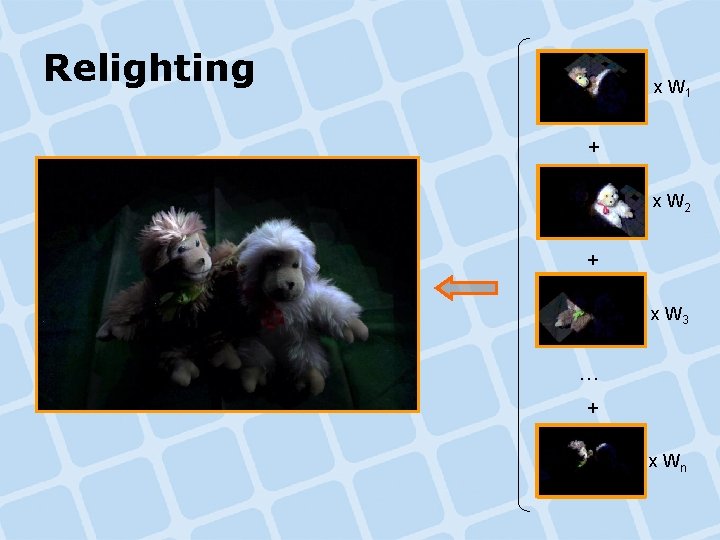
Relighting x W 1 + x W 2 + x W 3 … + x Wn
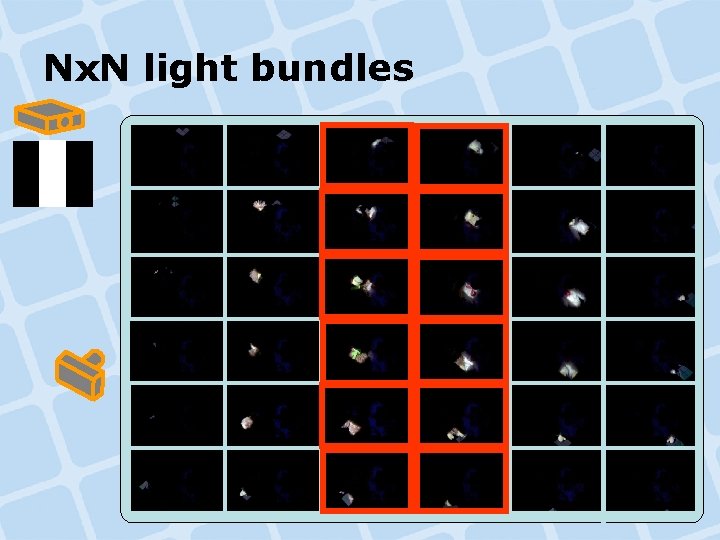
Nx. N light bundles
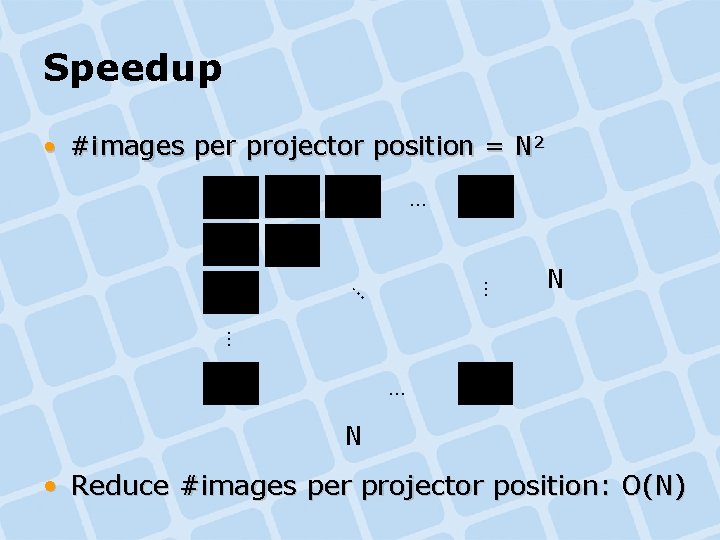
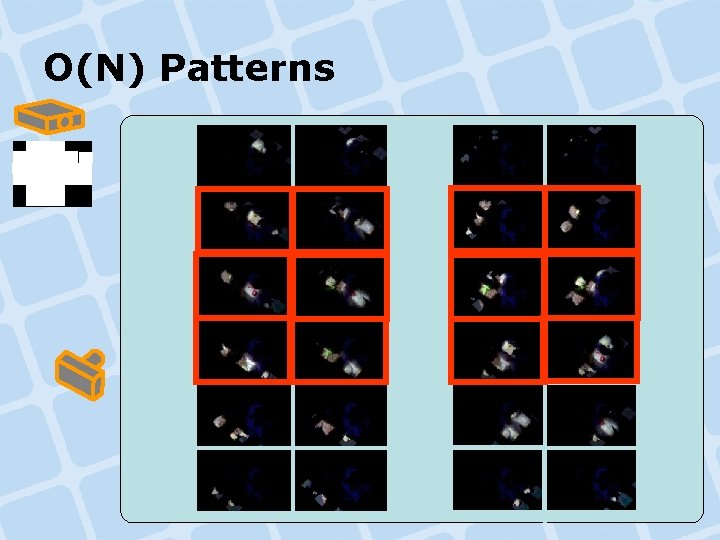
Speedup • #images per projector position = N 2 … … … N • Reduce #images per projector position: O(N)
O(N) Patterns
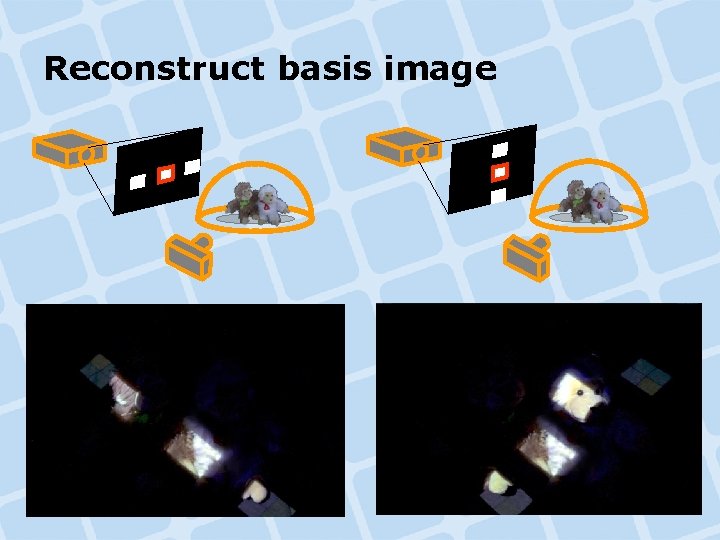
Reconstruct basis image
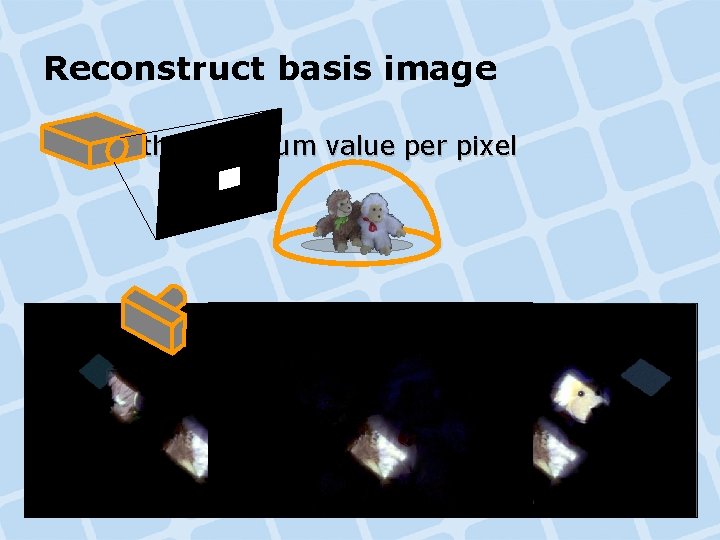
Reconstruct basis image • Take the minimum value per pixel
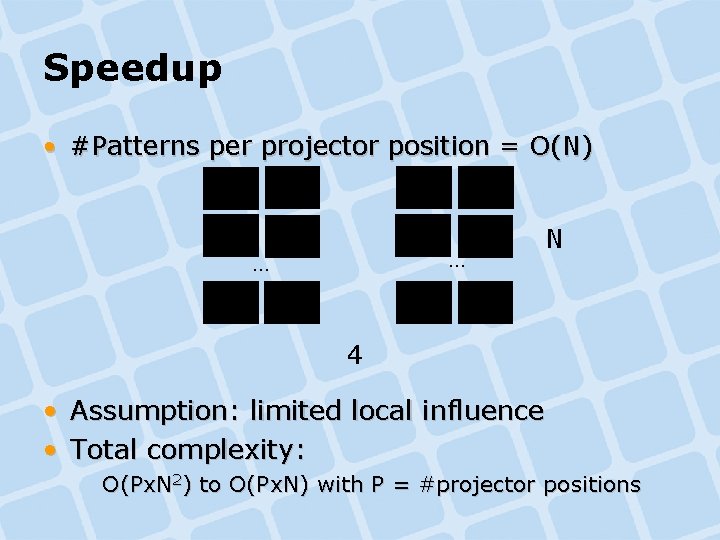
Speedup • #Patterns per projector position = O(N) … … N 4 • Assumption: limited local influence • Total complexity: O(Px. N 2) to O(Px. N) with P = #projector positions
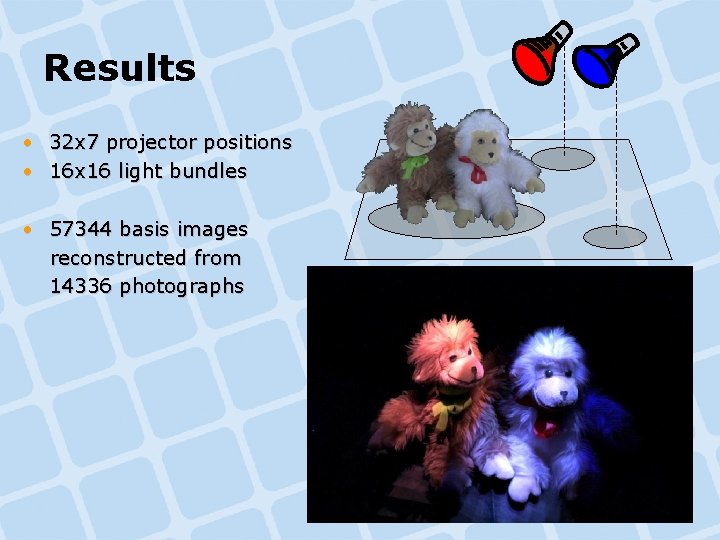
Results • 32 x 7 projector positions • 16 x 16 light bundles • 57344 basis images reconstructed from 14336 photographs
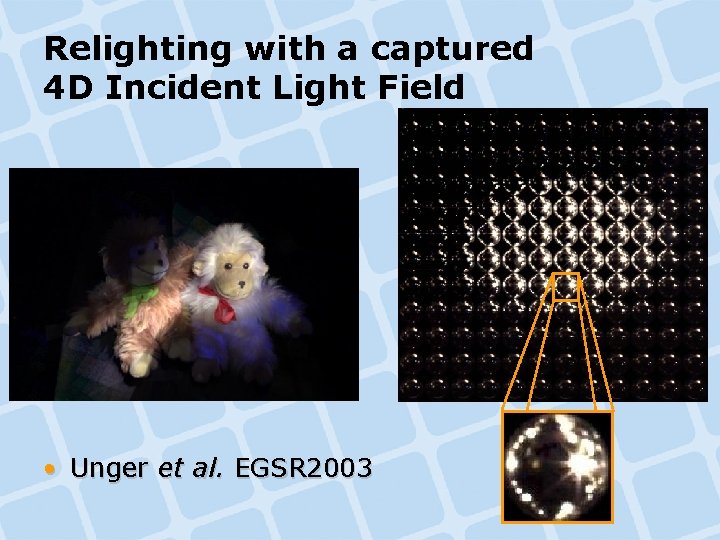
Relighting with a captured 4 D Incident Light Field • Unger et al. EGSR 2003
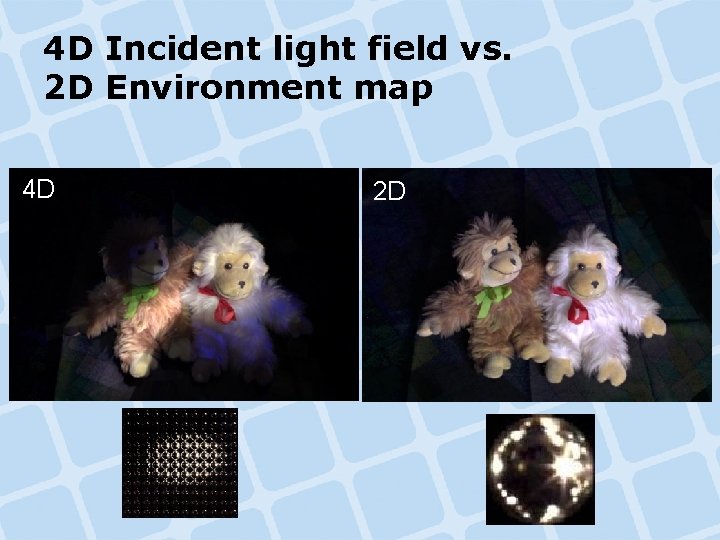
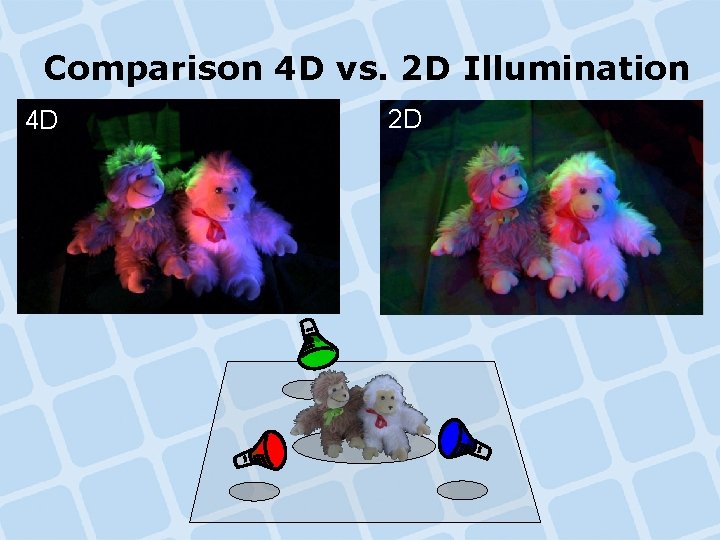
4 D Incident light field vs. 2 D Environment map 4 D 2 D
Comparison 4 D vs. 2 D Illumination 4 D 2 D
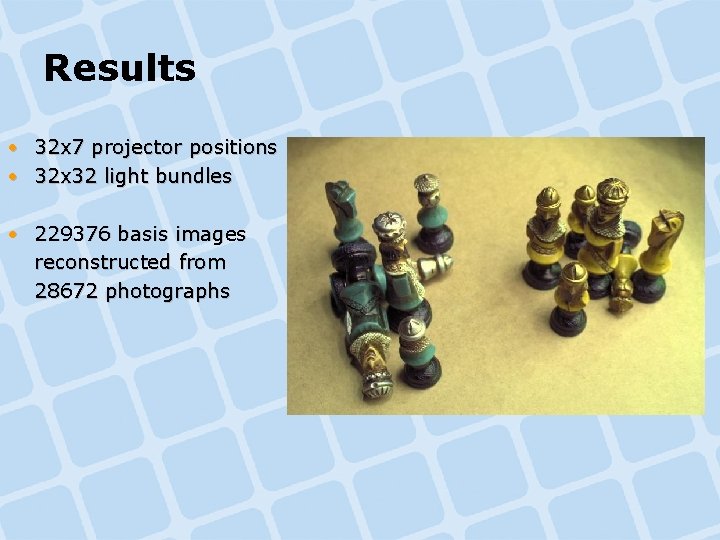
Results • 32 x 7 projector positions • 32 x 32 light bundles • 229376 basis images reconstructed from 28672 photographs
Results
Results
Conclusion • Acquire reflectance field to relight with 4 D incident light fields • Speedup: O(Px. N 2) to O(Px. N) Future work • Use other illumination basis functions – Gaussians, Wavelets, … • Smarter acquisition – What images do we really need? • Move the camera – Capture the complete 8 D reflection field
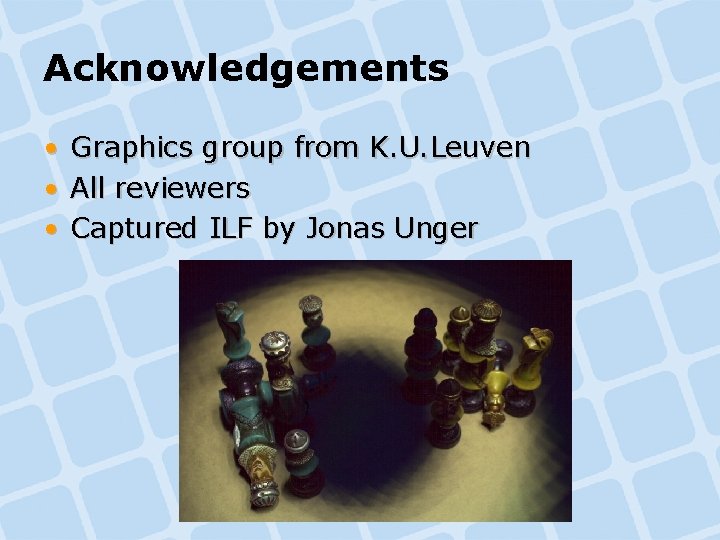
Acknowledgements • Graphics group from K. U. Leuven • All reviewers • Captured ILF by Jonas Unger