SHEDDING THE LIGHT ON READING The Importance of



- Slides: 13
SHEDDING THE LIGHT ON READING
The Importance of the Four Language Cueing Systems � � 1. graphophonics = letters and their sounds 2. syntax = grammar and sentence structure 3. pragmatic = how words are used in familiar situations applied to similar situation described in new text 4. semantics = meaning of words We need to use ALL of these in order to understand what we read! From “What’s Your Cue? Incorporating the Semantic and Graphophonic Cueing Systems into Students’ Reading” Brandi R. P. Thacker
How do we help our students to put the pieces together? ?
By teaching them 4 steps to success!!
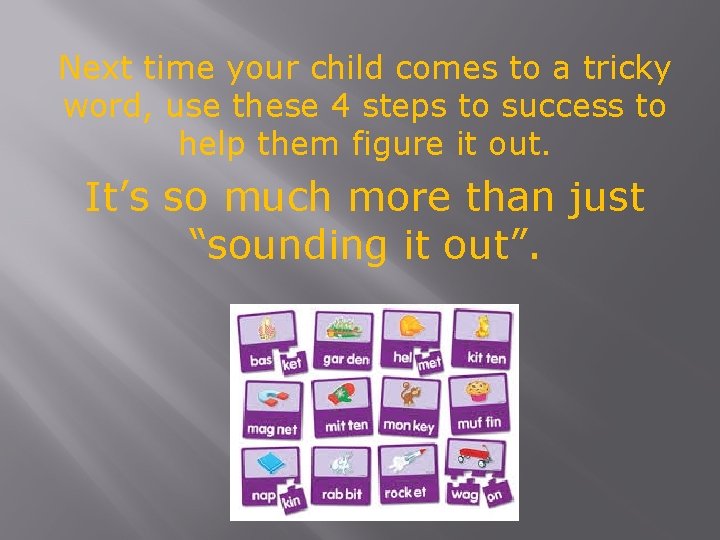
Next time your child comes to a tricky word, use these 4 steps to success to help them figure it out. It’s so much more than just “sounding it out”.
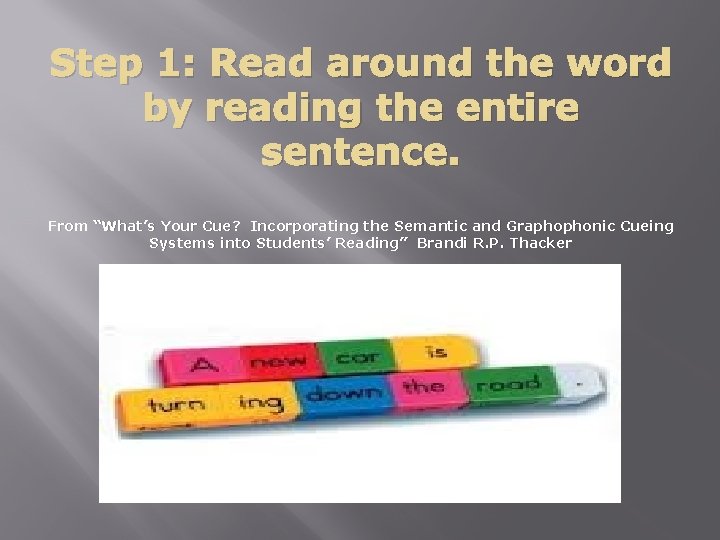
Step 1: Read around the word by reading the entire sentence. From “What’s Your Cue? Incorporating the Semantic and Graphophonic Cueing Systems into Students’ Reading” Brandi R. P. Thacker
This helps us to use the SYNTAX, SEMANTIC and PRAGMATIC cueing systems to help figure out the word. The most important thing to ask is “what word MAKES SENSE in this sentence? ” From “What’s Your Cue? Incorporating the Semantic and Graphophonic Cueing Systems into Students’ Reading” Brandi R. P. Thacker
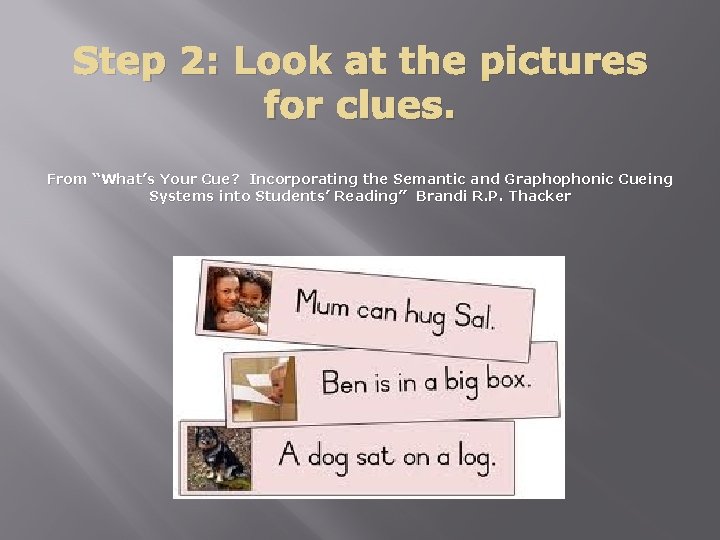
Step 2: Look at the pictures for clues. From “What’s Your Cue? Incorporating the Semantic and Graphophonic Cueing Systems into Students’ Reading” Brandi R. P. Thacker
Step 3: Make a guess. Think of a word that makes sense in this sentence and fits the picture. List some guesses on a post-it. From “What’s Your Cue? Incorporating the Semantic and Graphophonic Cueing Systems into Students’ Reading” Brandi R. P. Thacker
Step 4: Check your guess. Cross-check your words with the letters and length of the word you’re trying to figure out. Do you have a word that matches? From “What’s Your Cue? Incorporating the Semantic and Graphophonic Cueing Systems into Students’ Reading” Brandi R. P. Thacker
This helps us to use the GRAPHOPHONIC cueing system to match the words with the same letters and sounds. From “What’s Your Cue? Incorporating the Semantic and Graphophonic Cueing Systems into Students’ Reading” Brandi R. P. Thacker
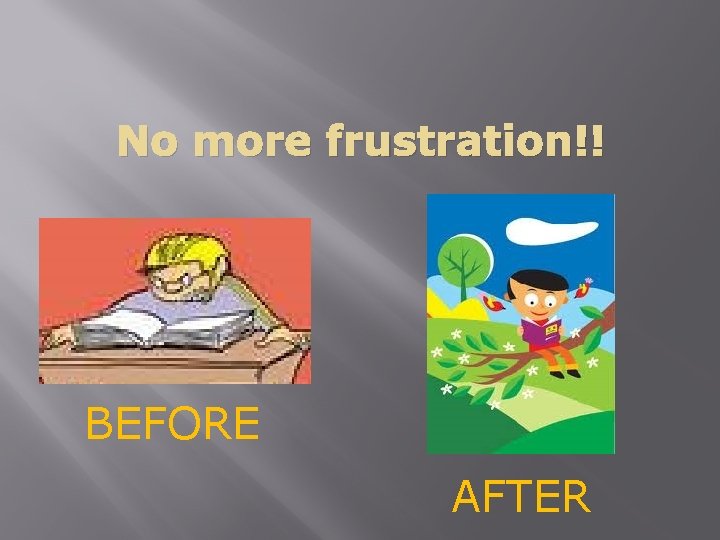
No more frustration!! BEFORE AFTER
Further Resources: http: //www. edu. gov. on. ca/eng/literacynumeracy/parent. Guide Lit 2012. pdf http: //www. edu. gov. on. ca/abc 123/eng/tips/readkto 3. html http: //www 2. ed. gov/parents/read/resources/edpicks. jhtml http: //www. readingrockets. org/audience/parents Also, students are often more engaged by technology. Let them read articles on the internet of interest to them, or video game manuals, or play reading games on the computer. There are many ways we can help our students to enjoy reading while getting better at it. Please visit my website for links to some other sites of interest (mrsmclean. ca).