Sharing on EL Oral Communication PSG Meeting 3
- Slides: 11
Sharing on EL Oral Communication PSG Meeting 3 August 2016 Mdm. Nora Shahriya (HOD EL/Lit) nora_shahriya@moe. edu. sg
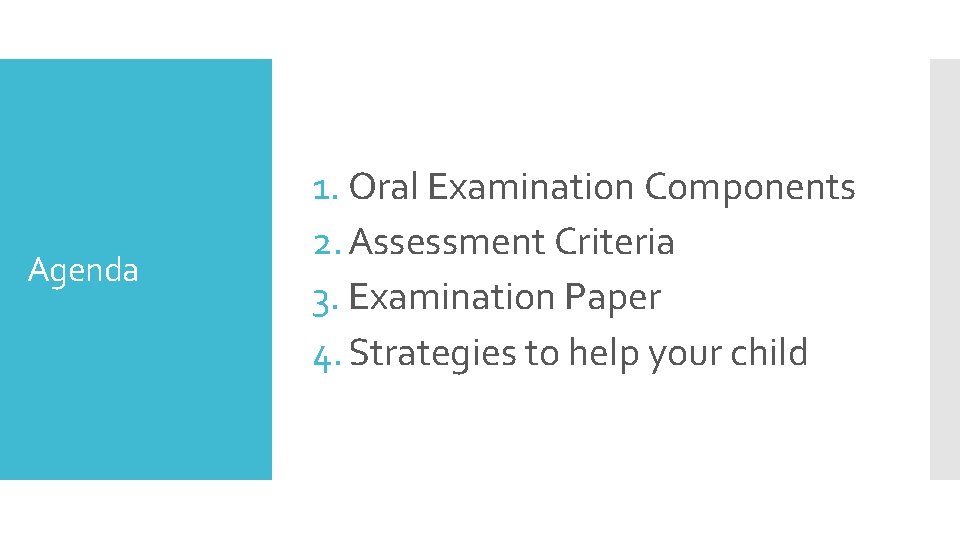
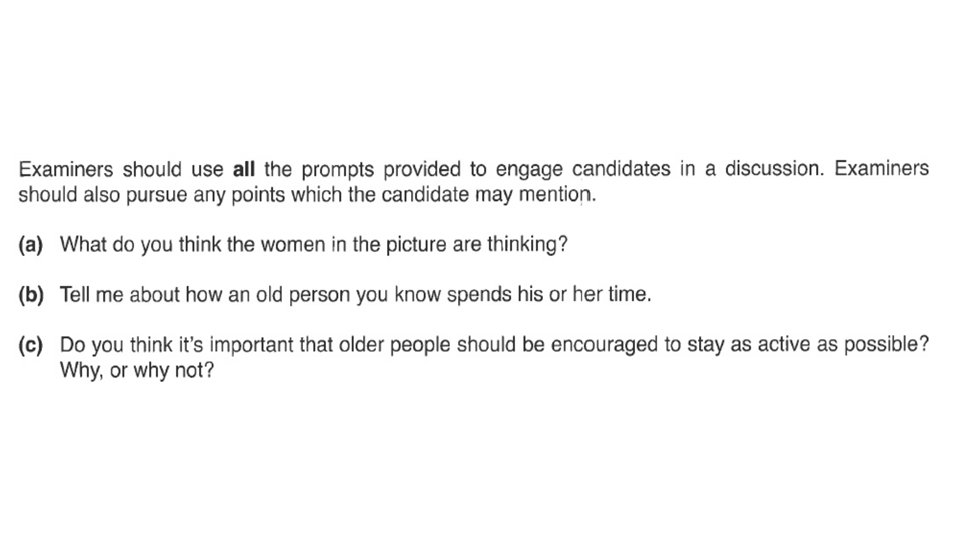
Agenda 1. Oral Examination Components 2. Assessment Criteria 3. Examination Paper 4. Strategies to help your child
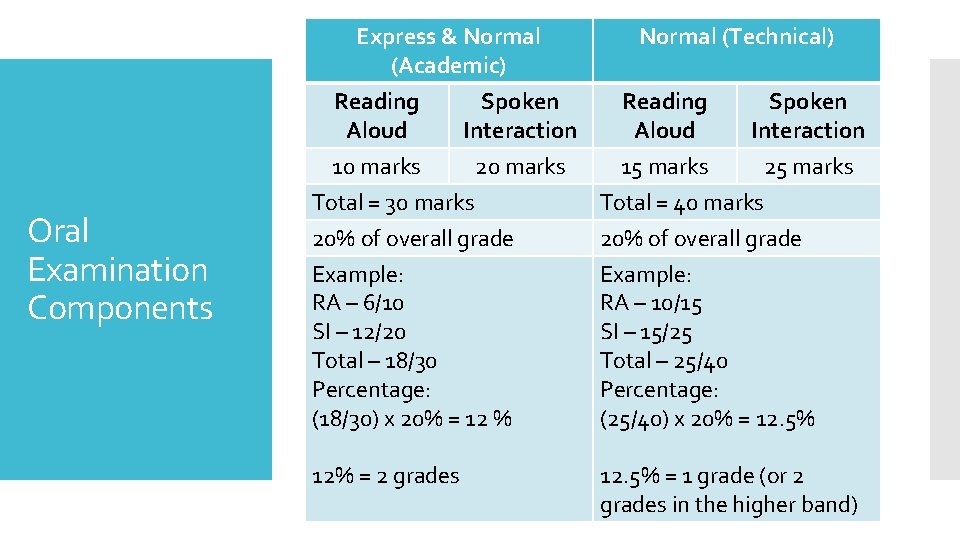
Express & Normal (Academic) Reading Spoken Aloud Interaction Oral Examination Components Normal (Technical) Reading Aloud Spoken Interaction 10 marks 20 marks Total = 30 marks 15 marks 25 marks Total = 40 marks 20% of overall grade Example: RA – 6/10 SI – 12/20 Total – 18/30 Percentage: (18/30) x 20% = 12 % 20% of overall grade Example: RA – 10/15 SI – 15/25 Total – 25/40 Percentage: (25/40) x 20% = 12. 5% 12% = 2 grades 12. 5% = 1 grade (or 2 grades in the higher band)
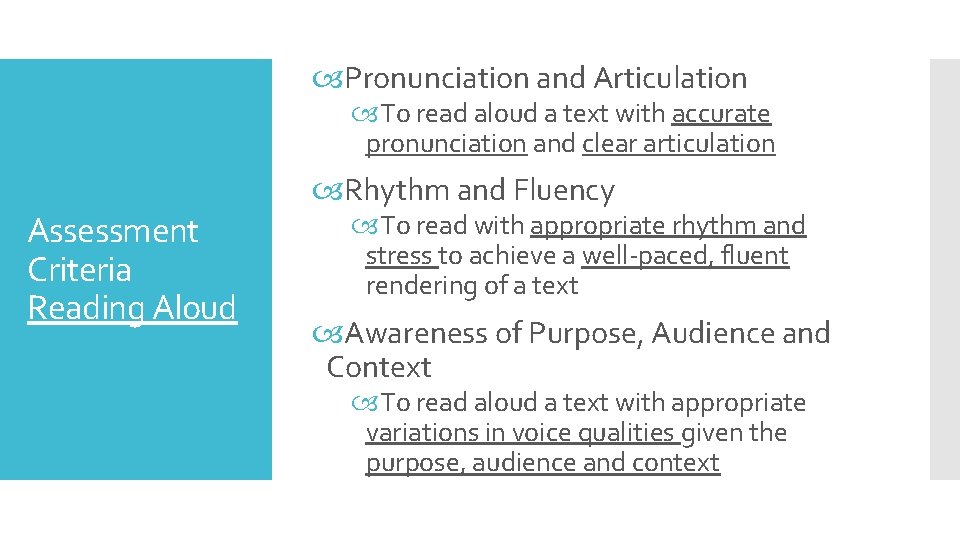
Pronunciation and Articulation To read aloud a text with accurate pronunciation and clear articulation Assessment Criteria Reading Aloud Rhythm and Fluency To read with appropriate rhythm and stress to achieve a well-paced, fluent rendering of a text Awareness of Purpose, Audience and Context To read aloud a text with appropriate variations in voice qualities given the purpose, audience and context
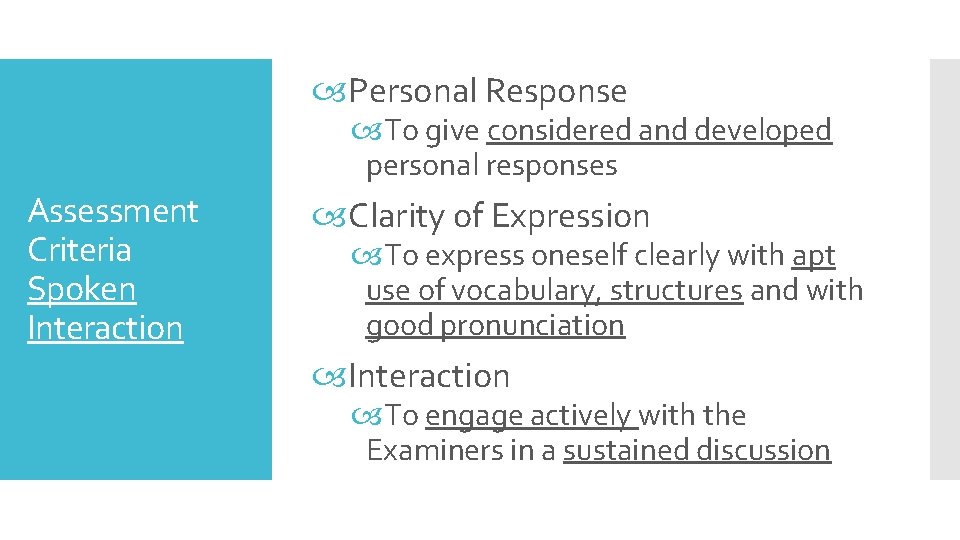
Personal Response To give considered and developed personal responses Assessment Criteria Spoken Interaction Clarity of Expression To express oneself clearly with apt use of vocabulary, structures and with good pronunciation Interaction To engage actively with the Examiners in a sustained discussion
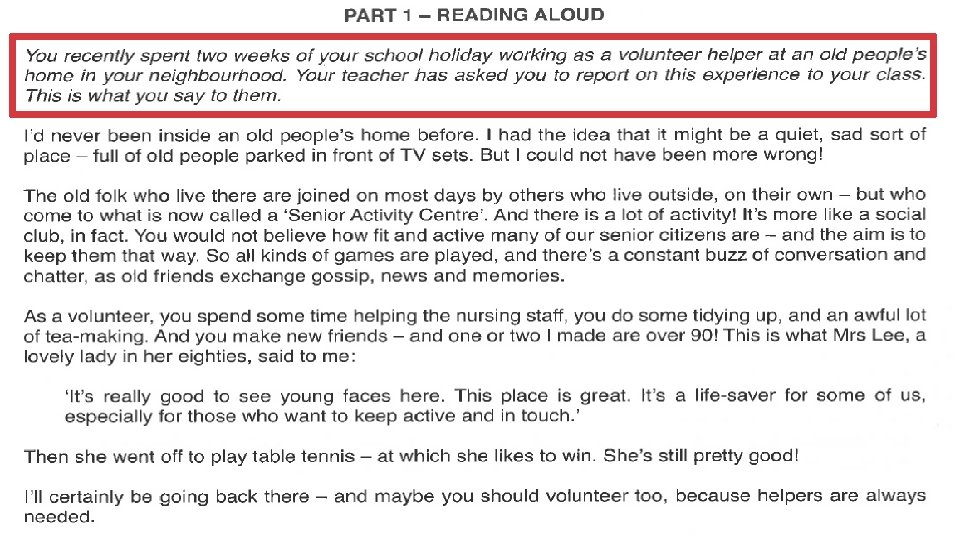
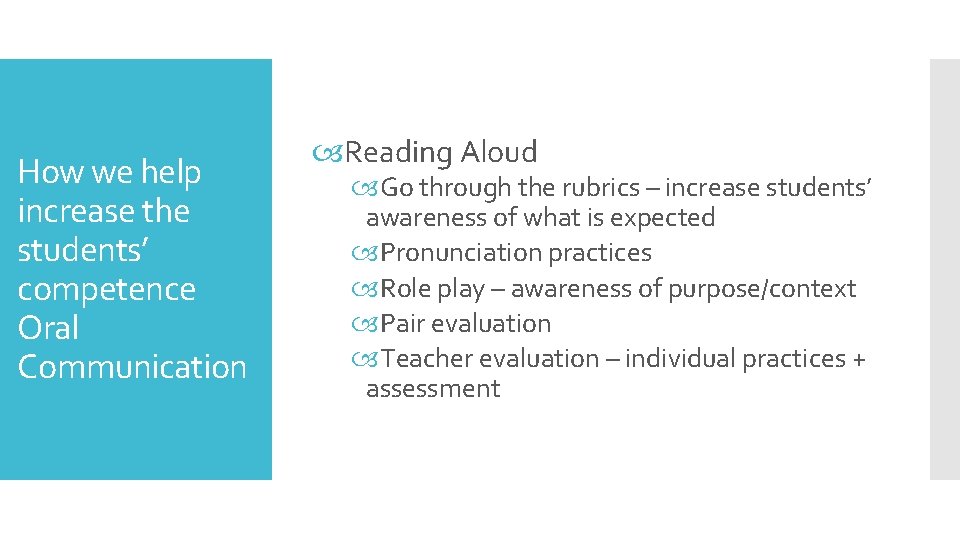
How we help increase the students’ competence Oral Communication Reading Aloud Go through the rubrics – increase students’ awareness of what is expected Pronunciation practices Role play – awareness of purpose/context Pair evaluation Teacher evaluation – individual practices + assessment
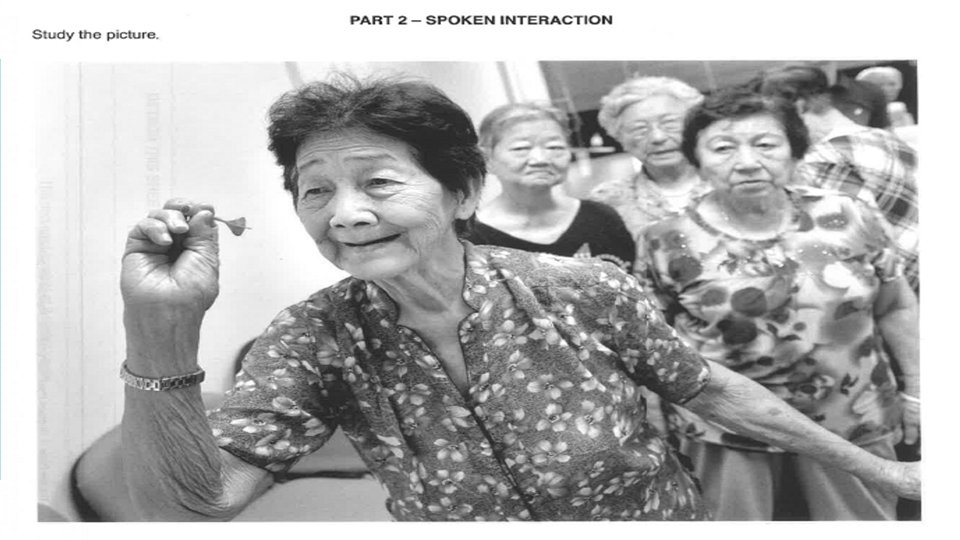
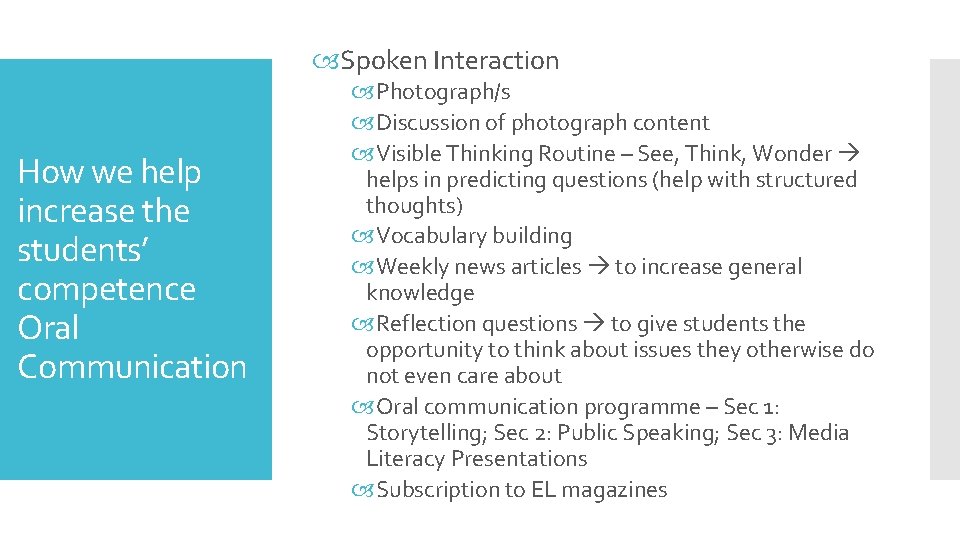
Spoken Interaction How we help increase the students’ competence Oral Communication Photograph/s Discussion of photograph content Visible Thinking Routine – See, Think, Wonder helps in predicting questions (help with structured thoughts) Vocabulary building Weekly news articles to increase general knowledge Reflection questions to give students the opportunity to think about issues they otherwise do not even care about Oral communication programme – Sec 1: Storytelling; Sec 2: Public Speaking; Sec 3: Media Literacy Presentations Subscription to EL magazines
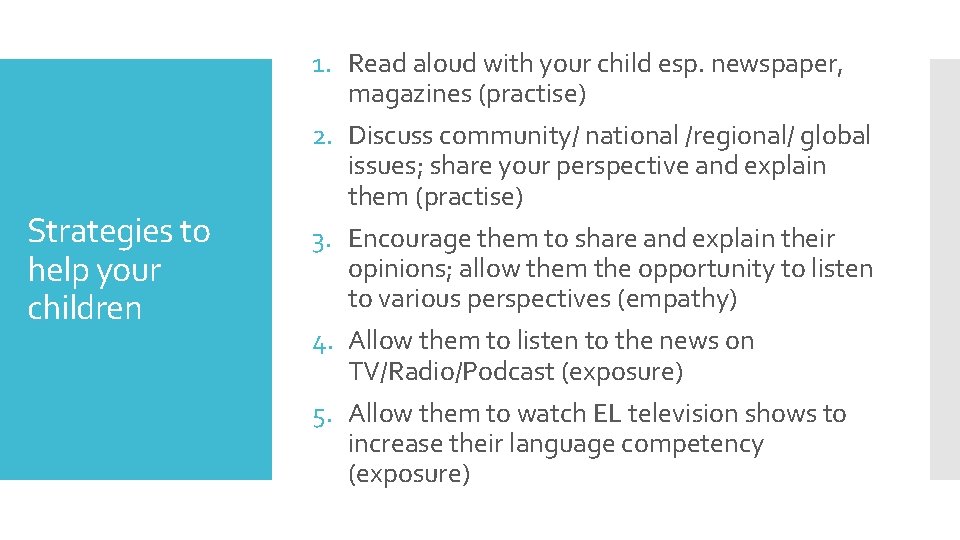
Strategies to help your children 1. Read aloud with your child esp. newspaper, magazines (practise) 2. Discuss community/ national /regional/ global issues; share your perspective and explain them (practise) 3. Encourage them to share and explain their opinions; allow them the opportunity to listen to various perspectives (empathy) 4. Allow them to listen to the news on TV/Radio/Podcast (exposure) 5. Allow them to watch EL television shows to increase their language competency (exposure)