SENTENCE STRUCTURE MATERIALS 1 2 SHEETS OF LINED
- Slides: 25
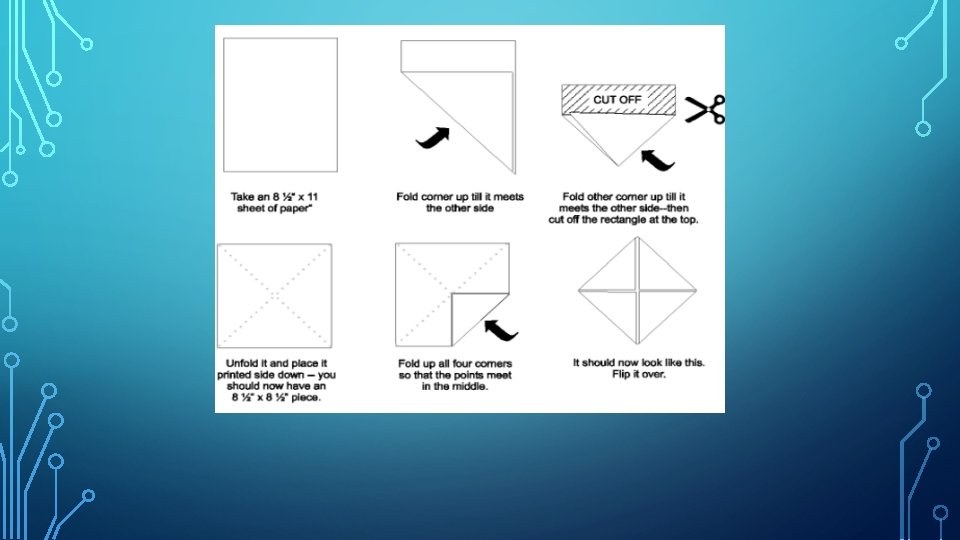
SENTENCE STRUCTURE MATERIALS: 1 -2 SHEETS OF LINED PAPER SCISSORS 1 SHEET WHITE PAPER
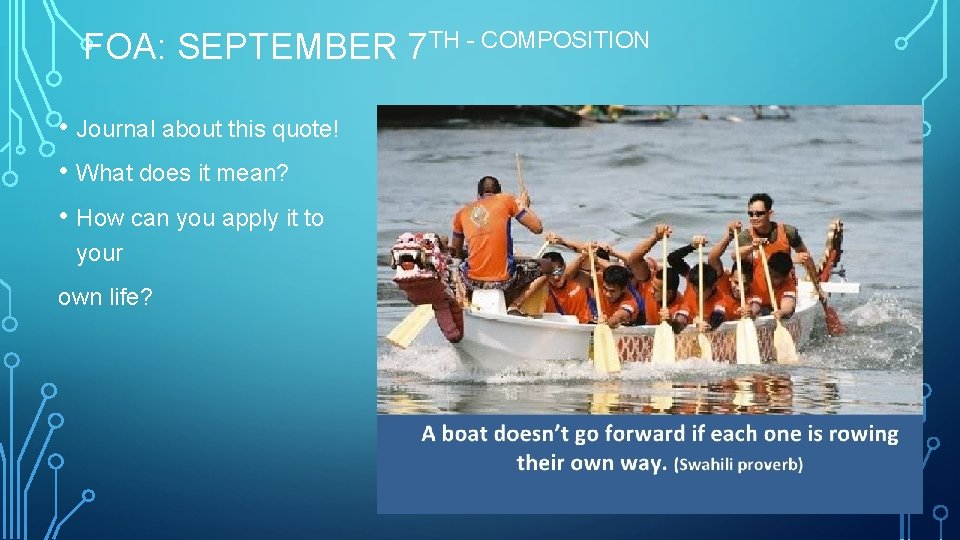
FOA: SEPTEMBER 7 TH - COMPOSITION • Journal about this quote! • What does it mean? • How can you apply it to your own life?
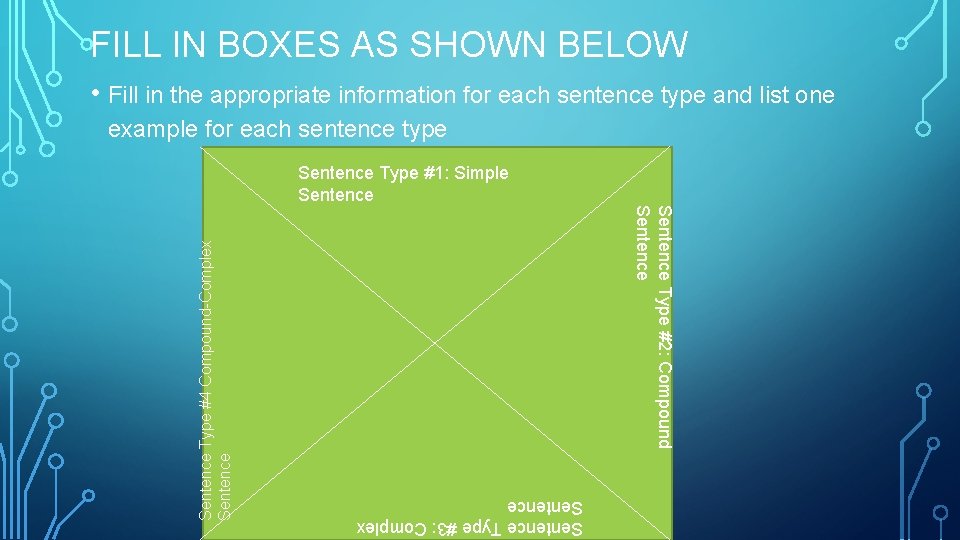
FILL IN BOXES AS SHOWN BELOW • Fill in the appropriate information for each sentence type and list one example for each sentence type Sentence Type #3: Complex Sentence Type #4 Compound-Complex Sentence Type #2: Compound Sentence Type #1: Simple Sentence
SENTENCE TYPES • in order to form a sentence in English, you must have two components: subject and verb
SENTENCE TYPE 1: SIMPLE SENTENCE A simple sentence will have a subject, verb complete thought.
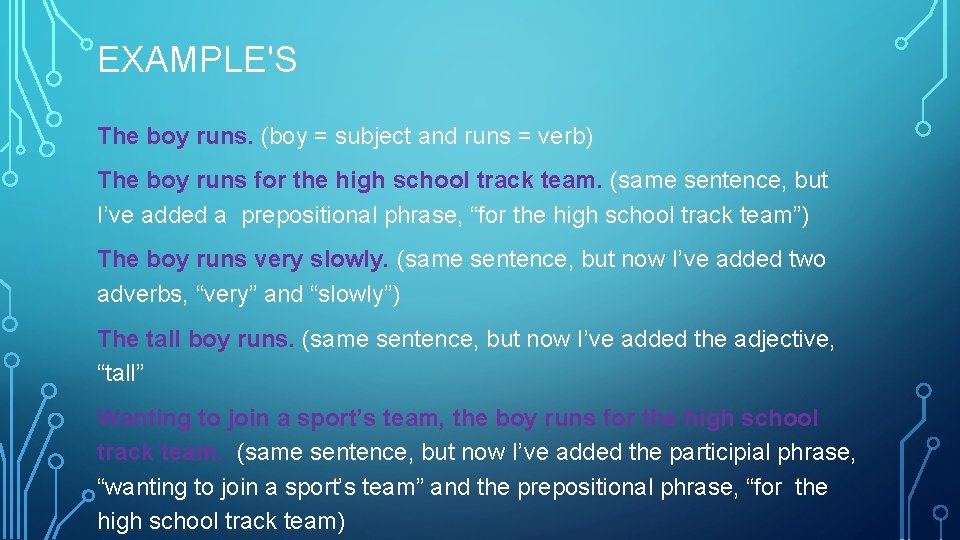
EXAMPLE'S The boy runs. (boy = subject and runs = verb) The boy runs for the high school track team. (same sentence, but I’ve added a prepositional phrase, “for the high school track team”) The boy runs very slowly. (same sentence, but now I’ve added two adverbs, “very” and “slowly”) The tall boy runs. (same sentence, but now I’ve added the adjective, “tall” Wanting to join a sport’s team, the boy runs for the high school track team. (same sentence, but now I’ve added the participial phrase, “wanting to join a sport’s team” and the prepositional phrase, “for the high school track team)
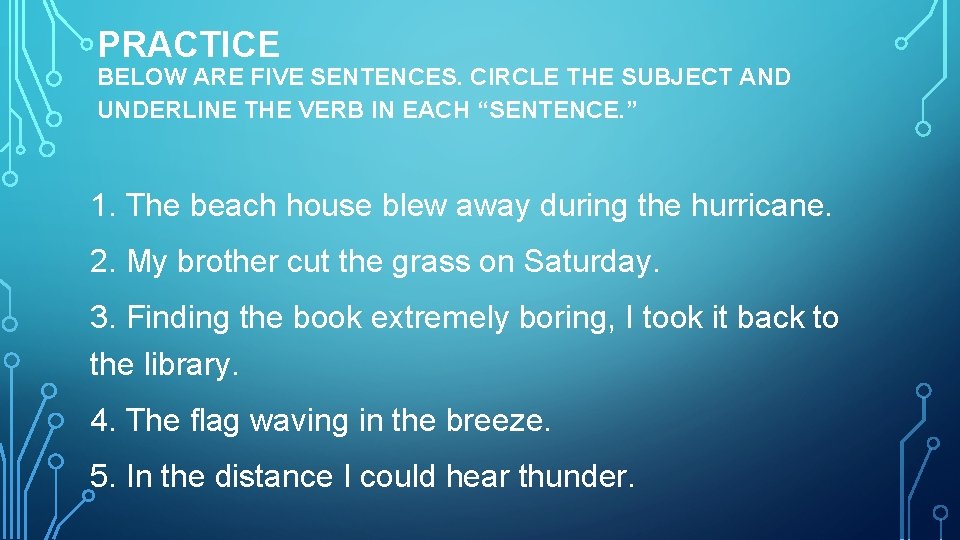
PRACTICE BELOW ARE FIVE SENTENCES. CIRCLE THE SUBJECT AND UNDERLINE THE VERB IN EACH “SENTENCE. ” 1. The beach house blew away during the hurricane. 2. My brother cut the grass on Saturday. 3. Finding the book extremely boring, I took it back to the library. 4. The flag waving in the breeze. 5. In the distance I could hear thunder.
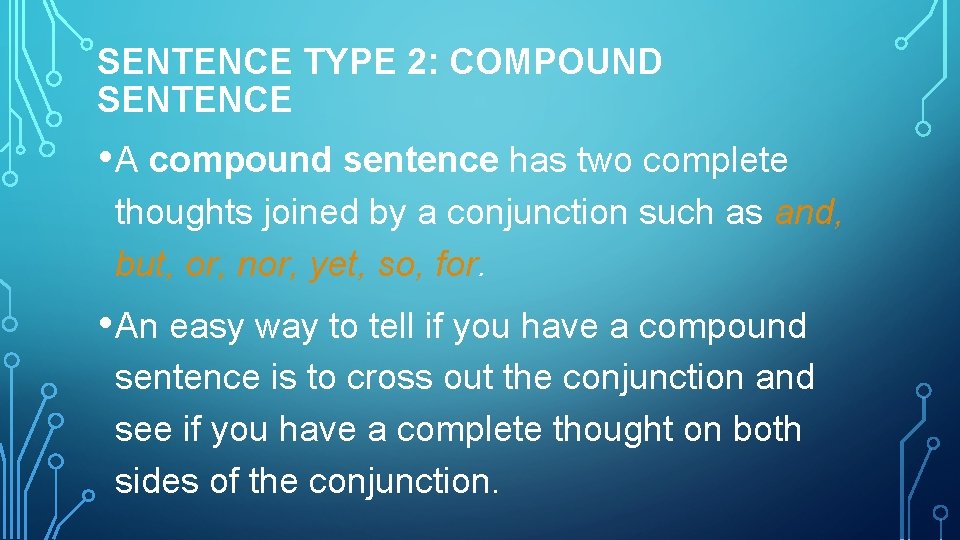
SENTENCE TYPE 2: COMPOUND SENTENCE • A compound sentence has two complete thoughts joined by a conjunction such as and, but, or, nor, yet, so, for. • An easy way to tell if you have a compound sentence is to cross out the conjunction and see if you have a complete thought on both sides of the conjunction.
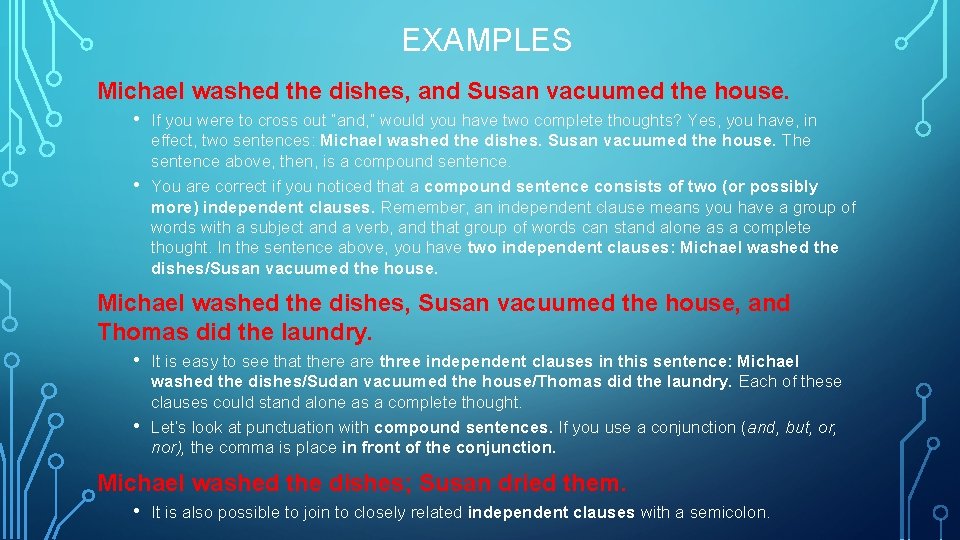
EXAMPLES Michael washed the dishes, and Susan vacuumed the house. • • If you were to cross out “and, ” would you have two complete thoughts? Yes, you have, in effect, two sentences: Michael washed the dishes. Susan vacuumed the house. The sentence above, then, is a compound sentence. You are correct if you noticed that a compound sentence consists of two (or possibly more) independent clauses. Remember, an independent clause means you have a group of words with a subject and a verb, and that group of words can stand alone as a complete thought. In the sentence above, you have two independent clauses: Michael washed the dishes/Susan vacuumed the house. Michael washed the dishes, Susan vacuumed the house, and Thomas did the laundry. • • It is easy to see that there are three independent clauses in this sentence: Michael washed the dishes/Sudan vacuumed the house/Thomas did the laundry. Each of these clauses could stand alone as a complete thought. Let’s look at punctuation with compound sentences. If you use a conjunction (and, but, or, nor), the comma is place in front of the conjunction. Michael washed the dishes; Susan dried them. • It is also possible to join to closely related independent clauses with a semicolon.
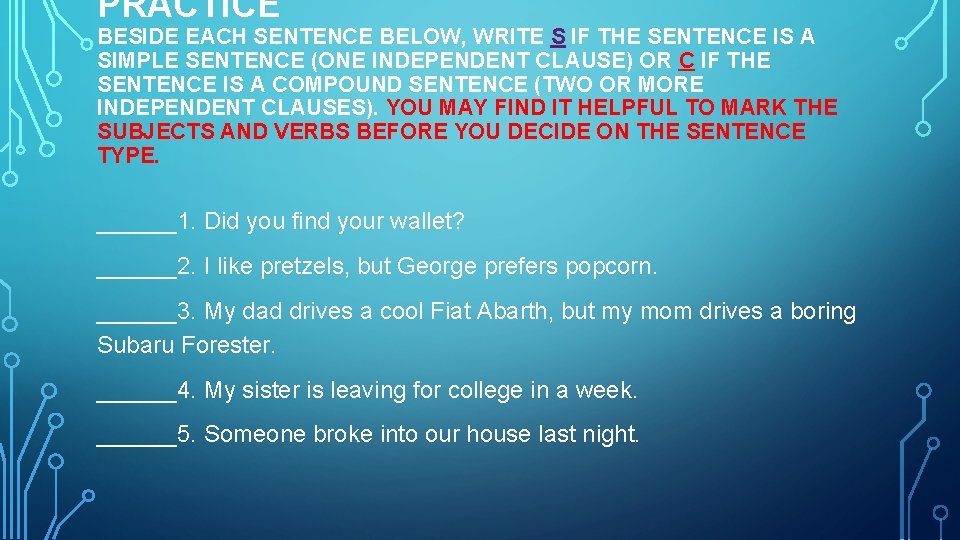
PRACTICE BESIDE EACH SENTENCE BELOW, WRITE S IF THE SENTENCE IS A SIMPLE SENTENCE (ONE INDEPENDENT CLAUSE) OR C IF THE SENTENCE IS A COMPOUND SENTENCE (TWO OR MORE INDEPENDENT CLAUSES). YOU MAY FIND IT HELPFUL TO MARK THE SUBJECTS AND VERBS BEFORE YOU DECIDE ON THE SENTENCE TYPE. ______1. Did you find your wallet? ______2. I like pretzels, but George prefers popcorn. ______3. My dad drives a cool Fiat Abarth, but my mom drives a boring Subaru Forester. ______4. My sister is leaving for college in a week. ______5. Someone broke into our house last night.
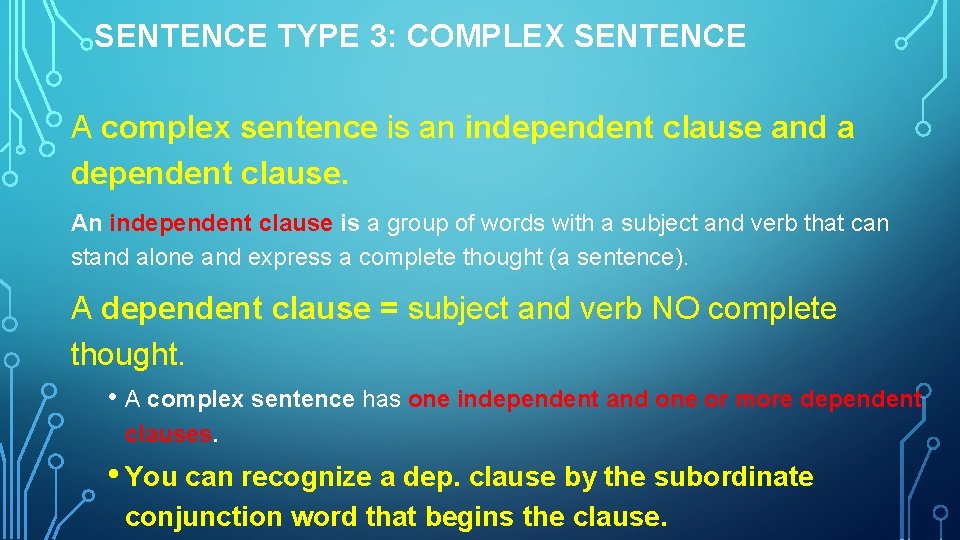
SENTENCE TYPE 3: COMPLEX SENTENCE A complex sentence is an independent clause and a dependent clause. An independent clause is a group of words with a subject and verb that can stand alone and express a complete thought (a sentence). A dependent clause = subject and verb NO complete thought. • A complex sentence has one independent and one or more dependent clauses. • You can recognize a dep. clause by the subordinate conjunction word that begins the clause.
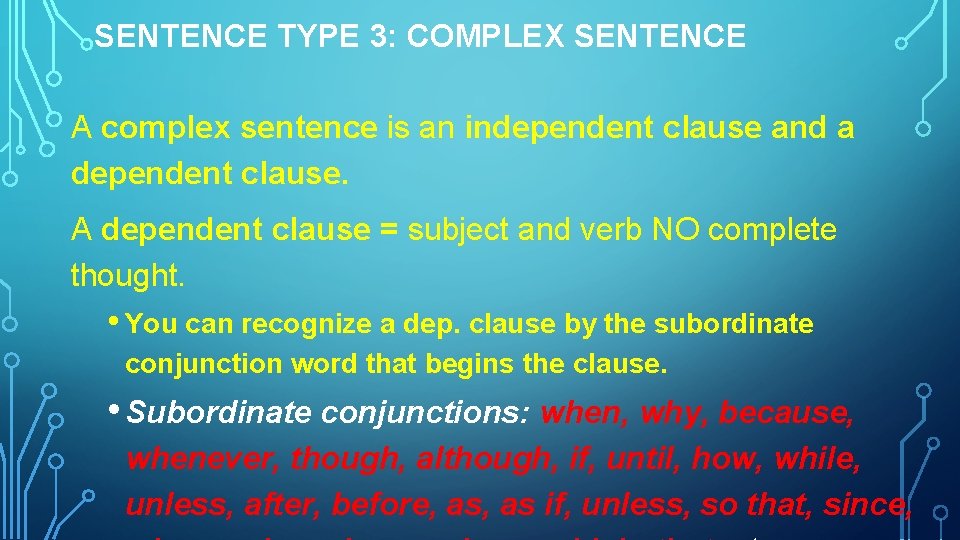
SENTENCE TYPE 3: COMPLEX SENTENCE A complex sentence is an independent clause and a dependent clause. A dependent clause = subject and verb NO complete thought. • You can recognize a dep. clause by the subordinate conjunction word that begins the clause. • Subordinate conjunctions: when, why, because, whenever, though, although, if, until, how, while, unless, after, before, as if, unless, so that, since,
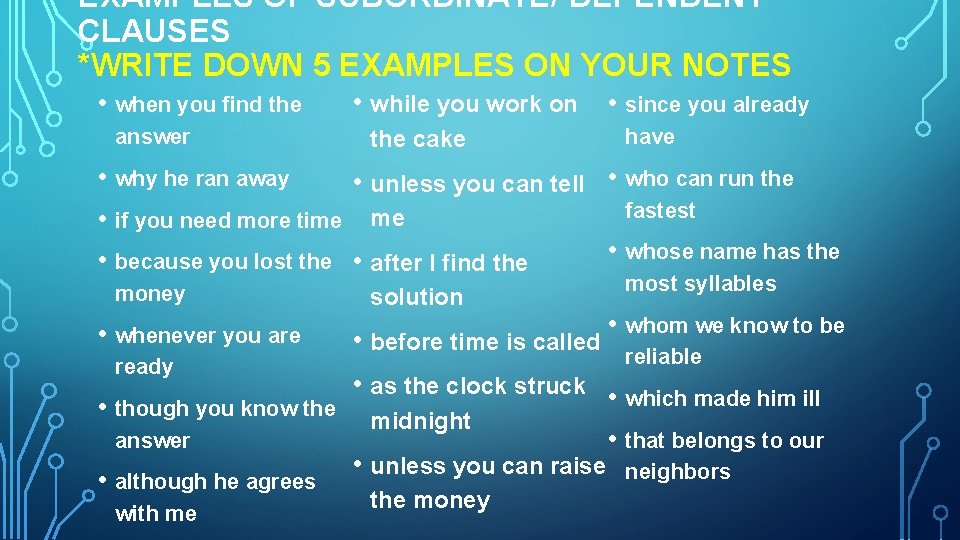
EXAMPLES OF SUBORDINATE/ DEPENDENT CLAUSES *WRITE DOWN 5 EXAMPLES ON YOUR NOTES • when you find the • while you work on • since you already answer the cake have • why he ran away • unless you can tell • who can run the fastest • if you need more time me • whose name has the • because you lost the • after I find the money • whenever you are ready • though you know the answer • although he agrees with me solution most syllables • whom we know to be • before time is called reliable • as the clock struck • which made him ill midnight • unless you can raise the money • that belongs to our neighbors
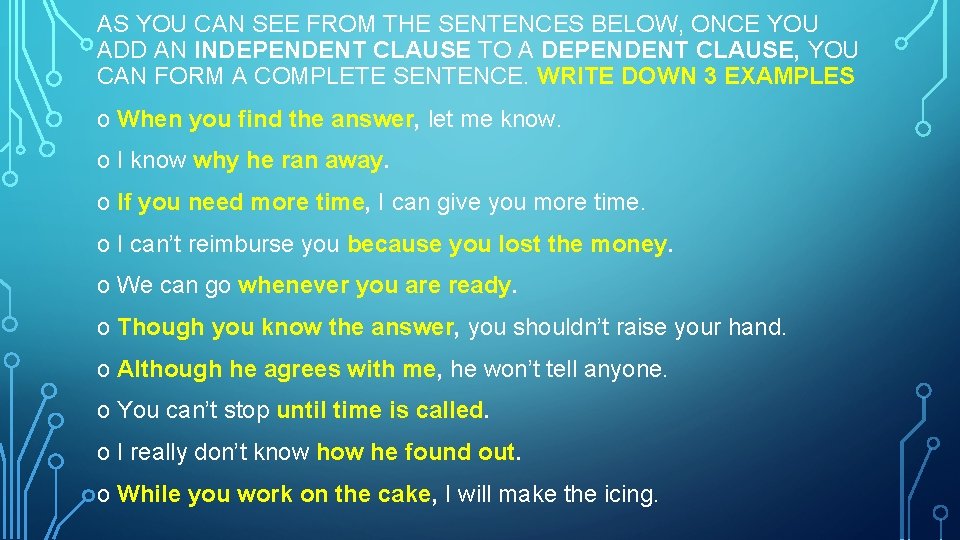
AS YOU CAN SEE FROM THE SENTENCES BELOW, ONCE YOU ADD AN INDEPENDENT CLAUSE TO A DEPENDENT CLAUSE, YOU CAN FORM A COMPLETE SENTENCE. WRITE DOWN 3 EXAMPLES o When you find the answer, let me know. o I know why he ran away. o If you need more time, I can give you more time. o I can’t reimburse you because you lost the money. o We can go whenever you are ready. o Though you know the answer, you shouldn’t raise your hand. o Although he agrees with me, he won’t tell anyone. o You can’t stop until time is called. o I really don’t know he found out. o While you work on the cake, I will make the icing.
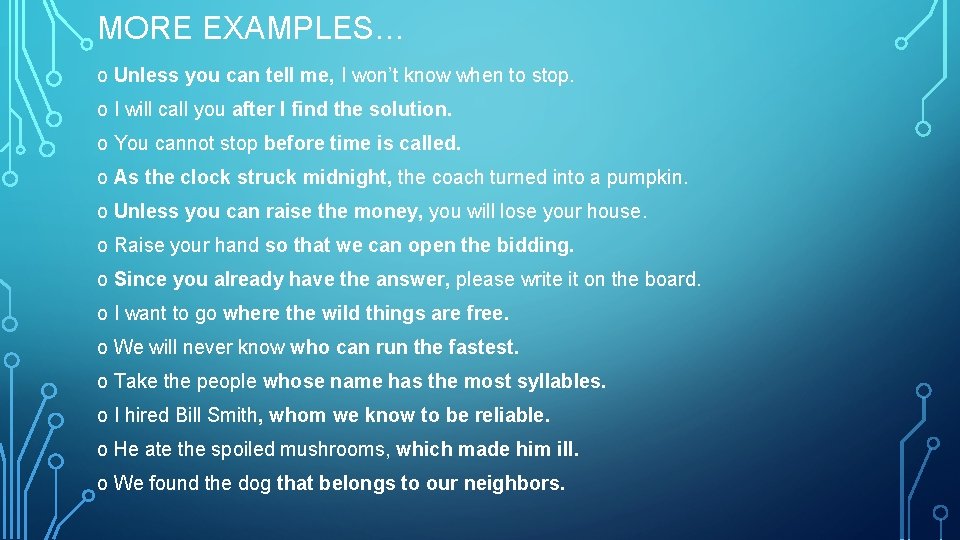
MORE EXAMPLES… o Unless you can tell me, I won’t know when to stop. o I will call you after I find the solution. o You cannot stop before time is called. o As the clock struck midnight, the coach turned into a pumpkin. o Unless you can raise the money, you will lose your house. o Raise your hand so that we can open the bidding. o Since you already have the answer, please write it on the board. o I want to go where the wild things are free. o We will never know who can run the fastest. o Take the people whose name has the most syllables. o I hired Bill Smith, whom we know to be reliable. o He ate the spoiled mushrooms, which made him ill. o We found the dog that belongs to our neighbors.
TODAY’S AGENDA • Hawk Mastery reminder • Finish Sentence types notes • Sophisticated Sentence practice • Cumulative Individual Sentence type practice
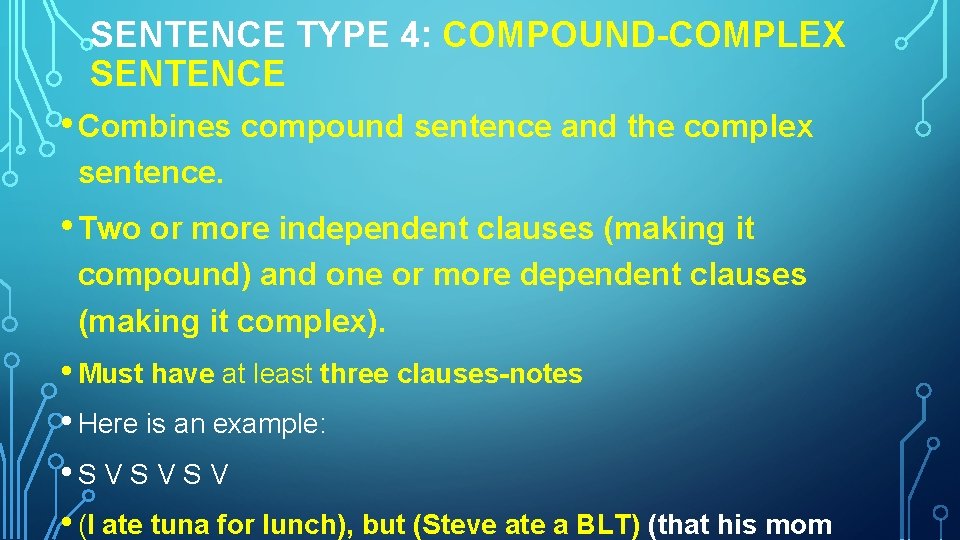
SENTENCE TYPE 4: COMPOUND-COMPLEX SENTENCE • Combines compound sentence and the complex sentence. • Two or more independent clauses (making it compound) and one or more dependent clauses (making it complex). • Must have at least three clauses-notes • Here is an example: • S V S V • (I ate tuna for lunch), but (Steve ate a BLT) (that his mom
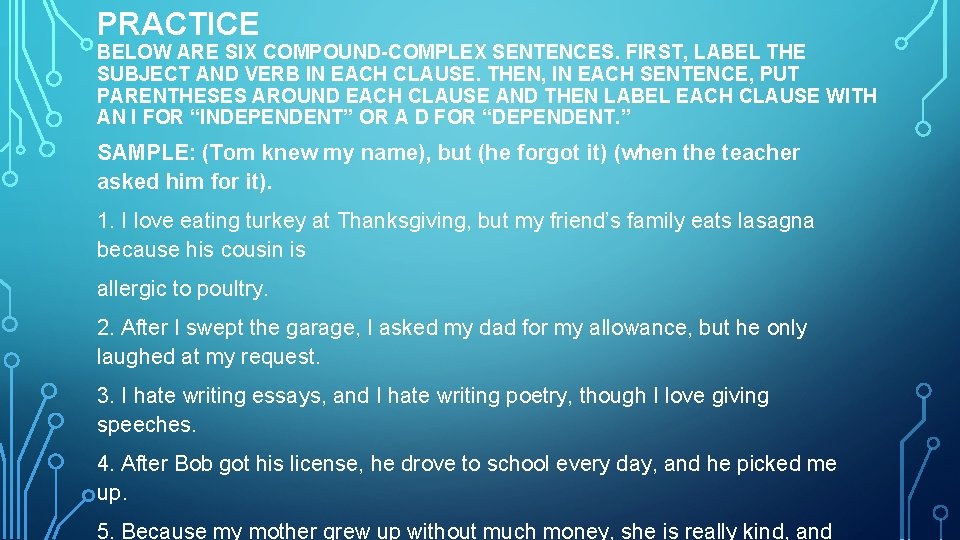
PRACTICE BELOW ARE SIX COMPOUND-COMPLEX SENTENCES. FIRST, LABEL THE SUBJECT AND VERB IN EACH CLAUSE. THEN, IN EACH SENTENCE, PUT PARENTHESES AROUND EACH CLAUSE AND THEN LABEL EACH CLAUSE WITH AN I FOR “INDEPENDENT” OR A D FOR “DEPENDENT. ” SAMPLE: (Tom knew my name), but (he forgot it) (when the teacher asked him for it). 1. I love eating turkey at Thanksgiving, but my friend’s family eats lasagna because his cousin is allergic to poultry. 2. After I swept the garage, I asked my dad for my allowance, but he only laughed at my request. 3. I hate writing essays, and I hate writing poetry, though I love giving speeches. 4. After Bob got his license, he drove to school every day, and he picked me up. 5. Because my mother grew up without much money, she is really kind, and
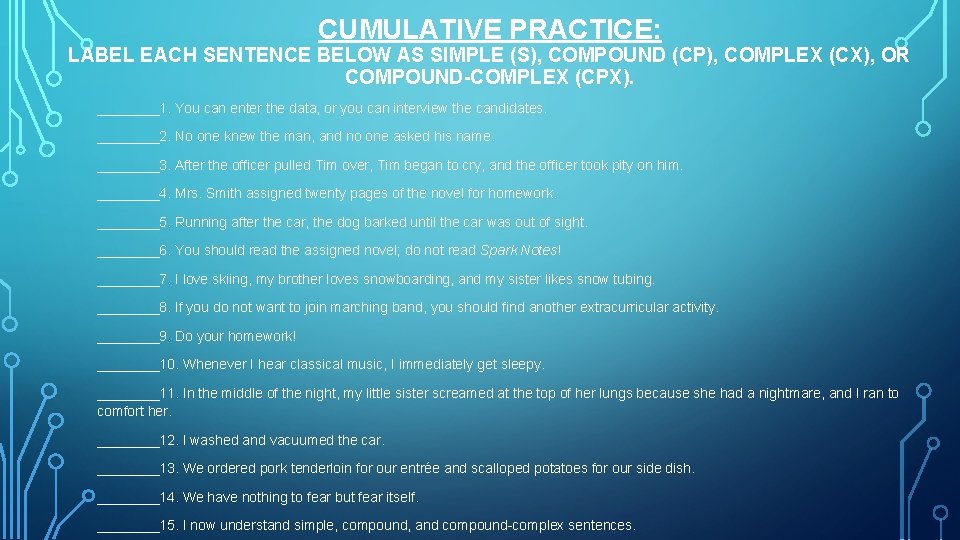
CUMULATIVE PRACTICE: LABEL EACH SENTENCE BELOW AS SIMPLE (S), COMPOUND (CP), COMPLEX (CX), OR COMPOUND-COMPLEX (CPX). ____1. You can enter the data, or you can interview the candidates. ____2. No one knew the man, and no one asked his name. ____3. After the officer pulled Tim over, Tim began to cry, and the officer took pity on him. ____4. Mrs. Smith assigned twenty pages of the novel for homework. ____5. Running after the car, the dog barked until the car was out of sight. ____6. You should read the assigned novel; do not read Spark Notes! ____7. I love skiing, my brother loves snowboarding, and my sister likes snow tubing. ____8. If you do not want to join marching band, you should find another extracurricular activity. ____9. Do your homework! ____10. Whenever I hear classical music, I immediately get sleepy. ____11. In the middle of the night, my little sister screamed at the top of her lungs because she had a nightmare, and I ran to comfort her. ____12. I washed and vacuumed the car. ____13. We ordered pork tenderloin for our entrée and scalloped potatoes for our side dish. ____14. We have nothing to fear but fear itself. ____15. I now understand simple, compound, and compound-complex sentences.
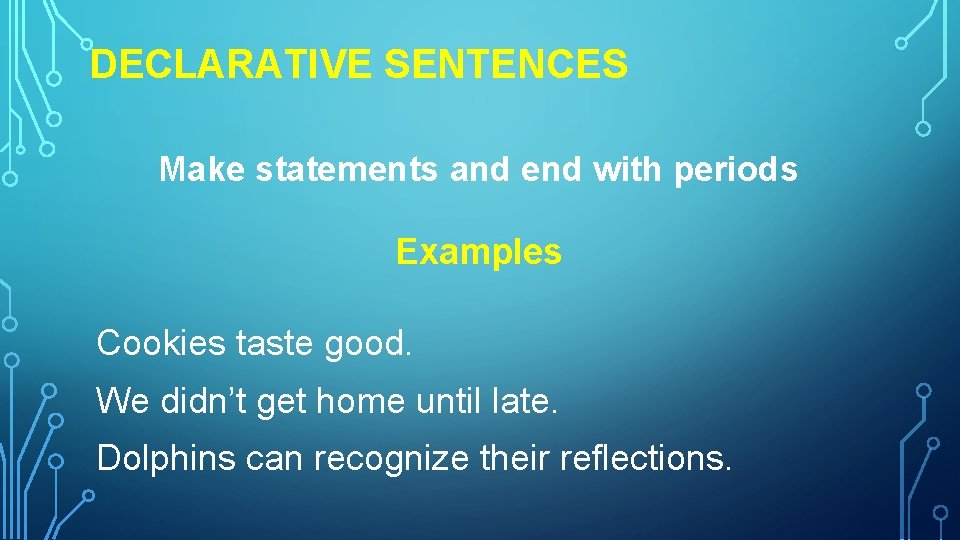
DECLARATIVE SENTENCES Make statements and end with periods Examples Cookies taste good. We didn’t get home until late. Dolphins can recognize their reflections.
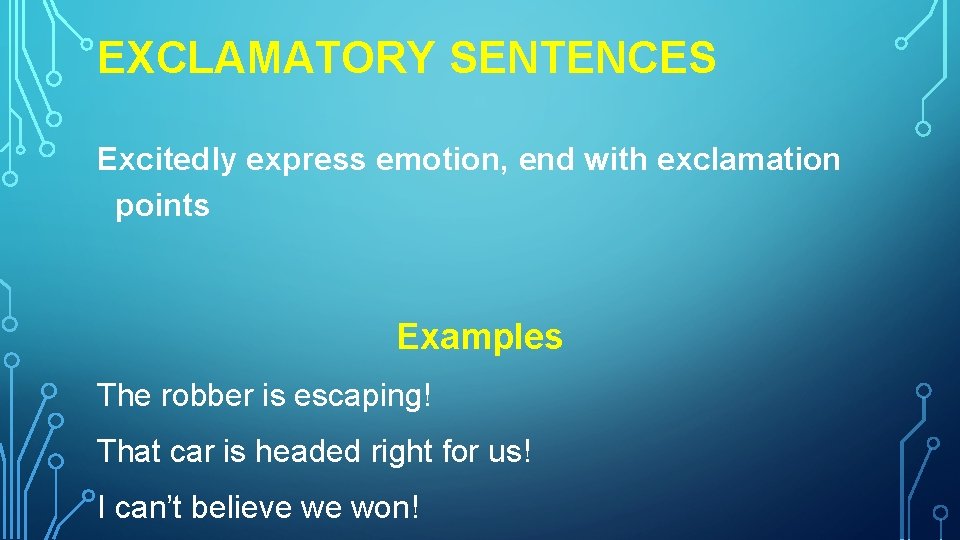
EXCLAMATORY SENTENCES Excitedly express emotion, end with exclamation points Examples The robber is escaping! That car is headed right for us! I can’t believe we won!
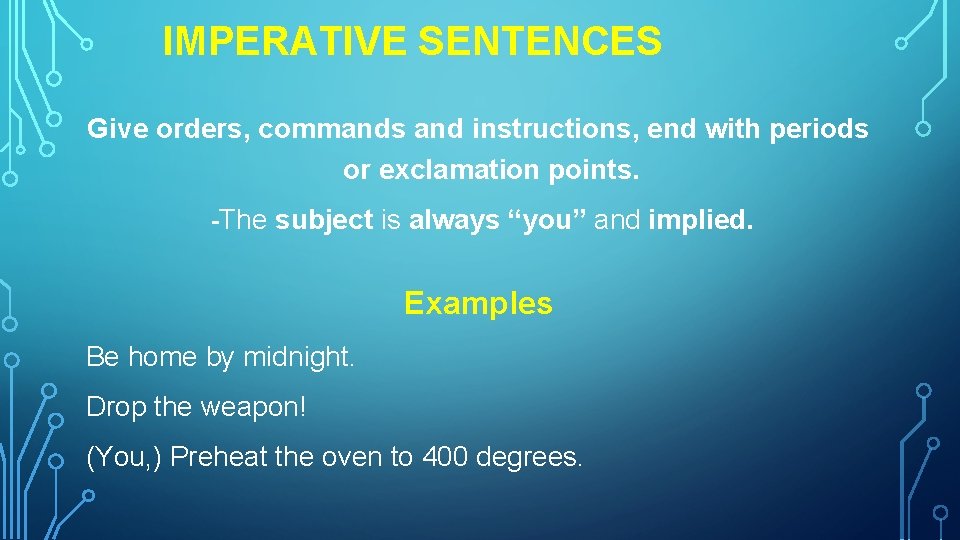
IMPERATIVE SENTENCES Give orders, commands and instructions, end with periods or exclamation points. -The subject is always “you” and implied. Examples Be home by midnight. Drop the weapon! (You, ) Preheat the oven to 400 degrees.
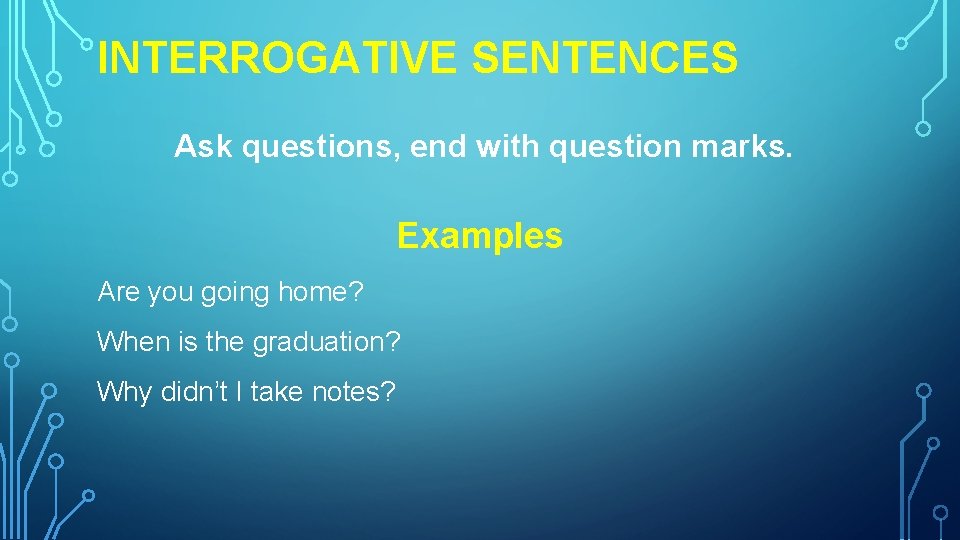
INTERROGATIVE SENTENCES Ask questions, end with question marks. Examples Are you going home? When is the graduation? Why didn’t I take notes?
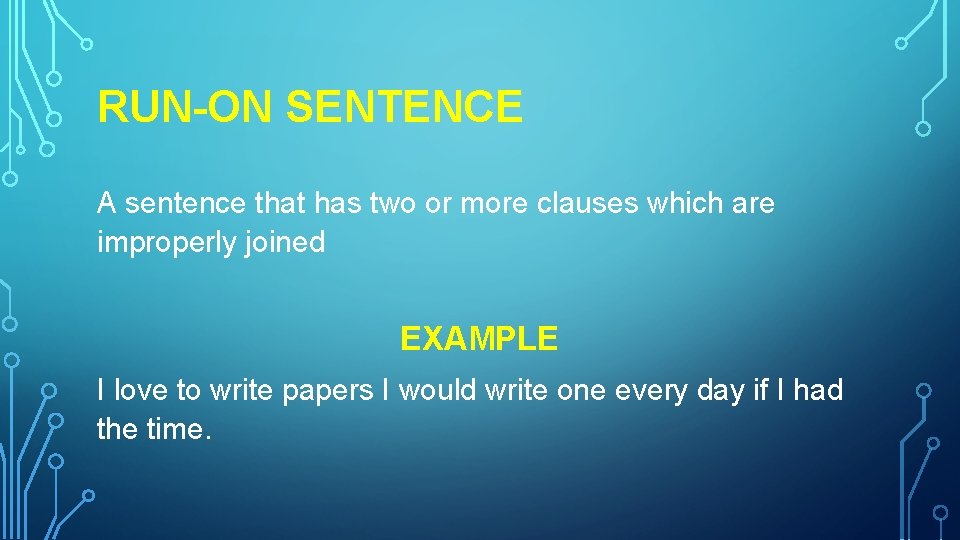
RUN-ON SENTENCE A sentence that has two or more clauses which are improperly joined EXAMPLE I love to write papers I would write one every day if I had the time.