SCOG Skagit Council of Governments PLANNING AND PRIORITIZING
- Slides: 26
SCOG Skagit Council of Governments PLANNING AND PRIORITIZING AT -GRADE RAILROAD CROSSINGS Kevin Murphy Skagit Council of Governments
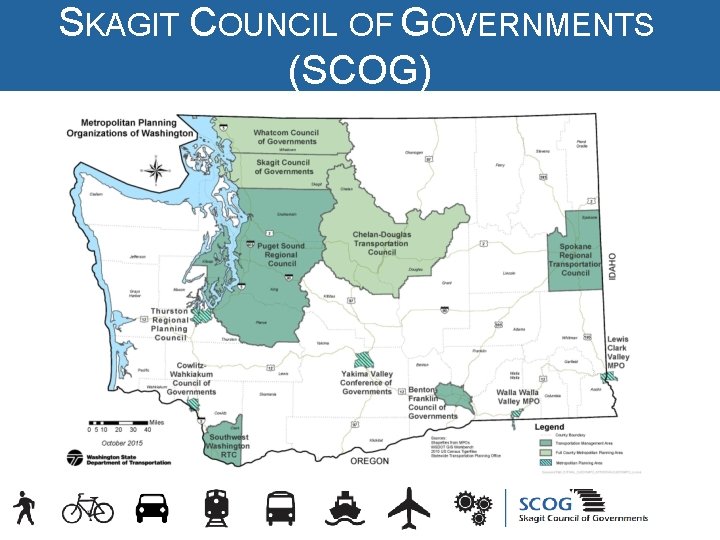
SKAGIT COUNCIL OF GOVERNMENTS (SCOG)
TODAY’S PRESENTATION • Analyze impacts of rail traffic on transportation system • Identification of needs/issues • Prioritization process • Data used • Going from regional needs to project level
SKAGIT COUNTY RAIL-CROSSING STUDY
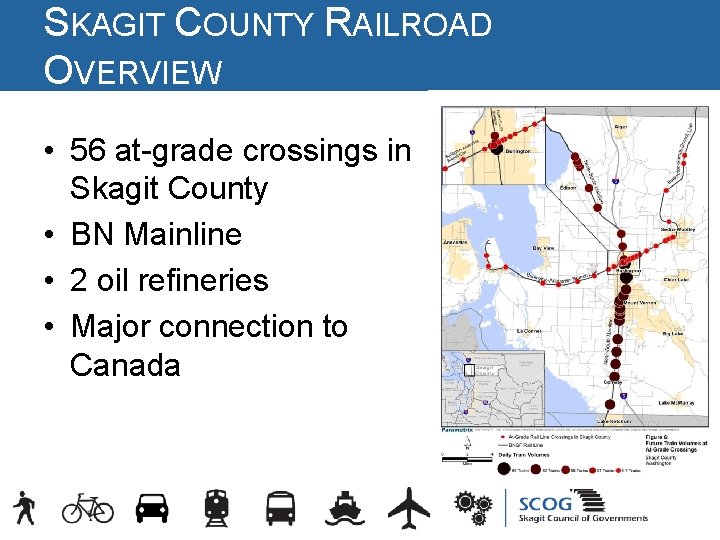
SKAGIT COUNTY RAILROAD OVERVIEW • 56 at-grade crossings in Skagit County • BN Mainline • 2 oil refineries • Major connection to Canada
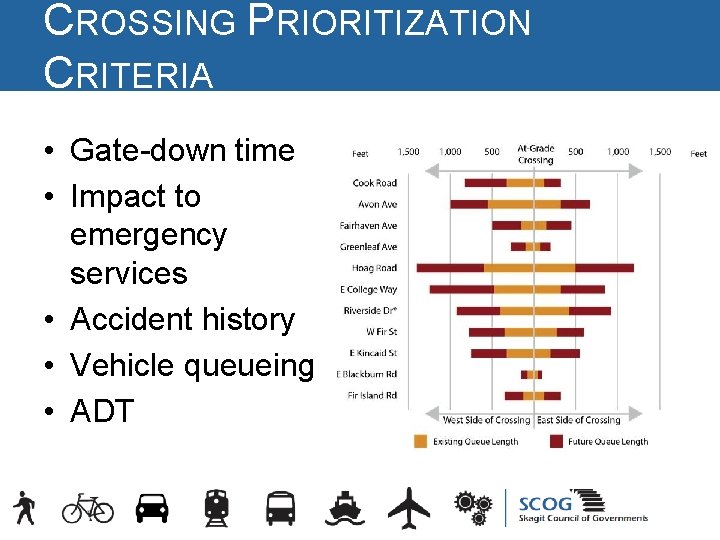
CROSSING PRIORITIZATION CRITERIA • Gate-down time • Impact to emergency services • Accident history • Vehicle queueing • ADT
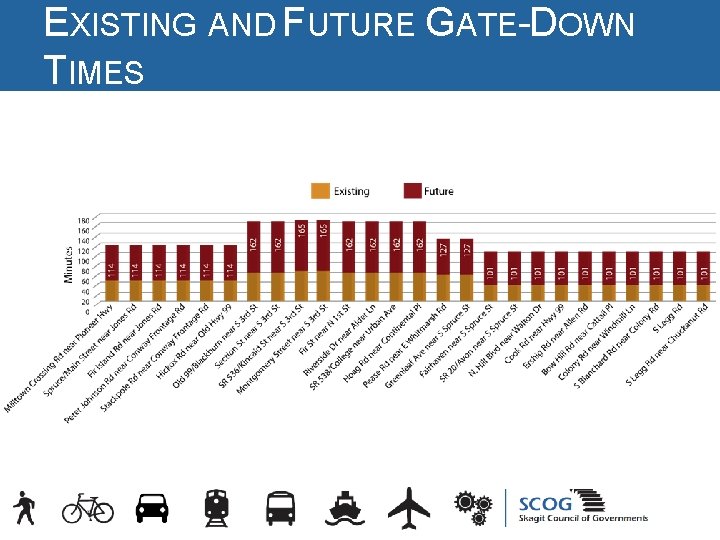
EXISTING AND FUTURE GATE-DOWN TIMES
KEY CROSSING IDENTIFICATION • List of crossings narrowed to 12 key crossings • Identify mitigation strategies – Grade separation – ITS strategies – Crossing consolidation
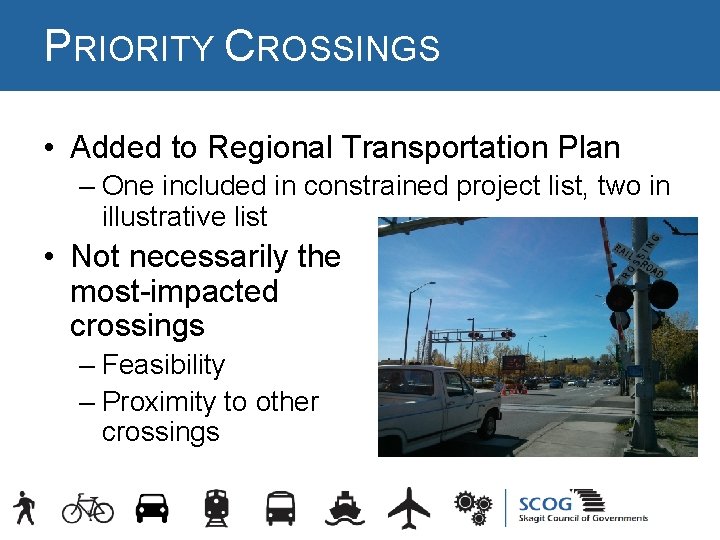
PRIORITY CROSSINGS • Added to Regional Transportation Plan – One included in constrained project list, two in illustrative list • Not necessarily the most-impacted crossings – Feasibility – Proximity to other crossings
ROAD-RAIL CONFLICTS IN WASHINGTON STATE
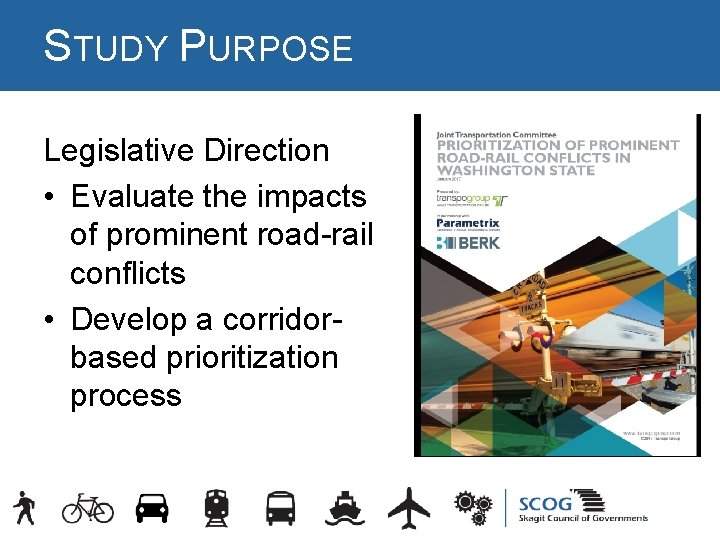
STUDY PURPOSE Legislative Direction • Evaluate the impacts of prominent road-rail conflicts • Develop a corridorbased prioritization process
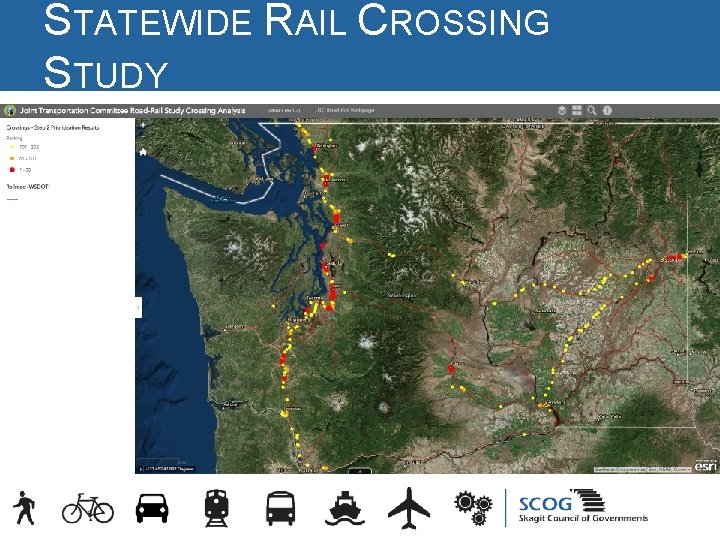
STATEWIDE RAIL CROSSING STUDY
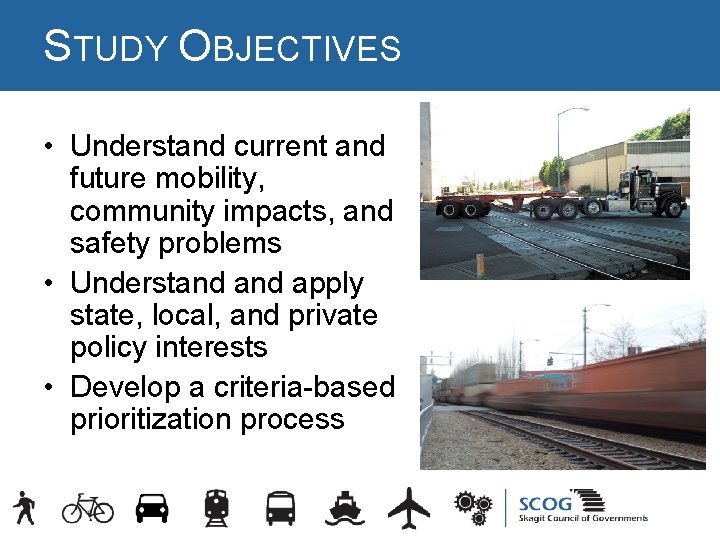
STUDY OBJECTIVES • Understand current and future mobility, community impacts, and safety problems • Understand apply state, local, and private policy interests • Develop a criteria-based prioritization process
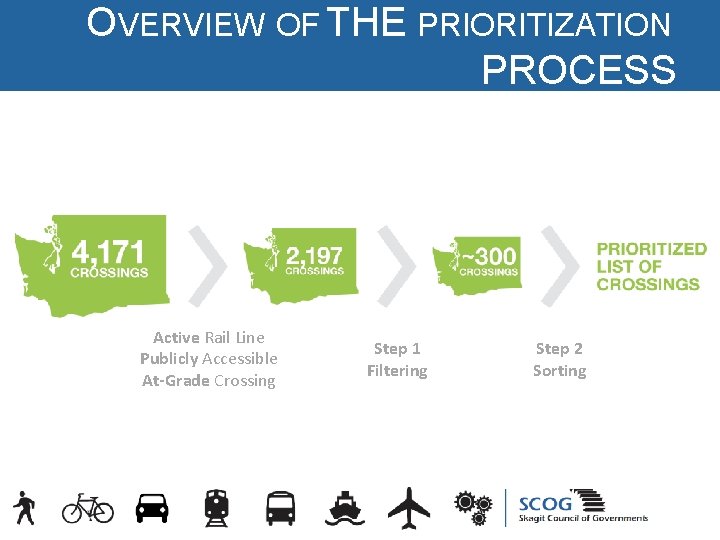
OVERVIEW OF THE PRIORITIZATION PROCESS Active Rail Line Publicly Accessible At-Grade Crossing Step 1 Filtering Step 2 Sorting
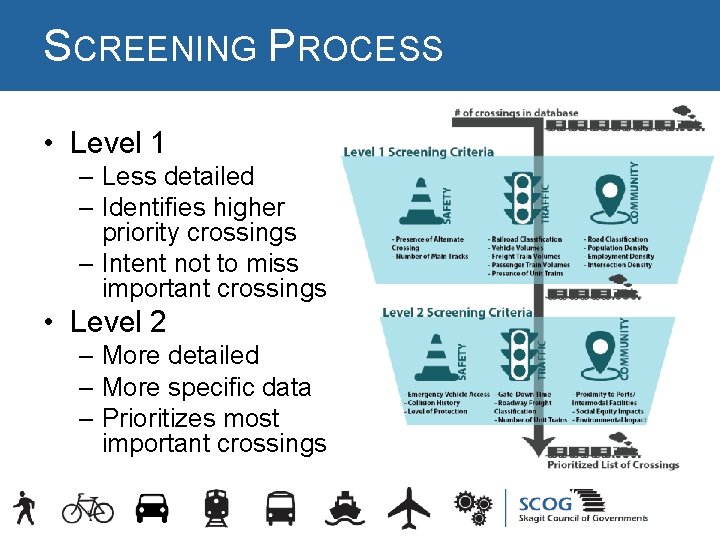
SCREENING PROCESS • Level 1 – Less detailed – Identifies higher priority crossings – Intent not to miss important crossings • Level 2 – More detailed – More specific data – Prioritizes most important crossings
KEY FINDINGS • The road-rail conflicts at the Top 50 at-grade crossings are substantial and there are few funding sources to address them • The prioritization results point to a significant need for additional funding to address crossing improvements • The database and prioritization process provide a mechanism to compare and understand the magnitude of crossing improvement needs on a statewide basis
SCOG COOK ROAD CORRIDOR STUDY
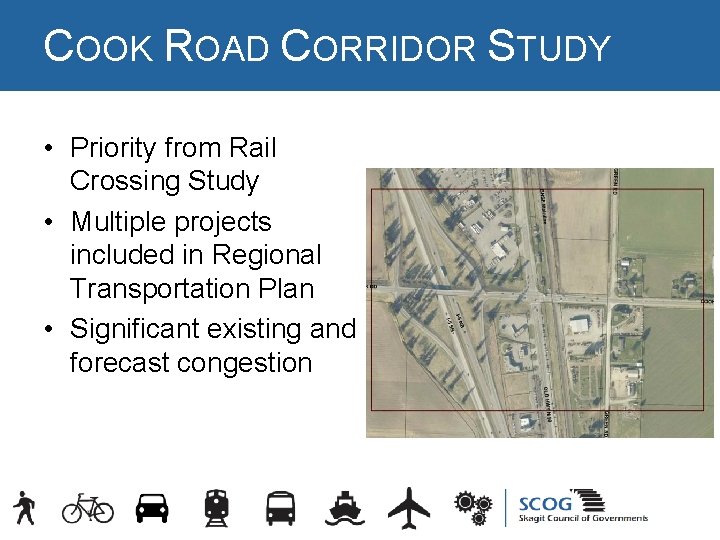
COOK ROAD CORRIDOR STUDY • Priority from Rail Crossing Study • Multiple projects included in Regional Transportation Plan • Significant existing and forecast congestion
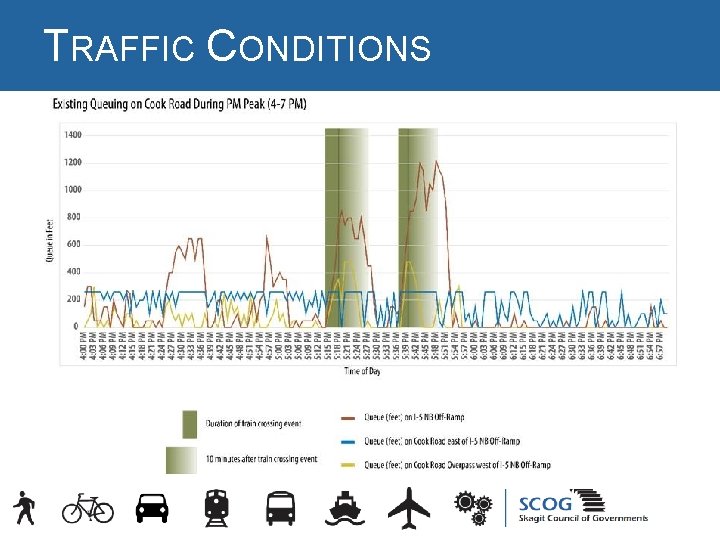
TRAFFIC CONDITIONS
SHORT-TERM SOLUTIONS • Intersection operations analysis – Simulations • Feasibility assessment • Installation of signals, increased freeway ramp capacity, increased roadway capacity
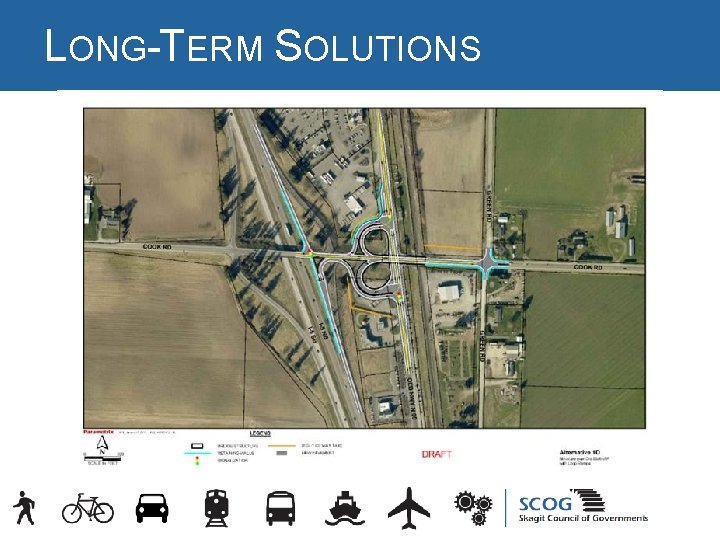
LONG-TERM SOLUTIONS • Grade separation • Major tradeoffs – Operational analysis concerns – Property taking concerns • Constructability concerns • Funding concerns
LONG-TERM SOLUTIONS
SUMMARY • Highest-ranked crossing is not necessarily highest priority • Data exists but has challenges • Important to maintain the data/tool • Build in flexibility in criteria • System effects difficult to assess regionaly or statewide
UPCOMING WORK • Statewide – Prioritization of rail-crossing projects – Data base refinements – Input of conflicts to regional plans • SCOG - Cook Road – Short-Term Projects seek funding – PE for Long-Term in a couple years
RESOURCES • WA Joint Transportation Committee Road-Rail Study and associated links: – http: //leg. wa. gov/JTC/Pages/Road-Rail-Study. aspx • SCOG Rail-Crossing Study: – http: //scog. net/transportation/skagit-rail-crossing-study/
QUESTIONS? Contact Information Kevin Murphy Executive Director Skagit Council of Governments 204 West Montgomery Street Mount Vernon, WA 98273 360. 416. 7871 kevinm@scog. net www. scog. net