RNAi A Novel Approach for PCSK 9 Therapy

- Slides: 17
RNAi: A Novel Approach for PCSK 9 Therapy Dr David Kallend Chief Medical Officer The Medicines Company
David Kallend , MBBS Employment: The Medicines Company Stockholder: The Medicines Company disclosure
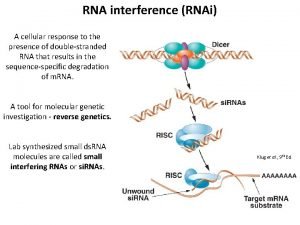
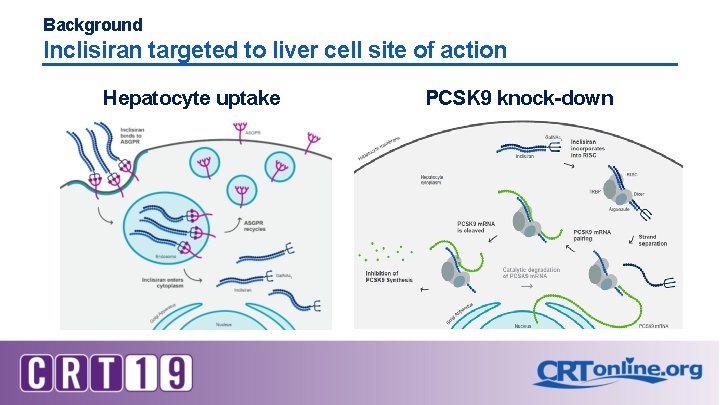
Background Inclisiran targeted to liver cell site of action Hepatocyte uptake PCSK 9 knock-down
Pre-clinical Safety Update
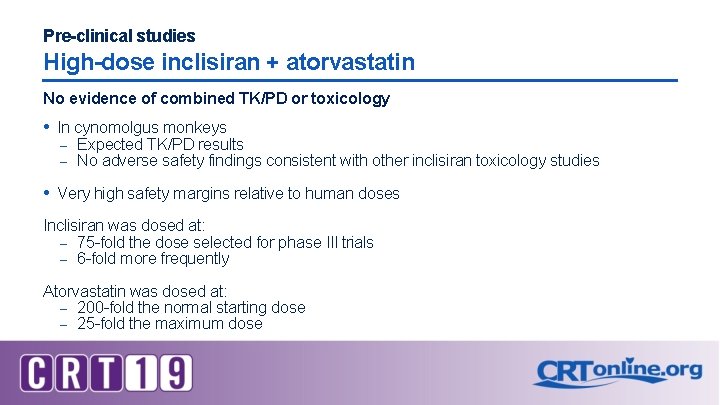
Pre-clinical studies High-dose inclisiran + atorvastatin No evidence of combined TK/PD or toxicology In cynomolgus monkeys – Expected TK/PD results – No adverse safety findings consistent with other inclisiran toxicology studies Very high safety margins relative to human doses Inclisiran was dosed at: – 75 -fold the dose selected for phase III trials – 6 -fold more frequently Atorvastatin was dosed at: – 200 -fold the normal starting dose – 25 -fold the maximum dose
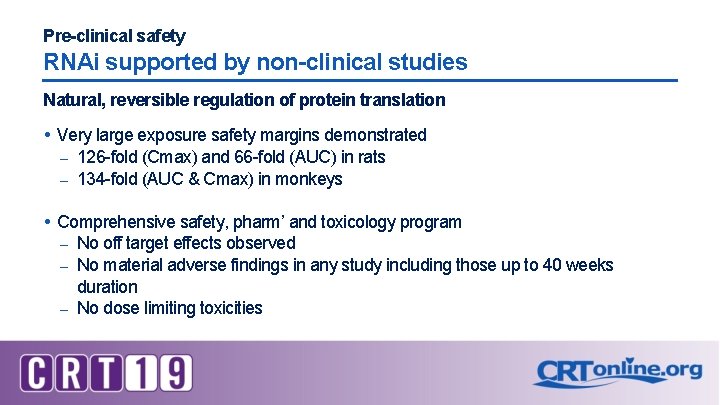
Pre-clinical safety RNAi supported by non-clinical studies Natural, reversible regulation of protein translation Very large exposure safety margins demonstrated – 126 -fold (Cmax) and 66 -fold (AUC) in rats – 134 -fold (AUC & Cmax) in monkeys Comprehensive safety, pharm’ and toxicology program – No off target effects observed – No material adverse findings in any study including those up to 40 weeks duration – No dose limiting toxicities
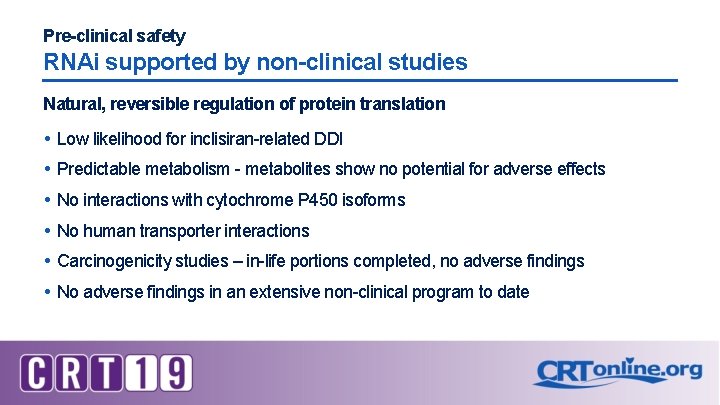
Pre-clinical safety RNAi supported by non-clinical studies Natural, reversible regulation of protein translation Low likelihood for inclisiran-related DDI Predictable metabolism - metabolites show no potential for adverse effects No interactions with cytochrome P 450 isoforms No human transporter interactions Carcinogenicity studies – in-life portions completed, no adverse findings No adverse findings in an extensive non-clinical program to date
Clinical Update
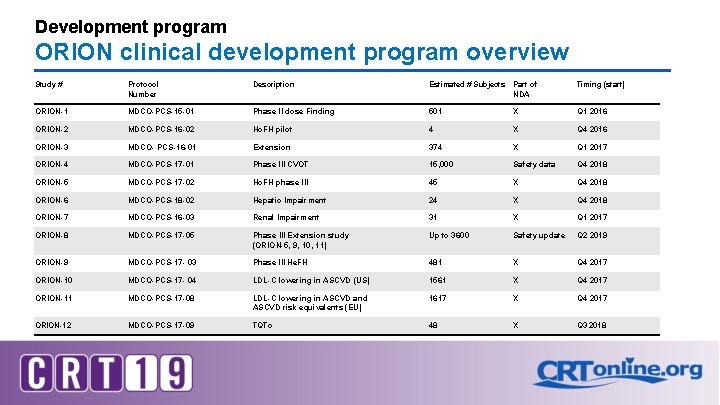
Development program ORION clinical development program overview Study # Protocol Number Description Estimated # Subjects Part of NDA Timing (start) ORION-1 MDCO-PCS-15 -01 Phase II dose Finding 501 X Q 1 2016 ORION-2 MDCO-PCS-16 -02 Ho. FH pilot 4 X Q 4 2016 ORION-3 MDCO- PCS-16 -01 Extension 374 X Q 1 2017 ORION-4 MDCO-PCS-17 -01 Phase III CVOT 15, 000 Safety data Q 4 2018 ORION-5 MDCO-PCS-17 -02 Ho. FH phase III 45 X Q 4 2018 ORION-6 MDCO-PCS-18 -02 Hepatic Impairment 24 X Q 4 2018 ORION-7 MDCO-PCS-16 -03 Renal Impairment 31 X Q 1 2017 ORION-8 MDCO-PCS-17 -05 Phase III Extension study (ORION-5, 9, 10, 11) Up to 3600 Safety update Q 2 2019 ORION-9 MDCO-PCS-17 - 03 Phase III He. FH 481 X Q 4 2017 ORION-10 MDCO-PCS-17 - 04 LDL-C lowering in ASCVD (US) 1561 X Q 4 2017 ORION-11 MDCO-PCS-17 -08 LDL-C lowering in ASCVD and ASCVD risk equivalents (EU) 1617 X Q 4 2017 ORION-12 MDCO-PCS-17 -09 TQTc 48 X Q 3 2018
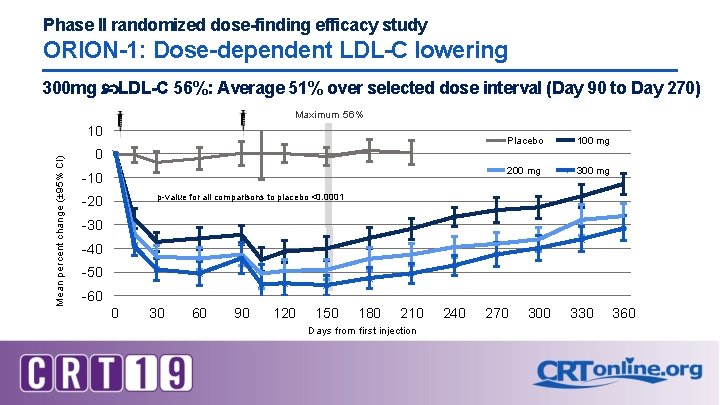
Phase II randomized dose-finding efficacy study ORION-1: Dose-dependent LDL-C lowering 300 mg LDL-C 56%: Average 51% over selected dose interval (Day 90 to Day 270) Maximum 56% Mean percent change (± 95% CI) 10 Placebo 100 mg 200 mg 300 mg 0 -10 p-value for all comparisons to placebo <0. 0001 -20 -30 -40 -50 -60 0 30 60 90 120 150 180 210 Days from first injection 240 270 300 330 360
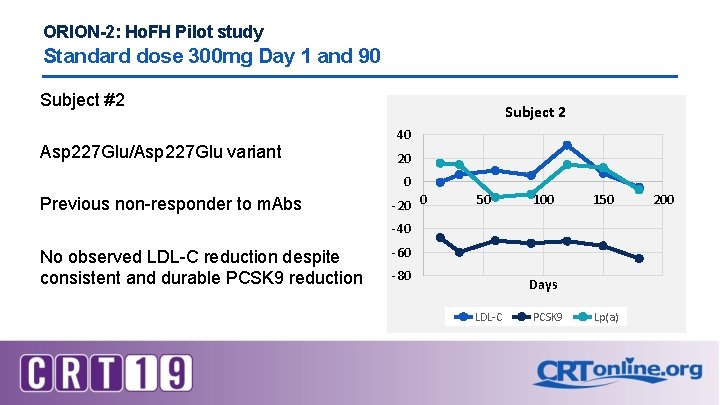
ORION-2: Ho. FH Pilot study Standard dose 300 mg Day 1 and 90 Subject #2 Asp 227 Glu/Asp 227 Glu variant Subject 2 40 20 0 Previous non-responder to m. Abs -20 0 50 100 150 -40 No observed LDL-C reduction despite consistent and durable PCSK 9 reduction -60 -80 Days LDL-C PCSK 9 Lp(a) 200
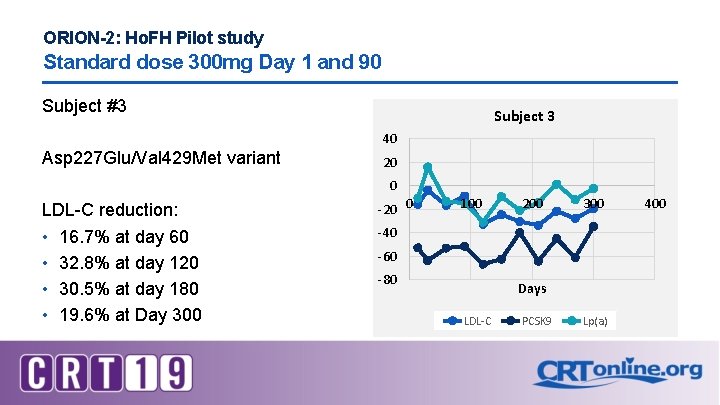
ORION-2: Ho. FH Pilot study Standard dose 300 mg Day 1 and 90 Subject #3 Subject 3 40 Asp 227 Glu/Val 429 Met variant 20 0 LDL-C reduction: • 16. 7% at day 60 • 32. 8% at day 120 • 30. 5% at day 180 • 19. 6% at Day 300 -20 0 100 200 300 -40 -60 -80 Days LDL-C PCSK 9 Lp(a) 400
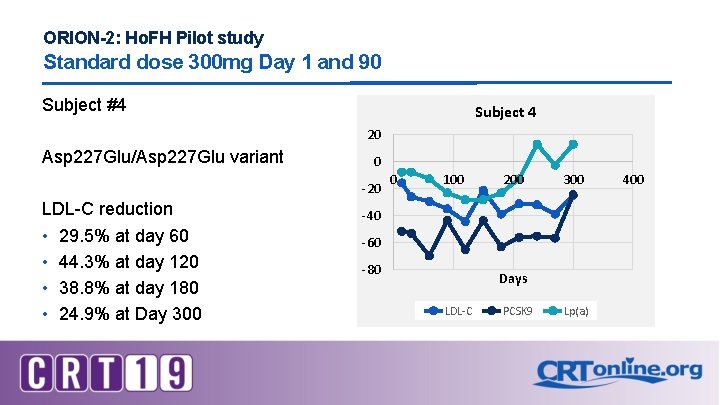
ORION-2: Ho. FH Pilot study Standard dose 300 mg Day 1 and 90 Subject #4 Subject 4 20 Asp 227 Glu/Asp 227 Glu variant 0 -20 LDL-C reduction • 29. 5% at day 60 • 44. 3% at day 120 • 38. 8% at day 180 • 24. 9% at Day 300 0 100 200 300 -40 -60 -80 Days LDL-C PCSK 9 Lp(a) 400
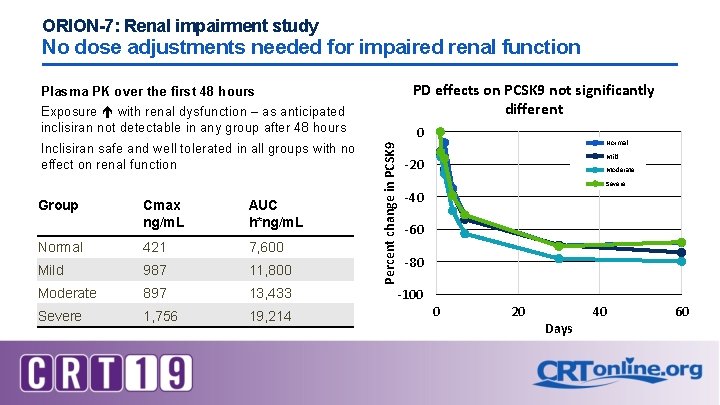
ORION-7: Renal impairment study No dose adjustments needed for impaired renal function PD effects on PCSK 9 not significantly different Plasma PK over the first 48 hours Exposure with renal dysfunction – as anticipated inclisiran not detectable in any group after 48 hours Group Cmax ng/m. L AUC h*ng/m. L Normal 421 7, 600 Mild 987 11, 800 Moderate 897 13, 433 Severe 1, 756 19, 214 Percent change in PCSK 9 Inclisiran safe and well tolerated in all groups with no effect on renal function 0 Normal Mild -20 Moderate Severe -40 -60 -80 -100 0 20 Days 40 60
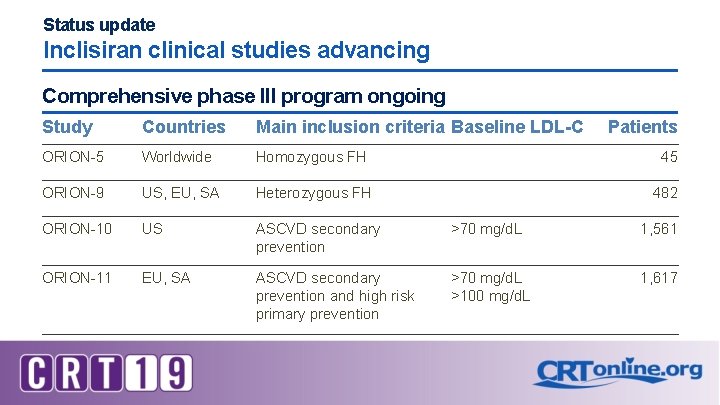
Status update Inclisiran clinical studies advancing Comprehensive phase III program ongoing Study Countries Main inclusion criteria Baseline LDL-C Patients ORION-5 Worldwide Homozygous FH 45 ORION-9 US, EU, SA Heterozygous FH 482 ORION-10 US ASCVD secondary prevention >70 mg/d. L 1, 561 ORION-11 EU, SA ASCVD secondary prevention and high risk primary prevention >70 mg/d. L >100 mg/d. L 1, 617
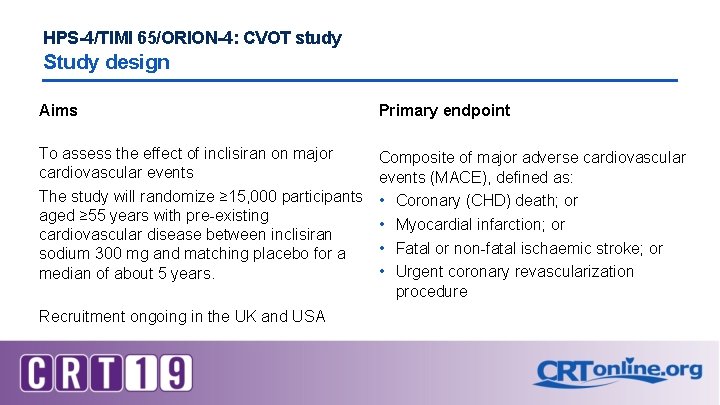
HPS-4/TIMI 65/ORION-4: CVOT study Study design Aims Primary endpoint To assess the effect of inclisiran on major cardiovascular events The study will randomize ≥ 15, 000 participants aged ≥ 55 years with pre-existing cardiovascular disease between inclisiran sodium 300 mg and matching placebo for a median of about 5 years. Composite of major adverse cardiovascular events (MACE), defined as: • Coronary (CHD) death; or • Myocardial infarction; or • Fatal or non-fatal ischaemic stroke; or • Urgent coronary revascularization procedure Recruitment ongoing in the UK and USA
Inclisiran clinical trials program Inclisiran dosing regimen is simple, consistent and convenient Inclisiran emerging from Phase II with a “one size fits all” dosing regimen: • • 300 mg s. c. dose on day 1, 90, then every 180 days Applicable to all patient populations and sub-groups Consistent and durable efficacy No safety signals observed in a broad range of patient groups More than 3500 patients followed up to 330 days to date and more than 2700 patient years of exposure to inclisiran Five DMSB reviews of fully unblinded data completed with a recommendation to continue the studies without modification