Refresher Course Gender Analysis Frameworks GAF 26 27

- Slides: 22
Refresher Course Gender Analysis Frameworks (GAF) 26 -27 TH December, 2016 Pamela Singla Professor Department of Social Work University of Delhi pamelasingla@gmail. com Refresher Course in Women and Child Development Organized by: Women Studies Centre and HRD Centre University of Kashmir
Gender Analysis • Is a tool for framing better, more effective policies • Men-women different roles, access to resources, control over resources. • Understood before initiating any new development project. • Projects can have unintended outcomes if gender roles and relationships in the society are not carefully analyzed.
So how does one go about doing a Gender Analysis--- Through Gender Analysis Frameworks
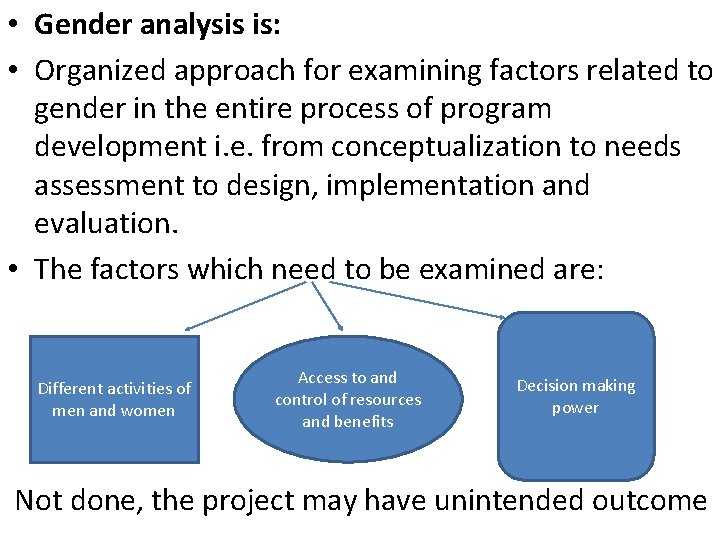
• Gender analysis is: • Organized approach for examining factors related to gender in the entire process of program development i. e. from conceptualization to needs assessment to design, implementation and evaluation. • The factors which need to be examined are: Different activities of men and women Access to and control of resources and benefits Decision making power Not done, the project may have unintended outcome
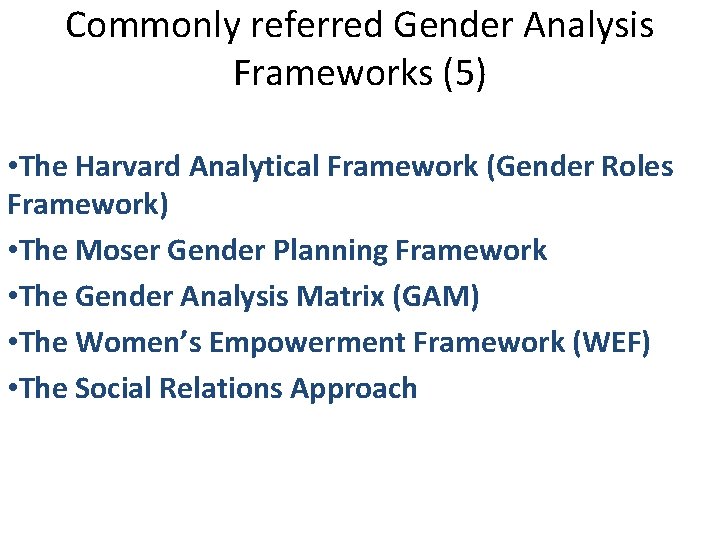
Commonly referred Gender Analysis Frameworks (5) • The Harvard Analytical Framework (Gender Roles Framework) • The Moser Gender Planning Framework • The Gender Analysis Matrix (GAM) • The Women’s Empowerment Framework (WEF) • The Social Relations Approach
Important to know that: • No single framework addresses all development problems. • Each model was developed at a particular point in time. • Consultatnts could use one model or combination of models/ methods depending on the situation in hand.
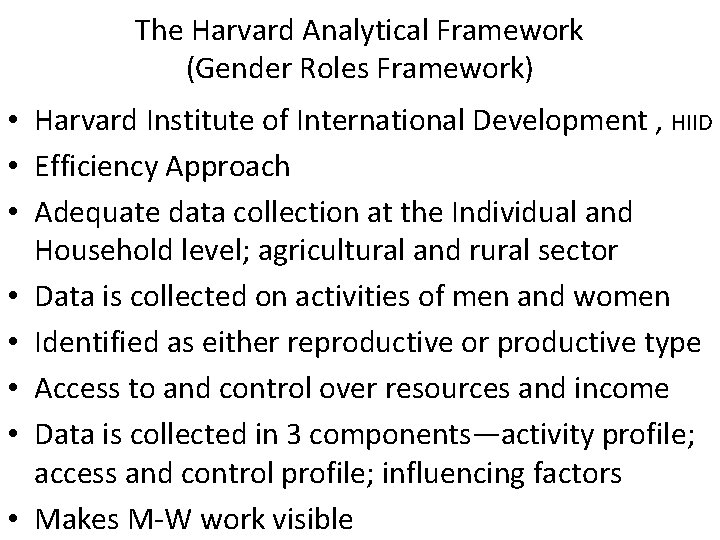
The Harvard Analytical Framework (Gender Roles Framework) • Harvard Institute of International Development , HIID • Efficiency Approach • Adequate data collection at the Individual and Household level; agricultural and rural sector • Data is collected on activities of men and women • Identified as either reproductive or productive type • Access to and control over resources and income • Data is collected in 3 components—activity profile; access and control profile; influencing factors • Makes M-W work visible
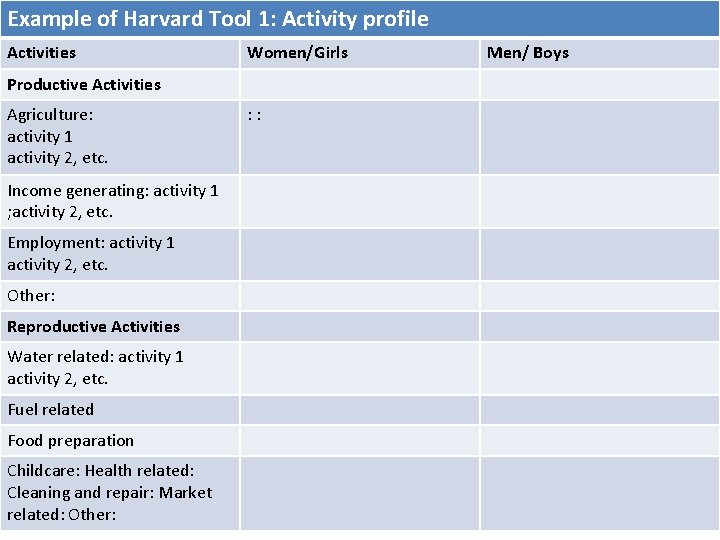
Example of Harvard Tool 1: Activity profile Activities Women/Girls Productive Activities Agriculture: activity 1 activity 2, etc. Income generating: activity 1 ; activity 2, etc. Employment: activity 1 activity 2, etc. Other: Reproductive Activities Water related: activity 1 activity 2, etc. Fuel related Food preparation Childcare: Health related: Cleaning and repair: Market related: Other: : : Men/ Boys
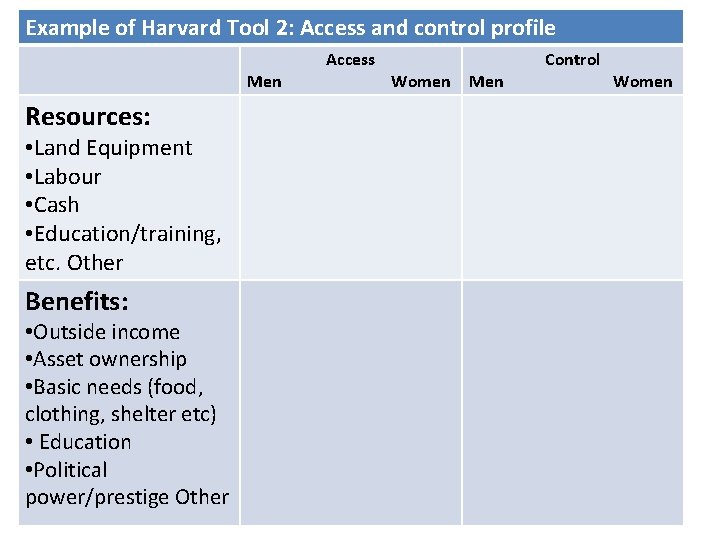
Example of Harvard Tool 2: Access and control profile Access Men Women Resources: • Land Equipment • Labour • Cash • Education/training, etc. Other Benefits: • Outside income • Asset ownership • Basic needs (food, clothing, shelter etc) • Education • Political power/prestige Other Control Men Women
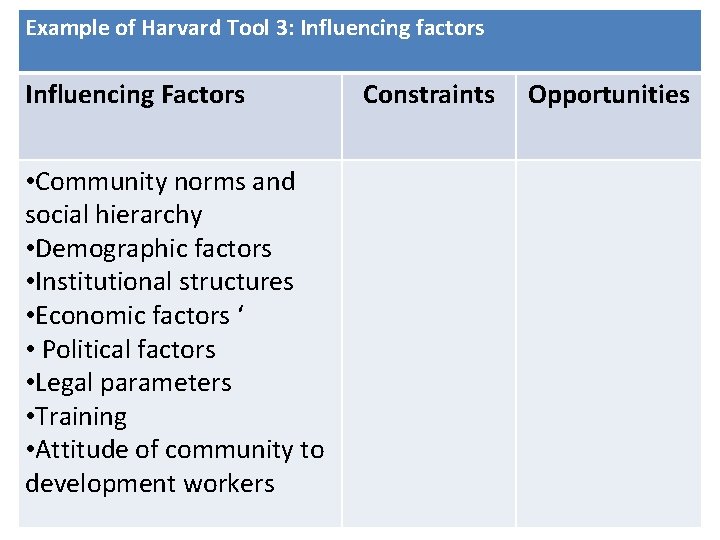
Example of Harvard Tool 3: Influencing factors Influencing Factors • Community norms and social hierarchy • Demographic factors • Institutional structures • Economic factors ‘ • Political factors • Legal parameters • Training • Attitude of community to development workers Constraints Opportunities
Case study of Harvard Analytical Framework: Indonesia community Forestry Project
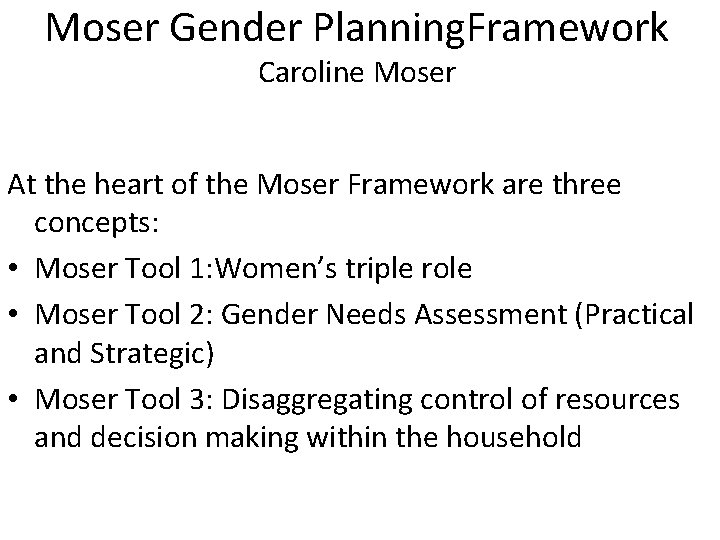
Moser Gender Planning. Framework Caroline Moser At the heart of the Moser Framework are three concepts: • Moser Tool 1: Women’s triple role • Moser Tool 2: Gender Needs Assessment (Practical and Strategic) • Moser Tool 3: Disaggregating control of resources and decision making within the household
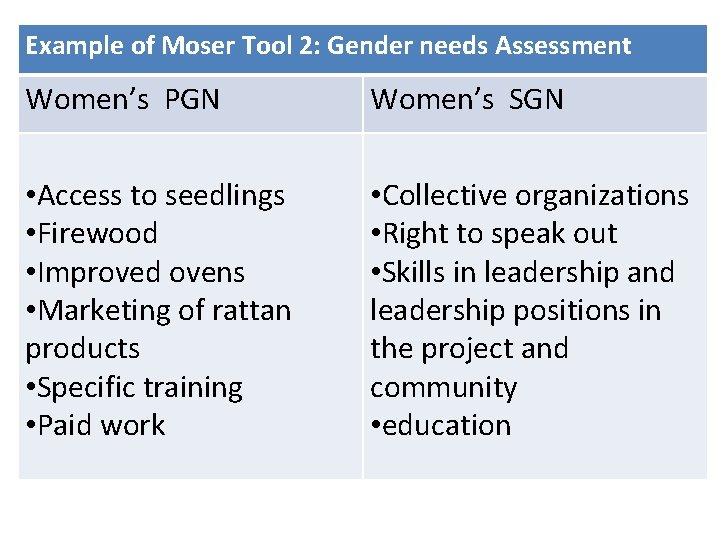
Example of Moser Tool 2: Gender needs Assessment Women’s PGN Women’s SGN • Access to seedlings • Firewood • Improved ovens • Marketing of rattan products • Specific training • Paid work • Collective organizations • Right to speak out • Skills in leadership and leadership positions in the project and community • education
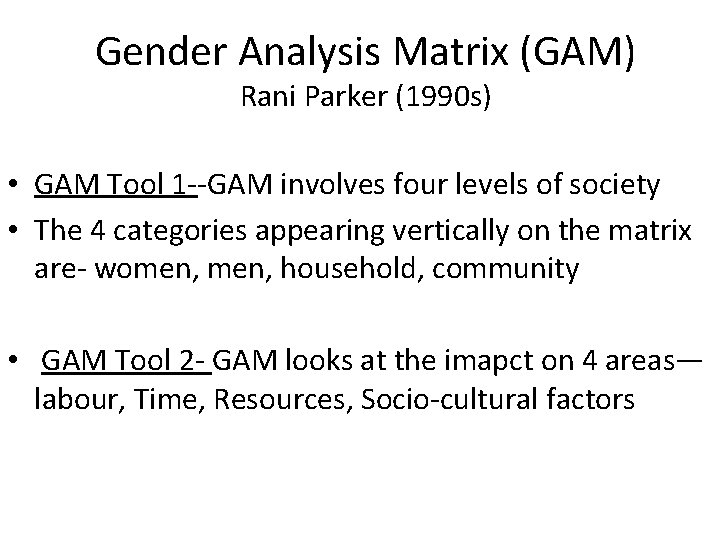
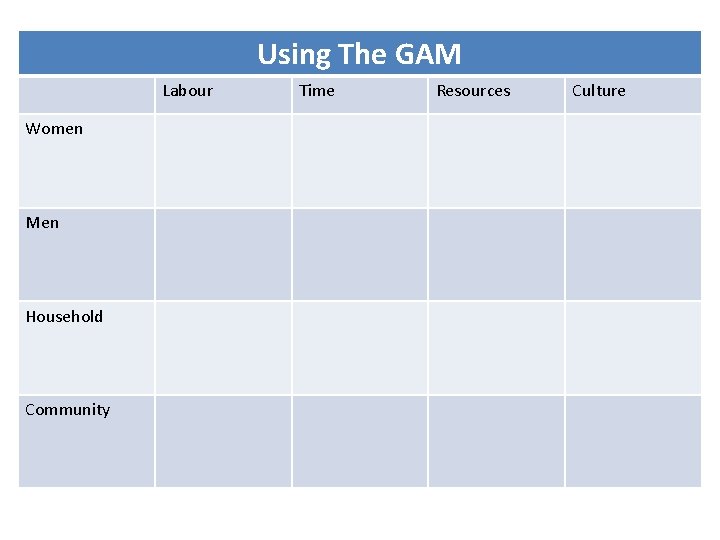
Gender Analysis Matrix (GAM) Rani Parker (1990 s) • GAM Tool 1 --GAM involves four levels of society • The 4 categories appearing vertically on the matrix are- women, household, community • GAM Tool 2 - GAM looks at the imapct on 4 areas— labour, Time, Resources, Socio-cultural factors
Using The GAM Labour Women Men Household Community Time Resources Culture
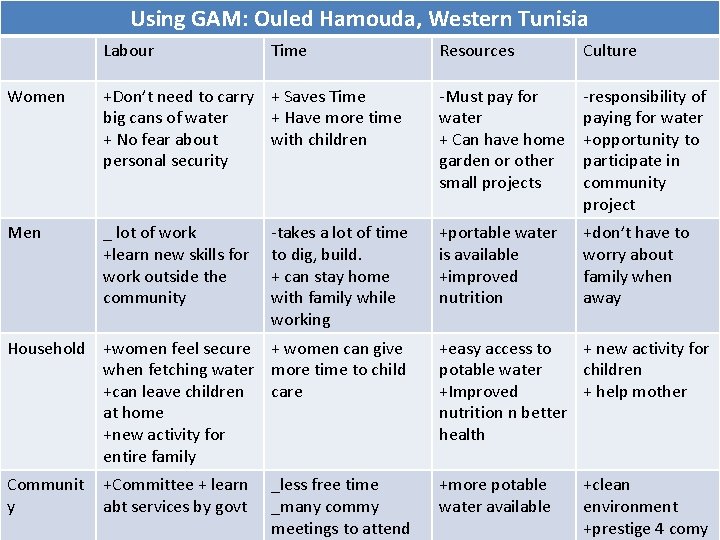
Using GAM: Ouled Hamouda, Western Tunisia Labour Time Resources Culture Women +Don’t need to carry + Saves Time big cans of water + Have more time + No fear about with children personal security -Must pay for water + Can have home garden or other small projects -responsibility of paying for water +opportunity to participate in community project Men _ lot of work +learn new skills for work outside the community +portable water is available +improved nutrition +don’t have to worry about family when away -takes a lot of time to dig, build. + can stay home with family while working Household +women feel secure + women can give when fetching water more time to child +can leave children care at home +new activity for entire family +easy access to + new activity for potable water children +Improved + help mother nutrition n better health Communit y +more potable water available +Committee + learn abt services by govt _less free time _many commy meetings to attend +clean environment +prestige 4 comy
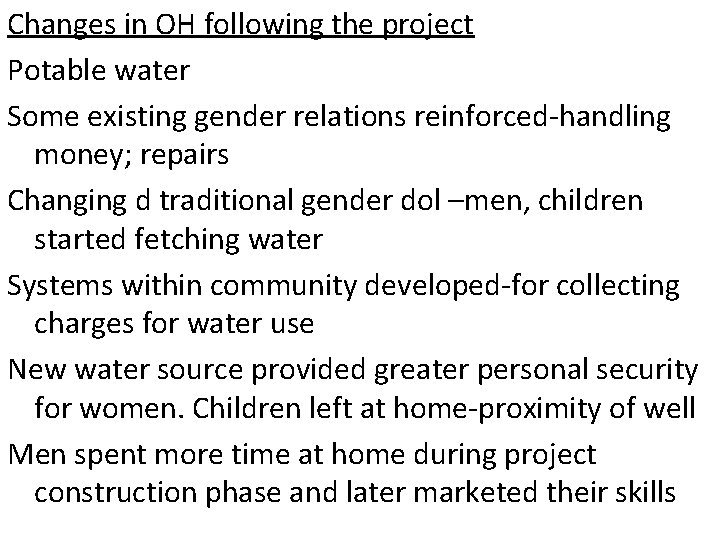
Changes in OH following the project Potable water Some existing gender relations reinforced-handling money; repairs Changing d traditional gender dol –men, children started fetching water Systems within community developed-for collecting charges for water use New water source provided greater personal security for women. Children left at home-proximity of well Men spent more time at home during project construction phase and later marketed their skills
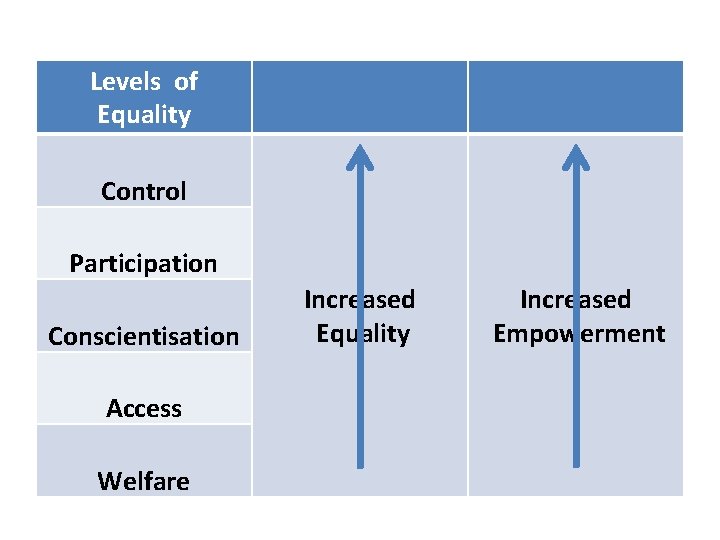
Women’s Empowerment Framework by Sarah Longwe
Levels of Equality Control Participation Conscientisation Access Welfare Increased Equality Increased Empowerment
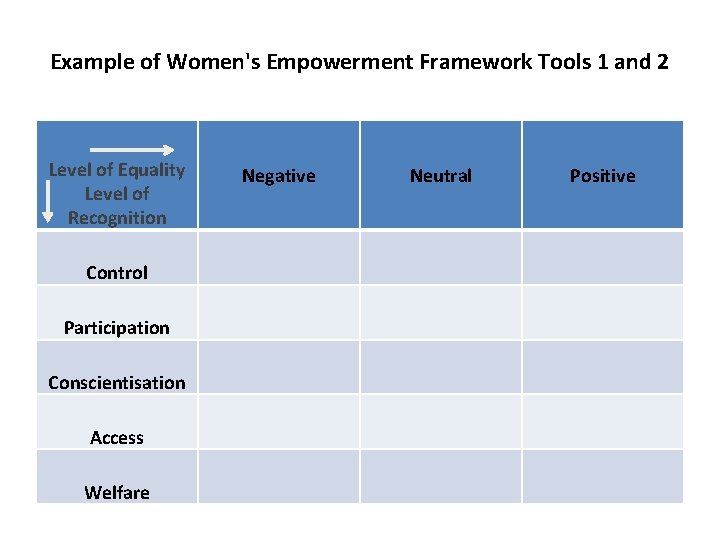
Example of Women's Empowerment Framework Tools 1 and 2 Level of Equality Level of Recognition Negative Neutral Positive Control Participation Conscientisation Access Welfare
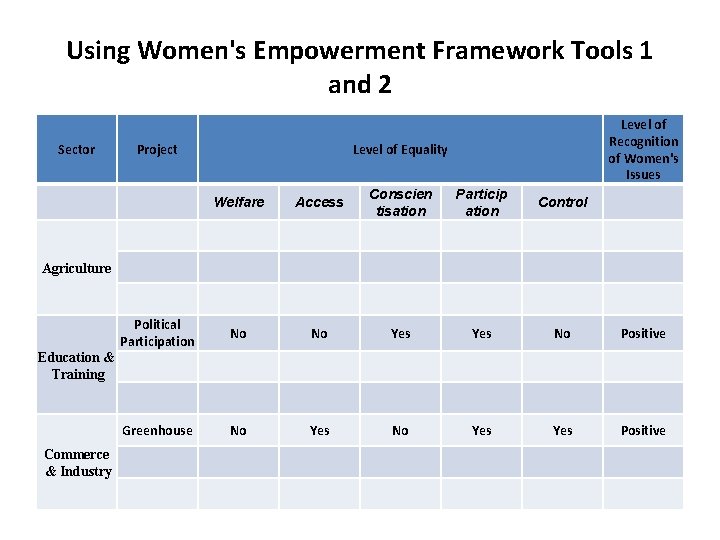
Using Women's Empowerment Framework Tools 1 and 2 Level of Recognition of Women's Issues Sector Project Welfare Access Conscien tisation Particip ation Control Political Participation No No Yes No Positive Greenhouse No Yes Yes Positive Agriculture Education & Training Commerce & Industry Level of Equality
Thank you