R C Patel Institute of Pharmaceutical Education and

- Slides: 28
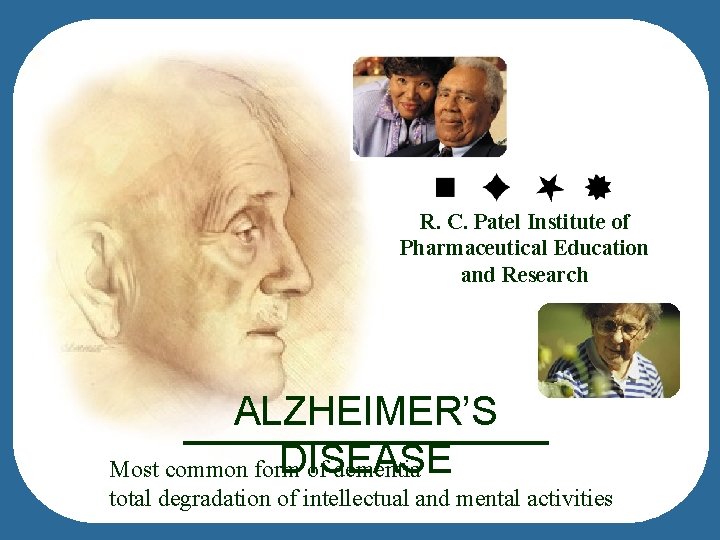
R. C. Patel Institute of Pharmaceutical Education and Research ALZHEIMER’S DISEASE Most common form of dementia total degradation of intellectual and mental activities
German neuropathologist & psychiatrist. In a 1906 lecture he first described the disease which now carries his name. Dr Alois Alzheimer 1864 - 1915
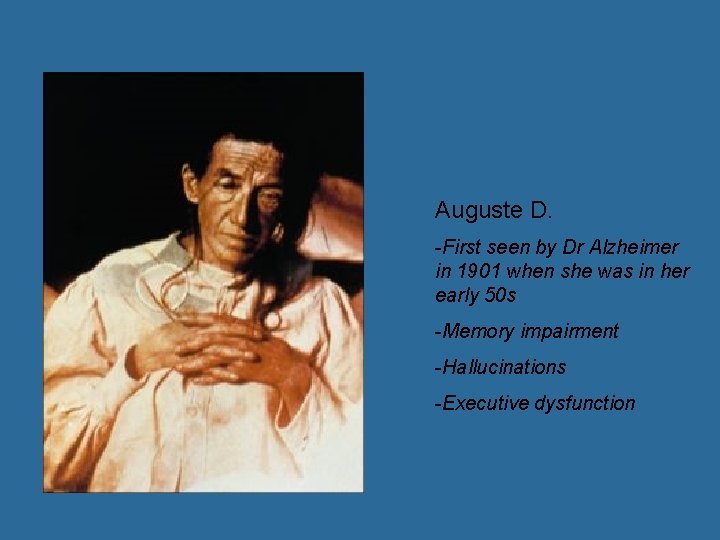
Auguste D. -First seen by Dr Alzheimer in 1901 when she was in her early 50 s -Memory impairment -Hallucinations -Executive dysfunction
What is AD? Alzheimer’s disease is an progressive nervous disorder that slowly impairs memory and cognition function. Slide 4
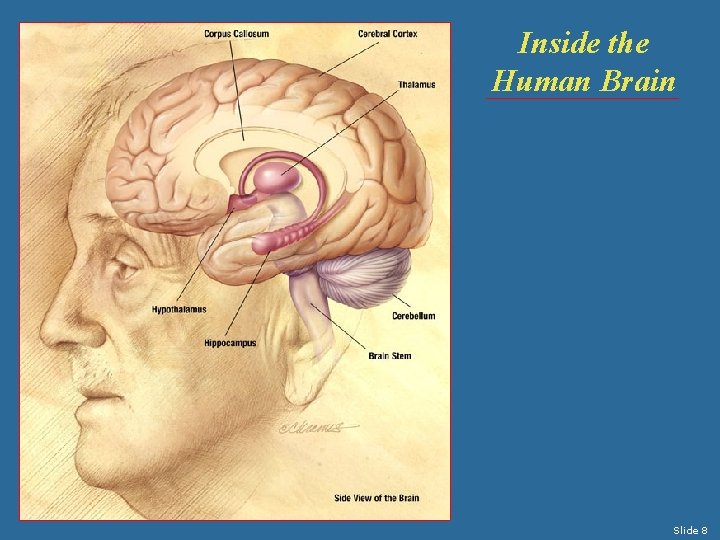
Inside the Human Brain Slide 8
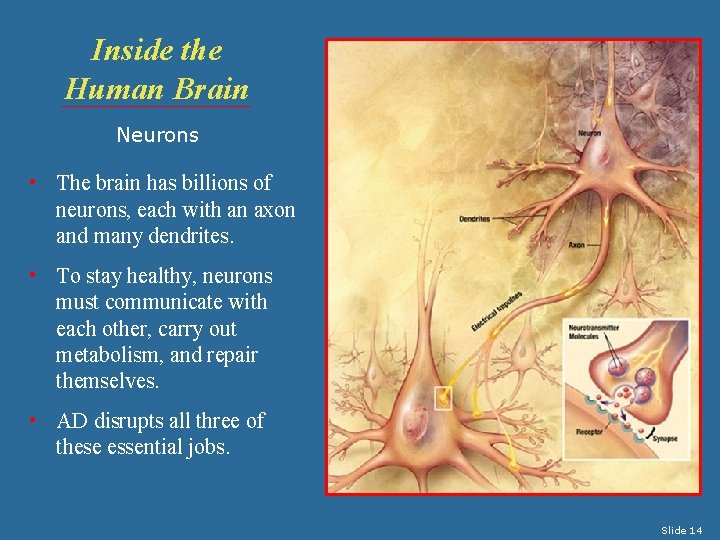
Inside the Human Brain Neurons • The brain has billions of neurons, each with an axon and many dendrites. • To stay healthy, neurons must communicate with each other, carry out metabolism, and repair themselves. • AD disrupts all three of these essential jobs. Slide 14
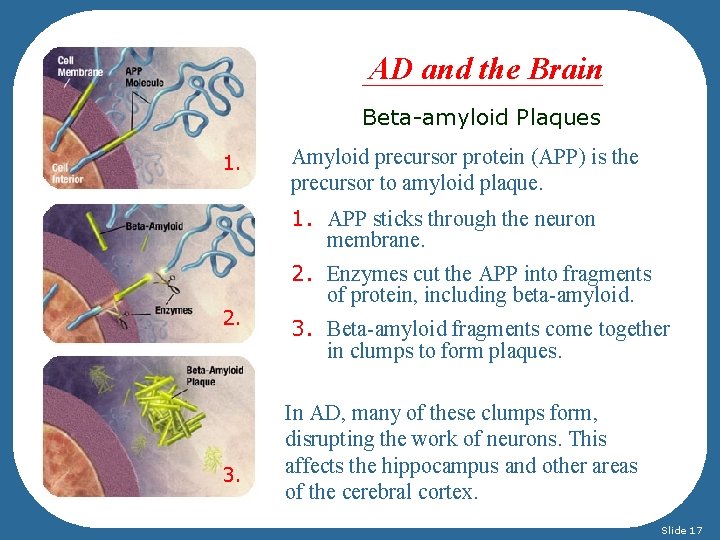
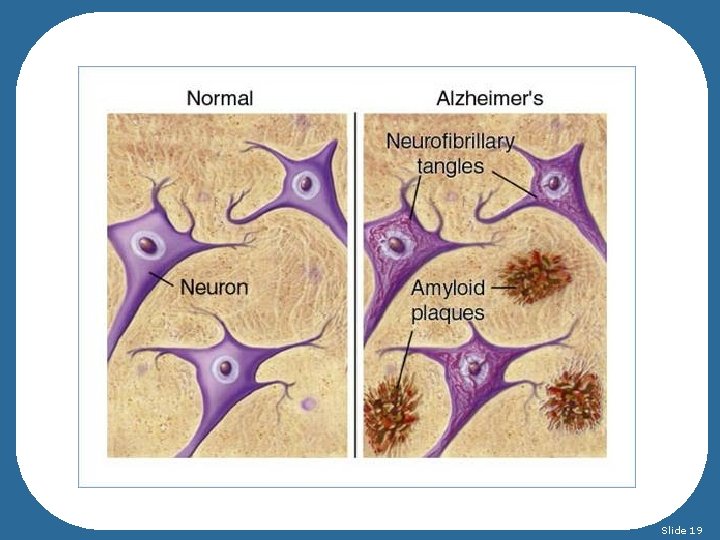
AD and the Brain Beta-amyloid Plaques 1. Amyloid precursor protein (APP) is the precursor to amyloid plaque. 1. APP sticks through the neuron membrane. 2. 3. 2. Enzymes cut the APP into fragments of protein, including beta-amyloid. 3. Beta-amyloid fragments come together in clumps to form plaques. In AD, many of these clumps form, disrupting the work of neurons. This affects the hippocampus and other areas of the cerebral cortex. Slide 17
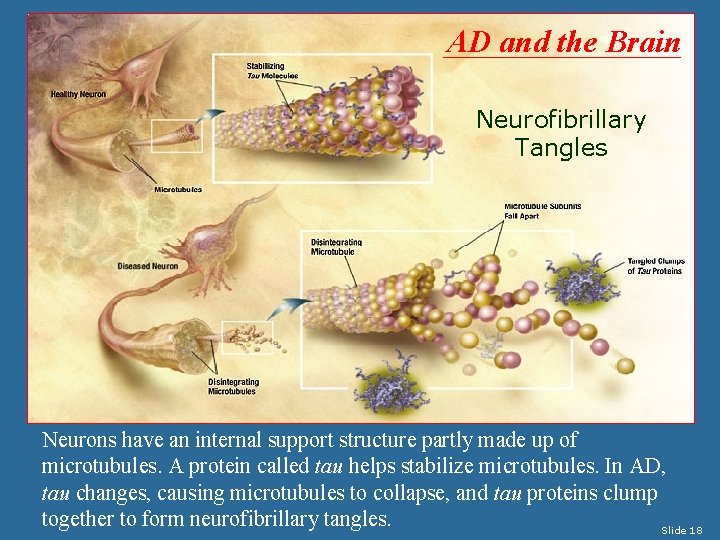
AD and the Brain Neurofibrillary Tangles Neurons have an internal support structure partly made up of microtubules. A protein called tau helps stabilize microtubules. In AD, tau changes, causing microtubules to collapse, and tau proteins clump together to form neurofibrillary tangles. Slide 18
Slide 19
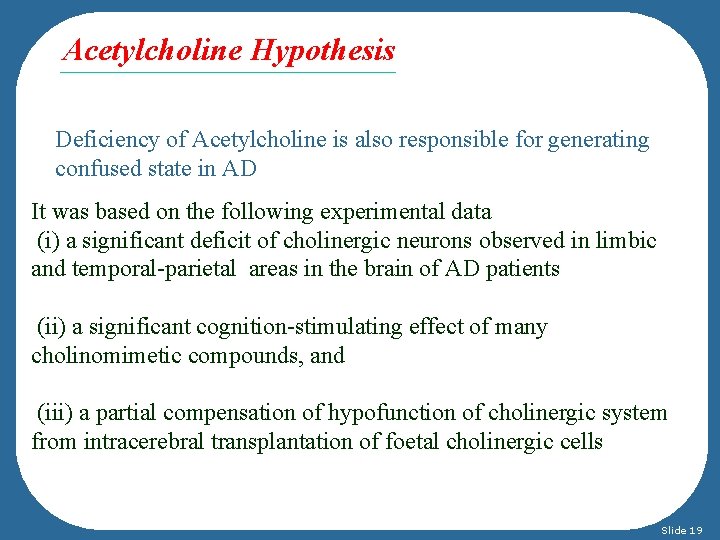
Acetylcholine Hypothesis Deficiency of Acetylcholine is also responsible for generating confused state in AD It was based on the following experimental data (i) a significant deficit of cholinergic neurons observed in limbic and temporal-parietal areas in the brain of AD patients (ii) a significant cognition-stimulating effect of many cholinomimetic compounds, and (iii) a partial compensation of hypofunction of cholinergic system from intracerebral transplantation of foetal cholinergic cells Slide 19
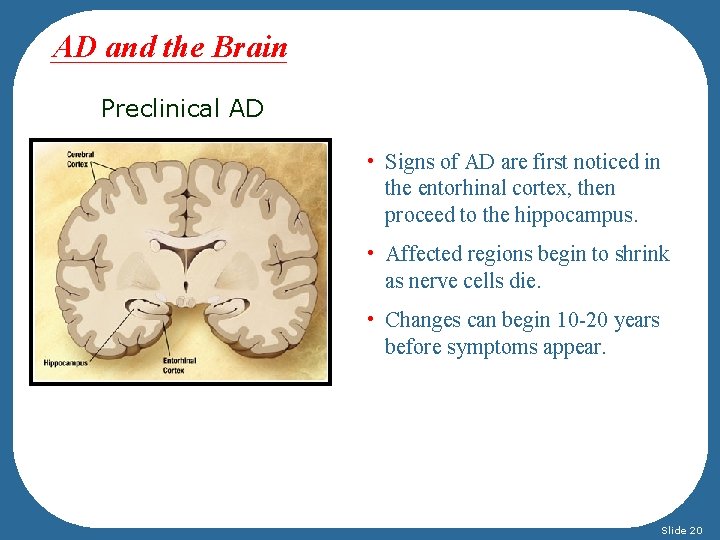
AD and the Brain Preclinical AD • Signs of AD are first noticed in the entorhinal cortex, then proceed to the hippocampus. • Affected regions begin to shrink as nerve cells die. • Changes can begin 10 -20 years before symptoms appear. Slide 20
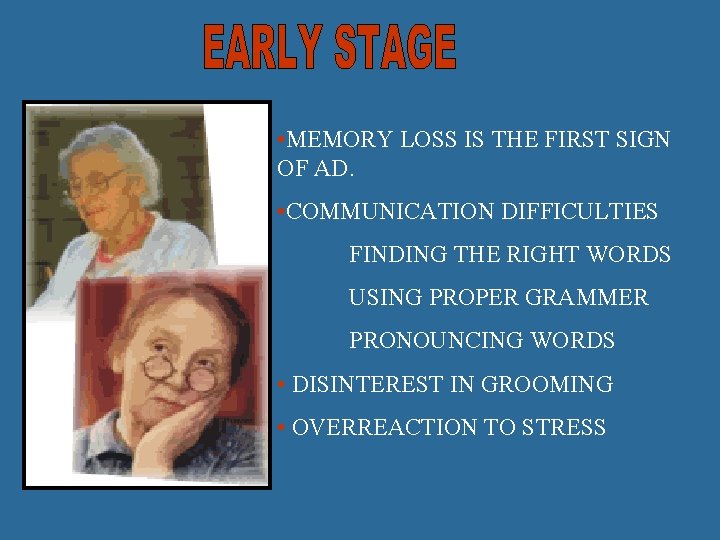
• MEMORY LOSS IS THE FIRST SIGN OF AD. • COMMUNICATION DIFFICULTIES FINDING THE RIGHT WORDS USING PROPER GRAMMER PRONOUNCING WORDS • DISINTEREST IN GROOMING • OVERREACTION TO STRESS
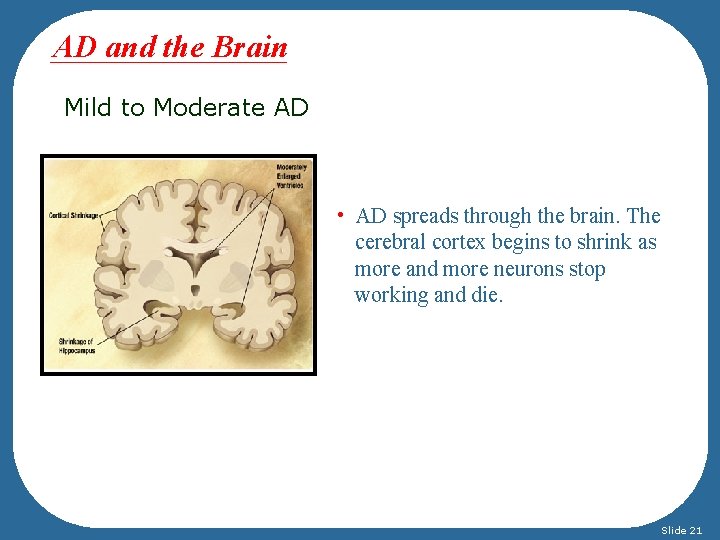
AD and the Brain Mild to Moderate AD • AD spreads through the brain. The cerebral cortex begins to shrink as more and more neurons stop working and die. Slide 21
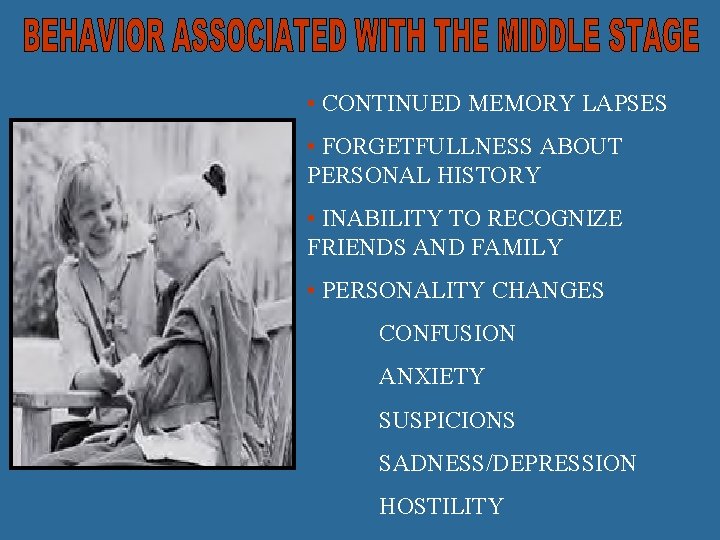
• CONTINUED MEMORY LAPSES • FORGETFULLNESS ABOUT PERSONAL HISTORY • INABILITY TO RECOGNIZE FRIENDS AND FAMILY • PERSONALITY CHANGES CONFUSION ANXIETY SUSPICIONS SADNESS/DEPRESSION HOSTILITY
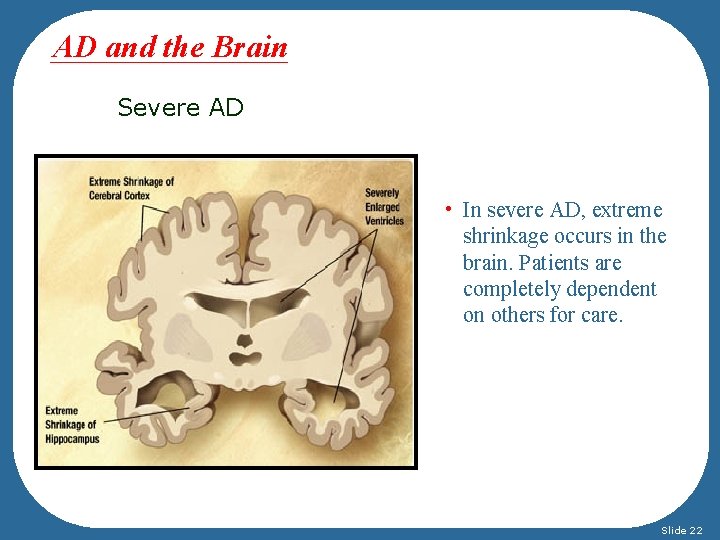
AD and the Brain Severe AD • In severe AD, extreme shrinkage occurs in the brain. Patients are completely dependent on others for care. Slide 22
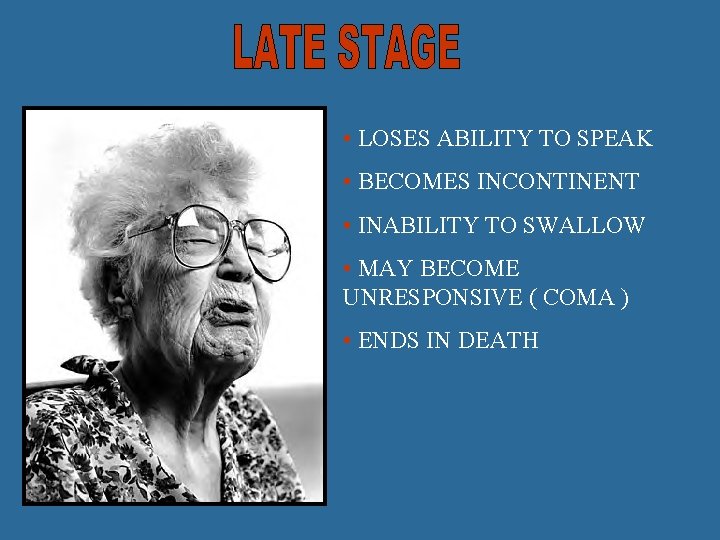
• LOSES ABILITY TO SPEAK • BECOMES INCONTINENT • INABILITY TO SWALLOW • MAY BECOME UNRESPONSIVE ( COMA ) • ENDS IN DEATH
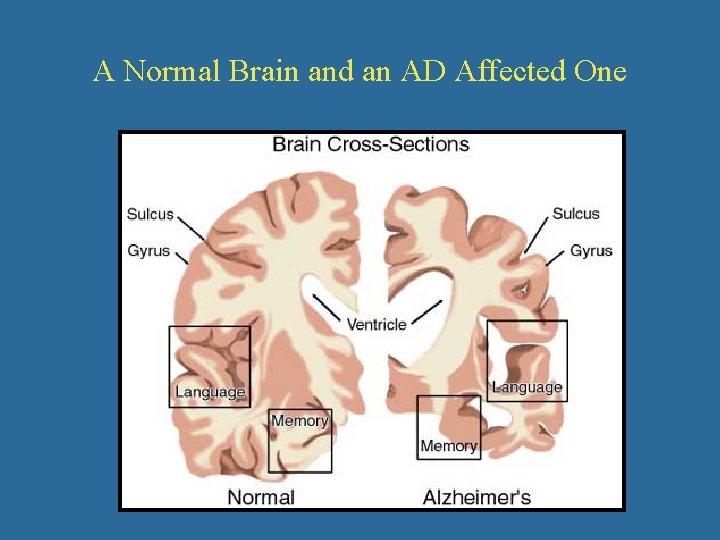
A Normal Brain and an AD Affected One
Treatment of Alzheimer’s Disease • Anti-Cholinestrase • Nootropic Agents (Cognition Enhancer) • Vasoactive Cerebral Protector • Glutamate Antagonist • Beta Amyloid Synthesis Inhibitors • Tau Fibrillation Inhibitor
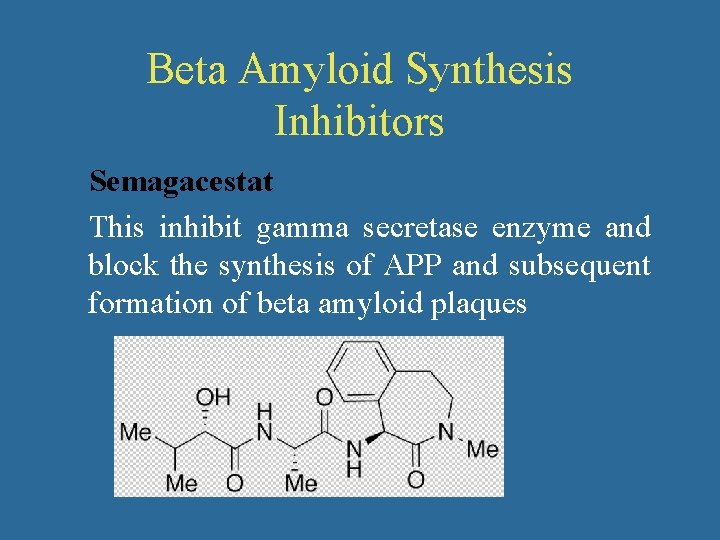
Beta Amyloid Synthesis Inhibitors Semagacestat This inhibit gamma secretase enzyme and block the synthesis of APP and subsequent formation of beta amyloid plaques
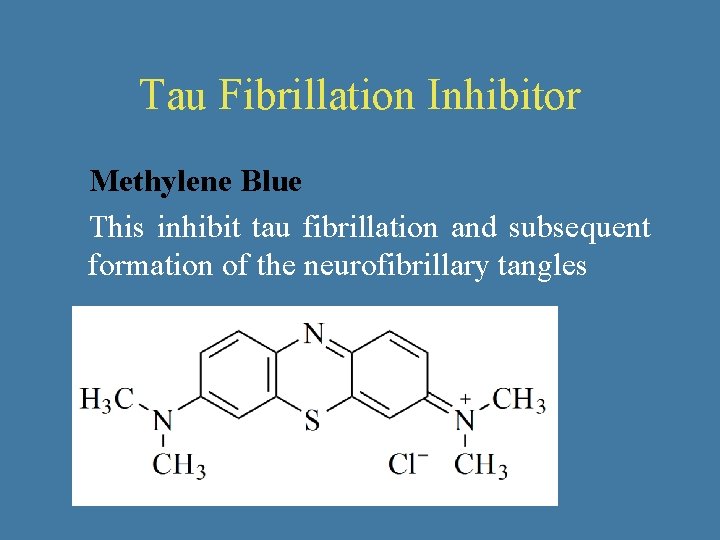
Tau Fibrillation Inhibitor Methylene Blue This inhibit tau fibrillation and subsequent formation of the neurofibrillary tangles
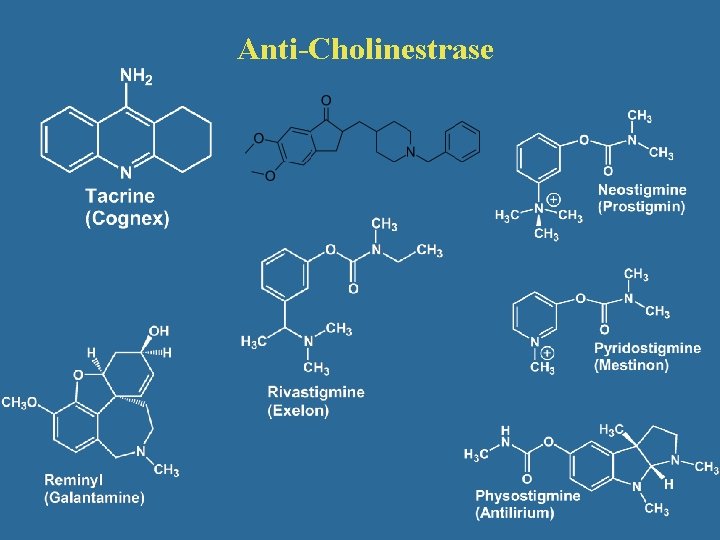
Anti-Cholinestrase
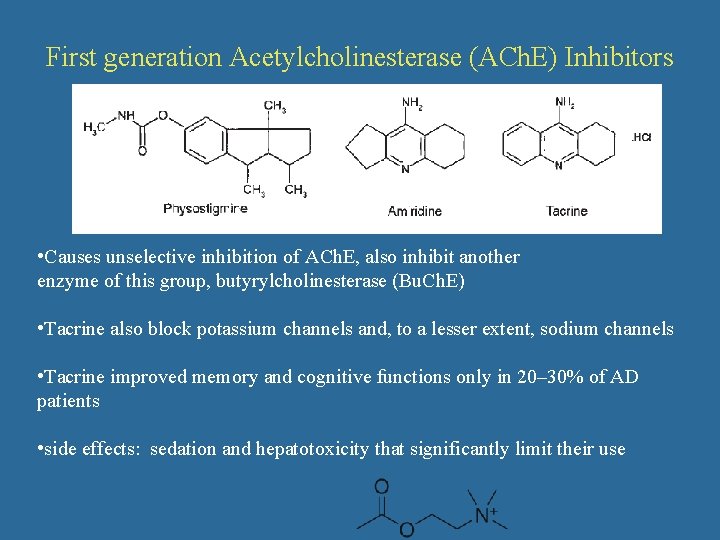
First generation Acetylcholinesterase (ACh. E) Inhibitors • Causes unselective inhibition of ACh. E, also inhibit another enzyme of this group, butyrylcholinesterase (Bu. Ch. E) • Tacrine also block potassium channels and, to a lesser extent, sodium channels • Tacrine improved memory and cognitive functions only in 20– 30% of AD patients • side effects: sedation and hepatotoxicity that significantly limit their use
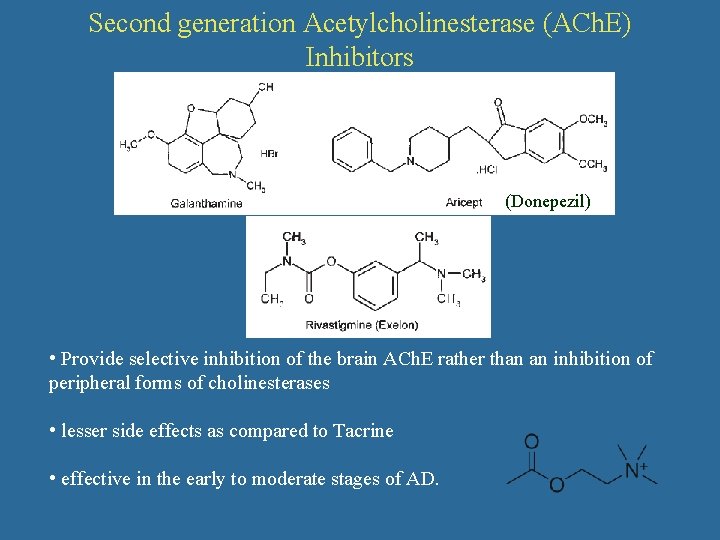
Second generation Acetylcholinesterase (ACh. E) Inhibitors (Donepezil) • Provide selective inhibition of the brain ACh. E rather than an inhibition of peripheral forms of cholinesterases • lesser side effects as compared to Tacrine • effective in the early to moderate stages of AD.
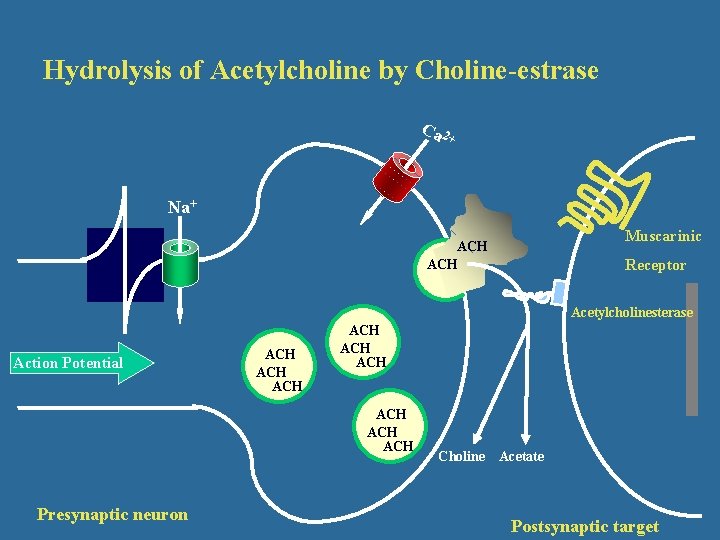
Hydrolysis of Acetylcholine by Choline-estrase Ca 2 + Na+ Muscarinic ACH Receptor Acetylcholinesterase Action Potential ACH ACH ACH Presynaptic neuron Choline Acetate Postsynaptic target
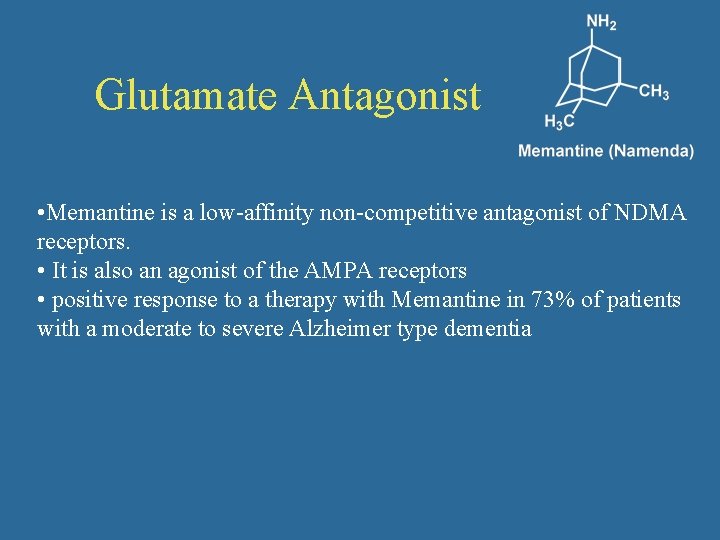
Glutamate Antagonist • Memantine is a low-affinity non-competitive antagonist of NDMA receptors. • It is also an agonist of the AMPA receptors • positive response to a therapy with Memantine in 73% of patients with a moderate to severe Alzheimer type dementia
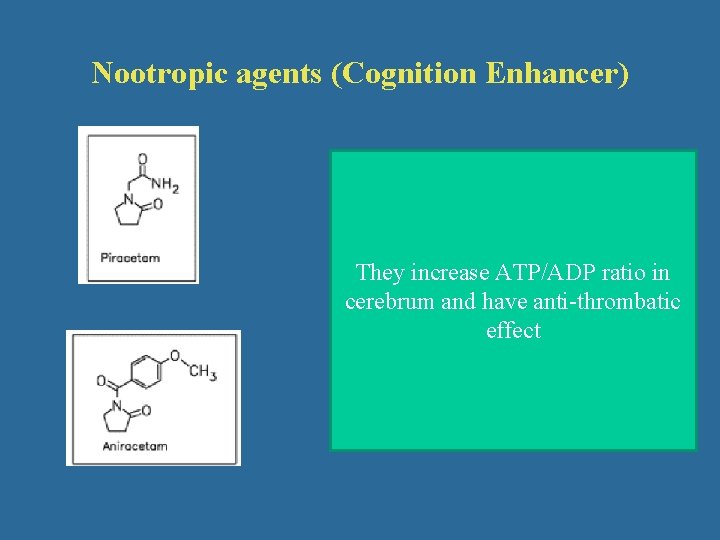
Nootropic agents (Cognition Enhancer) They increase ATP/ADP ratio in cerebrum and have anti-thrombatic effect
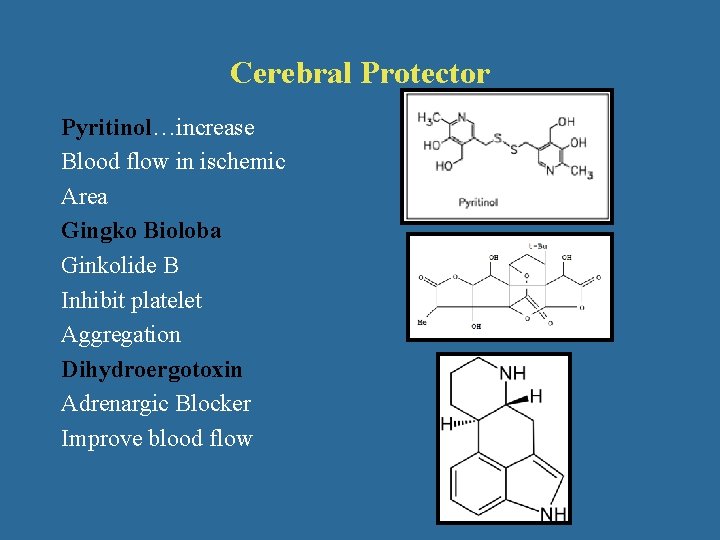
Cerebral Protector Pyritinol…increase Blood flow in ischemic Area Gingko Bioloba Ginkolide B Inhibit platelet Aggregation Dihydroergotoxin Adrenargic Blocker Improve blood flow
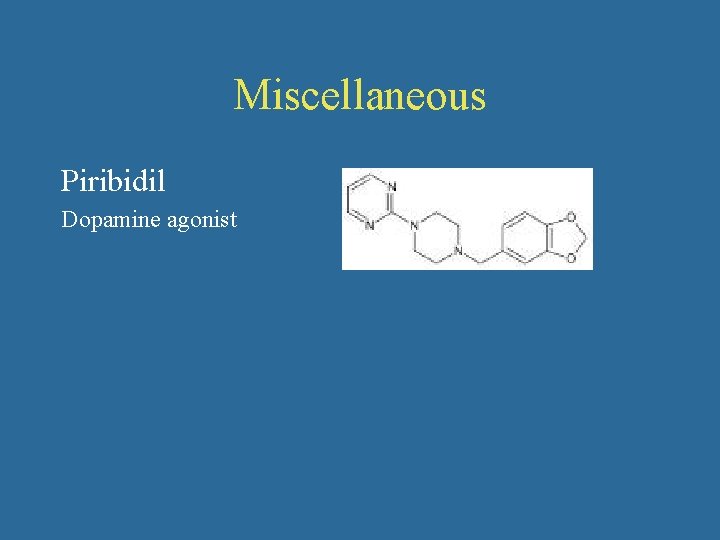
Miscellaneous Piribidil Dopamine agonist