
Assessment Feedback and Evaluation Vinod Patel John Morrissey
Assessment, Feedback and Evaluation Vinod Patel & John Morrissey 1
Learning outcomes By the end of this session you will be able to : • Define assessment, feedback and evaluation • Discuss how these are related and how they differ • Discuss the application of each in clinical education. • Begin to apply them in practice 2
Lesson Plan • Definitions • Assessment : theory & practice • Tea break • Feedback • Evaluation : theory & practice • Questions and close 3
Definitions ? • Assessment ? • Feedback • Evaluation ? 4
Assessment : definition “The processes and instruments applied to measure the learner’s achievements, normally after they have worked through a learning programme of one sort or another” Mohanna K et al (2004) Teaching Made Easy – a manual for health professionals 5
Feedback : definition “Specific information about the comparison between a trainee’s observed performance and a standard, given with the intent to improve the trainee’s performance” Van de Ridder JM et al (2008) Med Educ 42(2): 189 6
Evaluation : definition “A systematic approach to the collection, analysis and interpretation of information about any aspect of the conceptualisation, design, implementation and utility of educational programmes” Mohanna K et al (2004) Teaching Made Easy – a manual for health professionals 7
Part 1 Assessment 8
In this section: • • • Purposes of assessment Miller’s pyramid The utility function 9
Why assess ? 10
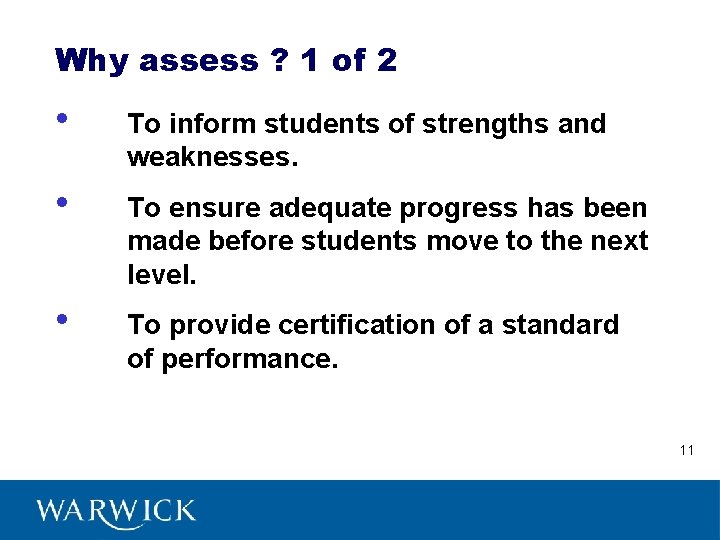
Why assess ? 1 of 2 • To inform students of strengths and weaknesses. • To ensure adequate progress has been made before students move to the next level. • To provide certification of a standard of performance. 11
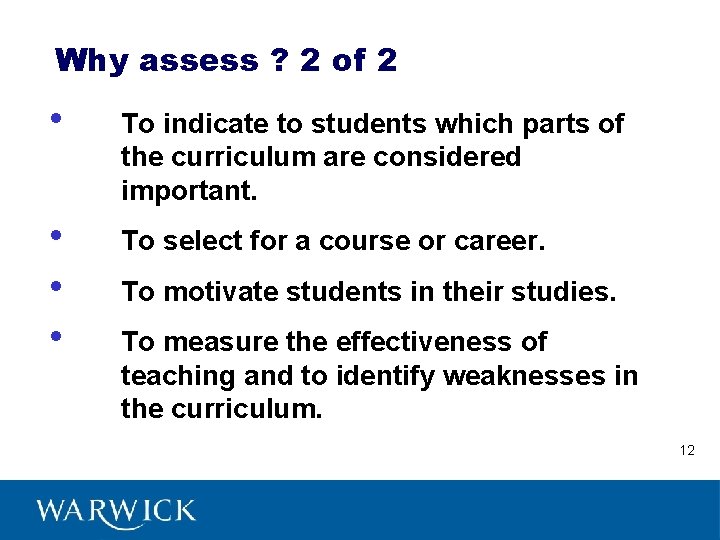
Why assess ? 2 of 2 • To indicate to students which parts of the curriculum are considered important. • • • To select for a course or career. To motivate students in their studies. To measure the effectiveness of teaching and to identify weaknesses in the curriculum. 12
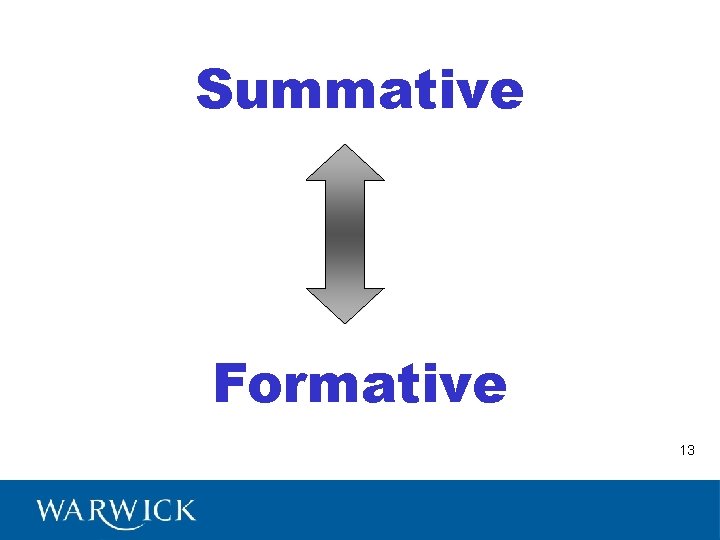
Summative Formative 13
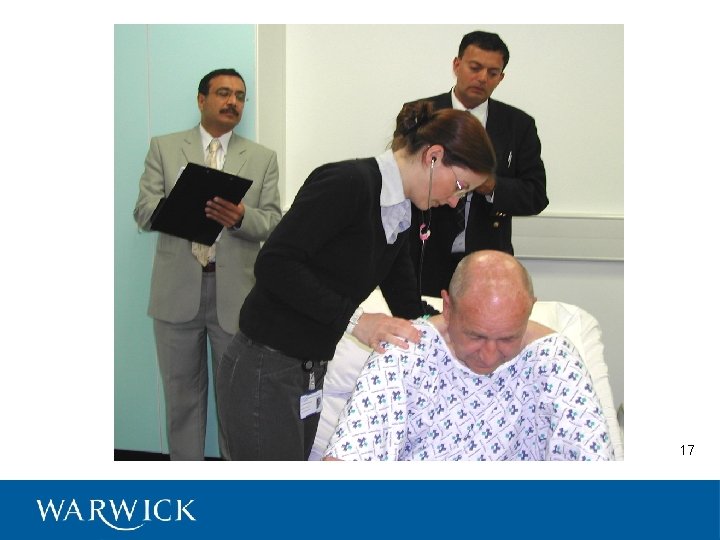
Clinical Education : Assessment Methods • • • Written Assessments Observed clinical practice Others : • Vivas • Portfolios • … 14
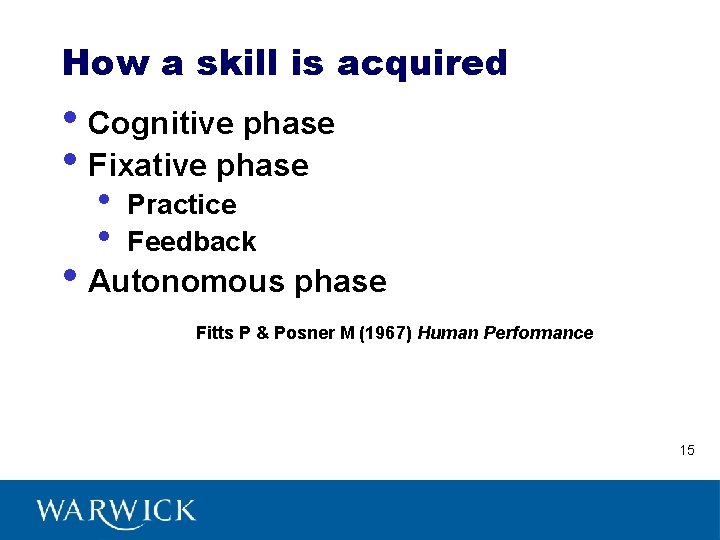
How a skill is acquired • Cognitive phase • Fixative phase • • Practice Feedback • Autonomous phase Fitts P & Posner M (1967) Human Performance 15
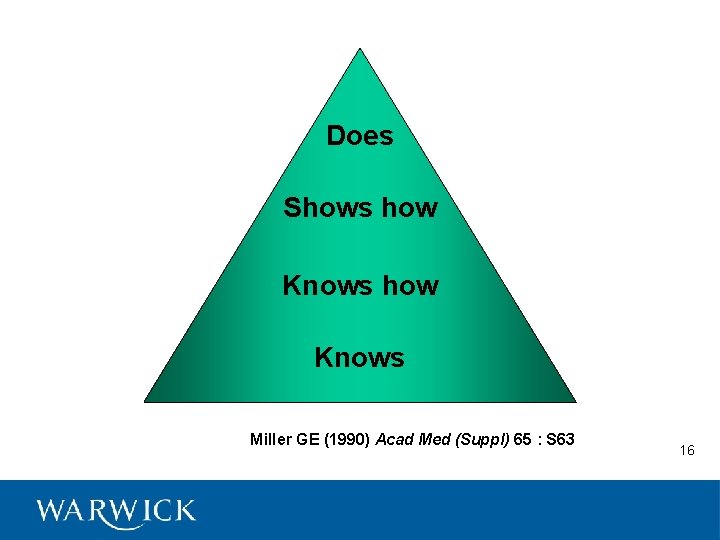
Does Shows how Knows Miller GE (1990) Acad Med (Suppl) 65 : S 63 16
17

18
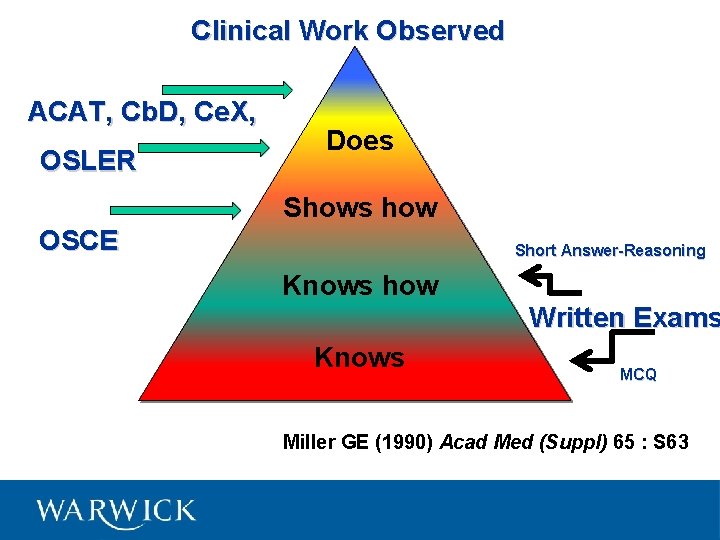
Clinical Work Observed ACAT, Cb. D, Ce. X, OSLER Does Shows how OSCE Short Answer-Reasoning Knows how Written Exams Knows MCQ Miller GE (1990) Acad Med (Suppl) 65 : S 63
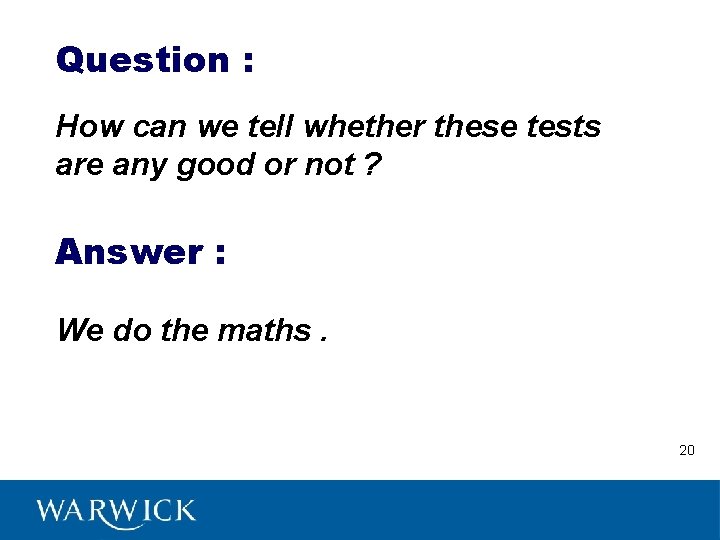
Question : How can we tell whether these tests are any good or not ? Answer : We do the maths. 20
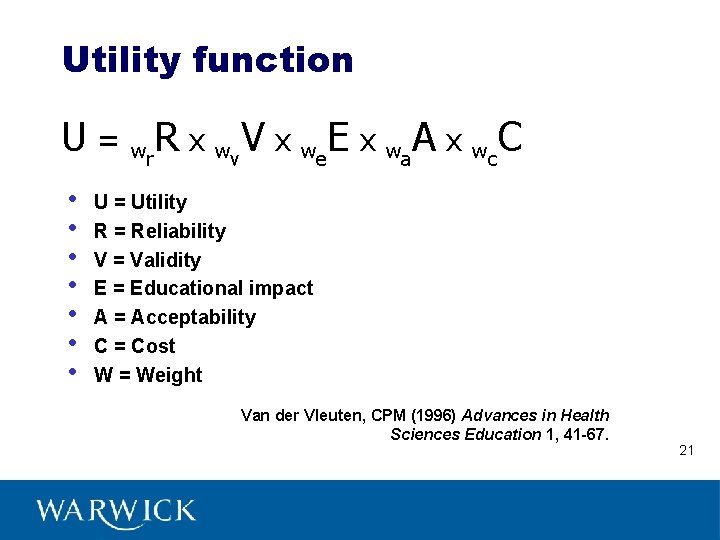
Utility function U = w r R x w v. V x w e E x w a A x w c C • • U = Utility R = Reliability V = Validity E = Educational impact A = Acceptability C = Cost W = Weight Van der Vleuten, CPM (1996) Advances in Health Sciences Education 1, 41 -67. 21
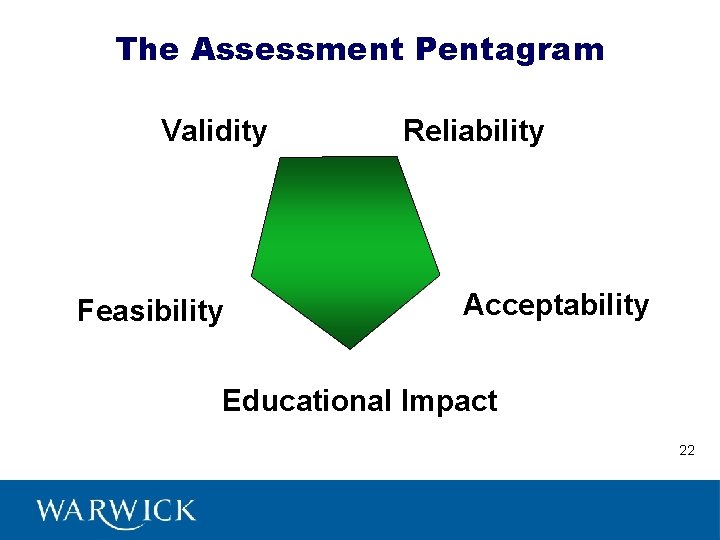
The Assessment Pentagram Validity Feasibility Reliability Acceptability Educational Impact 22
Validity & reliability • • Validity : the extent to which the competence that the test claims to measure is actually being measured. Reliability : the extent to which a test yields reproducible results. Schuwirth & van der Vleuten (2006) How to design a useful test : the principles of assessment 23
Validity : another definition “The degree to which empirical evidence and theoretical rationales support the adequacy and appropriateness of inferences and actions based on test scores or other modes of assessment. ” Messick (1994) Educational Researcher 23 : 13 24
Some causes of low validity • • • Vague or misleading instructions to candidates. Inappropriate or overcomplicated wording. Too few test items. Insufficient time. Inappropriate content. Items too easy or too difficult. Mc. Aleer (2005) Choosing Assessment Instruments 25
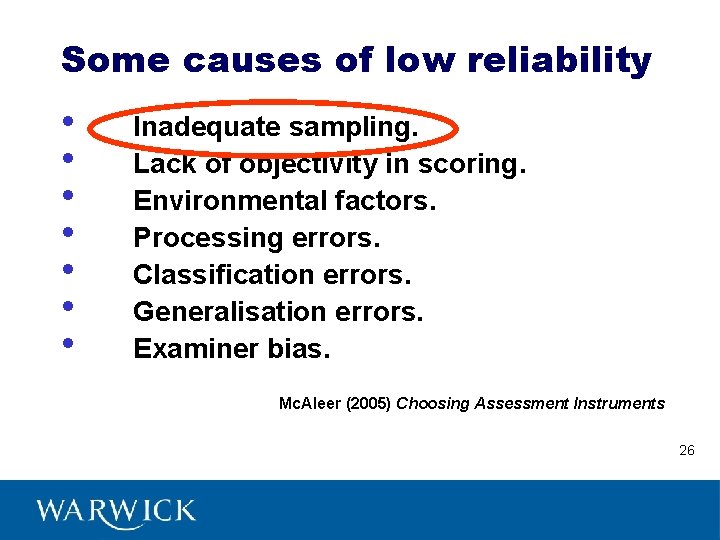
Some causes of low reliability • • Inadequate sampling. Lack of objectivity in scoring. Environmental factors. Processing errors. Classification errors. Generalisation errors. Examiner bias. Mc. Aleer (2005) Choosing Assessment Instruments 26
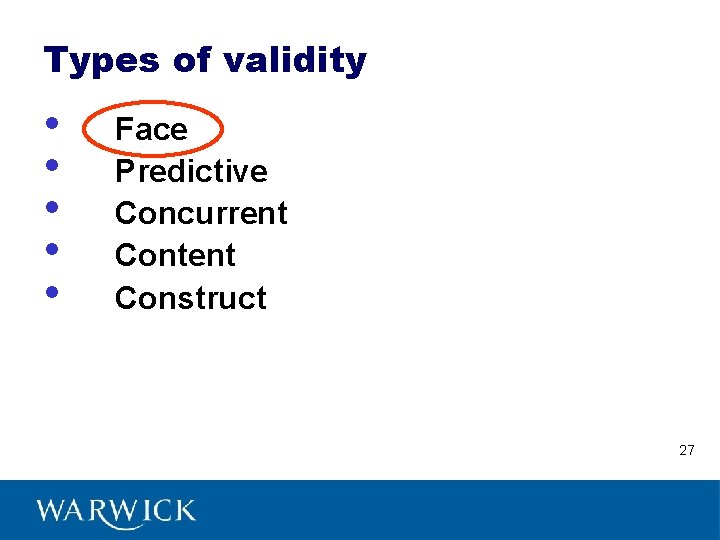
Types of validity • • • Face Predictive Concurrent Content Construct 27
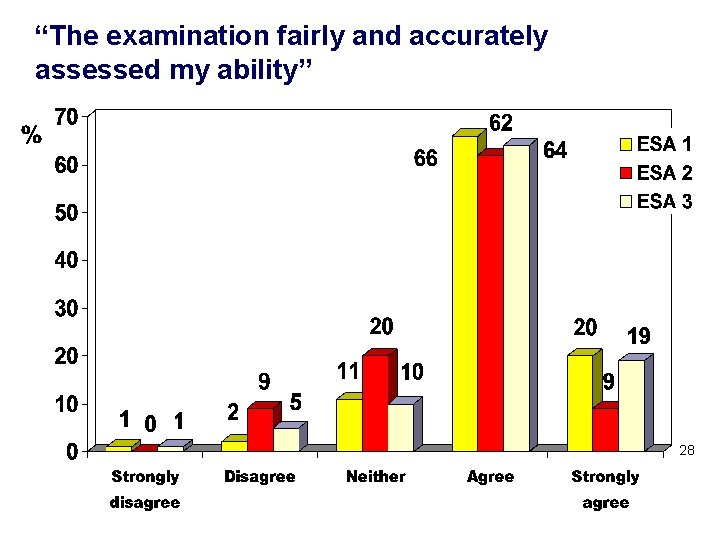
“The examination fairly and accurately assessed my ability” 28
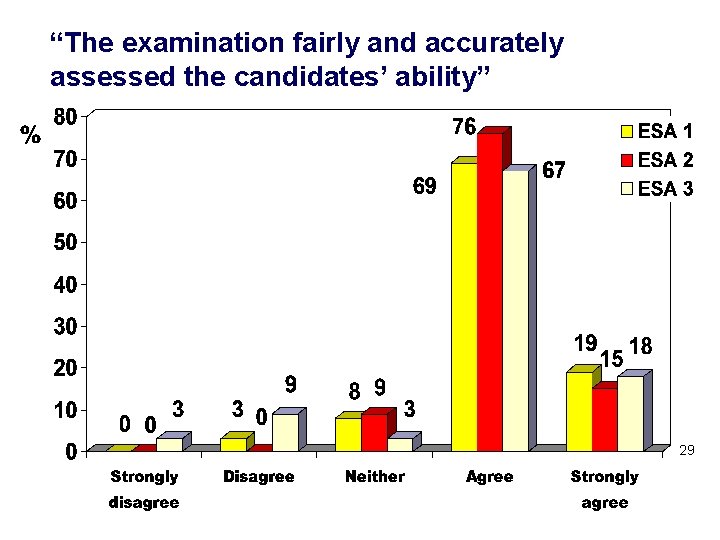
“The examination fairly and accurately assessed the candidates’ ability” 29
Problem : Appearances can be deceptive. 30
Types of reliability • • Test-retest Equivalent forms Split-half Interrater and intrarater 31
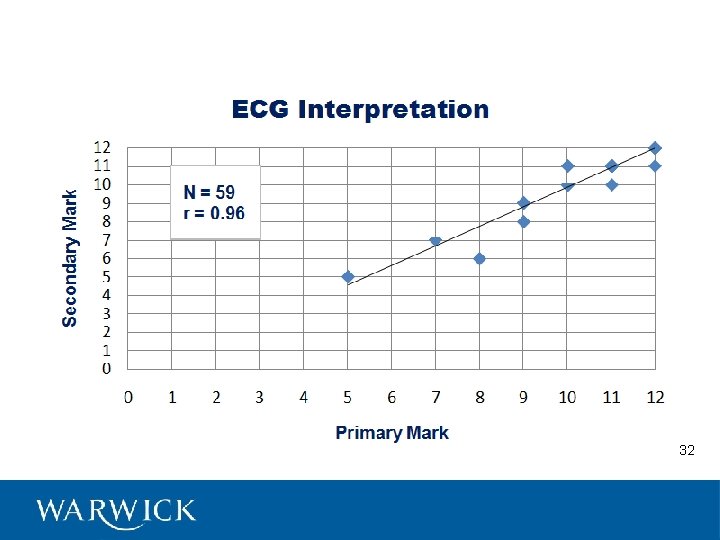
32
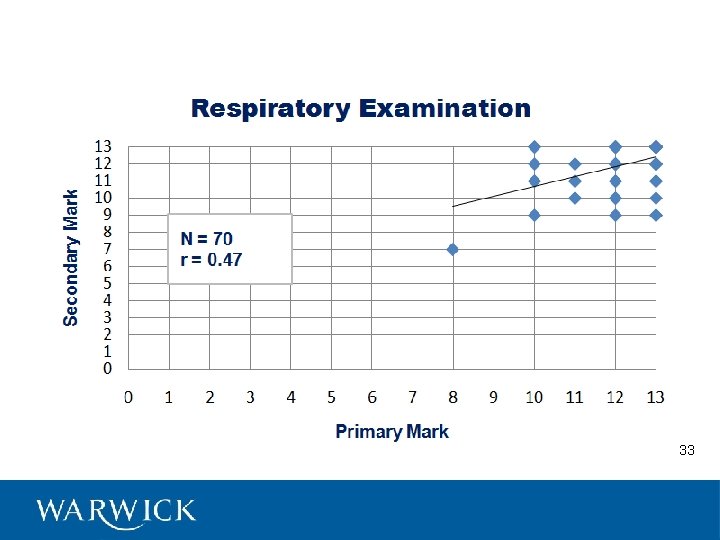
33
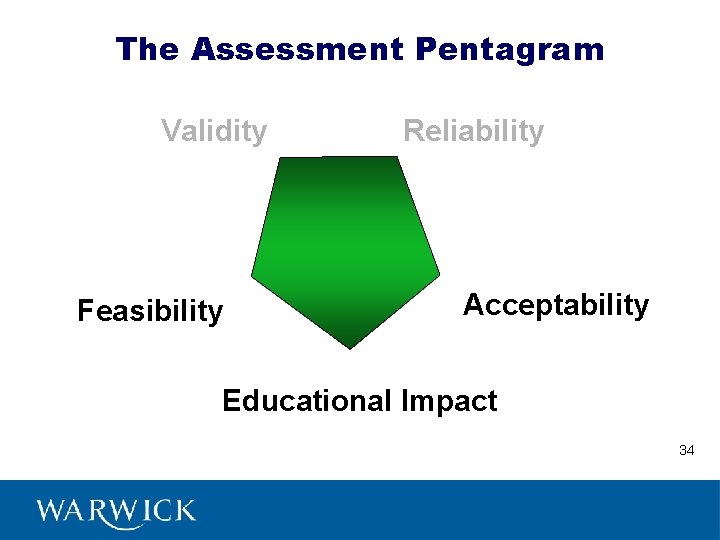
The Assessment Pentagram Validity Feasibility Reliability Acceptability Educational Impact 34
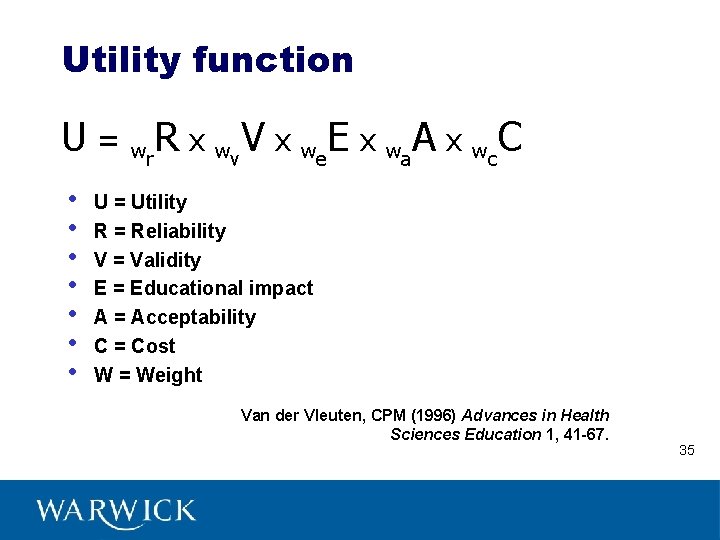
Utility function U = w r R x w v. V x w e E x w a A x w c C • • U = Utility R = Reliability V = Validity E = Educational impact A = Acceptability C = Cost W = Weight Van der Vleuten, CPM (1996) Advances in Health Sciences Education 1, 41 -67. 35
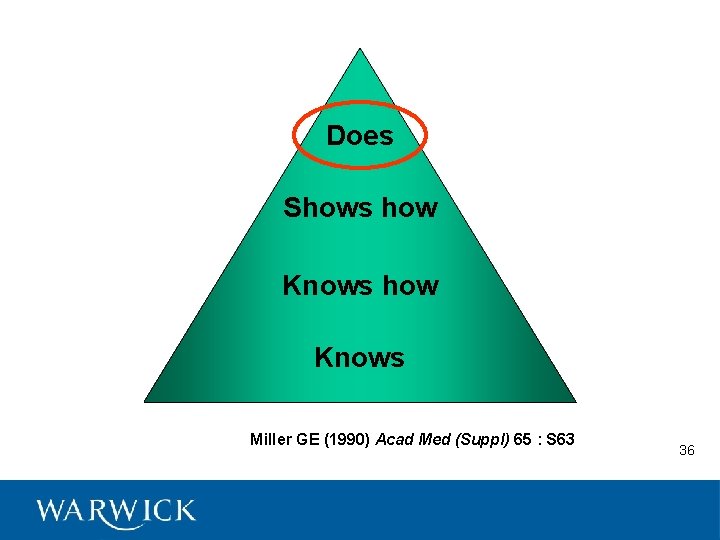
Does Shows how Knows Miller GE (1990) Acad Med (Suppl) 65 : S 63 36
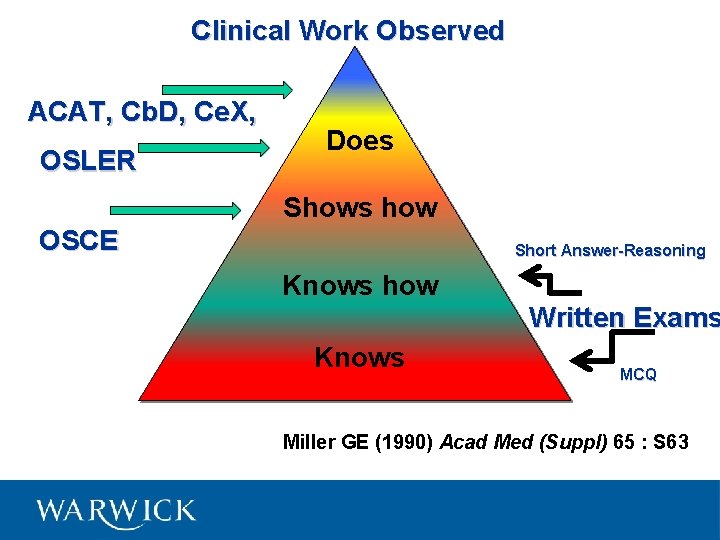
Clinical Work Observed ACAT, Cb. D, Ce. X, OSLER Does Shows how OSCE Short Answer-Reasoning Knows how Written Exams Knows MCQ Miller GE (1990) Acad Med (Suppl) 65 : S 63
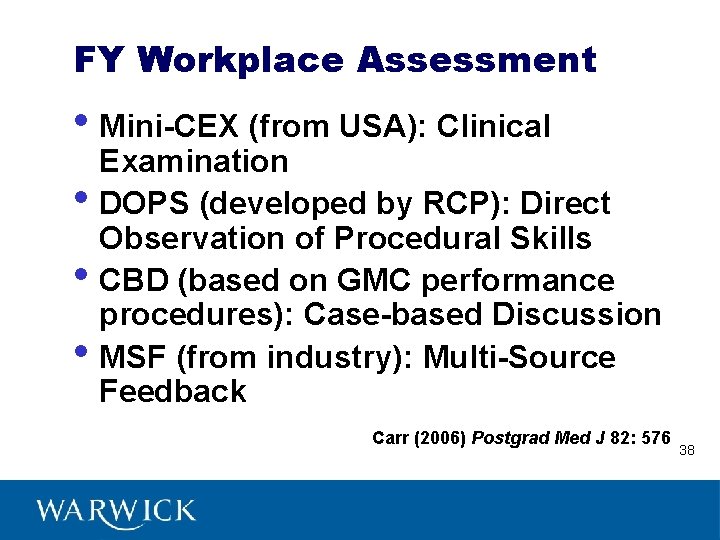
FY Workplace Assessment • Mini-CEX (from USA): Clinical • • • Examination DOPS (developed by RCP): Direct Observation of Procedural Skills CBD (based on GMC performance procedures): Case-based Discussion MSF (from industry): Multi-Source Feedback Carr (2006) Postgrad Med J 82: 576 38
Practical Exercise 39
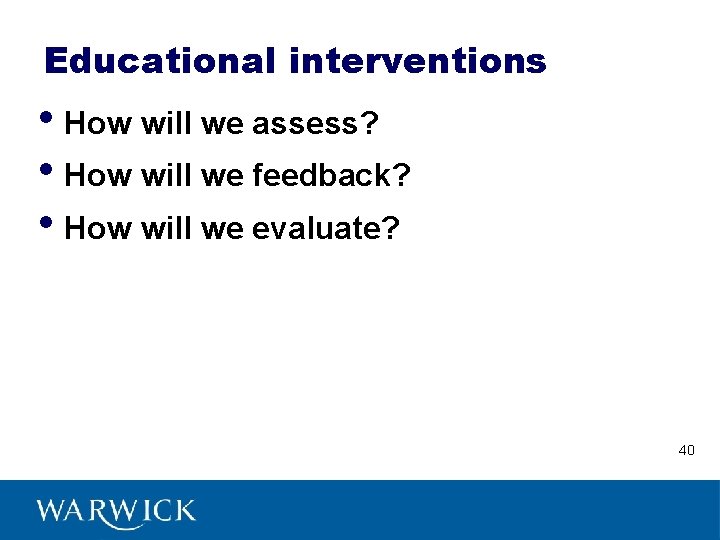
Educational interventions • How will we assess? • How will we feedback? • How will we evaluate? 40
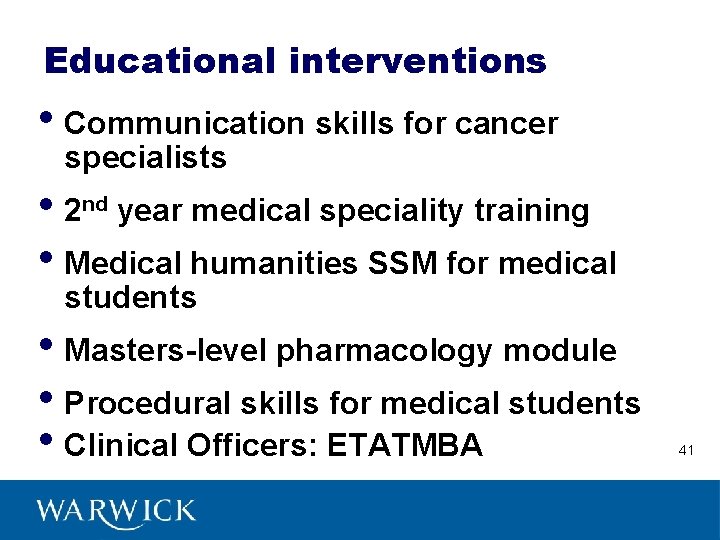
Educational interventions • Communication skills for cancer specialists • 2 nd year medical speciality training • Medical humanities SSM for medical students • Masters-level pharmacology module • Procedural skills for medical students • Clinical Officers: ETATMBA 41
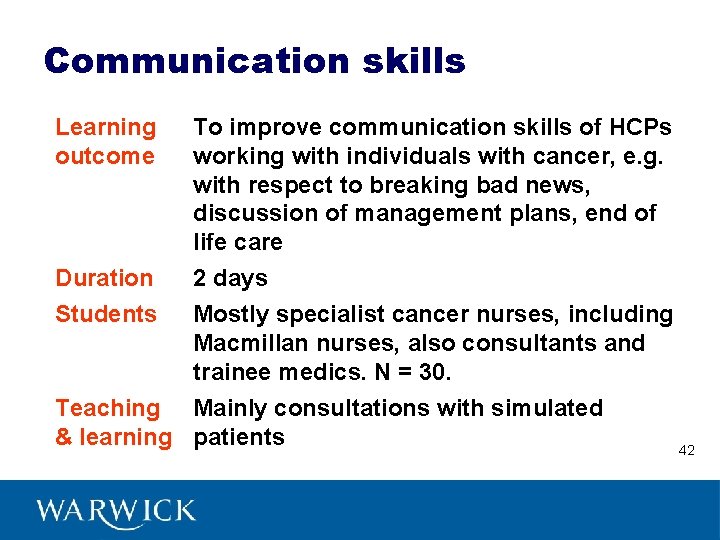
Communication skills Learning outcome To improve communication skills of HCPs working with individuals with cancer, e. g. with respect to breaking bad news, discussion of management plans, end of life care Duration 2 days Students Mostly specialist cancer nurses, including Macmillan nurses, also consultants and trainee medics. N = 30. Teaching Mainly consultations with simulated & learning patients 42
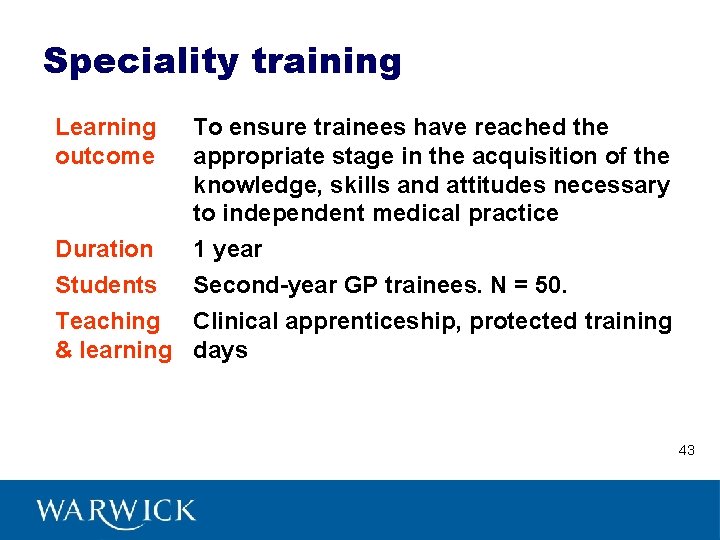
Speciality training Learning outcome To ensure trainees have reached the appropriate stage in the acquisition of the knowledge, skills and attitudes necessary to independent medical practice Duration 1 year Students Second-year GP trainees. N = 50. Teaching Clinical apprenticeship, protected training & learning days 43
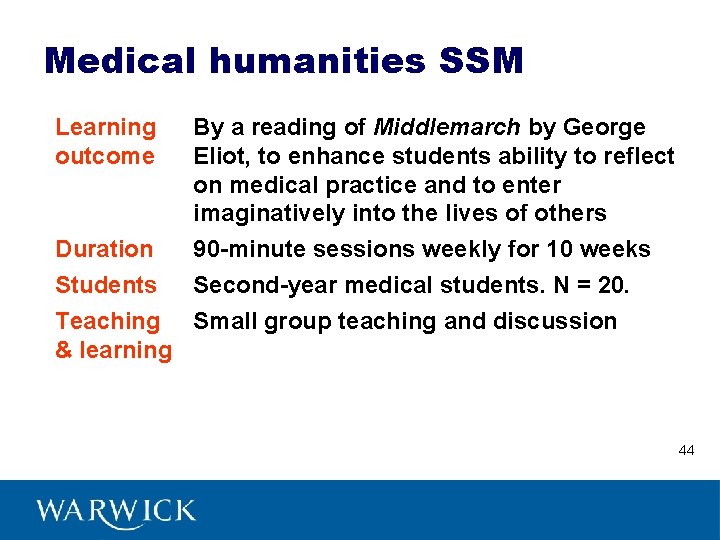
Medical humanities SSM Learning outcome By a reading of Middlemarch by George Eliot, to enhance students ability to reflect on medical practice and to enter imaginatively into the lives of others Duration 90 -minute sessions weekly for 10 weeks Students Second-year medical students. N = 20. Teaching Small group teaching and discussion & learning 44
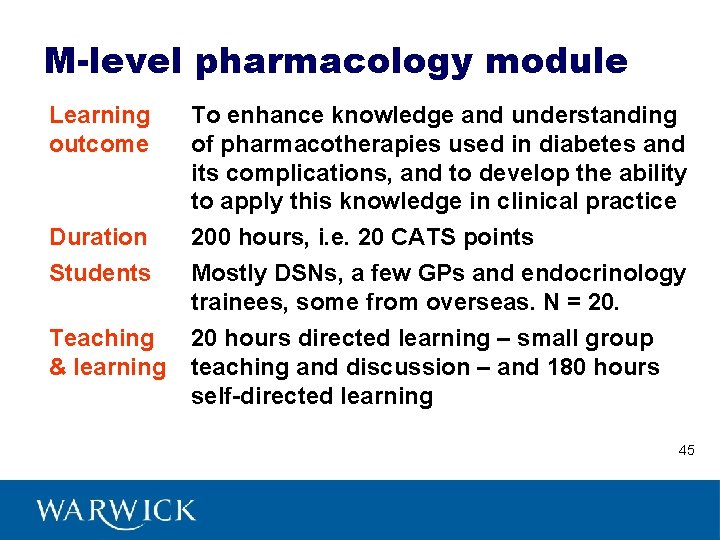
M-level pharmacology module Learning outcome Duration Students Teaching & learning To enhance knowledge and understanding of pharmacotherapies used in diabetes and its complications, and to develop the ability to apply this knowledge in clinical practice 200 hours, i. e. 20 CATS points Mostly DSNs, a few GPs and endocrinology trainees, some from overseas. N = 20. 20 hours directed learning – small group teaching and discussion – and 180 hours self-directed learning 45
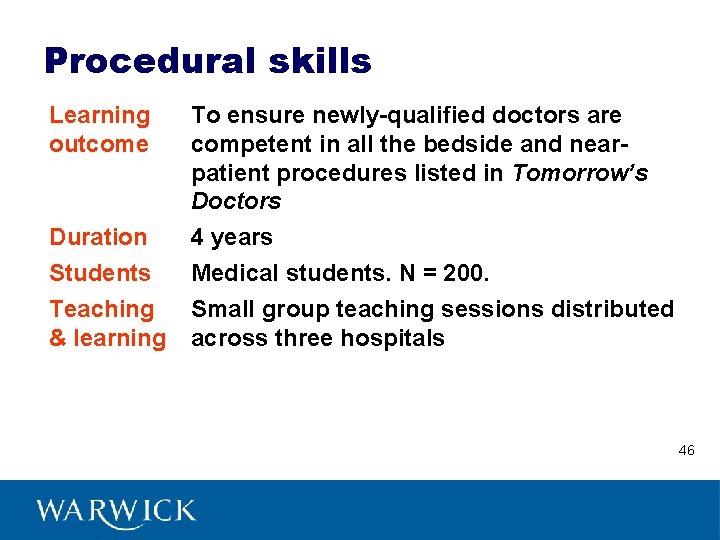
Procedural skills Learning outcome To ensure newly-qualified doctors are competent in all the bedside and nearpatient procedures listed in Tomorrow’s Doctors Duration 4 years Students Medical students. N = 200. Teaching & learning Small group teaching sessions distributed across three hospitals 46
Clinical Officers Learning outcome Duration Students To…………………………………………………… ……………………………. . x……… y…………. Teaching z……. & learning 47
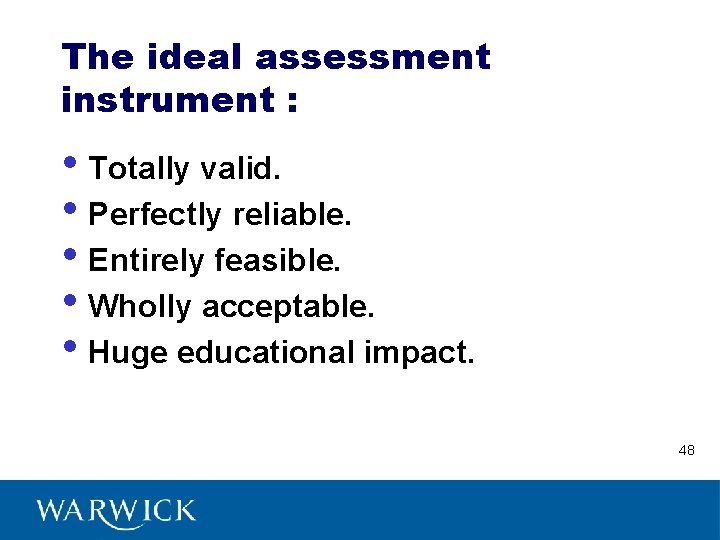
The ideal assessment instrument : • Totally valid. • Perfectly reliable. • Entirely feasible. • Wholly acceptable. • Huge educational impact. 48
Part 2 Feedback 49
Feedback : definition “Specific information about the comparison between a trainee’s observed performance and a standard, given with the intent to improve the trainee’s performance” Van de Ridder JM et al (2008) Med Educ 42(2): 189 50
Feedback : definition “Specific information about the comparison between a trainee’s observed performance and a standard, given with the intent to improve the trainee’s performance” Van de Ridder JM et al (2008) Med Educ 42(2): 189 51
Feedback : definition “Specific information about the comparison between a trainee’s observed performance and a standard, given with the intent to improve the trainee’s performance” Van de Ridder JM et al (2008) Med Educ 42(2): 189 52
Feedback : definition “Specific information about the comparison between a trainee’s observed performance and a standard, given with the intent to improve the trainee’s performance” Van de Ridder JM et al (2008) Med Educ 42(2): 189 53
In this section: • • • Importance of feedback How to give feedback: models How to improve feedback 54
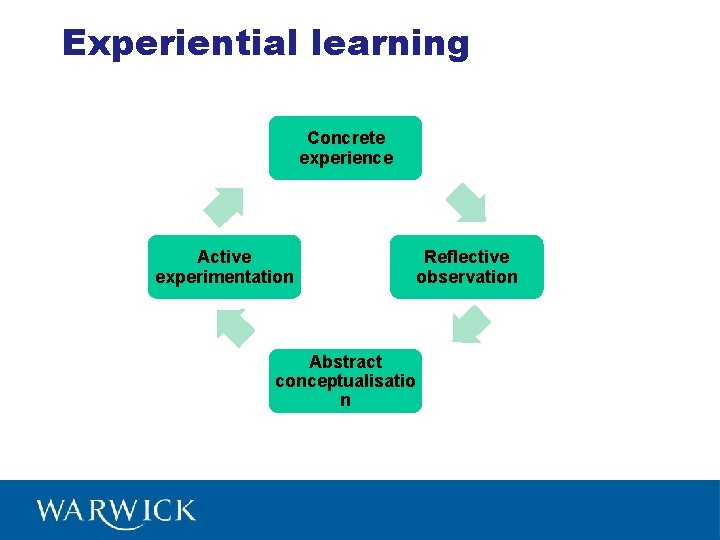
Experiential learning Concrete experience Active experimentation Reflective observation Abstract conceptualisatio n
Feedback • Its value is self-evident : experiential learning cannot take place without it • It is often infrequent, untimely, unhelpful or incomplete • It is often not acted upon to improve performance 56
How to give feedback • Establish appropriate interpersonal climate • Use appropriate location • Establish mutually agreed goals • Elicit learner’s thoughts and feelings • Reflect on observed behaviours • Be non-judgmental • Relate feedback to specific behaviours • Offer right amount of feedback • Offer suggestions for improvement Hewson MG & Little ML (1998) J Gen Int Med 13 (2) : 111 57
Practical Exercise 58
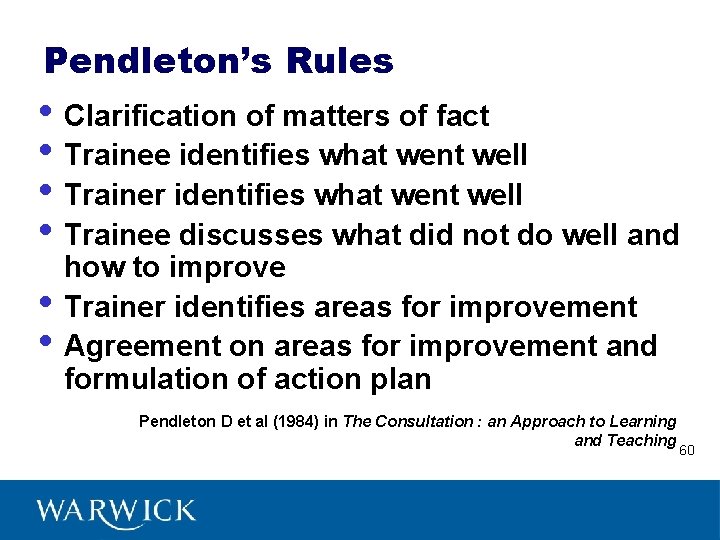
Pendleton’s Rules • Clarification of matters of fact • Trainee identifies what went well • Trainer identifies what went well • Trainee discusses what did not do well and • • how to improve Trainer identifies areas for improvement Agreement on areas for improvement and formulation of action plan Pendleton D et al (1984) in The Consultation : an Approach to Learning and Teaching 60
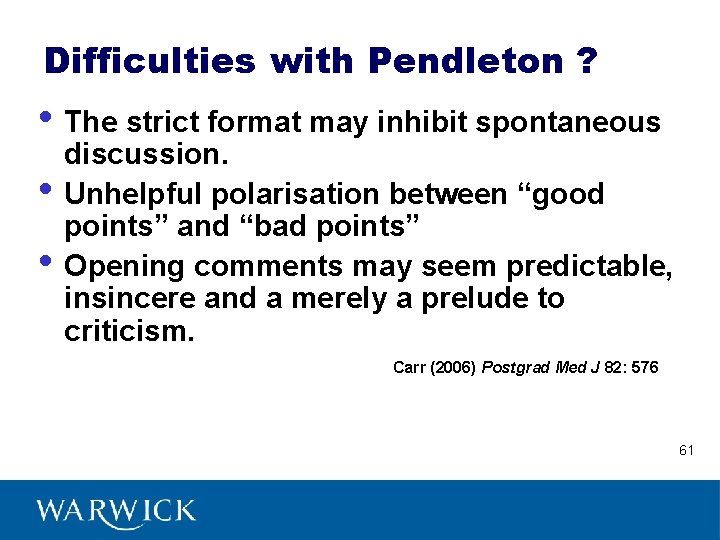
Difficulties with Pendleton ? • The strict format may inhibit spontaneous • • discussion. Unhelpful polarisation between “good points” and “bad points” Opening comments may seem predictable, insincere and a merely a prelude to criticism. Carr (2006) Postgrad Med J 82: 576 61
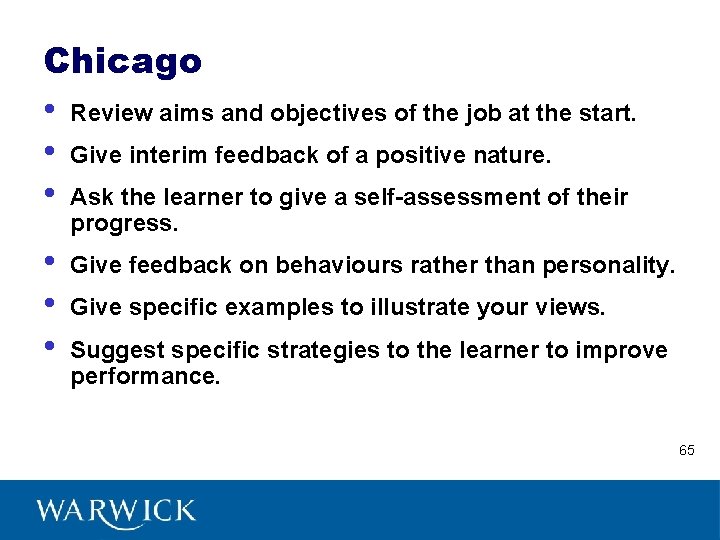
Chicago • Review aims and objectives of the job at the start. • Give interim feedback of a positive nature. • Ask the learner to give a self-assessment of their progress. • • • Give feedback on behaviours rather than personality. Give specific examples to illustrate your views. Suggest specific strategies to the learner to improve performance. 65
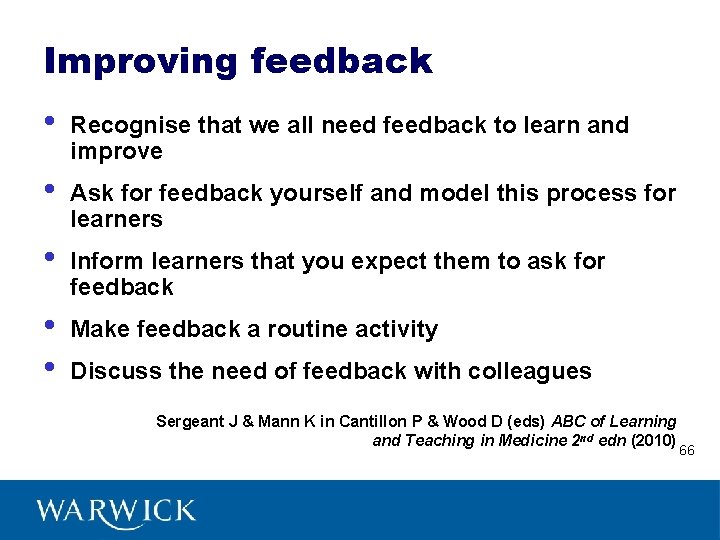
Improving feedback • Recognise that we all need feedback to learn and improve • Ask for feedback yourself and model this process for learners • Inform learners that you expect them to ask for feedback • • Make feedback a routine activity Discuss the need of feedback with colleagues Sergeant J & Mann K in Cantillon P & Wood D (eds) ABC of Learning and Teaching in Medicine 2 nd edn (2010) 66
Part 3 Evaluation 67

Evaluation : definition “A systematic approach to the collection, analysis and interpretation of information about any aspect of the conceptualisation, design, implementation and utility of educational programmes” Mohanna K et al (2004) Teaching Made Easy – a manual for health professionals 68

In this section: • • • Purposes of evaluation Data sources Kirkpatrick’s heirarchy 69
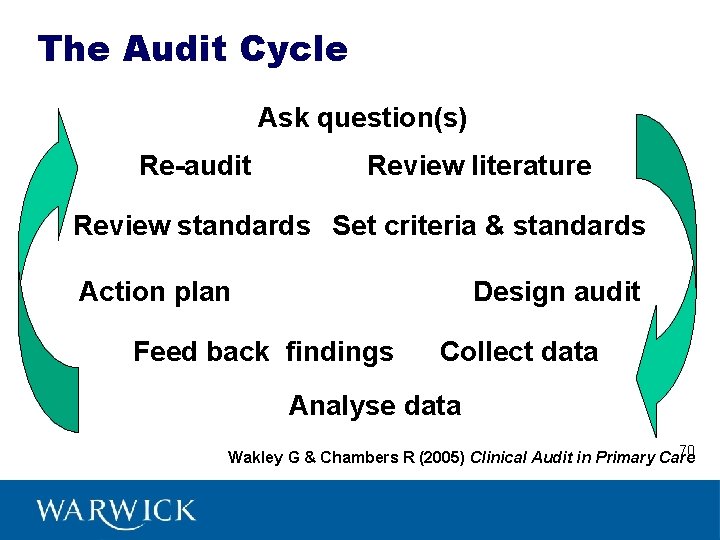
The Audit Cycle Ask question(s) Re-audit Review literature Review standards Set criteria & standards Action plan Design audit Feed back findings Collect data Analyse data 70 Wakley G & Chambers R (2005) Clinical Audit in Primary Care

Why evaluate ? • • To ensure teaching is meeting students’ needs. To identify areas where teaching can be improved. To inform the allocation of faculty resources. To provide feedback and encouragement to teachers To support applications for promotion by teachers. To identify and articulate what is valued by medical schools. To facilitate development of the curriculum. Morrison (2003) Br Med J 326 : 385 71
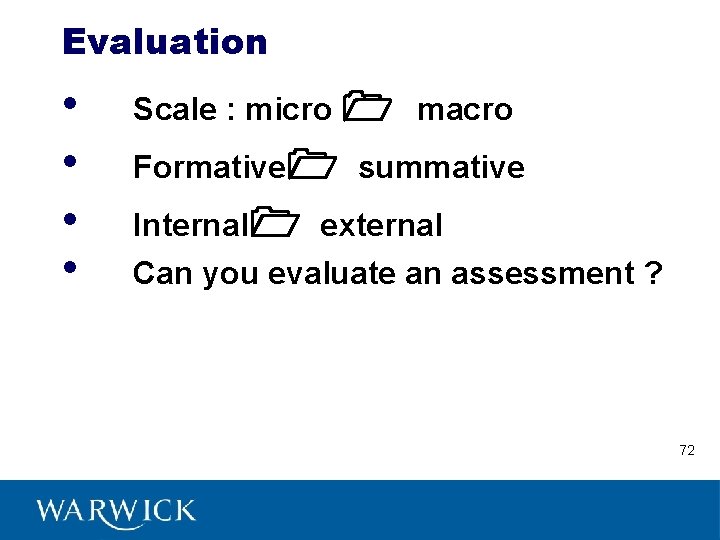
Evaluation • • Scale : micro macro Formative summative Internal external Can you evaluate an assessment ? 72
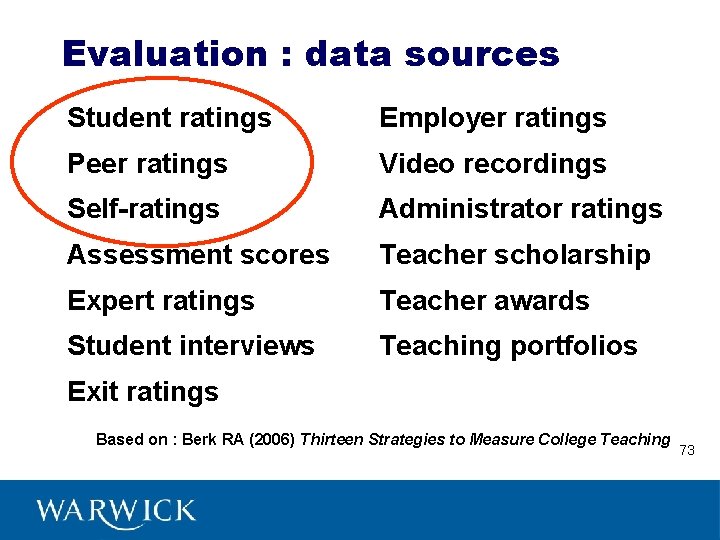
Evaluation : data sources Student ratings Employer ratings Peer ratings Video recordings Self-ratings Administrator ratings Assessment scores Teacher scholarship Expert ratings Teacher awards Student interviews Teaching portfolios Exit ratings Based on : Berk RA (2006) Thirteen Strategies to Measure College Teaching 73
74
75
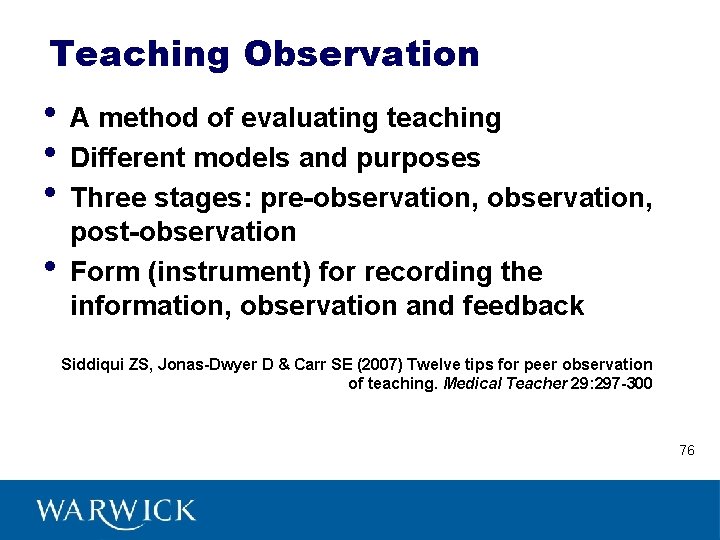
Teaching Observation • A method of evaluating teaching • Different models and purposes • Three stages: pre-observation, • post-observation Form (instrument) for recording the information, observation and feedback Siddiqui ZS, Jonas-Dwyer D & Carr SE (2007) Twelve tips for peer observation of teaching. Medical Teacher 29: 297 -300 76
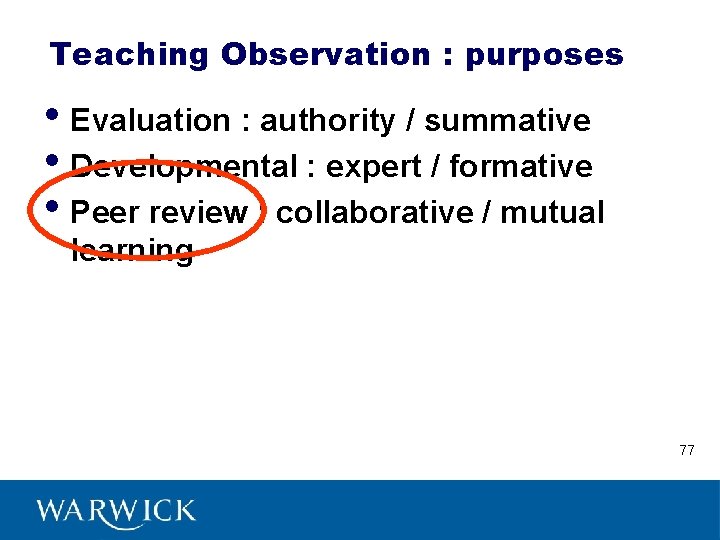
Teaching Observation : purposes • Evaluation : authority / summative • Developmental : expert / formative • Peer review : collaborative / mutual learning 77
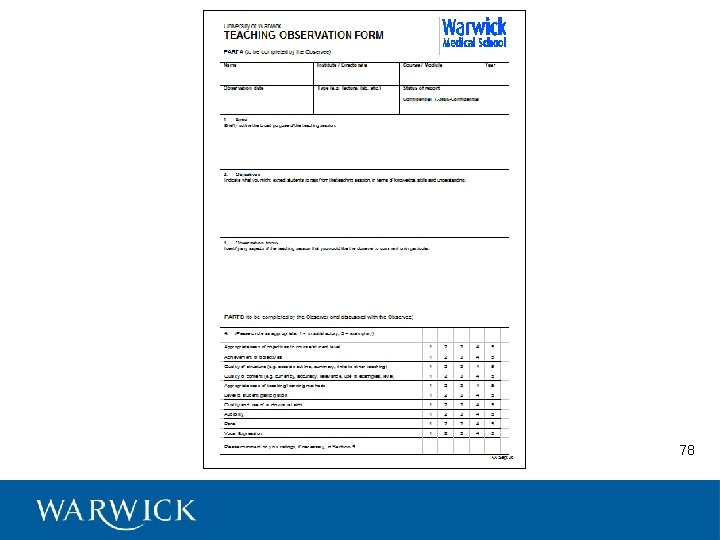
78
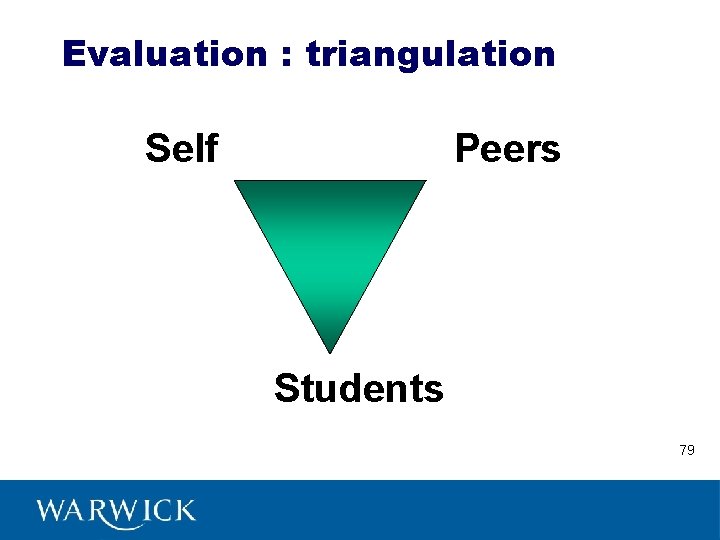
Evaluation : triangulation Self Peers Students 79
Practical Exercise 80
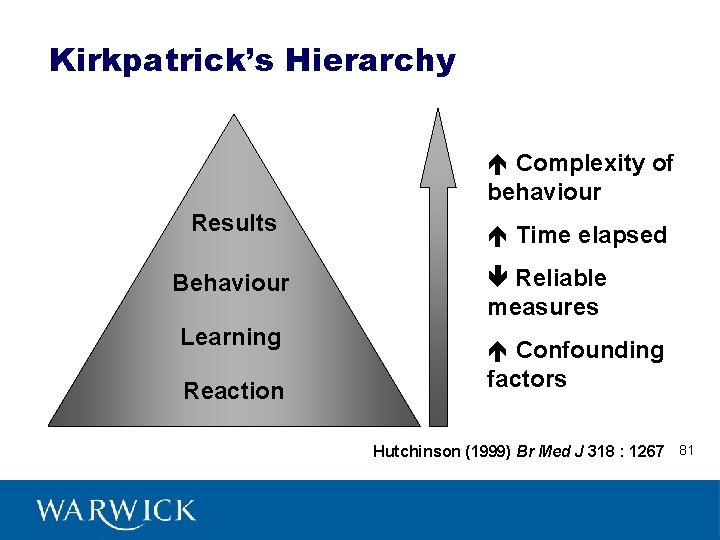
Kirkpatrick’s Hierarchy é Complexity of behaviour Results Behaviour Learning Reaction é Time elapsed Reliable measures é Confounding factors Hutchinson (1999) Br Med J 318 : 1267 81

What’s the point ? 82
83
Issues with Kirkpatrick • Is it a hierarchy ? • Omissions : learning objectives ? • Linkages between levels ? • “Kirkpatrick plus” Tamkin P et al (2002) Kirkpatrick and Beyond, IES 84
Conclusions • There is no perfect assessment instrument • Feedback to students is essential to experiential learning • The ultimate purpose of evaluation is to improve clinical outcomes 85
- Slides: 81