Prospective evaluation of cryoneurolysis for refractory neuralgia Ryan
- Slides: 13
Prospective evaluation of cryoneurolysis for refractory neuralgia Ryan, Adam 1; Grechushkin, Vadim 1; Durkin, Brian 2; Moore, William 1 1 Radiology, SUNY Stony Brook, NY 2 Anesthesiology, SUNY Stony Brook, NY
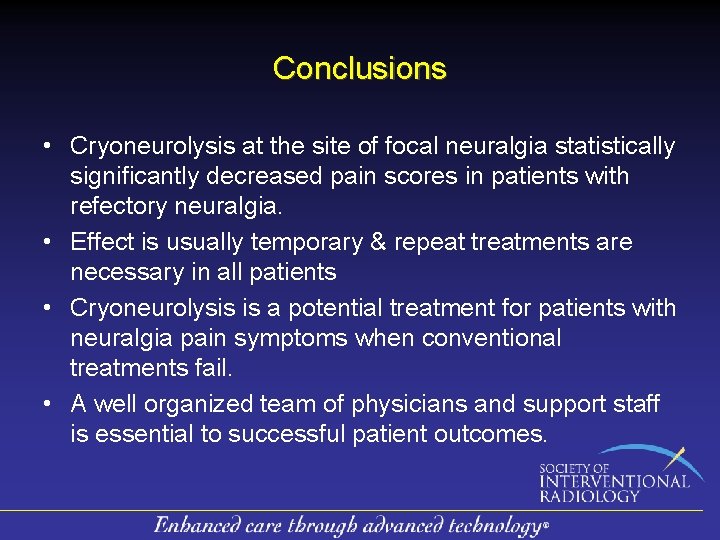
Conclusions • Cryoneurolysis at the site of focal neuralgia statistically significantly decreased pain scores in patients with refectory neuralgia. • Effect is usually temporary & repeat treatments are necessary in all patients • Cryoneurolysis is a potential treatment for patients with neuralgia pain symptoms when conventional treatments fail.
Background - Neuropathic pain • Common problem with various etiologies – Postsurgical injury/neuroma formation – Post-herpetic neuralgia – Chronic radiculopathy – 15 million people on the US and Europe suffer from chronic neuropathic pain.
Background - Neuropathic pain • Often refractory to therapy • Multidisciplinary treatment approach required – Pharmacologics – Localized interventional procedures with pharmacological agents – Lifestyle modification – Homeopathic approaches
Background - Neuropathic pain • Standard of care: • Often treated with multiple agents prior to any intervention. – Anti-depressants and anti-seizure medication are first line therapy • Often leading to cognitive side effects. – Opioids are second line therapy. However, there is little evidence to support their use in neuropathic pain. • Side effects: constipation, tolerance and risk of abuse.
Background - Neuropathic pain Role of Pain Management: Diagnostic injection of local anesthetic to pain generative nerve(s) Document location of damaged nerve(s) Document effect of local therapy Orchestrate the multi-modality multi-prong management strategy.
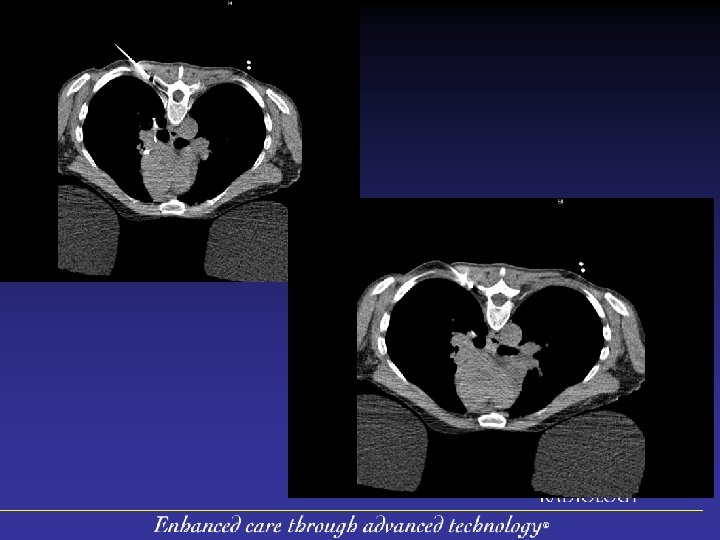
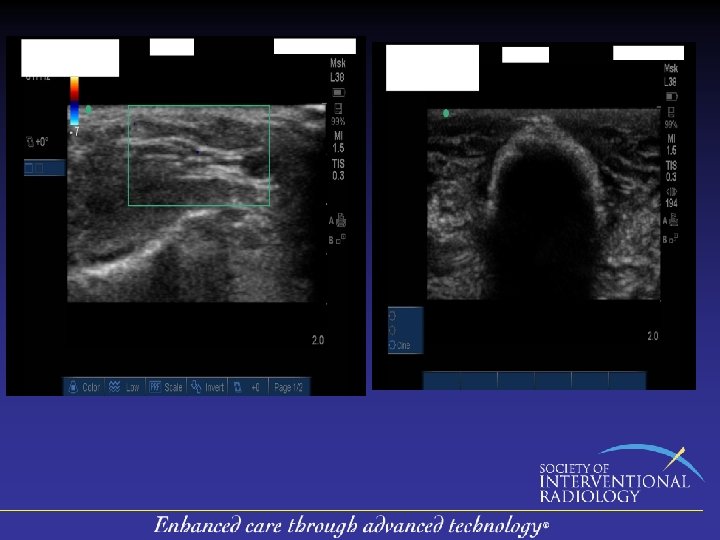
Nerves treated: • Prospective study • 25 patients – Intercostal nerves (14) – Foot/plantar neuromas (2) – Ilioinguinal (2) – Saphenous (4) – Gluteal nerves (1) – Peroneal (1) – Digital nerve (1) • CT or U/S guided depending on location
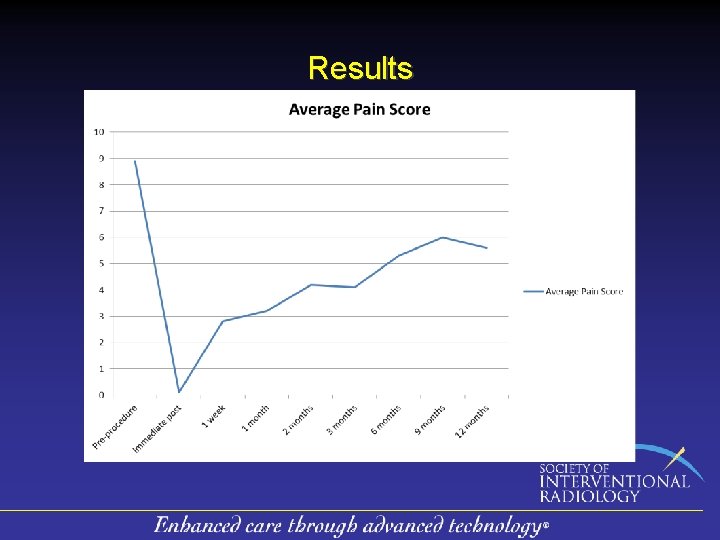
Results
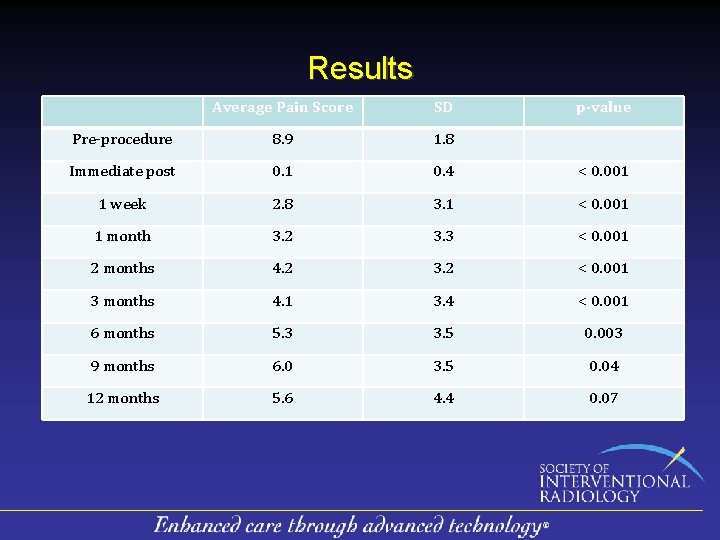
Results Average Pain Score SD p-value Pre-procedure 8. 9 1. 8 Immediate post 0. 1 0. 4 < 0. 001 1 week 2. 8 3. 1 < 0. 001 1 month 3. 2 3. 3 < 0. 001 2 months 4. 2 3. 2 < 0. 001 3 months 4. 1 3. 4 < 0. 001 6 months 5. 3 3. 5 0. 003 9 months 6. 0 3. 5 0. 04 12 months 5. 6 4. 4 0. 07
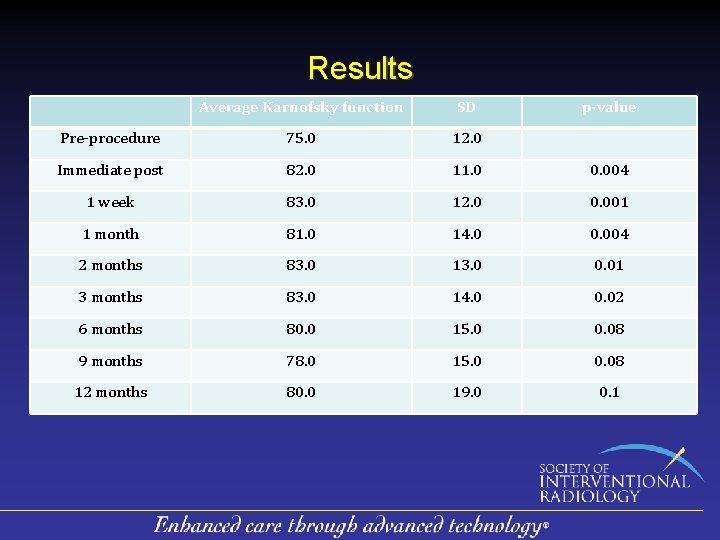
Results Average Karnofsky function SD p-value Pre-procedure 75. 0 12. 0 Immediate post 82. 0 11. 0 0. 004 1 week 83. 0 12. 0 0. 001 1 month 81. 0 14. 0 0. 004 2 months 83. 0 13. 0 0. 01 3 months 83. 0 14. 0 0. 02 6 months 80. 0 15. 0 0. 08 9 months 78. 0 15. 0 0. 08 12 months 80. 0 19. 0 0. 1
Conclusions • Cryoneurolysis at the site of focal neuralgia statistically significantly decreased pain scores in patients with refectory neuralgia. • Effect is usually temporary & repeat treatments are necessary in all patients • Cryoneurolysis is a potential treatment for patients with neuralgia pain symptoms when conventional treatments fail. • A well organized team of physicians and support staff is essential to successful patient outcomes.