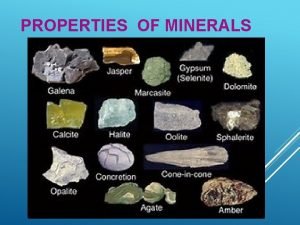
Properties of Minerals Geologists use characteristics to tell

- Slides: 23
Properties of Minerals Geologists use characteristics to tell one mineral from another
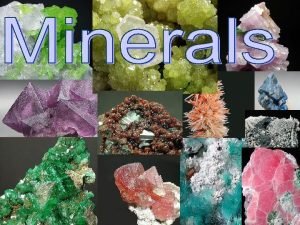
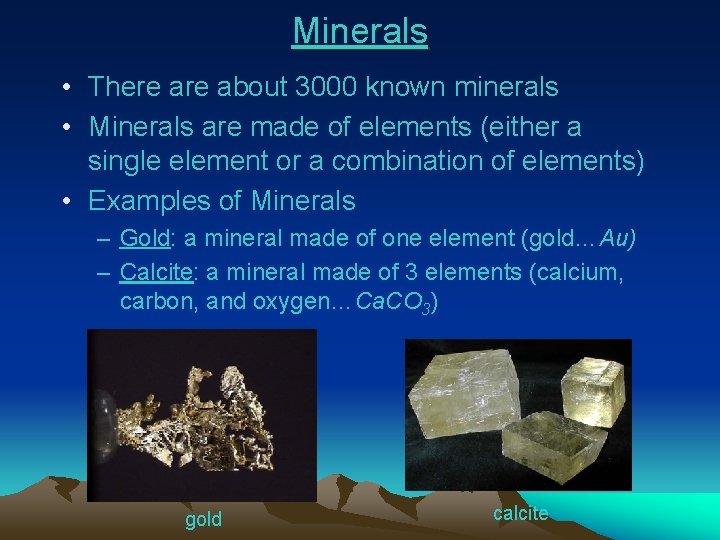
Minerals • There about 3000 known minerals • Minerals are made of elements (either a single element or a combination of elements) • Examples of Minerals – Gold: a mineral made of one element (gold…Au) – Calcite: a mineral made of 3 elements (calcium, carbon, and oxygen…Ca. CO 3) gold calcite
Scientific Requirements for a Substance to be a Mineral • • • Must be naturally occurring (they must occur in natu Must be inorganic (not made of living things) Must be crystalline (have a crystal structure) Must be solid (minerals are not gases and liquids) Must have definite physical and chemical propertie
Mineral Properties we will study Luster Hardness Cleavage Streak
Luster • Refers to the way light reflects from the surface of the mineral. • There are two types of luster, – Metallic: looks like polished metal. – Nonmetallic: does not look like polished metal. • Nonmetallic can be shiny or dull.
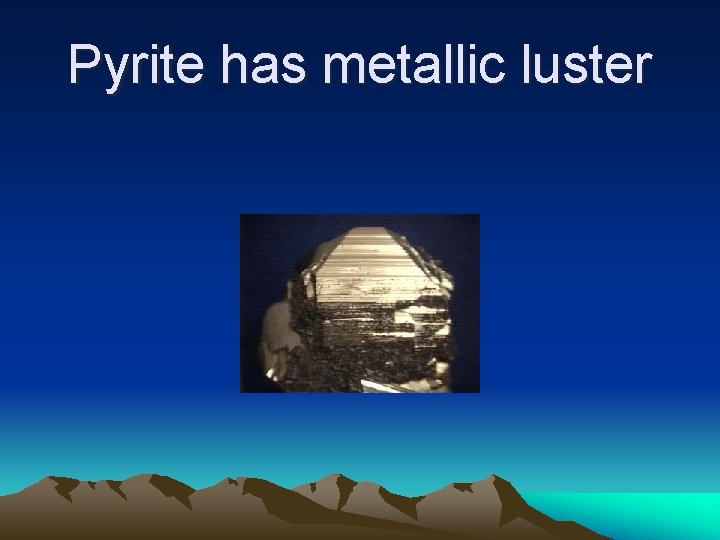
Pyrite has metallic luster
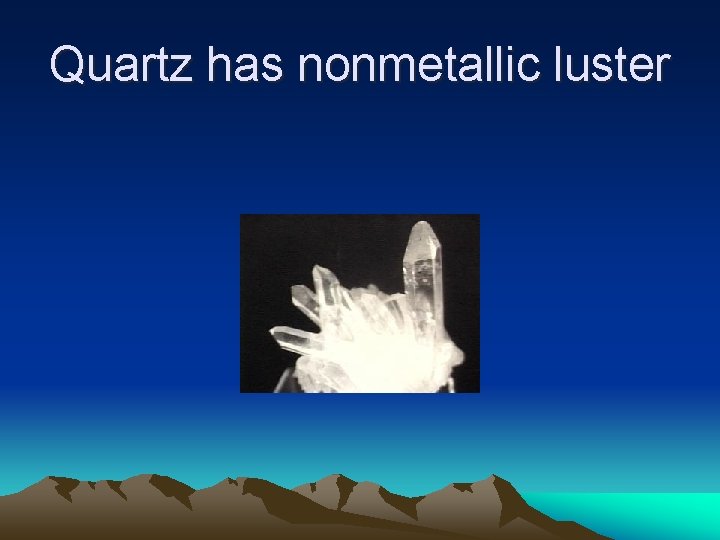
Quartz has nonmetallic luster
Hardness • Is measured by how easy it is to scratch. • Geologists order the hardness by… 1. Scratched by a fingernail. 2. Scratched by a penny. 3. Scratched by a nail. 4. Scratched by a diamond. These are not all of the tools geologists use, but it will work for our experiment.
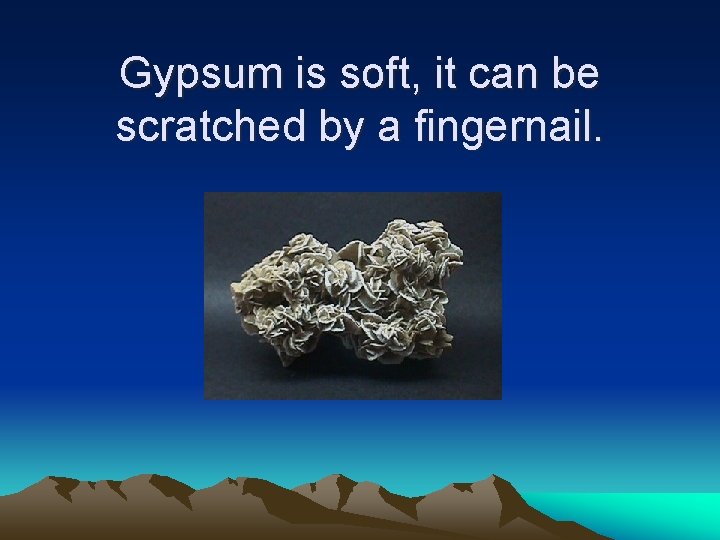
Gypsum is soft, it can be scratched by a fingernail.
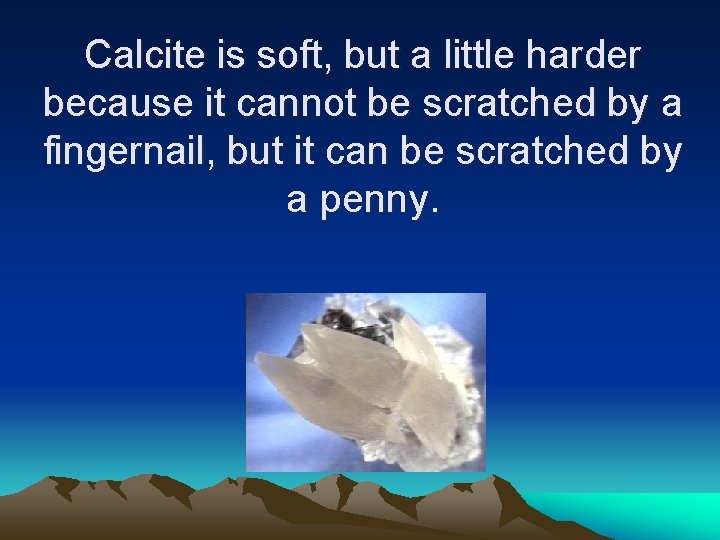
Calcite is soft, but a little harder because it cannot be scratched by a fingernail, but it can be scratched by a penny.
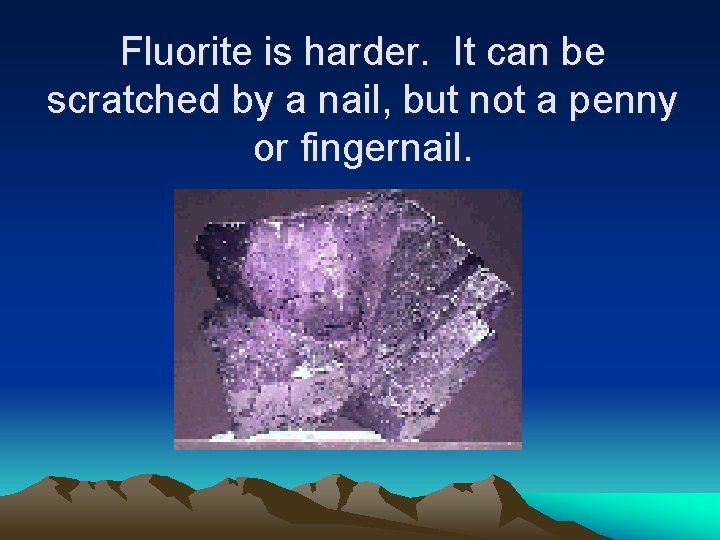
Fluorite is harder. It can be scratched by a nail, but not a penny or fingernail.
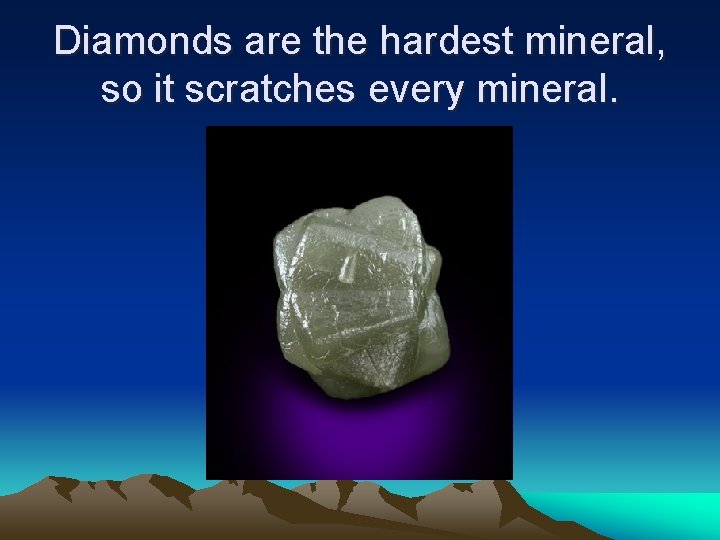
Diamonds are the hardest mineral, so it scratches every mineral.
Cleavage • Not all minerals have cleavage. • Some minerals split easily along a flat surface. • The number of lines that are created when a mineral is split will be the number of cleavage lines.
Cleavage Top Left http: //skywalker. cochise. edu/wellerr/mineral/calcite/6 calcite-cleavage 2. jpg Bottom Left http: //0. tqn. com/d/chemistry/1/0/E/c/mica. jpg Top Right http: //earthsci. org/mineral/rockmin/mineral_i_d/cleav. jpg Bottom Right http: //www. crystalradio. net/minerals/galena. jpg
Streak • Red chalk on a chalk board makes red marks. White chalk makes white marks. • Not all minerals work this way. When some minerals are scratched along a ceramic streak plate, it creates a different color.
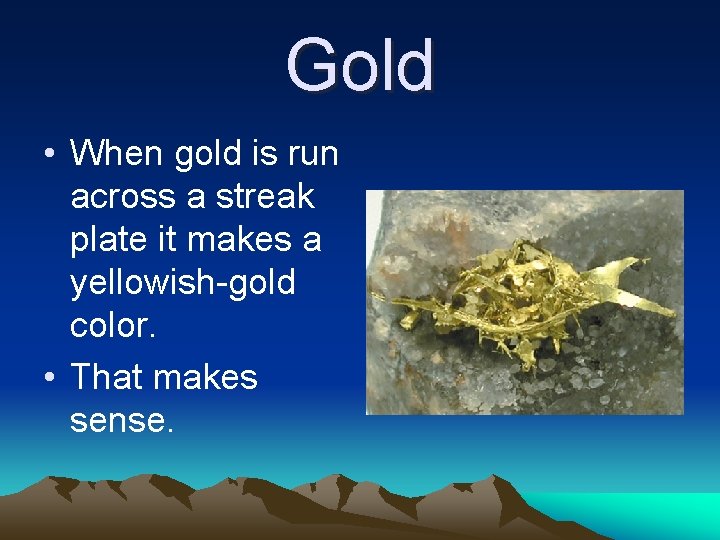
Gold • When gold is run across a streak plate it makes a yellowish-gold color. • That makes sense.
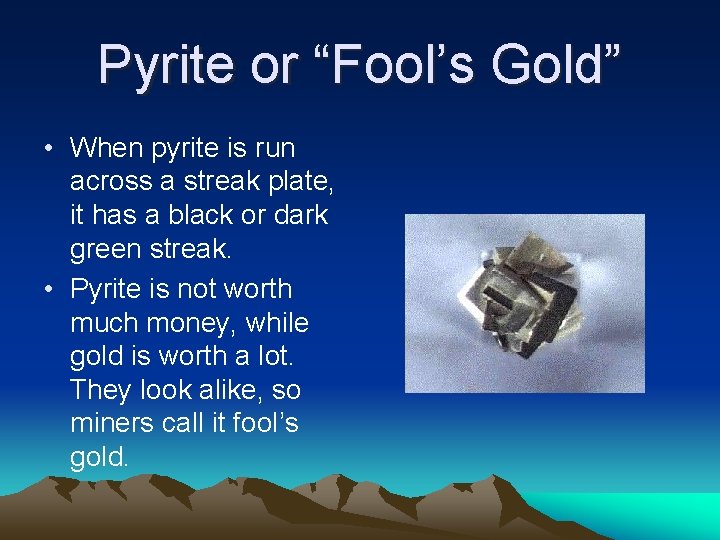
Pyrite or “Fool’s Gold” • When pyrite is run across a streak plate, it has a black or dark green streak. • Pyrite is not worth much money, while gold is worth a lot. They look alike, so miners call it fool’s gold.
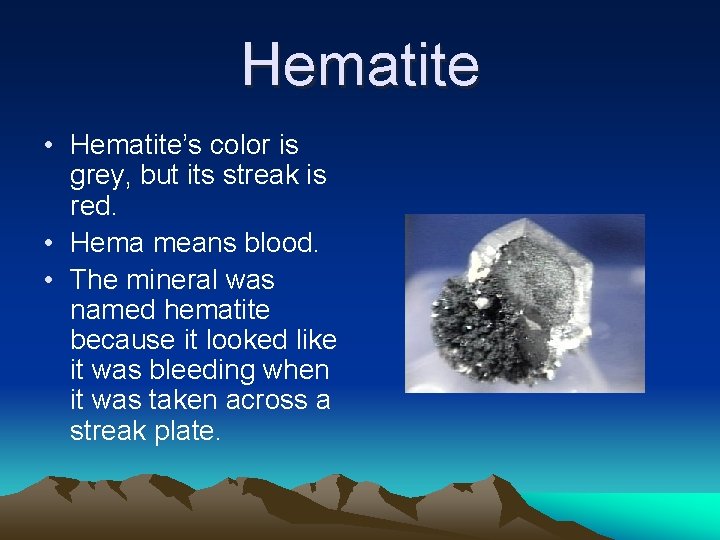
Hematite • Hematite’s color is grey, but its streak is red. • Hema means blood. • The mineral was named hematite because it looked like it was bleeding when it was taken across a streak plate.
One mineral property we will not use… COLOR
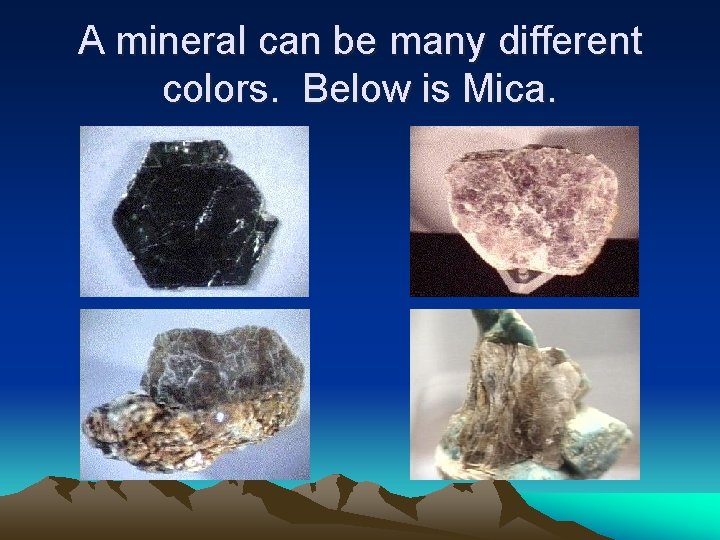
A mineral can be many different colors. Below is Mica.
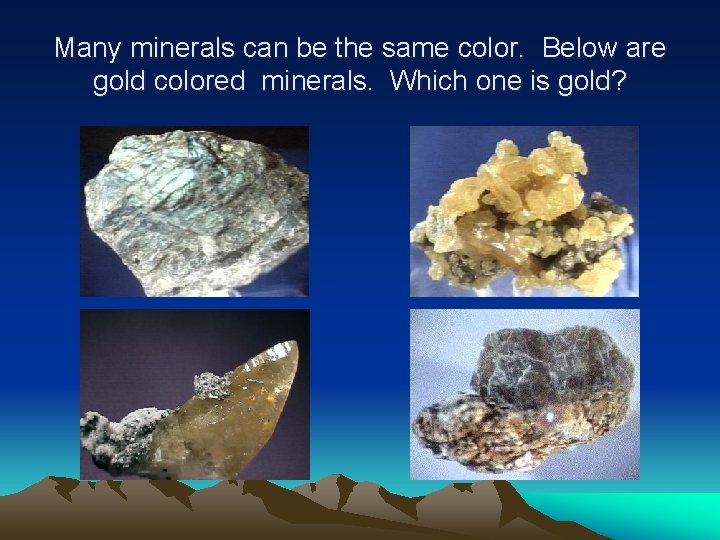
Many minerals can be the same color. Below are gold colored minerals. Which one is gold?
The answer… None of them were real gold.
Just like with people… Outside color does not tell you much about the important characteristics.