Promoting a Learning Culture DOE Accelerator Safety Workshop

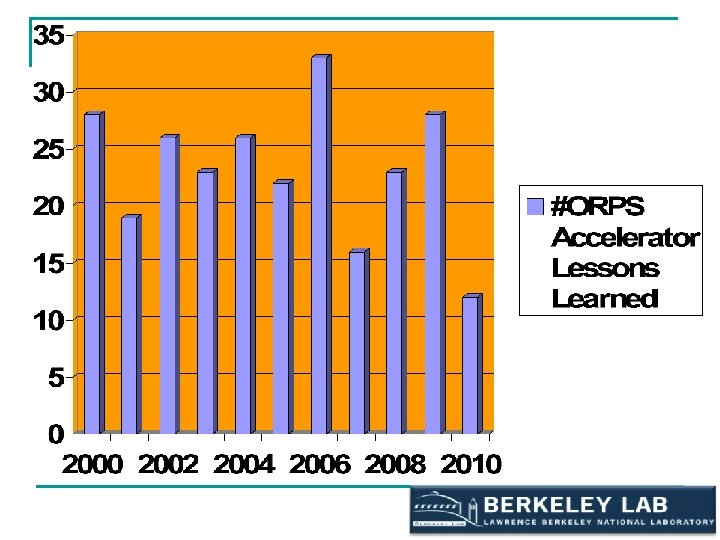
- Slides: 15
Promoting a Learning Culture § DOE Accelerator Safety Workshop § Stanford Linear Accelerator Center § August 18, 2010 § Amy Ecclesine, Compliance and QA Program Lead, Lawrence Berkeley National Laboratory
Principles of Human Performance § People are fallible, and even the best make mistakes § Error-likely situations are predictable, manageable and preventable § Individual behavior is influenced by organizational processes and values § People achieve high levels of performance based largely on the encouragement and reinforcement received from leaders, peers and subordinates § Accidents and issues can be avoided by understanding the reasons mistakes occur and applying the lessons learned from past events
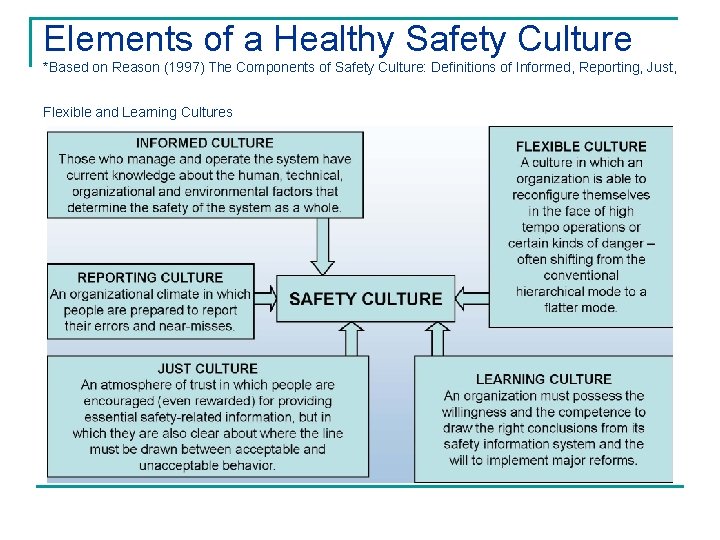
Elements of a Healthy Safety Culture *Based on Reason (1997) The Components of Safety Culture: Definitions of Informed, Reporting, Just, Flexible and Learning Cultures
Obstacles to a “Just Culture” q q q “Just” means different things to different people Implies that we believe the workplace can be made to be consistently fair (i. e. , a noble goal but unrealistic) Many managers believe they already have it
Learning Culture Main objective: “Learning Culture” 1. Easier to integrate the message into Lab culture than “Just Culture” 2. Views accidents and errors as providing opportunities to learn rather than providing opportunities to punish 3. Appeals to creativity and problem solving skills
Reporting Culture Obstacles to a “Reporting Culture” n. Our culture is not naturally self critical n. Reporting of events is not the norm n. Fear of critical attention n. Fear of being shut down n. Fear of losing control n. Worry about being “second guessed” n. We punish people for doing the right things n. We engage in the “drama triangle” stifling problem solving, proactivity, and creativity
Safety Culture A fundamental key to excellence in safety performance is…. …everyone takes his or her share of responsibility – no more and no less.
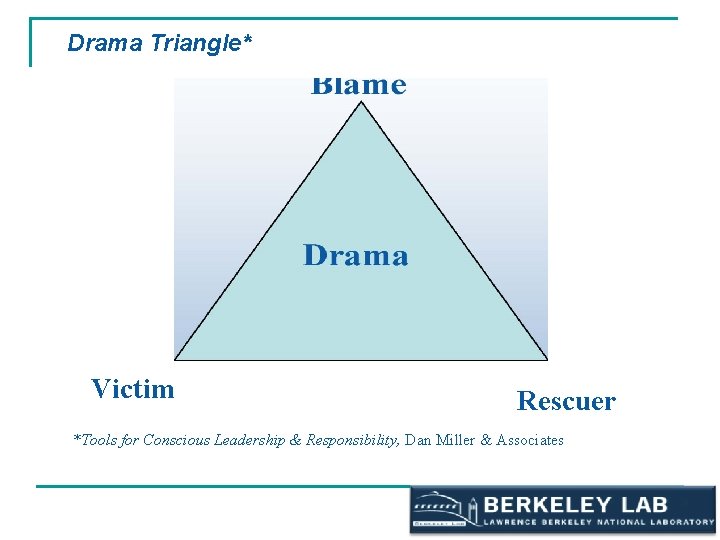
Drama Triangle* Victim Rescuer *Tools for Conscious Leadership & Responsibility, Dan Miller & Associates
Some Examples n“That guy should have known better” n“Training/procedure inadequate” n“When (fill in) stepped in, we lost control of the situation” n“DOE will conduct a Type B investigation” n“Management was not held accountable” n“They are treating us like a nuclear facility”
Behavior change for all of us When something goes wrong (or when you discover a mistake) –Stay out of the Drama Triangle –Own your part of the problem –Don’t get mad, get curious
Achieving a Reporting Culture n. Leaders must state and reinforce their expectations for reporting events and conditions n. Create an atmosphere that values reporting n. Promote a positive approach to identifying and classifying “events” Develop and publish leading indicators for identifying and reporting events
Key Messages n. Safety is a shared responsibility and everyone must do his or her part n. We cannot eliminate all mistakes -our goal is to reduce their frequency and severity n. In order to learn from our errors we must encourage open reporting Work to establish trust 1. Don’t punish people for making honest mistakes 2. Do what you say, say what you mean
Key References § “Tools for Conscious Leadership & Responsibility, ” Dan Miller & Associates, 1999, http//www. dan-miller. com § “Managing the Risks of Organizational Accidents, ” James Reason, 1997 § “Roadmap to a Just Culture: Enhancing the Safety Environment, ” Global Aviation Information Network, 1994 § Special thanks to James Tarpinian, former ESHQ Director at BNL who rolled this out in 2006
Lessons Learned Presentation Schedule n Robert Fairchild [rffairchild@lbl. gov] n n n John Graham [cgraham@lanl. gov] Phil Mc. Namara [mcnamara@aps. anl. gov] Michael Woods [mwoods@slac. stanford. edu] Andrew Ackerman, ANL Mike Baumgartner <mikeb@lanl. gov