PPE Head Protection 29 CFR 1910 135 29

- Slides: 26
PPE: Head Protection 29 CFR 1910. 135, 29 CFR 1915. 155, 29 CFR 1926. 100
Session Objectives You will be able to: • Identify head hazards • Choose appropriate head protection • Know the limitations of head protection • Use and take care of your head protection © Business & Legal Reports, Inc. 0603
Hazard Assessments • Assess the workplace • Evaluate every job • Determine appropriate PPE • Certify the completion of the hazard assessment in writing © Business & Legal Reports, Inc. 0603
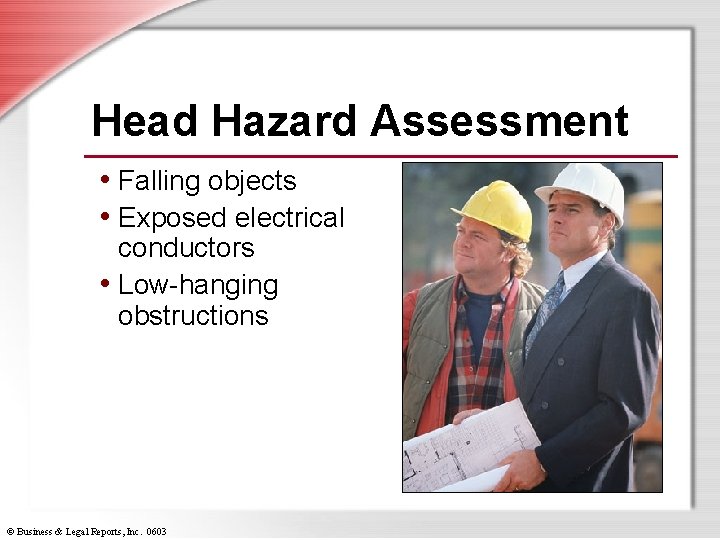
Head Hazard Assessment • Falling objects • Exposed electrical conductors • Low-hanging obstructions © Business & Legal Reports, Inc. 0603
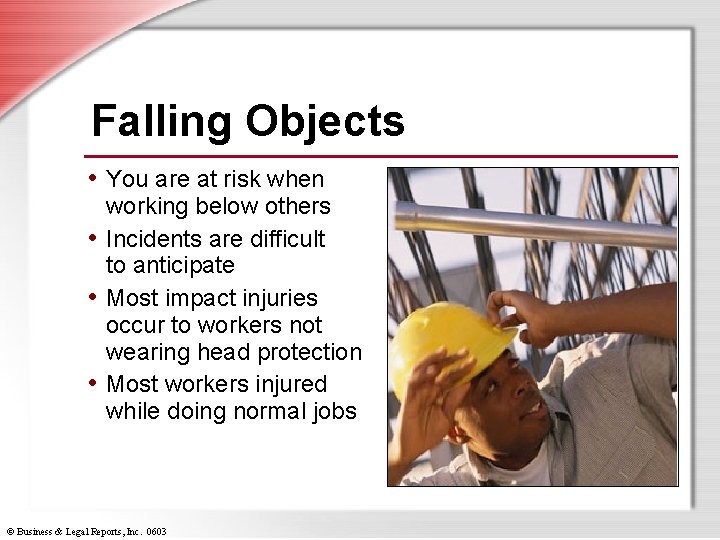
Falling Objects • You are at risk when working below others • Incidents are difficult to anticipate • Most impact injuries occur to workers not wearing head protection • Most workers injured while doing normal jobs © Business & Legal Reports, Inc. 0603
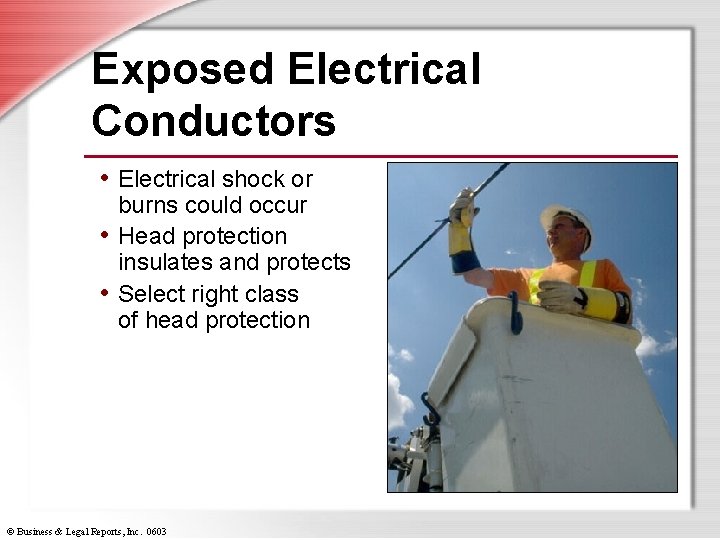
Exposed Electrical Conductors • Electrical shock or burns could occur • Head protection insulates and protects • Select right class of head protection © Business & Legal Reports, Inc. 0603
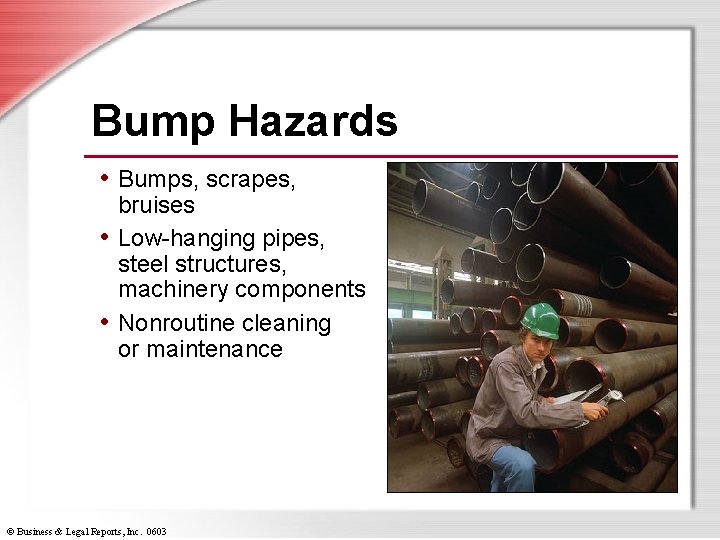
Bump Hazards • Bumps, scrapes, bruises • Low-hanging pipes, steel structures, machinery components • Nonroutine cleaning or maintenance © Business & Legal Reports, Inc. 0603
Head Hazards and Injuries —Any Questions? • Any questions about workplace hazards to your head? © Business & Legal Reports, Inc. 0603
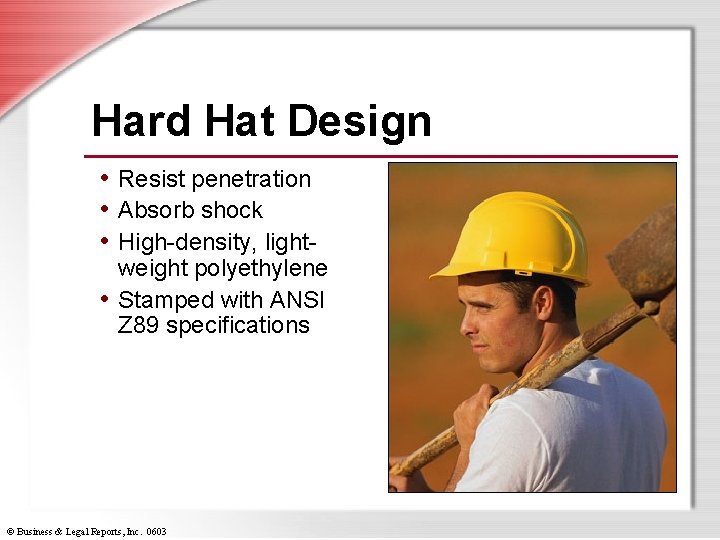
Hard Hat Design • Resist penetration • Absorb shock • High-density, light- weight polyethylene • Stamped with ANSI Z 89 specifications © Business & Legal Reports, Inc. 0603
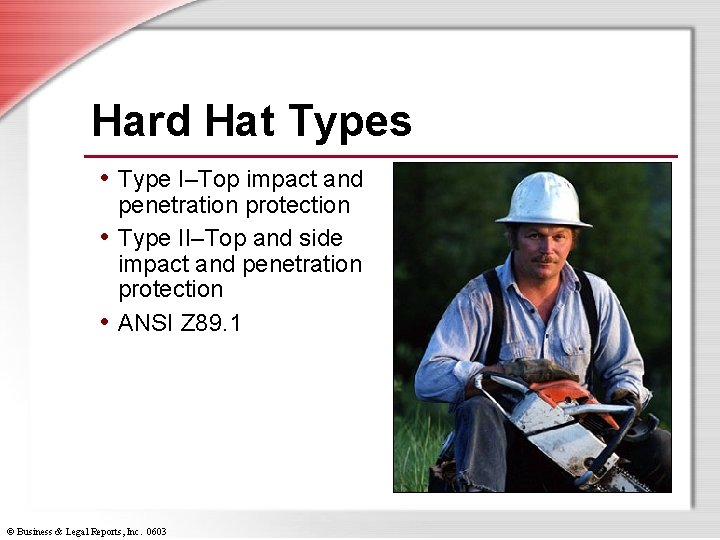
Hard Hat Types • Type I–Top impact and penetration protection • Type II–Top and side impact and penetration protection • ANSI Z 89. 1 © Business & Legal Reports, Inc. 0603
Hard Hat Classes • Class C – No electrical protection • Class G – Low voltage (tested at 2, 200 volts) • Class E – High voltage (tested at 20, 000 volts) © Business & Legal Reports, Inc. 0603
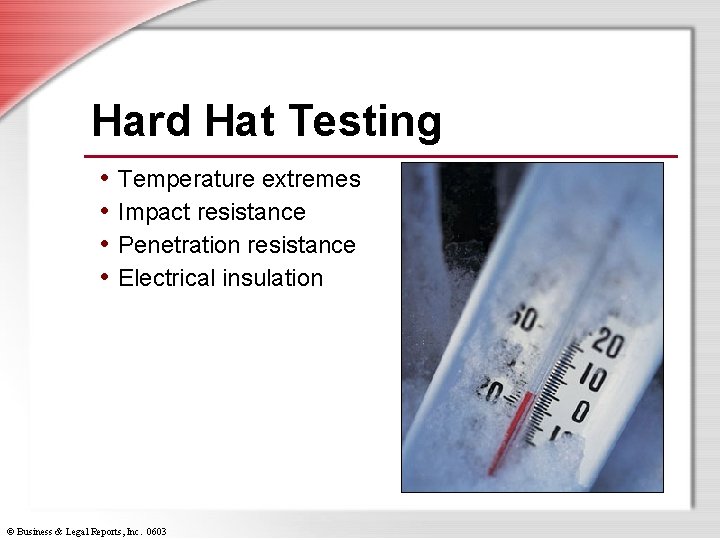
Hard Hat Testing • Temperature extremes • Impact resistance • Penetration resistance • Electrical insulation © Business & Legal Reports, Inc. 0603
Standard Head Protection • Wide profile and brim • Increased ventilation • Sun protection • Suspension system • Ratchet systems • Brow pads © Business & Legal Reports, Inc. 0603
Highly Protective Helmet • Impact and penetration resistance from all directions • Chin strap • Air vents molded into helmet • Crown pad and brow pad • Accessories © Business & Legal Reports, Inc. 0603
High Temperature Hats • Advanced thermoplastic materials • Utilities, welding, foundries, steel mills • Meet NFPA 1977 -1998 Standard • Exposed to 350ºF for 5 minutes • Resistant to radiant heat and flame © Business & Legal Reports, Inc. 0603
Bump Caps • Protect against bumps, scrapes, cuts • Used when helmet or hard hat unnecessary • Made of lightweight hard plastic • May accommodate faceshields or visors • Do not meet ANSI Z 89 standards © Business & Legal Reports, Inc. 0603
Hard Hat Selection—Any Questions? • Any questions about choosing appropriate head protection? © Business & Legal Reports, Inc. 0603
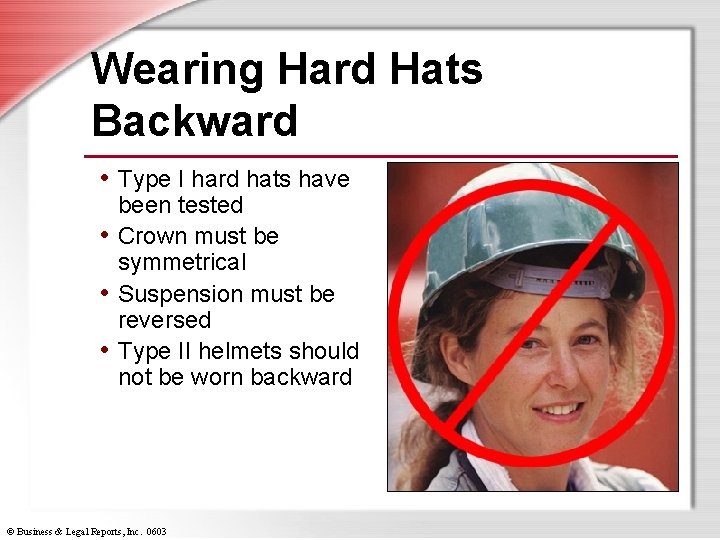
Wearing Hard Hats Backward • Type I hard hats have been tested • Crown must be symmetrical • Suspension must be reversed • Type II helmets should not be worn backward © Business & Legal Reports, Inc. 0603
Stickers or Markings • Adhesive stickers will not chemically damage helmets • Stickers may cover cracks or other signs of damage • Keep stickers at least 3/4 inch away from edge of helmet • Engraving is restricted to underside of brim • Do not engrave the crown area or near suspension sockets © Business & Legal Reports, Inc. 0603
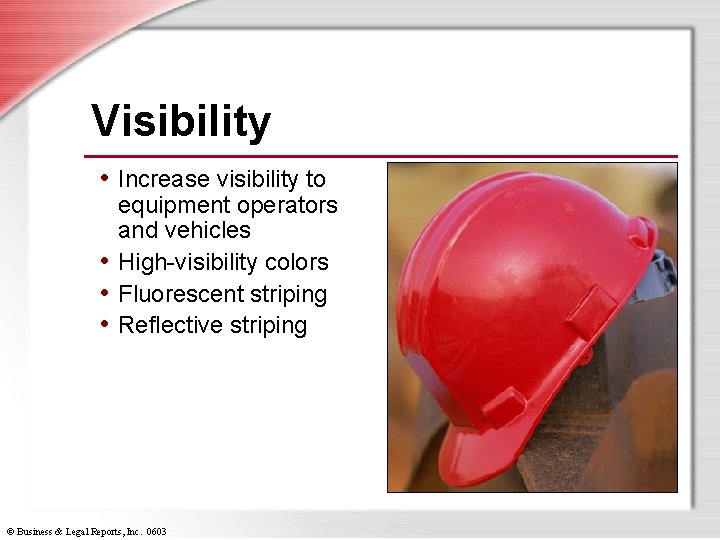
Visibility • Increase visibility to equipment operators and vehicles • High-visibility colors • Fluorescent striping • Reflective striping © Business & Legal Reports, Inc. 0603
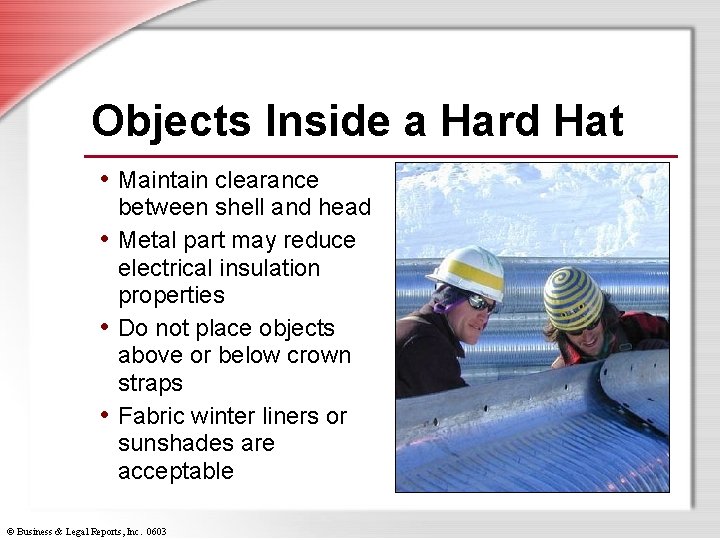
Objects Inside a Hard Hat • Maintain clearance between shell and head • Metal part may reduce electrical insulation properties • Do not place objects above or below crown straps • Fabric winter liners or sunshades are acceptable © Business & Legal Reports, Inc. 0603
Useful Life of a Hard Hat • Replace every 2 years if exposed to chemicals, sunlight, temperature extremes • Date codes are molded into brims • Replace if struck by a forcible blow © Business & Legal Reports, Inc. 0603
Maintenance and Care • Clean with mild detergent and hot water • Inspect shell for damage or excess wear • Inspect suspension straps for cuts, frays, chemical damage • Never drill holes • Do not use paints or cleaning solvents © Business & Legal Reports, Inc. 0603
Field Test Hard Hats • Compress shell sides inward 1 inch • Release pressure • Shell should return to original shape • Compare elasticity to new shell • Replace if not elastic or if it cracks © Business & Legal Reports, Inc. 0603
Head Protection—Any Questions? • Any questions about the use and care of hard hats? © Business & Legal Reports, Inc. 0603
Key Points to Remember • Follow recommendations in head hazard assessment • Wear the correct type and class of helmet for the hazards found • Inspect and clean hard hats daily • Limit stickers and other markings • Replace hard hats according to work conditions © Business & Legal Reports, Inc. 0603