
Personal Protective Equipment 29 CFR 1910 132 to
- Slides: 51
Personal Protective Equipment 29 CFR 1910. 132 to 29 CFR 1910. 138 Personal Protective Equipment or PPE is selected based on the specific job hazards you face.
1910. 132 General Requirements * Employer shall ensure that PPE be provided, used, and maintained in a sanitary and reliable condition to prevent injury. * When employees provide their own PPE, the employer shall assure the adequacy, including the proper maintenance and sanitation, of such equipment.
Hazard Assessment and Equipment Selection • Employers are required to assess the workplace to determine if hazards that require the use of PPE are present. Employers must select and have affected employees use properly fitted PPE suitable for protection from existing hazards. • Employers must certify in writing that a workplace hazard assessment has been performed.
Continued • Defective or damaged PPE shall not be used. • Before doing work requiring of PPE, employees must be trained to know when PPE is necessary, What type is necessary, how it is to be worn, and what its limitations, as well as know its proper care, maintenance, and storage.
Job Hazards Examples of Job Hazards are: • Noise • Chemicals • Accidental Impact • Sharp objects • Flying Particles • Dust & Mists • Bright Light • Vibration
29 CFR 1910. 133
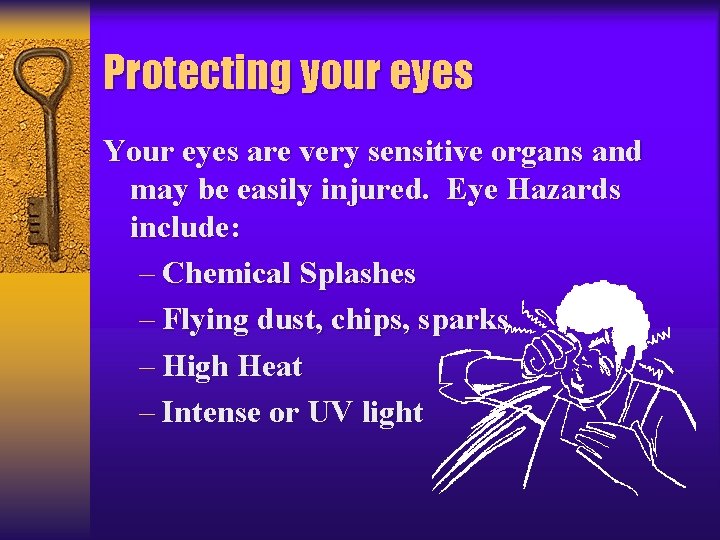
Protecting your eyes Your eyes are very sensitive organs and may be easily injured. Eye Hazards include: – Chemical Splashes – Flying dust, chips, sparks – High Heat – Intense or UV light
Specific hazards include… IMPACT - Chipping, grinding machining, masonry work, woodworking, sawing, drilling, chiseling, powered fastening, riveting, and sanding. HEAT - Furnace operations, pouring, casting, hot dipping, welding LIGHT or RADIATION - Electric arc welding, gas cutting IRRITANTS / CORROSIVES - mists, dusts, sprays, splashes
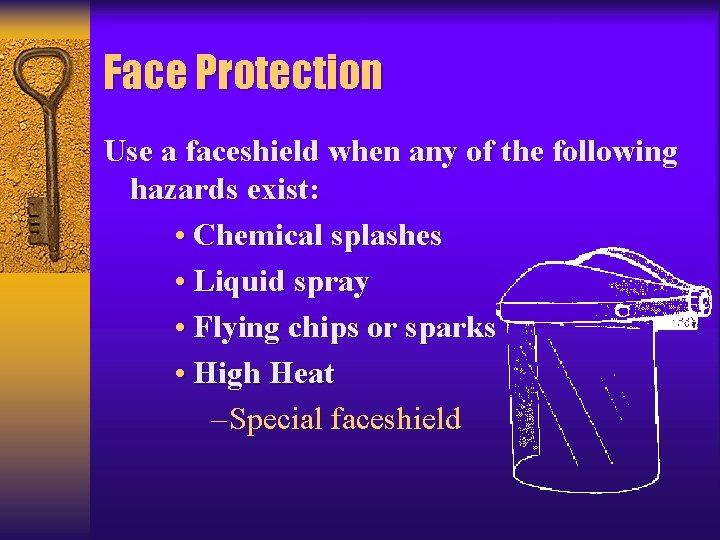
Face Protection Use a faceshield when any of the following hazards exist: • Chemical splashes • Liquid spray • Flying chips or sparks • High Heat – Special faceshield
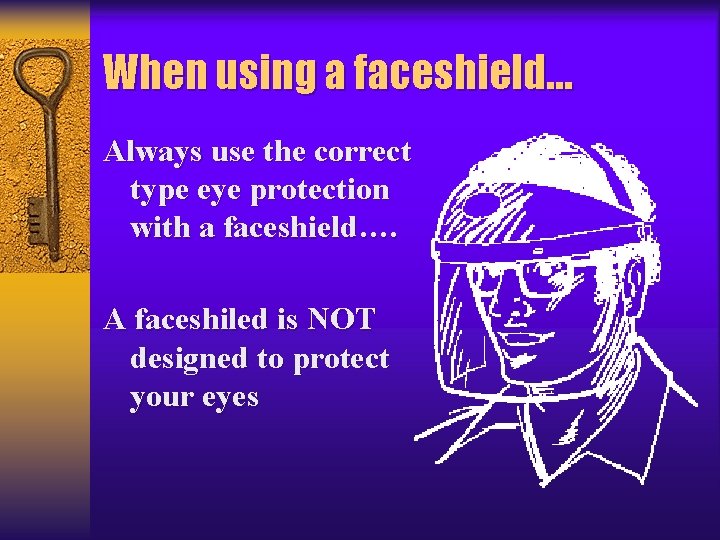
When using a faceshield… Always use the correct type eye protection with a faceshield…. A faceshiled is NOT designed to protect your eyes
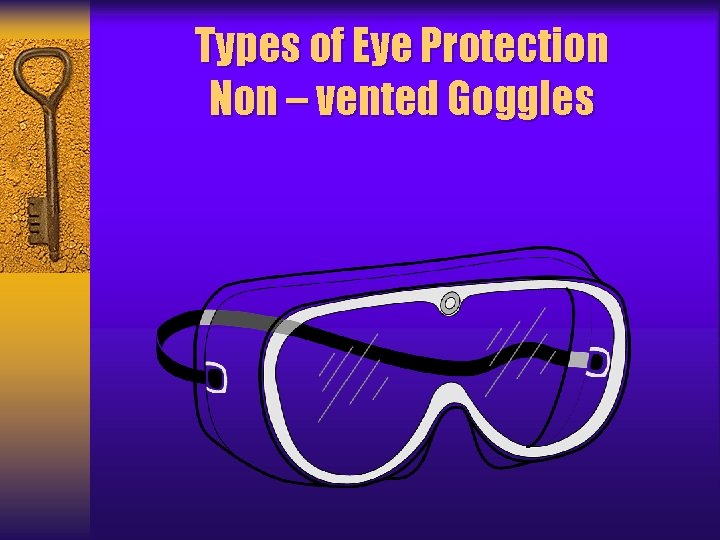
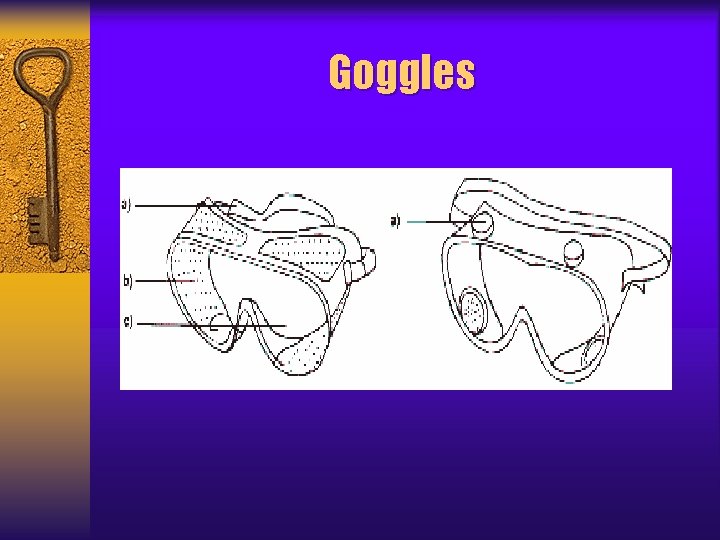
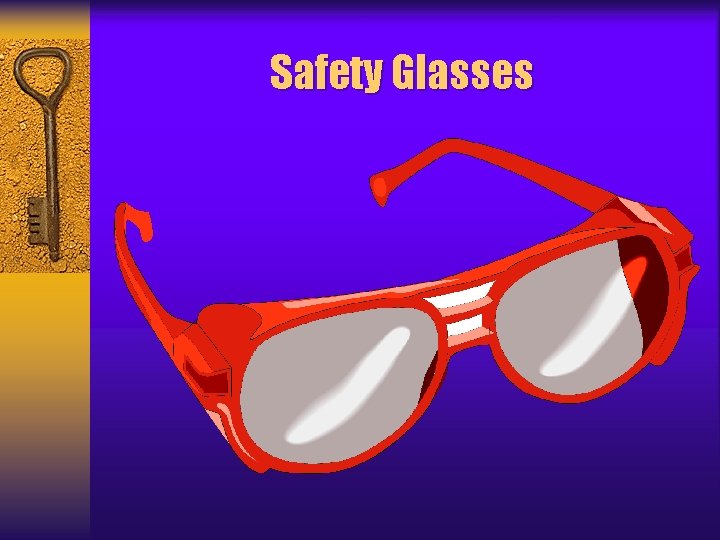
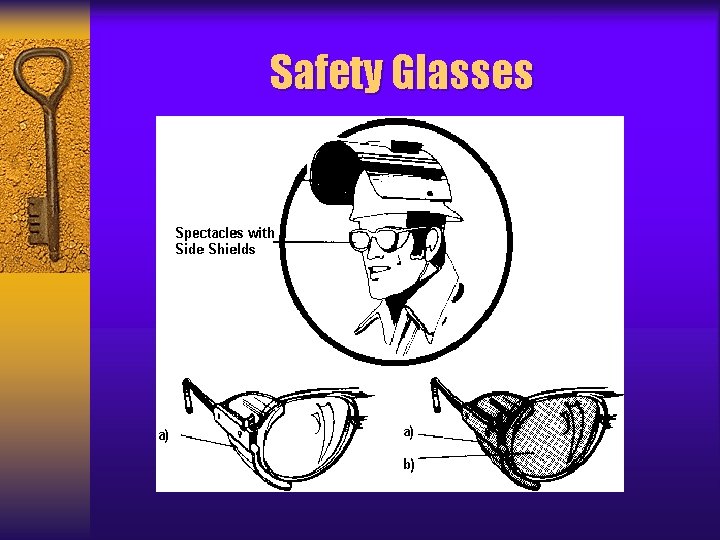
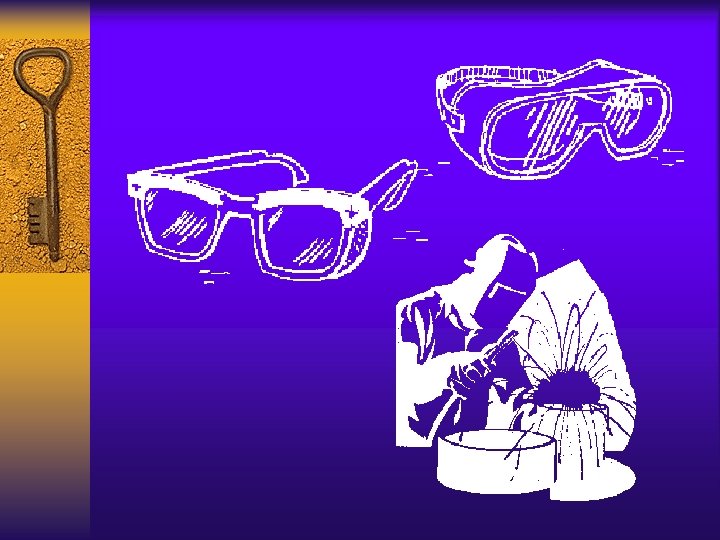
Types of Eye Protection Safety Glasses – for flying chips & low hazards Vented Goggles – for dust and nonhazardous mist Non-Vented Goggles – hazardous chemicals Dark Lenses – intense or UV light
Types of Eye Protection Non – vented Goggles
Goggles
Safety Glasses
Safety Glasses
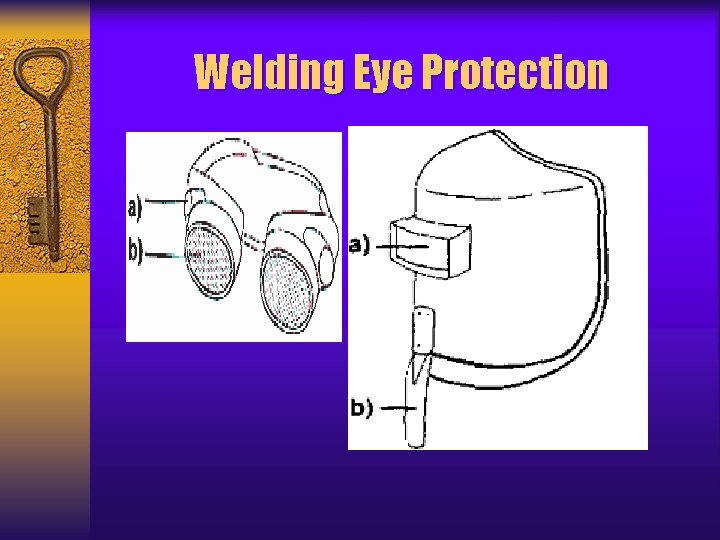
Welding Eye Protection
29 CFR 1910. 134 Respiratory Protection OSHA standards require employers to establish and maintain respiratory protection program whenever respirators are necessary to protect the health of employees.
Types of Respiratory Protective Devices 123 - Air - Purifying Devices Air – Supplying Devices Combination Air – Purifying and Air – Supplying Devices.
1 - Air – Purifying Respirators • This types of respirators is limited in its use to those environments where the air contaminant level is within the specified concentration limitation of the device. • These devices do not protect against oxygen deficiency.
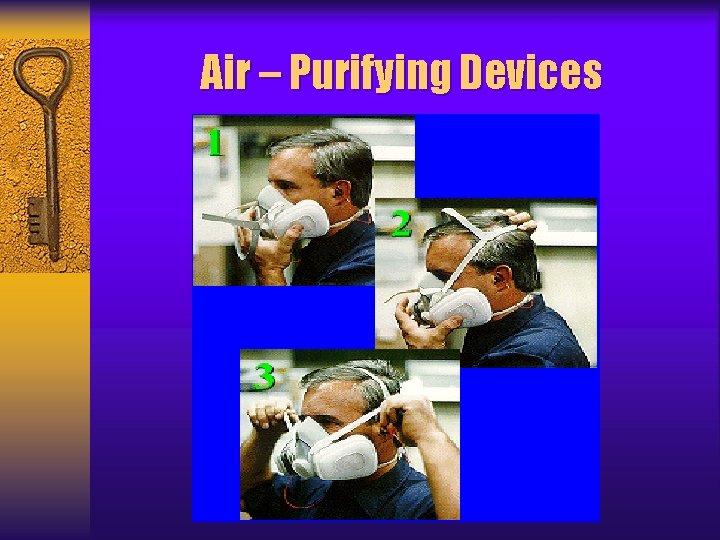
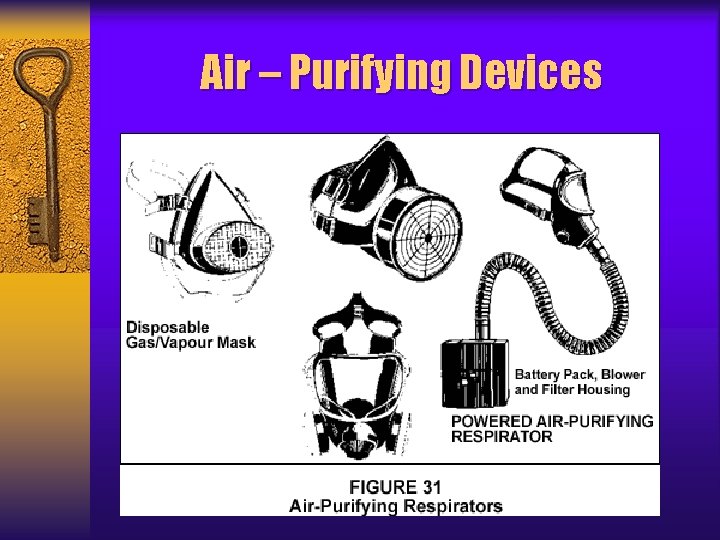
Air – Purifying Devices 1 - Mechanical – Filter Respirators 2 - Chemical – Cartridge Respirators 3 - Combination Mechanical-filter/Chemical cartridge respirators. 4 - Gas Masks 5 - Powered air – purifying respirators
Air – Purifying Devices
Air – Purifying Devices
2 - Air – Supplying Devices • Air – supplying devices provide a respirable atmosphere to the wearer, independent of the ambient air. • They fall into three groups: • Supplied – air respirators • Self – contained breathing apparatus • Combination SCBA and supplied – air respirators.
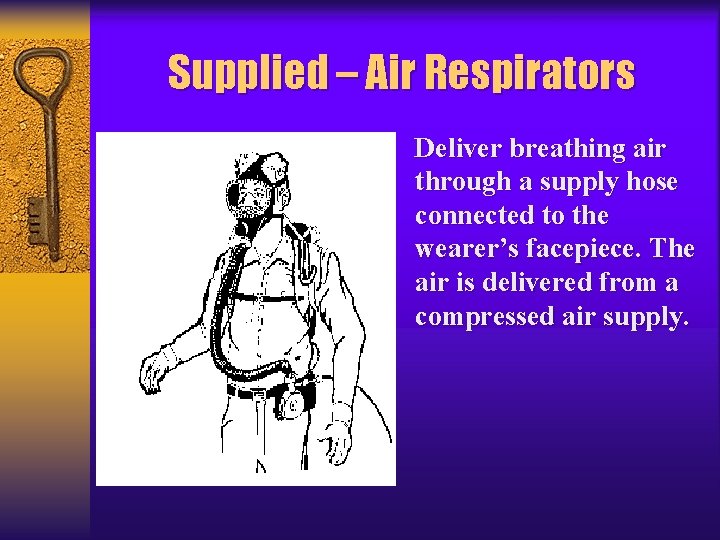
Supplied – Air Respirators Deliver breathing air through a supply hose connected to the wearer’s facepiece. The air is delivered from a compressed air supply.
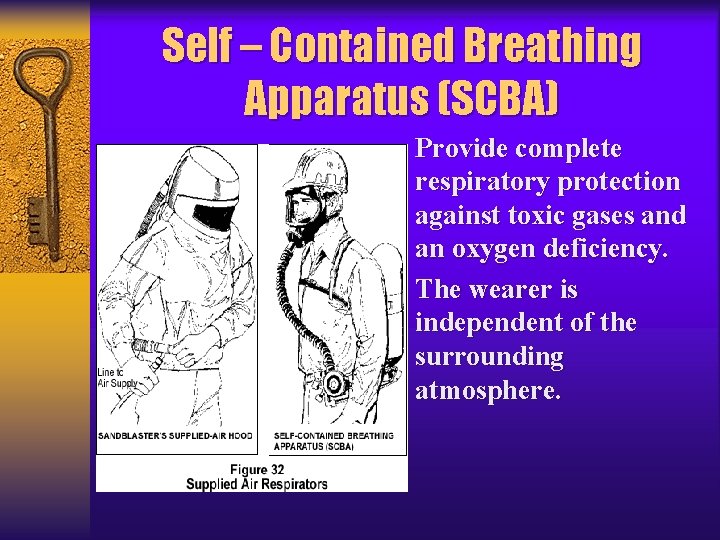
Self – Contained Breathing Apparatus (SCBA) Provide complete respiratory protection against toxic gases and an oxygen deficiency. The wearer is independent of the surrounding atmosphere.
Combination SCBA and Supplied air respirators • Are air – line respirators with an auxiliary self – contained air supply. • An auxiliary SCBA is an independent air supply that allows a person to evacuate an area for a very short period of time. • These devices are approved for use in IDLH atmospheres. • The auxiliary air supply can be switched to in the event the primary air supply fails to operate.
3 - Combination Air – Purifying and Air – Supplying Devices • It is a device that is a combination of an air – line respirator with an auxiliary air purifying attachment, which provides protection in the event the air supply fails. • They often used with high-efficiency filter as the air purifying element. • Use in the filtering mode is allowed for escape only.
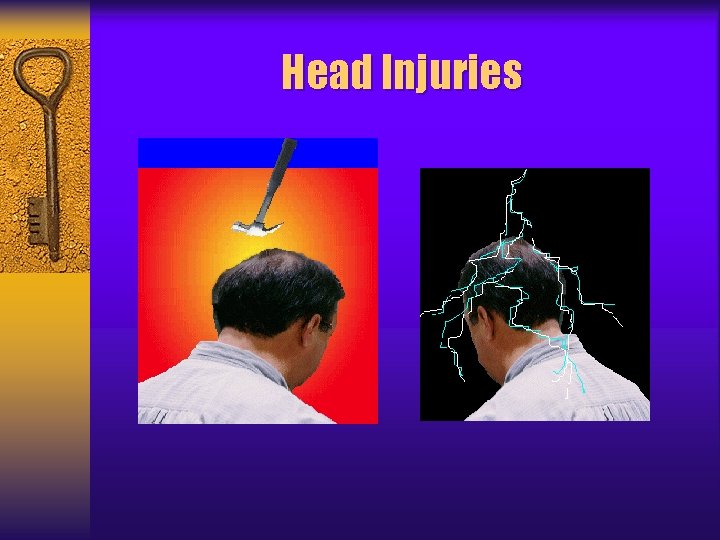
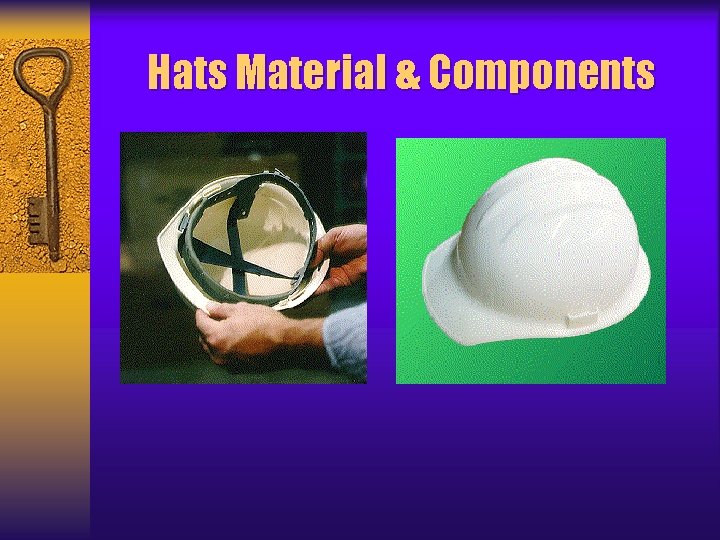
29 CFR 1910. 135 Head Protection • Head injuries are caused by falling or flying objects, or bumping the head against a fixed object. • Head protection, in the form of protective hats, must do two things: • 1 - Resist penetration. • 2 - Absorb the shock of a blow.
Head Injuries
Continued • Head protection by using hats is accomplished by making the shell of the hat of a material hard enough to resist the blow. • Also by utilizing a shock-absorbing lining composed of headband crown straps to keep the shell away from the wearer’s skull. (safety zone: 1 to 1. 25 inches). • Protective hats also must be used to protect against electrical shock.
Hats Material & Components
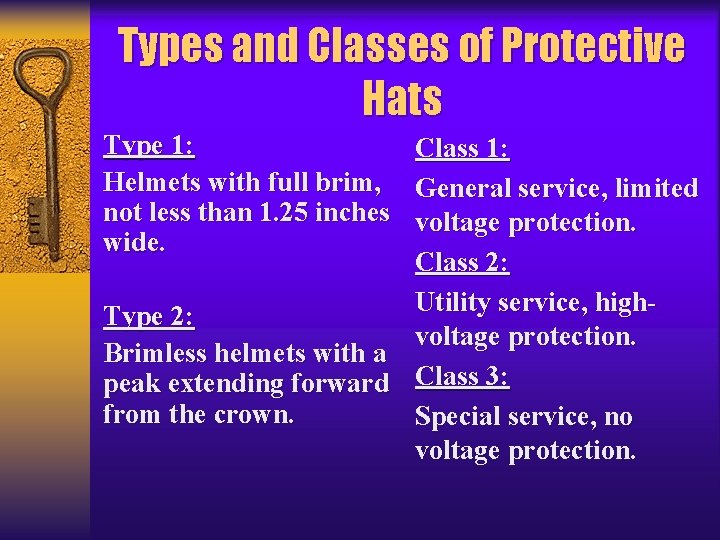
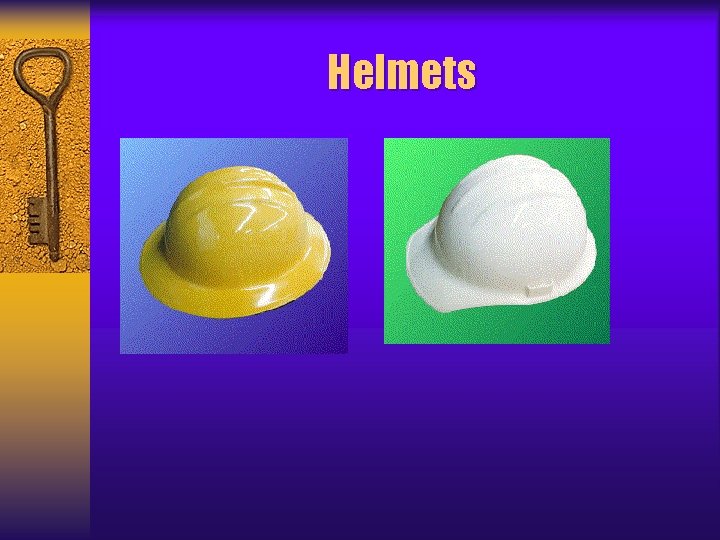
Types and Classes of Protective Hats Type 1: Class 1: Helmets with full brim, General service, limited not less than 1. 25 inches voltage protection. wide. Class 2: Utility service, high. Type 2: voltage protection. Brimless helmets with a peak extending forward Class 3: from the crown. Special service, no voltage protection.
Helmets
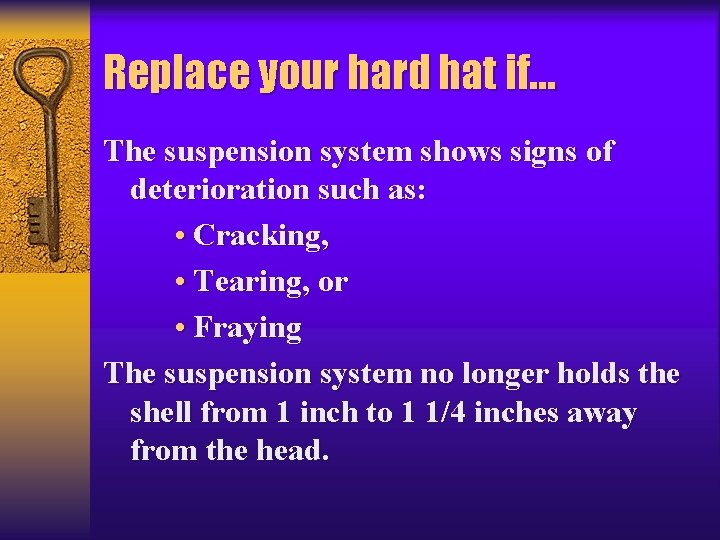
Replace your hard hat if… The suspension system shows signs of deterioration such as: • Cracking, • Tearing, or • Fraying The suspension system no longer holds the shell from 1 inch to 1 1/4 inches away from the head.
29 CFR 1910. 136
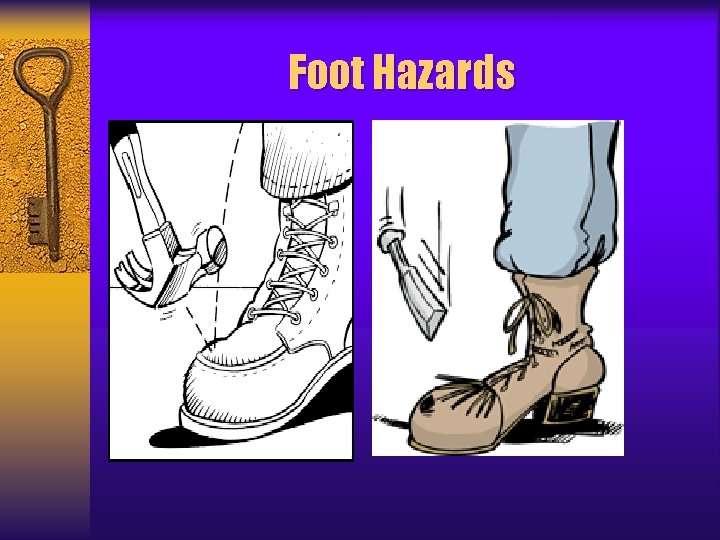
Foot Hazards ¨ Heavy objects such as barrels or tools that might roll onto or fall onto your feet. ¨ Sharp objects such as nails or spikes that might pierce the soles or uppers of ordinary shoes. ¨ Molten metal that might splash ¨ Hot, slippery or wet surfaces ¨ Corrosive Chemicals
Hazardous conditions… IMPACT - Carrying or handling materials such as packages, objects, parts or heavy tools which could be dropped COMPRESSION - Work activities involving skid trucks (manual material handling carts, around bulk rolls, around heavy pipes PUNCTURE - Sharp object hazards such as nails, wire, tacks, screws, large staples, scrap metal, etc CHEMICAL - Check MSDS for protection
Foot Hazards
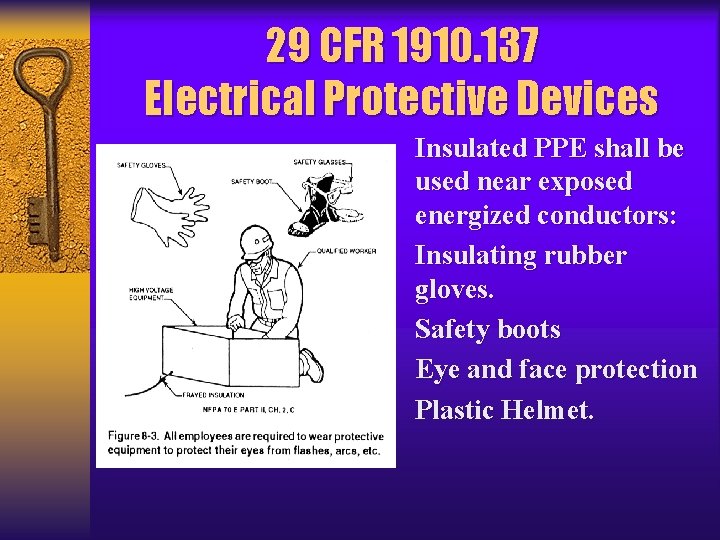
29 CFR 1910. 137 Electrical Protective Devices Insulated PPE shall be used near exposed energized conductors: Insulating rubber gloves. Safety boots Eye and face protection Plastic Helmet.
29 CFR 1910. 138
Hand Hazards • Cuts & punctures • Chemical exposure • Vibration • Electric shock • Burns • Heat & Cold • Biohazards
Glove selection Not all gloves are created equal…. Ensure the glove you use will protect your hands from the specific hazards of the job. Chemical gloves do not last forever… understand the chemical and “break -through” characteristics of your specific glove
Before you use… ¨ Use the proper glove for the task ¨ Remove rings & bracelets ¨ Do not wear gloves if they can be caught in machinery ¨ Check gloves for wear and damage
29 CFR 1910. 95
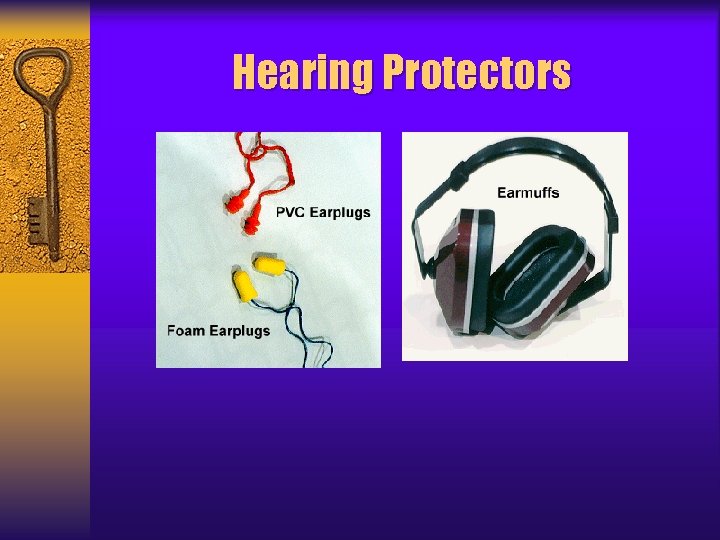
Protect your hearing… Use hearing protection when: Noise levels is 85 d. B or Higher • in high noise areas • using power saws, impact tools, etc. • off the job when shooting, using power tools, etc. Replace worn or broken hearing protectors immediately
Hearing Protectors 1 - Ear Muffs 2 - Ear Plugs 3 - Ear Canal NRR: Noise Reduction Rate of the Hearing Protector.
Hearing Protectors
Protect yourself… Use the right PPE for the Hazard Inspect your PPE before using Replace damaged or worn PPE Store your PPE properly so it will be ready for the next use Keep your PPE clean Notify your supervisor if you need new PPE