Post Classical India 600 1450 Islam in Northern

- Slides: 7
Post Classical India 600 -1450
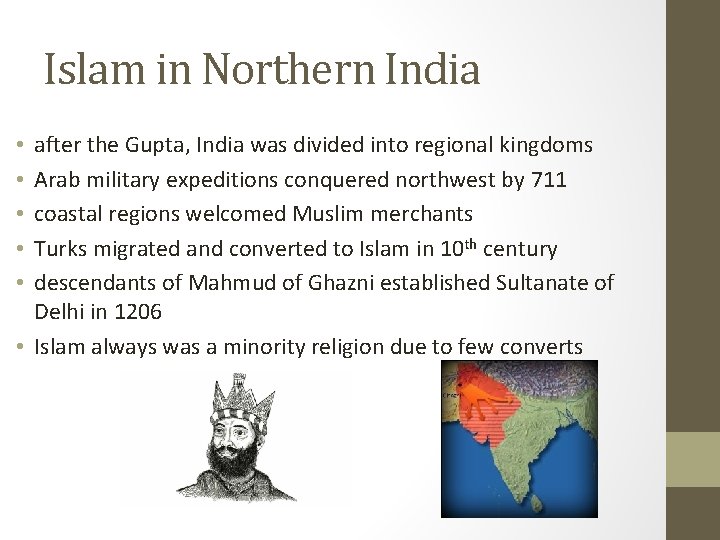
Islam in Northern India after the Gupta, India was divided into regional kingdoms Arab military expeditions conquered northwest by 711 coastal regions welcomed Muslim merchants Turks migrated and converted to Islam in 10 th century descendants of Mahmud of Ghazni established Sultanate of Delhi in 1206 • Islam always was a minority religion due to few converts • • •
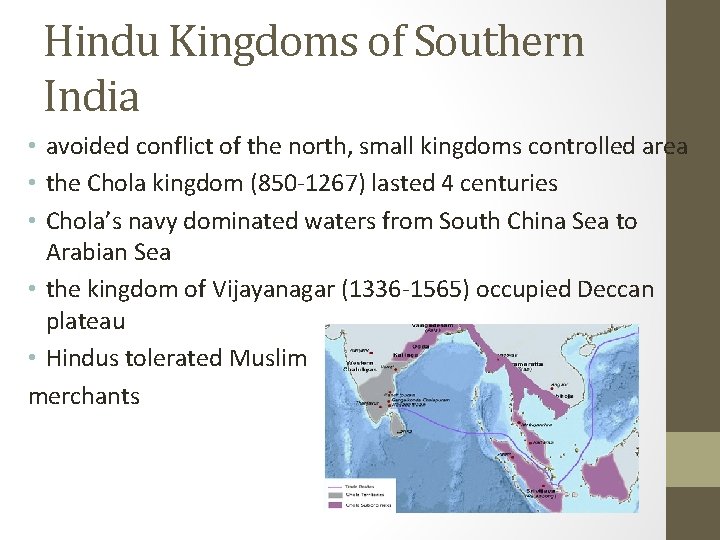
Hindu Kingdoms of Southern India • avoided conflict of the north, small kingdoms controlled area • the Chola kingdom (850 -1267) lasted 4 centuries • Chola’s navy dominated waters from South China Sea to Arabian Sea • the kingdom of Vijayanagar (1336 -1565) occupied Deccan plateau • Hindus tolerated Muslim merchants
Production and Trade • Agriculture • monsoon system challenged productivity • irrigation necessary for dry months • increased agriculture led to population growth (from 53 to 105 million) • urbanization increased in Delhi and port cities • Cross-Culture Trade • Indian Ocean trade system created wealth • dhows and junks used trade winds • Emporia, port cities, were used as clearinghouses of trade • warehouses located in India for storage due to central location • silk, porcelain (China), spices (SE Asia), pepper, gems, pearls, cotton (India), incense, horses (Arabia), gold, ivory, slaves (Africa)
Changes in Society • Caste system helped integrate immigrants, expansion of guilds and jatis • Jainism and Buddhism lost followers to Hindu and Islam • Hinduism dominated southern India, Islam in the north • devotional cults became popular in the south (Shiva, Vishnu) • Sufi mystics appealed to Indian merchants, effective missionaries • conversion to Islam was slow and gradual, some for improving social status • Bhakti movement attempted to blend Islam and Hinduism • Hindu and Muslim merchants from India spread culture to SE Asia
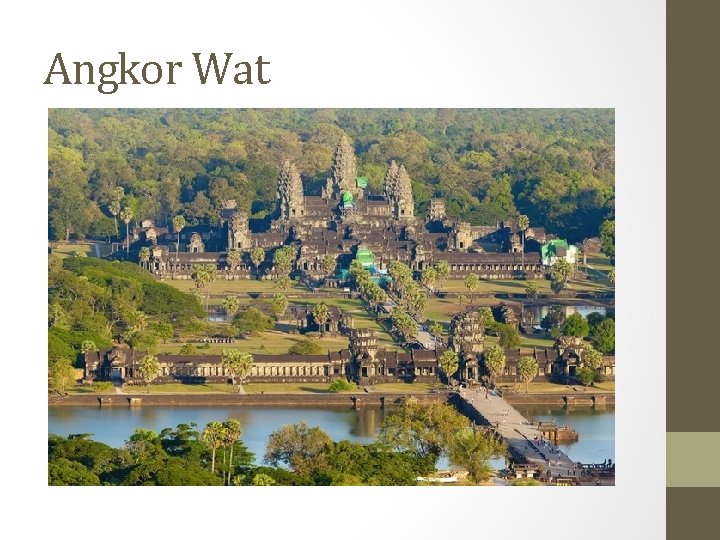
Influence of India in S. E. Asia • Indian merchants brought their faiths to SE Asia • ruling elites adapted some Indian political traditions • states sponsored Hinduism and Buddhism but not interested in caste system • Funan wealthy through trade in lower Mekong River area • Srivijaya on Sumatra used navy to maintain sea trade • Angkor built by Khmers was a reflection of Hindu world order • Angkor turned to Buddhism during 12 th and 13 th centuries • Thais invaded in 1431 and Khmers abandoned it • conversion to Islam in SE Asia was slow and quiet • ruling elite converted in cities while rural people kept old traditions
Angkor Wat