
Post Classical Period 600 1450 How did we

- Slides: 11
Post Classical Period 600 -1450
How did we get here? n Foundations (8000 bce – 600 bce) -Neolithic Revolution -Birth of sedentary civilization -Trade Patterns established n Classical Period (600 bce – 600 ce) -Empires Established -Expanding trade -Birth of sedentary civilization
The Six Things to Remember n n n 1. Tremendous growth in trade due to improvements in technology. 2. Major technological developments 3. Movement of People greatly altered the world. 4. Religion preached equality of all before God. 5. Spread of religion and trade acted as a unifying force. 6. Changes in functions and structures of states.
The Bookends n 600: Classical Empires have fallen n 632: Coming of Islam n 1000: Trade increases both by land sea. n 1450: Fall of Constantinople and decline of Silk Road n 1450: Europe looks westward toward the Atlantic.
Details: Growth in Trade n Long Distance Trade Increased Tremendously – Silk Road benefitted from big empires and peace. § Islamic Caliphate § Mongol Empire – Indian Ocean – Trans-Saharan Trade – Mediterranean Trade
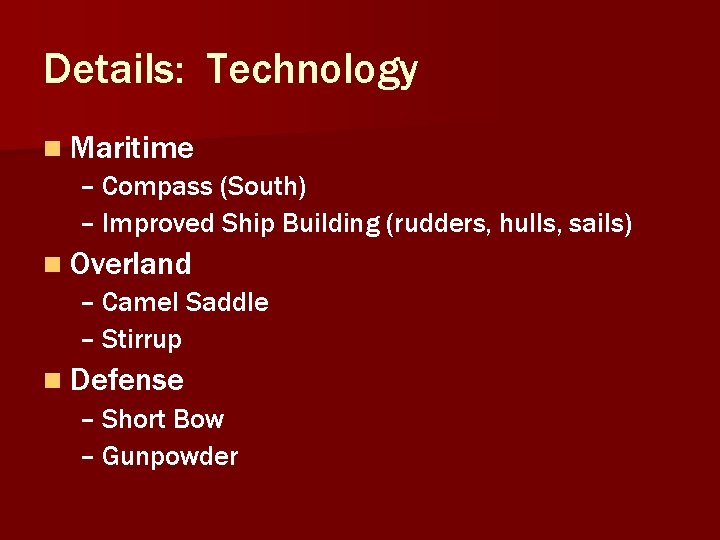
Details: Technology n Maritime – Compass (South) – Improved Ship Building (rudders, hulls, sails) n Overland – Camel Saddle – Stirrup n Defense – Short Bow – Gunpowder
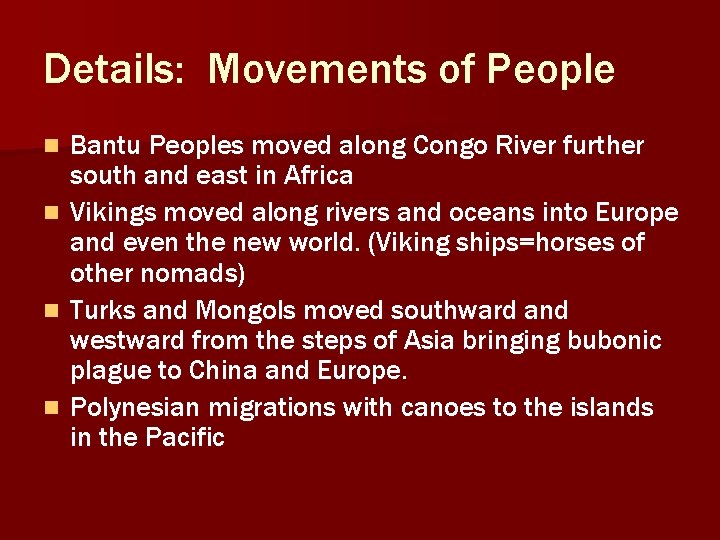
Details: Movements of People Bantu Peoples moved along Congo River further south and east in Africa n Vikings moved along rivers and oceans into Europe and even the new world. (Viking ships=horses of other nomads) n Turks and Mongols moved southward and westward from the steps of Asia bringing bubonic plague to China and Europe. n Polynesian migrations with canoes to the islands in the Pacific n
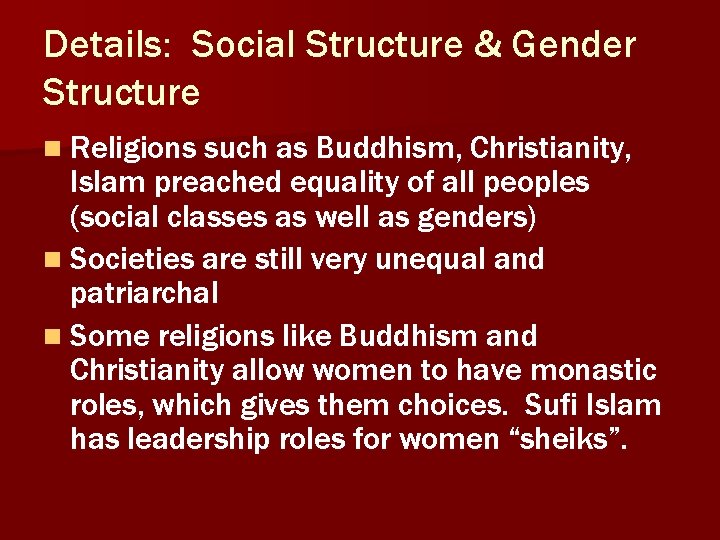
Details: Social Structure & Gender Structure n Religions such as Buddhism, Christianity, Islam preached equality of all peoples (social classes as well as genders) n Societies are still very unequal and patriarchal n Some religions like Buddhism and Christianity allow women to have monastic roles, which gives them choices. Sufi Islam has leadership roles for women “sheiks”.
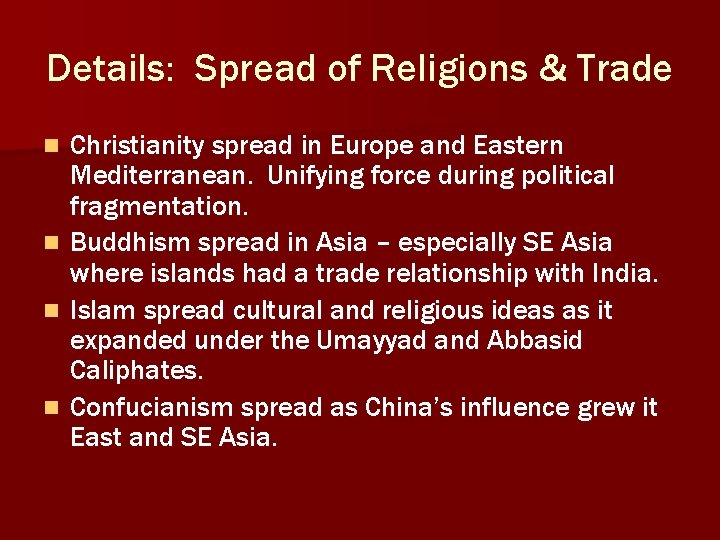
Details: Spread of Religions & Trade n n Christianity spread in Europe and Eastern Mediterranean. Unifying force during political fragmentation. Buddhism spread in Asia – especially SE Asia where islands had a trade relationship with India. Islam spread cultural and religious ideas as it expanded under the Umayyad and Abbasid Caliphates. Confucianism spread as China’s influence grew it East and SE Asia.
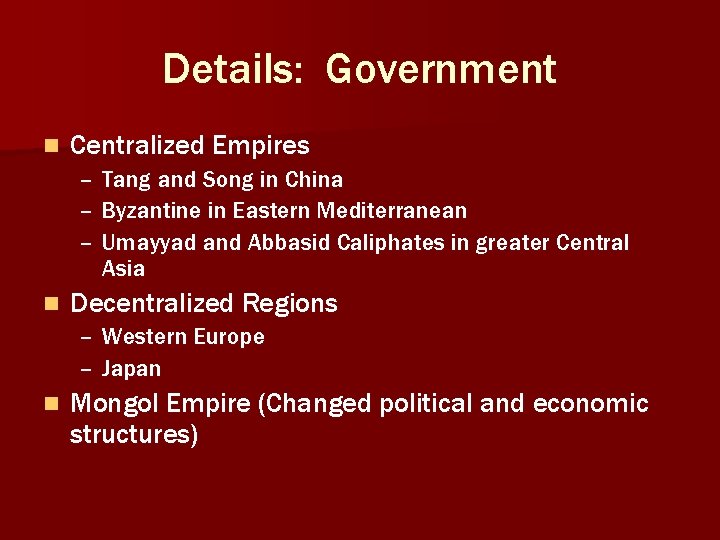
Details: Government n Centralized Empires – Tang and Song in China – Byzantine in Eastern Mediterranean – Umayyad and Abbasid Caliphates in greater Central Asia n Decentralized Regions – Western Europe – Japan n Mongol Empire (Changed political and economic structures)
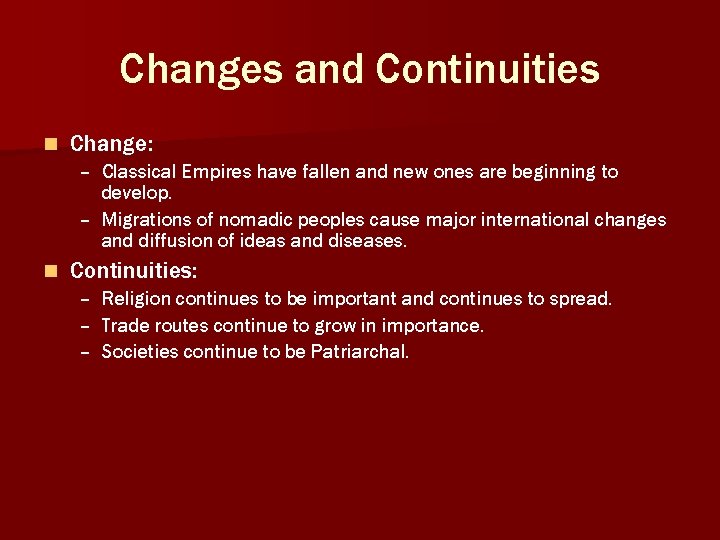
Changes and Continuities n Change: – Classical Empires have fallen and new ones are beginning to develop. – Migrations of nomadic peoples cause major international changes and diffusion of ideas and diseases. n Continuities: – – – Religion continues to be important and continues to spread. Trade routes continue to grow in importance. Societies continue to be Patriarchal.