PIC code simulations of solar flare processes Marian
- Slides: 23
PIC code simulations of solar flare processes Marian Karlický Miroslav Bárta Dieter Nickeler Astronomical Institute 251 65 Ondřejov Czech Republic
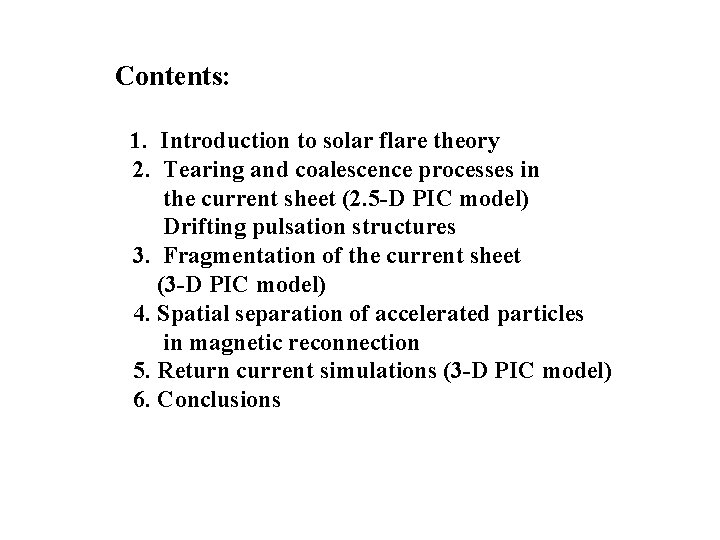
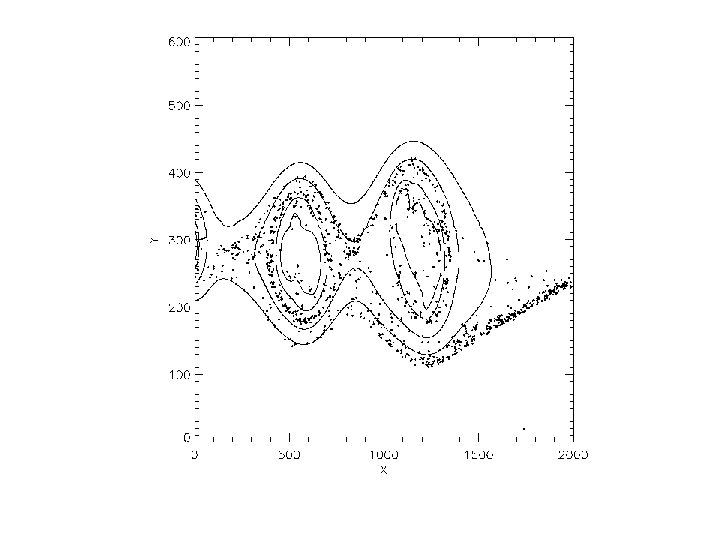
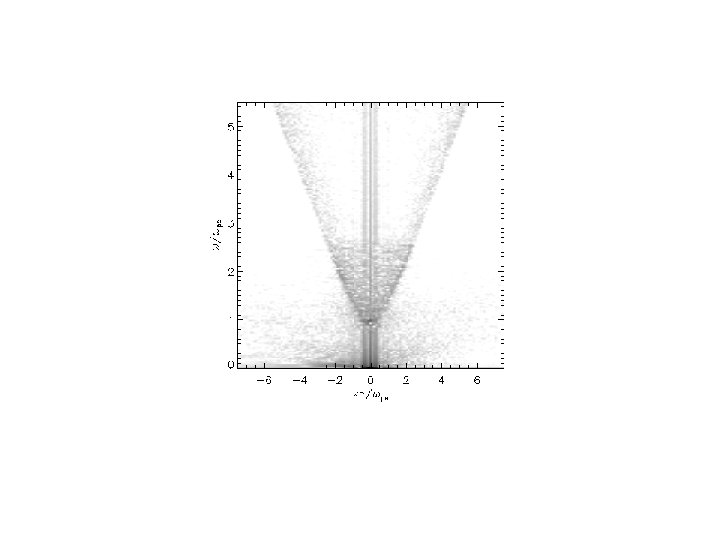
Contents: 1. Introduction to solar flare theory 2. Tearing and coalescence processes in the current sheet (2. 5 -D PIC model) Drifting pulsation structures 3. Fragmentation of the current sheet (3 -D PIC model) 4. Spatial separation of accelerated particles in magnetic reconnection 5. Return current simulations (3 -D PIC model) 6. Conclusions
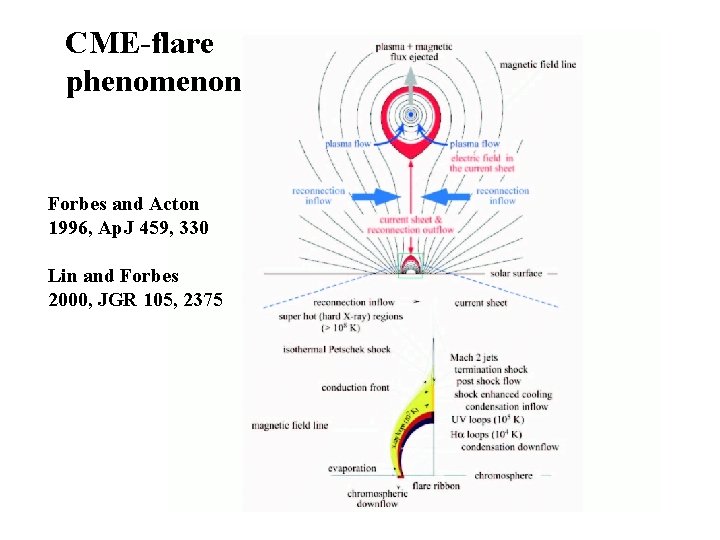
CME-flare phenomenon Forbes and Acton 1996, Ap. J 459, 330 Lin and Forbes 2000, JGR 105, 2375
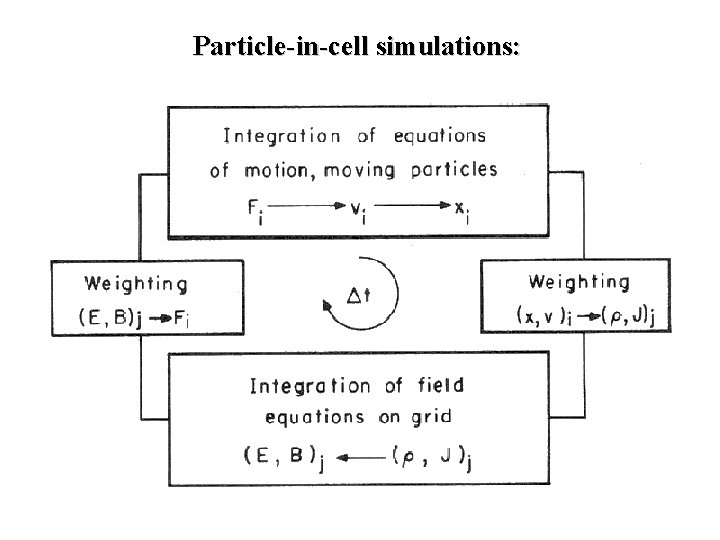
Particle-in-cell simulations:
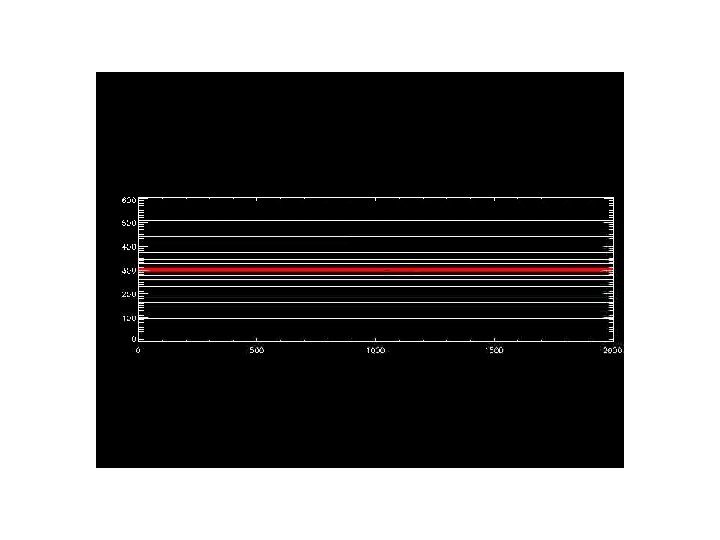
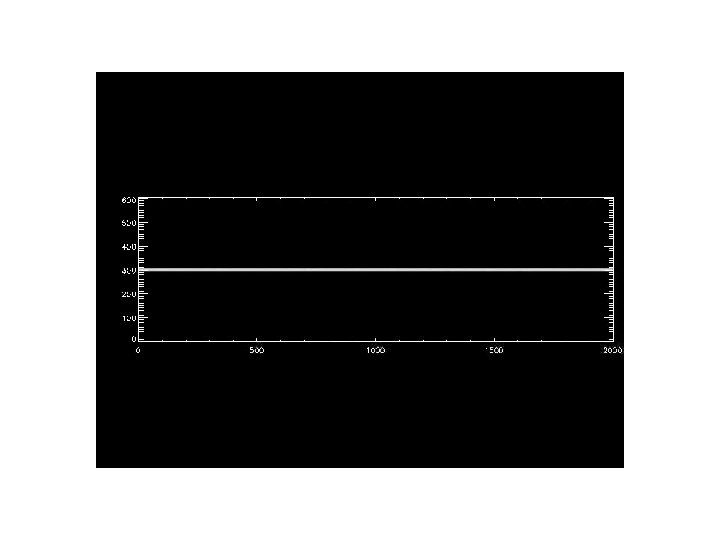
Particle-in-cell simulations: Drake et al. 2005, Phys. Rev. Lett. 94, 095001 Pritchett 2006, J. Geophys. Res. 111, A 10212 Karlický and Bárta 2007, AA 464, 735 2. 5 D electromagnetic relativistic PIC code (Saito, Sakai: 2004, Ap. J 616, L 179) Numerical box 2000 x 600 grids Current sheet, half-width 10 grids Parallel code, Ondřejov Cluster for Astrophysical Simulations
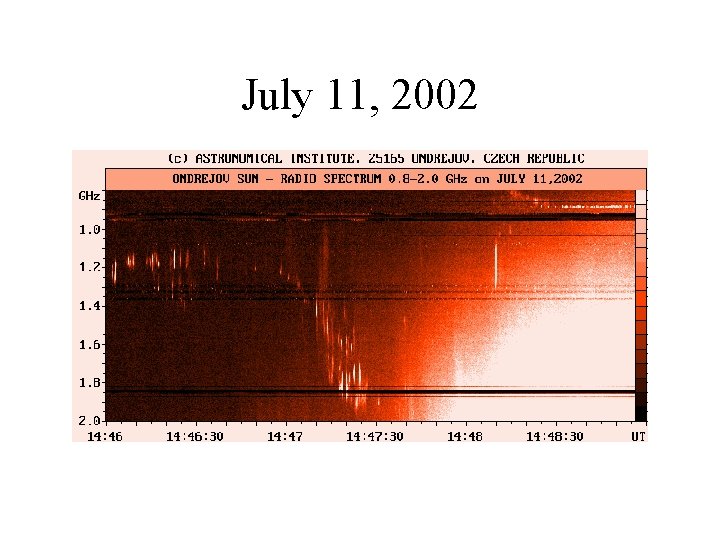
July 11, 2002
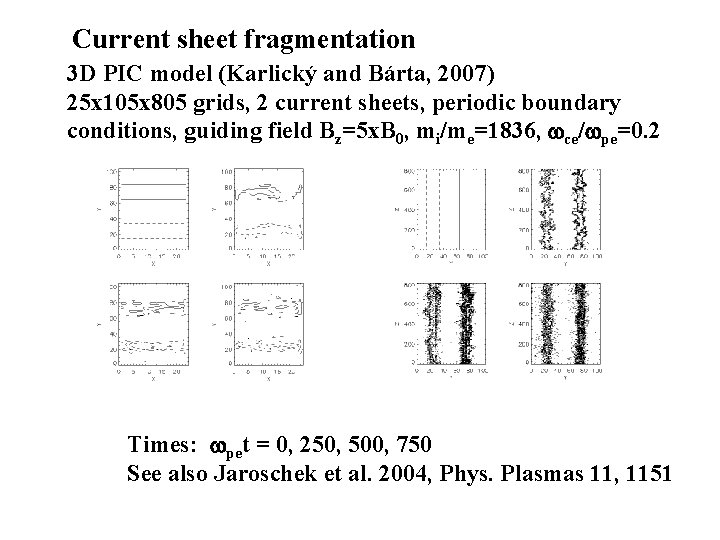
Current sheet fragmentation 3 D PIC model (Karlický and Bárta, 2007) 25 x 105 x 805 grids, 2 current sheets, periodic boundary conditions, guiding field Bz=5 x. B 0, mi/me=1836, wce/wpe=0. 2 Times: wpet = 0, 250, 500, 750 See also Jaroschek et al. 2004, Phys. Plasmas 11, 1151
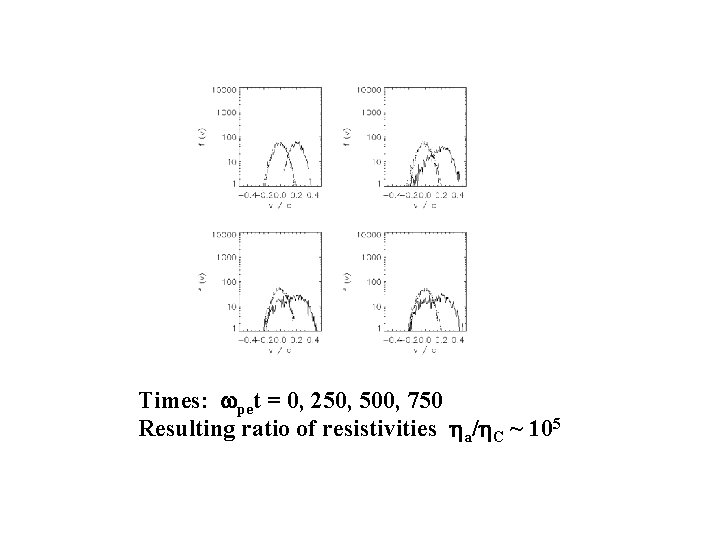
Times: wpet = 0, 250, 500, 750 Resulting ratio of resistivities ha/h. C ~ 105
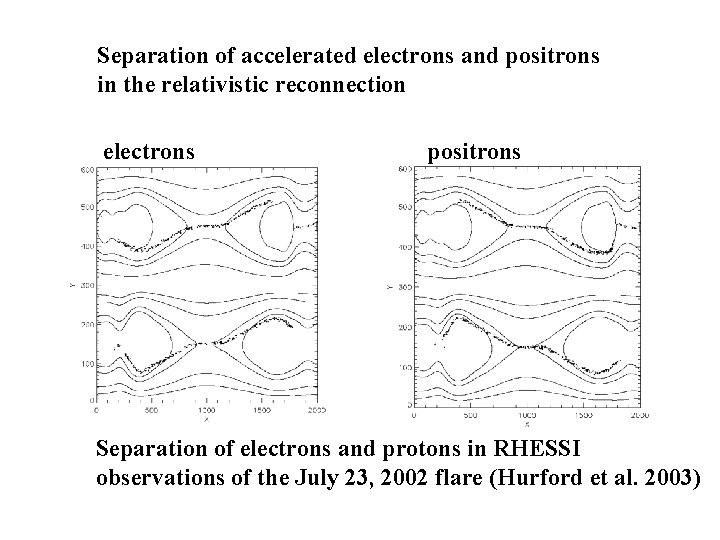
Separation of accelerated electrons and positrons in the relativistic reconnection electrons positrons Separation of electrons and protons in RHESSI observations of the July 23, 2002 flare (Hurford et al. 2003)
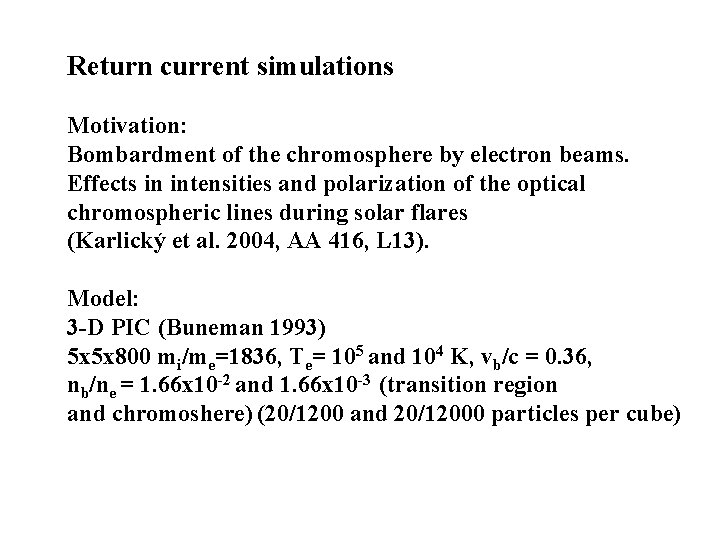
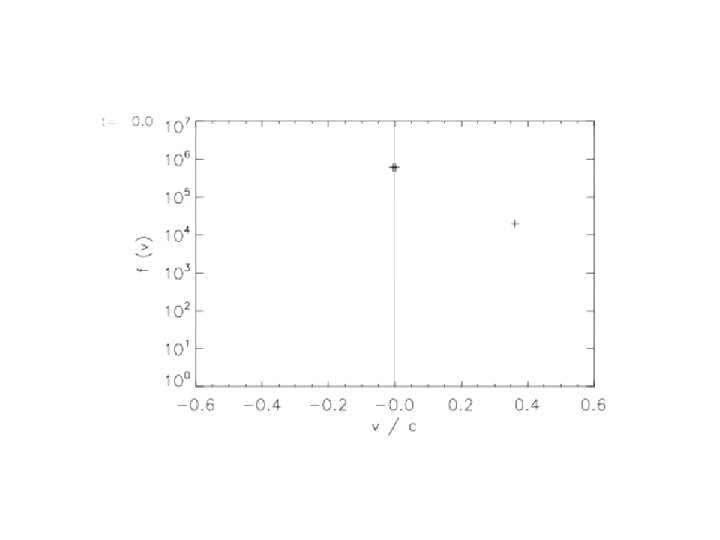
Return current simulations Motivation: Bombardment of the chromosphere by electron beams. Effects in intensities and polarization of the optical chromospheric lines during solar flares (Karlický et al. 2004, AA 416, L 13). Model: 3 -D PIC (Buneman 1993) 5 x 5 x 800 mi/me=1836, Te= 105 and 104 K, vb/c = 0. 36, nb/ne = 1. 66 x 10 -2 and 1. 66 x 10 -3 (transition region and chromoshere) (20/1200 and 20/12000 particles per cube)
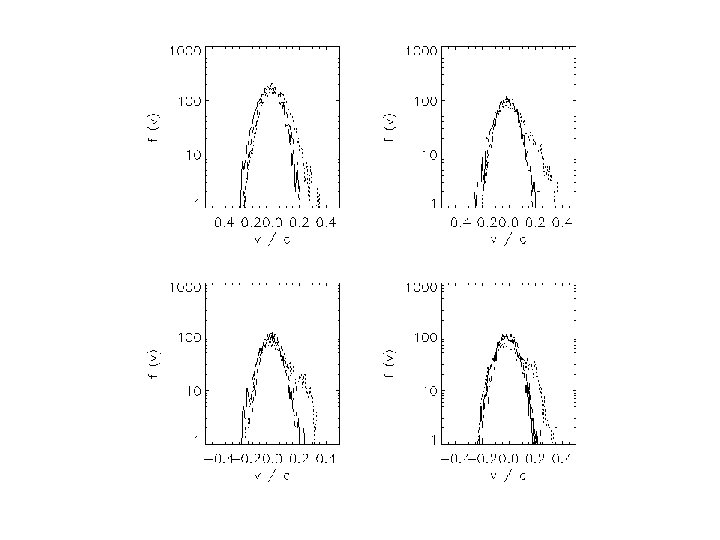
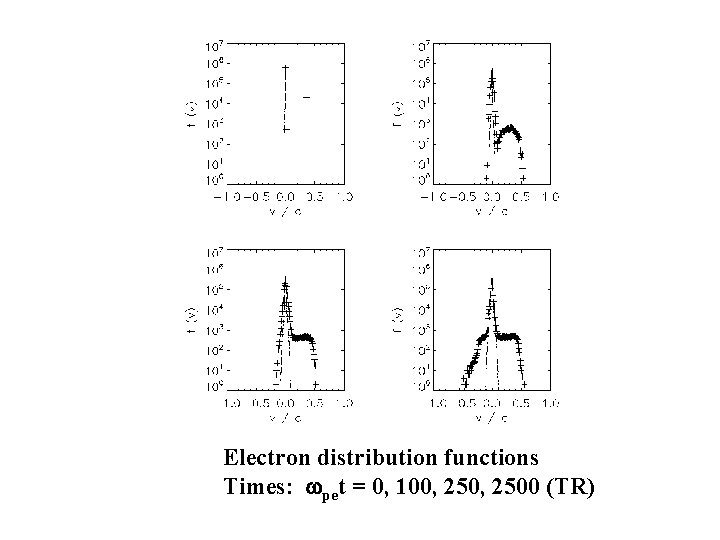
Electron distribution functions Times: wpet = 0, 100, 2500 (TR)
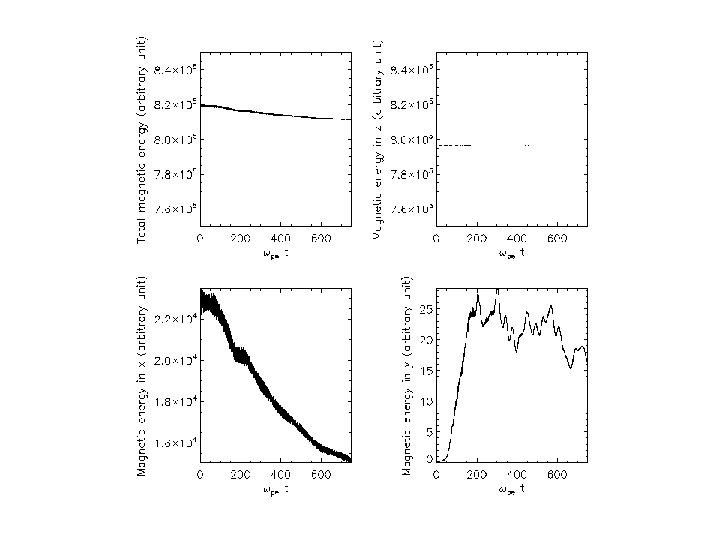
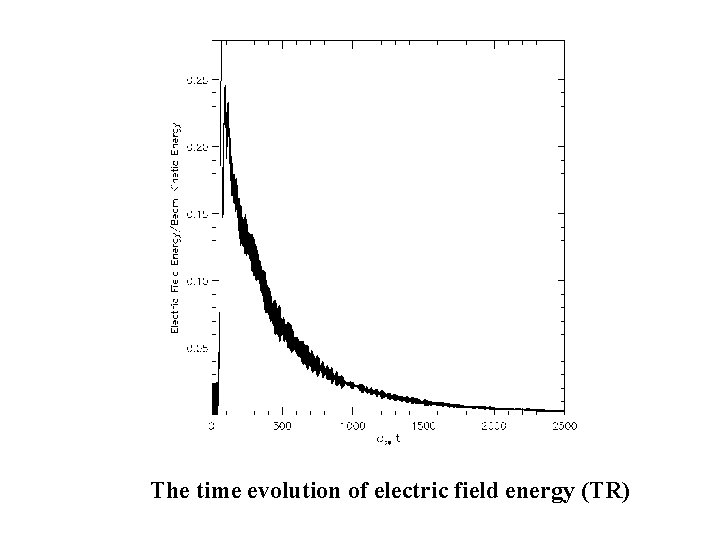
The time evolution of electric field energy (TR)
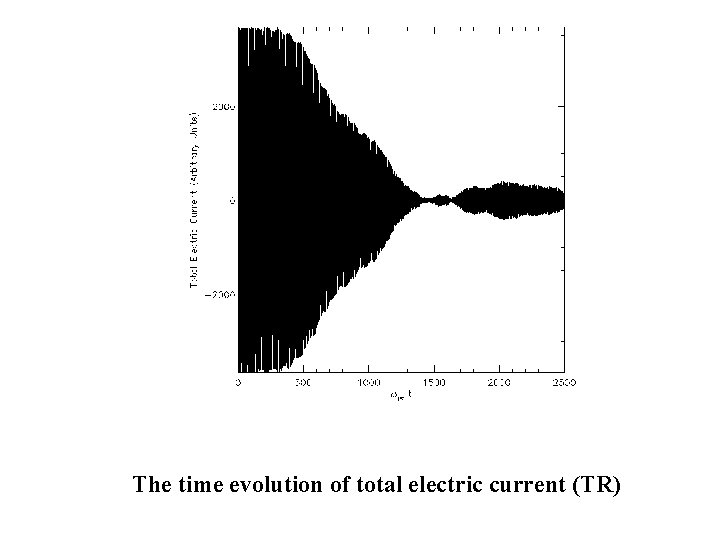
The time evolution of total electric current (TR)
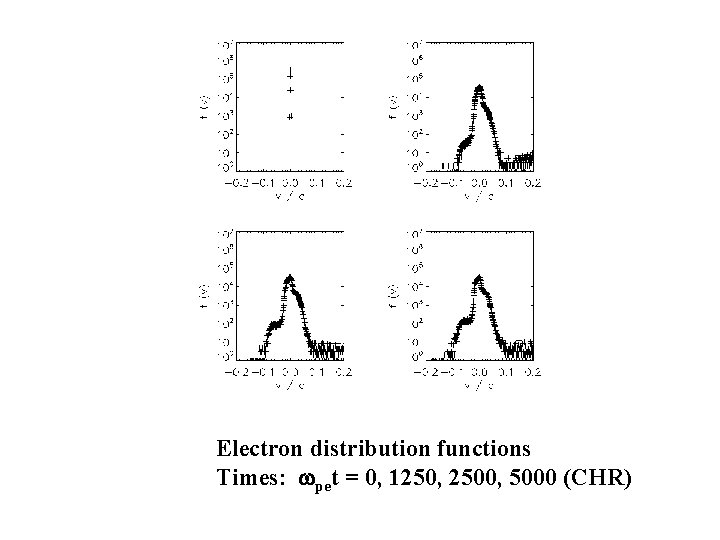
Electron distribution functions Times: wpet = 0, 1250, 2500, 5000 (CHR)
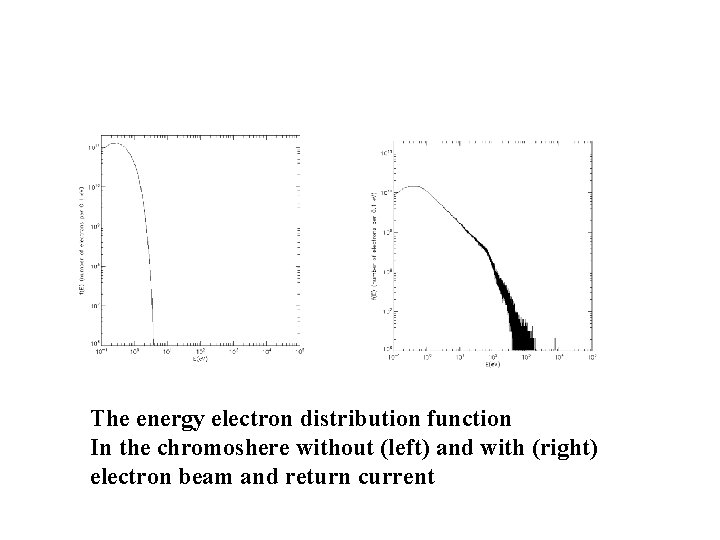
The energy electron distribution function In the chromoshere without (left) and with (right) electron beam and return current
Conclusions: 1. The PIC models show that the current sheets are unstable due to tearing mode instability and they become very fragmented due to Buneman and kinetic kink instability. These processes support fast dissipation of the magnetic field energy. 2. Magnetic reconnection with the guiding magnetic field spatially separates particles. 3. Observational evidence of these processes is: moving plasmoids, radio drifting pulsation structures, evolving X-ray and radio loop-top sources. 4. A formation of the return current is presented. This current is formed by electrons from the bulk as well as from the tail of the distribution function. Resuls are very important for computations of intensities and polarization of optical chromospheric lines.