PHYSICAL EVIDENCE AND THE SERVICESCAPE Chapter 10 Donna


- Slides: 26
PHYSICAL EVIDENCE AND THE SERVICESCAPE Chapter 10 Donna J. Hill, Ph. D. Service Marketing Spring 2000
Servicescape s Physical facility --(interior & exterior) Ambient conditions ---(temp. colors, noises, smells) s Other tangibles s
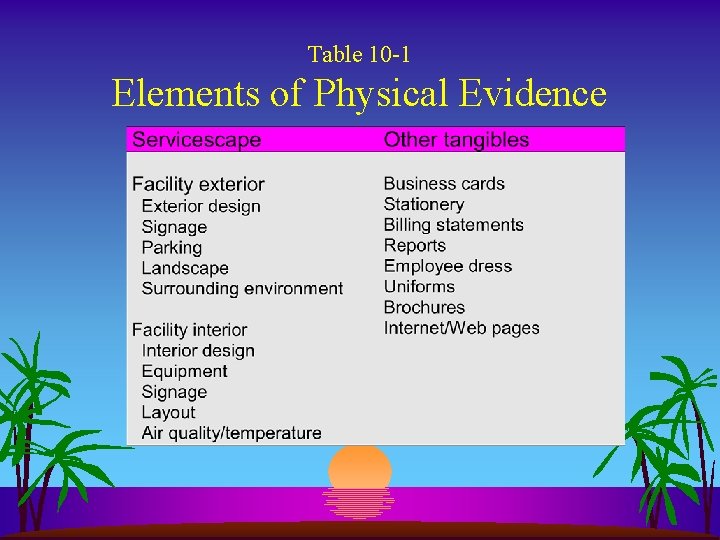
Table 10 -1 Elements of Physical Evidence
Impact of Service Environment s s Purchase decision Expectations Service quality evaluations Satisfaction
Table 10 -2 Examples of Physical Evidence from the Customer’s Point of View
Table 10 -3 Typology of Service Organizations Based on Variations in Form and Use of the Servicescape
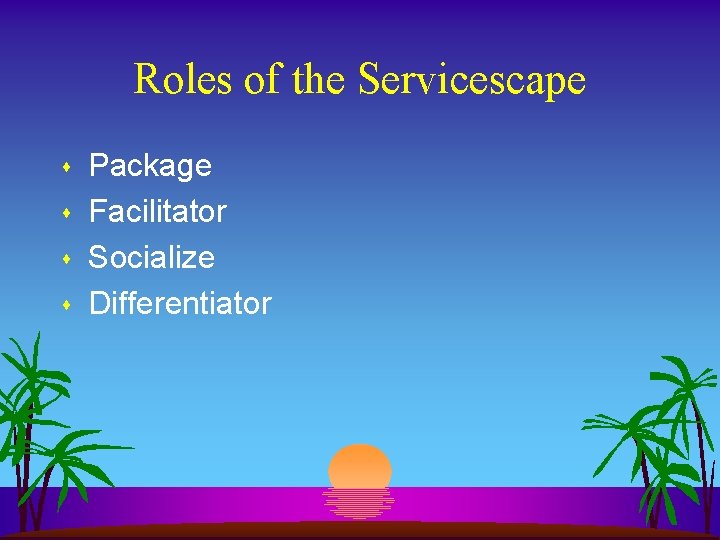
Roles of the Servicescape s s Package Facilitator Socialize Differentiator
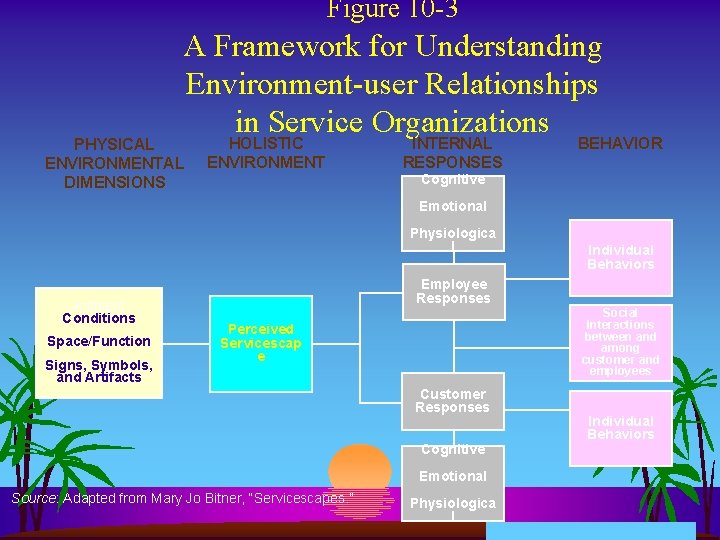
Figure 10 -3 A Framework for Understanding Environment-user Relationships in Service Organizations PHYSICAL ENVIRONMENTAL DIMENSIONS HOLISTIC ENVIRONMENT INTERNAL RESPONSES BEHAVIOR Cognitive Emotional Physiologica l Ambient Conditions Space/Function Signs, Symbols, and Artifacts Individual Behaviors Employee Responses Social Interactions between and among customer and employees Perceived Servicescap e Customer Responses Cognitive Emotional Source: Adapted from Mary Jo Bitner, “Servicescapes. ” Physiologica l Individual Behaviors
Framework for Understanding Servicescape Effects on Behavior s Internal Responses – Cognitive --- knowledge structure – Affective ---feelings & emotions – Physiological--- changes in
Knowledge Structures s Beliefs Categorization Symbolic Meaning
Emotional s s Mood Attitude
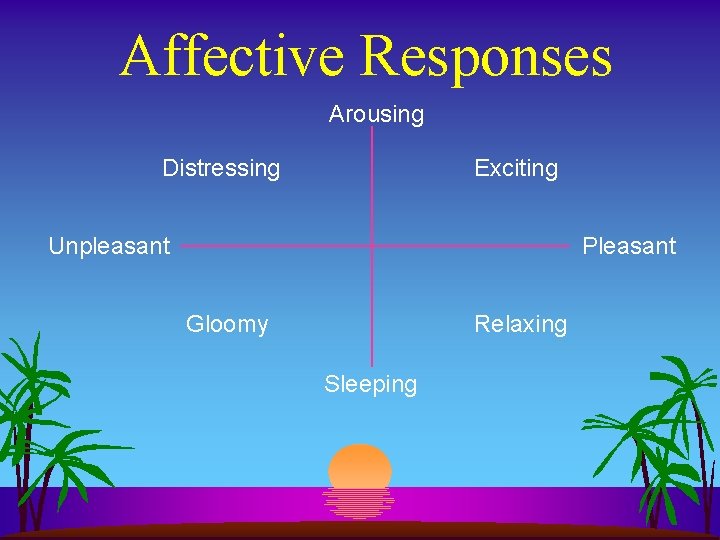
Affective Responses Arousing Distressing Exciting Unpleasant Pleasant Gloomy Relaxing Sleeping
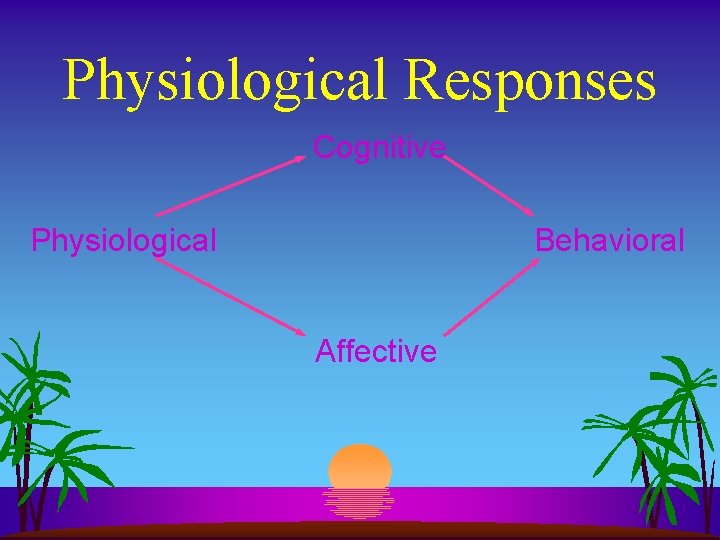
Physiological Responses s s Heart beat rate Pupil dilation Tears Perspiration Pain
Physiological Responses Cognitive Physiological Behavioral Affective
Individual Behaviors Created by Servicescape s s s Approach behaviors Avoidance behaviors Arousal seekers Arousal avoiders Environmental stimuli screeners Environmental stimuli nonscreeners
Social Interactions s Between and among customers and employees
Environmental Dimensions s Ambient Conditions Spatial Layout and Functionality Signs, Symbols and Artifacts
Perceptions of Crowding s s Environmental cues Shopping motives Constraints Expectations of crowding
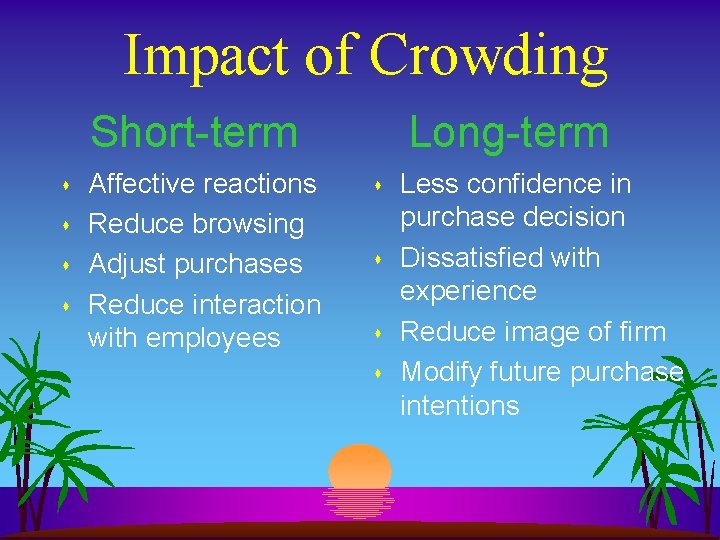
Impact of Crowding Short-term s s Affective reactions Reduce browsing Adjust purchases Reduce interaction with employees Long-term s s Less confidence in purchase decision Dissatisfied with experience Reduce image of firm Modify future purchase intentions
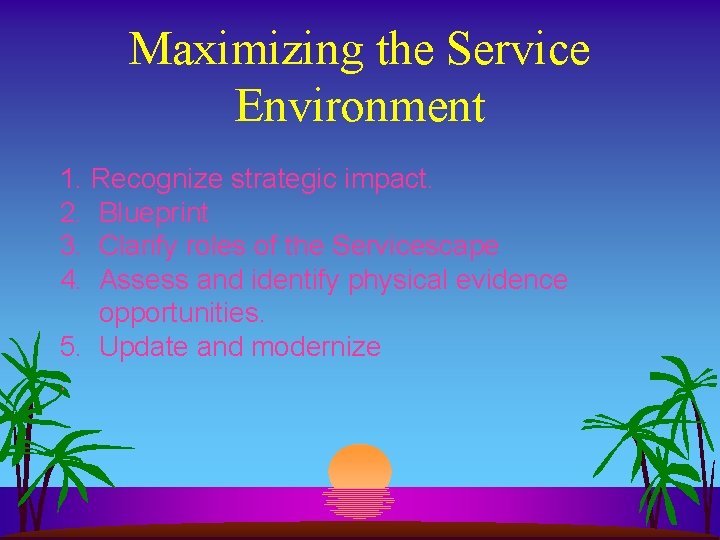
Maximizing the Service Environment 1. Recognize strategic impact. 2. Blueprint 3. Clarify roles of the Servicescape 4. Assess and identify physical evidence opportunities. 5. Update and modernize.
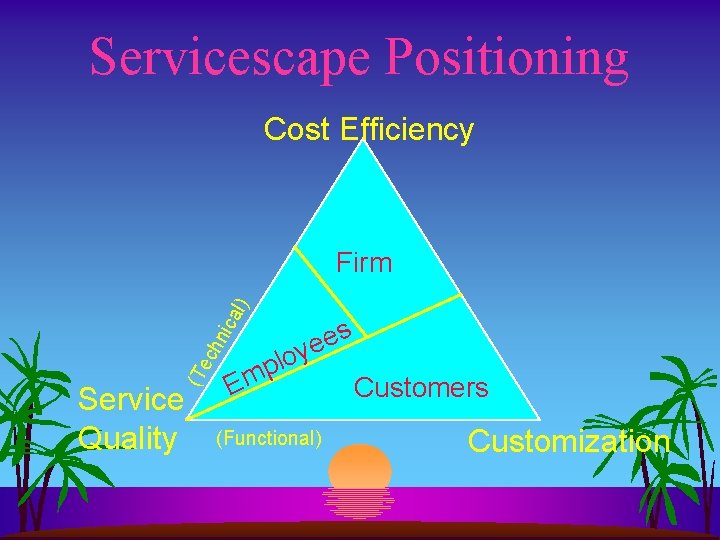
Servicescape Positioning Cost Efficiency al) Firm (Te ch nic s e e oy Service Quality l p Em (Functional) Customers Customization
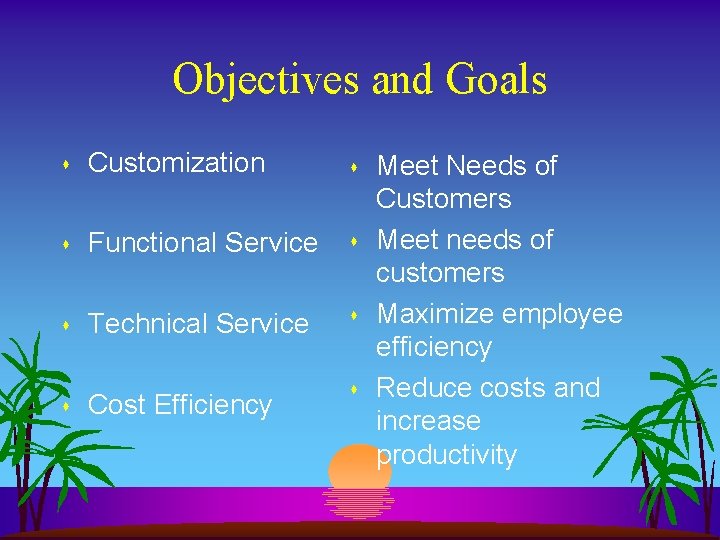
Objectives and Goals s Customization s s Functional Service s s Technical Service s s Cost Efficiency s Meet Needs of Customers Meet needs of customers Maximize employee efficiency Reduce costs and increase productivity
Choosing the Location s s s Operational Position Merchantability Traffic interception Cumulative competitive attraction Competitive compatibility Accessibility
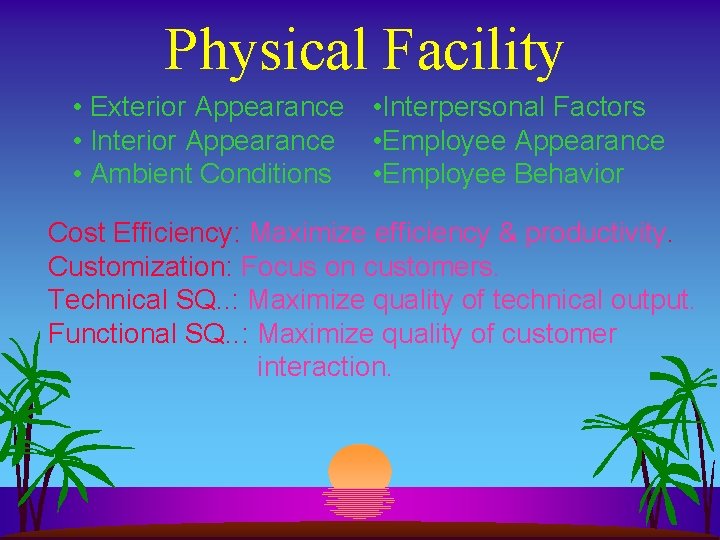
Physical Facility • Exterior Appearance • Interpersonal Factors • Interior Appearance • Employee Appearance • Ambient Conditions • Employee Behavior Cost Efficiency: Maximize efficiency & productivity. Customization: Focus on customers. Technical SQ. . : Maximize quality of technical output. Functional SQ. . : Maximize quality of customer interaction.
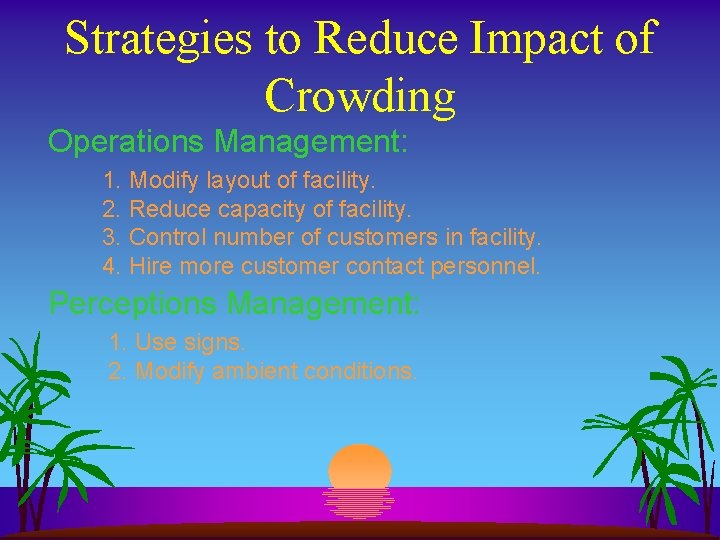
Strategies to Reduce Impact of Crowding Operations Management: 1. Modify layout of facility. 2. Reduce capacity of facility. 3. Control number of customers in facility. 4. Hire more customer contact personnel. Perceptions Management: 1. Use signs. 2. Modify ambient conditions.
Entertainment Services s Spectator Sports s Recreational Theme Parks