Phylum Echinodermata Lauren and Simon Echinoderms echin spiny
- Slides: 15
Phylum Echinodermata Lauren and Simon
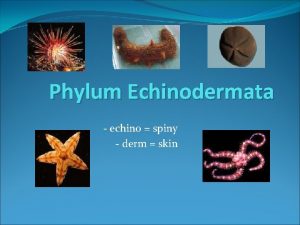
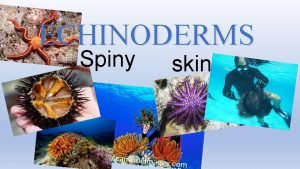
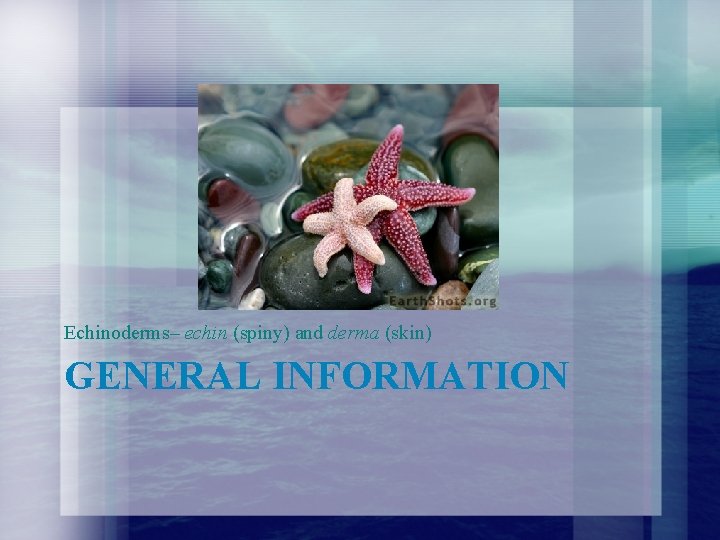
Echinoderms– echin (spiny) and derma (skin) GENERAL INFORMATION
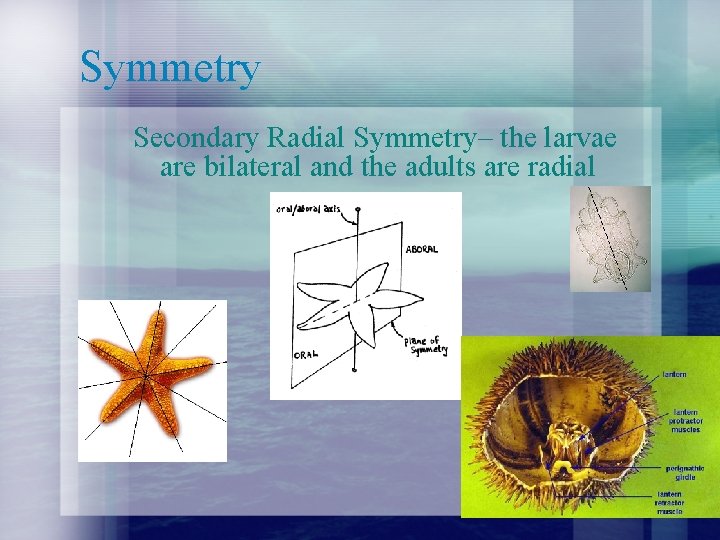
Symmetry Secondary Radial Symmetry– the larvae are bilateral and the adults are radial
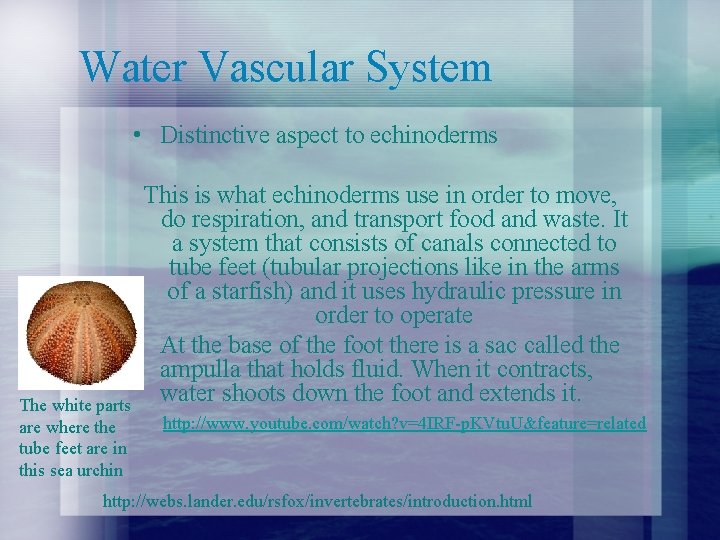
Water Vascular System • Distinctive aspect to echinoderms This is what echinoderms use in order to move, do respiration, and transport food and waste. It a system that consists of canals connected to tube feet (tubular projections like in the arms of a starfish) and it uses hydraulic pressure in order to operate • At the base of the foot there is a sac called the ampulla that holds fluid. When it contracts, water shoots down the foot and extends it. The white parts are where the tube feet are in this sea urchin http: //www. youtube. com/watch? v=4 IRF-p. KVtu. U&feature=related http: //webs. lander. edu/rsfox/invertebrates/introduction. html
Body Development • The Echinodermata has a two stage development—the larvae and the adult. When the larvae grows, its left side then grows a lot, and the right side gets absorbed. The left side then grows in a 5 part radial symmetrical fashion, creating the adult echinodermata.
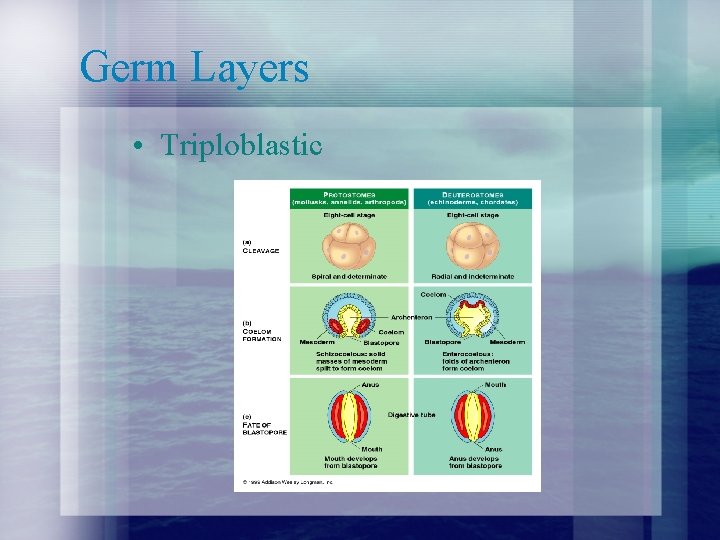
Germ Layers • Triploblastic
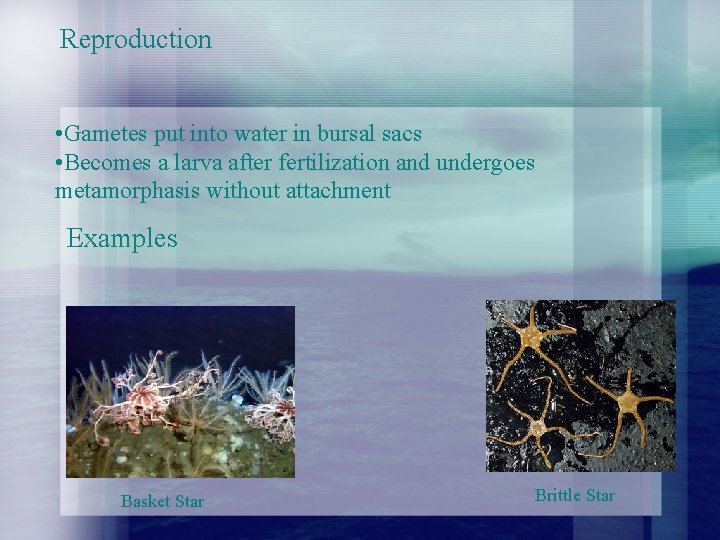
Reproduction • Gametes put into water in bursal sacs • Becomes a larva after fertilization and undergoes metamorphasis without attachment Examples Basket Star Brittle Star
Unique Abilities Echinoderms have a special kind of tissue connected to ossicles (plates made of calcium carbonate) that can change their consistency from solid to liquid very quickly. This phenomenon allows echinoderms to do amazing things: • Sea urchins can move or lock their spines • Brittle and sea stars can bend or purposely break off an arm • Sea cucumbers can move/flow into narrow places and harden when it is in a safe place http: //www. wildsingapore. com/chekjawa/text/p 600. htm
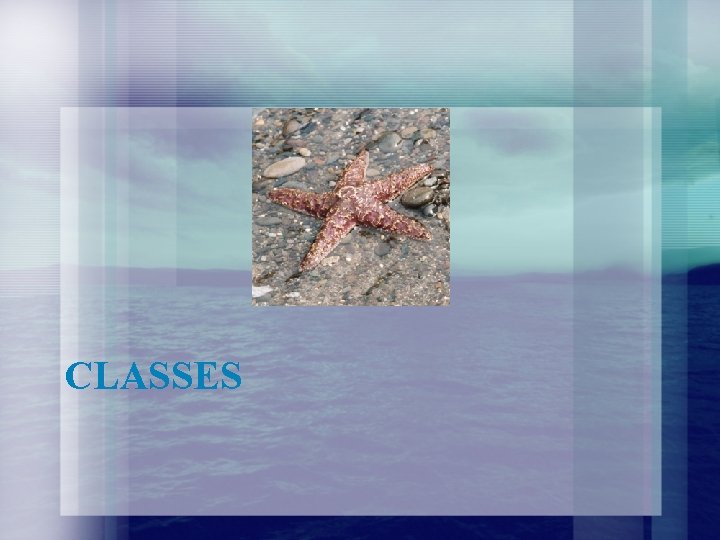
CLASSES
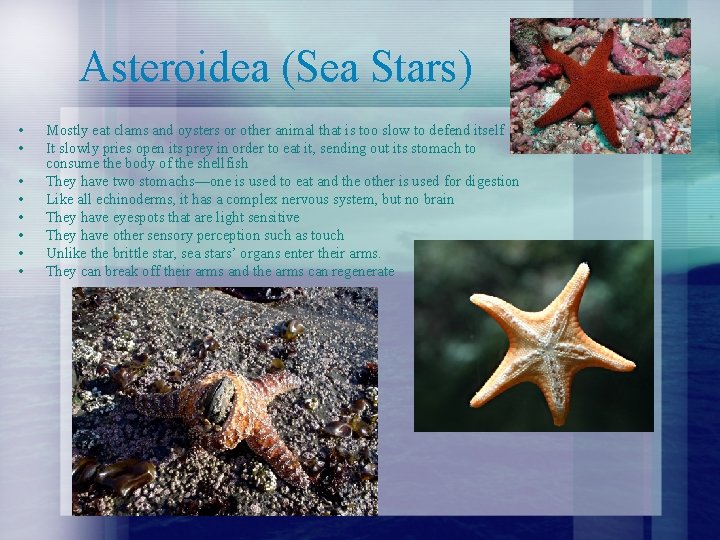
Asteroidea (Sea Stars) • • Mostly eat clams and oysters or other animal that is too slow to defend itself It slowly pries open its prey in order to eat it, sending out its stomach to consume the body of the shellfish They have two stomachs—one is used to eat and the other is used for digestion Like all echinoderms, it has a complex nervous system, but no brain They have eyespots that are light sensitive They have other sensory perception such as touch Unlike the brittle star, sea stars’ organs enter their arms. They can break off their arms and the arms can regenerate
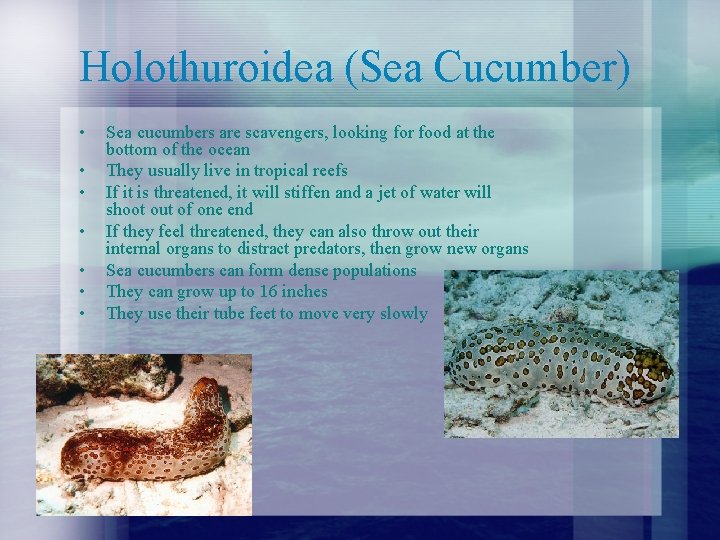
Holothuroidea (Sea Cucumber) • • Sea cucumbers are scavengers, looking for food at the bottom of the ocean They usually live in tropical reefs If it is threatened, it will stiffen and a jet of water will shoot out of one end If they feel threatened, they can also throw out their internal organs to distract predators, then grow new organs Sea cucumbers can form dense populations They can grow up to 16 inches They use their tube feet to move very slowly
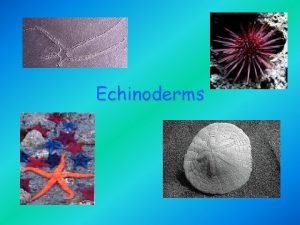
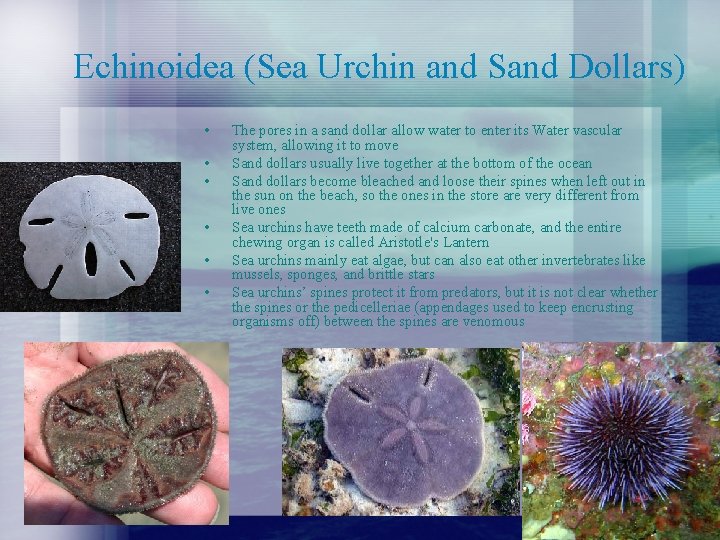
Echinoidea (Sea Urchin and Sand Dollars) • • • The pores in a sand dollar allow water to enter its Water vascular system, allowing it to move Sand dollars usually live together at the bottom of the ocean Sand dollars become bleached and loose their spines when left out in the sun on the beach, so the ones in the store are very different from live ones Sea urchins have teeth made of calcium carbonate, and the entire chewing organ is called Aristotle's Lantern Sea urchins mainly eat algae, but can also eat other invertebrates like mussels, sponges, and brittle stars Sea urchins’ spines protect it from predators, but it is not clear whether the spines or the pedicelleriae (appendages used to keep encrusting organisms off) between the spines are venomous
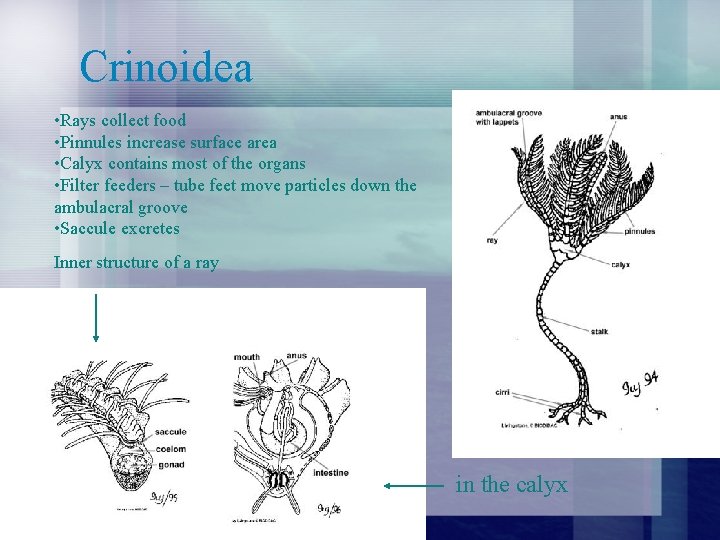
Crinoidea • Rays collect food • Pinnules increase surface area • Calyx contains most of the organs • Filter feeders – tube feet move particles down the ambulacral groove • Saccule excretes Inner structure of a ray in the calyx
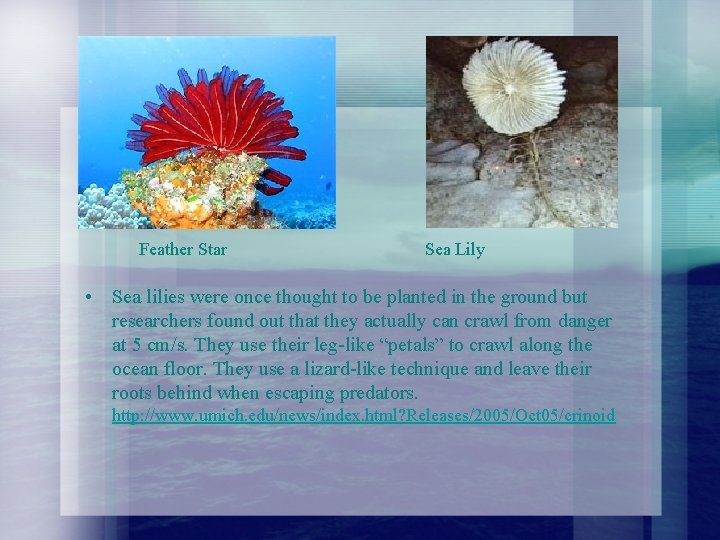
Feather Star Sea Lily • Sea lilies were once thought to be planted in the ground but researchers found out that they actually can crawl from danger at 5 cm/s. They use their leg-like “petals” to crawl along the ocean floor. They use a lizard-like technique and leave their roots behind when escaping predators. http: //www. umich. edu/news/index. html? Releases/2005/Oct 05/crinoid
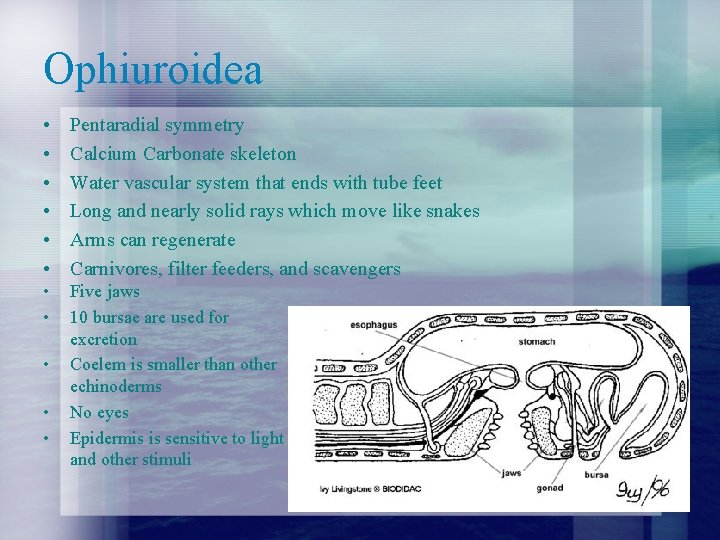
Ophiuroidea • • • Pentaradial symmetry Calcium Carbonate skeleton Water vascular system that ends with tube feet Long and nearly solid rays which move like snakes Arms can regenerate Carnivores, filter feeders, and scavengers • • Five jaws 10 bursae are used for excretion Coelem is smaller than other echinoderms No eyes Epidermis is sensitive to light and other stimuli • • •