
Echinoderms Phylum Echinodermata Echinodermata means spiny skin Echinoderms


- Slides: 23
Echinoderms
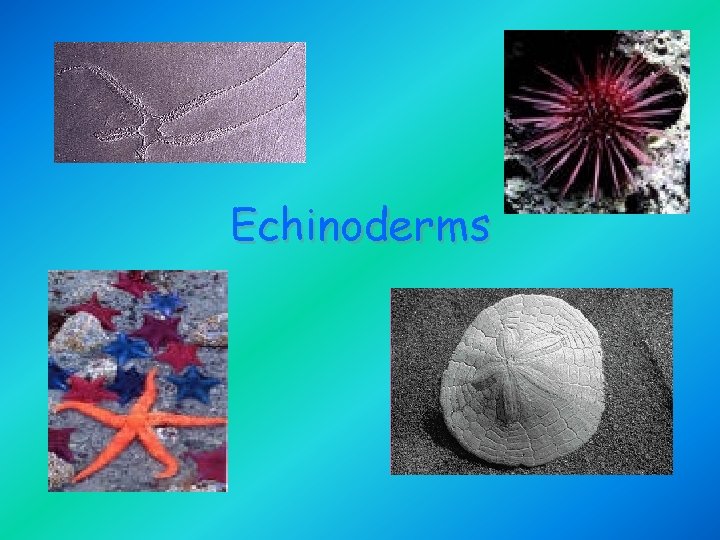
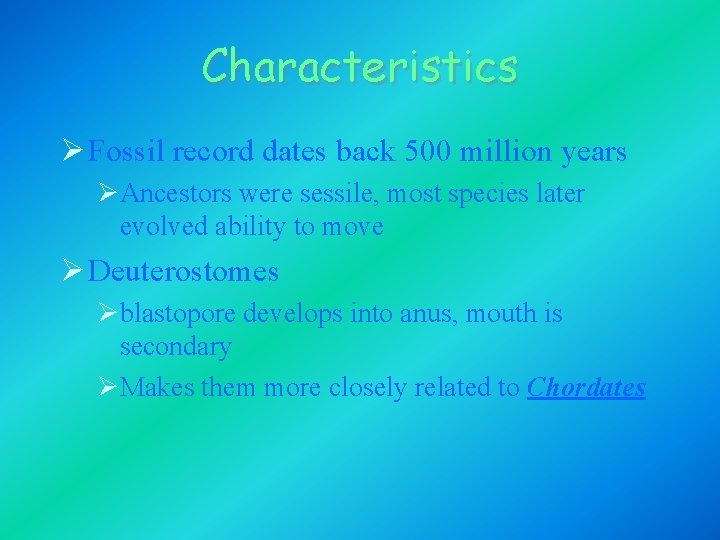
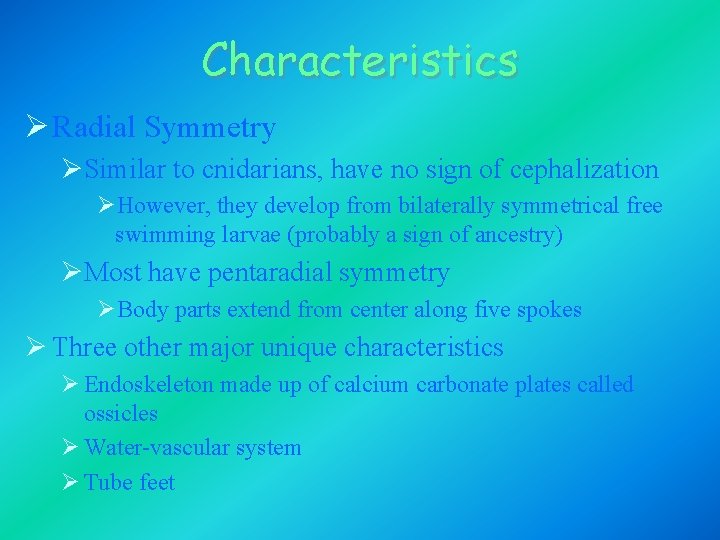
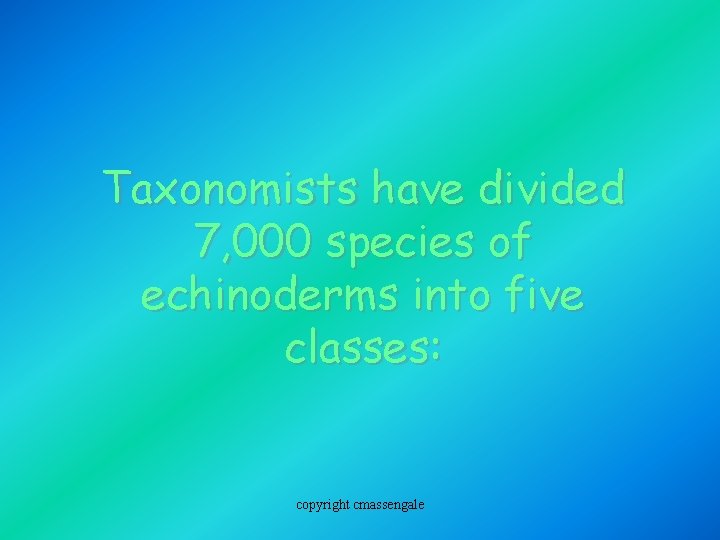
Phylum Echinodermata Ø Echinodermata means “spiny skin” Ø Echinoderms range in habitat from shallow coastal waters to deep ocean trenches Ø Vary in size from 1 cm to 1 meter Ø Organisms in this class include: • • Sea stars Sea Urchins Sand dollars Sea cucumbers
Characteristics Ø Fossil record dates back 500 million years ØAncestors were sessile, most species later evolved ability to move Ø Deuterostomes Øblastopore develops into anus, mouth is secondary ØMakes them more closely related to Chordates
Characteristics Ø Radial Symmetry ØSimilar to cnidarians, have no sign of cephalization ØHowever, they develop from bilaterally symmetrical free swimming larvae (probably a sign of ancestry) ØMost have pentaradial symmetry ØBody parts extend from center along five spokes Ø Three other major unique characteristics Ø Endoskeleton made up of calcium carbonate plates called ossicles Ø Water-vascular system Ø Tube feet
Taxonomists have divided 7, 000 species of echinoderms into five classes: copyright cmassengale
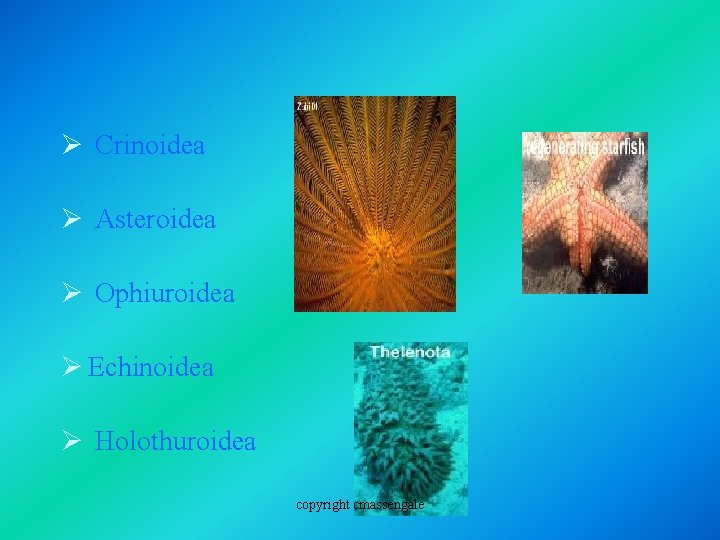
Ø Crinoidea Ø Asteroidea Ø Ophiuroidea Ø Echinoidea Ø Holothuroidea copyright cmassengale
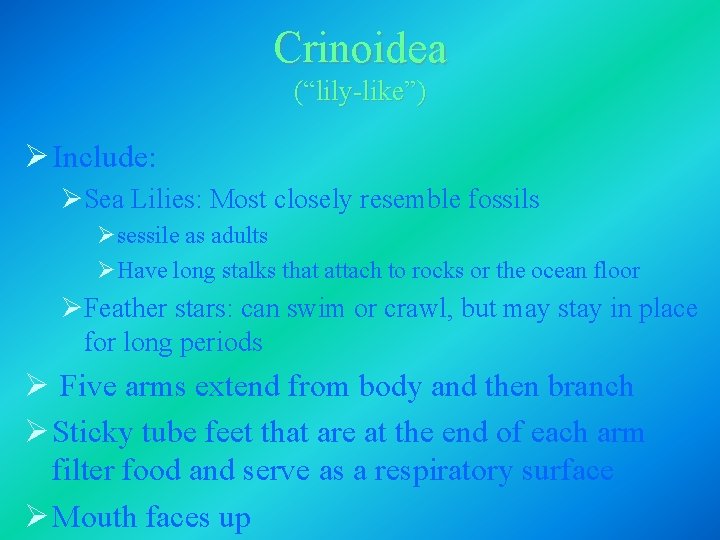
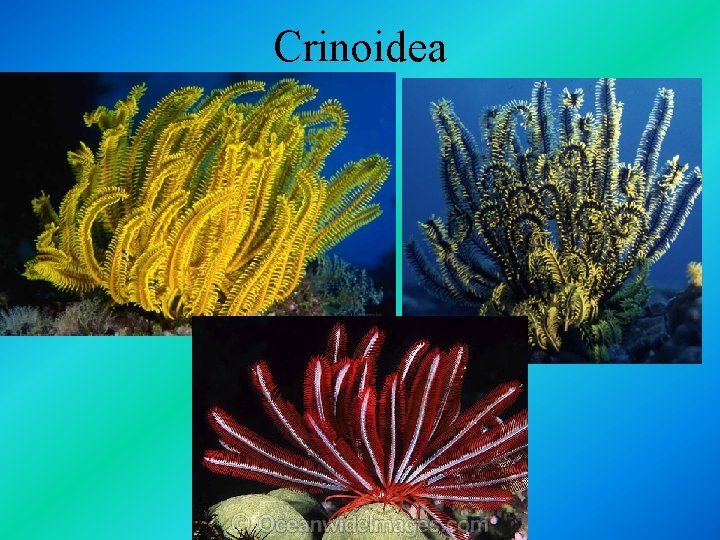
Crinoidea (“lily-like”) Ø Include: ØSea Lilies: Most closely resemble fossils Øsessile as adults ØHave long stalks that attach to rocks or the ocean floor ØFeather stars: can swim or crawl, but may stay in place for long periods Ø Five arms extend from body and then branch Ø Sticky tube feet that are at the end of each arm filter food and serve as a respiratory surface Ø Mouth faces up
Crinoidea
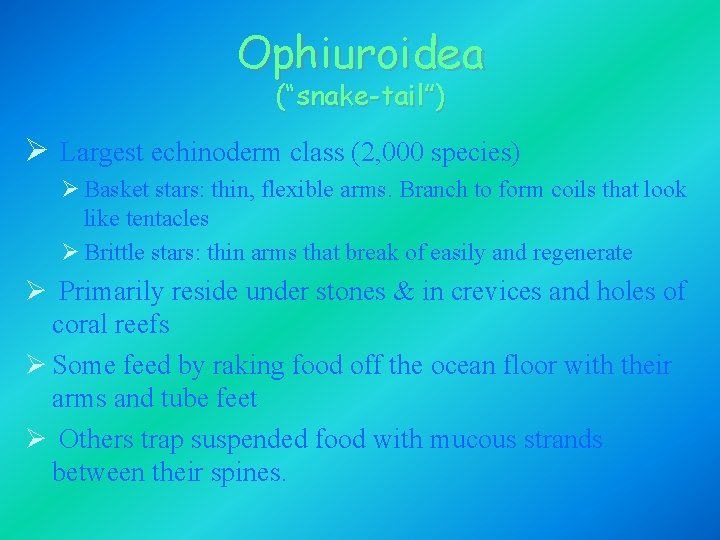
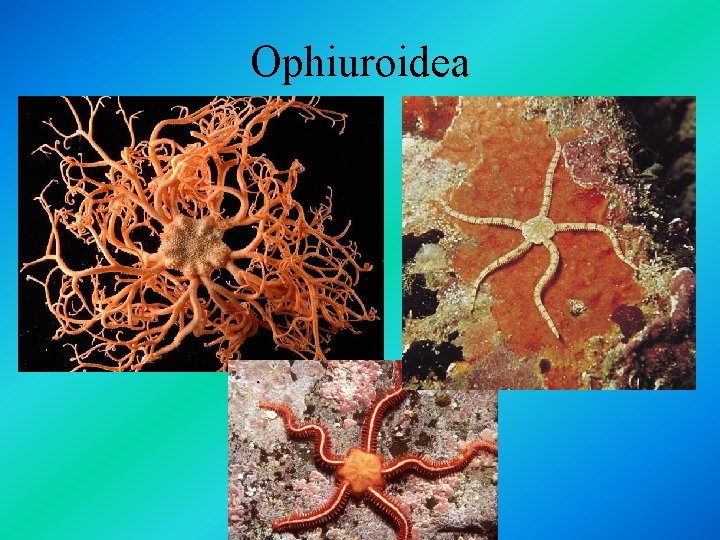
Ophiuroidea (“snake-tail”) Ø Largest echinoderm class (2, 000 species) Ø Basket stars: thin, flexible arms. Branch to form coils that look like tentacles Ø Brittle stars: thin arms that break of easily and regenerate Ø Primarily reside under stones & in crevices and holes of coral reefs Ø Some feed by raking food off the ocean floor with their arms and tube feet Ø Others trap suspended food with mucous strands between their spines.
Ophiuroidea
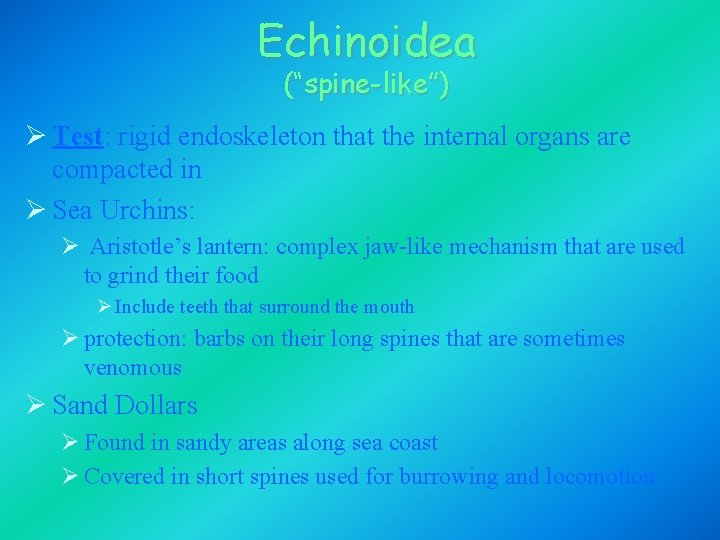
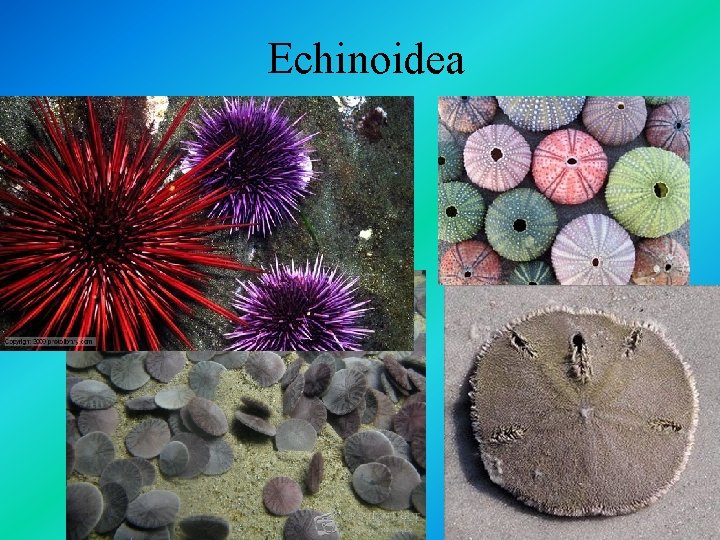
Echinoidea (“spine-like”) Ø Test: rigid endoskeleton that the internal organs are compacted in Ø Sea Urchins: Ø Aristotle’s lantern: complex jaw-like mechanism that are used to grind their food Ø Include teeth that surround the mouth Ø protection: barbs on their long spines that are sometimes venomous Ø Sand Dollars Ø Found in sandy areas along sea coast Ø Covered in short spines used for burrowing and locomotion
Echinoidea
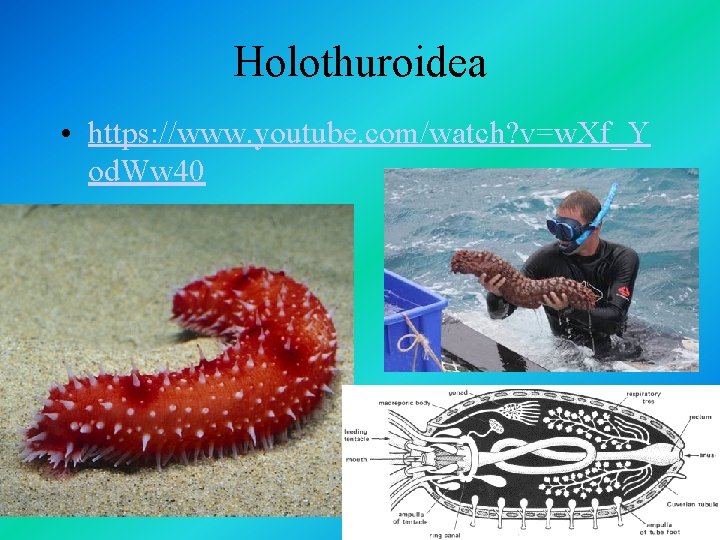
Holothuroidea “water-polyp” Ø Sea cucumbers Ø Bodies are soft, armless Ø Modified tube feet form fringe around mouth Ø Feeding: tentacles around the mouth sweep up sediment from the water Ø Protection: some can eject internal organs Ø Lost parts are later regenerated Ø Process called evisceration
Holothuroidea • https: //www. youtube. com/watch? v=w. Xf_Y od. Ww 40
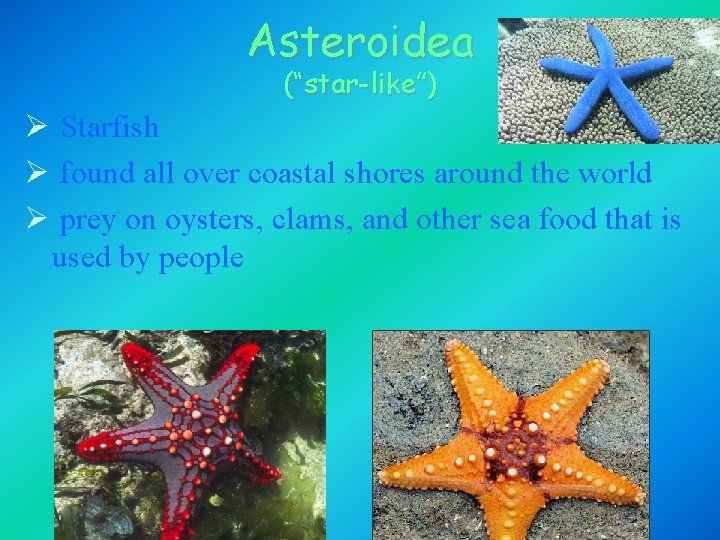
Asteroidea (“star-like”) Ø Starfish Ø found all over coastal shores around the world Ø prey on oysters, clams, and other sea food that is used by people
Structure & Function (Using the Starfish)
External Structure Ø Typically have five arms, but some species have as many as 24 Ø Oral surface: the underside of the body where the mouth is located Ø Aboral surface: top of the body (opposite the mouth) Ø Body is covered in short spines that give it rough texture Ø Pedicellariae: tiny pinchers that surround each spine Ø Protect and clean the body surface
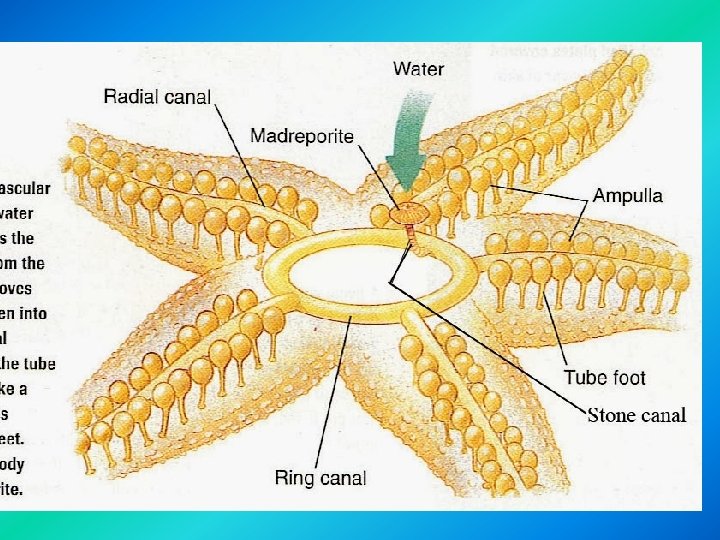
Water-Vascular System Ø Network of water filled canals connected to tube feet Ø The path (figure 40 -7) ØWater enters through madreporite (sieve-like plate on aboral surface ØStone canal (tube pathway) ØRing canal (tube that encircles mouth) ØRadial canal (tube that extends down each arm) ØCarry water to hundreds of hollow tube feet ØValves prevent water from flowing backwards
Water-Vascular System Ø Upper end of each tube foot expands to form a sac called the ampulla ØMuscles contract around the ampulla forcing water into tube feet and back out again ØThis is how the starfish can extend or shorten the tube feet ØEnable locomotion
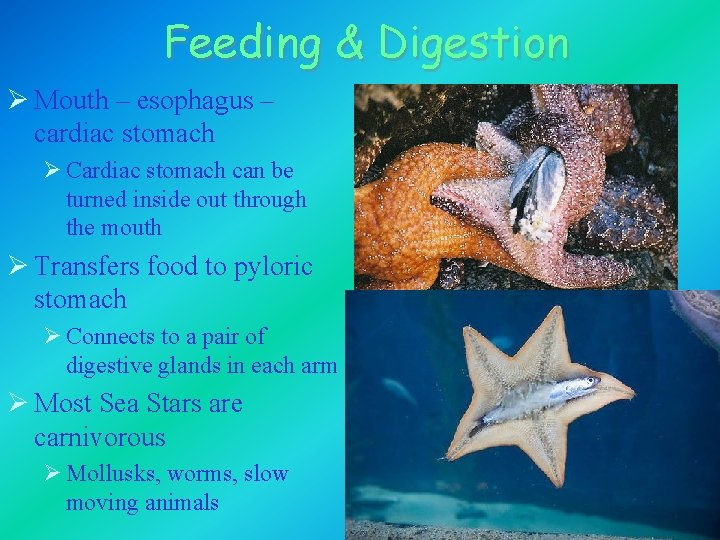
Feeding & Digestion Ø Mouth – esophagus – cardiac stomach Ø Cardiac stomach can be turned inside out through the mouth Ø Transfers food to pyloric stomach Ø Connects to a pair of digestive glands in each arm Ø Most Sea Stars are carnivorous Ø Mollusks, worms, slow moving animals
Other Body Systems Ø No circulatory, excretory, or respiratory organ systems Ø fluid in coelom bathes organs & distributes nutrients & oxygen Ø skin gills: project through coelom lining; allow gas exchange and waste excretion Ø nerve ring: surrounds mouth & branches off into nerve cords in each arm Ø Radial nerve runs from ring down each arm Ø If nerve is cut, tube feet lose coordination Ø Eyespots: on end of each arm that responds to light Ø Tentacles: responds to touch
Reproduction Ø Most species have separate sexes Ø each arm contains a pair of ovaries or testes Ø Fertilization occurs externally Ø Bipinnaria: free-swimming larva that a fertilized egg develops into Ø After ~2 months settles in the bottom and develops into an adult through metamorphosis Ø Regeneration: Ø Process is very slow Ø Use as a defense mechanism Ø Can be used to reproduce asexually