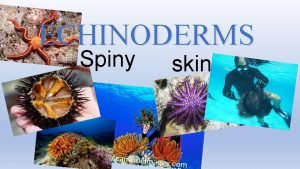
Echinoderms Echinoderm Facts n Major Characteristics n spiny


- Slides: 13
Echinoderms
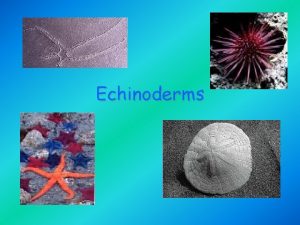
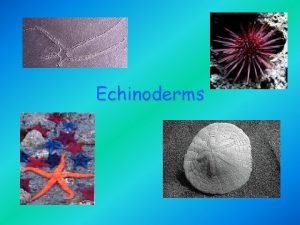
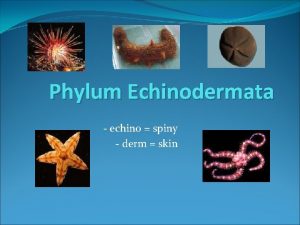
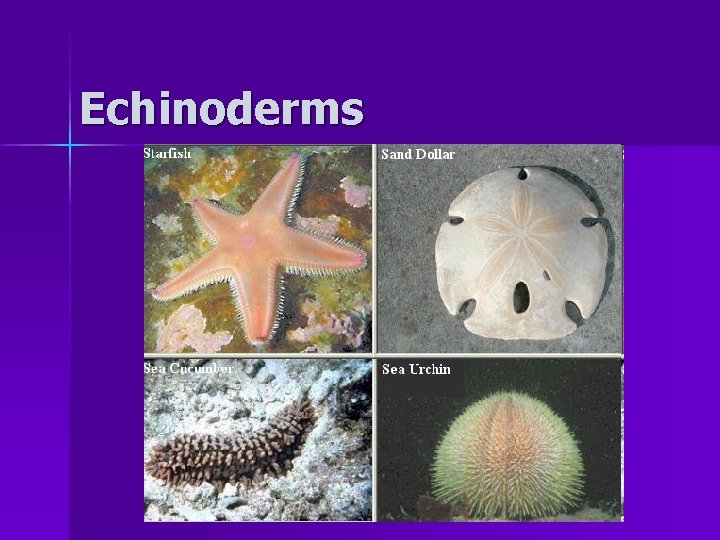
Echinoderm Facts n Major Characteristics: n spiny skin n radial symmetry (symmetry around a central point) n No segmentation n Over 5000 species in 5 major classes – – – Sea stars Sea urchins & Sand dollars Brittle stars Sea lilies and feather stars Sea cucumbers
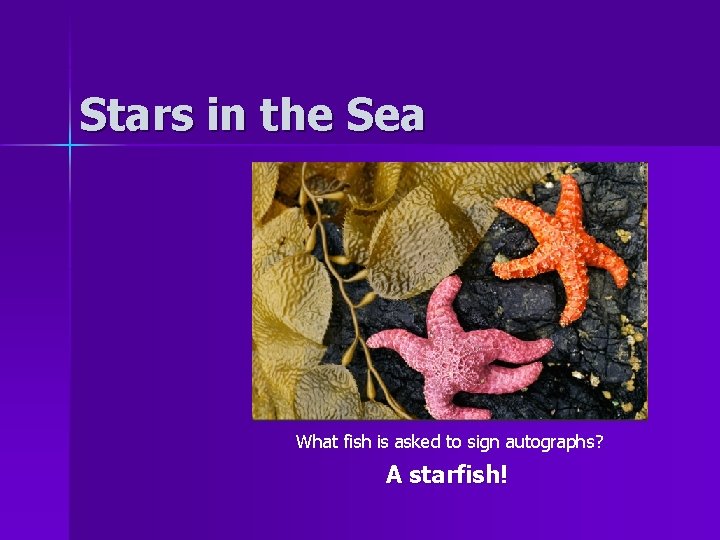
Stars in the Sea What fish is asked to sign autographs? A starfish!
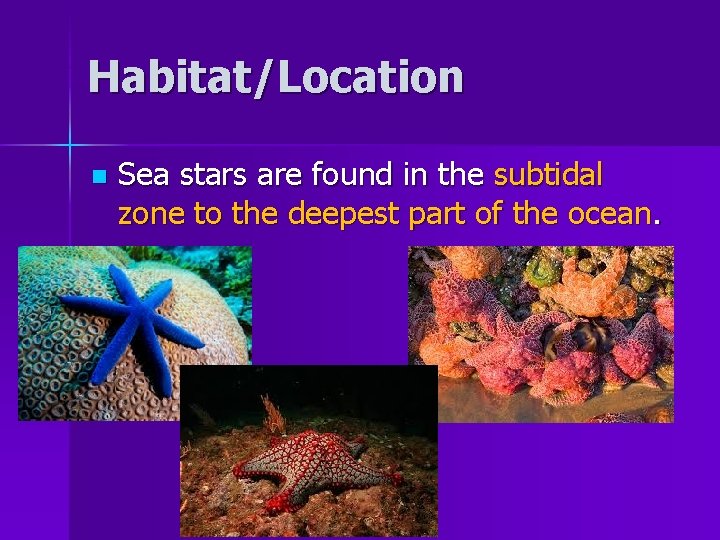
Habitat/Location n Sea stars are found in the subtidal zone to the deepest part of the ocean.
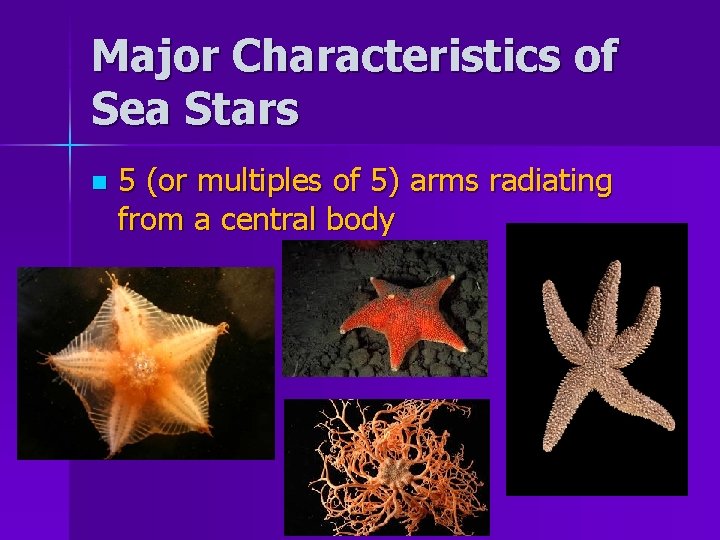
Major Characteristics of Sea Stars n 5 (or multiples of 5) arms radiating from a central body
Protection n Endoskeleton – an internal skeleton connected to the spiny skin of sea stars; gives support and protection
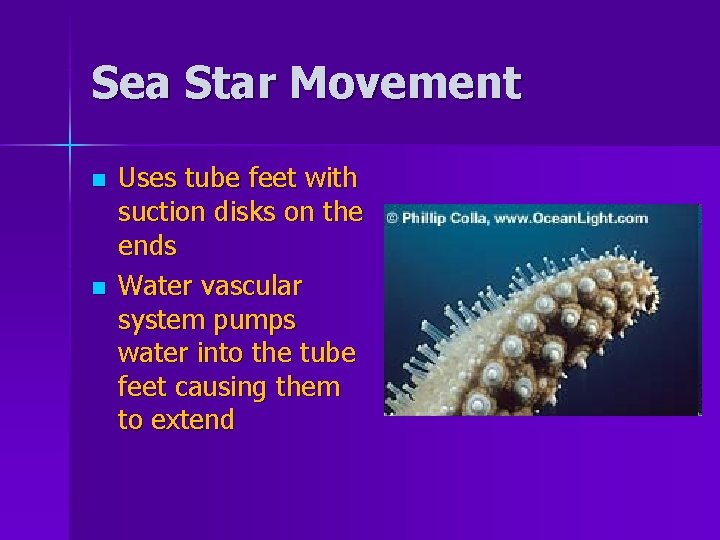
Sea Star Movement n n Uses tube feet with suction disks on the ends Water vascular system pumps water into the tube feet causing them to extend
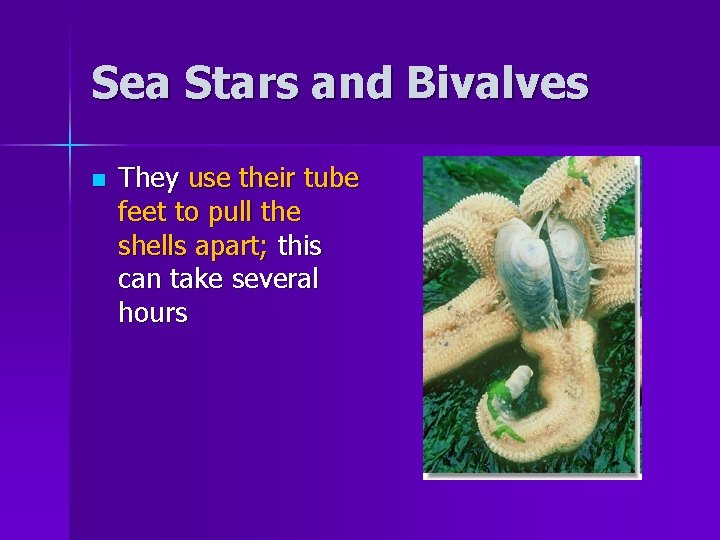
Sea Stars and Bivalves n They use their tube feet to pull the shells apart; this can take several hours
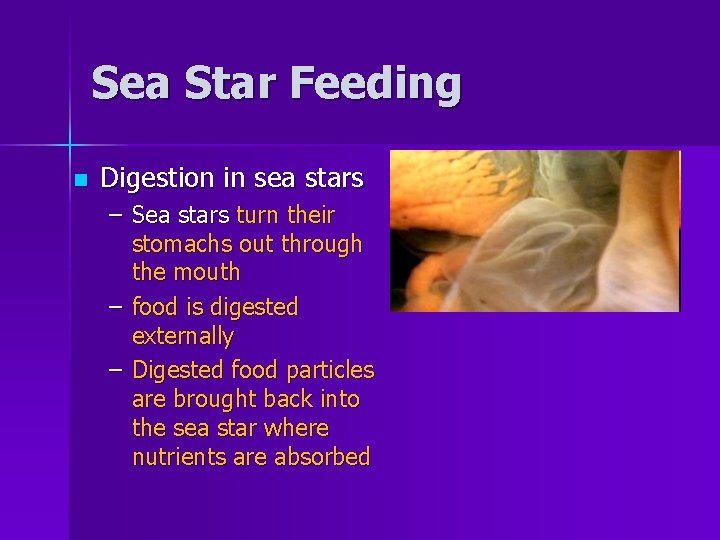
Sea Star Feeding n Digestion in sea stars – Sea stars turn their stomachs out through the mouth – food is digested externally – Digested food particles are brought back into the sea star where nutrients are absorbed
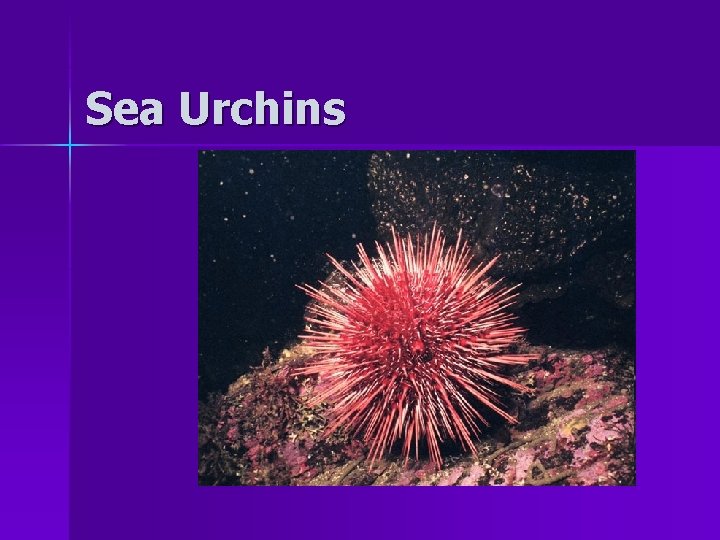
Sea Urchins
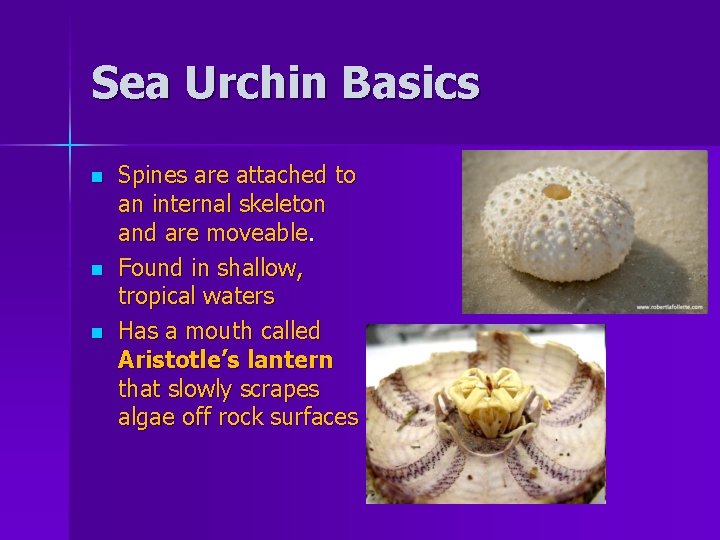
Sea Urchin Basics n n n Spines are attached to an internal skeleton and are moveable. Found in shallow, tropical waters Has a mouth called Aristotle’s lantern that slowly scrapes algae off rock surfaces
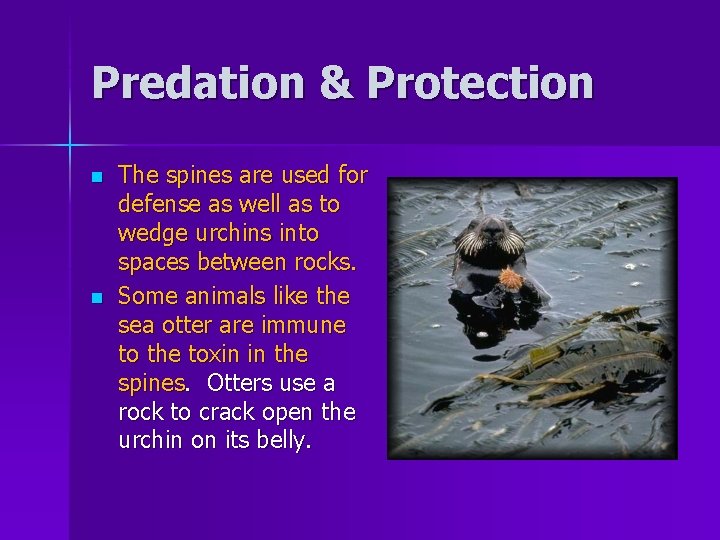
Predation & Protection n n The spines are used for defense as well as to wedge urchins into spaces between rocks. Some animals like the sea otter are immune to the toxin in the spines. Otters use a rock to crack open the urchin on its belly.
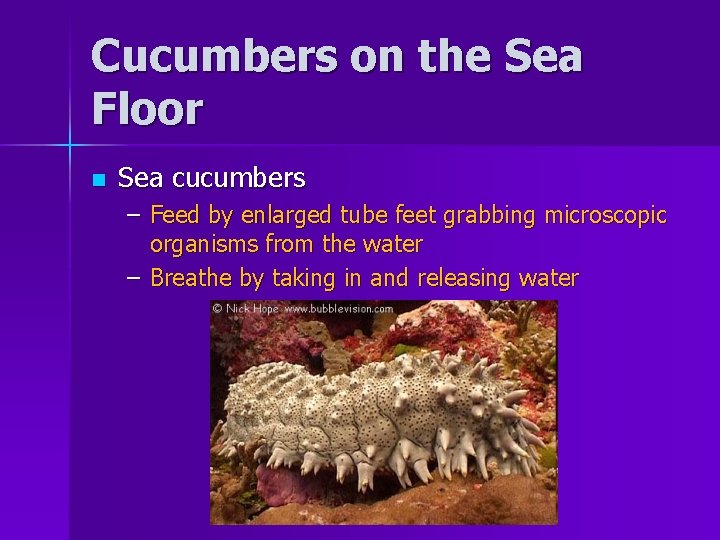
Cucumbers on the Sea Floor n Sea cucumbers – Feed by enlarged tube feet grabbing microscopic organisms from the water – Breathe by taking in and releasing water