
Echinoderms Phylum Echindermata Share common features with chordates
- Slides: 15
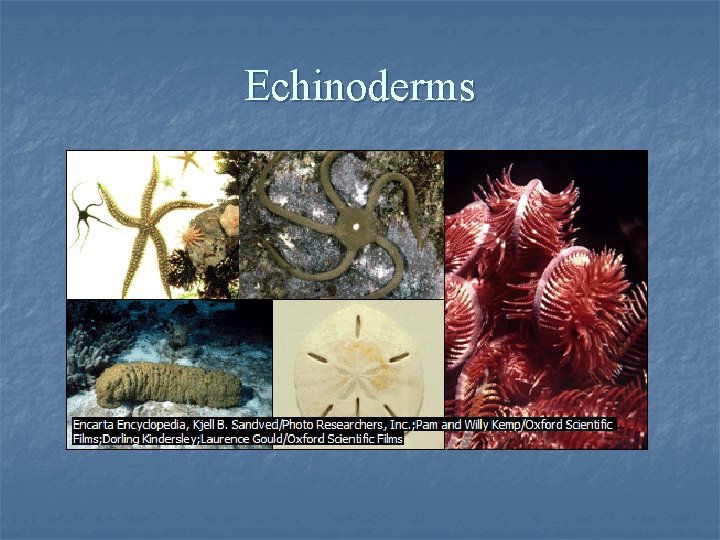
Echinoderms
Phylum Echindermata • Share common features with chordates • Radial Cleavage • Deuterostomes (Blastopore becomes anus) • Development of true coeloem • Usually slow moving or sessile • Usually are radially symmetrical • Body parts usually radiate from center (frequently as 5 spokes) • Possess a thick calcium plate endoskeleton surrounded by a thin skin layer • Possess a unique Water Vascular System, which continues throughout animal and extends into extensions called Tube Feet. • Functions for locomotion, feeding, & gas exchange. • Reproduce sexually or through regeneration.
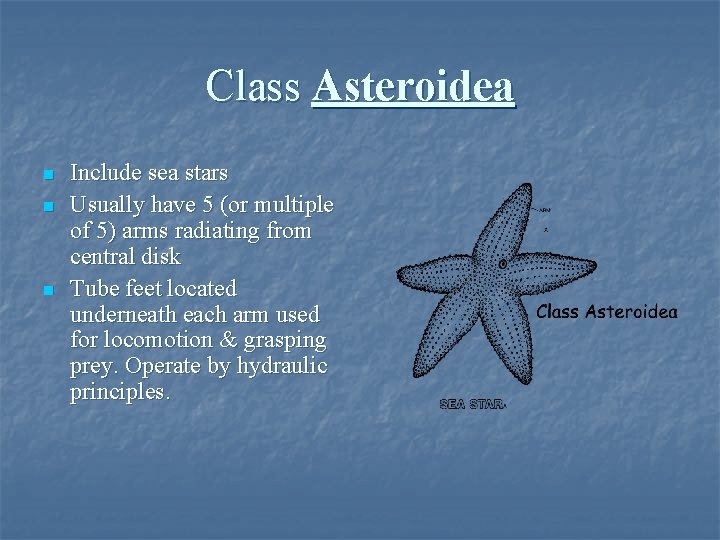
Class Asteroidea n n n Include sea stars Usually have 5 (or multiple of 5) arms radiating from central disk Tube feet located underneath each arm used for locomotion & grasping prey. Operate by hydraulic principles.
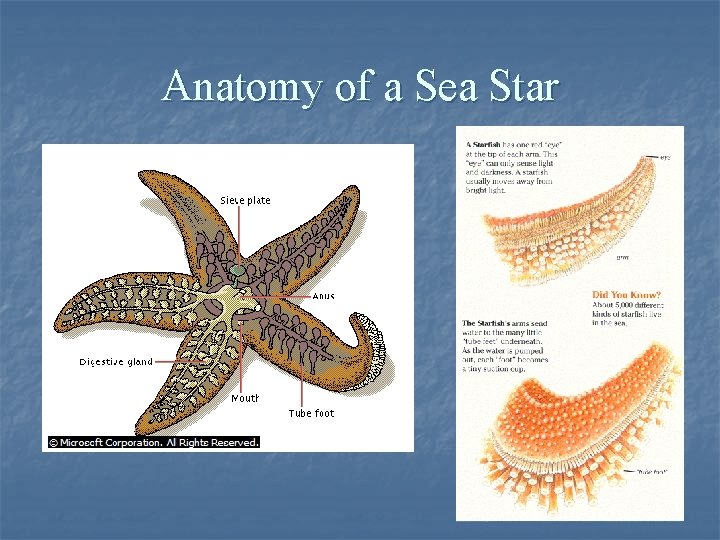
Anatomy of a Sea Star
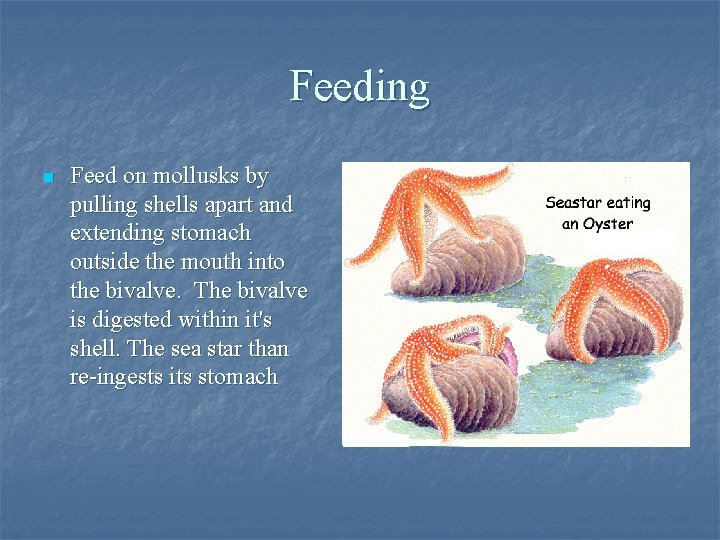
Feeding n Feed on mollusks by pulling shells apart and extending stomach outside the mouth into the bivalve. The bivalve is digested within it's shell. The sea star than re-ingests its stomach
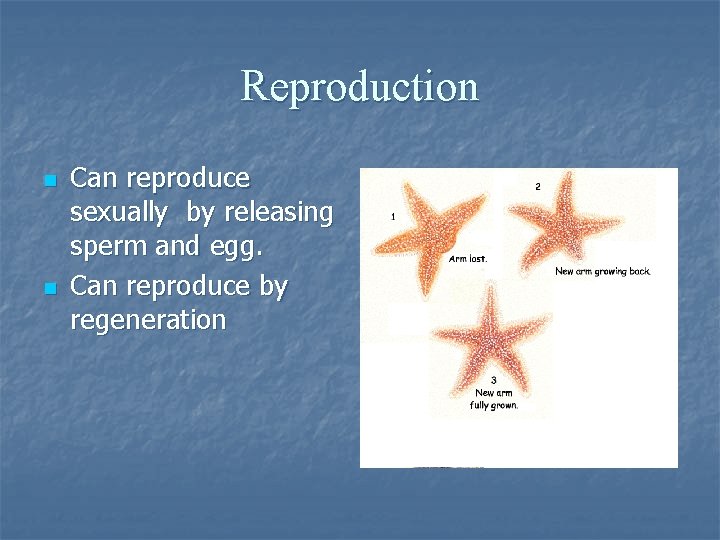
Reproduction n n Can reproduce sexually by releasing sperm and egg. Can reproduce by regeneration
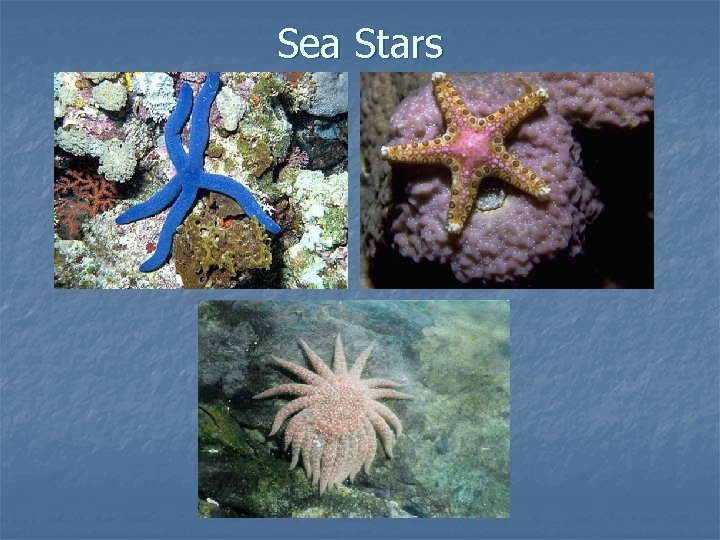
Sea Stars
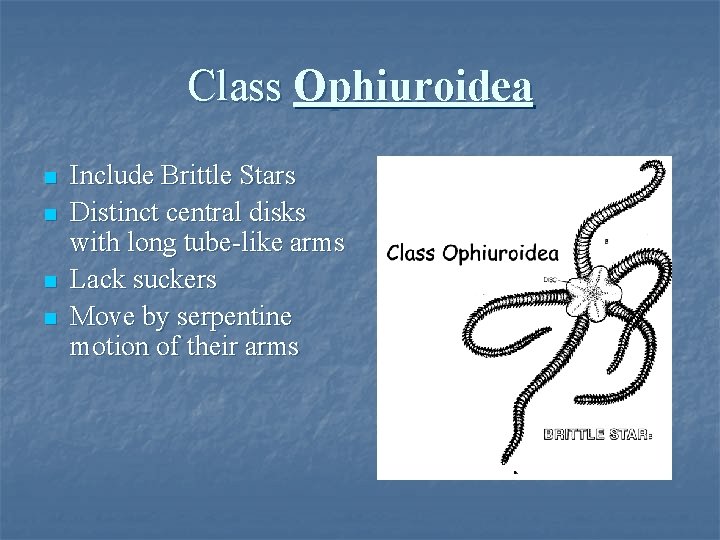
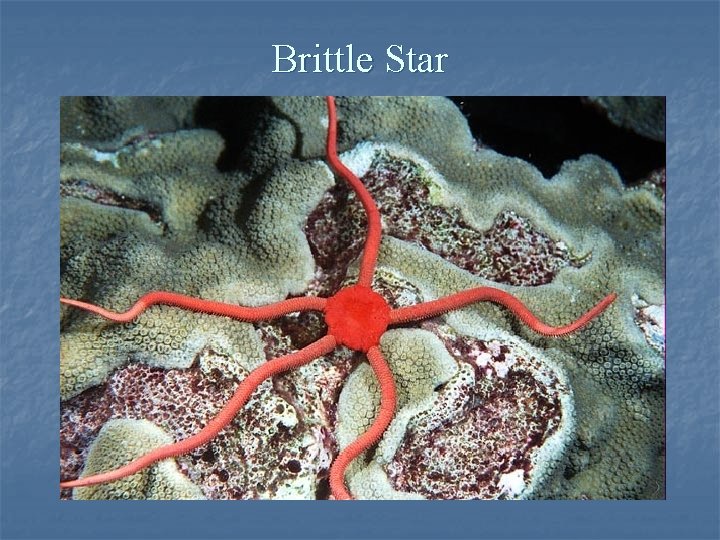
Class Ophiuroidea n n Include Brittle Stars Distinct central disks with long tube-like arms Lack suckers Move by serpentine motion of their arms
Brittle Star
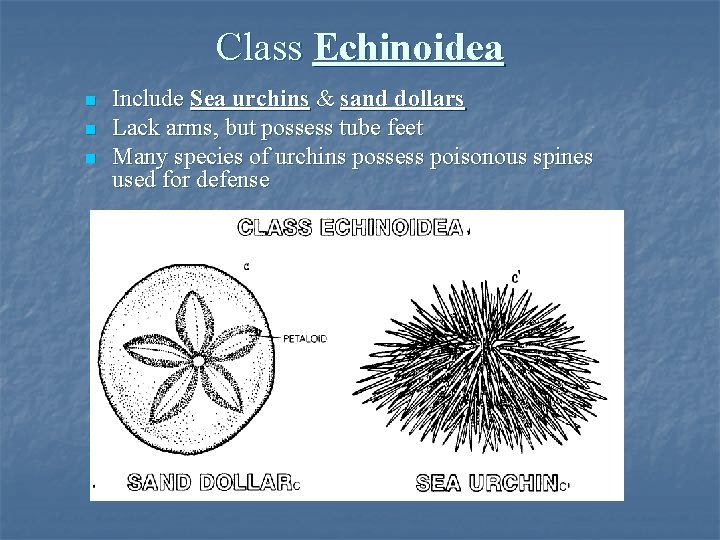
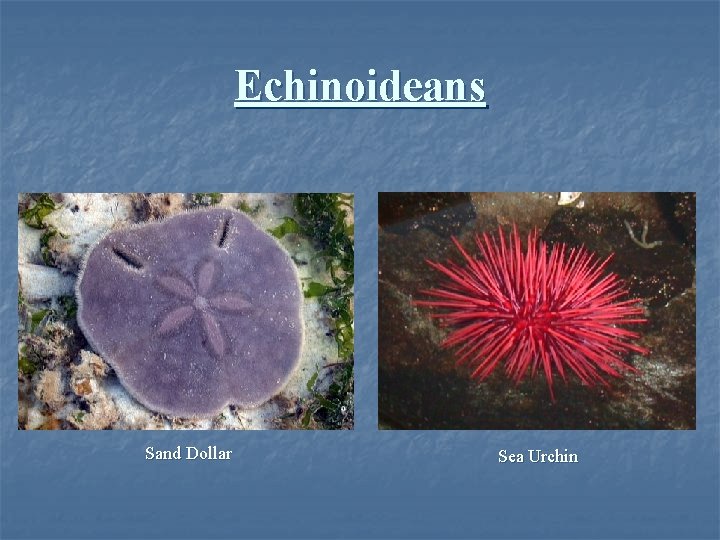
Class Echinoidea n n n Include Sea urchins & sand dollars Lack arms, but possess tube feet Many species of urchins possess poisonous spines used for defense
Echinoideans Sand Dollar Sea Urchin
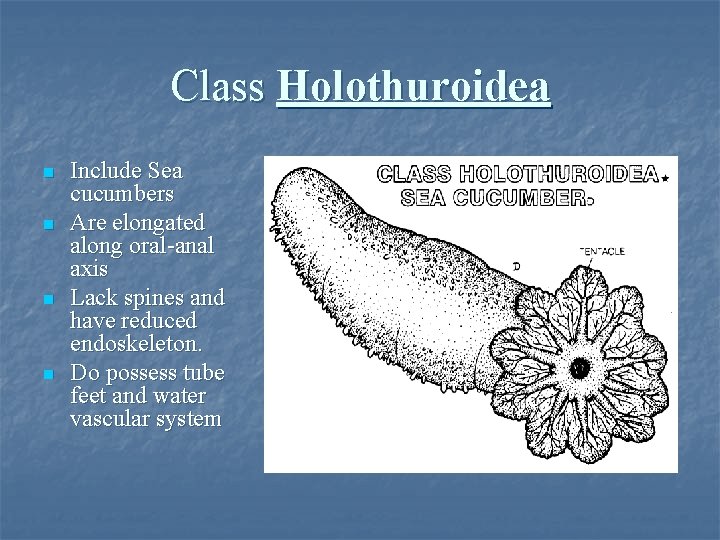
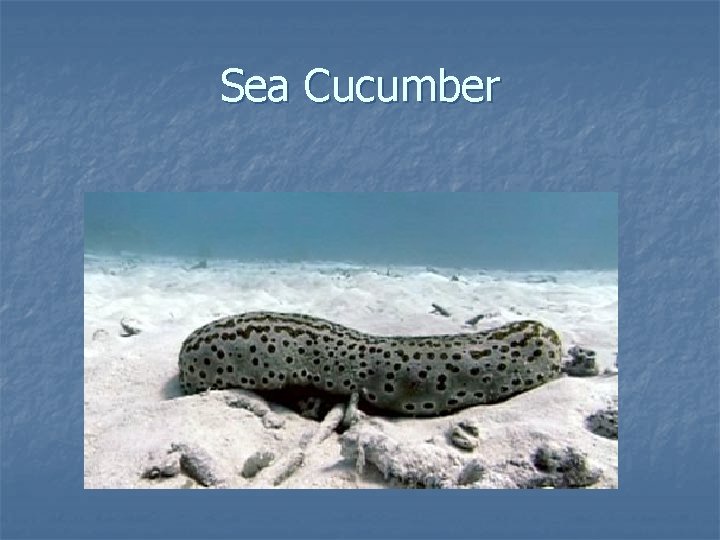
Class Holothuroidea n n Include Sea cucumbers Are elongated along oral-anal axis Lack spines and have reduced endoskeleton. Do possess tube feet and water vascular system
Sea Cucumber
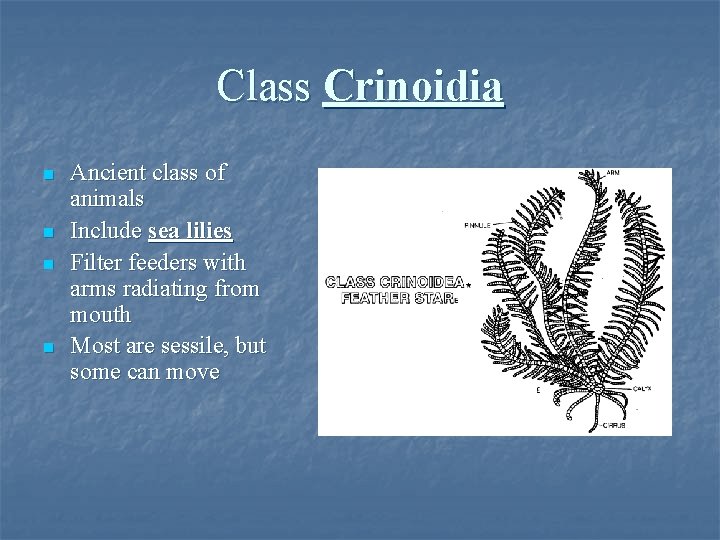
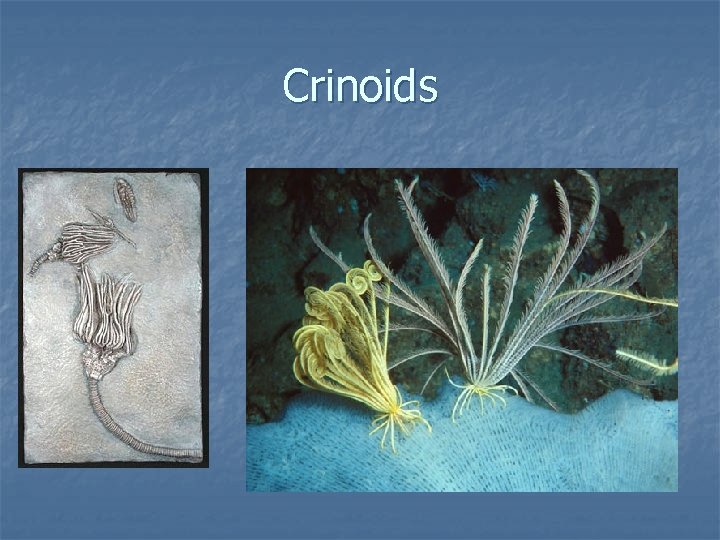
Class Crinoidia n n Ancient class of animals Include sea lilies Filter feeders with arms radiating from mouth Most are sessile, but some can move
Crinoids