PHOTOSYNTHESIS Sun Hwa Dong Photosynthesis n n n

- Slides: 18
PHOTOSYNTHESIS Sun Hwa Dong
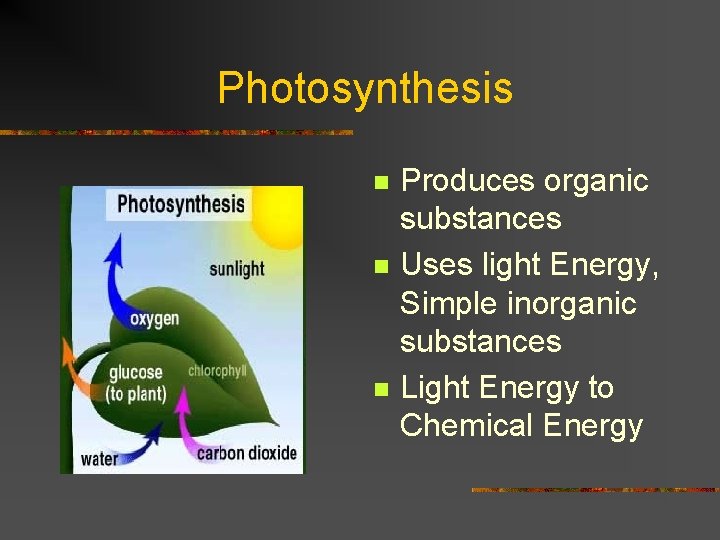
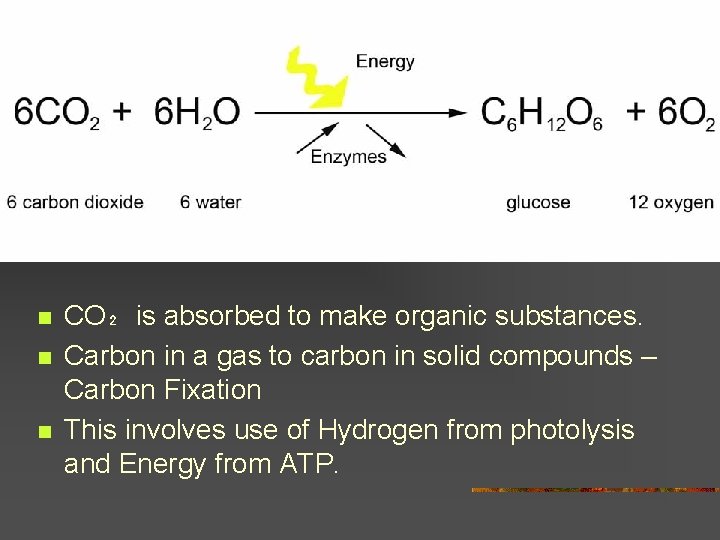
Photosynthesis n n n Produces organic substances Uses light Energy, Simple inorganic substances Light Energy to Chemical Energy
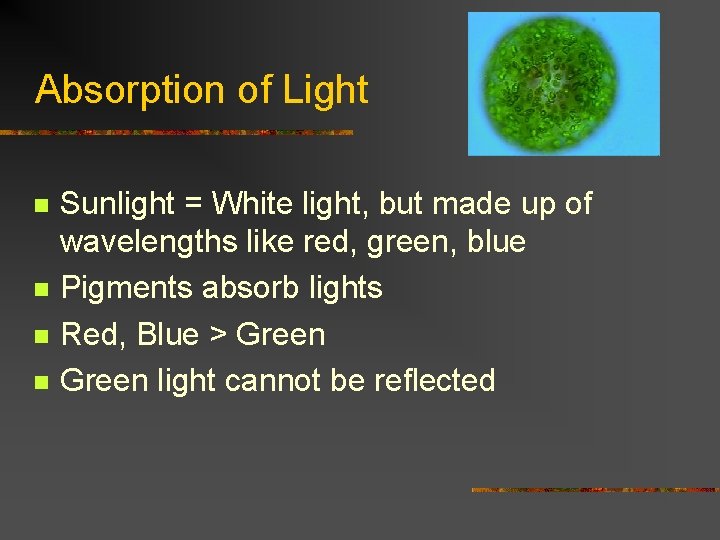
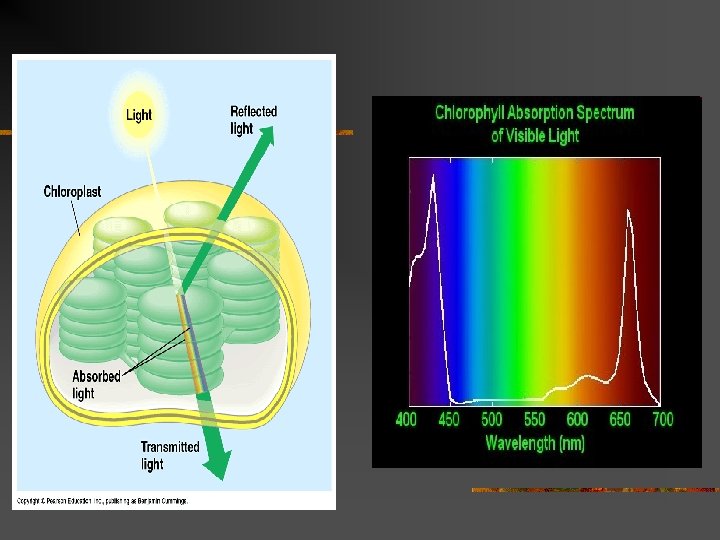
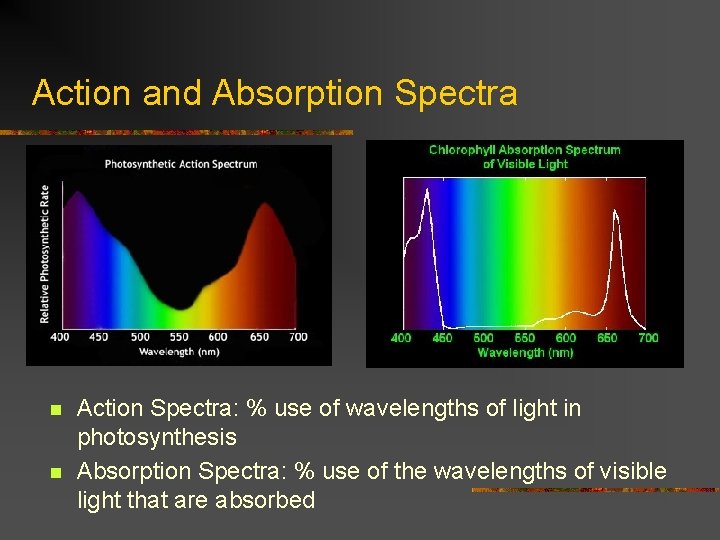
Absorption of Light n n Sunlight = White light, but made up of wavelengths like red, green, blue Pigments absorb lights Red, Blue > Green light cannot be reflected
Absorption of Energy n n n Some used to produce ATP. Some split water molecules – Photolysis of Water This forms Oxygen and Hydrogen.
n n n CO₂ is absorbed to make organic substances. Carbon in a gas to carbon in solid compounds – Carbon Fixation This involves use of Hydrogen from photolysis and Energy from ATP.
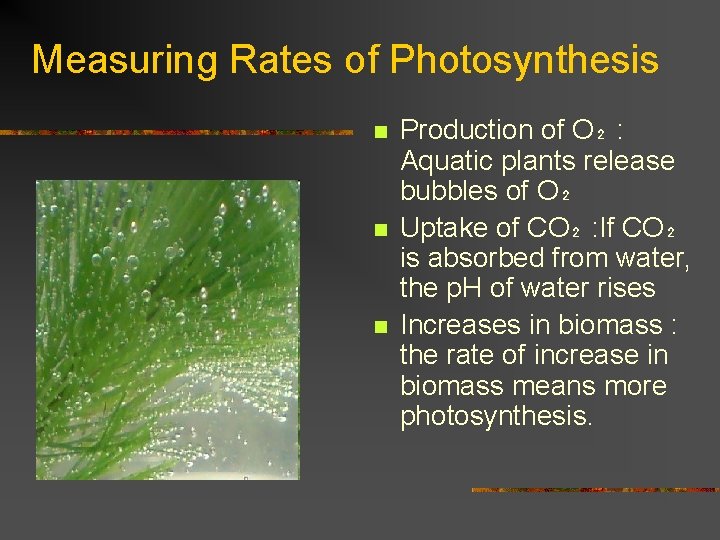
Measuring Rates of Photosynthesis n n n Production of O₂ : Aquatic plants release bubbles of O₂ Uptake of CO₂ : If CO₂ is absorbed from water, the p. H of water rises Increases in biomass : the rate of increase in biomass means more photosynthesis.
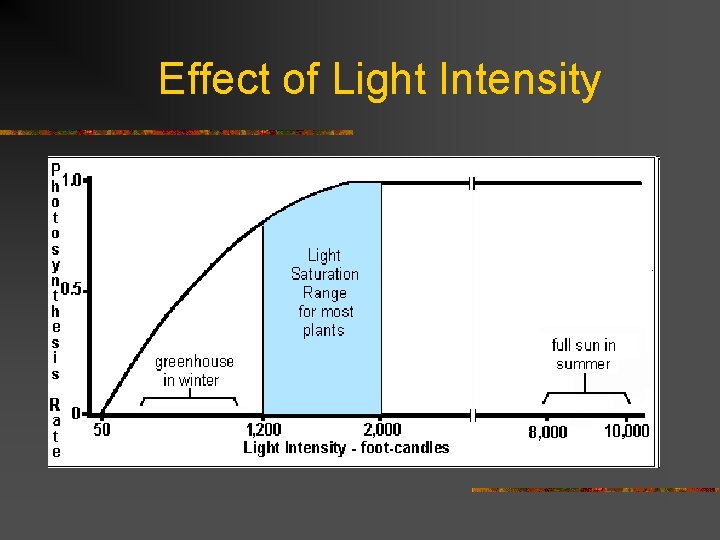
Effect of Light Intensity
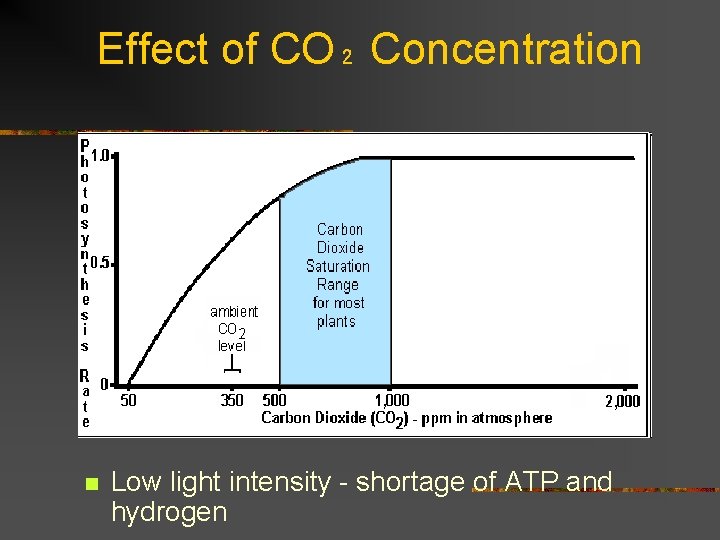
Effect of CO₂ Concentration n Low light intensity - shortage of ATP and hydrogen
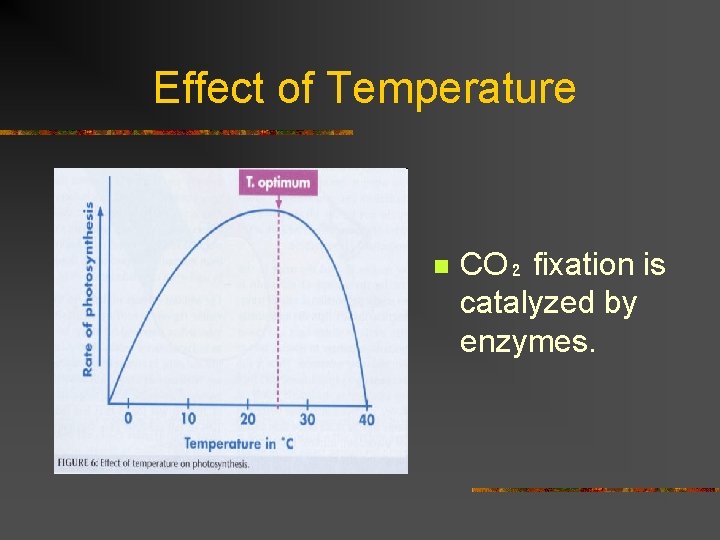
Effect of Temperature n CO₂ fixation is catalyzed by enzymes.
Limiting Factors n n n Each factors can limit the rate when below optimal level. Combination of factors – only one factor furthest from its optimum limits When 2 of the factors are equally close to optimum, increasing them rises the rate.
Action and Absorption Spectra n n Action Spectra: % use of wavelengths of light in photosynthesis Absorption Spectra: % use of the wavelengths of visible light that are absorbed
Photoactivation n Chlorophyll & accessory pigments Photosystem Chlorophyll molecules in photosystem absorb light energy and pass it to 2 special chlorophyll molecules in the reaction centre. Electron within the molecules become excited and photoactivated.
Photophosphorylation n n Photophosphorylation: the production of ATP, using E from light which is carried out by thylakoids Thylakoids: regular “stack” of membranes that contain Photosystem I &Ⅱ, ATP synthase, a chain of electron carriers
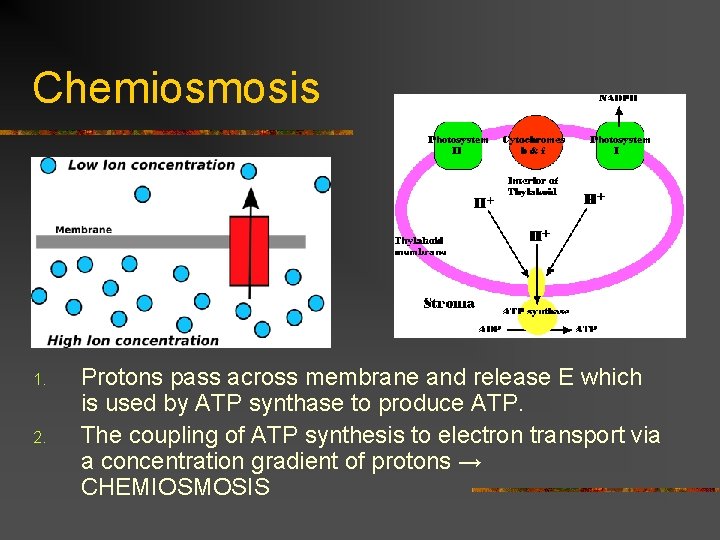
Chemiosmosis 1. 2. Protons pass across membrane and release E which is used by ATP synthase to produce ATP. The coupling of ATP synthesis to electron transport via a concentration gradient of protons → CHEMIOSMOSIS
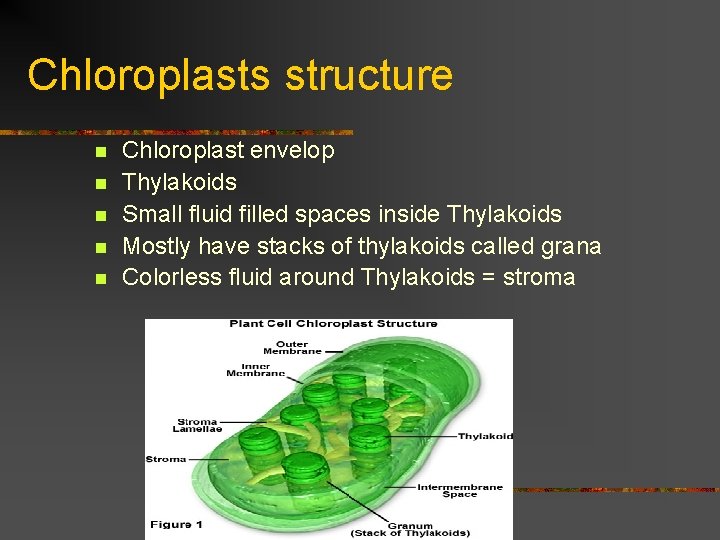
Chloroplasts structure n n n Chloroplast envelop Thylakoids Small fluid filled spaces inside Thylakoids Mostly have stacks of thylakoids called grana Colorless fluid around Thylakoids = stroma
Bibliography n n n n n Course Companion p 95 -108 Study Guide p 21, p 75, p 76 -81 Pearson: p 74 -78, p 227 -236 http: //biotransitioneng. wordpress. com/2009/05/10/fossils-fuels-%E 2%80%93 -a-great-problem/ http: //botit. botany. wisc. edu/images/130/Chlorophyta/Eremosphaera_Images/Chloroplasts_MC. html Pearson Education, Inc. , publishing as Benjamin Cummings http: //www. cbu. edu/~seisen/Photosynthesis. htm http: //helpmyphysics. co. uk/wordpress/? m=200902 http: //botit. botany. wisc. edu/images/130/Chlorophyta/Eremosphaera_Images/Chloroplasts_MC. html http: //generalhorticulture. tamu. edu/lectsupl/physiol. html http: //fhs-bio-wiki. pbworks. com/Factors-effecting-the-rate-of-photosynthesis http: //reefbuilders. com/2010/08/23/chlorophyll-f-a-newly-discovered-photosynthetic-pigment-uses-infrared-light/ www. theoremeinnovation. com/revolution-en. html www. firstrays. com/plants_and_light. htm http: //image. absoluteastronomy. com/images/encyclopediaimages/c/ch/chemiosmosis 1. png www. cbs. dtu. dk/staff/dave/roanoke/bio 101 ch 07. htm micro. magnet. fsu. edu/. . . /chloroplasts. html
Vocabulary n n n n n Photosynthesis: The process used by plants and other organisms to produce all their own organic substances (food), using only light energy and simple inorganic substances. Photolysis of water: Splitting of water by energy absorbed by chlorophyll. Carbon Fixation: The conversion of carbon in a gas to carbon in solid compounds. Photosystem: protein complexes involved in photosynthesis Photoactivation: The initial stage of photosynthesis in chlorophyll Molecules where the presence of light Energy raises the energy. Chemiosmosis: The coupling of ATP synthesis to electron transport via a concentration gradient of protons Photophosphorylation: the production of ATP, using E from light which is carried out by thylakoids Thylakoids: regular “stack” of membranes with very small fluid-filled spaces inside that contain Photosystem I &Ⅱ, ATP synthase, a chain of electron carriers Grana: stacks of thylakoids Stroma: a colorless fluid around the thylakoids that contains many different enzymes