Peter Salamone Ph D Technical Manager North America


- Slides: 22
Peter Salamone, Ph. D Technical Manager – North America
General Trends Vintage 2012 • Ideal Growing Season • Record Harvest – High Quality Fruit • Low YAN Compared to Previous Harvests • More AF Issues than MLF
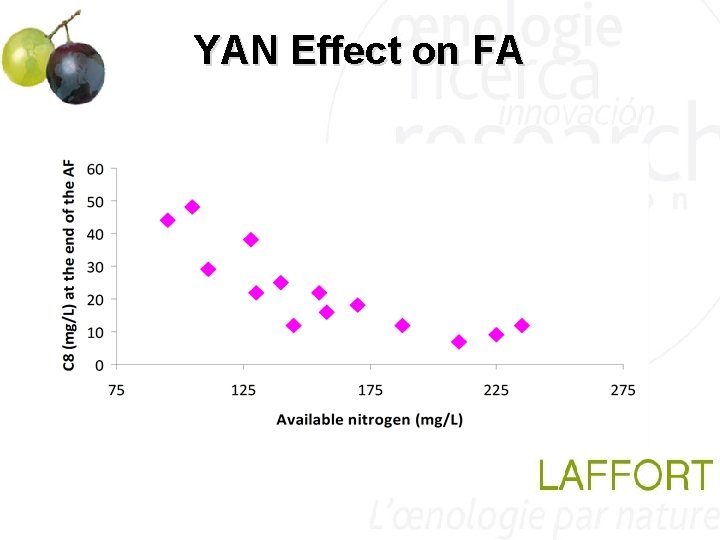
YAN and Fermentation • YAN values dropped from ~205 to ~145 • Nitrogen/Nutrient Supplementation – DAP alone – Complex Nutrients – Organic Nutrients – Yeast Rehydration Survival Factors • No Pattern to Stuck and Sluggish Ferments
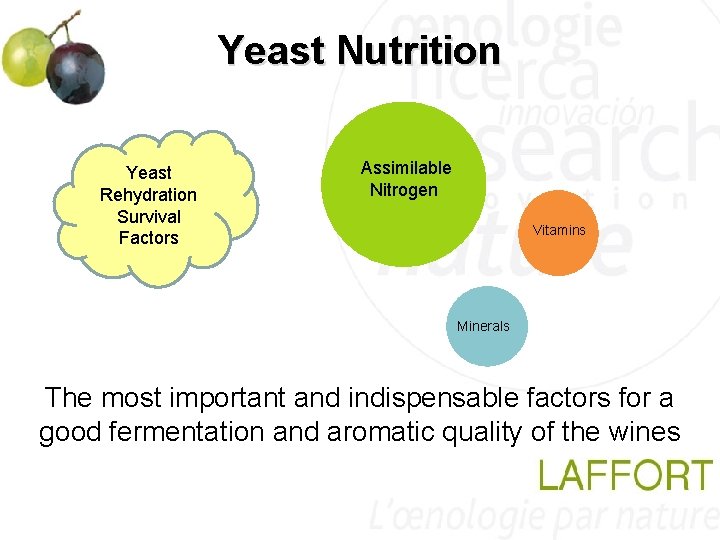
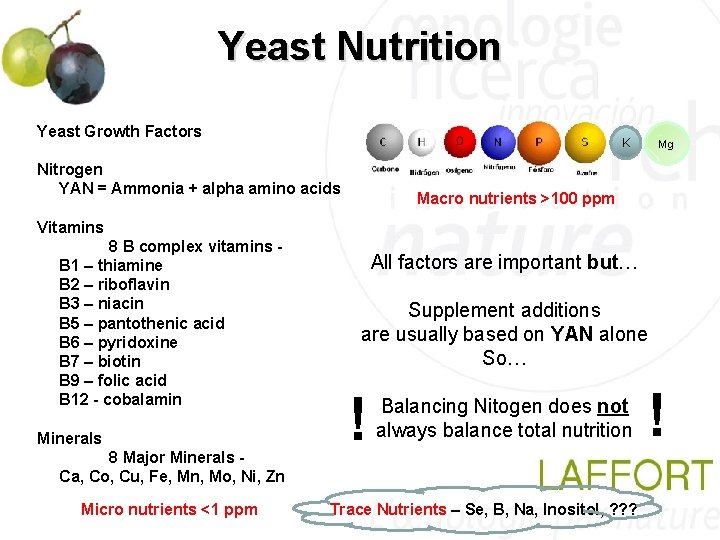
Yeast Nutrition Yeast Rehydration Survival Factors Assimilable Nitrogen Vitamins Minerals The most important and indispensable factors for a good fermentation and aromatic quality of the wines
Where to Look ? • Poor Fermentation Causes – No Shortage! – – – Low Population of Viable Yeast Fermentation Temperature Spikes – Heat, Cold Microbial Competition – Early, Late Toxins – Microbial, Al, Pb, Pesticide Residues Yeast Genetic Mechanisms – Prions - Epigenetics Nutrition • C / N Balance - Brix / YAN • Macro nutrient shortage • Micro nutrient shortage • Trace nutrient shortage
Yeast Nutrition Yeast Growth Factors K Nitrogen YAN = Ammonia + alpha amino acids Mg Macro nutrients >100 ppm Vitamins 8 B complex vitamins B 1 – thiamine B 2 – riboflavin B 3 – niacin B 5 – pantothenic acid B 6 – pyridoxine B 7 – biotin B 9 – folic acid B 12 - cobalamin Minerals 8 Major Minerals Ca, Co, Cu, Fe, Mn, Mo, Ni, Zn Micro nutrients <1 ppm All factors are important but… Supplement additions are usually based on YAN alone So… ! Balancing Nitogen does not always balance total nutrition Trace Nutrients – Se, B, Na, Inositol, ? ? ? !
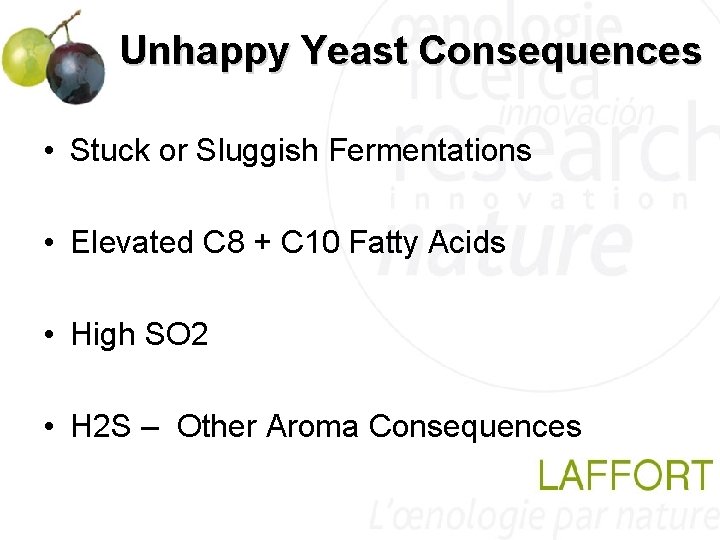
Unhappy Yeast Consequences • Stuck or Sluggish Fermentations • Elevated C 8 + C 10 Fatty Acids • High SO 2 • H 2 S – Other Aroma Consequences
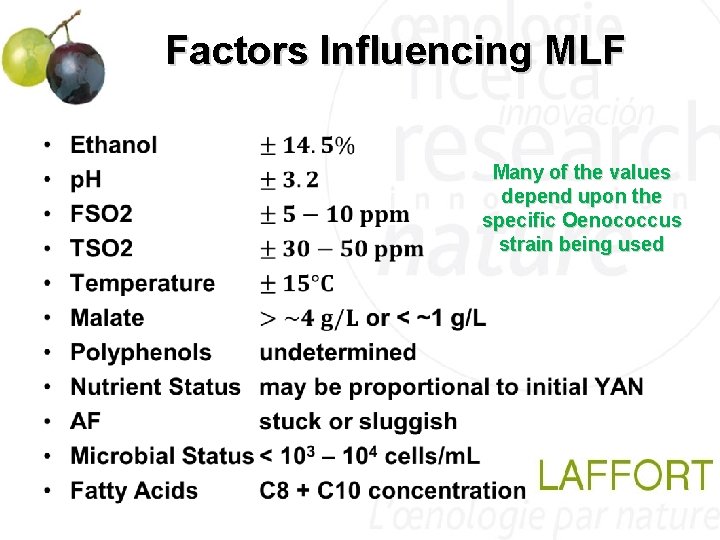
Factors Influencing MLF • Many of the values depend upon the specific Oenococcus strain being used
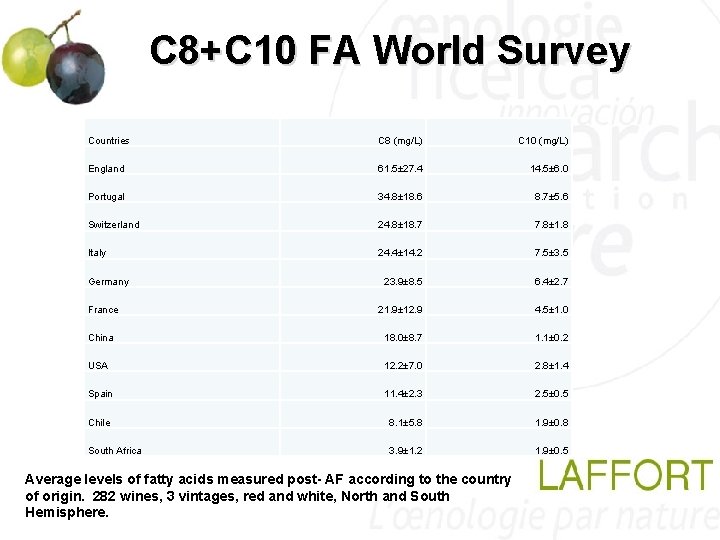
C 8+C 10 FA World Survey Countries C 8 (mg/L) C 10 (mg/L) England 61. 5± 27. 4 14. 5± 6. 0 Portugal 34. 8± 18. 6 8. 7± 5. 6 Switzerland 24. 8± 18. 7 7. 8± 1. 8 Italy 24. 4± 14. 2 7. 5± 3. 5 23. 9± 8. 5 6. 4± 2. 7 France 21. 9± 12. 9 4. 5± 1. 0 China 18. 0± 8. 7 1. 1± 0. 2 USA 12. 2± 7. 0 2. 8± 1. 4 Spain 11. 4± 2. 3 2. 5± 0. 5 Chile 8. 1± 5. 8 1. 9± 0. 8 South Africa 3. 9± 1. 2 1. 9± 0. 5 Germany Average levels of fatty acids measured post- AF according to the country of origin. 282 wines, 3 vintages, red and white, North and South Hemisphere.
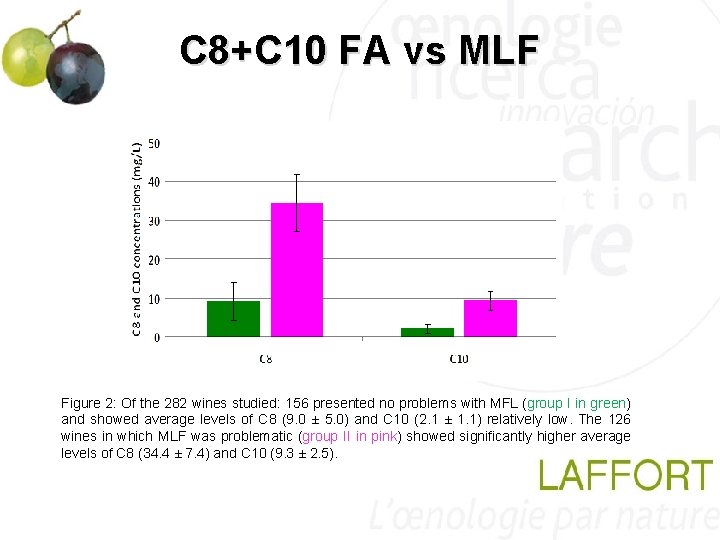
C 8+C 10 FA vs MLF Figure 2: Of the 282 wines studied: 156 presented no problems with MFL (group I in green) and showed average levels of C 8 (9. 0 ± 5. 0) and C 10 (2. 1 ± 1. 1) relatively low. The 126 wines in which MLF was problematic (group II in pink) showed significantly higher average levels of C 8 (34. 4 ± 7. 4) and C 10 (9. 3 ± 2. 5).
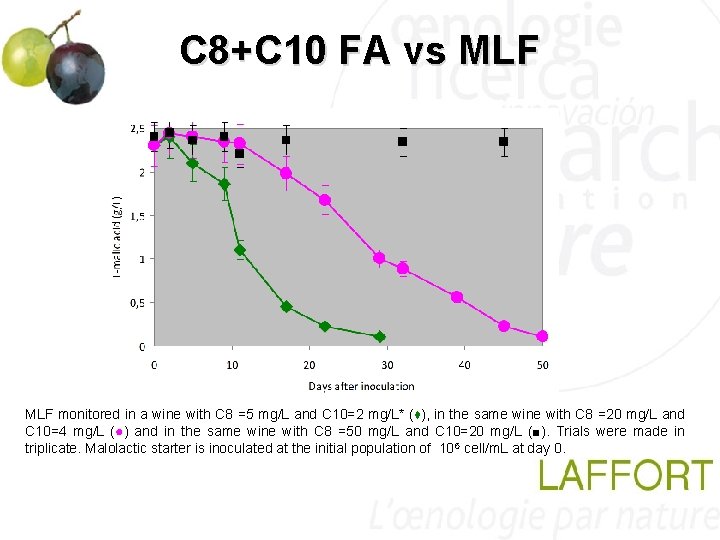
C 8+C 10 FA vs MLF monitored in a wine with C 8 =5 mg/L and C 10=2 mg/L* (♦), in the same wine with C 8 =20 mg/L and C 10=4 mg/L (●) and in the same wine with C 8 =50 mg/L and C 10=20 mg/L (■). Trials were made in triplicate. Malolactic starter is inoculated at the initial population of 106 cell/m. L at day 0.
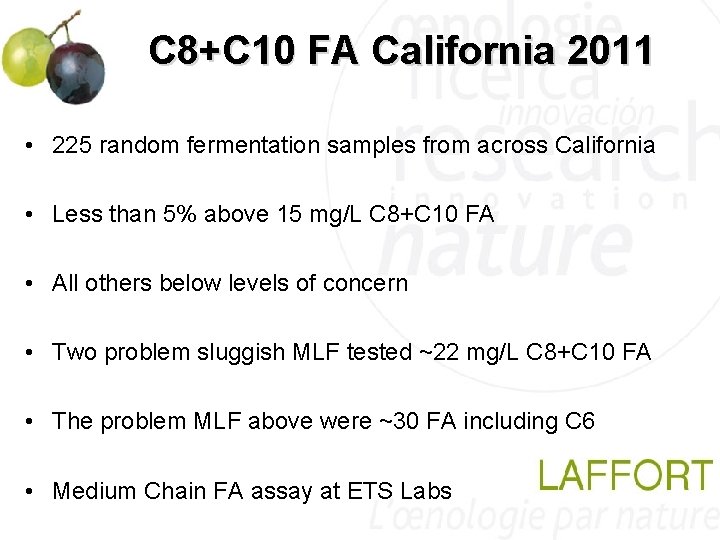
C 8+C 10 FA California 2011 • 225 random fermentation samples from across California • Less than 5% above 15 mg/L C 8+C 10 FA • All others below levels of concern • Two problem sluggish MLF tested ~22 mg/L C 8+C 10 FA • The problem MLF above were ~30 FA including C 6 • Medium Chain FA assay at ETS Labs
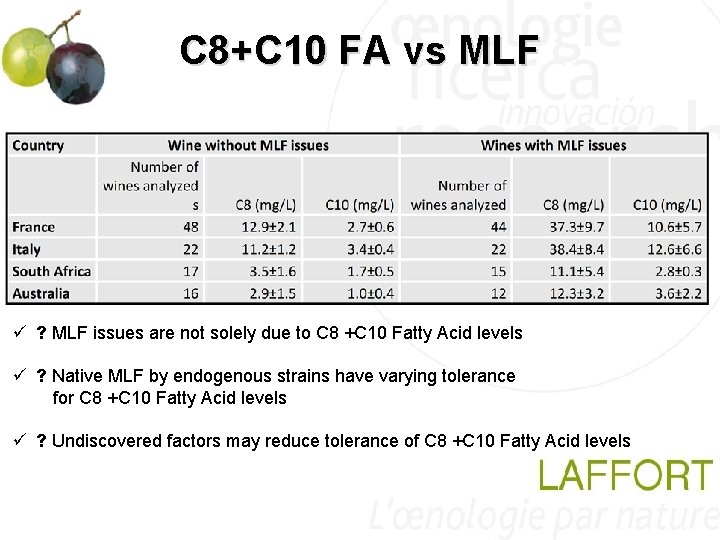
C 8+C 10 FA vs MLF ü ? MLF issues are not solely due to C 8 +C 10 Fatty Acid levels ü ? Native MLF by endogenous strains have varying tolerance for C 8 +C 10 Fatty Acid levels ü ? Undiscovered factors may reduce tolerance of C 8 +C 10 Fatty Acid levels
YAN Effect on FA
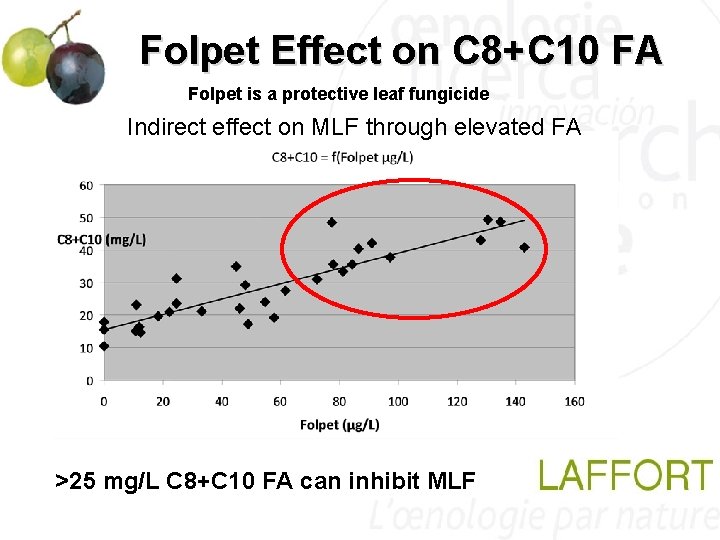
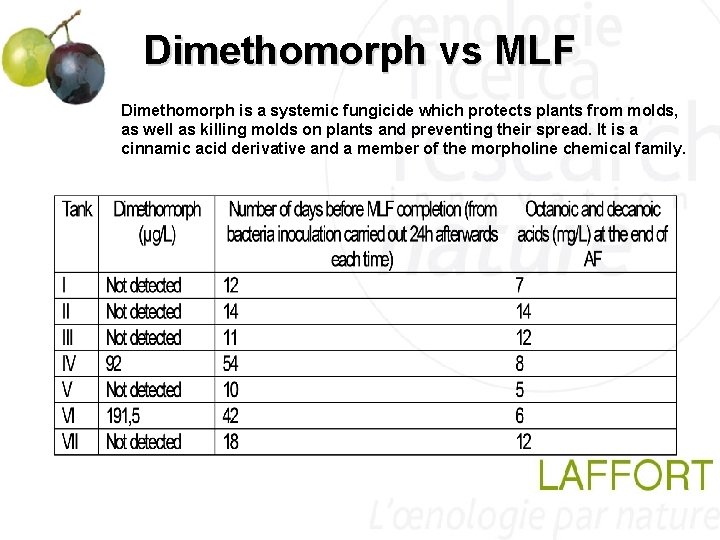
Phytosanitary Treatments and Effect on MLF • Bordeaux 2010 vintage was very dry at end of season • Washout by rain was minimal • Led to persistence of abnormally high residues in must – Folpet residue • Two phytosanitary compounds were >100 ug/L – Boscalid – Dimethomorph
Folpet Effect on C 8+C 10 FA Folpet is a protective leaf fungicide Indirect effect on MLF through elevated FA >25 mg/L C 8+C 10 FA can inhibit MLF
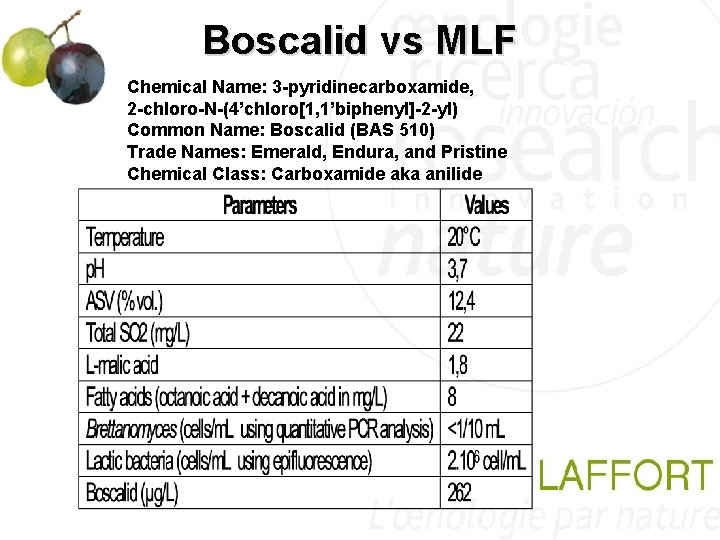
Boscalid vs MLF Chemical Name: 3 -pyridinecarboxamide, 2 -chloro-N-(4’chloro[1, 1’biphenyl]-2 -yl) Common Name: Boscalid (BAS 510) Trade Names: Emerald, Endura, and Pristine Chemical Class: Carboxamide aka anilide
Dimethomorph vs MLF Dimethomorph is a systemic fungicide which protects plants from molds, as well as killing molds on plants and preventing their spread. It is a cinnamic acid derivative and a member of the morpholine chemical family.
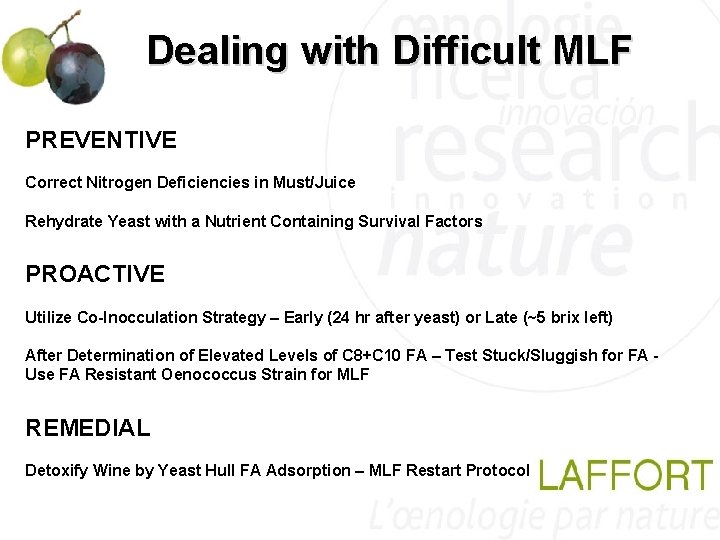
Dealing with Difficult MLF PREVENTIVE Correct Nitrogen Deficiencies in Must/Juice Rehydrate Yeast with a Nutrient Containing Survival Factors PROACTIVE Utilize Co-Inocculation Strategy – Early (24 hr after yeast) or Late (~5 brix left) After Determination of Elevated Levels of C 8+C 10 FA – Test Stuck/Sluggish for FA Use FA Resistant Oenococcus Strain for MLF REMEDIAL Detoxify Wine by Yeast Hull FA Adsorption – MLF Restart Protocol
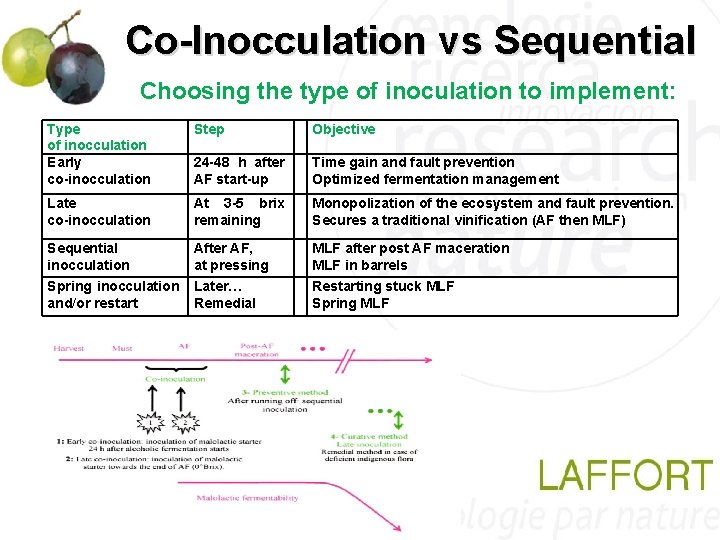
Co-Inocculation vs Sequential Choosing the type of inoculation to implement: Type of inocculation Early co-inocculation Step Objective 24 -48 h after AF start-up Time gain and fault prevention Optimized fermentation management Late co-inocculation At 3 -5 brix remaining Monopolization of the ecosystem and fault prevention. Secures a traditional vinification (AF then MLF) Sequential inocculation After AF, at pressing MLF after post AF maceration MLF in barrels Spring inocculation and/or restart Later… Remedial Restarting stuck MLF Spring MLF
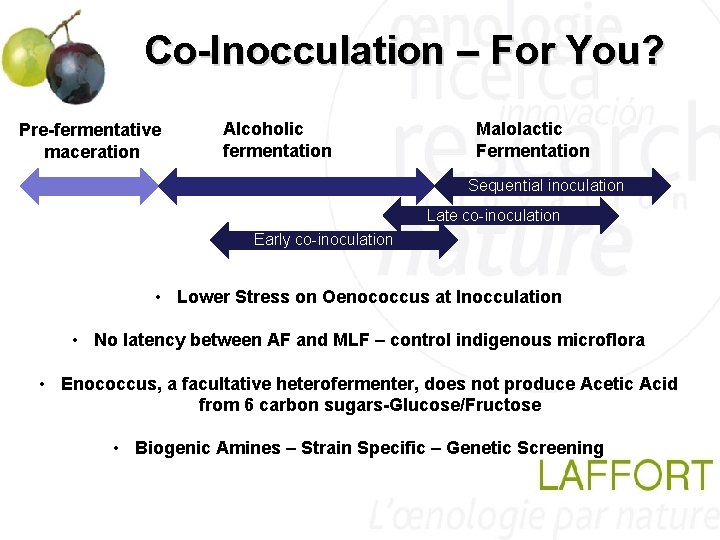
Co-Inocculation – For You? Pre-fermentative maceration Alcoholic fermentation Malolactic Fermentation Sequential inoculation Late co-inoculation Early co-inoculation • Lower Stress on Oenococcus at Inocculation • No latency between AF and MLF – control indigenous microflora • Enococcus, a facultative heterofermenter, does not produce Acetic Acid from 6 carbon sugars-Glucose/Fructose • Biogenic Amines – Strain Specific – Genetic Screening
Thank You! Peter Salamone, Ph. D Technical Manager, NA Laffort USA 1460 Cader Lane, Suite C Petaluma, CA 94054 (707 934 -5771 Peter. Salamone@Laffort. com