
Part I Define in terms of crystal formation
- Slides: 9
Part I: Define in terms of crystal formation, alignment of the atoms. Then give an example where this might be used in everyday life, or an example of a product formed by this process. Annealing: In most metals, this process is performed by heating the material (generally until glowing) and then cooling slowly at room temperature. Annealing increases ductility and softens metals (more malleable).
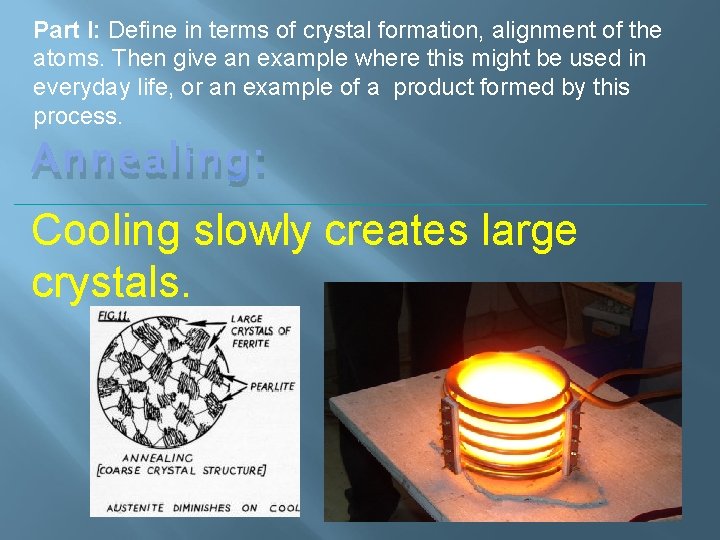
Part I: Define in terms of crystal formation, alignment of the atoms. Then give an example where this might be used in everyday life, or an example of a product formed by this process. Annealing: Cooling slowly creates large crystals.
Precipitation strengthening: . . is used to increase the strength of malleable metals. Soluble impurities are added to alloys with different temperatures that hardens the metal. Different size crystals give radically different properties.
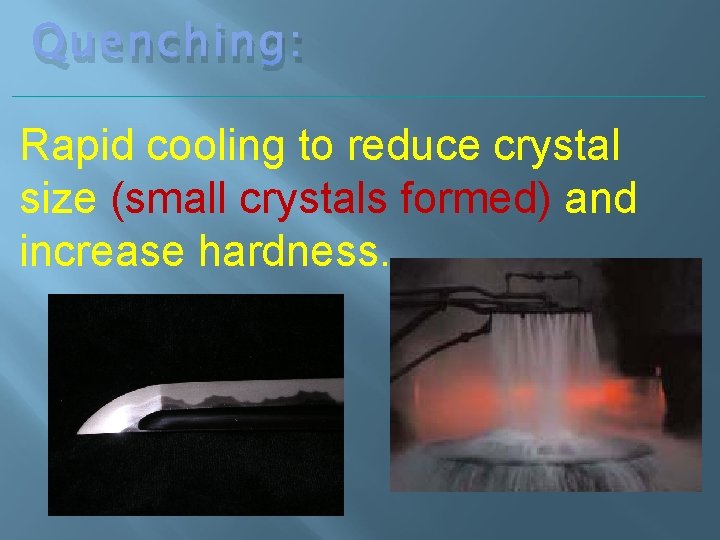
Quenching: Rapid cooling to reduce crystal size (small crystals formed) and increase hardness.
Tempering: To harden or strengthen by heating and cooling. Tempering usually occurs after hardening metal with a lower temperature to remove some of the hardness.
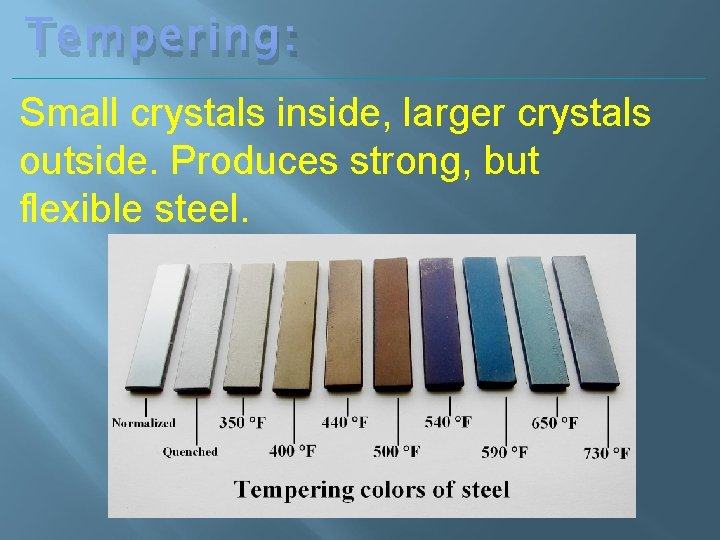
Tempering: Small crystals inside, larger crystals outside. Produces strong, but flexible steel.
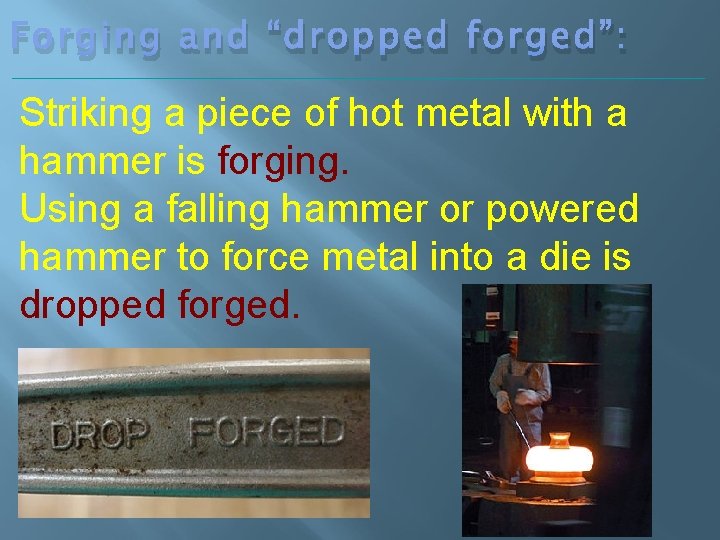
Forging and “dropped forged”: Striking a piece of hot metal with a hammer is forging. Using a falling hammer or powered hammer to force metal into a die is dropped forged.
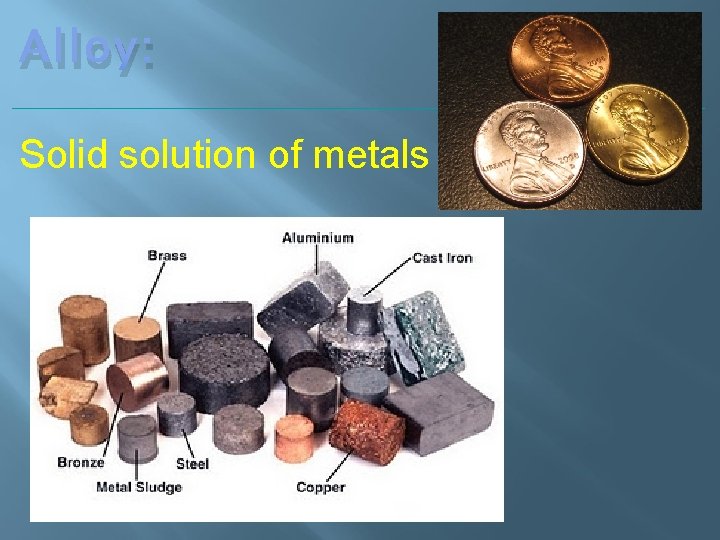
Alloy: Solid solution of metals
Part II: What is the science of working with metals called? Metallurgy