OVERVIEW OF TRANSGENDER HEALTH CARE Ward Carpenter MD








- Slides: 22
OVERVIEW OF TRANSGENDER HEALTH CARE Ward Carpenter, MD Director, Transgender Health Program
CORE CONCEPT OF GENDER SPECTRUM
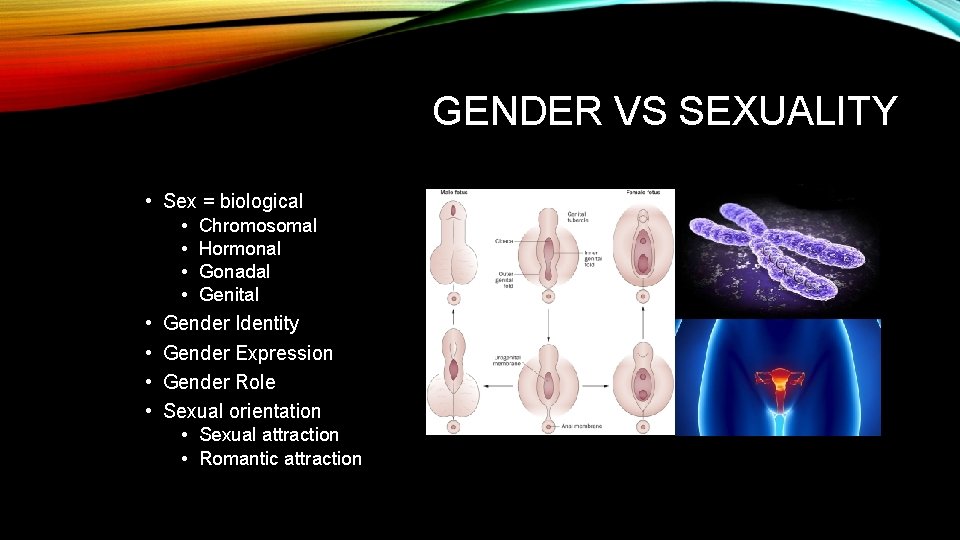
GENDER VS SEXUALITY • Sex = biological • Chromosomal • Hormonal • Gonadal • Genital • Gender Identity • Gender Expression • Gender Role • Sexual orientation • Sexual attraction • Romantic attraction
BARRIERS TO CARE • Trans-people postpone medical care when sick or injured due to discrimination (28%) or inability to afford (48%). • Refusal of care: 19% of trans people surveyed reported being refused care due to their transgender or gender non-conforming status, with even higher numbers among people of color in the survey. • Lack of provider knowledge: 50% of the sample reported having to teach their medical providers about transgender care Injustice at Every Turn/ National Transgender Discrimination Survey © Transgender Economic Empowerment Project/ TEEP, all rights reserved
FOUNDATION: GENDER DYSPHORIA • The key reason hormone care and transitioning exists • Gender Dysphoria is a life-threatening condition • 41% of trans people reported at least one suicide attempt in their life! • Treating depression without treating gender dysphoria often does not work or helps only partially • For many trans people, the only way to help them is to “fix” their bodies
DSM-5 • For a person to be diagnosed with gender dysphoria, there must be a marked difference between the individual’s expressed/experienced gender and the gender others would assign him or her, and it must continue for at least six months. • This condition causes clinically significant distress or impairment in social, occupational, or other important areas of functioning. • Gender dysphoria is manifested in a variety of ways, including strong desires to be treated as the other gender or to be rid of one’s sex characteristics, or a strong conviction that one has feelings and reactions typical of the other gender. • The DSM-5 diagnosis adds a post-transition specifier for people who are living full-time as the desired gender (with or without legal sanction of the gender change). This ensures treatment access for individuals who continue to undergo hormone therapy, related surgery, or psychotherapy or counseling to support their gender transition. • Gender dysphoria in DSM-5 is separated from Sexual Dysfunctions and Paraphilic Disorders.
• “Feminizing/masculinizing hormone therapy - the administration of exogenous endocrine agents to induce feminizing or masculinizing changes – is a medically necessary intervention for many transsexual, transgender, and gender nonconforming individuals with gender dysphoria” WPATH Standards of Care V. 7(p. 33)
HORMONES & IMPROVED QUALITY OF LIFE • Newfield et al (2006) among 446 FTM • those on hormones had statistically significant higher quality of life than those not on hormone therapy. • Gorin-Lazard et al (2012) • hormone therapy significantly associated with higher quality of life, after adjusting for confounding factors (cross-sectional). • Murad et al (2009) systematic review & meta-analysis • “sex reassignment” (hormones + surgery) likely improves gender dysphoria, psychological functioning and comorbidities, sexual function and overall quality of life.
RESULTS • Prospective study of 325 consecutive adults undergoing hormone and surgical transition • Statistically significant improvements in gender dysphoria scores • Psychological function improved among all patients • Fewer than 2% expressed regret (Smith, Van Goozen, Culper et al 2005)
WHAT’S YOUR MODEL? • Gate-keeper vs informed consent
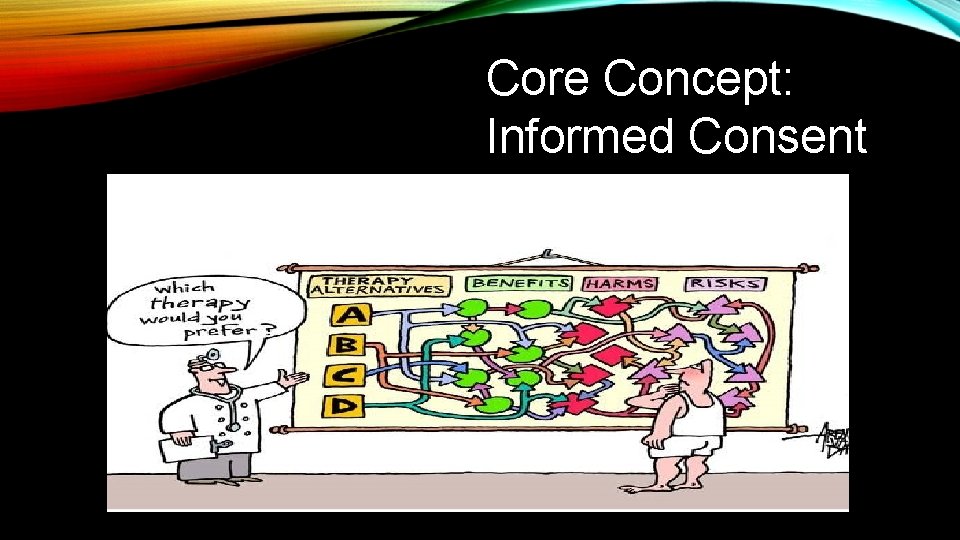
Core Concept: Informed Consent
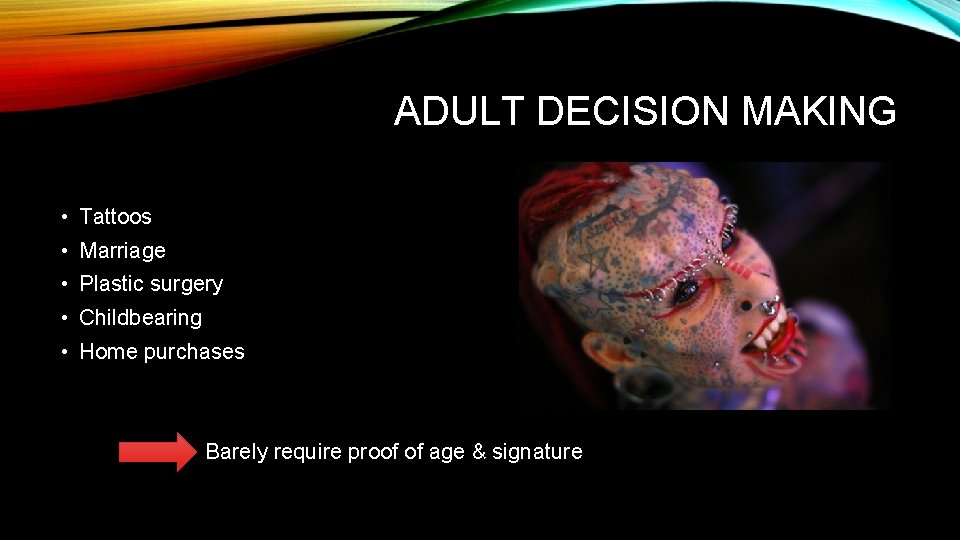
ADULT DECISION MAKING • Tattoos • Marriage • Plastic surgery • Childbearing • Home purchases Barely require proof of age & signature
INFORMED CONSENT • Informed consent is the process by which the treating health care provider discloses appropriate information to a competent patient so that the patient may make a voluntary choice to accept or refuse treatment • It originates from the legal and ethical right the patient has to direct what happens to their body and from the ethical duty of the physician to involve the patient in their health care
PRESCRIBING HORMONES IS RELATIVELY SIMPLE • Have you ever prescribed testosterone for hypogonadism? • Have you ever prescribed spironolactone for PCOS? • Have you ever prescribed estrogen replacement therapy for a post-menopausal woman? Yes? …then you can provide transgender hormone care
PRESCRIPTION AND MONITORING • Begin at low-medium starting dose • Monitor with labs and follow-up • Adjust doses as indicated by patient experience and physical/lab findings • Monitor with labs and follow-up • *Hormone level testing? ?
IMPORTANT RESOURCES FOR PCPS • Center of Excellence for Transgender Health Primary Care Protocol • WPATH Standards of Care Version 7 Clear Messages: ØHormone care can be performed by trained primary care providers ØYou have the tools to do it!
PSYCHOSOCIAL CONCERNS Assess how transition will affect and be affected by: • Housing • Employment • Finances • Family support • Relationship • Safety
CREATING A WELCOMING OFFICE ENVIRONMENT LGBTQIA-welcoming materials displayed in the office go a long way to establishing a safe space © Transgender Economic Empowerment Project/ TEEP, all rights reserved
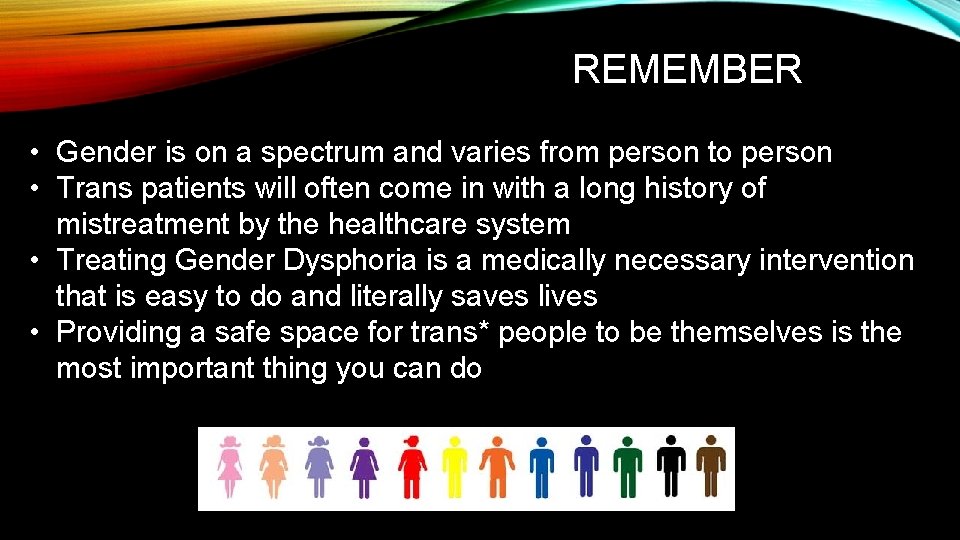
REMEMBER • Gender is on a spectrum and varies from person to person • Trans patients will often come in with a long history of mistreatment by the healthcare system • Treating Gender Dysphoria is a medically necessary intervention that is easy to do and literally saves lives • Providing a safe space for trans* people to be themselves is the most important thing you can do