OSCE Question 022015 TMH AED 1 Question 1

- Slides: 31
OSCE Question 02/2015 TMH AED 1
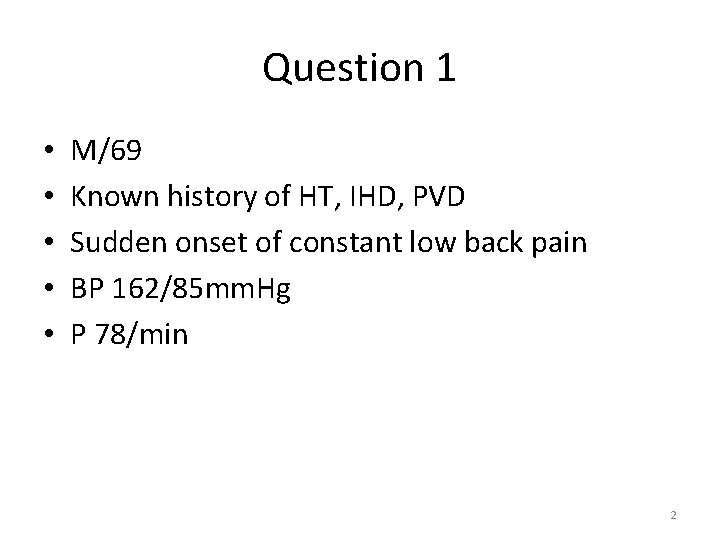
Question 1 • • • M/69 Known history of HT, IHD, PVD Sudden onset of constant low back pain BP 162/85 mm. Hg P 78/min 2
Question 1 • Suggest 5 differential diagnosis of acute low back pain 3
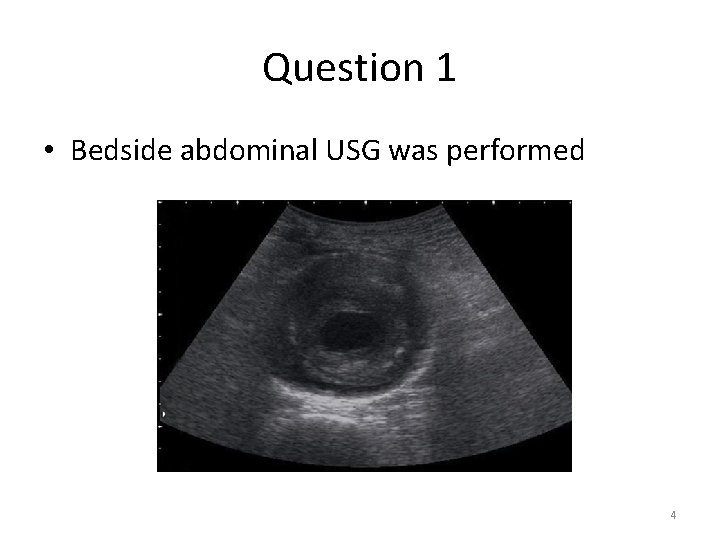
Question 1 • Bedside abdominal USG was performed 4
Question 1 • What’s the sonographic diagnosis? • How to measure the size of the lesion? • How to classify the type of the lesion using ultrasound? 5
Question 1 • State the microbe that is most commonly associated with this condition? 6
Question 2 • F/40 • Good past health • Sudden onset of right sided weakness 1 hour before • BP 180/93 mm. Hg • P 104/min • GCS 15/15 7
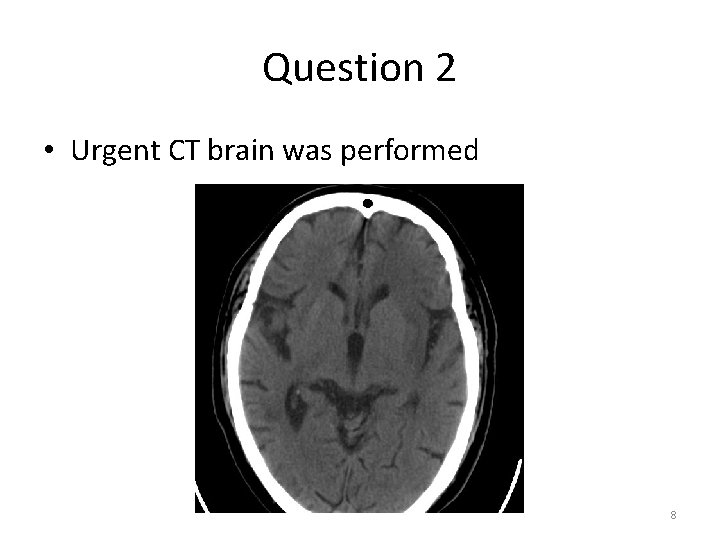
Question 2 • Urgent CT brain was performed 8
Question 2 • Described the CT finding • Suggest 3 more hyperacute stroke CT signs 9
Question 2 • Outline subsequent management plan for this patient 10
Question 2 • State 3 etiologies for young onset stroke 11
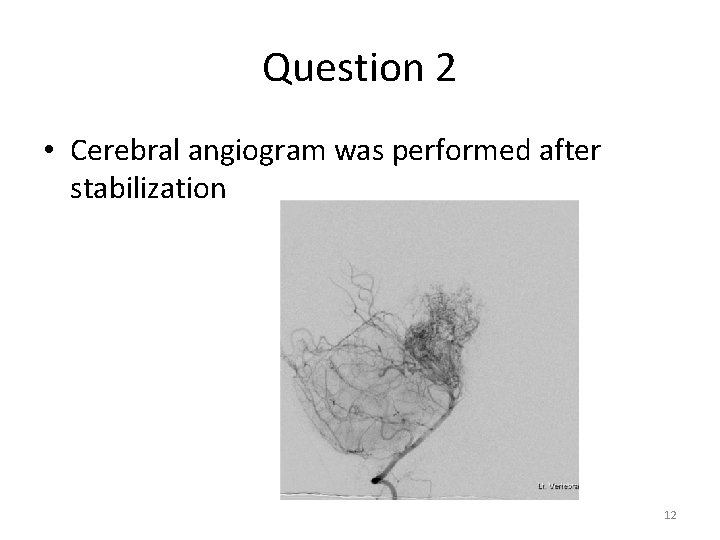
Question 2 • Cerebral angiogram was performed after stabilization 12
Question 2 • Describe the finding • What is the diagnosis? 13
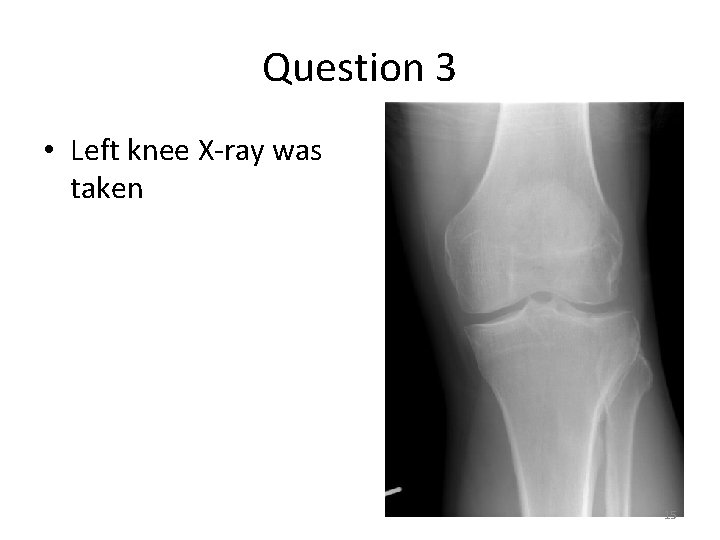
Question 3 • F/56 • Good past health • Vehicle-pedestrian collision with left knee injury • BP 153/79 mm. Hg • P 95/min 14
Question 3 • Left knee X-ray was taken 15
Question 3 • Describe the X-ray finding • What is the classification of the aboved condition? • Which type this patient belonged to? 16
Question 3 • What is the mechanism of the injury? • Name 4 potential complications 17
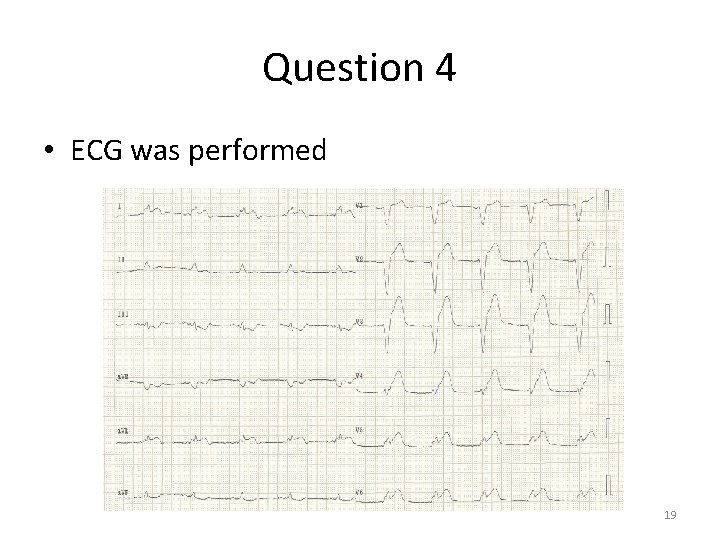
Question 4 • M/72 • History of DM, HT, SSS on pacemaker • Sudden onset of severe chest pain for 3 hours, only partially relieved by TNG • BP 164/88 mm. Hg • P 62/min 18
Question 4 • ECG was performed 19
Question 4 • Describe the ECG findings • State an ECG criteria for assistance of diagnosis • What is the diagnosis? 20
Question 4 • Outline the management in AED 21
Question 5 • M/62 • Repeated vomiting for 1 day, with mild epigastric pain after an alcohol binge • First vomited out undigested food and then mild blood streak • BP 123/59 mm. Hg • P 84/min • Abdominal examination was unremarkable. Per rectal examination noted brownish stool. • CXR was normal 22
Question 5 • Name 3 clinical prediction rules/scores in upper gastrointestinal bleeding to risk stratification • He asked if his condition could be managed without hospital admission • State which score is the most relevant in this scenario? What cut-off and associated clinical implication for the score? 23
Question 5 • More history was taken and he had known alcoholic with alcoholic liver cirrhosis • Blood tests result: – Hb 13. 4 g/d. L – Urea 7. 8 mmol/L • How would you management this patient? 24
Question 5 • He developed gross haematemesis during his stay in AED • BP 96/49 mm. Hg • P 106/min 25
Question 5 • How would you manage this patient in addition to the management you ordered before? 26
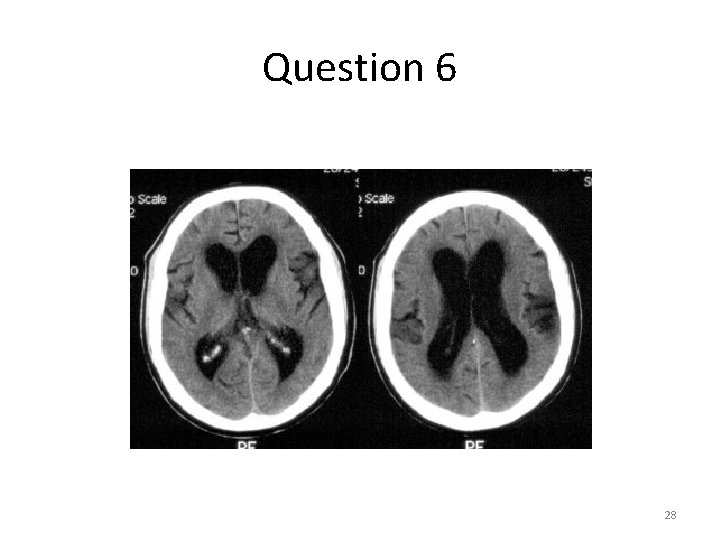
Question 6 • M/69 • History of HT, DM, old CVA • Decrease general condition for 1 month 27
Question 6 28
Question 6 • Describe the CT finding • What further investigations would you proceed? 29
Question 6 • If the opening pressure of the lumbar puncture is 12 cm H 2 O • What is the condition called? • What is the classic triad of this condition? 30
Question 6 • What is the definitive treatment? 31